Saturday, January 17, 2026
Home Blog Page 550

CIA claims COVID-19 likely originated from lab leak in China

China COVID
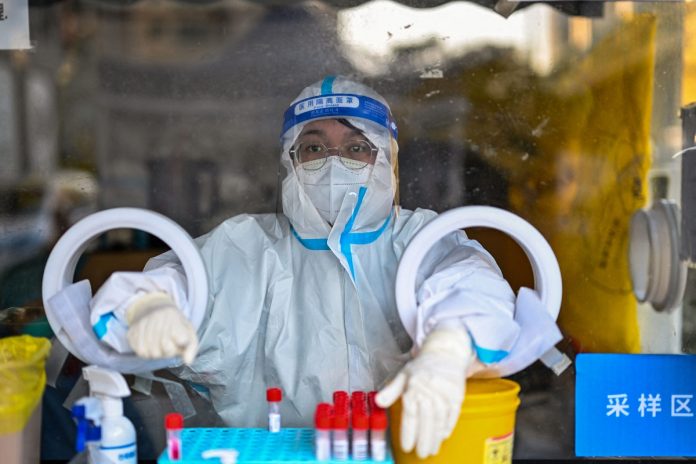
A health worker waits for people to take swab samples to test for the Covid-19 coronavirus in Shanghai on December 19, 2022. (Photo by Hector RETAMAL / AFP) (Photo by HECTOR RETAMAL/AFP via Getty Images)

“CIA assesses with low confidence that a research-related origin of the COVID-19 pandemic is more likely than a natural origin based on the available body of reporting,” a CIA spokesperson shared in a statement to NBC News.

“CIA continues to assess that both research-related and natural origin scenarios of the COVID-19 pandemic remain plausible.”

Ratcliffe said he supported theories that the virus was developed at the Wuhan Institute of Virology in China prior to his new post.

“I’ve been on record, as you know, in saying I think our intelligence, our science, and our common sense all really dictates that the origins of COVID was a leak at the Wuhan Institute of Virology,” Ratcliffe, a former director of national intelligence, told Breitbart on Thursday.

“But the CIA has not made that assessment or at least not made that assessment publicly. So I’m going to focus on that and look at the intelligence and make sure that the public is aware that the agency is going to get off the sidelines.”

President Donald Trump has previously referred to COVID-19 as the “China virus” in tweets and supported similar rhetoric.

China has denied all ties to manufacturing the virus intentionally but intelligence officials are still unaware of its origin.

“As President Trump deals with [Chinese] President Xi [Jinping], he needs to be armed with the very best intelligence and to be able to talk about China in a way that if they caused or contributed to the death of a million Americans, the president needs to be armed with that,” Ratcliffe stated in the Breitbart interview.

Some scientists believe COVID-19 could have developed naturally, differing from theories of a lab leak.

Israeli soldiers fire toward Gazans attempting to return to their homes in north

Gaza War

Scores of families had gathered at Al Rasheed street – the coastal road to the north – in anticipation of returning home. But they scattered after the shots were fired, with many ducking to the ground. It is unclear whether there were any casualties.

The Israeli military has claimed its troops “only fired warning shots” and they “did not aim to shoot the suspects or to cause harm.”

Before the crowd dispersed, many people told CNN that they wanted to return to the north despite not knowing what happened to their homes.

One woman, Yusra Mahmoud Judat Abdel Rabbo, said she wanted to return home to Jabalia in the north, where her husband was.

“Since the start of the war, we’ve been waiting for this moment to return to our homes in the north,” she added.

Hamna Ramadan Abdullah, also from Jabalia, told CNN while her house had been bombed, she was looking forward to returning home.

“The land is my soul, my heart, my life, my religion, my morals, and my people. I came early because I was eager and longing to go back,” Abdullah stated from Al Rasheed street.

“We’ll go and see if we’ll live in a school or a tent.”

Mohammad Al-Ghazali, from Gaza City, described the past 15-months of war as “the worst days of our lives.” He told CNN: “We lost everything dear and valuable. Now, all we have left is to return to Gaza City and kiss its soil.”

The first six-week phase of a Gaza ceasefire agreement took effect Jan. 19, suspending Israel’s genocidal war that has killed nearly 47,300 Palestinians, mostly women and children, and injured nearly 111,500 since a Hamas attack on Oct. 7, 2023.

The three-phase agreement includes a prisoner exchange and sustained calm, aiming for a permanent truce and the withdrawal of Israeli forces from Gaza.

The Israeli onslaught has left Gaza in ruins, and its residents displaced, hungry, and prone to disease.

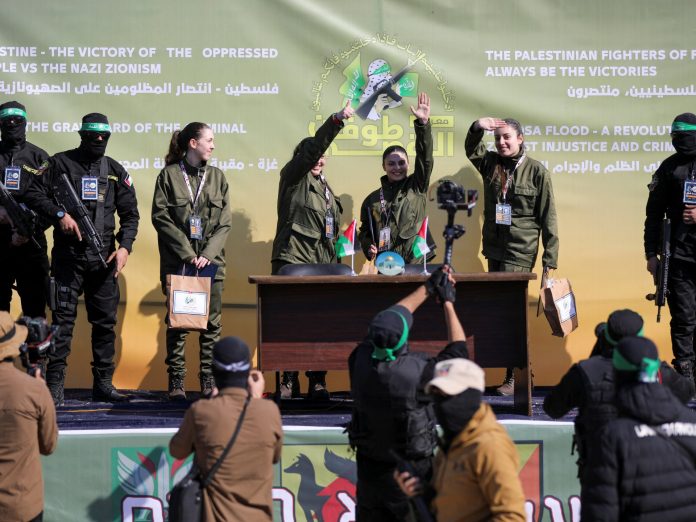
On Saturday, Hamas released four Israeli female soldiers to the International Committee of the Red Cross (ICRC), while Israel followed by releasing 200 Palestinian prisoners as part of a ceasefire deal.

Saturday’s scheduled exchange will mark the second swap since the ceasefire took effect on 19 January. During the first exchange, Hamas released three Israeli female civilians in return for 90 Palestinian prisoners.

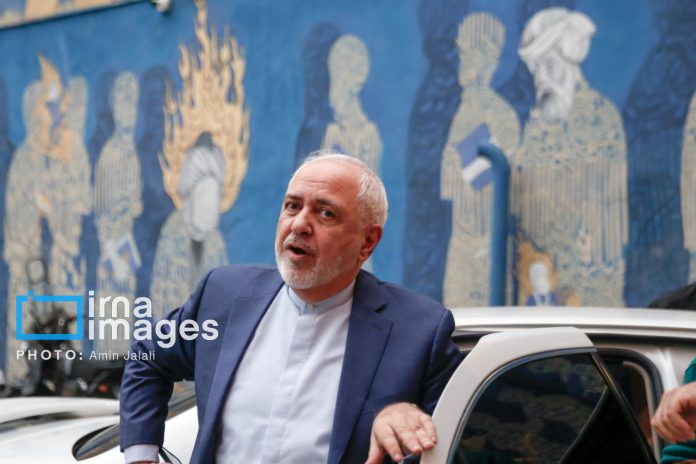
Radical protesters in Iran call for execution of VP Zarif, trigger outcry

Javad Zarif

Javan newspaper reported that the identity and political affiliation of the protesters are unclear.

It wrote, “They organized a virtual call for a shroud-wearing protest at Pasteur Square, outside the Presidential Office, to oppose the government’s policies on negotiations with the West, Zarif’s stance, and efforts to join the Financial Action Task Force (FATF).”

The daily noted that protests are deemed ineffective as even the principlists disown them while being ignored by the government.

Etelaat, another newspaper, wrote that those responsible for the Crescent case want Zarif prosecuted. The daily was referring to a long-standing legal dispute in 2009 that led to multiple legal proceedings and arbitration rulings, resulting in the seizure of Iranian assets in various countries to compensate Crescent Petroleum.

Etelaat reminded that Crescent case, which caused an $18 billion loss to the country, is only one case among numerous sufferings unleased on the nation by the radicals who lack popular support.

It highlighted that they aim to overshadow Zarif’s successful presence at Davos, noting in his interview with Fareed Zakaria, he defended Iran’s position and addressed all accusations against the country.

Yemen’s Houthis free 153 prisoners of war

Yemen Houthi

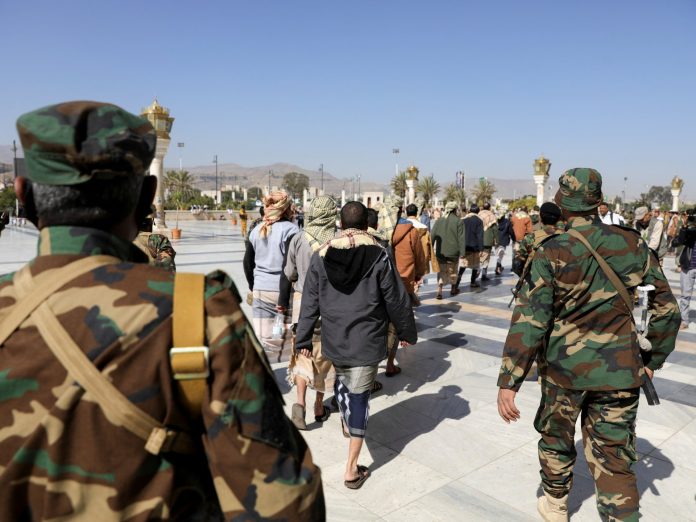
The “conflict-related detainees” were released in the capital, Sanaa on Saturday, and had received regular visits by the ICRC as part of detention work to ensure humane treatment of war-related prisoners, according to the organisation.

The identities of the prisoners were not disclosed.

“This operation has brought much-needed relief and joy to families who have been anxiously waiting for the return of their loved ones. We know that many other families are also waiting for their chance to be reunited. We hope that today’s release will lead to many more moments like this” said Christine Cipolla, the ICRC’s head of delegation in Yemen.

Abdul Qader al-Murtada, the head of the Houthis’ Committee for Prisoners’ Affairs, stated in a statement carried by Houthi-affiliated media that those released were “humanitarian cases” that included the sick, wounded and the elderly.

“The goal of the initiative is to build trust and establish a new phase of serious and honest dealing,” al-Murtada was cited as saying.

The ICRC welcomed the move as “another positive step towards reviving negotiations” under a framework agreed during the country’s war, which raged for years between the Houthis and a Saudi Arabia-led-coalition.

The war left more than 150,000 people killed and created one of the world’s worst humanitarian disasters that is still continuing, with more than 18 million people across Yemen requiring assistance.

The releases on Saturday come as the Houthis continue to hold personnel working with the United Nations.

Seven UN staff members were arrested on Friday, according to the organisation, which called for their immediate release.

The UN also suspended all travel into areas held by the Houthis after the arrests until further notice.

Another 11 UN staff were detained last June, followed by the seizure of the Human Rights Office in the Yemeni capital in August.

The Red Cross has previously helped with prisoner releases, including one that saw some 1,000 prisoners swapped in 2020. Another exchange saw some 800 detainees released in 2023, with more than 100 freed last May.

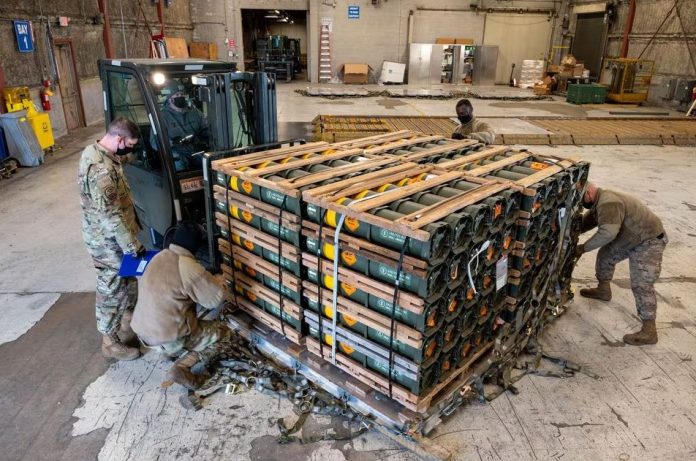
US hits record military equipment export in 2024 on Ukraine-related demand

Western weapons flow to Ukraine's military

The figures from the Joe Biden administration’s final year underpin expectations of stronger sales for U.S. weapons makers like Lockheed Martin (LMT.N), General Dynamics (GD.N),  and Northrop Grumman (NOC.N), whose shares are forecast to climb amid rising global instability.

During his presidential campaign, Republican Donald Trump stated allies should spend more on their own defenses. Trump wants other members of NATO to spend 5% of their gross domestic product on defense – a huge increase from the current 2% goal and a level that no NATO country, including the United States, currently reaches.

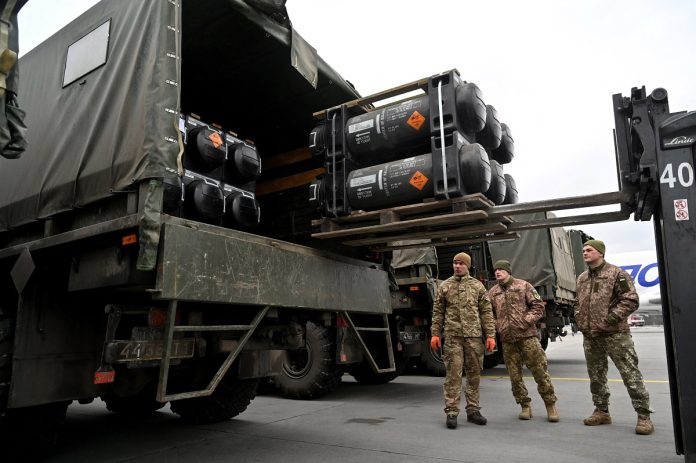
Defense contractors are straining to meet the surge of demand that has mushroomed as a result of Russia’s invasion of Ukraine. Global ministries of defense have been lining up to submit orders to boost their inventories, while the U.S. is seeking to replenish stockpiles of weaponry and munitions sent to Kyiv.

Arms sales and transfers are viewed as “important U.S. foreign policy tools with potential long-term implications for regional and global security,” the State Department announced in a statement.

Sales approved in 2024 included $23 billion worth of F-16 jets and upgrades to Turkey, $18.8 billion worth of F-15 fighter jets to Israel, and $2.5 billion worth of M1A2 Abrams tanks to Romania.

Orders approved in 2024 often go into the order backlog for U.S. weapons makers, which are expecting that orders for hundreds of thousands of artillery rounds, hundreds of Patriot missile interceptors, and a surge in orders for armored vehicles will underpin their results in coming quarters.

There are two major ways foreign governments purchase arms from U.S. companies: direct commercial sales negotiated with a company, or foreign military sales in which a government typically contacts a Defense Department official at the U.S. embassy in its capital. Both require U.S. government approval.

Direct military sales by U.S. companies rose to $200.8 billion in fiscal 2024 from $157.5 billion in fiscal 2023, while sales arranged through the U.S. government rose to $117.9 billion in 2024 from $80.9 billion the prior year.

Police discovers ancient artifacts in Harsin, western Iran

Ancient artifacts Iran

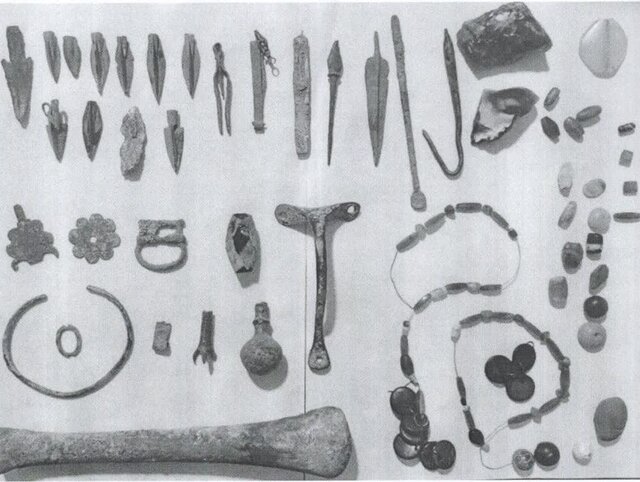
Colonel Afshin Daraei, Commander of Harsin’s security forces in Iran’s Kermanshah Province said the discovery was made after local security forces received information about the presence of historical items in a residential home in the city.

Following intelligence operations, security forces inspected the suspected area where, the 100 historical artifacts, verified by cultural heritage experts, were uncovered.

Harsin, located in the east of Kermanshah Province, is known for its historical sites. The city is a significant archaeological hub in Iran.

Annual cancer incidence in Iran reaches 131k cases

Cancer Iran

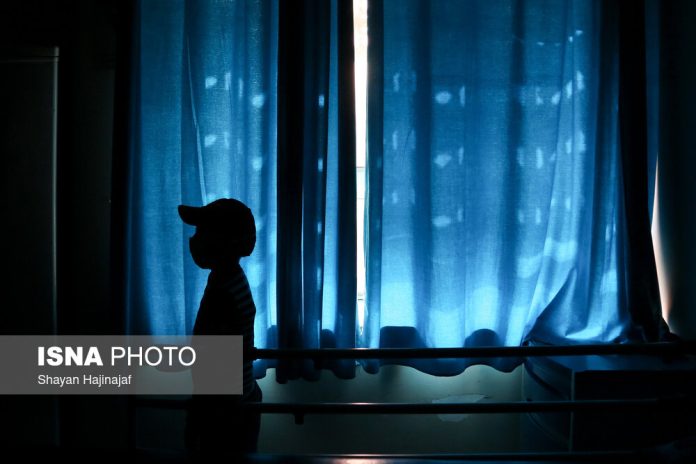
The cancer incidence rate in Iran stands at about 152 cases per 100,000 people.

The most common types of cancer among men are stomach, prostate, and lung cancers, while among women, breast, stomach, and colorectal cancers are the most prevalent.

In terms of mortality, the leading causes of cancer-related deaths in men are stomach, prostate, and lung cancers, while in women, breast, stomach, and lung cancers are the deadliest diseases.

This is while figures show cancer cases and related mortality rates are increasing worldwide due to factors such as aging populations and lifestyle changes.

Hamas releases four female Israeli soldiers, 200 Palestinian prisoners freed

Gaza War

Three buses carrying 114 Palestinian prisoners arrived in Ramallah, where crowds of Palestinians lined the streets to welcome them. The Palestinian Prisoners Club announced among those to be released is Mohammed al-Tous, 69, who has spent the longest continuous period in Israeli detention.

Meanwhile, 16 prisoners have been transferred to the Gaza Strip, while 70 others – including Palestinians serving life sentences and long-term prison terms – have been released into Egypt, according to state-run Qahera TV.

According to the terms of the deal, Israel is expected to free 50 Palestinian prisoners for every Israeli female soldier released.

The four soldiers – Karina Ariev, Daniella Gilboa, Naama Levy and Liri Albag – were stationed at an observation post on the outskirts of Gaza and were captured by Hamas fighters when they overran the base during the attack on southern Israel on 7 October 2023. They were among around 250 captives seized that day.

Saturday’s scheduled exchange will mark the second swap since the ceasefire took effect on 19 January. During the first exchange, Hamas released three Israeli female civilians in return for 90 Palestinian prisoners.

The four Israeli captives were reunited with their families at an Israeli military base near the Gaza border, Israeli army spokesperson Daniel Hagari stated in a video.

Israel announced a female Israeli civilian, Arbel Yehud, should have also been freed on Saturday. However, Hamas informed mediators that she was alive and will be released next week, a Hamas official told Al Jazeera.

Israeli Prime Minister Benjamin Netanyahu said that Palestinians in Gaza will not be allowed to cross back to the northern part of the territory until the issue is resolved.

Israel’s 15-month onslaught on Gaza has displaced hundreds of thousands of Palestinians from northern Gaza. As part of the agreement, the Israeli military was expected to withdraw on Sunday from the northern section of the Netzarim Corridor, which cuts through central Gaza, allowing Palestinians to return home to the north.

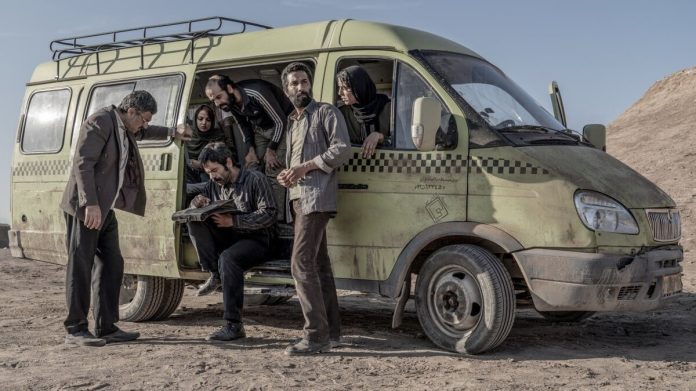
“Cause of Death: Unknown” competes in New York’s Iranian Film Festival

Cause of Death: Unknown

The film will be screened at the festival, which will be held from January 29 to February 6.

It will take part in the festival’s competitive section and will also be showcased at the closing ceremony.

The jury of this year’s festival includes Eric Kohn, Rosalyn Elby, and Rachel Lambert.

After being banned for three years, “Cause of Death: Unknown” is now showing in Iranian cinemas and has become the best-selling social film in Iran.

The story follows seven travelers who leave the city of Shahdad for Kerman before dawn, only to be halted by an unexpected event.

In addition to screening various Iranian films, the festival will spotlight the works of Simin Motamed-Arya, showcasing five of her films, including the restored versions of “Time for Love” (1992), “The Actor” (1993), and the U.S. premieres of “Baham” (2015), “The Blue Ones” (2019), and “Once Upon a Time in Abadan” (2021).

US halts aid to Ukraine for 3 months: Politico

Russia Ukraine War Weapons Arms

Rubio instructed diplomatic and consular posts to issue “stop-work orders” on nearly all “existing foreign assistance awards,” Politico said, citing an internal document.

According to Politico, the order “shocked” State Department officials and appears to apply to funding for military assistance to Ukraine.

The magazine cited three current and two former officials familiar with the matter as saying Rubio’s guidance means that “no further actions will be taken to disperse aid funding to programs already approved by the US government.”

The BBC, which also reviewed the State Department memo, reported that it appears to “affect everything from development assistance to military aid.”

Although the Pentagon previously told Voice of America that the aid freeze would not affect “security assistance to Ukraine,” Rubio’s memo reportedly only granted exceptions for military aid to Israel and Egypt, without mentioning any other country.

Journalist Ken Klippenstein posted what he said was a copy of Rubio’s guidance, which “pauses all new obligations of funding, pending a review, for foreign assistance programs” funded through the State Department and the US Agency for International Development (USAID).

Trump, who took office on Monday, has ordered a 90-day suspension of all “foreign development assistance for assessment of programmatic efficiencies and consistency with United States foreign policy.”

A USAID official told Reuters that among the programs that were frozen are assistance to schools and healthcare, including emergency maternal care and the vaccination of children.

Since February 2022, USAID has provided $2.6 billion in humanitarian aid, $5 billion in development assistance, and more than $30 billion in “direct budget support,” according to its website.

The US has provided nearly $66 billion in military aid to Ukraine since February 2022, according to the Pentagon.

Trump has repeatedly criticized his predecessor, Joe Biden, for approving unconditional aid to Ukraine and has vowed to implement cost-cutting measures. He also promised to quickly negotiate a peace deal between Moscow and Kiev.