Saturday, January 17, 2026
Home Blog Page 551

Tehran condemns European Parliament resolution on Iran’s human rights as ‘meddlesome’

Tehran Grand bazaar

Afkham said the resolution reflects an interventionist and politicized approach within this European institution and lacks legal validity.

Afkham emphasized the judiciary of the Islamic Republic of Iran is a professional and independent body, and judicial processes in Iran are always based on law and conducted through fair trial procedures.

She added that the Islamic Republic of Iran considers any foreign interference aimed at meddling in judicial processes and functions as contrary to the principles and rules of international law and rejects it.

Also pointing to the EU allegations against the Islamic Revolution Guard Corps (IRGC), Afkham said the IRGC as a legal and popular institution, has played a fundamental role in safeguarding Iran’s national security, defending Iran against the aggression of Saddam’s regime and other invading forces, and combating terrorism in the region.

She pointed out that any audacity against this institution will be met with a decisive response from the Islamic Republic of Iran.

The Iranian official said the European Parliament should learn from past ill-considered actions and, instead of openly supporting terrorist groups and elements – which amounts to endorsing and encouraging violence and violating fundamental human rights – should take steps towards respecting its international legal obligations and playing a constructive role in promoting peace, stability, and human rights.

President Rashid: Iraq’s relations with Iran ‘normal, friendly’

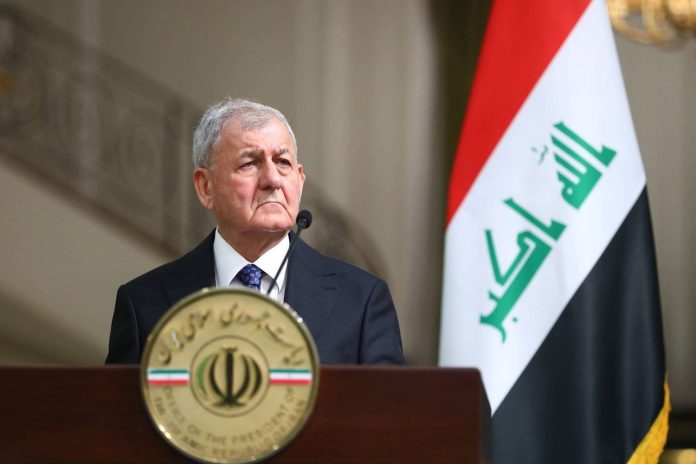
Iraqi President Abdul Latif Jamal Rashid

In an interview with Bloomberg on Friday, President Rashid highlighted the long history of interaction and coexistence between Iranians and Iraqis, stating that Iraq cannot ignore Iran, just as Iran cannot ignore Iraq.

He noted the social, religious, and even familial connections between the people of both countries, which have always fostered popular, commercial, and diplomatic relations.

Rashid affirmed Iraq’s independence, expressing satisfaction with the friendly relations with Iran and asserting that no country will be allowed to interfere in Iraq’s decision-making processes.

He criticized Turkish forces for their continued interference in the Iraqi Kurdistan region and called on Turkey to cease such actions, emphasizing that Iraq will not permit any country to undermine its sovereignty or launch attacks on neighboring countries from its soil.

Regarding popular resistance forces in Iraq, Rashid clarified they are not Iranian proxies but Iraqi people. He stressed that all their activities are now under the control of the Iraqi government, and no group will be allowed to operate within Iraq outside of government oversight.

Iran UN envoy refutes Israel’s claims as baseless, warns of its non-compliance

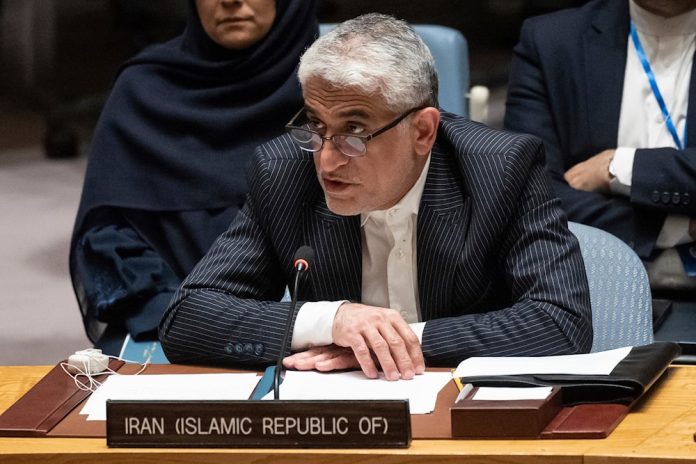
Amir Saeed Iravani

Amir Saeed Iravani, in response to the letter dated January 13, 2025, from the representative of the I‌s‌ra‌e‌li regime to the United Nations, added that this claim is nothing more than an excuse to justify the regime’s repeated violations of Security Council Resolution 1701 (2006) and its blatant disregard for the ceasefire arrangements with Lebanon.

Iravani also warned that the I‌s‌ra‌e‌li regime has no intention of adhering to its commitments to withdraw from Southern Lebanon after the 60-day ceasefire period and raises such unfounded accusations to legitimize its ongoing illegal occupation of Lebanese territory.

In the letter, the Iranian ambassador also dismissed similar accusations made by representatives of the United States and the United Kingdom during the public meeting of the Security Council on January 23, 2025, as baseless.

He added that attributing destabilizing and destructive activities in the region to the Islamic Republic of Iran is a deliberate and planned effort to divert attention and conceal the direct complicity of the US and the UK in the genocide and other war c‌ri‌m‌e‌s committed by the I‌s‌ra‌e‌li regime against the P‌al‌es‌ti‌ni‌an people in Gaza.

Rights groups raising alarm over Trump ‘Muslim ban’

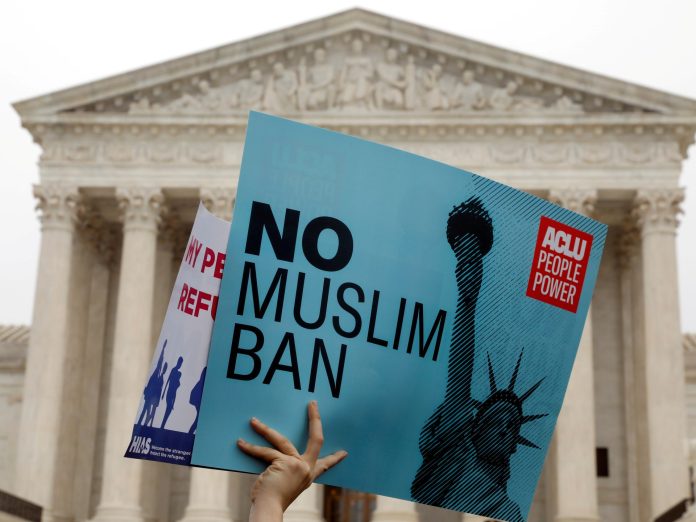
US Muslim ban

The executive order, released on Monday, may also be used to target foreign nationals who are already in the US legally and crack down on international students who advocate for Palestinian rights, experts say.

Deepa Alagesan, a lawyer at the International Refugee Assistance Project (IRAP), an advocacy group, said the new order is “bigger and worse” than the “xenophobic” travel ban that Trump imposed on several Muslim-majority countries in 2017 during his first term.

“The worst part of it now, it’s looking to not just ban people outside the US entering the US, but also to use these same rationales as a basis to get people out of the US,” Alagesan told Al Jazeera.

The new order directs administration officials to compile a list of nations “for which vetting and screening information is so deficient as to warrant a partial or full suspension on the admission of nationals from those countries”.

It goes further, however. It calls for identifying the number of citizens who entered the US from those countries since 2021 — during Joe Biden’s presidency — and collecting “relevant” information about their “actions and activities”.

The White House then orders “immediate steps” to deport foreign citizens from those countries “whenever information is identified that would support the exclusion or removal”.

Trump’s executive order also says the administration must ensure that foreign citizens, including those in the US, “do not bear hostile attitudes” towards American citizens, culture or government and “do not advocate for, aid, or support designated foreign terrorists”.

Alagesan warned that the decree, dubbed “Protecting the United States from Foreign Terrorists and Other National Security and Public Safety Threats”, could inflict more harm on immigrant families than the 2017 travel restrictions, known collectively as the “Muslim ban”.

She said the order’s vague language is “scary” because it appears to give US agencies broad authority to recommend actions against people whom the administration seeks to target.

“At its core, it’s just another method to keep people out, to get people out, to break up families, to incite fear, to make sure that people know that they are not welcome and that the government will bring its force to bear against them,” Alagesan told Al Jazeera.

Other advocacy groups have also decried the order since its publication.

The American-Arab Anti-Discrimination Committee (ADC) said the decree goes further than the 2017 “Muslim ban” by giving the government “wider latitude to use ideological exclusion” to deny visas and remove people from the US.

“ADC calls on the Trump administration to stop stigmatizing and targeting entire communities, which only sows division,” the group said in a statement.

“America’s promise of freedom of speech and expression — a principle that President Trump himself has long highlighted — now stands in stark contradiction to his new executive order.”

The Muslim Public Affairs Council also cautioned in a statement that enhancing vetting measures for specific countries risks “functioning as a de facto Muslim ban under the guise of security protocols”.

Maryam Jamshidi, a professor at the University of Colorado Law School, said the order appears to revive the travel ban from Trump’s first term, while pushing a right-wing agenda in the broader culture wars.

Parts of the decree also specifically target Palestinians and Palestinian rights supporters, Jamshidi added.

“The right is very invested in continuing this notion that foreigners, people who are Black, brown, Muslim — not white Judeo-Christian, effectively — are threatening ‘real Americans’.”

In 2018, several US media outlets reported that Trump told aides the US should admit more immigrants from places like Norway rather than people from Haiti, El Salvador and African nations, which he called “s***hole countries”.

Many right-wing politicians — including Trump’s current vice president, JD Vance — have embraced the “great replacement” conspiracy theory, which posits that there is an effort to replace native-born Americans with immigrants.

Trump’s recent order warns against foreign nationals in the US seeking to undermine or replace American culture.

Still, experts say it is unlikely to be used as a mass deportation vehicle.

“It gives marching orders to the agencies to basically use the full extent of legal frameworks and loopholes to take the ugliest possible action to remove people that the president has decided he doesn’t want here,” Alagesan said.

“That said, there are still laws limiting the grounds on which someone can be removed, and there are protections available to people who are in deportation proceedings.”

Jamshidi also said it is not clear how the order would go about deporting people, noting that it is not established whether the immigration law cited gives the administration authority to remove foreign nationals.

The decree relies on a section of the Immigration and Nationality Act that gives the president power to restrict entry to the US for “any class of aliens” — but not to remove people already here.

“This is probably not a blanket deportation charge,” Jamshidi said.

But she warned that the order could lead to further scrutiny against people from those countries and deter political activities — especially Palestinian solidarity — that could be perceived as running afoul of the administration’s guidelines.

The order directs US officials to make recommendations to “protect” citizens from foreign nationals “who preach or call for sectarian violence, the overthrow or replacement of the culture on which our constitutional Republic stands, or who provide aid, advocacy, or support for foreign terrorists”.

Jamshidi said the language is “certainly about foreign nationals, including foreign students who are participating in Palestine advocacy”.

With pro-Israel politicians often calling campus activists “pro-Hamas”, Jamshidi said Trump’s edict could be used to target Palestinian rights advocates who are in the US on student visas.

Both Trump and Secretary of State Marco Rubio have previously called for deporting international students.

As Palestinian solidarity protests swept the country’s universities following the outbreak of the war on Gaza, Israel’s supporters, especially Republicans, painted student demonstrators as a threat to campus safety.

Rubio led a Senate letter to the Biden administration in October 2023, calling for the removal of international students who participated in protests in support of Palestinians.

The letter drew parallels between student protesters and the 9/11 attackers. It cited “lessons learned on September 11, 2001, when terrorists, many of whom were studying in the United States or had overstayed visas, carried out the deadliest attack on American soil”.

“Sadly, twenty-two years later, our country is witnessing public displays from terrorist sympathizers taking to the streets and condoning Hamas’ brutal attacks against the State of Israel,” the letter read.

The 2024 Republican Party platform also calls for deporting “pro-Hamas radicals” to make college campuses “safe and patriotic again”.

Dima Khalidi, director of the advocacy group Palestine Legal, said it is “clear” that Trump’s recent executive order was crafted to specifically target Palestinian rights supporters.

She added that, while the decree does not specify Israel, pro-Israel groups have been trying to portray criticism of the US ally as not just anti-Israel or even anti-Semitic but as “un-American”.

“We have to connect it to this order to the broader ideological imposition that’s happening and part of the larger purging that Trump seems very intent on carrying out,” Khalidi told Al Jazeera.

She said the Trump administration is seeking to use the broad discretion in immigration law to crack down on Palestinian rights supporters because of their views and circumvent free speech rights.

“They are really painting a picture for people of what is acceptable, what is not; what is American, what is not; what is patriotic, what is not,” Khalidi told Al Jazeera.

Critics say the bottom line is that, while Trump’s first “Muslim ban” targeted travellers from several Muslim-majority countries, this order has farther-reaching consequences, including about what it means to be an American.

For example, the decree calls for measures to ensure the “proper assimilation” of immigrants and “promote a unified American identity”.

Jamshidi said the order has “broader implications for all sorts of groups than the initial iterations of the Muslim ban”.

“It’s another salvo in the right’s culture wars,” she told Al Jazeera.

Israel says will stay in Lebanon beyond ceasefire deadline

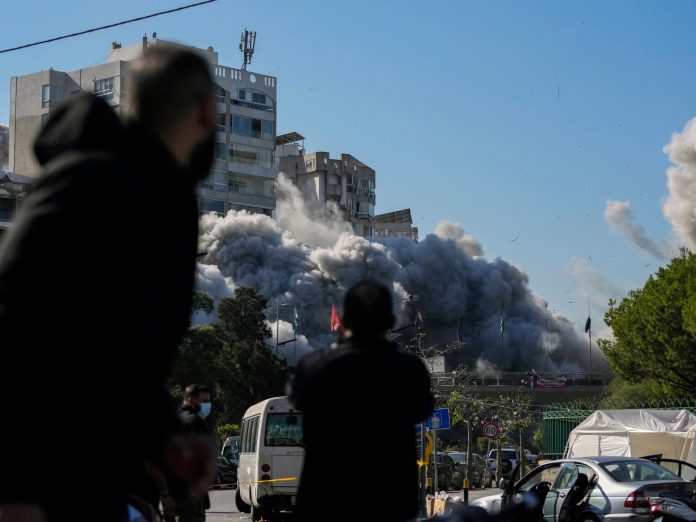
Lebanon War

The agreement, signed by both Israel and the Lebanese government, ended over a year of border clashes and two months of full-blown conflict on 27 November.

It gave Israel 60 days to fully withdraw from southern Lebanon, while Hezbollah is supposed to retreat to the north of the Litani River. Hezbollah is supposed to be replaced by the Lebanese army in the areas it leaves.

The process is supposed to be completed on Monday at 4am local time (2am GMT).

Netanyahu’s office said Israel’s withdrawal is “contingent on the Lebanese army deploying in southern Lebanon and fully and effectively enforcing the agreement, while Hezbollah withdraws beyond the Litani”.

“Since the ceasefire agreement has not yet been fully enforced by the Lebanese state, the gradual withdrawal process will continue in full coordination with the United States,” it added.

Hezbollah and the Lebanese authorities are yet to comment on the allegations.

According to The Guardian, Israel is currently asking US President Donald Trump for a 30-day extension to the agreement, which Israeli media says he is unlikely to approve.

Israel has been accused by the Lebanese government of breaching the ceasefire hundreds of times, as it has continued bombing southern Lebanon, sometimes killing people, and flown drones over Beirut and the south.

It has also been demolishing residential homes along Lebanon’s border with Israel.

In a speech ahead of the implementation of a ceasefire in the Gaza Strip last week, Hezbollah Secretary General Naim Qassem warned Israel against its breaches.

“Don’t test our patience,” Qassem stated.

Israel’s attacks on Lebanon have killed more than 4,000 people and displaced over 1.2 million.

More than 60% of Israelis say Netanyahu should resign over Hamas attack failures: Poll

Netanyahu

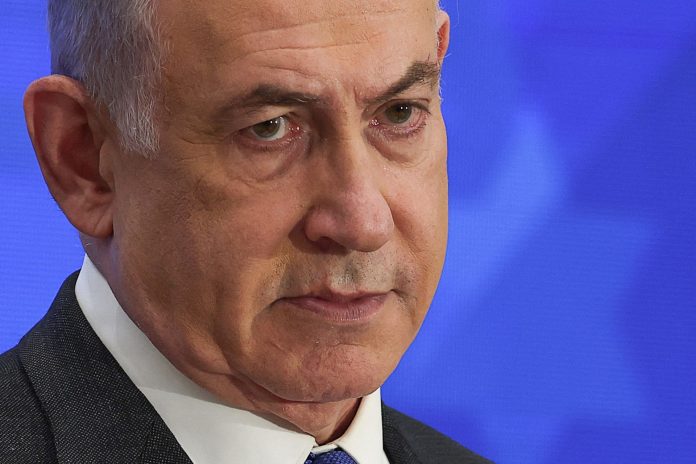
A survey published by the Israeli daily Maariv on Friday showed that 62% of Israelis support Netanyahu’s resignation, while 29% oppose it, and 19% expressed no opinion.

Among opposition voters, 93% support Netanyahu’s resignation, compared to just 31% of voters from coalition partners in the government.

Notably, 18% of Likud voters, the party led by Netanyahu, also believe he should vacate his position due to his role in the failure to prevent the attack.

Despite the criticism, Netanyahu has consistently refused to take responsibility, instead shifting the blame onto the military.

The poll also showed that only 28% of Israelis believe that the prisoner exchange and ceasefire agreement in Gaza will be fully implemented. In contrast, 39% expected it to be fully disregarded, and 33% were undecided.

The survey also found that if elections were held today, the opposition bloc would win 59 out of the 120 seats in the Knesset, while Netanyahu’s coalition would secure 51 seats. Arab parties are projected to hold 10 seats.

Following the resignation of far-right Otzma Yehudit party leader Itamar Ben-Gvir and the commencement of the first phase of the Gaza ceasefire, Likud would win 21 seats, losing two compared to the previous week’s poll.

Despite these shifts, there is no indication that elections are imminent, as Netanyahu has refused to call for elections, citing the ongoing war as the reason.

The first six-week phase of a Gaza ceasefire agreement took effect Jan. 19, suspending Israel’s genocidal war that has killed nearly 47,300 Palestinians, mostly women and children, and injured nearly 111,500 since a Hamas attack on Oct. 7, 2023.

The three-phase agreement includes a prisoner exchange and sustained calm, aiming for a permanent truce and the withdrawal of Israeli forces from Gaza.

The Israeli onslaught has left Gaza in ruins, and its residents displaced, hungry, and prone to disease.

The International Criminal Court issued arrest warrants in November last year for Netanyahu and his former Defense Minister Yoav Gallant for war crimes and crimes against humanity in Gaza.

Israel also faces a genocide case at the International Court of Justice for its war on the enclave.

Trump’s controversial Pentagon pick confirmed by US Senate

Pete Hegseth

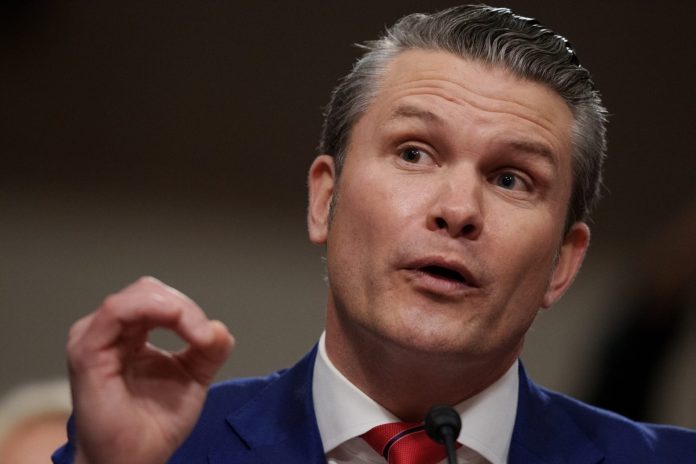
Almost the entire Republican conference supported Hegseth’s nomination while every Senate Democrat voted against his confirmation, resulting in a 50-50 vote. Three Republican senators – Mitch McConnell of Kentucky, Susan Collins of Maine and Lisa Murkowski of Alaska – opposed Hegseth’s nomination. Collins and Murkowski had earlier cited concerns about his personal history and inexperience as disqualifying.

Hegseth was among the most heavily scrutinized nominees for Donald Trump’s cabinet, owing to allegations of sexual assault and workplace misconduct that have surfaced in the last two months.

Shortly after Trump announced Hegseth as his defense secretary pick, extremism experts raised alarms about Hegseth’s apparent affinity for far-right symbols – noting that his tattoo sleeve featured at least two images associated with far-right and neo-Nazi groups. Hegseth himself has complained publicly that the US Army declined his service during Joe Biden’s 2021 inauguration after a fellow servicemember flagged him as a potential insider threat.

In Hegseth’s hyperpartisan 2020 book, American Crusade, he writes that he believes the US is on course for factional violence and claims the country faces an existential threat from the left.

“You must be thinking, ‘Pete, you laid this out in pretty simple terms. Us versus them. America versus the left. Good versus evil. You’re overplaying your hand. It’s not that bad,’” writes Hegseth.

“Read on, and think again.”

Before the confirmation hearings, Hegseth declined to meet with Democratic members of the Senate armed services committee, spurring concerns about his willingness to run the agency in a nonpartisan manner.

During Hegseth’s 14 January confirmation hearing, the New Hampshire senator Jeanne Shaheen, said that since she joined the committee in 2011, every other nominee has met with her and her Democratic colleagues before their hearing and questioned Hegseth’s unwillingness to do the same.

After a report in the New Yorker uncovered reports of day drinking and Hegseth’s alleged belligerent, drunken behavior at the workplace, some Republican senators seemed skeptical about the former Fox News host’s viability as a nominee.

Hegseth refused to answer questions about his conduct during the hearing, repeatedly answering questions from the Arizona Democratic senator Mark Kelly about accusations of sexual misconduct and public, belligerent drunkenness with a two-word answer: “anonymous smears”.

“All anonymous, all false, all refuted by my colleagues who I’ve worked with for 10 years,” said Hegseth when Kelly pressed him to answer questions about his alleged alcoholism.

When the Democratic senator Elissa Slotkin asked whether he would refuse unconstitutional orders, and whether he would decline to deploy the military against US civilians, Hegseth evaded a direct answer, saying “I reject the premise” of the questions.

When questioned about his past support for three military officials accused of war crimes, Hegseth acknowledged that the Geneva convention was the “law of the land”, but complained of “burdensome rules of engagement” imposed by human rights law.

Hegseth also insisted that he would bring a “warrior culture” to the defense department and stressed his commitment to unravelling diversity, equity and inclusion policies in the military.

Trump’s allies unified behind Hegseth and pushed for his confirmation, and the little resistance within the Republican party to his nomination disappeared.

Even the Iowa senator Joni Ernst – a combat veteran and sexual assault survivor who initially cast doubt on Hegseth’s nomination – announced she would support him following his confirmation hearing, saying in a statement that she would “work with Pete to create the most lethal fighting force and hold him to his commitments of auditing the Pentagon, ensuring opportunity for women in combat while maintaining high standards, and selecting a senior official to address and prevent sexual assault in the ranks”.

Kremlin says Putin ready to speak with Trump

Trump Putin

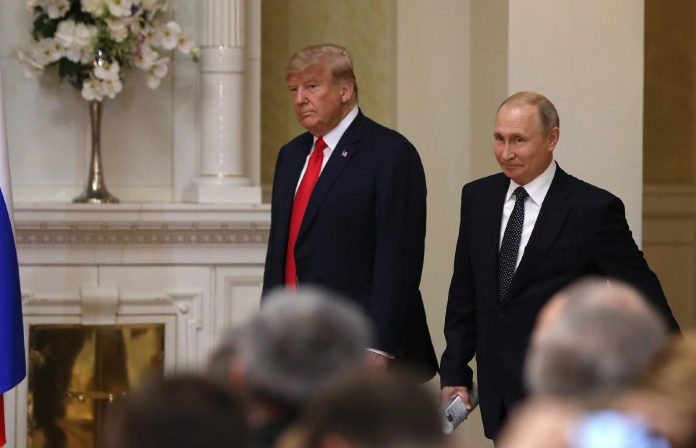
When asked on Friday whether a long-awaited phone call between Putin and Trump, who has vowed to quickly end the Ukraine conflict, could take place over the weekend, Peskov would neither confirm nor deny the possibility.

“Putin is ready, we are waiting for signals. Everyone is ready. It is difficult to read the tea leaves. If something happens, we will let you know,” he told reporters.

On Thursday, several days after his inauguration, Trump said that he was ready for a meeting with the Russian president to discuss the Ukraine conflict, adding that “from what I hear, Putin would like to see me.”

“Every day we don’t meet, soldiers are being killed on the battlefield,” the US president remarked.

Earlier, media reports suggested that Trump’s team was eyeing a peace plan for Ukraine, which could include a ceasefire along the current front lines and the creation of an 800-mile demilitarized zone patrolled by European troops. Additionally, the roadmap would reportedly see Kiev’s agreement to delay its aspirations for NATO membership for at least 20 years.

Moscow, however, has ruled out a freezing of the conflict. Russian Foreign Minister Sergey Lavrov has said that the Kremlin “is, of course, not satisfied” with proposals to postpone Kiev’s NATO ambitions and deploy a Western peacekeeping contingent in Ukraine.

Russia has insisted that hostilities will only end when Ukraine commits to permanent neutrality, demilitarization, and denazification, stressing that Kiev must recognize the territorial “realities on the ground.” Moscow has stated that it has always been open to talks with Ukraine, but that any deal must include “reliable, legally binding agreements eliminating the root causes of the conflict.”

Israeli drone attack kills two in West Bank

Israel Palestine West Bank

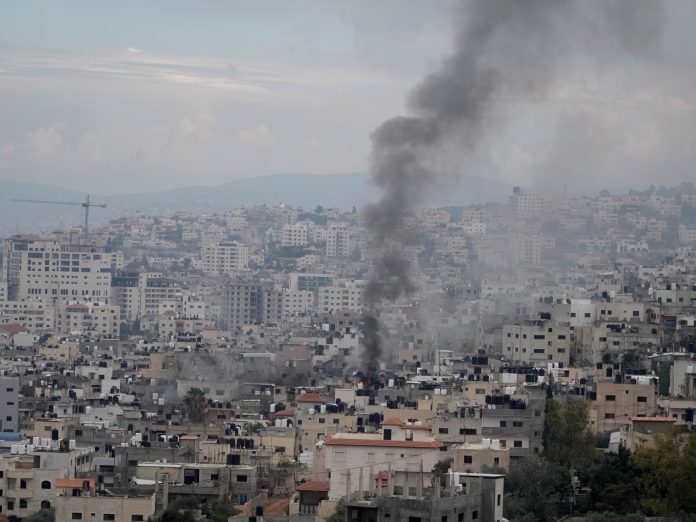
The Israeli military announced the air attack on Friday in the Jenin governorate hit a vehicle with what it claimed was a “terrorist cell” inside, but it gave no further details.

The official Palestinian news agency Wafa reported that it was a drone attack that happened just before Israeli forces stormed Qabatiya and began “sweeping operations”.

The air attack coincided with the ongoing military operation against Palestinian fighters in Jenin and its adjacent refugee camp, which has already resulted in the deaths of 14 Palestinians and injured about 50 others, according to the Palestinian Health Ministry in Ramallah.

In addition to the loss of life, the operation in the northern West Bank – launched just two days after the truce agreed between Israel and Hamas in Gaza – has caused widespread destruction.

Israeli armoured bulldozers and diggers have demolished houses and dug up roads in the Jenin area and forced the displacement of about 2,000 families.

A United Nations spokesperson on Friday warned against the “deteriorating” situation in the West Bank and called on Israel to protect Palestinians.

During a media briefing, Farhan Haq stated the UN Office for the Coordination of Humanitarian Affairs (OCHA) “warns once again that lethal, warlike tactics are being applied, raising concerns over use of force that exceeds law enforcement standards”.

Earlier, Thameen Al-Kheetan, spokesperson for the Office of the UN High Commissioner for Human Rights, expressed grave concerns about the use of disproportionate and unlawful force in Jenin, warning of the potential for widespread human rights violations.

Al-Kheetan emphasised the international community’s responsibility to hold Israel accountable for these actions.

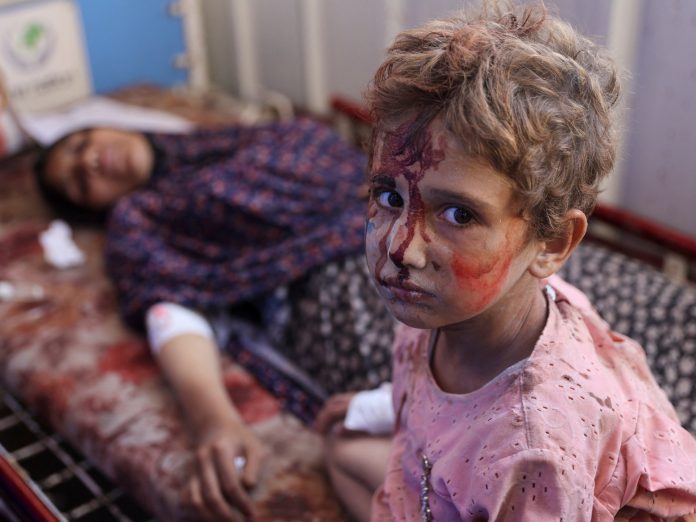
UN warns 1mn children in Gaza need mental health support for depression, anxiety

Gaza War

“The ceasefire has provided a vital reprieve from relentless hostilities for Palestinians,” Tom Fletcher told a Security Council session on the plight of children in Gaza.

He stressed the importance of maintaining the ceasefire by all sides and added that “safe, unobstructed humanitarian access alongside the absence of hostilities and the almost complete cessation of criminal looting over the past days have significantly improved our ability to operate.”

Describing the grave impact of the conflict, Fletcher said: “Children have been killed, starved and frozen to death. They have been maimed, orphaned or separated from their family. Conservative estimates indicate that over 17,000 children are without their families in Gaza.”

Noting that an estimated 150,000 pregnant women and new mothers are “in desperate need of health services,” he added some of the babies in Gaza “died before their first breath – perishing with their mothers in childbirth” due to Israel’s relentless attacks.

“One million children are in need of mental health and psycho-social support for depression, anxiety and suicidal thoughts,” he continued, citing the UN Children’s Fund (UNICEF).

Fletcher urged the international community to act.

“Across the spectrum, humanitarian organizations and agencies have united to meet our humanitarian goals. At the center of this, as always, is UNRWA. But we cannot do this alone.”

He emphasized that “surging high volumes of aid” needed to get into Gaza and said the UN’s 2025 Flash Appeal requests $4.07 billion to address the needs of 3 million people in Gaza and the West Bank, with the majority allocated for Gaza.

“Funding this appeal is essential to meet massive needs and to sustain the ceasefire,” Fletcher added.

Fletcher further reported “record-high levels of casualties, displacement and access restrictions” in the occupied West Bank.

“These trends have intensified since the announcement of the ceasefire. Israeli settlers have attacked Palestinian villages, setting homes and properties on fire,” he stated.

Noting an increase in impediments to Palestinians’ access to basic necessities by Israel, he also said that “mass detentions are taking place across the West Bank.”

“Of particular concern is the situation in Jenin, where an Israeli military operation — helicopter gunfire and airstrikes alongside ground forces — has claimed lives and caused further destruction of basic infrastructure and displacement,” he added.

Fletcher urged the Council to “ensure that international law is respected across the Occupied Palestinian Territory of Gaza and the West Bank, including East Jerusalem. Civilians must be protected and their essential needs met.”