Saturday, December 27, 2025
Home Blog Page 541

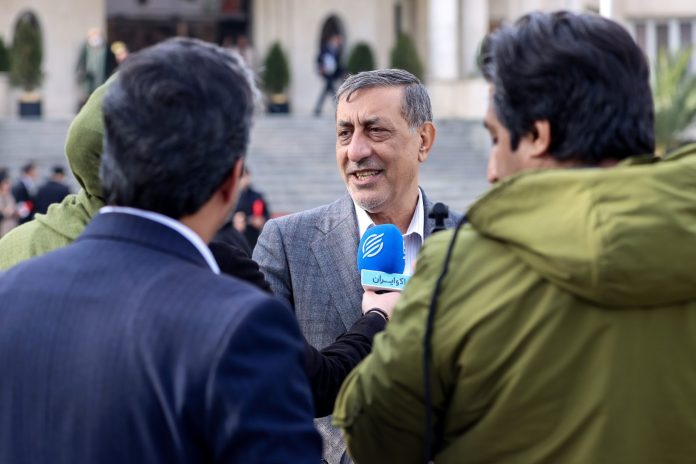
Iran’s executive VP: Approval of FATF will alleviate sanctions pressure

Mohammad Jafar Qaem Panah

In response to strong reactions from some individuals, including parliament members who are against reviewing the hurdles for Iran’s accession to FATF in the Expediency Council, Mohammad Jafar Qaem Panah emphasized that hearing a single voice is not compatible with democracy.

He stressed that parliament members should be able to express their opinions, and the government is open to listening to opposing views, but reminded that FATF has already been approved by the parliament and cannot be re-voted.

Qaem Panah expressed hope that the approval of FATF in the Expediency Council will alleviate a significant portion of the sanctions’ pressures.

The current Iranian administration has put exiting from the FATF blacklist high on the agenda, arguing not joining the taskforce has deprived the country of many economic opportunities.

FATF is an intergovernmental body that sets standards and regulations for combating money laundering and terrorist financing.

Opponents in Iran argue that accepting the last two conventions and joining the task force would give too much control to foreign actors.

Israeli cabinet approves ceasefire agreement with Hamas

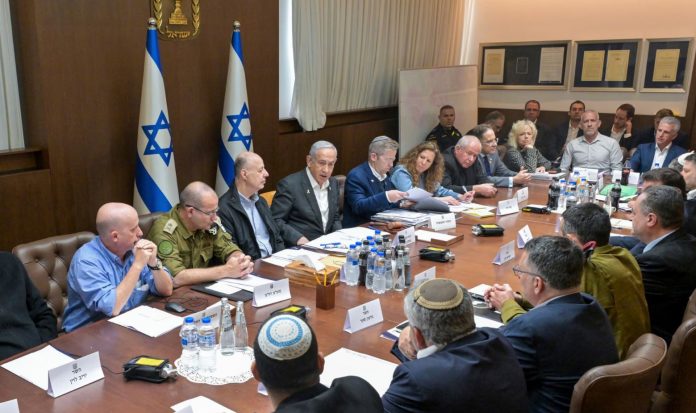
Israeli Cabinet

The Israeli government ratified the ceasefire agreement early on Saturday morning after meeting for more than six hours, Netanyahu’s office said in a brief statement.

“The Government has approved the framework for the return of the hostages. The framework for the hostages’ release will come into effect on Sunday,” it added.

With the deal bitterly opposed by some Israeli cabinet hardliners, media reports said 24 ministers in Netanyahu’s coalition government voted in favour of the deal while eight opposed it. The Israeli security cabinet had voted in favour of the ceasefire deal earlier on Friday.

Under the deal, the ceasefire starts with an initial six-week phase where captives in Gaza are released in exchange for Palestinians detained in Israeli jails, and which opens the way to ending the 15-month-old war.

After the ceasefire was ratified by the cabinet, Israeli authorities released an updated list of 737 Palestinian detainees slated to be freed in the first phase of the agreement, which will take place “not before” 4pm local time (14:00 GMT) on Sunday.

The list includes several members of Hamas, Palestinian Islamic Jihad, and the Palestinian Authority’s ruling Fatah movement, who are serving life sentences.

Lead negotiator for the US in the ceasefire talks, Brett McGurk, stated the White House expected the ceasefire to start on Sunday morning, with three female captives to be released to Israel by Sunday afternoon through the Red Cross.

“We have locked down every single detail in this agreement. We are quite confident … it is ready to be implemented on Sunday,” McGurk said in a television interview from the White House.

After Sunday’s release of captives, McGurk noted the deal called for four more female captives to be released after seven days followed by the release of three additional captives every seven days thereafter.

Despite the ceasefire agreement being announced on Wednesday by mediators Qatar, Egypt and the US, Israeli attacks on Gaza have continued with almost 120 people killed in the Palestinian enclave since then.

War-torn Gaza should also now see a surge in humanitarian aid. Trucks carrying aid lined up on Friday on the Egyptian side of the Rafah border crossing into southern Gaza.

An Egyptian official said an Israeli delegation from the military and Israel’s Shin Bet internal security agency arrived on Friday in Cairo to discuss the reopening of the Rafah crossing.

Israeli forces will also pull back from many areas in Gaza during the first phase of the ceasefire and hundreds of thousands of Palestinians will be able to return to what remains of their homes in the north of the territory.

Israel’s military has said that as its forces gradually withdraw from specific locations and routes in Gaza, residents will not be allowed to return to areas where troops are present or near the Israel-Gaza border.

The military also warned any threat to Israeli forces “will be met with a forceful response”.

While longer-term questions about post-war Gaza remain, including who will rule the territory and the daunting task of reconstruction, the Palestinian Authority (PA) announced on Friday that it was ready to assume its “full responsibilities” in the Gaza Strip.

The Palestinian news agency Wafa quoted from a PA statement in which the authority said its staff was “fully prepared to carry out its duties and alleviate the suffering of the people of Gaza”.

The PA statement also reiterated the position expressed by the authority’s President Mahmoud Abbas that the group has legal and political jurisdiction over the Gaza Strip, like the rest of the occupied Palestinian territory in the West Bank and Jerusalem.

Hamas has governed the Gaza Strip since 2007, while the PA exercises partial civil control over the occupied West Bank.

Israeli and Arab media also report that the PA has sent a delegation to Egypt to discuss the management of the Rafah crossing with the Gaza Strip as the ceasefire comes into effect, with a view to the authority taking over management of the key border point.

Iranian official optimistic direct talks with US can lead to deal in 3 months

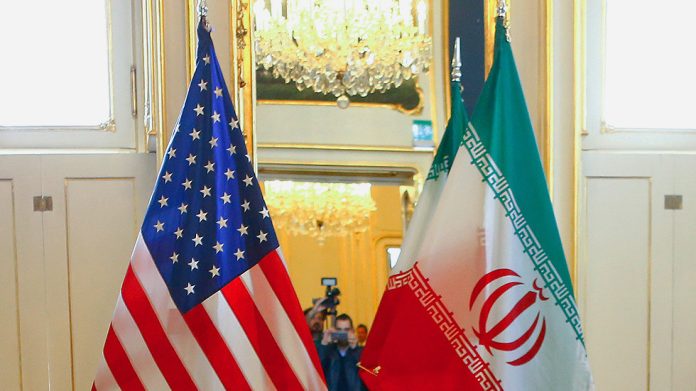
Iran US Flags

In an interview with Ensaf news website, Ali Abdolalizadeh, noted that the government’s plan is transparent and it is ready for talks, saying US can invest in Iran once sanctions are lifted.

Abdolalizadeh, however, highlighted that Iran’s readiness for negotiations depends on the US not engaging in deceitful tactics.

He explained that while strategic maneuvering is natural in negotiations, deceit involves reneging on agreements when forced to make concessions.

The moderate official pointed out American companies, particularly multinational ones, could find Iran’s oil and gas industry attractive for investment.

Abdolalizadeh expressed concern over losing resources in shared energy fields, citing Qatar’s progress with the help of European and American multinationals, while Iran struggles due to sanctions.

He also mentioned that after the JCPOA nuclear deal, Iran welcomed cooperation from all countries except the US, raising questions about why American companies were excluded. He noted that while the Obama administration downplayed the issue, Trump threatened to tear up the JCPOA, leading to mutual regret.

US flag removed from Iranian government yard to ease tensions

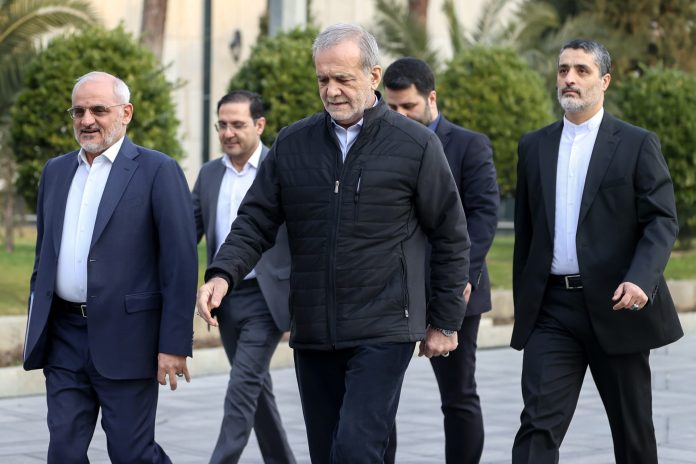
Pezeshkian

The practice, common in rallies for years, was implemented in the government yard before the current administration took office. The removal aligns with President Massoud Pezeshkian’s moderate policies.

Former Iranian diplomat Fereydoun Majlesi praised the removal, calling it a logical step towards rational actions. He noted that such symbolic and provocative behaviors are no longer appropriate years after the 1979 Revolution, as familiarity with governmental and international norms has grown.

The US flag has been placed at the entrance of many state-run buildings across the country, forcing visitors to step on it.

The action conflicted with the current administration’s foreign policy stance, which emphasizes constructive interaction with the world, including the US.

President Pezeshkian recently stated in an NBC interview that Iran is ready for dialogue.

While deep-seated differences between Iran and the US persist, removing symbolic provocations can create a more conducive environment for dialogue and interaction.

Majlesi emphasized that flags represent nations and should be respected, just as Iran expects respect for its symbols.

Iran, Russia ink comprehensive strategic partnership deal

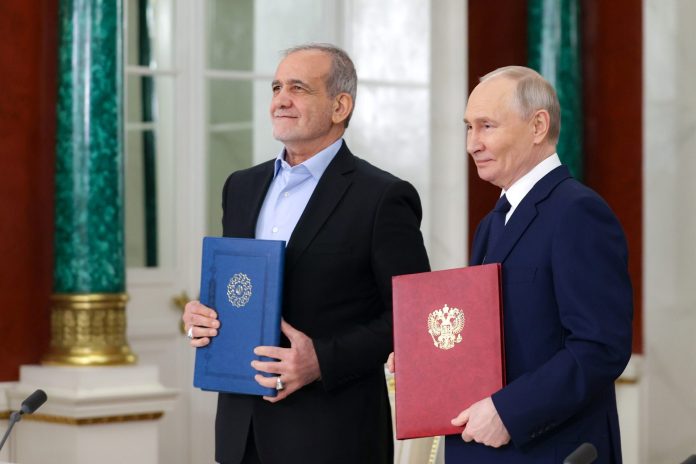
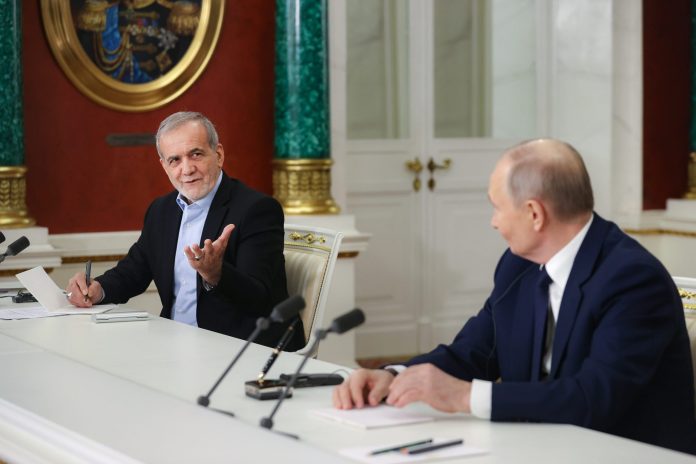
Pezeshkian and Putin

The agreement was signed by Iranian President Masoud Pezeshkian and his Russian counterpart Vladimir Putin in Moscow on Friday.

Speaking at a joint press conference following the signing event, Pezeshkian said the agreement will open a new chapter in relations between the two countries in all arenas, notably in the economic sector.

“This document, which has been drawn up based on the two countries’ interests, can chart the path of cooperation between Iran and Russia with a bright horizon,” he added.

He said both Tehran and Moscow are determined to remove obstacles to customs tariffs, banking, investment guarantees, facilitation of meetings among traders and visa issues.

The Iranian president noted that the document includes increasing the level of exchanges by utilizing the capacities and capabilities within the Eurasian Economic Union.

It also emphasized the importance of improving bilateral cooperation on issues such as the fight against extremism, terrorism and organized violence, he added.

He expressed hope that Iran and Russia will strengthen bonds to serve mutual interests and open a new chapter in strategic cooperation.

Pezeshkian added Russia is an important country in the world which has a privileged status in the Islamic Republic policy of neighborliness.

He noted that he held “positive” talks in Moscow on regional and international cooperation, including the developments in the West Asia region, the Caucasus and peace and stability in Afghanistan.

Given the two countries’ membership in the Shanghai Cooperation Organization (SCO) and the BRICS group of emerging economies, the development of mutual relations will have a leading impact on strengthening regional convergence and serving common interests, the Iranian president stated.

Pezeshkian reiterated that war is not a proper solution to issues and said Tehran welcomes the establishment of peace between Russia and Ukraine through negotiations.

“We firmly believe that Western countries should respect the security concerns of other countries and avoid imposing their own excessive demands on others.”

He said he exchanged views with Putin on the Israeli regime’s military aggression against Lebanon and Syria.

“Both countries emphasize the need to establish a permanent ceasefire in Lebanon and put an end to this regime’s aggression against the Syrian territory.”

Iran and Russia hope that a final ceasefire will be established in Gaza to end the war in the Strip, Pezeshkian added.

The Russian president said Tehran and Moscow heed the developments in Ukraine and have intelligence cooperation in accordance with international law and the United Nations Charter.

Putin stated the two sides have very close stance on the developments in West Asia and the Caucasus which will be beneficial to all countries.

Iran and Russia do not interfere in the internal affairs of the countries and stand against illegal sanctions against them, he emphasized.

The Russian president placed a premium on the expansion of trade ties with Iran and noted that in talks with Pezeshkian, the two sides discussed ways to increase trade exchanges.

Putin expressed hope that a ceasefire in Gaza would lead to a “long-term stabilization” and called for efforts to secure a “comprehensive settlement of the Palestinian-Israeli conflict”.

The Russian president also said that both his country and Iran are resolutely opposed to external pressure from abroad and attach importance to the establishment of peace and security in the Caucasus.

He voiced his country’s support for the settlement of issues in Syria based on its territorial integrity.

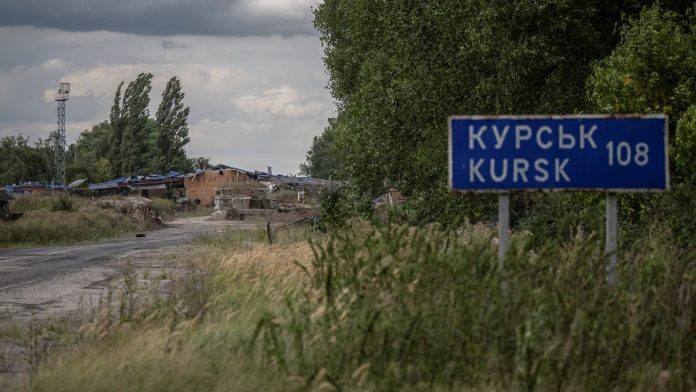
Russia claims has liberated majority of territory Ukraine occupied in Kursk

Russia Ukraine War

In the first two weeks of January, units from the North military grouping reclaimed the villages of Alexandriya, Leonidovo, Russkoye Porechnoye, and Kruglenkoye, the Russian military announced on Telegram on Friday.

Over the past 24 hours, a Ukrainian counterattack aimed at halting the Russian advance near the village of Berdin was repelled. The Russian military reported inflicting significant losses on Ukrainian troops, forcing them to retreat to their original positions.

Ukraine’s losses in the area totaled more than 230 servicemen over the past 24 hours, according the Defense Ministry in Moscow. Destroyed equipment included a tank, three armored personnel carriers – two of which were US-made Strykers – two armored combat vehicles, and four artillery pieces.

“Russian troops are advancing in all directions. The enemy is suffering significant losses and retreating from the occupied territories, despite the transfer of additional reserves,” the military announced.

In the first two weeks of 2025 alone, Ukrainian forces lost over 5,600 soldiers and more than 570 pieces of military equipment in Kursk Region. The latter included 40 tanks, 213 infantry fighting vehicles, and other armored vehicles, 91 artillery pieces and mortars, and over 210 other vehicles, according to the ministry.

Ukraine launched its large-scale incursion into Kursk Region in early August. The offensive aimed to force Russia to divert resources away from the main front and also potentially use the occupied territory as a bargaining chip in any peace negotiations. However, Russia’s advances in Donbass have continued unabated.

Since the onset of the hostilities in Kursk Region, Ukrainian forces there have lost over 52,450 personnel, 304 tanks, 231 infantry fighting vehicles, 173 armored personnel carriers, 1,562 armored combat vehicles, 371 artillery pieces, 44 multiple rocket launchers, including 13 US-made HIMARS and six MLRS systems, according to the Russian Defense Ministry.

Iranian president: Strategic partnership treaty with Russia will boost ties in all areas

President Pezeshkian was speaking during a meeting with Russian President Vladimir Putin in Moscow on Friday where he will be signing the treaty.

Pezeshkian noted that the strategic partnership treaty on which both sides have worked for years will enable Tehran and Moscow to further boost their relations in all economic, cultural and security spheres.

While describing the Tehran-Moscow ties as vital, sensitive and strategic, the Iranian president said before leaving Iran for Russia, Iran’s Leader Ayatollah Seyed Ali Khamenei put high emphasis on the need to expand ties between the two nations.

Pezeshkian also said economic and cultural ties with Russia are expanding and that following the signing of the strategic partnership treaty, the relations will get further strengthened.

He added that Iran is determined to expand ties with Russia.

Both Iran and Russia have  said the strategic partnership treaty is not against any third party.

Iranian vice president Zarif: Trump is not a giant; we are bigger than that

He stated, “We are much bigger than that. Iran is a powerful country. We proved to the world that we are not an easy target.”

In an exclusive interview with Jamaran news website, Zarif discussed various topics, including the explosion of pagers in Lebanon, his relationship with the late General Qassem Soleimani, and the protests against his presence in the administration of President Massoud Pezeshkian.

He noted that despite Trump’s withdrawal from the JCPOA nuclear deal in 2018, Iran did not collapse as he had anticipated.

Zarif pointed out that Trump’s economic pressure on Iran aimed to isolate the country and force it to abandon its nuclear program, but the US strategy failed.

He added, “Trump thought the world would side with the US after leaving the JCPOA, but that didn’t happen.”

Zarif mentioned President Pezeshkian inherited a challenging situation but managed to save the country from war with the help of the Iranian Leader.

He praised Pezeshkian’s commitment to unity and his efforts to address economic issues despite external pressures.

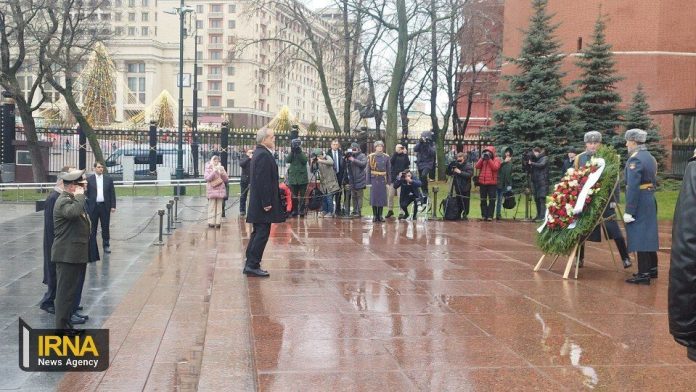
President Pezeshkian lays wreath at Unknown Soldier’s Tomb in Moscow

Russian Energy Minister Sergey Tsivilyov, who also heads the Russian side of the Joint Cooperation Commission, accompanied President Pezeshkian at the ceremony.

The event included a parade by honor guards from Russia’s three armed forces branches.

President Pezeshkian arrived in Moscow on Friday, following an official invitation from his Russian counterpart Vladimir Putin.

The visit aims to strengthen bilateral relations and sign a comprehensive strategic treaty between Iran and Russia.

The document, previously announced to contain a preamble and 47 articles, covers all aspects of bilateral relations.

President Pezeshkian is accompanied by a high-ranking delegation, including ministers of foreign affairs, economy, roads and urban development, oil, and agriculture, as well as the head of the Atomic Energy Organization of Iran, the Central Bank governor, the deputy defense minister for international affairs, and other officials.

BRICS, SCO effective in countering Western sanctions, says Iranian official

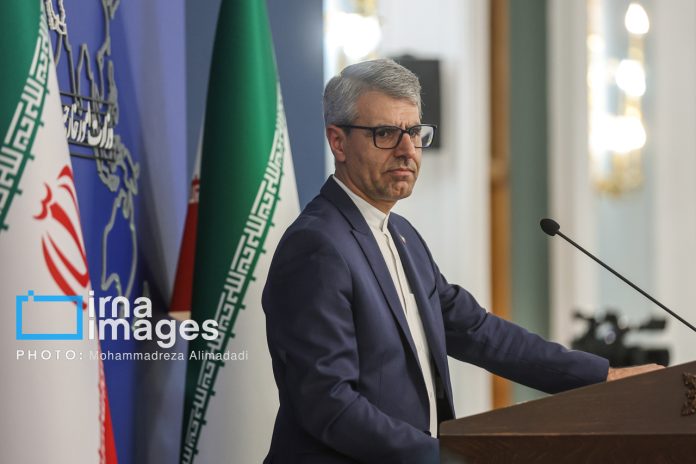
bIn response to a question from Sputnik about Iran-Russia cooperation to counter Western sanctions, Esmaeil Baqaei said, “We have extensive bilateral cooperation with Russia aimed at mutual economic benefits for both nations.”

“We also engage in close consultations within international organizations, including the UN, to combat the promotion of norms and concepts contrary to the principles of the UN Charter,” he added.

Baqaei highlighted that the “Group of Friends in Defense of the Charter of the United Nations” is one of the initiatives bringing a significant number of countries together to actively work on establishing international legal norms to protect the rules of international law.

He stated, “Tehran supports every effort to restore and maintain peace and security in the region and is in close contact with its Russian friends on this matter.”

On regional developments, Baqaei reiterated, “Iran supports every effort to restore and maintain peace and security in the region.”

His comments come as Iranian President Massoud Pezeshkian is visiting Moscow for talks on regional developments and issues of mutual intetest.