Saturday, December 27, 2025
Home Blog Page 536

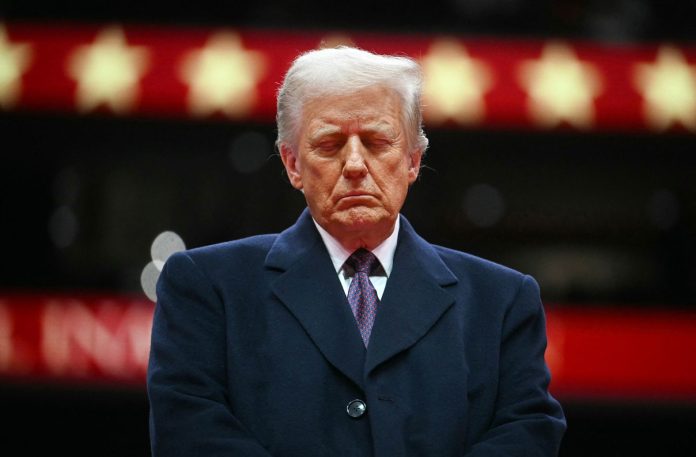
Potential Trump strategies towards Iran: Experts weigh in

Known for his “maximum pressure” campaign, Trump withdrew from the Iran nuclear deal in 2018 and has since sought a comprehensive agreement with Iran.

In his inaugural address, Trump expressed willingness to negotiate with Tehran and even visit Iran.

Trump’s unpredictable nature extends beyond Iran, with controversial statements and decisions, such as renaming the Gulf of Mexico and proposing the annexation of Canada and Greenland.

Despite these surprises, Trump opposes US intervention in other countries, focusing on the economy and countering China.

Iranian experts, in interviews with Donya-ye Egtesad suggest Trump may prioritize diplomacy with Iran while maintaining pressure.

Rahman Ghahremanpour, a senior international affairs researcher, believes Trump will initially pursue diplomacy with a time-limited negotiation offer. If unsuccessful, stricter measures, including military action, may follow.

Ghahremanpour doubts high chances of successful negotiations due to perceived imbalances and internal challenges in Iran.

Tahmoures Gholami, an American affairs researcher, notes Trump’s previous failure with maximum pressure and predicts a more radical approach if diplomacy fails.

Gholami foresees potential collaboration between Trump and Israeli prime minister Benjamin Netanyahu against Iran’s nuclear program.

Former Iranian ambassador to Norway, Abdolreza Faraji-Rad, emphasizes Trump’s initial focus on diplomacy, with increased pressure if talks fail.

He highlights the importance of Iran’s nuclear activities and US economic involvement in any future negotiations.

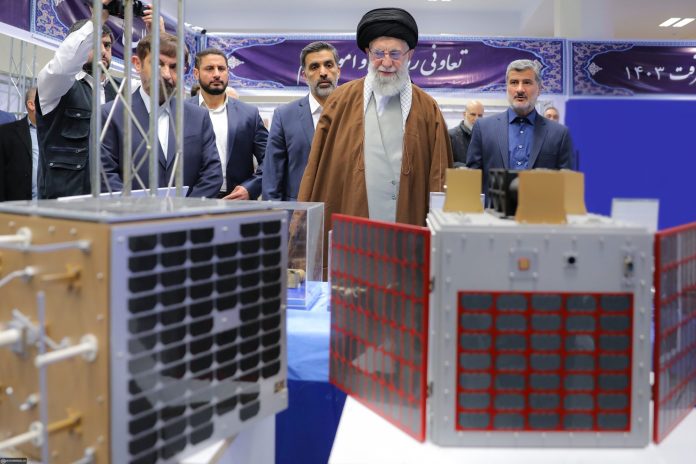
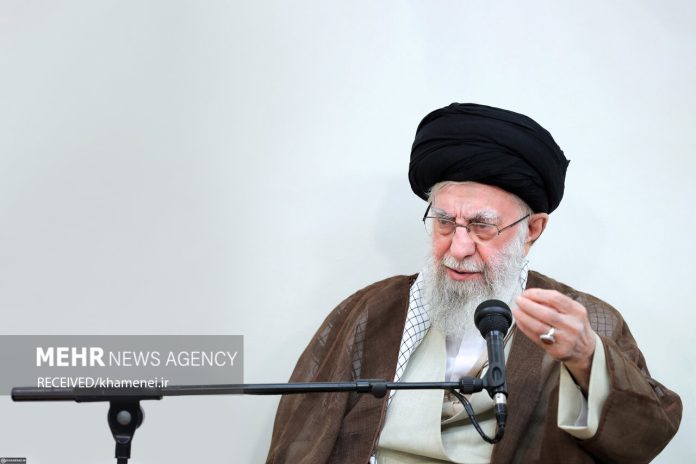
Ayatollah Khamenei visits exhibition on Iran private sector achievements

The event, dubbed “Pioneers of Progress, a National Event of the Capabilities and Achievements of the Private Sector”, kicked off at Imam Khomeini Hussainiya on Tuesday morning.

As part of the national exhibition, a group of private sector manufacturers and prominent figures are slated to meet with Ayatollah Khamenei on Wednesday morning to share their viewpoints with the Leader on ways to secure a leap in production through popular participation.

Ayatollah Khamenei named the Iranian calendar year of 1403, which ends on March 20, 2025, the year of “Surge in production through people’s participation”.

Trump says he’s not confident Gaza truce will be upheld

Gaza War

Asked during a signing ceremony at the Oval Office on the first day of his inauguration how confident he is that the deal will hold through all three phases, Trump responded: “I’m not confident. It’s not our war. It’s their war. I think they are very weakened on the other side.”

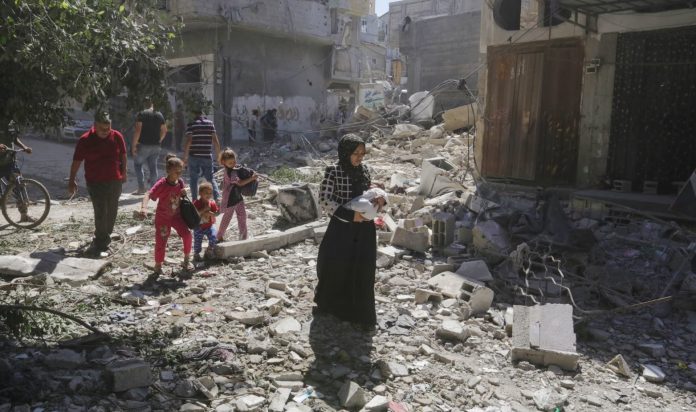
“I looked at a picture of Gaza. Gaza is like a massive demolition site. That place is…It’s really got to be rebuilt in a different way,” he continued.

“Gaza is interesting. It’s a phenomenal location on the sea, best weather, you know, everything’s good. It’s like some beautiful things could be done with it, but it’s very interesting, but some fantastic things could be done with Gaza,” Trump added.

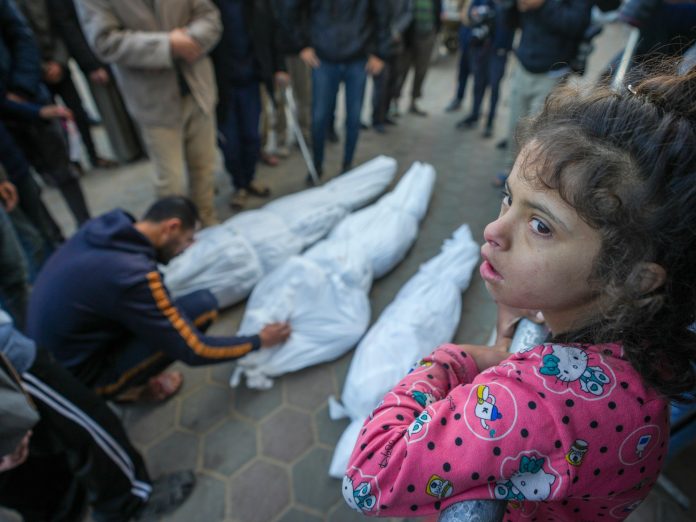
Israel launched a genocidal war on Gaza that has killed more than 47,000 Palestinians, most of them women and children, since a cross-border attack by the Palestinian group Hamas on Oct. 7, 2023.

On Sunday, a ceasefire and prisoner exchange agreement between Israel and Hamas took effect.

The International Criminal Court issued arrest warrants in November last year for Israeli Prime Minister Benjamin Netanyahu and his former Defense Minister Yoav Gallant for war crimes and crimes against humanity in Gaza.

Israel also faces a genocide case at the International Court of Justice for its war on Gaza.

During his remarks at the Capitol One Arena earlier, Trump’s envoy to the Middle East, Steve Witkoff, said Trump’s leadership “has redefined what is possible in the pursuit of progress and stability in the Middle East.”

“His decisive, pragmatic approach ensures that even the most entrenched conflicts are met with fresh perspectives and innovative strategies. His policies have already delivered remarkable successes, such as yesterday’s release of hostages in Gaza,” he stated.

“This achievement demonstrates the strength of President Trump’s leadership and the respect he commands on the global stage,” Witkoff continued, adding, “It is yet another example of his ability to deliver results in the most complex and challenging situations.”

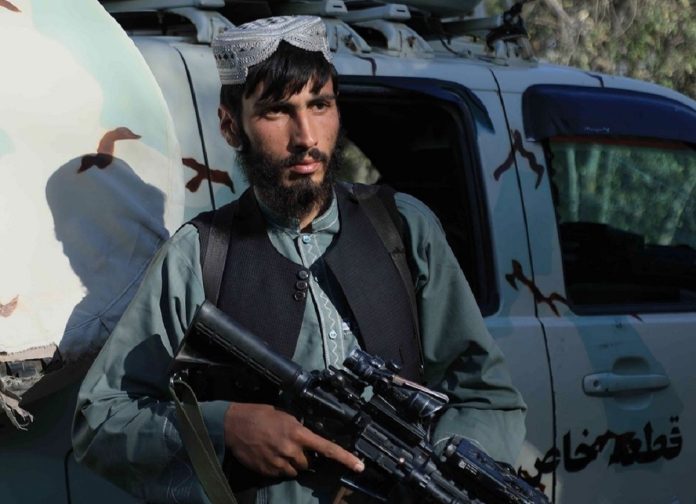
Taliban announces prisoner swap with US

Taliban Afghanistan

Discussions about the prisoner exchange were confirmed last year, but the swap was announced after outgoing US President Joe Biden handed over to Donald Trump, who was inaugurated on Monday.

“An Afghan fighter Khan Mohammed imprisoned in America has been released in exchange for American citizens and returned to the country,” the Afghan foreign ministry said in a statement.

The ministry added Mohammed had been serving a life sentence in California after being arrested “almost two decades ago” in the eastern Afghan province of Nangarhar.

Taliban government spokesman Zabihullah Mujahid told AFP two US nationals had been released, declining to provide any further details on the exchange.

The family of US citizen Ryan Corbett, who was detained by the Taliban in 2022, confirmed he was released and expressed “overwhelming gratitude” that he was coming home.

“Today, our hearts are filled with overwhelming gratitude and praise to God for sustaining Ryan’s life and bringing him back home after what has been the most challenging and uncertain 894 days of our lives,” the family said on their website.

They thanked both the Biden and Trump administrations, as well as Qatar, for Corbett’s freedom, and called for two other Americans still held in Afghanistan to be released.

US media named William McKenty as the second released American detainee, noting little was known about what he was doing in Afghanistan and that his family had asked the US government for privacy in his case.

The New York Times reported two other Americans remain in detention in Afghanistan, former airline mechanic George Glezmann and naturalised American Mahmood Habibi.

In August 2024, the US Federal Bureau of Investigation said it was seeking information about the disappearance of Afghan-American businessman Habibi two years previously.

Biden came under heavy criticism for the chaotic withdrawal of US forces from Afghanistan in 2021, more than a year after Trump presided over a deal with the Taliban insurgents to end US and NATO involvement in the two-decade war.

After Trump’s election win in November, the Taliban government had said it hoped for a “new chapter” in ties with the United States.

Taliban authorities have repeatedly announced they want positive relations with every country since sweeping back to power in 2021.

No state has officially recognised their government, with restrictions on women’s rights a key sticking point for many countries, including the United States.

The Taliban government on Tuesday called the exchange “a good example of resolving issues through dialogue, expressing special gratitude for the effective role of the brotherly country of Qatar in this regard”.

“The Islamic Emirate views positively those actions of the United States that contribute to the normalisation and expansion of relations between the two countries,” it added, using the Taliban authorities’ name for their government.

A 2008 US Department of Justice statement named Mohammed — aged 38 at the time — as a member of “an Afghan Taliban cell” and said he was arrested in October 2006 and sentenced in December 2008 to “two terms of life in prison on drug and narco-terrorism charges”.

It was the first narco-terrorism conviction in a US federal court, the statement said.

Dozens of foreigners have been detained by the Taliban authorities since the group’s return to power.

It is unclear how many Afghan citizens are in US custody.

At least one Afghan prisoner remains in detention at the secretive US prison Guantanamo Bay in Cuba, Muhammad Rahim, whose family called for his release in November 2023.

In February last year, two former prisoners held in Guantanamo Bay until 2017 were welcomed home to Afghanistan, more than 20 years after they were arrested.

Iranian deputy FM: Israel most serious violator of int’l humanitarian law

Gaza War

Addressing a conference marking the 75th anniversary of the Geneva Conventions, Kazem Gharibabadi emphasized that the conventions have played a crucial role in alleviating human suffering during wars and crises.

He pointed out the essential role of humanitarian law in protecting civilians and limiting the effects of armed conflicts, despite ongoing violations leading to high civilian casualties and infrastructure damage, as seen in UN annual reports.

Gharibabadi stressed the need for a comprehensive approach to civilian protection, urging all efforts to ensure compliance with international humanitarian laws and safeguard civilians.

The Iranian deputy foreign minister criticized Israel for its flagrant breaches of these laws, especially the Fourth Geneva Convention as an occupying power, by genocide, mass civilian killings, destruction of hospitals, and forced displacements in Palestine.

Highlighting the necessity for nations to uphold their humanitarian obligations, he called for unity and action to enforce international humanitarian law, protect human rights, and hold perpetrators accountable.

Around 50,000 Palestinians have been killed during Israel’s 15-month-long war on Gaza, with thousands still trapped under the rubble.

Trump signs executive order pausing foreign assistance for 90 days

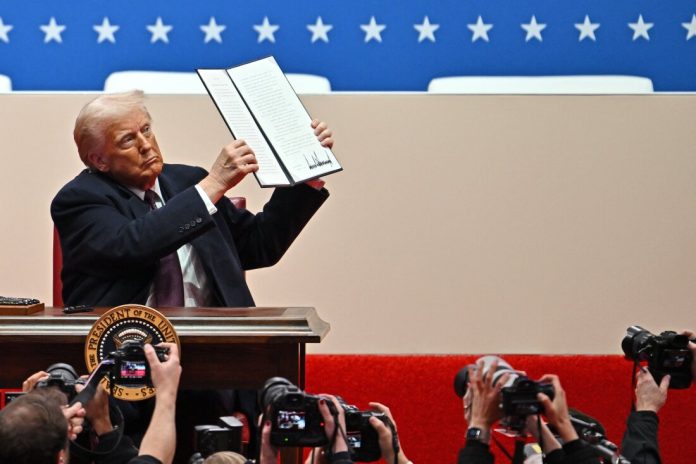
US President Donald Trump signs executive orders during the inaugural parade inside Capital One Arena, in Washington, DC, on January 20, 2025. (Photo by ANGELA WEISS / AFP) (Photo by ANGELA WEISS/AFP via Getty Images)

The order pausing funding follows an executive order directing the State Department to implement an “America First foreign policy,” although the specifics of that policy are not defined.

Trump is directing department and agency heads with responsibility for U.S. foreign development assistance programs to immediately pause new obligations and disbursements of development assistance funds to foreign countries; non-governmental organizations, international organizations or contractors.

The president calls for a review of these programs for “programmatic efficiency” and to determine whether they are consistent with U.S. foreign policy. The Office of Management and Budget will “enforce this pause,” the executive order states.

The executive order includes a waiver for the secretary of State to waive the rules for “specific programs.”

It also allows funding to resume earlier than 90 days if a review is conducted and the secretary of State or his designee, in consultation with director of OMB, decide to continue the program in the same or in a modified form.

The measure encroaches on the legislative branch’s control over spending, which could create friction in Congress.

Secretary of State Marco Rubio, who was confirmed unanimously by the Senate on Monday, affirmed Congress’s “power of the purse” in appropriations.

“The power of the purse still resides with the Congress. Now maybe if confirmed, moving towards the executive branch, I’ll forget that lesson a little bit,” he joked during his confirmation hearing, “I hope not. But ultimately I still recognize and understand that the power of the purse is with Congress and it’s an incredibly important power.”

At the same time, there have been some critics in Congress of how some foreign aid is distributed.

House Foreign Affairs Committee Chairman Brian Mast (R-Fl.), for example, has put U.S. assistance in the crosshairs. He criticized U.S. funding for NGO programs in Ecuador that have drag performers read stories, and the discovery of funding for an organization promoting atheism in Nepal.

Republicans last week were outraged to learn that nurses in Mozambique, receiving funding through the anti-Aids program in Africa PEPFAR, had performed an estimated 21 abortions, in violation of federal law surrounding the program.

Iran’s military chief says Tehran ready for joint production of arms, equipment with Islamabad

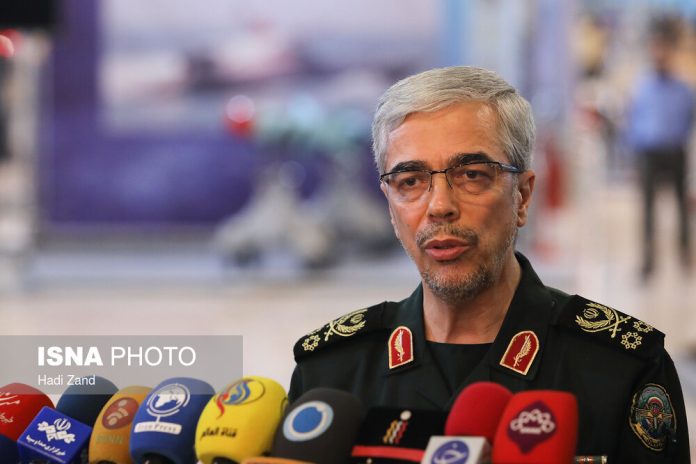
Major General Mohammad Bagheri

In a meeting with Chief of Army Staff of Pakistan Asim Munir, held in Islamabad on Monday, Major General Mohammad Hossein Baqeri said Iran is ready to cooperate with Pakistan in the joint production of defense equipment.

The Iranian general also stressed the need for coordination and exchange of intelligence between the two neighbors in the fight against terrorist groups along the common border.

Hailing Pakistan’s determination to battle against the notorious Jaish al-Adl (known in Iran as Jaish al-Dhulm) terrorist group, General Baqeri stressed the need for coordinated cross-border patrol operations and joint exercises.

The top commander also expressed Iran’s readiness for joint naval war games with Pakistan.

He noted that close convergence among the major actors of the Islamic world, such as Iran, Pakistan, Turkey and Saudi Arabia, will serve the interests of the regional nations.

The Iranian general also stressed the need for efforts to ensure peace and stability in neighboring Afghanistan.

Major General Baqeri also held a separate meeting with Pakistani President Asif Ali Zardari on Monday.

Heading a military delegation, the Iranian general traveled to Islamabad at the official invitation of the chief of Army Staff of Pakistan.

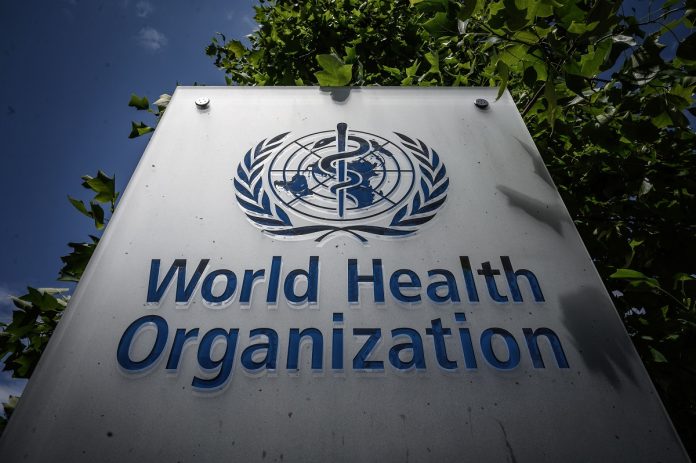
Trump signs orders to withdraw US from WHO, Paris Agreement

WHO

The U.S. has historically been the largest funder of the Geneva-based organization, which is a branch of the United Nations responsible for combating global public health emergencies.

Public health experts fear the move will weaken the organization as well as global health security.

Trump has previously tried to remove the U.S. from the organization, issuing a notice of withdrawal in 2020. He criticized the organization for its handling of the COVID-19 pandemic, calling it very “China centric” and threatened to withhold U.S. funding even while his administration was scrutinized for downplaying the virus’s threat early in the pandemic.

Former President Joe Biden quickly rejoined the organization when he entered the White House in 2021, before the end of the one-year waiting period of withdrawal had completed. He also restored U.S. funding to the organization.

In his Monday executive order, Trump again criticizes the WHO for its “mishandling” of the COVID-19 pandemic for “unfairly” asking for “onerous” payments from the U.S.

About a fifth of the WHO’s budget in 2023 — or roughly $1.28 billion — came from the United States.

Those funds went toward identifying and responding to health emergencies and stopping disease threats from spreading across borders, according to the WHO’s website.

The U.S. withdrawal from the WHO would mean the country’s health agencies would lose access to the organization’s resources, such as global data releases.

“The US withdrawing from the WHO will severely constrain the ability of the US to have situational awareness of infectious disease emergencies occurring all over the world all the time (including now),” stated Amesh Adalja, a senior scholar at the Johns Hopkins Center for Health Security who specializes in emerging infectious diseases and pandemic preparedness.

“The very real reforms that need to occur at the WHO such as putting pressure on China regarding information on the early days of COVID-19 and allowing Taiwan to be part of the organization are less likely to occur without the US as a member.”

Trump has also signed an executive order officially beginning the withdrawal of the U.S. from the Paris Climate Agreement.

The newly inaugurated president signed the order at an inauguration event at Washington’s Capital One arena, following up on a memo earlier in the day confirming it would be among his first executive actions. Trump withdrew the U.S. from the agreement in his first term as well, finalizing the process in 2020 only for former President Biden to reenter the agreement in his first year in office.

The multiyear process, when complete, will make the U.S. one of only a handful of countries that are not party to the agreement, along with Iran, Libya and Yemen. The nonbinding agreement includes a commitment among members to reduce greenhouse gas emissions, the primary cause of climate change, to avert warming beyond 1.5 degrees Celsius above the preindustrial average.

Withdrawal from the agreement was anticipated to be among Trump’s first actions in office, which are expected to focus in large part on energy and environmental policy. Trump has vowed to undo a number of Biden climate moves, including restrictions on offshore drilling along the East and West coasts. The new president has also said he will take action to block new approvals for offshore wind projects and undo a Biden administration freeze on new exports of liquefied natural gas.

Trump’s initial actions are largely the inverse of Biden’s first days as president, which saw him reenter the Paris agreement, block the approval of the Keystone XL Pipeline and announce a temporary pause on new oil and gas leases on public lands.

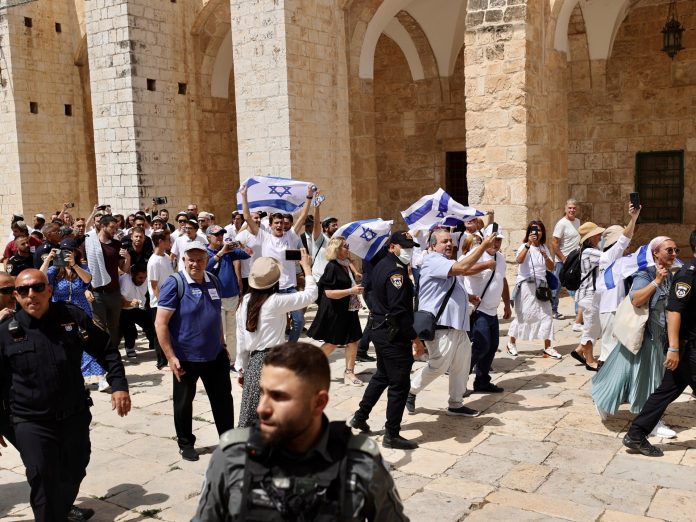
Trump revokes sanctions against violent Israeli settlers in West Bank

Israeli Settlers

It was among 78 executive orders rescinded by Trump not long after he stepped into the Oval Office.

Executive order 14115 titled “Imposing Certain Sanctions on Persons Undermining Peace, Security and Stability in the West Bank” targeted illegal Israeli settlers who committed “high levels of extremist settler violence, forced displacement of people and villages, and property destruction.”

The order, signed by Biden on Feb. 1, 2024, said that illegal Israeli settler violence “undermines the foreign policy objectives of the United States, including the viability of a two-state solution and ensuring Israelis and Palestinians can attain equal measures of security, prosperity and freedom.”

The United Nations Office for the Coordination of Humanitarian Affairs (OCHA) has recently reported that 2024 saw the highest number of Israeli settler attacks in the occupied West Bank and East Jerusalem since the agency began keeping records nearly two decades ago.

The OCHA has reported the “highest number” of illegal Israeli settler-linked incidents in the occupied West Bank and East Jerusalem.

The report covers incidents “since the office began keeping records almost two decades ago,” it said in a statement.

OCHA noted that “around 1,400 such incidents – including physical assaults, arson attacks, raids on Palestinian communities and the destruction of fruit trees – have resulted in Palestinian casualties, damage to property, or both.”

“This is nearly four incidents per day,” said OCHA.

It also added that 12% of internally displaced Palestinians in the occupied West Bank “have cited settler violence and access restrictions as the main reasons that forced them out of their homes or communities.”

“This year has also marked the second highest number of Palestinian fatalities in the West Bank since OCHA’s records began, following 2023, which was the highest,” said OCHA.

The statement further reported that more than 480 Palestinians, including children, were killed in the occupied West Bank and East Jerusalem.

“OCHA notes that most of them were killed by Israeli forces,” it said.

Iran’s Leader’s message: “Hamas is Alive and Will Remain Alive” Amid Gaza Ceasefire

Ayatollah Khamenei

The tweet by Ayatollah Seyyed Ali Khamenei reads, “The people of Gaza stand firm like a mountain, and the resistance front, despite the martyrdom of prominent figures like Yahya Sinwar, will not stop even the slightest. Hamas is alive and will remain alive.”

The message comes after the recent ceasefire between Hamas and Israel, which took effect on Sunday.

The ceasefire, brokered by the US, Qatar, and Egypt, has brought a temporary halt to 15 months of Israeli aggression.

As part of the agreement, three Israeli hostages were released by Hamas, and Israel freed 90 Palestinian prisoners.

Aid and commercial supplies have started flowing smoothly into Gaza, providing much-needed relief to the region.