Saturday, December 27, 2025
Home Blog Page 535

Iran finance minister says Tehran prepared for any scenario under Trump

Trump

In a long interview with Iran’s state TV, Abdonnasser Hemmati said that Iran once experienced tough economic conditions and learned how to deal with it when Trump was US president for a first term from 2016 to 2020.

“For a period in 2020, our oil revenues fell to $7-8 billion and the coronavirus complicated the problems … but we managed to run the country and the Americans failed to achieve what they had promised,” stated Hemmati, who served as Iran’s top banker between 2018 and 2021.

“After the maximum pressure campaign (was implemented) in Trump’s first administration, the next US administration admitted that the maximum pressure had been defeated. This is their own admission,” he added.

The comments came hours after Trump was sworn in as US president more than two months after winning one of the most divisive presidential elections in US history.

Trump has not indicated that he is going to repeat his previous policies on Iran. However, he has picked figures as aides or future ministers who are known for their hawkish anti-Iran stances.

Hemmati said Iran is prepared for a potential new round of maximum pressure under Trump although he suggested that the Americans might adopt a more pragmatic approach toward Iran in the next four years.

“We hope they think more reasonably and take (preemptive) measures to stop things from escalating. However, we are not afraid of Trump’s arrival and we have plans for such circumstances,” added the minister.

Reports of Zarif’s negotiations with US in Davos dismissed

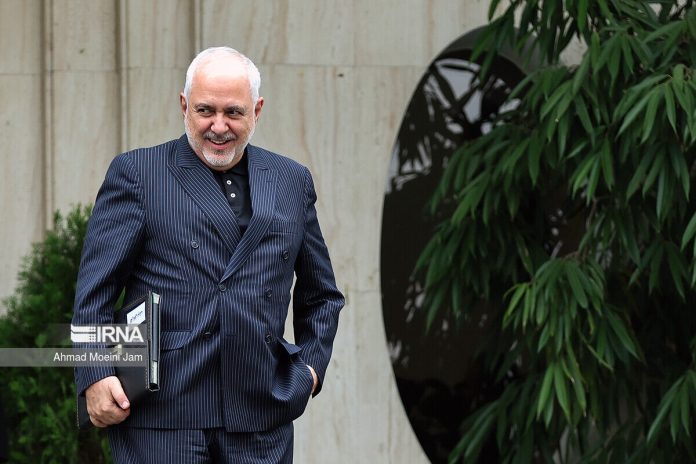
Javad Zarif

The director general of Media Office for the Vice President urged individuals and media to refrain from spreading baseless rumors, clarifying that “no such negotiations have taken place with the US or any third country.”

The official emphasized that any negotiations would be conducted based on decisions made by high-ranking officials and within the usual diplomatic frameworks, led by the foreign ministry.

Zarif represents Iran at the 55th annual WEF meeting, themed “Collaboration for the Intelligent Age,” in Davos, Switzerland.

Senior government and private sector officials from around the world are in attendance in the event which will wrap up on Friday.

Former Iranian OPEC representative urges action beyond nuclear negotiations

Iran Oil Gas

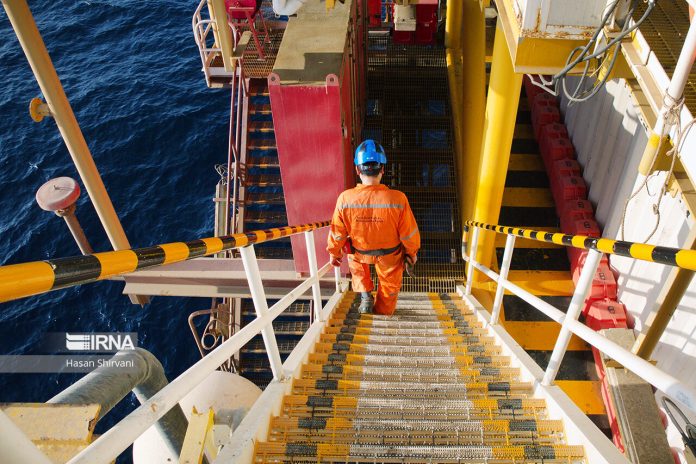
In an interview with ILNA news agency, Mohammad Ali Khatibi discussed the impact of US President Donald Trump’s policies on Iran’s oil exports and industry development.

He noted that while President Biden did not lift the restrictions imposed by Trump, Iran has adapted to these limitations and found ways to continue its oil exports.

Khatibi pointed out that Trump’s aggressive policies towards countries like Iran and China are unlikely to succeed in the long term, as they may lead to closer ties and increased trade among the targeted nations.

He also argued that the sustained global demand for Iranian oil will mitigate long-term impacts, adding Iran has developed greater resilience and the ability to find new export routes.

Khatibi stressed the importance of not waiting for nuclear negotiations to yield results, urging Iran to proactively seek new economic opportunities.

He also addressed the potential economic shifts resulting from Trump’s return to power, including closer ties between Europe, Iran, Russia, and China, and the resolution of the Russia-Ukraine conflict.

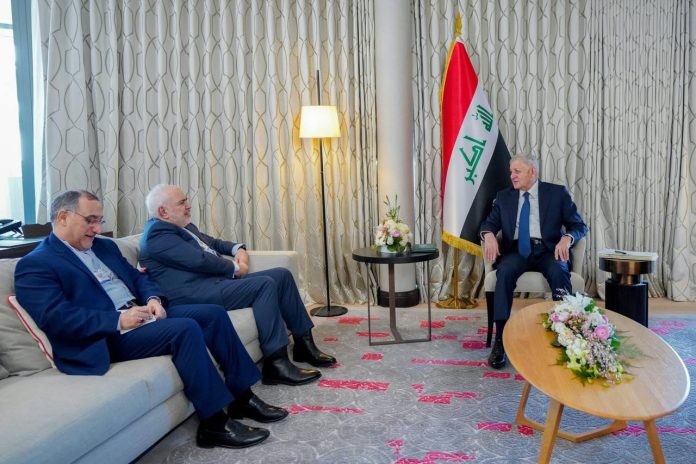
Iranian Vice President Zarif meets Iraqi president at Davos to discuss bilateral ties

Zarif emphasized Iran’s commitment to strengthening joint cooperation to achieve progress, prosperity, and stability for both nations.

The Iraqi president highlighted the deep ties between the two countries and the necessity of developing the relations in all areas, including security, economy, environment, and energy.

Both parties reviewed the latest political, security, and economic developments at regional and international levels and discussed ways to address them.

Zarif also held discussions with Norwegian Foreign Minister and President of the WEF, Borge Brende, about Iran’s cooperation with the forum.

Brende suggested holding regional Davos meetings in Iran and invited Iranian officials to the June summit in China.

Zarif expressed gratitude to Norway for its stance against Israeli crimes and support for international court rulings.

Earlier, Zarif met with Serbian President Aleksandar Vučić to discuss West Asian issues, emphasizing the need for a fundamental resolution to the Palestinian crisis.

Major ground subsidence in Tehran, Mashhad, Isfahan warned

Iran Flood

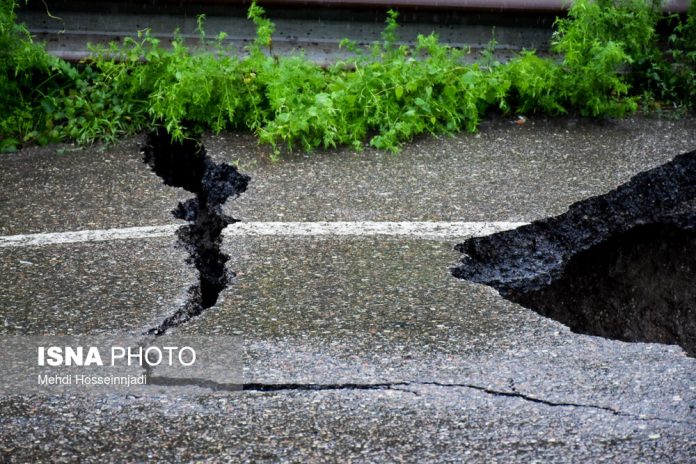
Eisa Bozorgzadeh highlighted on Tuesday that 70% of the country’s plains have been lost to subsidence.

He pointed out that the annual depletion of approximately 8,500 wells forces Iran to dig more.

Hamidreza Peyrovan, head of the Water and Soil Engineering Group at the Agricultural Education and Promotion Organization of Iran, had earlier stated that the country’s rate of ground subsidence is 10 times higher than global standards.

Official figures show seventy percent of the country’s plains are affected by the issue.

Peyrovan noted that prolonged droughts have led to a significant decrease in surface and groundwater resources, exacerbating the problem as water extraction increases.

Mohammad Darvish, former director of education and public participation at Iran’s Environmental Protection Organization, added that Iran experiences an annual ground subsidence rate of 54 centimeters, which is 140 times the critical standard set by the European Union.

Trump says he would visit Riyadh for $500bn in Saudi trade

As Trump signed over a hundred executive orders on his first day back at the White House, he was asked about his 2017 trip to Saudi Arabia, which broke with American tradition.

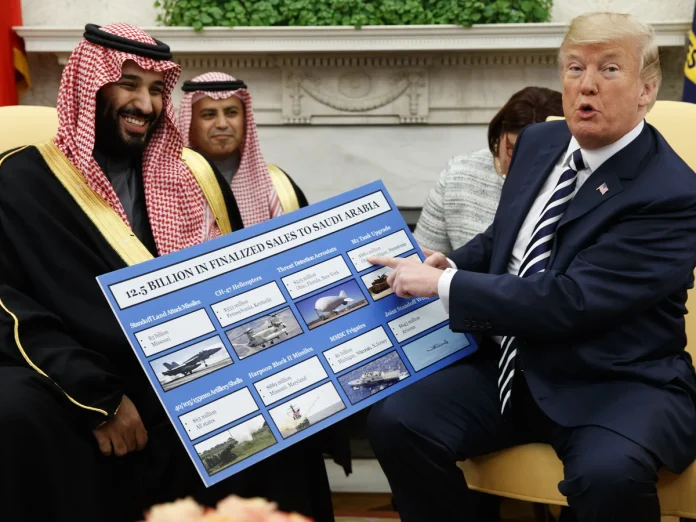
Trump told a reporter at the Oval Office he went to the kingdom because the Saudi government agreed to purchase hundreds of billions of dollars of American goods.

“I did it with Saudi Arabia last time because they agreed to buy $450bn dollars worth of our product. I said I’ll do it, but you have to buy American product, and they agreed to do that,” adding that he “would go there” again if the kingdom agreed to buy more.

“Well, I don’t know. If Saudi Arabia wanted to buy another 450 or 500, we’d raise it for all the inflation. I think I probably would go there.”

The 2017 trip led to the famous photo of Trump clutching an ominous glowing orb alongside Egyptian President Abdel Fattah el-Sisi and Saudi King Salman bin Abdulaziz.

It’s unclear whether Trump was serious in his remarks. However, the comment highlights how Trump approaches policy by prioritising American trade and the US economy above all other issues.

US-Saudi relations soured under the previous administration of President Joe Biden due to Biden’s criticism of the killing of Saudi columnist Jamal Khashoggi.

Despite an attempt by the Biden administration to fix their relationship in the latter half of its tenure, the ties never seemed to fully warm.

Under Trump, Saudi Arabia and the US had a much friendlier relationship, and Trump’s son-in-law and former senior advisor, Jared Kushner, had a personal friendship with the Saudi crown prince, Mohammed bin Salman.

That friendship came into play at the time of Khashoggi’s killing, which was done at the hands of Saudi agents. With Khashoggi being a US resident, his killing caused shockwaves in Washington, with calls for Trump to condemn his murder.

The previous Trump administration never altered its relationship with Riyadh despite the outrage over Khashoggi’s killing, and also blocked a bipartisan congressional measure aimed at ending US support for the Saudi-led war in Yemen.

Before entering office this time around, the Trump Organisation also signed a brand deal for a luxury tower real estate project in Saudi Arabia, another sign of the deepening ties between the Trump Organisation and Dar Al Arkan, the parent company of Dar Global, which is the real estate developer working on the tower project.

After Trump lost the 2020 presidential election, he was also seen on multiple occasions with Yasir al-Rumayyan, head of the sovereign wealth fund of Saudi Arabia, who is also currently chairing the new LIV Golf promotion.

Qatar hopes Palestinian Authority will return to Gaza after war

Gaza War

Israel launched the war on Gaza on October 7, 2023 after Hamas led an attack on southern Israel that killed at least 1,200 people.

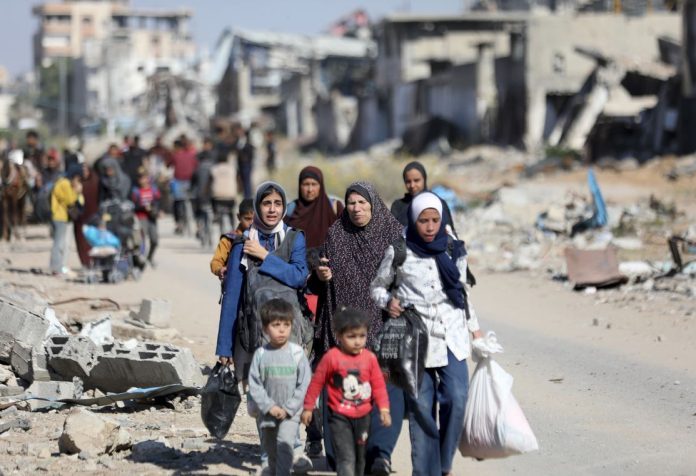
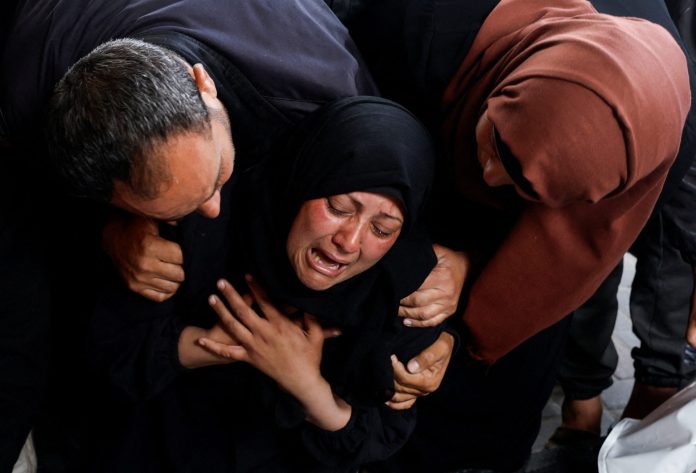
Israel’s ferocious 15-month onslaught on Gaza has killed more than 47,000 people, according to Palestinian health authorities, and destroyed much of the territory’s civilian infrastructure. Israel has severely restricted supplies of aid to the territory, leading to warnings of a humanitarian crisis.

Qatar’s Prime Minister Sheikh Mohammed bin Abdulrahman bin Jassim Al Thani was speaking at the World Economic Forum’s annual meeting in Davos, Switzerland on Tuesday, two days after the ceasefire that Doha helped broker came into effect in Gaza.

The prime minister cautioned that Palestinians in Gaza – and not any other country – should dictate the way the enclave will be governed.

“We hope to see the PA back in Gaza. We hope to see a government that will really address the issues of the people over there. And there is a long way to go with Gaza and the destruction,” he said.

Sheikh Mohammed, who is also Qatar’s foreign minister, stated that his country was sorry for the time wasted in the talks between Israel and Hamas.

“When we look at and reflect on what we have achieved in the last few days, we felt really sorry for all the time … wasted in these negotiations,” he added.

“We have seen that the framework that we have agreed on in December is the one that’s been realised a couple of days ago, and … I’m talking about December ’23, this means just a year of negotiating details.”

He added that this included “some meaningless things compared to the lives of the people that they have lost”.

How Gaza will be governed after the war was not directly addressed in the agreement between Israel and Hamas, the Palestinian group that ran Gaza until the war.

The ceasefire agreement between the sides was mediated by Qatar, Egypt and the United States and includes a truce, the exchange of Israeli captives for Palestinian prisoners in Israeli jails, and a surge in humanitarian aid deliveries.

Israel has rejected any governing role for Hamas, but it has also opposed rule by the Palestinian Authority, the body set up under the Oslo interim peace accords three decades ago that has limited governing power in parts of the occupied West Bank.

The PA, dominated by the Fatah faction created by former Palestinian leader Yasser Arafat, faces opposition from rival faction Hamas, which prevailed in elections and then drove the PA out of Gaza in 2007 after a brief war.

Israel has ‘biblical right’ to West Bank: Trump’s UN envoy pick

West Bank

Elise Stefanik’s comment came during her confirmation hearing before the Senate Foreign Relations Committee, where she also pledged to further Trump’s “America First” mission.

“If confirmed, I stand ready to implement President Trump’s mandate from the American people to deliver America First, peace-through-strength national security leadership on the world stage,” she said during her opening statements.

If confirmed as ambassador, Stefanik explained she would audit US funding for the UN and its constellation of agencies. She would also seek to counter China’s influence at the international organisation and bolster Washington’s staunch support for Israel.

But it was her views on the West Bank that signalled the starkest contrast between the Trump administration and that of his predecessor, President Joe Biden.

Stefanik was definitive when asked if she shared the view of far-right Israeli Finance Minister Bezalel Smotrich and former National Security Minister Itamar Ben Gvir that Israel has a “biblical right to the entire West Bank”.

“Yes,” she replied during the exchange with Democratic Senator Chris Van Hollen.

When pushed if she supported self-determination for Palestinians, Stefanik sidestepped the question.

“I believe the Palestinian people deserve so much better than the failures that they’ve had from terrorist leaders,” she continued, adding, “Of course, they deserve human rights.”

Over the last four years, the Biden administration provided resolute support for Israel at the UN. It repeatedly vetoed UN Security Council resolutions calling for a ceasefire to stop Israel’s war in Gaza.

However, the administration had been willing to stand up to its “ironclad” ally on the issue of Israeli settlements in the occupied West Bank. Such settlements are considered illegal under international law.

Stefanik’s comments were the latest indication that the incoming Trump administration would take a very different tack.

Trump’s first term saw a surge in settlements, with his administration removing a four-decade-long US policy that recognised the expansion into the West Bank as illegal.

Upon taking office on Monday, Trump cancelled Biden-era sanctions on far-right Israeli settler groups and individuals accused of violence against Palestinians.

Trump’s pick to be the US ambassador to Israel, Mike Huckabee, has also supported Israeli settlements in the West Bank, citing the Bible as justification. In a 2017 interview with CNN, for instance, Huckabee argued that the Palestinian territory did not exist at all.

“There is no such thing as a West Bank. It’s Judea and Samaria,” he said, using a biblical name.

And in 2008, when he was campaigning for the presidency, Huckabee asserted that the Palestinian identity itself was a fiction.

“I need to be careful about saying this, because people will really get upset. There’s really no such thing as a Palestinian,” Huckabee, who has not yet faced a confirmation hearing, stated at the time.

Stefanik has long been one of Trump’s most ardent defenders in the US House of Representatives.

In December 2023, however, she rose to a new level of prominence with her viral questioning of three university leaders from Harvard, MIT and the University of Pennsylvania, pressing them over alleged “anti-Semitism” on campus. Two of the three presidents resigned in the aftermath.

Critics have stressed her accusations helped spur other university leaders to crack down on pro-Palestinian protests on campus, out of fear of public backlash.

In her opening address at Tuesday’s confirmation hearing, Stefanik hailed herself as “the leader in combating anti-Semitism in higher education”, citing her 2023 interaction with the university presidents.

“My oversight work led to the most-viewed testimony in the history of Congress,” she noted, adding, “This hearing with university presidents was heard around the world and viewed billions of times.”

Responding to questions from bipartisan lawmakers, Stefanik pledged to continue — and extend — the US legacy of support for Israel at the UN. The US is one of five permanent members of the UN Security Council and therefore wields veto power.

She repeated the US position that Israel is unfairly targeted by the UN, decrying what she called “anti-Semitic rot” within the organisation.

The US currently pays about one-fifth of the UN’s regular budget, a regular point of ire for Trump.

On Tuesday, Stefanik promised “a full assessment of all the UN sub-agencies” to make sure “that every dollar [goes] to support our American interests”.

She added she would oppose any US funds going to the UN Relief and Works Agency for Palestine Refugees (UNRWA).

Legislation passed by the US Congress last year bans funding through March 2025 for the agency, which humanitarian groups say provides irreplaceable support to Palestinians in both the West Bank and Gaza.

In her hearing, Stefanik also defended Israel, despite criticisms from UN experts that its methods in Gaza are “consistent with genocide”.

“It is a beacon of human rights in the region,” Stefanik said of Israel.

Stefanik’s hearing came just hours after former Senator Marco Rubio, Trump’s pick for secretary of state, became the first member of the incoming administration to be sworn in.

At least 8 killed, dozens injured in Israeli attack on Jenin refugee camp, West Bank

Israeli Army

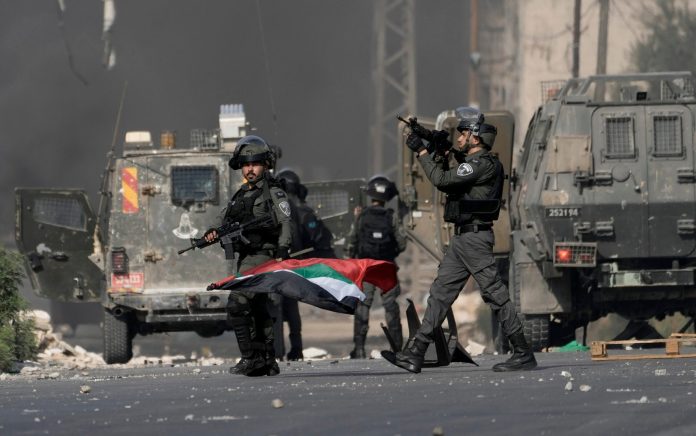
The Israeli army said earlier on Tuesday that soldiers, police and intelligence services launched “a counterterrorism action”, but gave no further details.

The identity of those killed was not immediately clear. The health ministry announced that 35 people have been injured.

A spokesperson for the Palestinian Authority’s (PA) security forces said in a statement that Israeli forces “opened fire on civilians and security forces, resulting in injuries to several civilians and a number of security personnel, one of whom is in critical condition”.

Israeli Prime Minister Benjamin Netanyahu claimed the operation aimed to “eradicate terrorism”. An Israeli military spokesperson added the ongoing operation was dubbed the “Iron Wall”.

Jenin Governor Kamal Abu al-Rub called the action “an invasion”.

“It came quickly. Apache planes in the sky and Israeli military vehicles everywhere.”

The attack in Jenin, where the Israeli army has carried out multiple raids and large-scale incursions in recent years, comes just days after a ceasefire took effect in the Gaza Strip, and underscores the threat of more violence in the West Bank.

Before the Israeli action, the PA’s security forces had been conducting a weeks-long operation to reassert control of the city of Jenin, as well as its refugee camp.

Last week, an Israeli air raid on the refugee camp killed at least three Palestinians and wounded many more.

On Monday, Israeli settlers set vehicles and properties on fire under the protection of Israeli forces while also injuring at least 21 Palestinians across the West Bank.

AEOI head says West irritated by Iran’s progress in heavy water industry

Mohammad Eslami

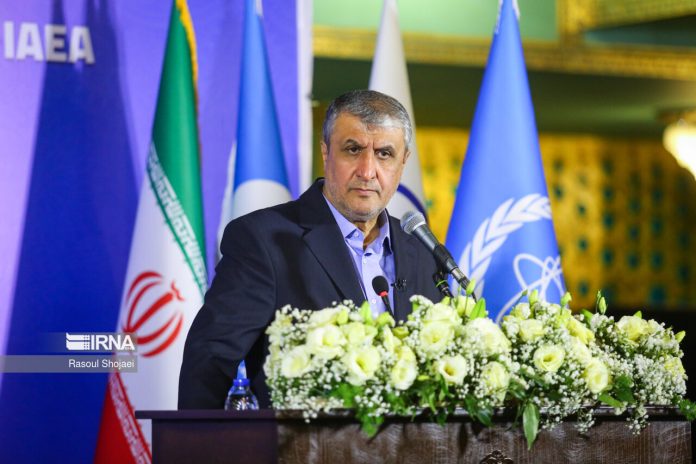
Mohammad Eslami, head of the Atomic Energy Organization of Iran (AEOI), said on Monday that Iran has made significant progress in recent years in producing heavy water and its derivatives.

Eslami said the progress has been achieved despite the West’s continued objections to Iran’s nuclear endeavors and its technological advancement in the production of heavy water.

He said the main reason for the West’s irritation is the huge economic potential that exists in Iran’s heavy water production, adding that the country can fetch thousands of dollars for each gram of by-products obtained from heavy water production.

“Each (metric) ton of methanol produced from heavy water is worth $1.2 million while the price of the methanol produced in petrochemical plants is less than $500 (per ton),” said the AEOI chief.

Eslami stated that Western countries, including the US, have admitted that the heavy water produced in Iran has the highest degree of purity in the world.

He added that Iran can increase its share of the global heavy water market from the current 12.5% if it decides to sell the by-products produced in the sector.

The official made the comments during a speech in Tehran where he defended the use of peaceful nuclear technology for responding to Iran’s various needs.

He said that Iran’s only nuclear power plant on the Persian Gulf coast has enabled the country to cut some $8 billion from its oil consumption bill since 2001 when the plant was inaugurated with a total investment of $1.8 billion.