Monday, January 19, 2026
Home Blog Page 513

Iranian officials urged to monitor Russia-US negotiations closely

In a Wednesday editorial, Jomhuri-e Eslami highlighted the necessity for Iranian officials to observe Russia’s interactions with the US, particularly any potential deals that might negatively impact Iran.

The editorial highlighted that while internal debates persist among Iranian politicians regarding the “Look to the East” policy, national interests demand close monitoring of Russia’s interactions with the US and elsewhere.

Past events “where Russia sided with Israel in conflicts in Syria and Lebanon” were cited as warnings.

The heads-up comes amid speculations that Russian President Vladimir Putin and his US counterpart Donald Trump could strike a deal that not only involves the sacrifice of Ukraine but also grants the US more freedom to act in the Middle East, potentially at the expense of Iran.

It also notes Saudi Arabia’s economic gains from the Ukraine conflict, suggesting that Iran could have reaped similar benefits with more strategic policies.

The article underscores the importance of proactive measures by reassessing Iran’s foreign policy to mitigate potential risks and maximize the country’s benefits.

Trump blames Ukraine for war with Russia, presses Zelensky to hold elections

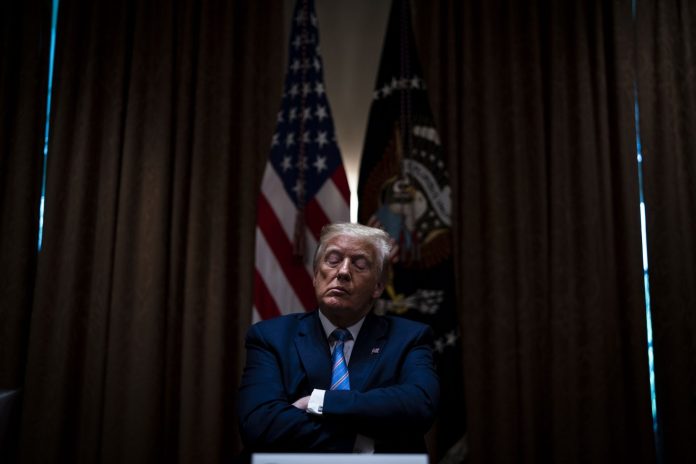
Donald Trump

Trump’s comments come after U.S. and Russian officials earlier in the day met in Saudi Arabia — without Ukraine — to discuss strategies for ending the full-scale war.

Talking on the topic of why Ukraine was not present at the talks, Trump blamed the besieged country for the start of Russia’s invasion and for not “making a deal” to achieve peace.

“But today I heard, ‘Oh, well, we weren’t invited.’ Well, you’ve been there for three years. You should have never started it. You could have made a deal,” Trump said while speaking to reporters.

The comments echo Trump’s earlier statements where he blamed Zelensky and the Joe Biden administration for the conflict unleashed by Russia.

Ukraine should hold elections because Zelensky holds a “4% approval rating,” Trump also alleged without evidence.

The claim contradicts recent polling from the Kyiv International Institute of Sociology, which shows that as of December 2024, 52% of Ukrainians trust Zelensky.

Kremlin propaganda has pushed the narrative that Zelensky is an illegitimate leader, relying on the premise that his first presidential term was originally meant to end on May 20, 2024. The false allegation ignores the fact that the Ukrainian constitution prohibits elections during martial law, which went into effect after Russia launched the full-scale invasion in 2022.

Trump distanced himself from the Russian narrative, claiming that it was his personal opinion that Ukraine should hold elections.

“That’s not a Russia thing. That’s something coming from me,” he stated.

Trump went on to describe the destruction of Ukraine in exaggerated terms, falsely claiming that the majority of its cities had been “blown to smithereens.”

“I don’t know how anybody even lives there,” he added while claiming that a quick deal early in the war could have given Ukraine “almost all of the land, everything, almost all of the land, and no people would have killed, and no city would have been demolished.”

Instead of condemning Russia for bombarding Ukraine in daily attacks over the past three years, Trump laid the blame in part on Zelensky’s government.

“You have leadership now that’s allowed the war to go on,” he noted.

At the same time, the U.S. president praised the talks in Riyadh as “very good,” alleging that Russia wants “to do something” and “stop the savage barbarianism.”

The U.S.-Russian meeting in Saudi Arabia concluded without concrete agreements on ending the war, but Ukraine’s absence serves as a worrying signal for Kyiv and its partners.

The U.S. delegation, led by Secretary of State Marco Rubio, stressed that the talks were just the start of a “long and difficult journey” and the “serious process” to end the full-scale invasion. Rubio previously claimed that both Europe and Ukraine would be involved once official negotiations are underway.

Trump spoke directly to Russian President Vladimir Putin in a phone call on Feb. 12 — before calling Zelensky later that day. The Saudi Arabia talks represent the first direct negotiations between the U.S. and Russia since the launch of the full-scale war.

Macron rules out dispatching French troops to Ukraine’s front line

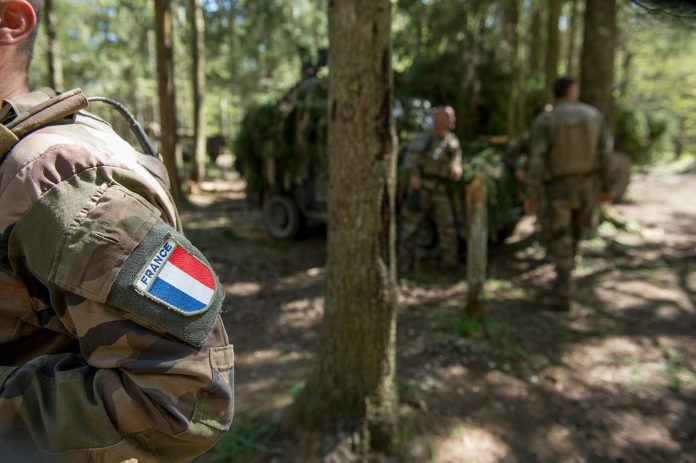
French Army

Macron invited European leaders to an emergency summit in Paris on Feb. 17 in response to U.S. officials saying Europe will not participate in Ukraine peace talks. France is set to host a second summit on Feb. 19 to continue discussions of security guarantees for Ukraine.

“France is not preparing to send combat ground troops to the front,” Macron said.

In partnership with the British, France is ready to consider sending experts or even a limited number of troops beyond the frontline to demonstrate solidarity and help Ukraine defend itself, Macron added.

Supporting NATO membership for Ukraine is among the several ways France is ready to support Ukraine in its battle against Russia’s aggression, Macron continued.

U.K. Prime Minister Keir Starmer signaled that his country is prepared to send British troops to Ukraine as part of a European-led peacekeeping force on Feb. 16.

U.S. President Donald Trump stated he is not opposed to European peacekeepers monitoring a ceasefire in Ukraine on Feb. 18.

Macron called for Ukraine’s “automatic membership in NATO” in the event of a violation by Russia in a potential ceasefire at an emergency summit held in France on Feb. 17.

West will have to reconsider Russia sanctions as part of Ukraine peace accord: Rubio

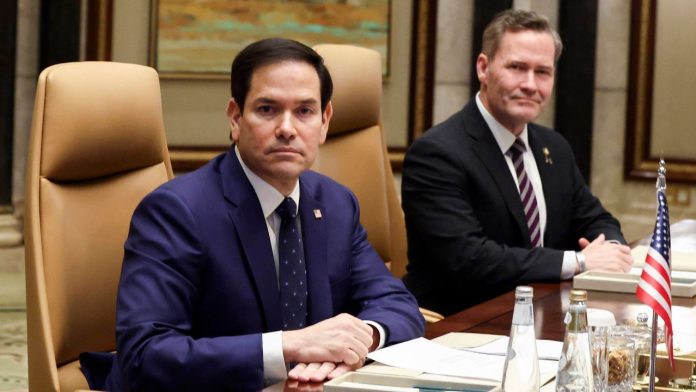
Rubio held a press conference along with National Security Adviser Mike Waltz and special envoy Steve Witkoff after meeting with the Russian delegation in Saudi Arabia’s capital. Moscow was represented by Foreign Minister Sergey Lavrov, presidential foreign policy aide Yury Ushakov, and Kirill Dmitriev, the CEO of the Russian Direct Investment Fund (RDIF).

The two sides discussed the conflict and a range of bilateral issues, including restoring diplomatic contacts. Both delegations hailed the meeting as constructive and positive.

Rubio said the issue of sanctions relief could be a part of a peace process aimed at putting an end to the Ukraine conflict.

“In order to bring an end to any conflict, there have to be concessions made by all sides,” the secretary of state stated. He did not elaborate on the potential concessions, adding that the issue has not been discussed with the Russian side yet.

The top US diplomat maintained that the process of sanctions removal would have to involve Washington’s allies in Europe as well.

“The EU is going to be at the [negotiations] table at some point because they have sanctions as well that have been imposed.”

The goal pursued by US President Donald Trump’s administration is to “bring an end to the conflict in a way that is fair, enduring, sustainable and acceptable to all parties involved,” Rubio said, adding that stopping the Ukraine conflict could open up some unprecedented opportunities for economic cooperation between Moscow and Washington.

The US would need to identify “credible opportunities… to partner with the Russians geopolitically, on issues of common interest and… economically on issues that hopefully will be good for the world and also improve our relations in the long term” once the Ukraine conflict is brought to an “acceptable end,” he said, adding that those opportunities could be “pretty unique” and “potentially historic.”

Over the past three years, the US and EU have imposed unprecedented sanctions against Moscow. This policy has cost American companies an estimated $300 billion in losses associated with leaving the Russian market, according to RDIF data.

Over $50bn needed to rebuild Gaza after Israel’s war: Report

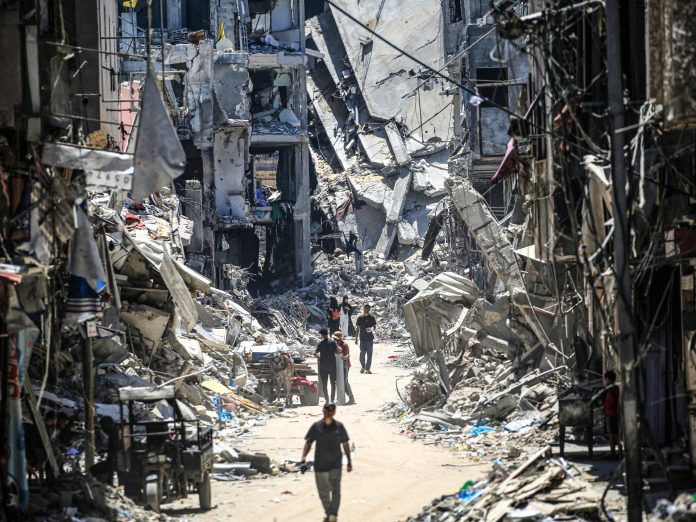
Gaza War

The figures come as Arab countries continue to scramble to find a viable recovery plan as an alternative to the mass displacement of the Palestinian enclave’s 2 million residents proposed by United States President Donald Trump.

The Gaza & West Bank Interim Rapid Damage and Needs Assessment (IRDNA), published on Tuesday, calculated that Israel’s war on Gaza caused $49bn in destruction between October 8, 2023 and October 8, 2024.

Researchers concluded that $53.2bn is now needed for the recovery and reconstruction of the Palestinian territory over the next 10 years, with about $20bn of the full amount required in the first three years alone.

“Funding will require a broad coalition of donors, diverse financing instruments, private sector resources, and significant improvements in the delivery of reconstruction materials to Gaza in the post-conflict period,” the joint report states.

More than half the total estimated cost of rebuilding, or $29.9bn, is needed for damaged buildings and other key infrastructure, while funds to replenish Gaza’s destroyed residential housing stock form the bulk of that figure – $15.2bn.

Housing suffered the most during Israel’s 15-month-long attack on the territory, with the report writers estimating that it accounted for 53 percent of the total destruction wrought by Israeli forces in Gaza, amounting to more than 292,000 homes destroyed or damaged.

Another $19.1bn is required to make up for social and economic losses resulting from severe damage to Gaza’s health, education, commerce and industry sectors, the report estimates.

The researchers also state that 95 percent of Gaza’s hospitals are now non-functional, while the local economy has contracted by 83 percent.

The IRDNA is a follow-up to the Interim Damage Assessment (IDA) published by the UN, EU and World Bank in April 2024, which estimated about $18.5bn in damages after just four months of Israel’s war.

Years of clearing unexploded ordnance and removing millions of tonnes of rubble also lie ahead as part of the reconstruction efforts.

The report’s findings come amid a fragile ceasefire between Israel and Hamas.

The report’s authors cautioned that conditions are not yet in place for large-scale recovery and reconstruction work to begin given the lack of clarity over Gaza’s future, not least how it will be governed.

“The speed, scale, and scope of recovery will be shaped by these conditions,” the report states.

Lavrov says Russia and US agree on Ukraine peace negotiations

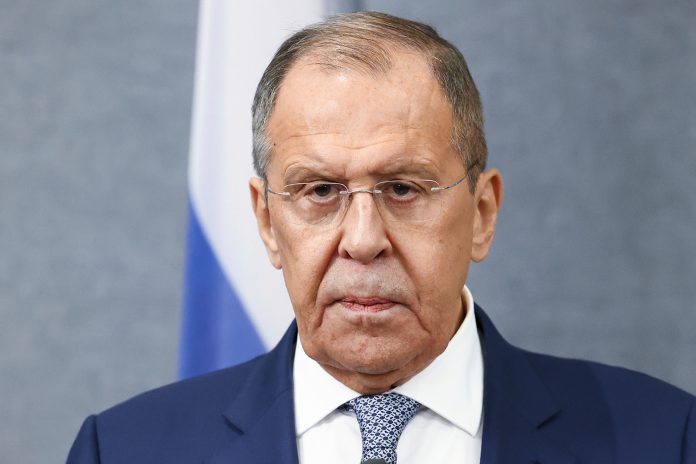
Russian Foreign Minister Sergey Lavrov

Top Russian and US diplomats met in Saudi Arabia on Tuesday to explore ways to restore diplomatic ties, lay the groundwork for a summit between Russian President Vladimir Putin and his US counterpart, Donald Trump, and advance efforts toward resolving the Ukraine conflict.

Lavrov led the Russian delegation, which also included Yury Ushakov, Vladimir Putin’s top foreign policy aide. The American side was represented by US Secretary of State Marco Rubio, Trump’s national security adviser, Mike Waltz, and Steve Witkoff, Washington’s special envoy for the Middle East.

Neither Ukraine nor the EU participated in the meeting, with Kiev stating it would not recognize the outcome of the talks unless it was involved.

Speaking to reporters after the meeting in Riyadh, Lavrov stated that as part of the agreement to initiate the Ukraine conflict settlement process, Russia will appoint its representative once it receives confirmation of Washington’s designated negotiator.

“I believe the discussions were highly productive,” Lavrov said, adding, “Not only did we listen, but we genuinely heard each other.”

He further stated that he had reason to believe the American side “now has a clearer understanding of Russia’s position,” as it had been “thoroughly detailed” using specific examples drawn from President Putin’s numerous statements.

Lavrov pointed out that the meeting in Riyadh was initiated by the Russian and US presidents, who had agreed that preparations for the next summit should be started. To achieve this, foreign ministers and national security advisers were tasked with meeting and determining what needed to be worked out before the two presidents “can negotiate specific dates and timelines for the summit.”

Moscow and Washington have agreed that “when national interests coincide, efforts must be united and implemented” in relevant areas through “mutually beneficial projects” in both geopolitical and economic spheres, according to Lavrov. However, when interests do not align, the sides should not provoke a conflict but rather work to resolve issues, he added.

Lavrov also touched on the issue of the US engagement with the EU concerning security guarantees and the potential deployment of a contingent force in Ukraine.

“We explained to our counterparts that President Putin has repeatedly emphasized that NATO expansion and the absorption of Ukraine into the military bloc pose a direct threat to Russia’s interests and sovereignty,” he stressed.

Moscow made it clear that it considers any NATO-linked military presence – whether under the EU flag or as part of national contingents – completely unacceptable, according to Lavrov.

The Russian foreign minister added that the sides “practically agreed that the issue of diplomatic missions must be resolved once and for all.” He noted that this includes addressing the sanctions imposed in recent years, the expulsion of diplomats, the seizure of diplomatic properties, and other obstacles that have complicated work.

“Our deputies will soon meet to discuss the removal of these artificial barriers and ensure the smooth functioning of embassies and consulates in both countries,” Lavrov added.

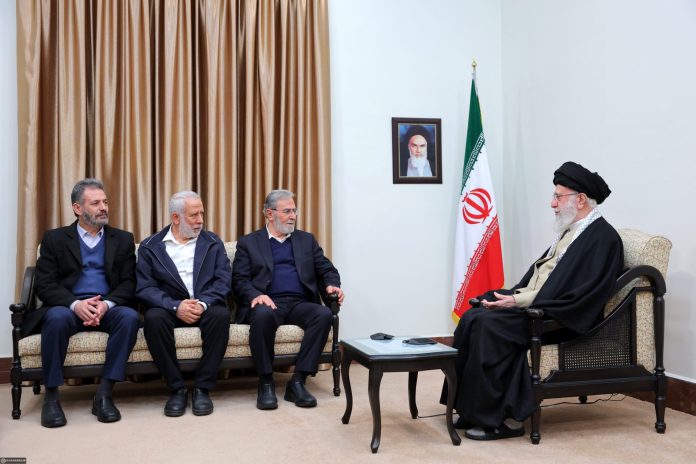
Ayatollah Khamenei rejects US plan for Gaza as ‘foolish, futile’

The Leader made the remarks in a meeting with Ziyad al-Nakhaleh, Secretary-General of the Palestinian Islamic Jihad movement.

“These plans will lead nowhere. Those who vowed to eliminate resistance within a short time a year and a half ago, now receive their prisoners from small groups of resistance fighters in exchange for a big number of Palestinians.”

Ayatollah Khamenei praised the victory of Gaza’s resistance over Israel and the US, describing it as magnificent.

He emphasized that the great work done by Palestinian resistance leaders and fighters in maintaining unity and cohesion, standing firm against enemies, and navigating the complex process of ceasefire talks, as well as the Gazan people’s resilience and patience has made the resistance proud in the region.

“This victory sets a new benchmark for resistance battles,” he noted.

Ayatollah Khamenei commended the way resistance handled prisoner exchanges as a testament to its strength before global audiences.

“Currently, international public opinion is in favor of Palestine, and thus no plan can succeed without consent from Gaza’s resistance and people,” the Leader added.

In this meeting, Nakhaleh congratulated Ayatollah Khamenei on Gaza’s victory and attributed it to Iran’s consistent support and guidance from late Hezbollah leader Seyed Hassan Nasrallah.

“The Palestinian resistance was effectively fighting America and the West over the past 18 months and despite the inequality of the balance of power, it could achieve major victories,” Nakhaleh said.

He highlighted the unity among Palestinian and Lebanese groups on the battlefield and political levels as one of the factors influencing their success in Gaza.

“We will never forget our path of resistance, and we will continue this path as soldiers of the resistance,” Nakhaleh stated.

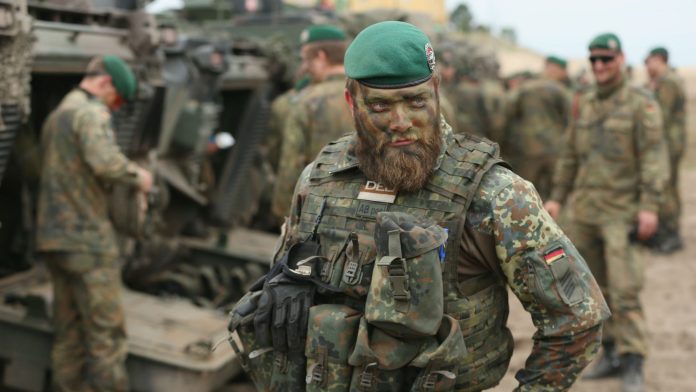
Germany will not send peacekeepers to Ukraine without ‘US involvement’: AFP

Germany Army

The reported remarks come after US Defense Secretary Pete Hegseth ruled out deploying American troops as part of potential security guarantees to Kiev.

“We will not participate in scenarios in which European and American security diverges, for example if European soldiers are deployed without full US involvement,” a German official told AFP.

Poland has also dismissed the possibility of sending troops to Ukraine.

“Poland will support Ukraine as it has done so far: organizationally, in accordance with our financial capabilities, in terms of humanitarian and military aid,” Polish Prime Minister Donald Tusk stated on Monday.

“We do not plan to send Polish soldiers to the territory of Ukraine.”

UK Prime Minister Keir Starmer, who described the Ukraine conflict as “existential,” announced on Sunday that he is ready to contribute troops as part of post-ceasefire “security guarantees” to Kiev.

Moscow has stressed that a peace settlement is possible only if the West addresses the “root causes” of the conflict, such as Ukraine’s plans to join NATO and the bloc’s continuing expansion eastward. Vassily Nebenzia, Russia’s envoy to the UN, said earlier this month that only the UN Security Council can authorize the deployment of peacekeepers, and warned that Russia would treat “any foreign military units” that do not have UN backing as “legitimate targets.”

US President Donald Trump has promised to quickly end the conflict and has taken steps to restore diplomatic contact with Moscow, which was de facto frozen in 2022. US and Russian officials will discuss Ukraine in Riyadh on Tuesday.

Ukrainian leader Volodymyr Zelensky said that Kiev will not take part in the Riyadh talks and will “not recognize” any negotiations held without its consent. EU officials have expressed frustration with Trump, after he had a phone call with Russian President Vladimir Putin on February 12 without their approval.

Israeli onslaught on West Bank sees most Palestinians displaced in occupied territories since 1967 War: Report

Israel Palestine West Bank

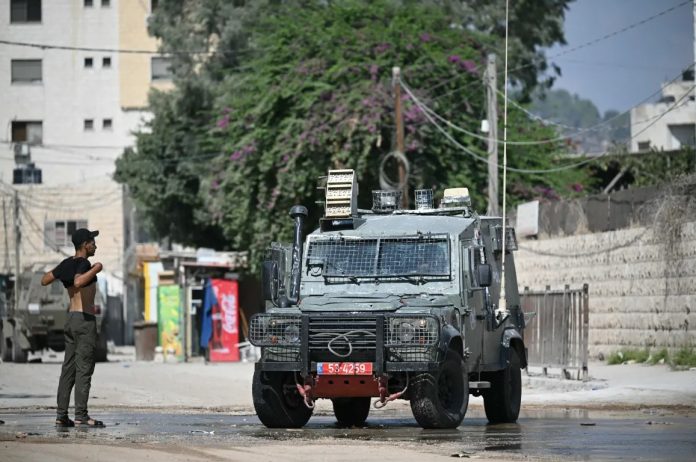
Israel has been waging a brutal offensive on the occupied territory since the summer when Israeli troops landed in northern parts of the occupied West Bank in military helicopters and large convoys of armoured vehicles, attacking the cities of Jenin, Tulkarm and Tubas.

Israel escalated its attacks further after a shaky ceasefire in the Gaza Strip was signed in January. The same month, Israel’s military started a new offensive on Jenin and its surrounding areas, killing 25 Palestinians, according to the Palestinian health ministry.

Philippe Lazzarini, the head of the UN Agency for Palestinian Refugees (UNRWA), said that Israel launched at least 38 air strikes in the occupied West Bank since January, a substantial escalation. Air strikes were extremely rare in the occupied West Bank until 2024.

Israel has focused its fire on refugee camps like Jenin, Tulkarm and Tubas. They are home to the descendants of Palestinians uprooted during the 1948 Nakba, Arabic for the catastrophe, when the state of Israel was created.

Around 750,000 Palestinians were forced from their homes by Zionist militias during the 1948 Nakba. Today, their descendants make up the seven million Palestinian refugees worldwide.

About a million of those live in the occupied West Bank, around a quarter of which live in 19 refugee camps.

The International Federation For Human Rights announced in February that around 45,000 Palestinians had been displaced from northern parts of the occupied West Bank.

UNRWA noted that several refugee camps have been “nearly emptied of their residents”, adding that this is the longest campaign in the territory since the 2000-2005 Second Intifada.

It also marks the most destabilising time since the 1967 War when hundreds of thousands of Palestinians were displaced. About 95 percent of those Palestinians fled to Jordan, and a smaller number travelled to Syria and Lebanon, human rights experts note.

The offensive comes amid Israeli efforts to deepen its occupation of the territory, amid what experts warn is a threat of annexation.

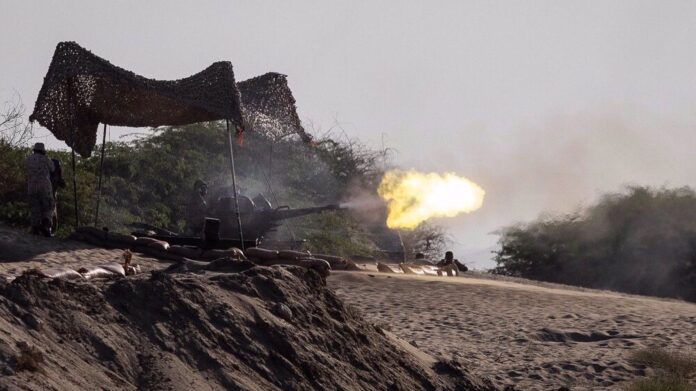
IRGC Ground Force conducts largest-ever operational readiness exercise

IRGC Pounds Terrorists' Positions across Iran's Northwestern Border

The exercise kicked off at a combat zone in Shaveriyeh region of Khuzestan Province on Tuesday, with Commander of the IRGC Ground Force, Brigadier General Mohammad Pakpour, in presence.

It marks the beginning of the second phase of Payambar-e-A’azam (The Great Prophet) 19 drill, and follows the initial security-focused drill in the Ezgeleh district of Salas-e Babajani County in the western province of Kermanshah.

This phase is reportedly meant to put into practice modern combat tactics and strategies, as well as the sophisticated homegrown military hardware newly delivered to IRGC divisions, and assess their efficiency in different real-world scenarios.

Various IRGC Ground Force units are scheduled to carry out a series of offensive and defensive operations, practice electronic warfare tactics and undertake several relevant tasks, and mount large-scale armored, missile, drone, and artillery attacks within the next few days.

Iranian military forces hold routine exercises according to a detailed schedule in various parts of the country in order to test their weaponry and equipment and evaluate their combat preparedness.

The country’s officials have repeatedly underscored that the country will not hesitate to strengthen its military capabilities, including its missile power, which are entirely meant for defense, and that Iran’s defense capabilities will never be subject to negotiations.