Thursday, December 25, 2025
Home Blog Page 503

Iran says its nuclear program completely transparent

Iran nuclear program

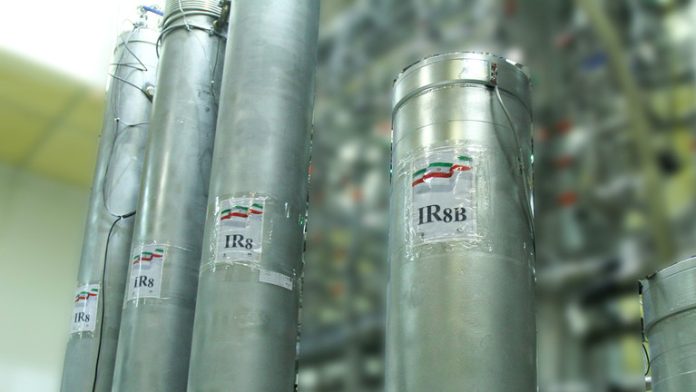
Mohammad Eslami made the remarks in an interview on Sunday where he explained the latest achievements and developments in the country’s nuclear industry.

“We have now reached a stage in the nuclear industry where we can exploit this technology,” Eslami said.

He added that advanced technologies have become a decisive area at the international level.

Eslami clarified that Iran has broken the monopoly and is standing on its own feet with endogenous research.

He stated, “Accessing technology is prohibited from the point of view of regional arrogance, and we do our work independently.”

“The next point is that this technology benefits the people. When you create the capability, you can get the results. We are now on this path and we can use nuclear technology to advance and influence various issues.”

Eslami stated that costs are not an issue in developing the nuclear program.

He said that nuclear technology is a platform for development in other sciences. Talking about the weapons nature of Iran’s program is an excuse for the West, he added.

The required enrichment percentages vary from country to country, he said.

He stated that Iran has accepted inspections to clarify its nuclear program.

Regarding the Iranian nuclear file and sanctions against Iran, Eslami noted: “In order for us to get a real picture, let’s take a look at the Davos meeting.”

“There is an opportunity to show the orientations and see what points countries are focusing on. One of the most important axes was new technology, which is in the fierce competition between developed countries,” he added.

“The main condition from their point of view is to support the interests of the United States. This was in the middle of all the talks of the maximum pressure group. The main issue is advanced technology and since we are not a member of the blocs, this is prohibited for us,” he stated.

The AEOI head said that the “IAEA statute clearly states that the laws and parliament of the IAEA must be approved within the countries. One is safeguards and the second is the NPT. These two must become laws in every country that wants to operate.”

“The International Atomic Energy Agency must support all countries’ access to peaceful nuclear technology,” he added.

“The IAEA must facilitate, and support so that every country can obtain nuclear technology, but behind the scenes, the US Congress passed the One Two Three Act in 1955 and says that anyone who wants to enter this field must have a contract with the US.”

“This law says that if you do not have relations with the US and do not comply, you cannot operate, and the US strictly controls and does not allow any country to operate. We are facing a political and security trend that created maximum pressure and was able to create disturbances,” he stated.
Longtime Hezbollah leader to be buried in Lebanon within weeks

Hezbollah Nasrallah

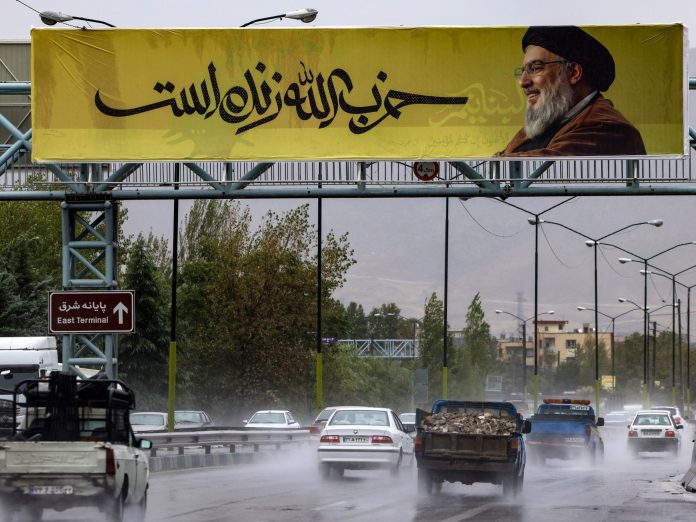
Nasrallah, who had served as Hezbollah’s secretary general for more than 30 years, was killed on September 27 as Israel ramped up its air attacks on Hezbollah targets in Beirut’s southern suburbs.

His successor Naim Qassem said in a televised address on Sunday that Nasrallah was killed “at a time when circumstances were difficult”, forcing the group to conduct a temporary burial for him according to religious tradition.

Qassem added the group had now decided to hold “a grand funeral procession with a large public presence” for both Nasrallah and Hashem Safieddine, another top Hezbollah official killed in an Israeli strike nearly a week after Nasrallah.

He also confirmed for the first time that Safieddine had been elected as Nasrallah’s successor but was killed before the announcement was made. He said Safieddine would also be buried with the title of secretary general.

Nasrallah will be buried on the outskirts of Beirut “in a plot of land we chose between the old and new airport roads”, while Safieddine will be buried in his hometown of Deir Qanoun in southern Lebanon, he continued.

Hezbollah announced on October 29 that Qassem, the group’s deputy leader, had been elected as its head, after the killings of many of the group’s top military commanders threw the group into disarray.

A ceasefire agreed in late November ended hostilities between Hezbollah and Israel and set a 60-day deadline for Israeli troops to withdraw from southern Lebanon, Hezbollah to remove its fighters and arms from the area and Lebanese troops to deploy there.

That deadline was extended last month until February 18. Israel has been accused of violating the terms of the ceasefire by refusing to leave Lebanon and continuing to carry out occasional air attacks in some parts of the country. Israel itself accuses Hezbollah of violating the terms of the ceasefire.

Hezbollah faced one of its biggest challenges after the Iranian-backed group opened up a front against Israel to help relieve pressure on its ally Hamas in Gaza in October 2023. The group suffered losses after months of cross-border fighting and Israeli attacks that targeted the group’s leading figures.

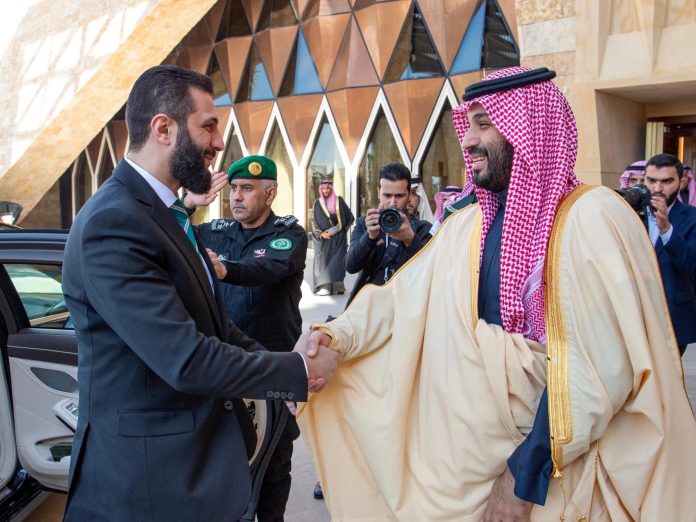
Syria’s new President meets Saudi crown prince in first foreign trip

The Saudi Press Agency (SPA) showed al-Sharaa meeting MBS – Saudi Arabia’s de facto leader – after the Syrian president had first been greeted by the Deputy Governor of the Riyadh Region Prince Mohammed bin Abdulrahman bin Abdulaziz after he landed at King Khalid International Airport in Riyadh on Sunday.

Al-Sharaa was accompanied for the talks in Riyadh by Syria’s foreign minister, Asaad al-Shaibani.

After the meeting, al-Sharaa said that the meeting with MBS had shown that Saudi Arabia had “a genuine desire to support Syria in building its future”. The Syrian president added that his meetings in Riyadh had included plans for cooperation in the fields of energy, technology, education, and health.

Al-Sharaa led the Syrian opposition in overthrowing the government of longtime President Bashar al-Assad on December 8, after a lightning advance across the country. Since then, the new Syrian administration has sought to gain regional and international legitimacy and to have damaging Western sanctions on Syria removed.

However, concerns over al-Sharaa’s past membership of al-Qaeda have tempered support from some quarters, even as Syria’s new leadership emphasises regional integration and protections for religious and ethnic minorities.

During a visit to Damascus last week, Saudi Foreign Minister Prince Faisal bin Farhan stated his country was engaged in an active dialogue with Europe and the United States to help lift economic sanctions imposed on Syria.

Last month, al-Sharaa told Al Arabiya TV that Saudi Arabia “will certainly have a large role in Syria’s future”, pointing to “a big investment opportunity for all neighbouring countries”.

Sunday’s trip comes after al-Shibani, Syria’s foreign minister, also travelled to Riyadh last month.

Iranian president unveils three new homegrown satellites 

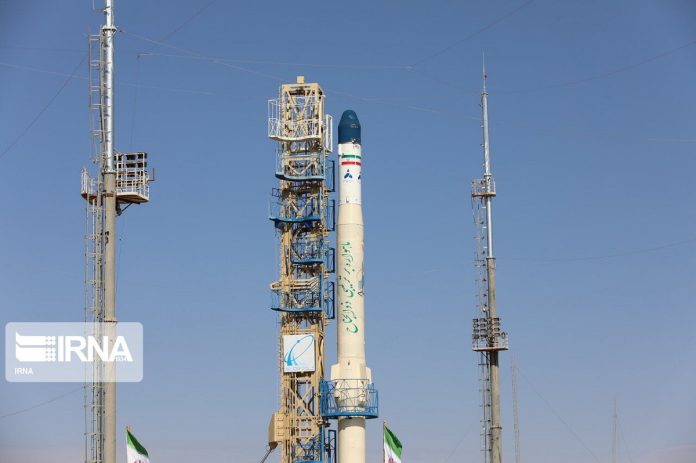
The satellites are Navak 1, Pars 2 and an upgraded version of Pars 1.

Navak 1 is a telecommunications satellite designed for a weight class of 20 to 50 kilograms and its primary purpose is to test the performance of the optimized Simorgh launcher.
Navak 1 will establish communication with ground stations using the S-band frequency.

Meanwhile, the upgraded version of Pars 1 is an imaging remote sensing satellite developed using a platform designed for satellites weighing between 100 to 150 kilograms. The first version of this satellite was successfully launched last year using.

The upgraded Pars 1 satellite will be launched into a low Earth orbit at an altitude of approximately 500 kilometers. Pars 2, which weighs 150 kilograms, is equipped with two imaging payloads featuring different types of sensors.

The three satellites were unveiled by the Iranian president on Sunday, February 2 which marks the National Day of Space Technology.

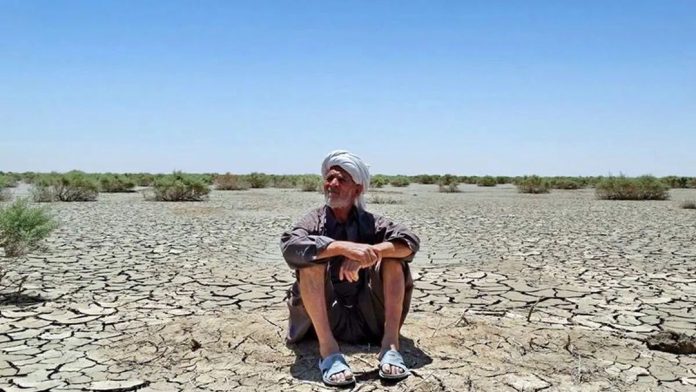
Iranian specialist warns: Water scarcity and droughts threaten Iran’s wetlands 

Wetlands in Iran parched into deserts

While noting that Iran sits approximately on 3.4 million hectares of wetlands, including 21 major sites like Lake Urmia and the Iranian section of the Hour al-Azim, Ali Arvahi said two-thirds of these areas are severely threatened by water scarcity and prolonged droughts.

Arvahi pointed out that pollution from industrial and urban wastewater continues to plague wetlands like Anzali and Shadegan.

He added that invasive species have also added insult to injury, jeopardizing native flora and fauna.

Arvahi however noted that the most pressing issue remains the lack of allocated water rights for these ecosystems.

He further voiced concern over the future of these vital ecosystems and questioned whether anything of the wetlands will remain for future generations of Iran at all.

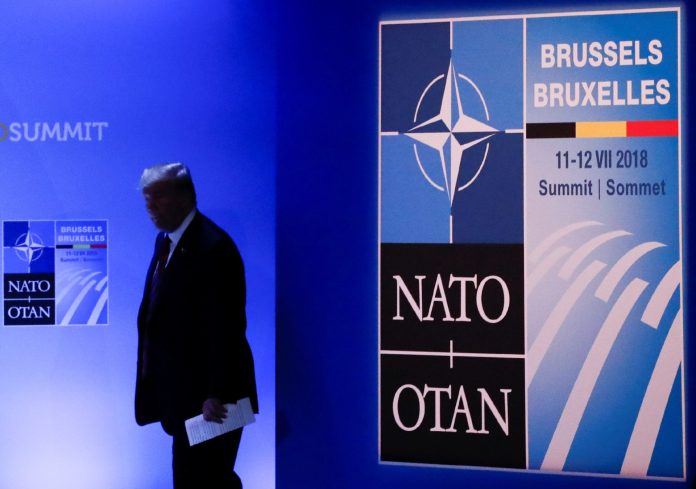
Ukraine says NATO membership ‘cheapest’ security guarantee, ‘victory’ for US

Donald Trump NATO

The question of Kyiv’s future accession to the Alliance is likely a key point of contention in the expected Russia-Ukraine peace negotiations, which Trump has pledged to initiate within the next few months.

NATO membership is the best possible security guarantee for Ukraine and the “cheapest” option for Western allies, Zelensky told the AP.

“I really believe that these are the cheapest security guarantees that Ukraine can get, the cheapest for everyone,” he said.

“It will be a signal that it is not for Russia to decide who should be in NATO and who should not, but for the United States of America to decide. I think this is a great victory for Trump.”

Ukraine officially applied to join NATO in September 2022 following Russia’s full-scale invasion. While NATO members asserted at the 2024 summit in Washington, D.C. that Ukraine’s path to membership is “irreversible,” they have yet to extend a formal invitation.

Russian propaganda narratives frequently cite Ukraine’s potential NATO membership as a justification for the invasion.

Trump himself has echoed this talking point, saying that former President Joe Biden’s support for Ukraine’s NATO aspirations provoked the full-scale war.

“That’s been like written in stone,” Trump had stated, referring to Russia’s opposition to Ukraine joining the Alliance.

“And Biden said, ‘No, they should be able to join NATO.’ Then Russia has somebody right on their doorstep. I could understand (Russia’s) feelings about that.”

Moscow has announced that a ban on Ukraine’s entry to NATO is a key condition of any ceasefire agreement.

Ukrainian officials, including Zelensky, have disputed Trump’s narrative and dismissed Russia’s demands. Ukraine’s Foreign Ministry called Russia’s proposed ban “utter bul***it” in a Jan. 24 statement.

Zelensky told the AP that Ukraine’s accession to the Alliance would be mutually beneficial to Kyiv and to member states. The addition of Ukrainian defense forces would also be an asset to NATO, potentially allowing the U.S. to withdraw its troops stationed overseas.

French President Emmanuel Macron’s proposal to deploy European peacekeepers to Ukraine to monitor a ceasefire is also being discussed, Zelensky continued. Questions remain as to its feasability, and it would have to be backed by other security measures.

“That’s not enough,” Zelensky added.

“Imagine, there is a contingent. The question is who is in charge? Who is the main one? What will they do if there are Russian strikes? Missiles, disembarkation, attack from the sea, crossing of the land borderline, offensive. What will they do? What are their mandates?”

Macron and Zelensky are “still in the process of this dialogue,” the president stressed.

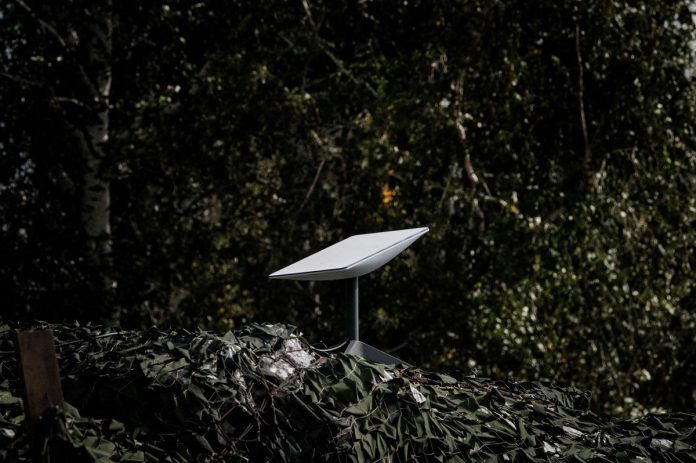
Data: Starlink users in Iran surge by 50% in two months

Starlink

While Starlink is not officially available in Iran, users are bypassing restrictions by registering with addresses from neighboring countries like Turkey, the UAE, or Armenia.

In December 2023, Forbes estimated around 20,000 Starlink users in Iran. However, a new report by the E-Commerce Association reveals this number has now surpassed 30,000 unique users. Despite the high costs due to sanctions and the illegal status of Starlink equipment in Iran, demand continues to rise.

The standard price for Starlink hardware is $250, but Iranian users face inflated prices due to limited access.

Starlink’s appeal lies in its unlimited data and unrestricted access, making it particularly attractive in Iran, where internet censorship and limitations are prevalent. Businesses, large residential complexes, and shopping centers are among the primary customers.

The mini version of Starlink, known for its portability, is now available in Iran, and recent reports suggest that satellite internet trials have begun on some mobile devices.

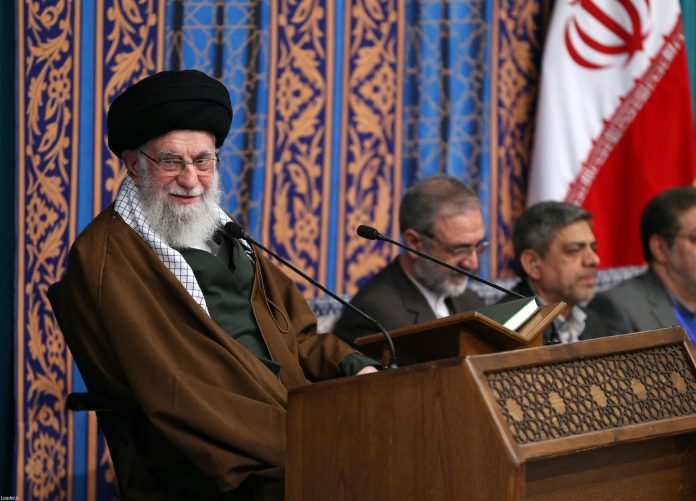
Ayatollah Khamenei says Iran has progressed in every aspect over past 40 years

“The Iranian nation has shown patience and perseverance for over 40 years, while all the arrogant world powers stood against it, working and plotting against it,” the Leader said in a meeting on Sunday with dozens of Quran reciters and memorizers attending the 41st International Holy Quran Competitions in the Iranian capital, Tehran.

“Yet, not only has the Iranian nation not been harmed, but it has also advanced and grown. Today’s Iran is not the Iran of 40 years ago—we have progressed in every aspect,” he added.

The Leader stressed that the Islamic Republic is confronting global arrogance alongside other countries in the world.

However, he went on, “What distinguishes Iran from many other nations is the Iranian people’s courage to denounce the United States as an aggressor, a liar, a deceitful and arrogant power while proclaiming down with America.”

Ayatollah Khamenei also extolled the sacrifices of Palestinian resistance groups against the Israeli regime and underscored the imminent victory of people in the besieged Gaza Strip against the occupying entity.

“God willing, Gaza will prevail over the Zionist regime,” he asserted.

Ayatollah Khamenei stressed the victory of the people of Gaza over the Zionist regime and the American regime as an example of the realization of what seemed impossible.

“If it had been said that the people of the small region of Gaza would fight against a great power like the US and emerge victorious, no one would have believed it, but this impossible matter has been realized by God’s permission,” he noted.

Iran aims to reduce fuel smuggling with smart monitoring system

Iran Gas

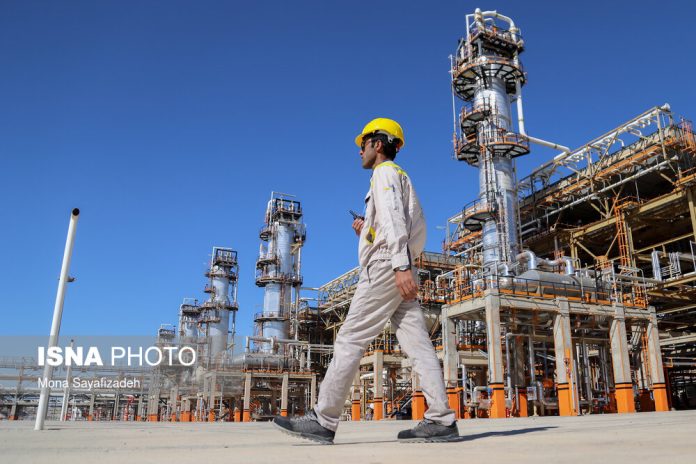
Speaking at the signing ceremony of a memorandum for the “Real-Time Monitoring and Smart Management of the Oil Supply Chain,” Azimi-Far emphasized the government’s commitment to reducing smuggling and improving energy efficiency.

He also said since the start of the current administration, Iran has increased gasoline production by an average of 10 million liters per day, with liquefied petroleum gas (LPG) production reaching 124 million liters daily in December and January.

Azimi-Far, “Daily diesel production increased by 13 million liters compared to the previous average, reaching 124 million liters per day in December this year. This production level was also maintained as the average for January, marking an unprecedented record.”

“In gasoline production, we achieved a 10 million liter increase in the average daily production over the past five months,” he noted.

Despite these gains, Azimi-Far acknowledged that fuel consumption in Iran is double the global average, partly due to smuggling and inefficiencies in the supply chain.

The new smart monitoring system will use advanced technologies, including the Internet of Things (IoT) and artificial intelligence (AI), to track every drop of fuel produced and minimize human intervention.

Azimi-Far stressed that the project involves collaboration with leading domestic organizations to ensure its swift implementation.

Iran celebrates a year of milestones in space industry

Iran Zoljanah satellite carrier

Hassan Salarieh, head of the Iranian Space Agency, highlighted the accomplishments during a ceremony commemorating National Space Technology Day, attended by President Massoud Pezeshkian and other senior officials.

Among the key achievements was the successful launch of the Pars-1 satellite in March, a remote-sensing satellite capable of capturing images with a resolution of 15 meters.

Iran also launched the Chamran satellite, a research satellite aimed at testing orbital control and correction systems. The mission, carried out by the Qaem 100 solid-fuel satellite carrier, marked the third consecutive successful launch of the carrier, solidifying its reliability.

In November, the private sector achieved a historic milestone by independently constructing and launching the Hodhod and Kowsar satellites.

Iran successfully injected a 300-gram payload into low Earth orbit using the Simorgh satellite carrier, which also tested an orbital transfer block, a critical step toward reaching higher orbits.

Salarieh also noted progress in infrastructure, including the Chabahar National Space Center, which is 80% complete and expected to serve as a gateway for international launches.

Other advancements include the development of satellite image reception stations and enhanced laboratory capacities.