Wednesday, December 31, 2025
Home Blog Page 4995

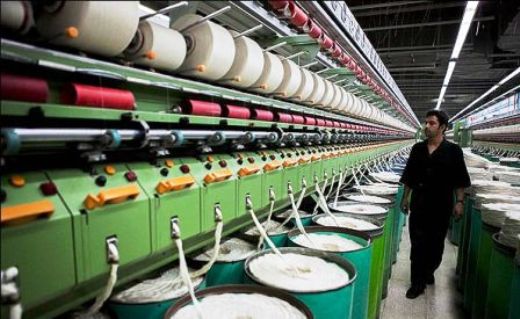
Traditional art of matting in Iran in photos

Iran-wicker mats

Mats or wicker mats are woven by palm leaf fibers in Iranian southwestern province of Khuzestan. Mats are also made by Cyperus papyrus found in abundance in the region. This type of mat is applied as a wicker as well as a cover for house roofs.

The following are the pictures Mehr News Agency posted on its website on December 16 of the traditional art:


Media in captivity

Ekrem Dumanli

The man who is seen in the picture above raising his right hand is Ekrem Dumanli, the editor-in-chief of Zaman newspaper, Turkey’s widest circulating daily.

That is the lead of a report by Sharq daily on December 17 on the arrests by the Turkish government of journalists and the uproar it has caused inside and outside the country. What appears below is the translation of the report followed by the reaction of President Recep Tayipp Erdogan to the barrage of condemnations at home and abroad:

Ekrem Dumanli and a host of fellow journalists should be put behind bars in order for the government of Prime Minister Ahmet Davutoglu not to be harmed, although the prime minster seems to have faded into the background these days and President Recep Tayipp Erdogan is said to be behind all these developments.

A while ago the Turkish government passed a bill in parliament to tighten its control over the media, something which will help it reach its intended objectives much more easily.

The government has rejected as destructive the performance of many independent media outlets and has arrested about 150 citizens who are active in media circles. Some Turkish newspapers have denounced the government decision as bulk arrests [of journalists].

The mass arrests of journalists in Turkey have sparked a firestorm in Europe. Turkey no longer hopes to join the EU; rather, the go-it-alone policies adopted by the ruling Justice and Development Party (AKP) show that the country seems to be dreaming about a return to the days of the Ottoman Empire.


Erdogan
President Erdogan

Erdogan: It is nobody’s business

President Erdogan showed bitter reaction to the EU’s condemnation of the arrests and said, “This question has nothing to do with European Union officials. The arrest of journalists does not run counter to the principle of press freedom”.

‘Crackdown on Corruption Possible through Transparency’

entezami-41

Deputy Minister of Culture and Islamic Guidance Hossein Entezami said the 11th government [President Rouhani’s] is determined to implement a law that allows citizens free access to information, because it believes transparency is the best way to turn up the heat on corruption and the free flow of information contributes to transparency. The following is the translation of part of Entezami’s comments in a press conference as reported by Sharq newspaper on December 17:

Hossein Entezami, who also serves as secretary of the Free Publication of and Access to Information Commission, said crackdown on corruption is possible through transparency, not rhetorical questions of ‘Shall I tell? Shall I tell?’ [A reference to the tactic of threatening to reveal someone’s secrets used by former President Mahmoud Ahmadinejad in presidential debates as he sought reelection in 2009 and later during his second term in office] “What the new law does is that it makes transparency legally binding. Transparency helps stop empty talk.”

He went on to say that by the definitions presented by international organizations we are not in a good position as far as administrative corruption goes. “I am hopeful that the new law helps improve our status in this regard, because the existence of such laws is a factor international bodies take account of in measuring transparency in countries.”

Entezami further said in order for the Free Publication of and Access to Information law to be implemented, free access to information should turn into a public demand. “The cooperation of the legislature and the judiciary with the executive branch is also required.”

The deputy culture minister stated, “The new law requires state institutions to provide citizens access to anything that gives them a right or requires them to do something. In that, the new light is expected to revolutionize the way the state interacts with citizens.”

In conclusion, he said, “In the beginning, there might be some problems about the existence of information in some areas. That means we need to move ahead slow and steady.”

Saudi Arabia serving Western States by Surplus Production

General Firouzabadi

Chief of Staff of the Iranian Armed Forces Major General Hassan Firouzabadi blasted Saudi Arabia for serving the Western countries’ interests by producing excessive oil.

“By increasing oil production, Saudi Arabia assured the US and the West, which represent the world’s big capital holders, that they will not be restricted for supplying fuel and on the other hand by decreasing the oil prices, it laid financial pressure on the regional countries which are fighting the ISIL terrorists,” Firouzabadi said in Tehran on Wednesday.

He voiced regret that regional countries have sustained $500bln worth of losses due to the increasing crude output by Saudi Arabia and its pro-ISIL allies, adding that Riyadh has strengthened the Western states’ financial system with a $300bln gift.

Also, Iranian Supreme Leader’s representative at the Islamic Revolution Guards Corps (IRGC) Ali Saeedi said in relevant remarks that “Saudi Arabia’s wrath at Iran’s influence” is the underlying cause of the falling crude prices.

Also earlier this month, Secretary of Iran’s Supreme National Security Council (SNSC) Ali Shamkhani warned that the decrease in oil prices in recent months was the result of a plot hatched by certain countries.

The fall of oil prices is a manufactured and political plot, he said.

“The reduction in crude oil prices is not an economic issue, rather a political plot by certain countries,” Shamkhani added.

President Hassan Rouhani also stated last Wednesday that the sudden decrease in oil prices in recent months is a plot hatched by the enemies against the regional people and Muslims.

Stressing that regional people would not forget these plots and betrayals against the Muslim world, Rouhani said, “Certainly, people will react to such schemes and the countries which have hatched this plot should know that they have just increased the Muslim world’s hatred for themselves.”

Medical services for terrorists in Israel signify Tel Aviv’s link with terrorism

Shamkhani

A senior Iranian security official said the treatment of ISIL terrorists at the Israeli hospitals is a clear sign of Tel Aviv’s link with terrorism.

“The medical treatment provided for the wounded terrorists from ISIL (the Islamic State in Iraq and the Levant) and Al-Nusra front at hospitals of the Zionist regime of Israel clearly shows Israel’s link with terrorism and the violation of UN Security Council resolutions,” Secretary of Iran’s Supreme National Security Council (SNSC) Ali Shamkhani said.

He made the remarks in a meeting with Iraqi Parliament Speaker Salim al-Jabouri in Tehran on Wednesday.

Reports show that several Takfiri terrorists have been recently transferred to Israeli hospitals for treatment. According to documents from Israeli hospitals, Israel’s army has paid millions of dollars for the costs of treatment to the foreign-sponsored terrorists injured during battles with Syrian government forces.

Earlier in October, Israeli political commentator, Ehud Yaari, said the Tel Aviv regime has provided medical treatment for over 1,400 wounded militants from Syria.

Shamkhani also referred to the failure of the so-called US-led coalition against terrorism, and said that resolving this regional and global crisis requires “goodwill and avoiding political and ethnical objectives.”

Al-Jabouri, for his part, hailed Iran’s significant role in maintaining security and stability in the region, and called ISIL threat a danger that should be eradicated through regional cooperation.

The ISIL militants made swift advances in northern and western Iraq over the summer, after capturing large swaths of northern Syria.

Since late September, the US and some of its allies have been conducting airstrikes against ISIL inside Syria without any authorization from Damascus or a UN mandate.

Meanwhile, a combination of concentrated attacks by the Iraqi military and the popular forces, who rushed to take arms after top Iraqi cleric Ayatollah Ali al-Sistani issued a fatwa calling for fight against the militants, have blunted the edge of the ISIL offensive.

A look at Iranian newspaper front pages on Dec. 18

Iranian Newspapers Headlines

The meetings the visiting Turkish foreign minister and Iraqi parliament speaker held in Tehran with senior officials dominated the front pages of Iranian newspapers on Thursday. The comments of government spokesman about subsides, next year’s budget and cooperation with the construction arm of the Islamic Revolution Guard Corps were on the front pages of several newspapers too.

Abrar: “Talks with the United States are part of negotiations with P5+1,” said Iranian Foreign Minister Mohammad Javad Zarif at a joint press conference with his Turkish counterpart in Tehran on Wednesday.


abrar


Abrar-e Eghtesadi: “A 17 percent pay rise for civil servants [next year] is impossible,” said Government Spokesman Mohammad Bagher Nobakht.


abrar eghtesadi


Afarinesh: “Thanks to the mismanagement of the past, the development budget has been undermined,” said Speaker of the Islamic Consultative Assembly Ali Larijani.


afarinesh


Afkar: Saudi Arabia has declared an oil war on Iran and Russia.


afkar


Arman-e Emrooz: “Tolerance for opposing views should be raised,” said Seyyed Hassan Khomeini, the grandson of the founding father of the Islamic Republic.


armane emrooz


Asrar: “In universities neither the graveyard quiet is good, nor the quiet that is typical of garrisons,” said Seyyed Hassan Khomeini, the grandson of the architect of the Islamic Republic.

Asrar: “Only 40 percent of [individuals and institutions that make up the] economy pay taxes,” said the director of the State Tax Organization.

Asrar: “The Worriers [supporters of the former President Ahmadinejad who are bitterly opposed to the policies of President Rouhani and keep sounding alarms about anything his government does] need not worry about nuclear talks,” said Mohammad Reza Bahonar, a [Principlist] deputy speaker of the Islamic Consultative Assembly.

Asrar: “Hardliners think my warnings are politically motivated,” said Chairman of the Expediency Council Ayatollah Akbar Hashemi Rafsanjani.


asrar


Ebtekar: Reaction to an economic allegation. Reports that $4.1 billion has been withdrawn from the National Development Fund are false.

Ebtekar: “The stage is set for a deal [with P5+1],” said Foreign Minister Mohammad Javad Zarif.


ebtekar


Emtiaz: “The drop in oil prices is a political ploy,” said Iranian Oil Minister Bijan Namdar Zanganeh.


emtiaz


Etemad: The US-Cuba Cold War has ended. Washington and Havana are to reestablish diplomatic ties after five decades.

Etemad: “Khatam al-Anbia Base [the construction arm of the Islamic Revolution Guard Corps] helps the government nobly,” said the government spokesman.

Etemad: “No one will lose as a result of a deal [between Iran and P5+1]” Foreign Minister Mohammad Javad Zarif told a joint press conference with his Turkish counterpart.


etemad


Ettela’at: “High-income individuals won’t get cash subsidies,” the government spokesman said.

Ettela’at: “Iran has no designs on regional countries,” said Parliament Speaker Ali Larijani.

Ettela’at: “Iran stands by the Iraqi people on all scenes,” President Hassan Rouhani told the visiting Iraqi parliament speaker.


ettelaat


Iran: President Rouhani has met with visiting Turkish foreign minister and Iraqi parliament speaker.

Iran: Handicrafts are more appreciated by foreigners than Iranians themselves.


iran


Jomhouri Islami: “The Takfiri movement thrives on division among nations and on insecurity,” the chairman of the Expediency Council told the Iraqi top MP.

Jomhouri Islami: “Ensuring security during Arba’een ceremonies was a manifestation of the power of the Iraqi government and people,” President Rouhani told the Iraqi parliament speaker.


jomhouri eslami


Kaenat: Hamas has been taken off Europe’s list of terrorist entities.


kaenat


Kayhan: The heinous massacre of Pakistani children at the hands of the Taliban has drawn international condemnation.

Kayhan: News of an imminent grand assault by the Iraqi army has sent IS Takfiri leaders fleeing Iraq’s Saladin Province.


kayhan


Roozan: “Reformists have no problem with Larijani and his associates,” said the parliamentary advisor to the chairman of the Expediency Council.


rouzan


Sayeh: “The overall condition of the health sector will improve in six months,” vowed Health Minister Hassan Hashemi.

Sayeh: “Iran stands ready to help Pakistan fight terrorism,” said President Rouhani in a message to the Pakistani prime minister following a school massacre in Peshawar at the hands of the Pakistani Taliban terrorists.


sayeh


Shahrvand: “Between 500 and 1,000 saplings have been planted along Tehran’s most beautiful street: Valiasr.”

Shahrvand: The secretary general of the International Federation of the Red Cross and Red Crescent has said that the potential of the Iranian Red Crescent Society should be tapped into to promote peace.


shahrvand


West Trying to Spread Iranophobia in Region

Ali Larijani

Western countries are trying to spread Iranophobia in the region in a bid to siphon the regional countries’ wealth off, Speaker of Iran’s Parliament Ali Larijani said on Wednesday.

Addressing a gathering of commanders and directors of Khatam al-Anbia Construction Headquarters, Larijani underscored that the Islamic Republic of Iran is looking for restoring the dignity of the Islamic Ummah (community) not boosting its regional influence.

Larijani pointed to Western attempts in recent years to intimidate small Middle-Eastern countries through spreading Iranophobia and stir rifts among regional countries, and said the plots are aimed at plundering these states’ resources.

“Iran is not looking for expanding (influence) and reviving (the Persian) empire in the region,” he said, adding that Iran has never invaded any country.

Larijani also said the strategy set by Imam Khomeini, the late founder of the Islamic Republic, was maintaining the unity and dignity of Islamic Ummah, and stressed that Iran is not involved in “hollow regional rivalry”.

In similar remarks this month, Iranian Defense Minister Brigadier General Hossein Dehqan slammed as doomed the attempts to isolate Iran from the world, saying the moves to spread Iranophobia will lead nowhere either.

Iranian President Hassan Rouhani had also underlined his administration’s resolve to confront ongoing efforts to spread Iranophobia, and said Iran opposes interference in the other country’s affairs.

Iran raps terrorist attack in Pakistan

Pakistan-attack

Iran’s Foreign Minister Mohammad Javad Zarif has denounced the recent terrorist attack on a school in Pakistan, saying that the perpetrators of such crimes seek to harm Islam’s image.

Zarif made the remarks in a Wednesday telephone conversation with Sartaj Aziz, a senior adviser to Pakistani Prime Minister Nawaz Sharif on national security and foreign affairs.

The top Iranian diplomat expressed sympathy with the Pakistani government, people and the families of the victims over the tragic incident in Peshawar, in which more than 140 people, mostly children, were killed.

In accordance with its strategic policy to condemn any kind of terrorist act, and considering its friendly and brotherly relations with Pakistan, the Islamic Republic strongly denounces the attack, Zarif said.

The Iranian foreign minister further expressed Iran’s preparedness to take any necessary measures to provide the injured with medical treatment and care.

Zarif further reiterated the Islamic Republic’s readiness for cooperation with Pakistan and other regional countries in fighting terrorism and extremism in the region.

The Pakistani official, for his part, expressed gratitude for Iran’s sympathy over the deadly incident.

He also said that bilateral and regional cooperation is the most effective way in countering terrorist and extremist groups.

In one of the bloodiest attacks in Pakistan’s history, a group of gunmen, reportedly dressed in military uniforms, stormed the Army Public School in Peshawar on Tuesday morning, going from classroom to classroom, shooting students and teachers.

The Pakistani military said at least 141 people, 132 of them children, lost their lives in the attack. More than 100 others were injured.

The death toll, however, does not include the seven terrorists who attacked the school, all of whom were killed by security forces.

The militant group Tehreek-e-Taliban Pakistan (TTP) has claimed responsibility for the attack, saying it was carried out in retaliation for an ongoing Pakistani military offensive against the militants.

Iran, Turkey can bring about stability in ME

Rouhiani-Çavuşoğlu-Tehran

Iranian President Hassan Rouhani says Iran and Turkey should seek common goals in regional issues in an effort to bring about stability.

The Iranian president made the remarks at a meeting with Turkish Foreign Minister Mevlut Cavluoglu in Tehran on Wednesday.

“Tehran and Ankara should seek common and important goals in the field of regional issues,” Rouhani said. “The two countries’ close cooperation could help ensure stability and security in the whole region.”

He added that “longer steps” have to be taken in boosting relations in political, economic, and cultural fields.

Rouhani noted that “important decisions” had been made during the visits the two countries’ presidents have had.

Cavluoglu, for his part, said, “We believe that we could reach significant solutions with helping each other.”

The Turkish minister also held talks with Iranian Parliament Speaker Ali Larijani and Iranian Foreign Minister Mohammad Javad Zarif after his arrival earlier in the day.

Abbas Araghchi: Iran nuclear talks to be held in January

Abbas-Araqchi

A senior Iranian nuclear negotiator says the next round of nuclear talks between Tehran and P5+1 will be held at the deputy level in January.

“The negotiations next month will also be held at the deputy foreign ministers level,” said Seyyed Abbas Araghchi, who also acts as Iran’s deputy foreign minister for legal and international affairs.

Araghchi made the remarks after nuclear negotiators from Iran and the five permanent members of the United Nations Security Council — Russia, China, France, Britain and the United States — plus Germany wrapped up talks on Iran’s nuclear energy program in the Swiss city of Geneva on Wednesday.

During the discussions, which began on Monday, deputy foreign ministers and experts from Iran and the US held bilateral negotiations on Tehran’s nuclear program.

Representatives from Iran also sat down for bilateral nuclear talks with delegations from France, Russia, and China separately.

Deputy foreign ministers from Iran, Germany, Britain and France also held quartet talks on the Islamic Republic’s nuclear program.

The three-day Geneva discussions were organized three weeks after Tehran and the six countries failed to reach a final agreement by a November 24 deadline.

Despite making progress, Iran and the six countries failed to clinch a final nuclear deal during their previous talks in the Austrian capital of Vienna.

However, Tehran and P5+1 agreed to extend their discussions for seven more months until July 1, 2015. They also agreed that the interim deal they had signed in Geneva in November 2013 remain in place during the negotiations.