Tuesday, December 30, 2025
Home Blog Page 4987

The gum-chewing that set tongues wagging

Gum

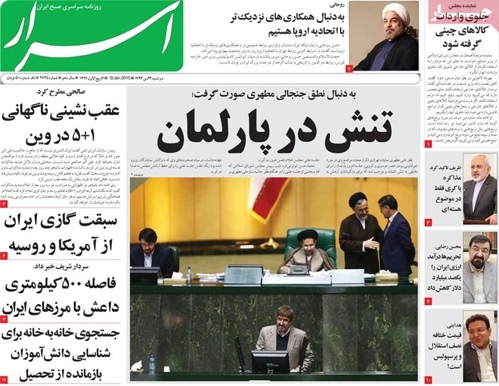
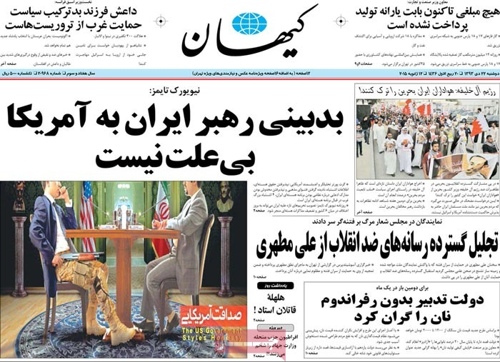
Jomhouri Islami, a daily, has denounced as undiplomatic the gum-chewing of a diplomat accompanying Iran’s representative to the United Nations. The official’s manners became a target for the daily’s ridicule after he was shown chewing gum in a news bulletin on Islamic Republic of Iran Broadcasting.

Alef, a news website, also filed a concise report on the controversial gum chewing on December 22. What prompted IFP to translate the Alef report were the comments that the viewers of the website posted in reaction to the news. The following is the translation of a dozen of such comments:

  • Chewing gum can partially relieve indigestion. It can even help those who suffer from bad breath! I don’t know much about this case, but in some cases chewing gum is prescribed by doctors.
  • The Government of Prudence and Hope and its foreign minister are champions of diplomacy; take it easy!
  • My dear friend, it has always been wrong to point a finger of blame at someone for someone else’s wrongdoing. I want to ask you a question: if your child takes a misstep, is it right for others to blame his mistake on you?
  • It’s no big deal, it’s much better than the government that ushered in inflation and high costs of living; the government whose diplomacy prompted the world nations to turn their backs on Iran!
  • At present, we are not at the pinnacle of dignity either. Prices are not falling, nor does our envoy to the UN deliver glorious speeches on a daily basis!
  • The diplomat that represented the government you favor [Ahmadinejad’s] went to a swimming pool [abroad] full of men and women.
  • They were probably rooted in cultural differences!
  • Gum could be chewed in the presence of the enemy to lampoon them!
  • As long as they don’t bring sanctions on the nation, chewing gum would be much better than discussing pointless philosophical matters in official meetings and bringing about sanctions on Iran.
  • Where did they poach this guy to be sent to the United Nations?!
  • They [officials] must have wanted to denounce [UN] resolutions as “worthless torn pieces of papers”. Of course how biting the resolutions are becomes clear later!
  • Chewing gum at official meetings by officials is a sign of bad manners. Politicians and their associates should be taught by experts in social and political etiquette. Such training is offered in America and Europe.

Rock castle of Sirjan in Kerman Province in photos

Rock castle of Sirjan

Qaleh Sang (rock castle) of Sirjan which dates back to the Sassanid Era, 224-651 CE, is located 7km southeast of Sirjan, Kerman Province in southern Iran. This castle has been registered as one of Iran’s national monuments.

The following are photos of the ancient castle Mehr News Agency posted on its website on December 20:


Ali Larijani: Iran will continue to back Iraq in anti-ISIL fight

Iran-Iraq-Larijani

Iran’s Parliament Speaker Ali Larijani says Tehran will continue to support Iraq in its fight against the ISIL militants.

In a meeting with Iraqi Prime Minister Haider al-Abadi in Baghdad on Wednesday, Larijani expressed hope that certain countries, whose policies have spread terrorist activities in the region, would change their approaches.

The Iraqi premier, for his part, commended Iran’s full support for his country in the battle against terrorism and said Tehran has stood by the Iraqi nation in difficult times.

He added that cooperation between the Iranian and Iraqi nation would lead to a bright future for the two countries and the entire region.

The ISIL terrorists control some parts of Syria and Iraq and are engaged in crimes against humanity in the areas under their control.

Since late September, the US and its allies have been conducting airstrikes against ISIL inside Syria without any authorization from Damascus or a UN mandate.

Washington has been also carrying out similar air raids against ISIL positions in Iraq since August. However, the raids have so far failed to dislodge ISIL.

Three terrorist ringleaders arrested on border: Intelligence min.

Iran's Intelligence Minister Seyyed Mahmoud Alavi

Three terrorist leaders have been arrested on Iran’s borders by border guards, Intelligence Minister Mahmoud Alavi said on Wednesday.

The intelligence chief said the three terrorists were to launch suicide operations at religious gatherings on the final days of the lunar month of Safar in Tehran.

Iran slams allegations of women’s rights violation

iran-women

Iran’s judiciary chief has slammed allegations about the violation of women’s rights in the country.

Addressing a meeting of high-ranking judiciary officials in Tehran on Wednesday, Ayatollah Sadegh Amoli Larijani described the claims as a trite falsehood.

“Women in our country can assume various posts and offices based on the law. Their absence in some positions does not mean their rights are suppressed,” Larijani said.

“For instance, no woman has ever become a president in the United States, could we then say that the rights of women are trampled in the US?” he asked.

Larijani also dismissed the recent United Nations General Assembly resolution on human rights situation in Iran and said the move is a “repetition of the previous false claims, albeit in a new color and taste.”

He further rejected allegations that Iran has carried out “mass, secret executions,” saying the judiciary system will respond to these accusations, if those who have made such claims submit the “names of those executed and the date and location of their executions.”

The Iranian official said most death penalties carried out in Iran are related to drug traffickers whose names and identities are disclosed to their families.

Iran has repeatedly criticized biased reports on its human rights situation, describing them as selective, politically-motivated and unacceptable.

Larijani congratulates counterparts on Christmas

Ali Larijani

Iran’s Parliament Speaker Ali Larijani on Wednesday congratulated his Christian counterparts on the advent of the new Christian year and the birth of Jesus Christ (Peace Be upon Him(.

“It is my pleasure to congratulate you and your revered colleagues on the blessed birthday of the Great Divine Prophet, the Jesus Christ (PBUH), and on beginning of the New Year”.

He said that the international community is more than ever in need of aspirations and values such as justice peace, brotherhood and faith in God which have been brought to humanity by the great divine prophets, and campaign against injustice, despotism and ignorance.

‘Violence and extremism are the main concerns of all nations and followers of divine religions, whose security, tranquility and freedom are seriously threatened in many parts of the world, especially the occupied Palestine, Africa, and West Asia.’

He further said that parliaments should strengthen cooperation and raise mutual understanding to make a better world and play a decisive role in the all-out progress and development of nation.

He said that parliament speakers can tap into cooperation to carry out their common responsibility to eliminate injustice and discrimination worldwide.

President Rouhani congratulates counterparts on Christmas

Iran-President Rouhani

President Hassan Rouhani on Wednesday congratulated the world heads of state on the birthday of Jesus Christ (Peace Be upon Him) and the Christian New Year [which is less than a week away].

“In today’s crisis-torn world, rife with violence rather than divine mercy, peace and passion, recourse to lofty instructions of divine prophets is the only way to gain prosperity and elevation of mankind,” the president said in his message.

He said that the Islamic Republic of Iran is treading the path of promoting peace and security and economic development with the idea of the World against Violence and Extremism, which was passed unanimously by the UN General Assembly.

“The Islamic Republic of Iran has taken strides on the path of challenge and will continue its efforts along with other member states of the United Nations to reach the final goal of respect for human dignity.

In a separate message, the president also congratulated the world Catholic Church leader on the occasion.

Iran has rejected illegitimate demands in nuclear talks: Zarif

Zarif letter

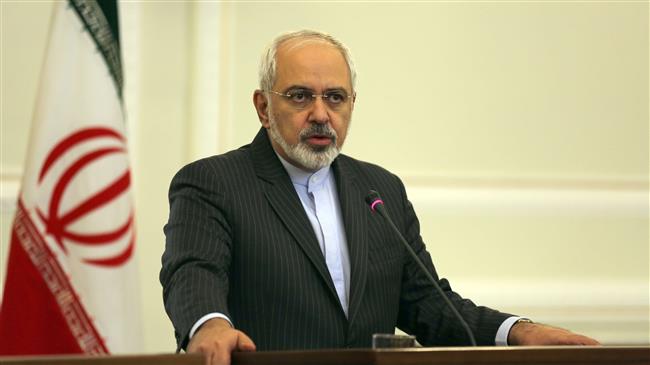
In a letter to his counterparts, Iranian Foreign Minister Mohammad Javad Zarif briefed them on the latest developments in the negotiations between the Islamic Republic of Iran and the P5+1 Group on Iran`s peaceful nuclear program.

The Iranian Foreign Minister said, “My delegation has engaged in these talks with the firm mandate and strong political will to reach a comprehensive agreement. We have clearly demonstrated that we are prepared to accept a rational and fair agreement based on mutual respect and interest, in the same manner as we resist and reject arbitrary, degrading and unlawful demands. We have tried to be creative and innovative and have offered solutions.”

He added, “In our Joint Plan of Action, we envisaged a common goal for these negotiations: To reach a mutually-agreed long term comprehensive solution that would ensure Iran’s nuclear program will be “exclusively peaceful” and “would produce the comprehensive lifting of all UN Security Council sanctions, as well as multilateral and national sanctions related to Iran’s nuclear program.”

Zarif said, “Achieving the first objective is not difficult, because Iran does not want or need nuclear weapons. In our view, nuclear weapons are obsolete tools of the past, incapable of providing external security or internal stability. This is especially the case for Iran, which is content with its size, geography, natural resources and human capital, and has not started a single war in the past three centuries. A sober strategic assessment will show that nuclear weapons are detrimental to Iran’s security.

He added, “Iran also has a solid track record of opposing all WMDs on religious grounds. Ayatollah Khamenei, like his predecessor Imam Khomeini, declared that all WMDs are strictly forbidden by Islam. For this reason, Iran did not use chemical weapons even in retaliation when Saddam Hussein gassed our troops and civilians on a scale not seen since the First World War.”

Part of the letter said, “Moreover, “practical limits” envisaged by JPOA preclude arbitrary limits, which seek to shrink Iran’s enrichment to a token program. Such is neither practical nor realistic.”

The Iranian Foreign Minister pointed out, “The second objective envisaged by JPOA, namely the lifting of all sanctions, is an essential component of any agreement. But some members of P5+1 have become increasingly reluctant to abandon this counterproductive, illegal and inhuman instrument of coercion even at the expense of putting in jeopardy the entire process that provides certainty and assures transparency. Obsession with sanctions has not only obstructed a comprehensive long-term agreement, but also prevented the West from regaining the confidence of the Iranian people even after the adoption of JPOA. While Iran has shown its good faith by completely fulfilling its part of the bargain under the deal, the US and EU have adopted more measures to maintain and strengthen the sanctions regime than to live up to their sanction-easing commitments.”

The Iranian Foreign Minister concluded, “I am confident that a comprehensive agreement is imminently within reach. It requires foresight, political will and recognition of realities by our negotiating partners as well as the audacity to make the right choice benefitting the entire global community rather than succumbing to the whims of vocal, but increasingly unpopular, pressure groups and special interests.”

By 2040 countries lacking nuclear-generated electricity will fall apart

Bousher power plant

Nuclear scientists have stressed that uranium resources will meet energy needs of humans for 5 million years.

Tasnim News Agency ran a report on December 22 on the advantages of nuclear energy and enrichment, taking a look at the history and prospect of nuclear energy. What appears below is the translation of the report:

The world first learned about nuclear energy on August 6, 1945 when the US dropped an atomic bomb on Hiroshima, Japan. Nuclear energy has multiple functions. The World Nuclear Association (WNA) predicts that in 2015, a nuclear power plant will go up and running in the world every five days, on average.

Why will the world opt for nuclear energy? Power generation through nuclear energy is more cost-effective than through fossil fuels. On the other hand, non-renewable energy sources – coal, oil and natural gas – are running out. Those countries which remain dependent by 2040 on the sale or consumption of non-renewable energies will be on the verge of collapse.

Uranium sources can meet humans’ energy demands for 5 million years; that’s why the US which possesses one of the world’s largest oil reserves has the maximum number of nuclear power plants. France taps into nuclear energy to supply 80 percent of its electricity. Production of nuclear energy is cheaper than wind and solar energies and is not tied to any specific climatic conditions. Nuclear energy has more advantages.

3.5 – 5 percent enrichment

Electricity generation through nuclear energy will save $5 billion annually. It also helps diagnose and treat cattle diseases, ensure the safety of livestock products, desalinate seawater and overcome water shortages.

However, when it comes to the employment of nuclear energy for medical purposes, higher levels of enrichment are needed. To diagnose cardiovascular diseases and treat different types of cancers, brain tumors and the like, nuclear medicine should utilize 20%-enriched uranium.

What are the other functions of 20%-enriched uranium? It helps determine toxic elements in foodstuffs, discover rare [earth] deposits, spot environmental pollutants, improve the quality and quantity of agricultural products, and make desert farming an achievable possibility.

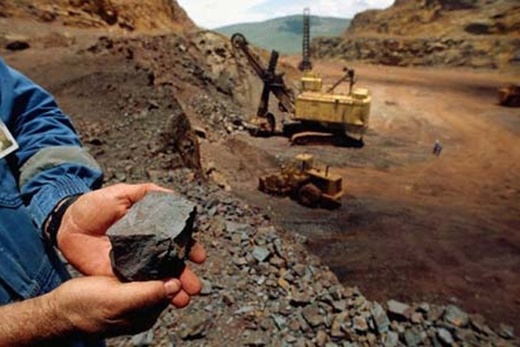
Submarines need the uranium enriched to 45-50 percent as their fuel. A nuclear-run submarine can move underwater for several months without any need to refuel. Currently, only a few countries can tap into commercial-grade uranium, and Iran is trying to break that monopoly.

Tehran University, a hangout of the opponents of nuclear program

Mohammad Esmaili

Iran’s nuclear case has been unquestionably a staple of Iranian news over the past 18 months. The spin different media circles have put on the news differs though, with some trying to deal with the question logically and justly, and others looking at the case one-sidedly.

Mohammad Esmaili, a member of parliament’s National Security and Foreign Policy Committee, has reacted to remarks by some university figures he calls “Revisionists”, calling on President Rouhani’s government to take a transparent stance on the Western-oriented approaches of Revisionists and discourage speculations that his Cabinet is like-minded with them.

Javan, a principlist newspaper, on December 17, ran an opinion piece by Esmaili who has analytically reviewed the performance of the Revisionists, saying perhaps this group aims to “downplay the [high] value the nuclear program has among people”. The following is a partial translation of what else he has written:


Denunciation of nuclear progress

Over the past year prominent figures and media affiliated to Revisionists have pushed hard to fuel suspicions among people [about nuclear achievements] through psychological-media operations and raising demagoguery questions such as “What’s the use of nuclear energy for the nation? … The nuclear achievements pale into insignificance when compared with [growing] economic and political pressures … We need to halt the development of nuclear energy to let people breathe easily”.

To theorize what they say, four people with links to Revisionists – on December 16 – took coordinated positions which clearly show their comments are “purposeful”.

Ahmad Shirzad, a member of the [Islamic Iran] Participation Party in the sixth parliament [which was reformist-majority and rife with tensions including mass resignations of some MPs] made comments in University of Tehran which deserve to be contemplated:

“No water can be taken out of the well (of nuclear industry), but it can provide some people with bread [something to live on] …. From 2003 on, we have taken no single glass of water [from this well]”.

He said, “Nobody in Iran knows why we have stepped onto the nuclear path. This is like the continuation of war after the liberation of Khorramshahr [back in 1982] when certain people were shouting slogans such as: ‘To reach the holy Quds, we need to pass through Karbala.’

“Since 2003 when the nuclear case was first raised, we have achieved nothing. The country was supposed to march toward scientific growth because of its nuclear program, but no research or document proves such growth”.

Davoud Hermidas-Bavand [a political scientist] implied that nuclear progress is costly, saying, “Our problems remain unresolved as long as we fail to patch up our differences with the US.”

Sadegh Zibakalam, a political analyst, said for his part, “Iran has made no scientific progress or innovation as far as the nuclear issue goes”.


What are the objectives of downplaying nuclear values?

In a separate piece of writing, we will study why nuclear gains matter for Iran, but the reasons Revisionists seek “to downplay nuclear values” are as follows:

1. “People don’t regret the loss of something which is useless, valueless and costly for them.” Through such mindset, the pro-Liberalist camp is trying to show that nuclear gains are worthless, costly and risky. The move is meant to weaken public support for such achievements. They seek to make people believe that the march toward nuclear development will earn the country no distinct, objective achievement, thus people should not pin their hopes on nuclear development, rather be content with not having nuclear technology.

2. Since the months leading up to the 2013 [presidential] elections the Revisionist theoreticians have tried to resort to reason No. 1 [above] to make people believe that “nuclear progress translates into economic and pocketbook problems for them”. If institutionalized, such mentality will kill people’s enthusiasm about nuclear progress and make them defy it.

3. Based on the reasons one and two, public disillusionment with nuclear progress paves the way for making concessions to the West.

4. The Revisionist decision makers hold that downplaying nuclear values justifies the theory of “compromise”, “capitulation” and “passivity” which prevailed during and after reformist years, and confirms the continuation of such a trend as expedient for the country.

5. The main reason is “to pit the public against the establishment”. “To be against the establishment” is an integral part and base of the strategy adopted by the proponents of liberalism in Iran. It doesn’t seem far-fetched if we think that they make use of the nuclear case to provoke confrontation between people and the establishment.


What does the government is expected to do?

Finally, it is worth mentioning that the officials of the eleventh government – although they have on several occasions stressed the need for nuclear progress – are expected to show appropriate reaction to pre-planned and targeted stances of Revisionists to eliminate speculations that some office holders see eye to eye with pro-West Revisionists inside the country.