Tuesday, December 30, 2025
Home Blog Page 4985

IRIB chief names woman as deputy for radio affairs

sarafraz-abravan

The head of the Islamic Republic of Iran Broadcasting (IRIB) has picked a woman as his deputy for radio affairs.

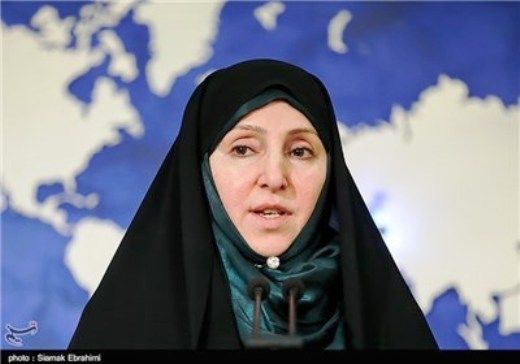
Mohammad Sarafraz on Saturday appointed Nasrin Abravani as his deputy to regulate radio affairs of Iran’s broadcasting service.

Abravani is the first woman ever appointed to the post. She replaces Mohammad Hossein Sufi who assumed the post in 2008.

A graduate of Persian language and literature, Abravani has served as director of Radio Payam, a popular radio station which broadcasts music and news items. She has also served as news editor and writer in radio programs since 1997.

Launched in 1926, Iran radio department governs 27 national radio stations, broadcasting programs for various ethnic groups inside Iran.

Iran congratulates world Christians on New Year

Iran-Christians

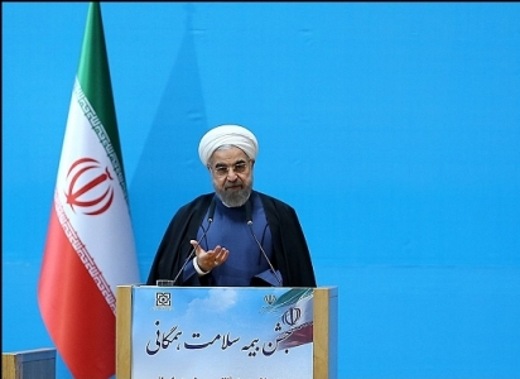
Iran’s President Hassan Rouhani has congratulated Christians around the world New Year.

“On the threshold of the new Christian year, I urge fraternity and amity upon all free-thinking and peaceable people, and hope the year 2015 will be a year replete with prosperity and welfare for all people of the world,” the president said in a congratulatory message.

Rouhani also referred to the birth of Jesus as “good tidings to mankind.”

“Jesus came to give the good news that God is one, but does not belong to a single ethnic group or tribe. God is one, and is so for all humanity. Jesus came to say there is no [such thing as a] superior, better ethnic group.”

“We take pride in Iran, which is home to all Iranians, including Muslims, Christians, Jews and Zoroastrians,” the president said, and noted, “We Iranians have, as one of the first Muslim ethnicities and nations, always had good experience of coexistence with our fellow Christian countrymen and women.”

He said the onus is on Muslim and Christian intellectuals to “initiate people into the message of divine spirituality with clear-sightedness and awareness, and to stand up to violent distortion of the divine religion.”

Iranian children shine in Bulgarian Painting Contest

Child paint

Three Iranian children were awarded diplomas of honor at the International Montana Children Painting Competition in Bulgaria.

Paria Pirmandi, 12, Kimia Mahmoudtash, 14, both from West Azarbaijan province and Elaheh Yarahmadi, 7, from Lorestan province were awarded in the competition themed ‘Music and Devotional Dances’.

The Institute for Intellectual Development of Children and Young Adults had forwarded some 331 works to the event.
Israel’s illusions draw a firm response from Iranian MP

Alaeddin Boroujerdi

On December 27, Tabnak, a news website, quoted a senior Iranian MP as describing as delusional the comments of an Israeli Foreign Ministry official that Tel Aviv will one day reopen its embassy in Tehran. What appears below is the translation of the report:

“Not only will such a dream never come true, but Gold willing, the Islamic Republic of Iran will one day open its embassy in the holy land of Palestine without the presence of the Zionists,” said Alaeddin Boroujerdi, the chairman of parliament’s National Security and Foreign Policy Committee.

On Thursday, after news came out that the Israeli Foreign Ministry is going to offer Persian-language courses to its employees, Paul Hirschson, the ministry spokesman, started daydreaming and said that Israel will one day open its embassy in Tehran.

Yedioth Ahronoth, a Tel Aviv-based daily, reported that the language course by the Israeli Foreign Ministry is designed to provide additional tools for employees who deal with Iran’s nuclear program.

Such courses are aimed at helping Tel Aviv with fulfilling its 2015 objectives as far as Iran is concerned, including foiling Tehran’s nuclear program, exerting diplomatic pressure on Tehran, keeping sanctions in place, securing regional unity against Iran and highlighting Iran’s role in supporting [Palestinian] resistance groups, the daily reported.

After a 2-month hiatus music events are staged in Iranian concert halls

orchestra-sanfonic-tehran

On December 25, Iran, a daily, carried a report about the resumption of concerts in Tehran after a two-month hiatus because of the mourning months of Muharram and Safar. The following is a partial translation of the piece:

With mourning functions coming to an end, musical instruments are getting tuned to be played at concerts. After an interval of two months, concertgoers are looking forward to watching the performance of their favorite musicians.

With the concerts, comes into force a new agreement between police and the Music Office at the Ministry of Culture and Islamic Guidance. The deal eliminates the possibility of concert cancellations because of a lack of coordination between the police and organizers.

Rose, a newly-formed band led by Nazli Bakhshayesh, has already performed to a women-only audience at Tehran’s Niavaran Cultural Complex.

Vahdat Concert Hall will play host to Zaman Classical Guitar Orchestra conducted by Farzad Daneshmand in the final days of December. The orchestra will have staged two more charity concerts for cancer patients by yearend [March 21, 2015].

Fereydoon Nasehi, a veteran composer and musician, will give a piano recital in early January at Tehran’s Niavaran Cultural Complex. Nasehi will play a selection of pieces by Wolfgang Amadeus Mozart, Franz Peter Schubert, Frédéric François Chopin, Sergei Vasilievich Rachmaninoff and Franz Liszt.
Iranian pop band Seven will put on a concert at Milad Hall at Tehran International Fairground in mid-January.
Iran sets its sights on joint oil fields

arabs oil

Oil Minister Bijan Namdar Zanganeh has ordered the transfer of drilling rigs to oil fields jointly owned by Iran and neighboring Arab countries.

Iran newspaper ran a front-page report on December 25 on the order by the Iranian oil chief, calling it a giant leap by Iran toward better exploitation of joint oil fields. Here is a partial translation of the highlights of the full report on what Iran is planning to do to develop and exploit the fields:

Oil reserves are finite. The eleventh government [President Rouhani’s] has revised the country’s development plans, concentrating its efforts on the development of joint oil fields to raise the volume of crude oil – currently seven percent – Iran produces in the fields co-owned by neighboring countries.

The government has also required the oil industry to increase its production capacityto more than 5.7 million barrels per day in four years’ time.

Based on the targets set by authorities, Iran’s crude output in the West Karoon Oil Fields is projected to increase to 700,000 barrels per day by 2018.

By 2018, the Iranian government will have invested upward of $21 billion in the joint fields.

Stolen Iranian antiques returned from Belgium

Stolen Iranian antiques returned from Belgium

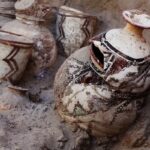
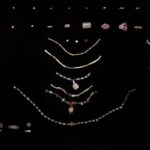
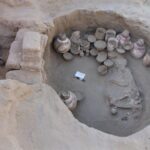
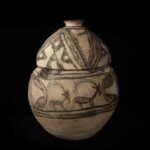
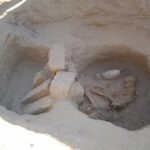
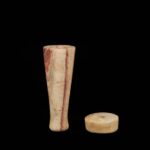
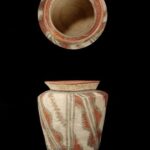
A collection of over 300 Iranian artifacts in Belgium for 50 years has finally been returned to Iran.

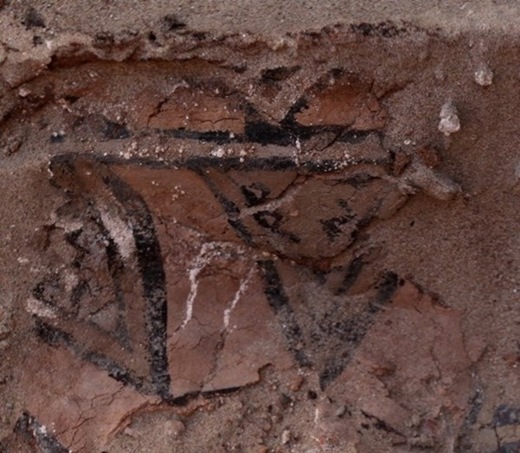
The 349 Iranian heritage items which had been illegally transferred to Belgium some 50 years ago were finally handed back to Iran by following a Belgian court ruling 33 years in the making.

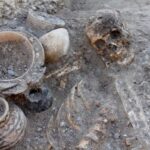
The stolen artifacts comprising of 221 clay and 128 bronze antiques date back to the end of the second millennium and the first millennium BC and are some 3,000 years old. They will be put on display at the National Museum of Iran soon.

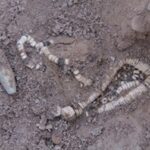
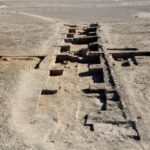
The antiques which had been discovered in Khurvin, Alborz Province, were gradually transferred to Belgium in 1965 by a French woman who had acquired an Iranian nationality due to her marriage to an Iranian professor.

After the Iranian government was informed of the existence of the collection in a Museum in Ghent, Belgium, it filed a lawsuit in Belgian courts in 1981, saying that the artifacts which had been illegally transferred out of the country, belonged to the government of Iran.

After more than 30 years, a Belgian court finally ruled in favor of Iran in September 2014 and the antique collection was returned to Iran on Thursday Dec. 24.

The head of Iran’s Cultural Heritage, Handicrafts and Tourism Organization (ICHTO) Masoud Soltanifar, while confirming the transfer of the antiques to the National Museum of Iran, maintained that Iran is adamantly following up on a similar case related to some 7,000 Achaemenid tablets which are presently being kept in the Oriental Institute of the University of Chicago.

According to the former head of ICHTO Mohammad Ali Najafi, the clay tablets had been loaned to Chicago’s Oriental Institute for Studies and Translation during the rule of the Shah, but they have not been returned to Iran yet.

Other than the case on Achaemenid tablets, Iran is following up on another case involving artifacts discovered in Choghamish in Dezful County, Khuzestan Province, which according to Soltanifar is in its final stages.

Iran hits 66% copper production target

Seyyed Mohamad Fatemian

Iran realized 66 percent of the copper cathode target by producing 129,000 tons in the eight months to November 21, said the director general of Mineral Industries Office of the Ministry of Industries, Mines and Trade.

“Based on the strategy for copper production by Iran University of Industries and Mines, it is predicted that Iran will produce 850,000 tons of copper cathode in future,” Seyyed Mohammad Fatemian added.

A total of 34 copper mines are operating in Iran, which account for almost five percent of the global copper resources.

“The installed capacity in downstream copper industries such as wire staples, pipes and the like is 940,000 tons,” he said, regretting that the productivity of this sector is only 20 percent due to low consumption of such products.

Fatemian noted that Iran produced 156,993 tons of copper anode and 523,598 tons of copper concentrates during the period.

“Based on international studies, 20 downstream manufacturing companies are on stream throughout Europe, while in Iran, 120 downstream copper units are working,” he said.

The official noted that in order to boost copper production capacity, new investment and development plans are inevitable.

The production of 24,120,159 tons of sulfide ore, 3,844 tons of molybdenum concentrate and 26,508 tons of wire staples was reported during the period.

Iran extracted 108,719,487 tons of copper during the same period.

Fatemian predicted that small mines will help produce 200,000 tons of concentrates, which require investments worth $625 million.

“Although copper exports will continue, domestic need is prioritized,” he said.

Copper complexes of Sarcheshmeh, Sungun and Miduk are the main copper mines of Iran respectively.

Iran constant supporter of Iraqis: KRG president

Larijani-Barzani-Erbil

The president of Iraq’s Kurdistan Regional Government has hailed Iran’s constant support for the Iraqi government and people in their fight against terrorist groups.

“Iran stood by the Iraqi government and nation in a difficult situation when the ISIL terrorist group was threatening (the capital of Iraqi Kurdistan region) Erbil and (the Iraqi capital) Baghdad, and this measure is worthy of appreciation,” Masoud Barzani said in a meeting with Iran’s Parliament (Majlis) Speaker Ali Larijani in Erbil on Friday.

Referring to numerous commonalities between the Kurdish region and Iran, Barzani stated that the two sides have good relations, which will be expanded in the future.

Larijani, for his part, described the current situation in the Middle East as sensitive and serious, calling on all regional governments to “feel responsible” in this regard.

Larijani, who arrived in Iraq early on Tuesday on the last leg of a regional three-country tour, also met with some other top officials, including Iraqi Prime Minister Haider al-Abadi, former Iraqi Parliament Speaker Mahmoud al-Mashhadani, and Deputy Leader of the Patriotic Union of Kurdistan Barham Salih.

The ISIL terrorist group controls some parts of Syria and Iraq. The Takfiris have engaged in crimes against humanity in the areas under their control. The militants have mass murdered local civilians, captured army and security officers and terrorized people from diverse communities, including Shias, Sunnis, Kurds, and Christians.

Iran’s Army Employs Suicide Drone in Drills

General Ahmad Reza Pourdastan

The Iranian Army Ground Force has for the first time utilized a type of suicide drone in the military exercises underway in the country’s south and southeast, a senior army commander announced.

“The (suicide) drone can be used for hitting the aerial and ground targets and can carry out an attack when it identifies a suspicious target,” Commander of the Iranian Army Ground Force Brigadier General Ahmad Reza Pourdastan told reporters on Friday.

He made the comments on the sidelines of large-scale military war games, now underway across the southeastern and southern Iranian provinces of Sistan and Balouchestan and Hormozgan.

Codenamed “Muhammad Rasulullah” (Muhammad, the messenger of God), the war games began on Thursday with the participation of different Army units and is expected to run until December 31.

The Ground Force’s plan to use suicide drones dates back to September 2013, when Pourdastan said his forces manufactured a new type of advanced suicide drone, dubbed ‘Ra’ad 85’.

“This drone is like a mobile bomb, and is capable of destroying fixed and mobile targets,” the commander said.

Elsewhere in his comments on Friday, the top army officer said the Ground Force employed Unmanned Aerial Vehicles (UAVs) in the ongoing drill in two phases.

In the first step, the drones played the role of enemy aircraft and in the second phase, the pilotless planes flew as the friendly aircraft, he explained.

He also hailed an extension in the range and operational capabilities of the Ground Force drones.

“These drones can carry heavier payloads compared to the past, and the quality of their optical devices has also improved,” the commander added, describing the drones as the “Ground Force’s upper-hand” in the battle field.