Tuesday, December 30, 2025
Home Blog Page 4984

Why the Iranian top diplomat sent letters to his counterparts around the world

iranian-foreign-minister

On December 8 in a letter to world’s top diplomats, Israeli foreign minister excluded of course, Iranian Foreign Minister Mohammad Javad Zarif elaborated on the latest developments in negotiations between the Islamic Republic of Iran and P5+1 on Tehran’s peaceful nuclear program. No doubt, the letter diplomacy, if you will, is proof of Iran’s goodwill gesture at a time when the other parties to the talks keep changing course and stance at the eleventh-hour. Donyay-e Eghtesad newspaper on December 27 ran a report on explanations by two former Iranian diplomats on why the foreign minister decided to put pen to paper:


Ali Akbar Velayati, an advisor to the Supreme Leader: Western frameworks are not coherent


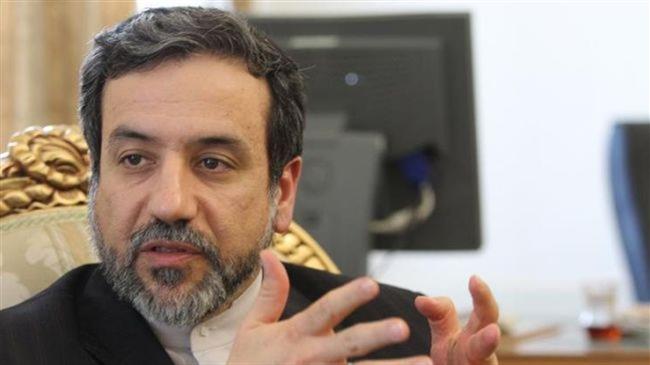
Ali Akbar VelayatiConsultations before and after the talks are what all countries, Iran included, do to directly let other nations learn about their official positions. Such consultations are designed to prevent the official stance of a country from being circulated through third parties. […]

We witnessed a change of heart on the part of the West in Vienna when the talks seemed to be closing in on a deal. By Sunday morning [one day before the November 24 deadline] the Westerners were acting as if the conclusiveness of the talks was certain, but they changed their mind all of a sudden. This shows that Western negotiators, including the US secretary of state, had no real authority at the talks.

The US and its fellow P5+1 had better send those officials to the talks who have strong willpower and clear guidelines to follow, just like the Iranians.

[…]

For sure, countries consult with their foreign ministers and agree on initial principles before they enter talks. That the Americans change their lines is perhaps the result of pressures placed on them at home or abroad to change the outcome of the talks in their own favor. The US which has for long claimed to be a super power risks its credibility by failing to honor its commitments.


Seyyed Hossein Mousavian, a former Iranian nuclear negotiator: Iran has acted in good faith


Seyed-Hossein-MousavianThe message of Mr. Zarif’s letter is that Iran has proved its good intention to clinch a comprehensive deal within the framework of the nuclear Non-Proliferation Treaty (NPT). World powers, not Iran, are making demands beyond what has been envisioned in the NPT and have obstructed – and will obstruct – the finalization of a deal.

Western demands which go beyond the requirements of the nuclear Non-Proliferation Treaty (NPT) are the major obstacle standing in the way of a nuclear deal between Iran and P5+1. The letter written by Foreign Minister Zarif has also underscored this fact.

I believe that the US president and secretary of state are both serious in seeking a deal that entails uranium enrichment and the gradual lifting of the sanctions. They do not intend to play politics with Iran. However, the fact of the matter is that the laws governing US sanctions against Iran are complicated and the American president does not have the authority to lift them. At best, he might be able to have them suspended. Anyway, it is a domestic issue for the Americans and the Obama administration will have to secure the green-light of Congress.

I am optimistic about the prospects of a deal. President Rouhani’s government and the Obama administration are both determined. The Europeans, the Russians, and the Chinese are also convinced. Above all, Iran’s negotiating team has the backing of the Supreme Leader. Therefore, conclusion of a final deal is possible, and God willing it will come soon.

Hampoiel Cave in northwest Iran in photos

Iran-Hampoiel Cave

Hampoiel Cave is situated in Tazekand village, 8 km to the southeast of Maragheh, a town in East Azarbaijan province. Locally known as the cave of birds, the cave has an entrance the rooftop of which used to be a nest for wild birds. The 200-meter-deep cave is more than 2 km in length. It is home to six vertical wells as well as wide hallways and large rooms. Below are the photos of the beautiful cave Mehr News Agency posted on its website on December 28:


One day, two prophets; festivals of joy and sorrow

Religoins in Iran

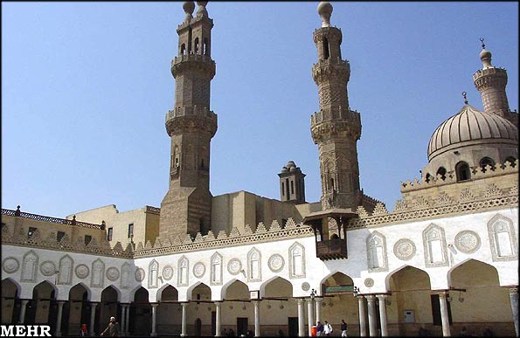
A mosque, a synagogue, a church and a fire temple are sitting a short distance apart along an old street in Tehran. As for the neighborliness of the four houses of worship in one small area of the Iranian capital, Seyyed Mohammad Beheshti, the Head of the Research Center of Iran’s Cultural Heritage, Tourism and Handicrafts Organization (ICHTHO), which is also located on the same street, says, “Foreigners do not need to travel to different corners of the country to see the peaceful coexistence of the followers of different religions and denominations in Iran; they can simply take a short stroll along the Tir 30th Street (previously called Qavam os-Saltaneh Street) [and see for themselves how they live peacefully together].

The followers of the Zoroastrianism held a ceremony on December 25 to mark the demise anniversary of the Prophet Zoroaster. The following is a partial translation of a report the Iranian Students News Agency (ISNA) filed on the religious observance:

In the ceremony, a Zoroastrian priest read out parts of the Avesta [the Zoroastrian scriptures] and the faithful started to pray en masse. Later they went to the Adrian Fire Temple in downtown Tehran for praying.

Across the street from the fire temple where Zoroastrians were mourning the demise of their prophet, the Church of Mary, awash with Christmas trees and baskets of flowers, had opened its doors to Christians who were there to celebrate the birth of Jesus Christ.

To enter the fire temple, women should have head covering, white scarves for instance, and men should have white hats on. As worshippers enter the temple, the Zoroastrian priest – the only person who is allowed to go into the fireplace – fans the flames of fire, literally, to help his fellow Zoroastrians enjoy their praying.

When praying, the Zoroastrians face fire, sunlight, moonlight, light or even a lit candle. They go to the fire temple to read the Khordeh Avesta, a Zoroastrian hymnal for laypeople, and say one of their five daily prayers there.

Also as part of the ceremony, they went to the Ghasr-e Firouzeh cemetery to pay a graveside visit to the dead.

Zoroastrians believe that water, soil, fire and wind are holy elements and should not be contaminated. […]

They also stand in long lines to get Ash-e Nazri [votive pottage] which is cooked especially for the demise anniversary of the Zoroaster, something they view as a blessing and send it in packages to their relatives living abroad.

An old Zoroastrian lady says this pottage is identical to what Muslims prepare in Muharram and Safar when they mourn the martyrdom of Imam Hussein. She adds that the Zoroastrians respect Imam Hussein for his marriage to Bibi Sharbanu [a daughter of Yazdegerd III, the last Emperor of the Sassanid dynasty in Iran] and view the third Shiite Imam as their son-in-law.

[…]

Islam views Zoroastrianism as a divine faith and respect its followers as the People or Religions of the Book. […]

Iranian professor joins US National Academy of Inventors

Iranian professor joins US National Academy of Inventors

An Iranian scholar and an associate professor at the University of South California joined the US National Academy of Inventors (NAI).

The NAI is an elite group of inventors which includes 21 Nobel laureates from across the world.

The institute brings together 414 leading inventors, 16 of whom have won the National Medal of Technology and Innovation and 10 have received the Great Seal of the US.

Dr. Khoshnevis who is Sharif Poly Technique University graduate is well-known worldwide for his newly-developed three-dimensional building printing system.

His robot system is able to construct a 2500-square feet building in 18-19 hours jointly with four other people.

He is now working on systems for quick construction of buildings on the moon and Mars.

President issues executive order to revive Management, Planning Org.

Rouhani issues

President Hassan Rouhani on Saturday issued an executive order to reinstate the Management and Planning Organization.

With the executive order, the president is going to fulfill one of the promises he made on the campaign trail.

The former president Mahmoud Ahmadinejad dissolved the specialized organization in gross violation of the Constitution which envisaged decentralization of financial administration as a pre-emptive measure against corruption.

The Management and Planning Organization was a specialized agency working to earmark budget for different institutions in the context of the annual budget plan which must be presented to parliament for approval.

The former president, well-known for his self-styled administration dissolved the organ to take the charge of all financial affairs in violation of the Constitution.

Members of parliament expressed outrage at Ahmadinejad’s move to dissolve the Management and Planning Organization, but he accused the parliament speaker of inciting the MPs against what he did.

In response to public anger at the unlawful actions of the former president, President Rouhani promised to revive the Management and Planning Organization if he was elected president.

Rouhani said that he gave the executive order following the green-light of the Supreme Administrative Council.

The Supreme Administrative Council in its 168th session on December 3 approved the reestablishment of the State Management and Planning Organization and its branches in provinces in a bid to create unified management and solidarity in organizational structure.

Proposed by Presidential Department for Planning and Strategic Supervision, the move is also aimed at providing the strategic requirements for the country’s development and promoting sustainable development.

Rouhani made clear that the reestablishment of the entity is taking place under Articles 126 and 124 of the Constitution.

A 1st int’l gathering of Islamic political parties to be held in Tehran

int’l gathering of Islamic political parties

On December 27, in a brief report, Etemad, a daily, reported that a first gathering of political parties from Islamic nations will be held in Tehran on January 8 on the sidelines of an International Islamic Unity Conference. What follows is the translation of the report:

The gathering brings together participants from India, Pakistan, Indonesia, Turkey’s Felicity Party, Lebanon’s Amal Movement and Hezbollah, Afghanistan, Iraq’s Islamic Dawa Party and the Islamic Supreme Council of Iraq, Tunisia, Bahrain, Malaysia, Algeria, Sudan, Tajikistan, the Islamic Jihad Movement in Palestine and Hamas.

The gathering will discuss a variety of topics, including denunciation of violence, extremism in the eyes of Islamic parties, the role of political common ground in unity among parties and political leaders, the role of Islamic parties in bringing followers of different Islamic sects closer, practical ways of securing international cooperation among parties in Islamic countries.

Iran backs freedom of religious minorities

President Rouhani’s assistant

The Islamic Republic of Iran feels duty bound to protect religious minorities and their freedom to practice their religion of choice, on December 27 Sharq newspaper quoted Ali Younesi, a special assistant to the president for ethnic and religious minorities, as saying.

The following is the translation of what else Younesi said on December 26 in a Tehran church for Assyrian and Chaldean Christians, marking the birth anniversary of Jesus:

Any disrespect by a Muslim for Jesus Christ (Peace Be upon Him) amounts to conscious abandonment of Islam by a Muslim.

The ceremonies to celebrate the birth anniversary of Jesus do not exclusively belong to Christians; rather, all Iranians – including Muslims – celebrate this joyful occasion.

Iranian Christians can take pride in the fact that they welcomed Christianity much earlier than the Romans and the Europeans, and this proves the intelligence of the Iranians.

Bam Citadel in photos, 11 years after killer earthquake

Iran-Bam citadel

The ancient city of Bam in Kerman, which is home to Arg-e Bam (the historical Bam Citadel), is lively and still standing strong 11 years after the 2003 earthquake. The reconstruction and renovation process of the city continues to progress.

The following are the pictures the Islamic Republic News Agency released on December 27 of the historical city more than a decade after the devastating earthquake:


A look at Iranian newspaper front pages on Dec. 28

Iranian Newspapers Headlines

Most Iranian dailies on Sunday led on the government’s reaction to allegations that it has illegally withdrawn $4.1 billion from the Foreign Exchange Reserve Fund. The government insists that there has been no such withdrawal. Some MPs, among them a principlist heavyweight Ahmad Tavakoli, say the report by the Supreme Audit Court is compelling enough that the fund has been tapped. Images of major war games by the Iranian Army in the south and news about Russia’s new military doctrine appeared on the front pages of several dailies too.


Abrar: “Up to 40 percent of street children are HIV-positive,” said the founder of the Society for the Protection and Assistance of Socially Disadvantaged Individuals.


Abrar newspaper 12 - 28


Afarinesh: President Rouhani has ordered the reinstatement of the Management and Planning Organization.

Afarinesh: The government has denied reports that it has withdrawn money from the Foreign Exchange Reserve Fund.


Afarinesh newspaper 12 - 28


Aftab-e Yazd: “Low-interest loans will be offered to the needy,” said government spokesman Mohammad Bagher Nobakht.
 

Aftabe yazd newspaper 12 - 28


Arman-e Emrooz: Former President Mahmoud Ahmadinejad’s membership of a political party has been revoked.


Armane emruz newspaper 12 - 28


Asrar: “Human rights have turned into a tool in the hands of the West,” Iranian Foreign Minister Mohammad Javad Zarif said at a meeting with his Belorussian counterpart.

Asrar: “Talks with P5+1 won’t last forever,” said President Rouhani’s Chief of Staff Mohammad Nahavandian.

Asrar: The new president of the Islamic Republic of Iran Broadcasting has appointed a female vice-president for the national broadcaster.


Asrar newspaper 12 - 28


Etemad: [Principlist MP] Ahmad Tavakoli has accused the government of acting against the law. In reaction the government spokesman has urged those who have made the “false accusations” to apologize to the government and the public.


Etemad newspaper 12 - 28


Ettela’at: “Some 55 percent of Iranian people are under 30 years of age,” said the director of the National Organization for Civil Registration.


Ettelaat newspaper 12 - 28


Hemayat: Bahraini people have staged a massive demonstration against the country’s rubberstamp parliament.


Hemayat newspaper 12 - 28


Javan: The Russian President has signed a new military doctrine which lists NATO as a major foreign threat to the Russian Federation.


Javan newspaper 12 - 28


Jomhouri Islami: The Iraqi army has liberated the town of Ramadi.

Jomhouri Islami: Former US President Jimmy Carter has described the policy to impose sanctions on nations as inefficient.


Jomhurie eslami newspaper 12 - 28


Kaenat: The first vice president said the government has made arrangements to prevent an oil shock.


Kaenaat newspaper 12 - 28


Kayhan: An investigation has been launched into the performance of mobile phone operators.


Kayhan newspaper 12 - 28


Mardom Emrooz led on an exclusive about Iran-Saudi ties. Less than a week ago Iran sent a message to the Saudi government, calling for understanding on regional issues, nuclear talks and oil prices.


Mardome emruz newspaper 12 - 28


Mardomsalari: The UN secretary general’s envoy to Tehran has said that the international community needs Iran’s support.


Copy of Mardom salari newspaper 12 - 28


Resalat: “A decree by the Supreme Leader stopped the execution of the seditionist leaders,” said Ayatollah Mesbah Yazdi.


Resalat newspaper 12 - 28


Sayeh: “Despite a drop in oil prices, the government is not worried about next year’s budget,” said the economy minister.


Sayeh newspaper 12 - 28


Sharq: Next year’s spending package envisions a 120 percent rise in the budget of state hospitals.


Shargh newspaper 12 - 28


Taadol: The new head of the Securities and Exchange Organization of Iran has said he would continue the policies adopted by his predecessor.


Copy of Taadol newspaper 12 - 28


Vatan-e Emrooz: The former director of the Atomic Energy Organization of Iran has said that the 2009 sedition [unrest caused in the wake of presidential elections] paved the way for the assassination of Iranian nuclear scientists.


Vatane emruz newspaper 12 - 28


Iran Blasts West’s “Unlawful” Sanctions

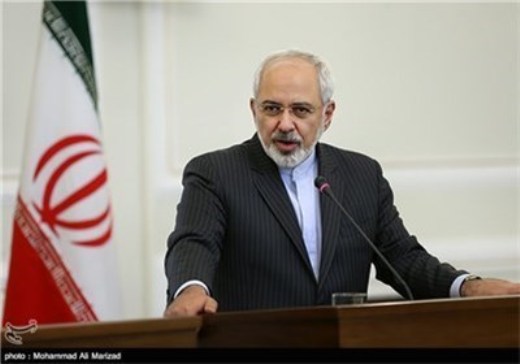
Zarif-Iran

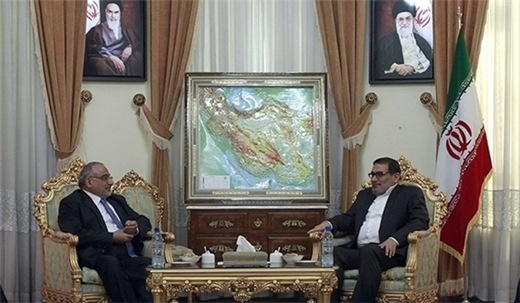
Iran’s foreign minister lashed out at the West for employing “unlawful and cruel” sanctions as leverage to exert pressure on other nations.

“We should not let the Western countries make use of sanction as a tool to pile up pressure on other countries,” Mohammad Javad Zarif said in a meeting with his Belarusian counterpart in Tehran on Saturday.

Making a reference to the Western sanctions imposed on Iran and Belarus, Zarif added, “The countries that aretargetedby the unlawful and cruel sanctions need to keep moving by relying on their own capabilities.”

He also pointed to the nuclear talks between Iran and major world powers, stressing that the negotiations will bear fruit only if the Western parties come to the understanding that “unfair sanctions, which go counter to the international regulations, do not amount to a great achievement for them.”

Belarusian Foreign Minister Vladimir Makei, for his part, voiced Minsk’s support for Tehran’s right to enjoy nuclear technology for peaceful purposes.

Belarus believes that the Iranian negotiators handle the nuclear talks with six world powers “wisely and in a prudent manner.”

Iran and P5+1 (Russia, China, the US, Britain, France and Germany) are in talks to hammer out a final agreement to end more than a decade of impasse over Tehran’s peaceful nuclear program.

The two sides wrapped up a week of intensive nuclear talks in Vienna on November 24 without reaching a long-awaited deal they were supposed to hammer out by the self-imposed November 24 deadline.

Negotiators from Iran and the sextet concluded a round of deputy-level talks on Tehran’s peaceful nuclear program in Switzerland’s Geneva on December 17.

The Swiss city will reportedly once again host the next round of talks before January 20, 2015.