Friday, December 26, 2025
Home Blog Page 4928

With or without sanctions, we’ll pursue resistance-based economy: VP

Jahangiri-Vice president

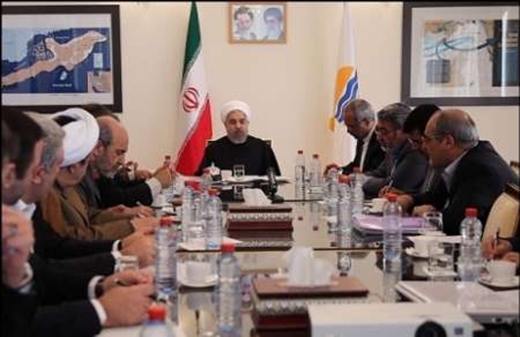
First Vice-President Eshagh Jahangiri has said resistance-based economy is a perfect recipe for simultaneous settlement of a variety of problems such as unemployment, inflation, sanctions as well as environmental woes.

According to a February 22 issue of Ettela’at daily, the vice president made the comment at a 14th International Environment Exhibition Sunday. The following is what else he and the environment chief had to say at the expo:

A resistance-based economy is one which remains unfazed in the face of local and foreign shocks. Whether we succeed in having the sanctions lifted, which God willing we will, or not resistance-based economy will be pursued.

Everyone should contribute to efforts to fundamentally settle the environmental problems of the country. Taking political and factional advantage of the problems of the people is below officials. Those who resort to such practices should know that their impact is short-lived.

Air pollution affects as many as 30 million people across the nation and since the rise to power of the current government measures to settle the problem of air pollution have been a top priority.

Government is committed to environmental issues in its development programs. Without environmental studies no permission will be issued to development or industrial projects. Projects like the Gatvand Dam which affect the environment will be rectified.

Director of the Environment Protection Organization told the same gathering that sustainable development won’t be possible in the absence of efforts to protect the environment.

Experience shows that many of the harms the environment suffers are irreversible, so measures should be taken to secure development and protect the environment in parallel.

Time is perfect to cut dependence on oil: Economy minister

Ali Tayyebnia

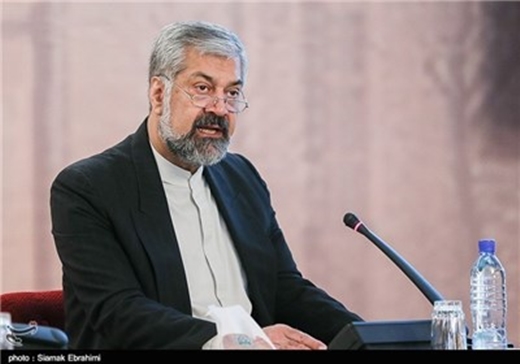
Minister of Economy and Financial Affairs Dr. Ali Tayyebnia has said that reliance on oil and on government are the two main problems of Iran’s economy.

According to a February 22 issue of Ettela’at newspaper, the economy chief made the comment in an interview with Khamenei.ir, the website of the Center for Preserving and Publishing the Works of Grand Ayatollah Seyyed Ali Khamenei. The following is a partial translation of what else he had to say:

Opting for a resistance-based economy is inevitable today. Weaning the economy from its dependence on oil revenues should turn into a national issue with public consensus on its implementation. The present juncture offers the best opportunity to reform the economy and cut dependence on oil.

Dependence on oil is no superficial matter to be settled by short-term decisions; on the contrary, it is a fundamental, structural problem whose impact is evident in all aspects of our social, political and economic life.

To solve the problem of dependence on oil which has furtively found its way into various economic and social institutions, a common understanding of the problem should be developed first.

That should be followed by common resolve among all institutions and officials to make the problem a thing of the past. Joint action and supervision of measures taken to achieve the ultimate goal of cutting dependence on oil revenues should come next.

Low growth, low productivity, economic growth fluctuations and chronic inflation are some of the main problems of the country’s economy.

Over the past 18 months, we have been relatively successful in dealing with sanctions, and economic contraction has been replaced with positive economic growth. Thanks to public contribution and the guidelines of the Supreme Leader we have also managed to contain inflation.

The signal containment of inflation sent to the West was that sanctions could not be as biting as in the past. One of the reasons why the West came to the negotiating table and recognized Iran’s right to peaceful nuclear technology was the relatively successful management of economy and sanctions.

Reformation of an economy does not happen overnight. Still, the reformation process should start in earnest at a certain point in time. Of course, that process might leave a mark on public welfare at first.

We need to accept the realities: Thanks to sanctions our revenues have shrunk and oil exports have been cut in half. Again thanks to sanctions the limited oil revenues we earn are not fully at our disposal. And oil prices have dramatically declined.

Internal and external circumstances suggest that time is right for economic reforms. The Supreme Leader is well versed in economic affairs and is anxious to see the country secure sustainable economic growth based on knowledge and modern technologies.

A look at Iranian newspaper front pages on Feb. 22

Iranian Newspapers Headlines

Nuclear talks in Geneva between representatives of Iran and the US and the addition of new faces to the Iranian negotiating team along with the passing of Seyyed Sadegh Tabatabai, an associate of the late Imam Khomeini during his years in exile, dominated the front pages of Iranian dailies on Sunday.


Abrar: Foreign Minister Mohammad Javad Zarif has arrived in Geneva.

His arrival came as a second day of talks [at deputy ministerial level] joined by the director of the Atomic Energy Organization of Iran was held on Saturday. Also over the weekend Zarif’s deputy Abbas Araghchi said there won’t be a two-stage deal.


A look at Iranian newspaper front pages on Feb. 22


Afkar: Ali Akbar Salehi has met with the US energy secretary.

The meeting between the director of the Atomic Energy Organization of Iran with Ernest Moniz was held in Geneva.


A look at Iranian newspaper front pages on Feb. 22


Aftab-e Yazd: Parliament has voted for an increase in electricity and gas bills.


A look at Iranian newspaper front pages on Feb. 22


Arman-e Emrooz: Salehi and Fereydoon have traveled to Geneva

With nuclear talks between Iran and P5+1 entering a sensitive final stage, director of the Atomic Energy Organization Ali Akbar Salehi and Hossein Fereydoon, a special adviser to the president, have arrived in Geneva to join the negotiations.

Arman-e Emrooz: Some 120 bank accounts suspected of having been used for money laundering have been blocked.

Attorney General Seyyed Ebrahim Raeesi made the announcement.

Arman-e Emrooz: “We won’t give in to rogue elements,” said Ali Jannati.

The minister of culture and Islamic guidance also said that some are taking advantage of the religious sentiments of the public.


A look at Iranian newspaper front pages on Feb. 22


Asrar: “Supporters of the previous government do not allow the Rouhani administration to fulfill its responsibility,” said Masoud Pezeshkian, an MP.


A look at Iranian newspaper front pages on Feb. 22


Ebtekar: Seyyed Sadegh Tabatabai has passed away.

Tabatabai, a nephew of Imam Musa al-Sadr and the brother in law of Seyyed Ahmad Khomeini, the late Imam’s son, has died of lung cancer in Dusseldorf, Germany.

Ebtekar: Traces of laundered money in political games

Interior Minister Abdolreza Rahmani-Fazli has said drug trafficking money has been used in electoral campaigning.


A look at Iranian newspaper front pages on Feb. 22


Ettela’at: “Current juncture offers the best opportunity to cut dependence on oil,” said the Iranian economy minister.

The comment by Ali Tayyebnia came as First Vice-President Eshagh Jahangiri said, “With or without sanctions, the principles of a resistance-based economy will be followed.”

Ettela’at: The chemical weapons of Muammar Qaddafi have fallen into the hands of IS.

IS terrorists have test-fired the chemical weapons stolen from the military depots of the deposed Libyan leader. The terrorist group has also claimed responsibility for an attack on a Libyan town that left dozens killed.


A look at Iranian newspaper front pages on Feb. 22


Hemayat: The national police chief has said that provision of shelter for homeless addicts is on the agenda of law enforcement.

The comment by Brigadier General Esmail Ahmadi Moghaddam came as the interior minister said the turnover of drug trafficking stands at two-thirds of the country’s annual budget.


A look at Iranian newspaper front pages on Feb. 22


Iran: “Rouhani’s presidency is more difficult than the conditions that prevailed in the immediate aftermath of war,” said Ayatollah Akbar Hashemi Rafsanjani.

The chairman of the Expediency Council also said the problems the Rouhani administration has inherited from the previous government are worse than what we went through during the war. “I have full confidence in President Rouhani.”

Iran: “The Environment Protection Organization is no place for settling political scores,” said the first vice-president.

Eshagh Jahangiri made the comment at an international environment exhibition in Tehran.


A look at Iranian newspaper front pages on Feb. 22


Jomhouri Islami: Following a decision by the Expediency Council the way elections are monitored will undergo change.

Under the new arrangements a Central Election Commission, which brings together the representatives of all three government branches and national confidants, will be formed.


A look at Iranian newspaper front pages on Feb. 22


Kar va Kargar: “Rumors that there has been an Ebola outbreak in the country are a media mischief,” said Health Minister Hassan Hashemi.

Kar va Kargar: “Without environmental studies no permission will be issued to development or industrial projects,” said Eshagh Jahangiri.

The vice-president made the comment in a speech at an international environment exhibition.


A look at Iranian newspaper front pages on Feb. 22


Kayhan: More than 200,000 deaths and 10 million displacements, a present the West has offered to the Syrian people.

The figures were released by a spokesman of the UN secretary general who said Ban Ki-moon calls for an immediate end to the Syrian crisis.

Kayhan: Israel is training IS leaders in Sinai Peninsula.


A look at Iranian newspaper front pages on Feb. 22


Resalat: “The leader has the ultimate say, I have a duty to abide by,” said Ayatollah Akbar Hashemi Rafsanjani.

The chairman of the Expediency Council also said that he has no interest in running for chairmanship of the Assembly of Experts.

Resalat: “Products of countries which have imposed sanctions on Iran should not be bought or advertised,” said Gholamali Haddad Adel, [a principlist MP and a former parliament speaker].


A look at Iranian newspaper front pages on Feb. 22


Shahrvand: “As many as 30 million Iranians are affected by air pollution,” said the first vice-president.


A look at Iranian newspaper front pages on Feb. 22


Sharq: The daughter of Ayatollah Ruhollah Khatami has passed away.

The president has offered condolences to former President Mohammad Khatami on the passing of his sister.


A look at Iranian newspaper front pages on Feb. 22


Taadol: New nuclear lineup of Iran and the US in Geneva

Appearance of new faces on both sides has made a deal more likely than ever. Meanwhile, Seyyed Hossein Mousavian, a former Iranian nuclear negotiator, said that the current understanding is enough to strike a final deal.


A look at Iranian newspaper front pages on Feb. 22


Either full deal or no deal: Iran

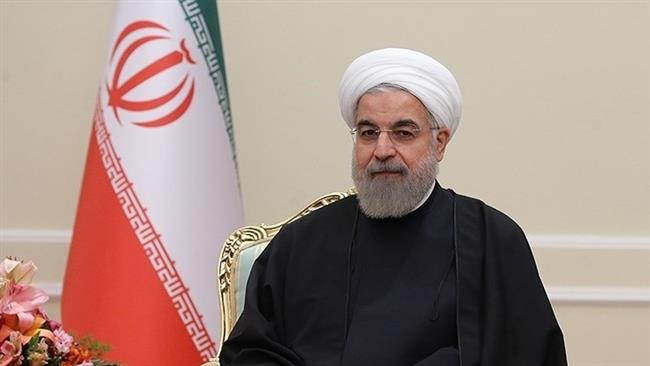
Iran Foreign Minister Mohammad Javad Zarif

Speaking in the Swiss city of Geneva on Saturday, Mohammad Javad Zarif said Tehran would not approve of an “incomplete and vague” nuclear accord, but rather a “complete agreement” should be struck.

“No other deal will be reached before a complete agreement is clinched,” said the top diplomat.

The comments came hours after his American counterpart John Kerry said that there were still “significant gaps” in negotiations over Iran’s nuclear program.

Kerry also said US President Barack Obama had “no inclination whatsoever” to extend the talks facing a March 31 deadline for agreement on the political framework.

Zarif also referred to the discussions at the deputy ministerial level between the Islamic Republic and the United States in Geneva on Friday.

“The deputies had good discussions, but no particular agreement has been made on the issues [at hand].”

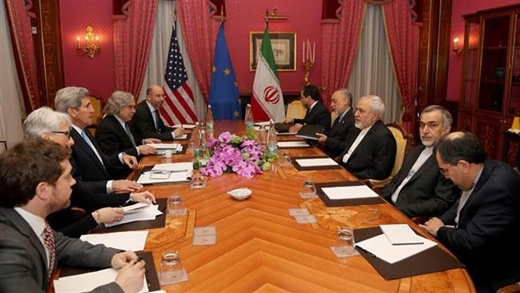
On Friday, representatives of Iran and the US kicked off a fresh round of intensive talks on Tehran’s nuclear program in Geneva to narrow remaining gaps ahead of the March 31 deadline for a final agreement.

Zarif and Kerry are scheduled to join the talks on Sunday and hold discussions for two days.

Iran and P5+1– Britain, France, China, Russia, and the United States plus Germany – are seeking to seal a high-profile political deal by the end of March and to confirm the full technical details of the accord by July 1.

The scale of Iran’s uranium enrichment and the timetable for the removal of anti-Iran sanctions are seen as the major stumbling blocks in the talks.

Iran has so far suspended some of its enrichment program in return for certain sanctions relief.

Light a lantern and make a wish for peace

Experience Project-1

A host of Iranian artists are planning to send lanterns – bearing messages of peace and friendship – to cafés overseas. The lanterns are expected to sit on café tables and create an opportunity to promote public participation and make people from different cultures and geographical locations ponder on how to get closer to each other and help develop mutual understanding.


What comes below is a partial translation of a report Honaronline published on February 18 on the remarks of the project manager followed by a photo gallery of the unique project:


The Experience Project, which was unveiled in Tehran’s Etemad Art Gallery, is to be implemented in India, Turkey and France in next phases, said Mehran Rad, the manager of the art project.

In the first leg of a foreign tour, I will take three packages – ten Experience lanterns in each – to several Istanbul cafés which are the favorite hangouts of artists and intellectuals, he said.

One package will be given to Karga café in Istanbul, and the other two will be handed over to Barin and Ara cafés in the European portion of Turkey, Rad added. Mr. Ara Guler, the celebrated Turkish photographer, is the owner of Ara Café.

The cafés will put these lanterns on their table for 20 to 30 days, he said, adding the lanterns bound for Turkey feature pieces of writing in Farsi, English and Turkish on peace and coexistence.

This way they can make the customers contemplate the project’s subject, he said. […]

“Those interested can make a 15-second film on their wishes, upload it on their Instagram page or that of the Experience Project. Or they can email their video messages to us. […] Anybody with any mindset can make their own movies, but insults to different religions and ethnicities are red lines.”

India and France are the next destinations of the lanterns of the Experience Project. […]

Rainbow, a journey into light in Tehran

Otto Piene

Between February 24 and April 17, the Tehran Museum of Contemporary Art (Tehran-MoCA) will play host to Rainbow, a collection of 100 works by Otto Piene*, a leading figure in kinetic and technology-based art.

The following is a partial translation of a report by iscanews.ir on February 17 on a press conference in which participants talked about the German artist and his works:

Museum’s director Majid Mollanoruzi said Tehran-MoCA, which aims to introduce artists and the techniques and styles of contemporary art, has so far put on display the works of two artists from Group ZERO, adding the retrospective will show the works of the third member of the movement.

[…]


German envoy: German-Iran cultural ties are important

German Ambassador to Iran Michael Freiherr von Ungern-Sternberg said Germany and Iran are always identified as economic partners, but bilateral ties also cover the cultural front which is of high importance.

As for the [30th] Fajr International Music Festival, he said a famous German musician who attended the festival is performing in Shiraz.

About the presence of German tourists in Iran, he said Berlin attaches great importance to cultural ties with Iran. […]


Piene, ambassador of peace

Till Breckner, the director of the Galerie Breckner in Dusseldorf, said, “I was moved by the hospitality of the Iranians.

“When Mr. Piene received the museum’s invitation he became very happy, but unfortunately he passed away in July 2014. Nonetheless, his family decided to complete what he left unfinished”.

As for the reason why Piene’s works should be displayed in Iran, Breckner said, “Otto Piene fought in World War II as a soldier when he was 14. One year later he was taken captive. In his childhood he used to live mostly in darkness thanks to war and bombardments. He saw the light of day, literally, when the war came to an end. Thus for him, light was a symbol of peace … and he is now in Iran as an ambassador of peace with his works.

“Piene has said, ‘I dream of a better world. […] I wish to have a wonderful world.’”


Otto Piene -1


Rainbow, a performance in the sky

Heinz-Gunther Thone, Piene’s art director, said, “Rainbow’s appearance in the sky is short-lived, but it is still a performance. For an artist, the colors of rainbow are among the purest made through the refraction of light.

He said Piene’s artistic exploration of light at the Prague City Gallery in 2002 will be put on display in this museum.

Piene was interested in creating an artwork for Iran, so he made “The colors of light” based on the tiles used in [Isfahan’s] Imam Mosque.

Thone said he is interested to see the works of Iranian artists on show in Germany and added Iran is expected to take the first step.


Otto Piene studied art and also took a degree in philosophy at Cologne University. He founded the influential European postwar movement Group Zero with Heinz Mack in 1957, to transform and redefine art in the aftermath of the Second World War. His most famous work was the Rainbow [the sky work made up of five differently colored helium-filled polythene tubes, each one 600m long] that lit up the Munich sky at the end of the 1972 Olympics.

We seek innovation in talks: Deputy FM

Abbas Araghchi

Iranian negotiator Seyyed Abbas Araghchi has described the first day of the latest round of talks between Iran, Europe and the US in Geneva as “positive and intense”, saying “We are after innovation and change in the way talks are held in order to speed up things.”

The Iranian deputy foreign minister said Saturday the fact that talks with US Under Secretary of State Wendy Sherman and Helga Schmid, the deputy of the EU foreign policy chief, have been positive does not mean we have made outstanding progress. “The talks are being followed intensely.”

He further said after one year of negotiations, we are at a stage that we need to get into details, particularly in light of the fact that we want any final deal to encompass both general outlines and the details.

The Iranian, US and European diplomats held five hours of talks on Friday while talks between experts lasted two and a half hours.

Those negotiations will continue later Saturday, with the US and Iranian foreign ministers joining their deputies on Sunday.

Minister defends “music” policy while observing religious criteria

Jannati-Fajr music festival

Minister of Culture and Islamic Guidance Ali Jannati said his ministry would defend “music” programs while remaining faithful to all religious criteria.

He made the remarks in Tehran on Friday in the closing ceremony of the 30th International Fajr Music Festival.

He noted that certain political groups are manipulating the sincere religious sentiments of people to downgrade music.

He stressed that his ministry while observing all rules and regulations of the Islamic system will defend efforts to promote music.

Referring to attempts by some political groups to create a certain atmosphere around the activities in the area of music, he said that the Ministry of Culture and Islamic Guidance truly believes that it knows all religious and government regulations much better than these groups.

He said all the concerts that have been granted permission by his ministry for public performance observe all regulations.

He said the ministry will support such performances and is not going to give in to the pressures of self-willed groups.

As for propaganda saying that women singers have been given permission for solo performances, he said all these are attempts to mar the political atmosphere in the country.

The minister said had his ministry issued such permission, it would have defended it.

However, he stressed, no such permission has ever been issued and the self-willed groups are only spreading rumors based on incorrect information they have received.

Referring to the important role of the Fajr Music Festival in safeguarding the vitality and dynamism of Iranian music, he said all should join hands to protect this wave.

Jannati added that the Ministry of Culture and Islamic Guidance as the embodiment of the government of President Hassan Rouhani is using all its capabilities to support and protect the sublime and dignified art of music the nation possesses.

FM reiterates inefficiency of sanctions policy against Iran

Fm Zarif

Iranian Foreign Minister Mohammad Javad Zarif reiterated that the only way out of the decade-long nuclear standoff between Iran and the West is dialogue and not sanctions since pressures can only deteriorate the case.

“If they really think that their sanctions are effective, then why do they negotiate with us? They can continue their sanctions on Iran,” Zarif told reporters on Friday.

He also reiterated that respect and negotiations are the only way which would lead to fruitful results in dealing with Iran, adding Iran wants to prove that its nuclear program is merely for peaceful purposes.

On Wednesday, Iran’s Supreme Leader Ayatollah Seyyed Ali Khamenei warned of the arrogant powers’ plots to impede Iran’s progress in different scientific and technological fields, and said even if Tehran accepts all the demands of the world powers in the nuclear standoff, the Western states would never remove their sanctions against the country.

“Their main goal of such measures (sanctions) is humiliation of the Iranian nation and stopping the nation and Islamic Republic’s great move towards a new Islamic civilization, and I believe that even if we accept the demands that they (want to) dictate on us in the nuclear issue, the sanctions will not be removed since they are opposed to the (Islamic) Revolution in essence,” Ayatollah said in Tehran, addressing a large number of visiting Iranians from East Azerbaijan Province.

He blasted US threats and the European states’ obedience to the US policies, and said, “If sanctions are to be imposed, the Iranian nation too can slap sanctions (on them), and it will do so.”

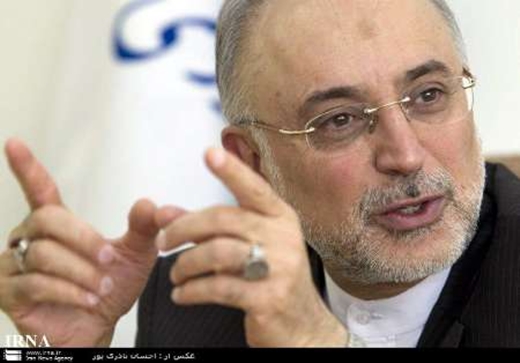
Iran atomic energy head to join Geneva nuclear talks

Ali Akbar Salehi-1

According to Behrouz Kamalvandi, the spokesman for Iran’s Atomic Energy Organization, Ali Akbar Salehi will leave Tehran for Geneva Saturday morning to meet US Energy Secretary Ernest Moniz.

Salehi will hold talks with Moniz to discuss “the technical issues” of nuclear negotiations between Iran and P5+1, Kamalvandi added.

Salehi is also scheduled to meet his Swiss counterpart, reports said.

On Friday, representatives from Iran and the United States started a fresh round of intensive talks on Tehran’s nuclear program in Geneva to narrow remaining gaps ahead of the March 31 deadline for a final agreement.

Iran’s Deputy Foreign Minister for Legal and International Affairs Abbas Araghchi and US Under Secretary of State for Political Affairs Wendy Sherman held talks on Friday.

Iran’s Foreign Minister Mohammad Javad Zarif and US Secretary of State John Kerry are scheduled to join the talks on Sunday and hold discussions for two days.

The negotiations will focus on the timetable for the lifting of sanctions against Iran as well as the extent of Tehran’s nuclear activities.

Iran and P5+1– Britain, France, China, Russia, the US and Germany – are seeking to seal a high-profile political deal by the end of March and to confirm the full technical details of the accord by July 1.

The scale of Iran’s uranium enrichment and the timetable for the removal of anti-Iran sanctions are seen as the major stumbling blocks in the talks.

Iran has so far suspended some of its enrichment program in return for certain sanctions relief.