Friday, December 26, 2025
Home Blog Page 4927

No one could claim Iran pursuing non-peaceful nuclear program: Rouhani

Rouhani-NAM

President Hassan Rouhani said that no one now could claim that Iran is pursuing non-peaceful goals in its nuclear program.

He made the remarks on Monday while addressing the opening of a meeting of Science Ministers of the Non-Aligned Movement (NAM) member states.

He said those who are imposing sanctions against Iran as well as the ones who are running projects to make Iran’s nuclear program a matter of security, are both well aware of the real objectives of the Iranian nation and government.

The president also stressed that today in the world nobody could ever claim that Iran’s nuclear program is non-peaceful.

He said Iranians are under a lot of pressure only because of their determination to safeguard their inalienable right to nuclear technology for civilian purposes.

Discrimination in science, he added, is now used as a tool to keep up the process of underdevelopment, poverty and unemployment in non-developed countries.

He went on to underscore the need for independent countries to adopt collective policies to confront this trend.

The Iranian president also stressed that as long as politicians in developing countries fail to make any reforms and establish a proper link between science and industries, the brain drain will continue in their countries.

He urged the NAM member states to drop non-realistic missions and try to focus on areas of joint scientific and technological cooperation.

He said each NAM country enjoyed remarkable scientific capacities which could be shared with other member states.

President Rouhani said that scientific and technological cooperation within the NAM could serve to enhance progress and prosperity in member states and in the long run help attain the ultimate goal of the organization which is to establish peace and equality in the world.

He said extreme poverty and unemployment in developing countries which is exacerbated in turn by an impotent global political and economic system paves the way for growing extremism and violence in the world.

The president highlighted the right of people to knowledge and technology as an inalienable one.

As learning and teaching knowledge have no borders, he said, the benefits gained from them have no limits either.

Representatives from 58 countries and international organizations, as well as 31 science ministers from the Non-Aligned Movement (NAM) states are participating in the meeting which is hosted by Iran’s Ministry of Science, Research and Technology.

Participants include officials from the Islamic Educational Scientific and Cultural Organization (ISESCO), D-8 Organization for Economic Cooperation, the Islamic Development Bank, the OIC Standing Committee on Scientific and Technological Cooperation (COMSTECH), the African Union, and a number of deans of universities from NAM states.

This is the first specialized summit on science and technology by NAM.

It is aimed at boosting major policy-making cooperation among the member states and improving the movement’s diplomacy of science and technology.

Zarif, Kerry, Salehi, Moniz end nuclear talks in Geneva

Zarif Kerry Salehi

The negotiations which began late Sunday in the Swiss city of Geneva ended after 2.5 hours with the two sides agreeing on resuming negotiations on Monday.

A source in the Iranian negotiating team said that the agenda for Monday is yet to be determined.

The meeting between the two top diplomats was delayed for several hours due to Kerry’s late arrival from London.

Ali Akbar Salehi, the director of the Atomic Energy Organization of Iran (AEOI) and US Energy Secretary Ernest Moniz also attended the talks. The high-ranking officials have already held two rounds of negotiations to discuss the technical aspects of Iran’s nuclear program.

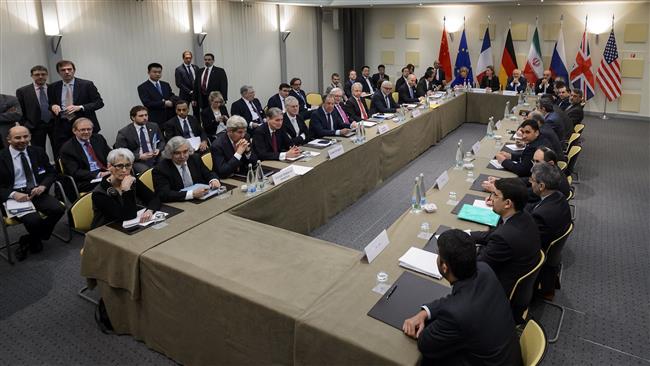
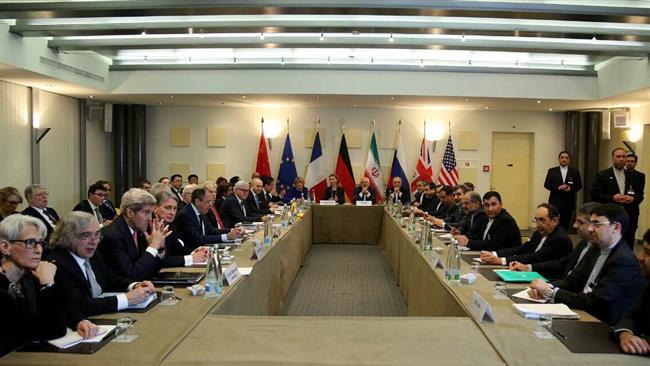
Iranian and US delegates, who attended a simultaneous meeting with negotiators from Russia, China, Germany, France and the UK, later joined talks between Zarif and Kerry.

Deputy Foreign Minister Abbas Araghchi, the head of the Iranian delegation, said after the meeting with P5+1 in the EU mission building in Geneva that it is soon to claim any progress has been made.

The talks are expected to continue on Monday at an expert level with discussions on the technical issues.

The ongoing talks in Geneva, which kicked off on Friday, are among the last attempts by the involved parties to narrow gaps on the remaining issues as a deadline for reaching a comprehensive deal on July 1 draws closer.

The two sides have missed two deadlines since an interim deal was signed in November 2013.

Deputy minister tells colleagues to quit if they can’t manage

Ettemad-Water

On February 21, Etemad daily ran a report on water crisis in Iran and the need for urgent action to defuse it. What appears below is a partial translation of what the energy minister and his deputy have said about the country’s water resources:

“We will have a tough year ahead [starting on March 21]. Over the past 11 months there has been a 30 percent drop in rainfall,” said Energy Minister Hamid Chitchian.

Deputy Energy Minister for Water and Sewage Affairs Rahim Meydani urged officials who play a role in water management across the country to try in earnest to implement the plan aimed at reviving ground water resources.

He underscored that implementation of the plan requires determination and said, “As we joined hands during the Sacred Defense to safeguard our territorial integrity, we should now spring into action to properly protect the country’s water resources.”

Meydani warned, “If those at the helm of water management failed to seize the opportunity, they would be blamed by present and future generations. If a manager thinks that they are not motivated enough to step up to the plate in dealing with water crisis, they should let us know as soon as possible.”

He further said, “Drought has turned out to be a blessing in disguise. In fact it was a wake-up call; it has prodded us to take action to compensate for overconsumption of water and properly manage surface and ground water resources in the face of crises.”

Stray dogs are collected and rehomed in Tehran

Dogs

A collaborative project by Tehran Municipality and animal rights organizations got underway in Darakeh, north of Tehran, on Friday to collect stray dogs and fit them with GPS tracking collars.

Etemad daily on February 21 filed a report on the animal-friendly project. The following is a brief translation of the report:

[…]

The project aims to treat homeless dogs in fixed periods of time and save them from diseases such as rabies.

Reza Ghadimi, who is in charge of organizing businesses and industries in Tehran, said that the project is meant to protect animals, adding that over the past year no stray dog has been killed, not even one.

After being vaccinated, the dogs become traceable thanks to the yellow collars they wear which are equipped with GPS, he said, adding this way the non-domesticated animals can receive periodic treatment.

Ghadimi further said that Tehran Municipality and a number of NGOs have joined hands to carry out this collaborative project which intends to help the strays and promote the culture of protecting the animals.

[…]

In addition to animal advocacy groups, he went on to say, 12 teams of veterinarians have joined the project to help with the vaccination of the canines. He added as many as 3,000 dogs have been equipped with GPS tracking collars over the past year.

[…]

The Municipality is planning to provide food to these dogs in order to prevent them from straying into residential areas in the capital.

[…]

The project helps 20 percent of unclaimed dogs – which are of good breed and have been simply abandoned – get rid of a homeless and unprotected life, and be used as watchdogs in [government] organizations and institutions instead.

A look at Iranian newspaper front pages on Feb. 23

Iranian Newspapers Headlines

Nuclear talks in Geneva between representatives of Iran and the US and the comments of President Rouhani on public support for the way his government handles the nuclear issue dominated the front pages of Iranian dailies on Monday.

News on the messages of condolences senior figures including the Supreme Leader released following the deaths of Seyyed Sadegh Tabatabai and Fatemeh Khatami also grabbed front-pages headlines.


Abrar: A plan to impose natural gas sanctions on Europe is on the agenda of Iranian MPs.


A look at Iranian newspaper front pages on Feb. 23


Afkar: Iran broke China’s steel production record

In January steel production in Iran posted a 20 percent growth.


A look at Iranian newspaper front pages on Feb. 23


Aftab-e Yazd: Gatherings to celebrate Chaharshanbe Suri [the fire-jumping festival that falls on last Tuesday of the year] are illegal.

The commander of the prevention department of the law enforcement force said.


A look at Iranian newspaper front pages on Feb. 23


Arman-e Emrooz: “We should not allow society to be divided,” said the president.

Speaking at a gathering on resistance-based economy Hassan Rouhani further stated in every poll conducted more than 70 percent of respondents have supported the government’s nuclear approach.

Arman-e Emrooz: When games become dangerous

Those who sell unauthorized computer games will be dealt with.


A look at Iranian newspaper front pages on Feb. 23


Ebtekar: “Some 80 percent of Iranians support nuclear talks with P5+1” said President Rouhani.

It came as Foreign Minister Zarif said that Tehran won’t accept any deal which is vague, incomplete or keeps sanctions in place.

Ebtekar: There has been an outpouring of sympathy with the family of Ayatollah Ruhollah Khatami.

Senior clerics, the chairman of the Expediency Council, the chairman and secretary of the Supreme National Security Council and the grandson of the late Imam Khomeini have all released messages of condolences following the passing of Fatemeh Khatami.


A look at Iranian newspaper front pages on Feb. 23


Etemad: A stern warning by Rouhani

“Let me once again tell all provincial governors, those who do not believe in what happened on June 14 [people overwhelmingly voted for Rouhani in 2013] should not hold high-level positions,” the president said.


A look at Iranian newspaper front pages on Feb. 23


Ettela’at: There have been two explosions near the residence of the Iranian ambassador to Libya.

No one was injured in the two blasts. In other news, IS launched its first radio service in Libya and residents of Sirte fled the Libyan city as IS militants took over.

Ettela’at: Twenty-one economists support the plan to secure sustainable development.

An economic adviser to the president has said that following a steep decline in oil prices, government faces a budget deficit to pay out cash subsidies.

And in other news, in the 30 days to February 20, inflation fell to 15.2 percent.


A look at Iranian newspaper front pages on Feb. 23


Iran: The Supreme Leader has released messages of condolences following the passing of Seyyed Sadegh Tabatabai and Fatemeh Khatami.

President Rouhani has offered condolences to [former President] Seyyed Mohammad Khatami [on the passing of his sister].


A look at Iranian newspaper front pages on Feb. 23


Jamejam: IS has set off a bomb outside the residence of the Iranian ambassador to Libya.


A look at Iranian newspaper front pages on Feb. 23


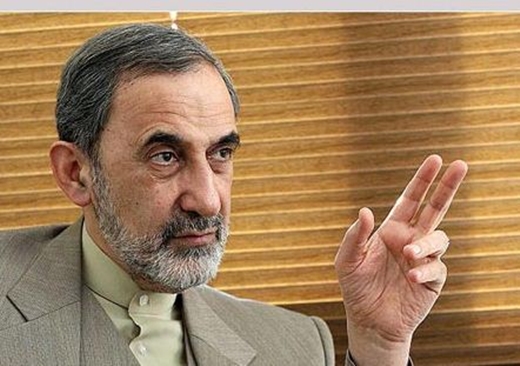
Javan: “We won’t adjust our behavior on the basis of American judgment,” said Ali Akbar Velayati, an adviser to the Supreme Leader.

His comments came after Secretary of State John Kerry said the US is ready to walk out of the talks.


A look at Iranian newspaper front pages on Feb. 23


Kayhan: Parliament has voted for a motion that bans the privatization of state schools.

Kayhan: In its latest crime, the Zionist regime [of Israel] has opened the floodgates of a dam, submerging the houses of Palestinians in Gaza.


A look at Iranian newspaper front pages on Feb. 23


Qods: “No power can isolate Iran,” said President Rouhani.

It came as an adviser to the Supreme Leader warned the West that its war of words won’t work in dealing with Iran.


A look at Iranian newspaper front pages on Feb. 23


SMT: The minister of industries, mines and trade has said that mining cooperation between Iran and Russia will increase.


A look at Iranian newspaper front pages on Feb. 23


Taadol: “It’s time to make serious decisions,” said Foreign Minister Mohammad Javad Zarif.

The comments by the Iranian top diplomat came after talks with his US counterpart John Kerry who said disagreements still remain.


A look at Iranian newspaper front pages on Feb. 23


No casualties in explosion in front of former envoy’s residence

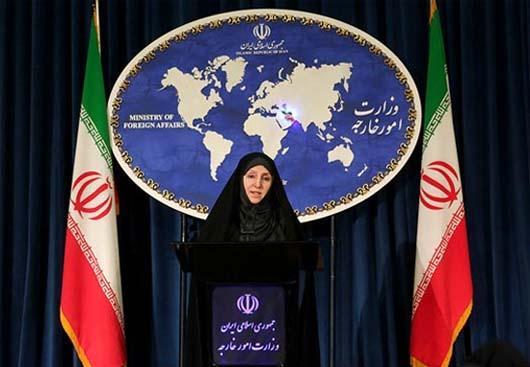
Iranian Foreign Ministry Spokeswoman Marziyeh Afkham

The Foreign Ministry spokeswoman on Sunday condemned the explosion of a handmade bomb in front of former Iranian ambassador’s residence in Tripoli, Libya, saying that the terrorist attack had not caused casualties, or major damage.

‘We have precise information indicating that the explosion of a handmade bomb in front of the residence of the former Iranian ambassador in Tripoli only led to trivial material damage,’ said Marzieh Afkham Sunday evening.

She said that Iran is following up the situation in Libya and opposes foreign interference in the North African country.

The Islamic Republic of Iran believes that the problematic developments in that country must be resolved through holding national dialogues.

The Foreign Ministry spokeswoman said that the Libyan political parties are required to develop national reconciliation to establish a national unity government in Libya, something which will block the path for the activities of the terrorists and the extremists.

Rouhani highlights strong public support for Iran’s nuclear approach

Rouhani

Iran’s President Hassan Rouhani underlined that the vast majority of Iranians back his administration’s approach in the nuclear talks with world powers.

“All polls indicate more than 80 percent (public) support for the administration’s nuclear approach,” the president said on Sunday.

He also stressed “the seriousness” of the country’s negotiators in the talks with P5+1 (Russia, China, the US, Britain, France and Germany) over Tehran’s peaceful nuclear energy program.

Iran and P5+1 (also known as E3+3) are in talks to hammer out a final agreement to end more than a decade of impasse over Tehran’s civilian nuclear energy program.

Following the diplomatic and confidence-building measures taken by President Rouhani’s administration, the two sides in November 2013 signed an interim deal – the Joint Plan of Action – that took effect on January 20, 2014 and expired six months later. They later extended the deal until November 24, 2014.

After failing to hammer out a lasting accord by the self-imposed November 24 deadline, the parties once again decided to extend the deadline for seven more months.

Mr. Kissinger! You are sowing the wind!

Henrry Kissinger

Recent remarks by Henry Kissinger, an American diplomat, political scientist and a former National Security Advisor, on Iran and its nuclear program reveal what the unyielding US hardliners are doing to interfere with nuclear talks.

The following is the full translation of an opinion piece on why US strategists should act more wisely in dealing with Iran. The piece by Fereydoon Majlesi, an international affairs analyst, appeared in Sharq daily on February 18:

After one and a half years of intensive talks over Iran’s nuclear program, the deadline for determining the scope of Iran’s nuclear activities and the removal of sanctions is approaching and hopes are growing for the settlement of the [long-standing] standoff and the lifting of sanctions, but hardliners and war hawks – at home and abroad – have joined the [anti-Iran] chorus, with the Israeli regime and its regional allies stepping up their destructive activities and adding fuel to the fire.

One such individual is Henry Kissinger, a former US national security advisor, who has said that if Iran’s demand for having an infrastructure of thousands of centrifuges is accepted, it would be almost impossible to deny other countries such a right, adding such an arrangement would very likely prompt other countries in the region, such as Saudi Arabia, “to match Iran’s threshold capability”.

I do not expect a seasoned, veteran politician like Kissinger to employ such indiscreet reasoning. It seems as if Saudi Arabia or any other countries were deprived of the enrichment right, or that Western countries are seeking to monopolize the enrichment right for the club of friendly nations.

I am not an expert in nuclear technology, but the logic Kissinger is using in support of Netanyahu and his Republican friends in the US Congress reminds me of a wolf which is drinking water upstream and blaming the lamb downstream for literally muddying the water. The problem here is that a sober guy is sitting among a crowd of drunkards.

… handed them an excuse, and with the help of “friends” like China and Russia, a gift of sanctions came Iran’s way from the UN Security Council.

Perhaps Kissinger knows that Saudi Arabia, which has created and harbored Alqaeda, the Taliban and ISIS, is one of them [Westerners]; thus, they are not concerned about its atomic bombs because the bomb of ignorance is much more dangerous. Moreover, the Pakistani government, which is the agent of Saudi Arabia to fulfill Riyadh’s desires, possesses atomic bombs.

For years, Saudi Arabia has been dreaming about its own empire and Islamic caliphate and has based its policies on overcoming two major obstacles: the Dari language and Shiism. Haven’t the Western sides seen a big number of roadside, mosque and hotel bombings? [Uranium] Enrichment is not an issue [for Saudi Arabia]; Riyadh has Pakistan’s atomic bombs at its disposal. So what are they concerned about?

Let’s assume that a person has made a comment eight years ago, describing a global decision as a “worthless piece of paper” [a reference to remarks by former President Mahmoud Ahmadinejad who mocked UN Security Council sanctions against Iran as pieces of paper of no value]. What do the West and Arabs think of a nation which seeks to exercise its conventional rights and freedom to do business and lead its own life?

What has Iran done wrong? Has it occupied other nations’ territories? Has it imprisoned people in their houses and destroyed their properties under the pretext of meeting its own demands? Has it murdered six million Jews? Has it massacred people in Hamburg at the end of war to take revenge? Has it dropped an A-bomb on a city? Has it killed 20-30 million people in Siberia, Poland, Afghanistan, East Europe and Central Asia in quest of its domineering goals? Has it shed the blood of people in Algeria, the black continent, Indochina, India? Has it plundered their wealth?

What has happened that people like Kissinger are scrambling to make the whole world rally behind them and threaten this nation which accounts for simply one percent of the global populace and territory? Has Iran killed Western scientists in their homes or on the street?

Has Iran used any malware to disrupt their computer systems, industries and economies? Why is it that when you face a similar threat you cry foul that the law has been flouted? Why is it that the West does not submit to a fair, reasonable and explicit solution? Why do they try to make a nation – which is hopeful and moderate – desperate and full of hatred of them? Why do they stir resentment? Why are they searching for the evil?

The evil acts and wicked, destructive reactions are abundant. Rationality, moderation, peace, calm, coexistence, business and life are what we lack. Kissinger should know that moderate [Iranian] statesmen – who build on rationality, fairness and moderation as well as on a popular mandate – are holding talks with his respective government, and they expect nothing in return expect fair, legal and respectful treatment.

These people have opened their facilities to inspectors in line with international rules and regulations. You need to remember that missiles you provided [to Saddam’s Iraq] rained down on them [the Iranians] in a prolonged war, and that they had every right to arm themselves in self-defense.

A balanced and wise behavior will result in a balanced and wise response. Kissinger had better advise US senators to treat the negotiating team in a way that does not defy rationality and fairness and not do anything which could play into the hands of radical opponents.

You need to remind them of the proverbial phrase which says, “The one who sows the wind will reap the whirlwind”.

One table and seven Western miscalculations

Iran Talks

Talks, at any level and with any intention, need a strategy to succeed. Calculations by parties to the talks help map out their strategies that set red lines and turn into negotiating tactics at a lower, operational level. The way each party identifies, analyzes and affects the calculations of the other party plays a decisive role in how talks proceed and what their outputs are.

Those sitting across from each other at the negotiating table try their utmost to develop a maximal understanding of each other’s calculations and tip – through diverse tools at their disposal – these calculations in their own favor, or disrupt them.

Kayhan daily on February 21 ran an opinion piece by Mohammad Sarfi about the seven miscalculations surrounding nuclear talks between Iran and P5+1 with the columnist saying that the Americans have made most of such miscalculations. The following is a partial translation of the piece which outlines those miscalculations:


1. Sanctions have brought Iran to the negotiating table: […] The phony war between the White House and the US Congress over new Iran sanctions have been designed and implemented based on such an assumption. Unlike what the Americans believe, basically the Islamic Republic of Iran has never opposed the question of talks; rather, Tehran has even welcomed it. Washington should not forget that in the past it would not agree to anything less than a complete shutdown of Iran’s nuclear program. That talks are underway is not because of sanctions, but because Iran has hold on to its rights and rightful stance.


2. Iran will continue to sit at the negotiating table for good: […] If the purpose of the talks is to reach a deal, they could not be extended multiple times, but if they aim to pass time and freeze activities, parties involved can continue talks on an open-ended basis!


3. A breakdown in talks is catastrophic: […] Suspension of talks would translate into the end of the honeymoon the Americans had after the Geneva deal. Given the unsatisfactory condition of the two sides in the Geneva deal, the Americans are like customers who go to a restaurant, order and eat food expecting the restaurant owner to foot the bill; who will suffer if the eatery is shut down?


4. Iran’s hands are tied: […] For 36 years, the Americans have had such an impression of Iran on different fronts; they have seen the opposite of what they thought, though. […] Iran’s hands are not tied; rather, it can have a hand in developments beyond its borders and play an influential role [in regional events].


5. A final deal can solve Iran’s problems: It is not just the West who has such an assessment of a possible nuclear deal; there are some groups inside the country who have turned a blind eye to realities trying to paint a false picture of the future of a final nuclear deal. […]

Those analysts who build on economic realities to make realistic comments have time and again said that even if we wake up to a day of no sanctions, there will be no immediate effect on the country’s state of economy. […]

Iran’s economic structure is in need of a surgery and the removal of sanctions will be like a painkiller which delays the surgery.


6. An everlasting alliance sits across the table: Some think that those facing Iran across the negotiating table are part of a strong alliance. But the ground realities say something else. Russia has been targeted by US and European sanctions. […]

Although China may sound silent, its bone of contention with the US is no less than Russia’s. At this situation when tensions are rising, it is immature to think that the party across the negotiating table has a consistent agenda to push.


7. Trial instead of negotiations: […] Again and again the Westerners have said openly that these talks are the acid test for Iran to see if it wants to be a normal country or continue to be a revolutionary nation. They [wrongly] think that the fact that Iran has sat around the negotiating table means it has abandoned the ideals of the Islamic Revolution. […]

Attempts to place unrelated topics – such as human rights, regional questions and the Islamic Republic’s missile capability – on the table stem from the very same miscalculations by the United States. […]

With or without sanctions, we’ll pursue resistance-based economy: VP

Jahangiri-Vice president

First Vice-President Eshagh Jahangiri has said resistance-based economy is a perfect recipe for simultaneous settlement of a variety of problems such as unemployment, inflation, sanctions as well as environmental woes.

According to a February 22 issue of Ettela’at daily, the vice president made the comment at a 14th International Environment Exhibition Sunday. The following is what else he and the environment chief had to say at the expo:

A resistance-based economy is one which remains unfazed in the face of local and foreign shocks. Whether we succeed in having the sanctions lifted, which God willing we will, or not resistance-based economy will be pursued.

Everyone should contribute to efforts to fundamentally settle the environmental problems of the country. Taking political and factional advantage of the problems of the people is below officials. Those who resort to such practices should know that their impact is short-lived.

Air pollution affects as many as 30 million people across the nation and since the rise to power of the current government measures to settle the problem of air pollution have been a top priority.

Government is committed to environmental issues in its development programs. Without environmental studies no permission will be issued to development or industrial projects. Projects like the Gatvand Dam which affect the environment will be rectified.

Director of the Environment Protection Organization told the same gathering that sustainable development won’t be possible in the absence of efforts to protect the environment.

Experience shows that many of the harms the environment suffers are irreversible, so measures should be taken to secure development and protect the environment in parallel.