Sunday, December 21, 2025
Home Blog Page 4883

Iranian protesters call for Saudi Embassy’s closure

Iranian protesters

Iranians have staged a protest rally outside the Saudi Embassy in Tehran, denouncing the kingdom’s airstrikes on Yemen as well as the sexual abuse of two Iranian teenagers by Saudi officers at the Jeddah airport.

During the Monday demo, a large group of angry demonstrators also shouted slogans against the Saudi royal family, the US, and Israel.

“We are here to show that we will defend an oppressed nation anywhere in the world. Such military aggression irrespective of its objectives is a blow to the Muslim Ummah (community) and benefits the Zionist regime of Israel and major powers. The aggressive countries must explain why they are using their facilities to attack a Muslim state,” a protester told a Press TV correspondent in Tehran.

Yemeni nationals and students living in Tehran also took part in the rally. The protesters called on Iranian officials to immediately shut down the Saudi embassy.

“We strongly condemn what is happening in Yemen. Women are being killed, children are being killed, civilians are being killed and I don’t find this acceptable. It is totally unacceptable,” another protester told the correspondent. A similar rally was also held outside the Saudi embassy on Saturday.

[…]

A look at Iranian newspaper front pages on April 14

Iranian Newspapers Headlines

Comments by the Judiciary spokesman at a news conference about a wide range of issues, from cases involving land grab and three officials who served in the government of Ahmadinejad to Washington Post correspondent Jason Rezaeian dominated the front pages of Iranian newspapers Tuesday. The championship of the Iranian freestyle wrestling team on American soil and suspension by Iranian officials of the Minor Hajj pilgrimage also appeared on the covers of the dailies.


Abrar: Thirty MPs have signed a petition that calls for impeachment of the minister of roads.

The announcement was made by the chairman of parliament’s Development Committee.

Abrar: Foreign Minister Zarif is on a European tour that has taken him to Spain. Next step is Portugal.


A look at Iranian newspaper front pages on April 14


Afarinesh: The unconstructive stance of some negotiating parties is interfering with conclusion of a nuclear deal.

The comment was made by Secretary of the Supreme National Security Council Ali Shamkhani.

Afarinesh: The minister of culture and Islamic guidance has said Minor Hajj pilgrimages have been suspended.


A look at Iranian newspaper front pages on April 14


Afkar: Hossein Amir-Abdollahian, an Iranian deputy foreign minister, has called for greater international resolve in the fight against terrorism.


A look at Iranian newspaper front pages on April 14


Aftab-e Yazd: Suspension of the Minor Hajj pilgrimage will remain in place until the two Saudi offenders are tried.

The announcement was made by Tehran MP Ali Motahari in an interview with the daily.

He was talking about two Saudi officers who have molested two Iranian teens at Jeddah airport.

Aftab-e Yazd: “I am waiting for an invitation by parliament to talk about the so-called dirty money.”

The comment was made by the interior minister. In response, a member of the chamber’s Presiding Board said, “Invitation is not necessary. Come over.”

Aftab-e Yazd: The ban on the sale to Iran of Russian S-300 missile system has been lifted.


A look at Iranian newspaper front pages on April 14


Amin: “Terrorist measures in the east were meant to undermine Iranian nuclear negotiators,” said an MP.


A look at Iranian newspaper front pages on April 14


Asr-e Iranian: The interior minister said those behind 90 assassinations and assassination attempts have been arrested.


 A look at Iranian newspaper front pages on April 14


Asr-e Rasaneh: “A new Iranian satellite will be launched this year,” said the minister of communications and information technology.


A look at Iranian newspaper front pages on April 14


Asrar: “The attack on Yemen was a big plot and a major blunder,” said Iranian Parliament Speaker Ali Larijani.

Asrar: “A bylaw on women’s presence in stadiums is being drafted,” said the interior minister.


A look at Iranian newspaper front pages on April 14


Ebtekar: “We are looking for a mechanism to terminate sanctions,” said Foreign Minister Mohammad Javad Zarif.


A look at Iranian newspaper front pages on April 14


Emtiaz: “There was a drop in the number of marriages registered across the country last year,” said the interior minister.


 A look at Iranian newspaper front pages on April 14


Etemad: Hashemi comes under fire

“Calling those who care about the revolution dogmatic stems from a grudge against the value system,” the commander of the Revolution Guards said.

“Leveling accusations with no proof to substantiate them amounts to libel and incitement of the public,” said the Judiciary spokesman.


A look at Iranian newspaper front pages on April 14


Ettela’at: “Removal of sanctions should not come at the expense of our dignity and national interests,” said Foreign Minister Mohammad Javad Zarif.


A look at Iranian newspaper front pages on April 14


Ghanoon: Gunter Grass, [a Nobel-winning German novelist] has passed away.


A look at Iranian newspaper front pages on April 14


Hemayat: “Crackdown on land grabbers and big shots will intensify this year,” said the spokesman of the Judiciary.

“The case involving the Washington Post reporter [Jason Rezaeian] is in the Revolutionary Court; his lawyers are studying the case,” Gholamhossein Mohseni Ejei further said.


A look at Iranian newspaper front pages on April 14


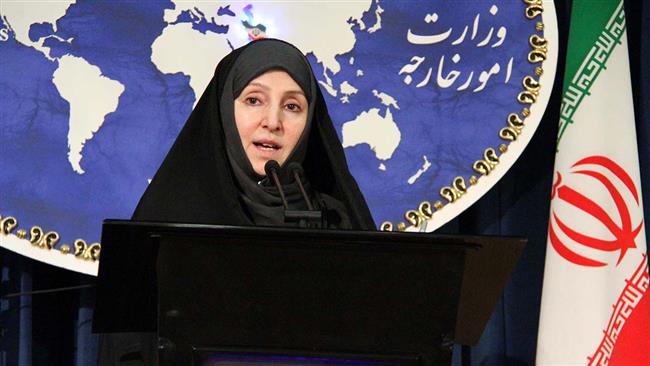
Kaenat: “There is no military solution to the problems of Yemen,” said the Iranian Foreign Ministry spokeswoman.


A look at Iranian newspaper front pages on April 14


Kayhan: Iranian production of tea is projected to increase 50 percent this year.


A look at Iranian newspaper front pages on April 14


Nasl-e Farda: “The perpetrators of acid attacks in Isfahan have yet to be arrested,” said the Judiciary spokesman.


A look at Iranian newspaper front pages on April 14


Roozan: There has been no petition for the lifting of a ban on publication and or broadcast of the image of the former reformist president.

The comment was made by the judiciary spokesman at a press conference Monday.


A look at Iranian newspaper front pages on April 14


Shahrvand: There has been flooding in four provinces.

In some areas, torrential rain has been unprecedented for thirty years.


A look at Iranian newspaper front pages on April 14


Sharq: “Three officials who served under Ahmadinejad failed to provide a list of their assets and property,” said the Judiciary spokesman.

Sharq: “A bill is being pieced together to make electoral campaign costs transparent,” said the interior minister.


A look at Iranian newspaper front pages on April 14


KAZGUU University confers an honorary doctorate on Iranian FM

Zarif

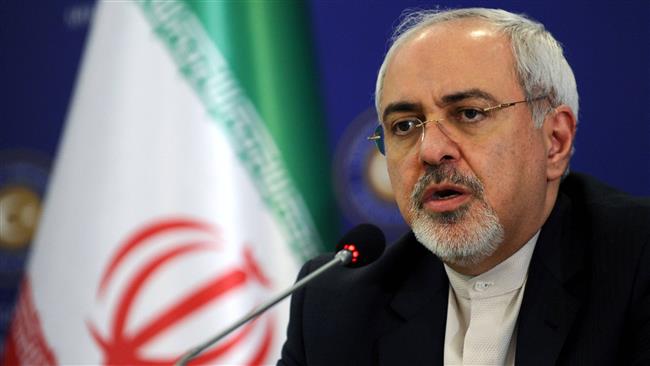
Kazakhstan University of the Humanities and Law (KAZGUU University) offered an honorary doctoral degree to Iranian Foreign Minister Mohammad Javad Zarif on Monday.

The following is a photo gallery that the Islamic Republic News Agency released online on April 14 of the ceremony at the university during Zarif’s state visit to Kazakhstan:

Total says interested in Iran comeback

Total

The French energy giant says it cannot ignore Iran’s natural gas potential and will consider a comeback to the country as soon as the sanctions against it are lifted.

“Iran has the world’s second largest gas reserves after Russia, and we will consider returning to this country once sanctions are lifted,” Total’s CEO Patrick Pouyanne told reporters in Russia on Monday.

Pouyanne said Total ran a gas project in Iran from 1995 to 2000, together with its Russian and Asian partners, but added any plans of a comeback were preliminary.

The company developed Phase 2&3 of Iran’s South Pars energy hub together with Russia’s Gazprom and Malaysia’s Petronas at a total cost of above $2 billion. The project is today producing a daily of 50 million cubic meters of natural gas as well as 80,000 barrels of condensate together with several other gas byproducts.

Total also joined Italy’ Elf and Canada’s Bow Valley in 1999 to develop Iran’s offshore Balal oil field through a deal worth above $300 million. Balal was delivered in 2002 and is today producing 40,000 barrels of oil.

Iran has already said it has received signals from international oil giants that they are interested in Iran’s oil and gas projects as soon as sanctions that ban investments in the country’s energy projects are lifted.

In early April, Iran and P5+1 announced after multiple days of intense nuclear talks in the Swiss city of Lausanne that UN Security Council economic sanctions against Iran will be lifted after the sides reach a final agreement over the Iranian nuclear energy program before June 30.

There will be no delay in supply of S-300 system to Iran: Peskov

Pushkov

Supplies of Russian S-300 air defense missile systems to Iran may begin any moment in line with the relevant decree signed by the Russian president earlier in the day, presidential spokesman Dmitry Peskov said on Monday.

Russian President Vladimir Putin signed a decree on Monday to lift the ban on the supplies of S-300 air defense missile systems to Iran. The ban was imposed in 2010.

“The decree stipulates… no delays,” Peskov told journalists adding that the second provision of the decree states that “it comes into force on the day it was signed.”

Putin’s decision on Monday to lift embargo on the deliveries of S-300 air defense missile systems comes in the wake of progress achieved at the Iran nuclear talks in Switzerland over a week ago paving the way for the international community to gradually lift sanctions against the Islamic Republic.

Peskov said that today’s official commentary by Russian Foreign Minister Sergey Lavrov on the possible supplies of S-300 air defense missile systems to Iran ‘fully reflects our [Kremlin’s] position.’

Lavrov said earlier in the day that Russia’s voluntary embargo on deliveries of S-300 air defense missile systems to Iran was no longer in need due to progress in the resolution of the situation around Iran’s nuclear program.

“Initially, the decision to suspend the implementation of the contract, which was already signed and came into force, was made in September 2010,” Lavrov said. “It was done in the interests of support for consolidated efforts of the six international negotiators to stimulate a maximally constructive process of talks on settlement of the situation in regard to the Iranian nuclear program.”

According to Tass news agency, the minister particularly stressed that ‘it was done absolutely voluntarily.’

“Resolution 1929 of the Security Council, which was approved in 2010, just like any other UN resolutions did not impose any restrictions on deliveries of air defense weapons to Iran. I will emphasize, it was done in the spirit of goodwill to stimulate progress at the talks,” he said.

This year, Lavrov continued, the six international negotiators, after a regular round of talks with Iran, ‘stated’ on April 2 in Lausanne ‘substantial progress in settling Iran’s nuclear problem.’

“The P5+1 stated progress in the settlement of Iran’s nuclear program. Political frameworks of the final agreement were coordinated. They received a high assessment everywhere on the international arena,” he said.

[…]

“This result was in many respects achieved because the six international negotiators worked in a consolidated manner on political settlement of the serious problem,” he said. “We are convinced that at this stage, there’s no more need of such an embargo, Russia’s separate voluntary embargo.”

“S-300 is an air defense missile system, which is of a purely defensive nature. It is not designed for attacks and will not put at risk the security of any regional state, including Israel, of course,” Lavrov said.

“Meanwhile, for Iran, taking into account the very tense situation in the region surrounding it, modern air defense systems are very important,” he said.

“This is in particular proven by fast alarming development of events in the past week of the military situation around Yemen. Of course, we couldn’t but take into account commercial and reputational aspects too. As a result of contract suspension, Russia did not receive large sums we were to have received,” Lavrov said.

“We see no more necessity in doing that, taking into account progress in the talks on settlement of the Iranian nuclear program and an absolutely legitimate nature of this forthcoming deal,” he said.

[…]

US fact sheet not expressive of context of framework agreement

Hamid Baidinejad

A senior member of the Iranian nuclear negotiating team Hamid Baidinejad said Monday that the US fact sheet is by no means expressive of the context of the framework agreement.

Speaking to reporters on the sidelines of a conference entitled ‘From Geneva to Lausanne’ held at a university in Tehran, Baidinejad said that it is natural that the Americans insist on their fact sheet.

He quoted head of Atomic Energy Organization of Iran Ali-Akbar Salehi as saying that Iran has prepared its own fact sheet and will publish if it deemed necessary.

When asked to comment about the time needed for the implementation of an emerging comprehensive deal and that some say it will take six months, Baidinejad said: “We have not discussed the details yet…thus, one cannot accurately predict the time needed. So the six-month prediction is not realistic and it will be shorter.”

On the next round of talks, he said that the next round of negotiations will be held at the level of deputy foreign ministers. However, he noted that no time and venue have yet been set for yet.

Iran prepared for “new tourist shock”

Tourism

Director of Iran’s Cultural Heritage, Handicrafts and Tourism Organization says the country is well-prepared for the “new shock” to be triggered by massive tourist inflow.

“We believe that tourism industry will witness a growing trend in Iran and we are prepared for the new shock which will be caused by the massive inflow of tourists,” said Masoud Soltanifar in a meeting with a German parliamentary delegation in Tehran.

Iran’s highest-ranking tourism official said tourist influx into the country is expected to increase dramatically in the second half of 2015 after the final deal is secured in the nuclear talks between Iran and P5+1.

Soltanifar said Tehran has already taken a series of measures including improving air transportation fleet, developing accommodation facilities and easing visa restrictions to boost tourism industry in the country, Donyay-e Eghtesad newspaper reported.

Iran has attached considerable significance to developing its tourism industry in recent years.

The country is seen as one of the world’s top potential tourist destinations as it holds countless ancient sites.

It hosts Asia’s 4th and the Middle East’s 1st largest number of UNESCO World Heritage Sites.

Iran is home to 17 historic sites which have been inscribed on UNESCO World Heritage List.

It has a diverse landscape and its tourism industry offers a myriad of recreational opportunities.

They range from hot mineral water showers in the northwest to hiking and skiing in the Alborz mountains to magnificent architectural sight-seeing in the center and beach holidays in the Persian Gulf and the Caspian Sea.

Apart from its glorious ancient sites, the country’s allure lies in its people’s reputation for hospitality.

Charting the course toward a better nuclear deal, dos and don’ts

Laussane Statement

Iran is midway through the nuclear negotiations and another deadline [July 1] is looming. What Iran should do in the critical three months ahead is hotly debated in the country these days with some saying the Islamic Republic should stay the course and others suggesting otherwise.

Javan daily, which reflects the viewpoints of the Islamic Revolution Guard Corps, has – in its editorial on April 12 – divided the dos and don’ts of the nuclear talks into two categories, explaining that the first category deals with general principles or what it calls “presuppositions” or “prerequisites”.

The second category, it says, entails the principles the country’s nuclear team has been recommended to pay attention to and respect during the talks.

The following is a brief translation of the editorial written by Abdollah Ganji, the daily’s managing editor:

[…]

Up until recently, only officials and negotiators of the two sides as well as the Zionists were in on the content of the [nuclear] talks, but the Supreme Leader called for information floodgates to be opened for the public when he said “We have nothing to hide”. In order to keep members of the public informed of the future roadmap on a two-way, narrowing road, the Leader revealed what the president or foreign minister had told him.

The Leader offered strategies for the country to move forward on the path – which has been somewhat paved – it has taken. The nation has learned about these strategies and the enemies have heard them publicly and will keep hearing them during the talks.

There are some dos and don’ts [in the Leader’s remarks] which have nothing to do with the talks and the commitments of [the parties to the talks]; rather, they are [in part] an introduction to or a prerequisite of what the Iranian team should do before it enters the talks. The other part is related to the atmosphere of the talks. In other words, dos and don’ts are about: 1) prerequisites of the talks and 2) strategies of interaction, decision making and commitments in the talks.

Dos and don’ts of the prerequisites

1. Distrust of the other party: […] We are in talks with our enemy. This reminds us of the fact that the enemy can derail the talks through deception or illogical methods, and that the Americans have a long record of breaking their promises and failing to implement their commitments. Palestine, Iraq, Afghanistan and Iran are good examples, proving America’s untrustworthiness.

[…]

2. Trust in Iran’s team: […] Any suspicion of and a political look at the country’s nuclear team could cause the critics to close their eyes to the deceptiveness of the enemies and internalize the challenge [of the nuclear dispute]. In that case, the enemies can capitalize on possible rifts [in Iran] to sap the country’s potential.

3. Unfulfillment of a principle which makes it [honoring commitments] mandatory: In light of the fact that such a principle has not been fulfilled, it makes no sense to show opposition to and feel overjoyed about [a deal]. The road ahead is not a place to pass judgment [on what has happened]; rather, we are walking down a path along which we need to pay close attention to hurdles as well as road and warning signs. The slippery points on this road should be re-highlighted by those who have already trodden this path.

The potential of today’s critics and yesterday’s negotiators should be exploited as an opportunity and we should enter the talks as we steer clear of political questions and take a look [at the talking points] through a national lens.

4. Rejection of a bad deal is the common denominator when it comes to Iran and the US: […] We need to pursue a deal we deem “good” because we do not care about what they call a “bad” deal.

5. Sole-topic talks: Talks should solely focus on the nuclear issue. Existence or non-existence of the Zionists, ballistic missiles, human rights as Western standards prescribe, Iraq, Syria and Yemen will not be on the agenda of the talks.

[…]

6. P5+1 is not the whole world: Iran is in talks with six countries. […] The international community [that the US president refers to and some Iranian officials echo his remarks] includes more than 200 countries and Iran is in talks with only six of them and is being challenged by only four of them.

If we view these four states as the international community, we will be unknowingly overawed by their influence and power and ignore other nations.

7. Valuability of nuclear achievements: Some downplay this principle – laid down by the Supreme Leader – to rid themselves of challenges. […] One should be out of their mind if they say that the Zionists and the West have assassinated Iranian scientists over a worthless issue. Otherwise, they might be putting on an act to show they are intellectuals. On this, posterity will pass sound judgment.


Dos and don’ts of the strategies

1. Talks will result in a breakthrough and respect for the dignity of the Islamic Republic of Iran if they can make the other party agree to and meet the establishment’s demands.

Iran’s insistence on the elimination of sanctions – once and for all – in exchange for the commitments the Islamic Republic is to honor is a sign of Iran’s might; such insistence also emphasizes the fact that Iran will remain undeterred by continuation of the existing sanctions. […]

2. Iran’s undeclared or military sites remain off-limits to [UN] inspections. The ban was publicly communicated by the Supreme Leader to the commanders of the armed forces. That’s why the enemies should put the option [of running checks on these sites] off the table as the talks proceed. The Iranian team too is expected not to approach that option.

3. Supervision – which excludes Iran from its fellow NPT members – is forbidden, and the path of unconventional supervision – which leads to disrespect for the Iranians and to the outflow of information – should remain blocked.

The Iranian team needs to devise ways to deal with these three challenges. On the Iranian side, the Supreme Leader has given the green-light to the extension of talks after a July deadline in case they fail to produce the intended results. This will provide the Iranian team with enough time [to work on the thorny issues].

Harmony and unanimity between the government and people – underscored by the Leader – together with the president’s emphasis on the removal of sanctions on the very day a [final] deal is struck are all indicative of national solidarity on the road ahead.

The Iranian team is expected to publicly disclose the hurdles in the way of nuclear talks in order for the country to win over the support of those who give a bargaining edge to Iran in the negotiations.

The objectives Saudis pursue in airstrikes against Yemen

Saudi-Yemen-map

The editorial of Sharq daily on April 13 focused on the goals Saudi Arabia is pursuing through airstrikes on Yemen. The following is a partial translation of the piece penned by Seyyed Mohammad Sadegh Kharrazi, a former Iranian diplomat:

[…]

A realistic look at regional developments helps us realize that the gravest threat facing the Persian Gulf, Gulf of Aden and Red Sea are extremism and radicalism stoked in the past and at present by Saudi Arabia, the UAE, Qatar, and Bahrain on the one hand, and Turkey and Egypt on the other.

The experience of the past five decades shows that occasional instability in the region has given rise to interference by trans-regional powers, and that Riyadh, other powers and Israel – through its overt and covert role in regional developments – have taken a high-risk gamble, undoubtedly too difficult to ride out gracefully.

History in the Middle East shows that non-governmental militias wield substantially greater influence than a regular army which does not enjoy popular support. For instance, Afghan fighters gained victory in their fight against the Soviet Union, or Lebanon’s Hezbollah won the 33-day war that pitted it against one of the world’s most terrifying armies. The Israeli army failed to defeat Hezbollah fighters in an expanse of land no bigger than 340 square km in area and suffered an abject defeat.

[…]

Saudi airstrikes in Yemen have brought about yet another calamity for the latter. Ansarallah is a group made up of millions of Shafi’i and Zaidi Muslims as well as other Yemenis who have coexisted peacefully for centuries. They have now united in the face of foreign aggression. The Houthis are armed with all kinds of military equipment and weaponry and a major part of the Yemeni army’s equipment is now in the hands of Ansarallah.

[…]

Given all facts on the ground in Yemen, now the question is why Riyadh has acted upon the half-baked idea of attacking Yemen and taken a massive risk?

This abrupt shift in Saudi policy came after the demise of King Abdullah. Up until the eve of his passing, Houthi representatives were the special guests of the Saudi government, negotiating the future of Yemen and a replacement to take the helm of the country. Now the question is what changes the death of King Abdullah has brought about to prompt Riyadh to supersede negotiations, a logical settlement and dialog with war and airstrikes.

The division between Saudi leaders is so clear. There are disagreements between Nayef bin Abdulaziz Al Saud [Saudi crown prince] and Bandar bin Sultan over airstrikes and military action on the ground in Yemen, so much so that the US has tried to act as an intermediary to settle the difference.

Currently, Saudi Arabia is unable to bring things under control in its backyard. It has also failed to contain different resistance and revolutionary movements. Besides, every offer floated by the Saudi regime has been turned down by the Houthis.

On two fronts, Riyadh has come across a grave crisis in the court of public opinion: Its support for al-Qaeda and IS beyond its borders and the legitimacy of its new rulers which has become a serious crisis gripping the country. A new generation who does not buy the idea of one family being at the helm of the country has presented the government with a legitimacy crisis.

The Saudis are under the impression that involvement in Yemen’s war can bring the national unity back to the establishment and the House of Saud.

However, the Saudi show of force has not only sparked off more crises in the region, but it has exposed the Saudi foreign policy.

Regional strategists have long described any security crisis in the region as a threat to national security of regional nations. One such example has been al-Qaeda, whose threat to national security has been experienced firsthand.

The Saudi intelligence agency has denied the region security for several years by lending long-term support to al-Qaeda as well as its recent backing of IS. And in an unwritten deal with Arab terrorists, Riyadh has ensured its internal security.

But we are talking about a serious war here. It is no longer possible to stir up insecurity in the region and buy security at home. Security is a concept to which a lot of factors contribute. Half-hearted attempts to ensure security like the establishment of puppet governments will shortly turn into a danger and a threat to security.

A hardworking female Iranian rice farmer (PHOTOS)

rice farmer

Aunty Nesa, a rice farmer who leads a simple life with her husband in the northern Iranian city of Amol, is so fond of farming. She has a hopeful approach to life and believes that work is a cure for all health problems.

The following is a photo gallery that Mehr News Agency placed online on April 8 depicting her at work and home: