Wednesday, December 24, 2025
Home Blog Page 488

Russia releases jailed US national Marc Fogel

The deal to release Fogel, who was designated as wrongfully detained by the US State Department, was negotiated by President Donald Trump, Special Envoy for the Middle East Steve Witkoff, “and the President’s advisers,” according to a statement from national security adviser Mike Waltz.

The statement did not provide any details about the “exchange,” other than to say it was “a show of good faith from the Russians and a sign we are moving in the right direction to end the brutal and terrible war in Ukraine.”

“We were treated very nicely by Russia, actually,” Trump said in the Oval Office later Tuesday.

“I hope that’s the beginning of a relationship where we can end that war and millions of people can stop being killed,” he added.

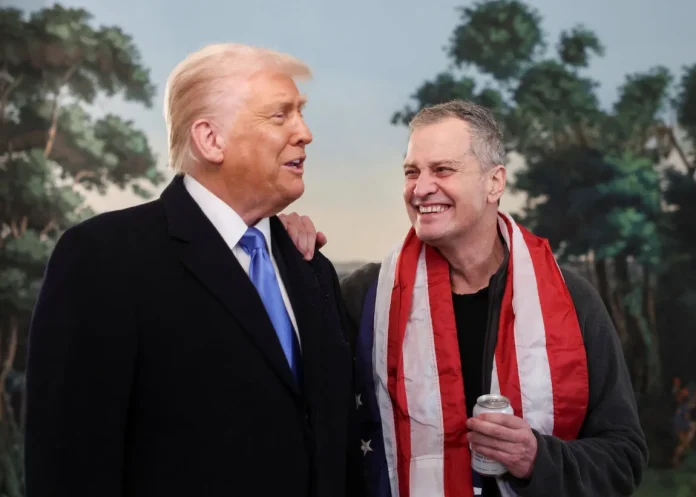
The White House posted a photo late Tuesday of Fogel stepping off a plane at Joint Base Andrews with an American flag draped across his shoulders.

In an extraordinary move, Witkoff personally went to Russia to bring back Fogel, Waltz’s statement indicated. There has been no known high-level US travel to Russia since the start of the war in Ukraine in February 2022.

Witkoff, who is Trump’s Middle East envoy and didn’t have previously known official dealings with Russia, was involved in part because he leveraged relationships in the Middle East to further the agreement, according to two people briefed on the discussions.

Witkoff has crisscrossed the region in recent months working on the Gaza ceasefire accord, notably in Qatar, a primary mediator. Doha was involved in helping Witkoff and the administration with Tuesday’s exchange deal through introductions Qataris made to Russian intermediaries, the people briefed said.

“By tonight, Marc Fogel will be on American soil and reunited with his family and loved ones thanks to President Trump’s leadership,” Waltz’s statement read.

Fogel worked for nearly a decade as a history teacher at the Anglo-American School in Moscow, where children of US diplomats were among his students.

He was arrested in August 2021 at an airport in Moscow after he was found carrying cannabis. He had traveled into the country with about 17 grams of cannabis, which his family and lawyer said was recommended by a doctor to treat “severe spinal pain.”

In June 2022, he was found guilty in a court just outside Moscow of committing “large-scale drugs smuggling” and given a 14-year sentence at a Russian hard labor camp. The same court held the trial of detained WNBA player Brittney Griner, who was released in a prisoner swap in December 2022.

Fogel was not included in multiple prisoner swaps under the Joe Biden administration, including one in August that saw the release of journalist Evan Gershkovich and former Marine Paul Whelan.

Secretary of State Marco Rubio stated that while Fogel’s release and an end to the war in Ukraine are not linked, he thinks it’s a good sign that Russia was willing to cooperate.

“It’s a long way to go between here and there. It’s not going to be easy,” Rubio said of ending the war.

“And again, I don’t want to claim that what’s happening here tonight is in any way the first step towards that, but I do think it’s a good sign that the Russians were willing to do something in this regard, and hopefully we can build on that in the days to come.”

Rubio added he didn’t think anybody can assign a timeline to the nearly three-year war ending.

“We don’t just want to see it end. We want to see it end in a way that’s sustainable.”

The news of the “exchange” with Moscow comes as Trump has suggested he could try to bring about an end to the war in Ukraine in ways that are unsettling to Kyiv.
Iran UN Envoy condemns Trump’s threat to use force against Tehran

Iravani said Trump’s reckless and inflammatory statements flagrantly violate international law and the UN Charter.

“Upon the instructions from my Government, I am writing to draw the Security Council’s attention to deeply alarming and irresponsible remarks made by the President of the United States, in which he openly threatened the use of force against the Islamic Republic of Iran,” Iravani stated.

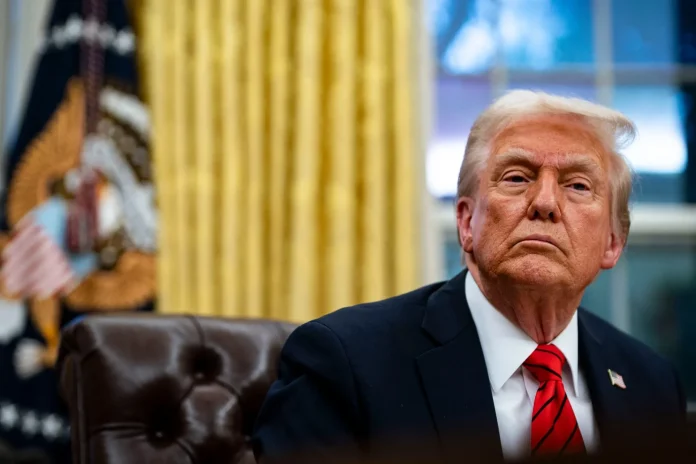
Trump said he would prefer to make a deal with Iran rather than “bombing the hell out of it,” in a media interview published on Saturday.

“I would like a deal done with Iran on non-nuclear. I would prefer that to bomb the hell out of it,” Trump told the New York Post, adding, “They don’t want to die. Nobody wants to die.”

In yet another belligerent statement, during an interview with Fox News on Monday, Trump reiterated the same language of war.

“I would like to make a deal without bombing them.”

Iravani stated that Trump’s “reckless and inflammatory statements flagrantly violate international law and the UN Charter, particularly Article 2(4), which prohibits threats or use of force against sovereign states.”

The Iranian diplomat also slammed Trump’s so-called maximum pressure” policy against Iran as a blatant violation of fundamental principles and norms of international law.

“Such provocation is further compounded by the so-called ‘maximum pressure’ policy, outlined in the National Security Presidential Memorandum (NSPM) of 4 February 2025. This policy reinforces unlawful, unilateral coercive measures and escalates hostility against Iran, blatantly violating fundamental principles and norms of international law,” he added.

Iravani called on the Security Council not to remain silent in the face of such brazen rhetoric and condemned it unequivocally.

“The Islamic Republic of Iran firmly rejects and condemns this reckless threat. The UN Security Council must not remain silent in the face of such brazen rhetoric, as normalizing the threat to use force sets a dangerous precedent and must be unequivocally condemned,” he said.

He warned that any act of aggression against Iran will have severe consequences, for which the US will bear full responsibility.

He emphasized that Iran will resolutely defend its sovereignty, territorial integrity, and national interests against any hostile action.

“The Islamic Republic of Iran warns that any act of aggression will have severe consequences, for which the US will bear full responsibility. As a responsible member of the United Nations, committed to upholding peace, security, and international cooperation, Iran will resolutely defend its sovereignty, territorial integrity, and national interests against any hostile action,” Iravani added.

Trump’s threats came a few days after he signed an order seeking to cut Iran’s oil exports to zero, while also claiming that he wanted to work towards a nuclear deal.

The directive is part of broader sanctions re-imposed after Trump unilaterally withdrew Washington from the 2015 Joint Comprehensive Plan of Action (JCPOA) in 2018.

Also responding to Trump’s threat, Iranian President Masoud Pezeshkian said on Monday that the country “does not seek war… but will not yield to foreign pressure.”

He further criticized the US president’s claim of willingness to hold talks with Iran while simultaneously restoring his so-called “maximum pressure” campaign against Iran.

“Trump says let’s have a dialogue, and then … he signs and announces all possible conspiracies to bring the [Islamic] Revolution to its knees,” Pezeshkian added.

Israel threatens to resume ‘intense’ fighting if captives not returned

Gaza War

“The military will return to intense fighting until Hamas is finally defeated,” he said in a video statement after a four-hour cabinet meeting.

“Last night, I ordered the IDF to assemble forces inside and around the Gaza Strip,” he added.

The statement comes a day after US President Donald Trump threatened to cancel the ceasefire if Israeli captives are not released, telling reporters on Monday that “all hell is going to break out” if they are not returned.

The statements come after Hamas announced it would delay the release of the next tranche of captives “until further notice”, accusing Israel of failing to comply with the terms of the truce deal.

Trump had also expressed frustration at the conditions of the recent batch of Israeli captives released by Hamas, noting his scepticism regarding whether the remaining captives are alive.

“I think a lot of the hostages are dead,” he said.

Trump has stated that he doesn’t think Hamas will return the captives and reiterated that if they aren’t returned, then “all bets are off”.

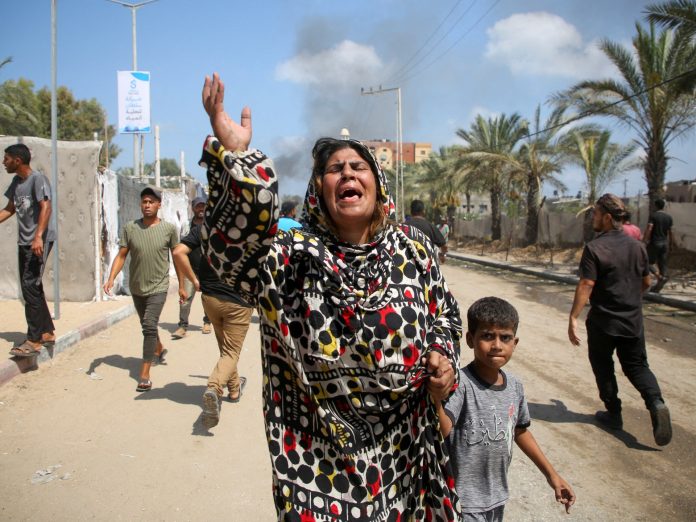
Israel’s war on Gaza has killed a confirmed nearly 48,200 people and injured 111,640, according to the enclave’s Health Ministry. The Government Media Office has updated the death toll to at least 61,700 people, saying thousands who were missing under the rubble are now presumed dead.

The International Criminal Court issued arrest warrants in November last year for Netanyahu and his former Defense Minister Yoav Gallant for war crimes and crimes against humanity in Gaza.

Israel also faces a genocide case at the International Court of Justice for its war on the enclave.

Moscow claims Kiev plotting to drag NATO into war

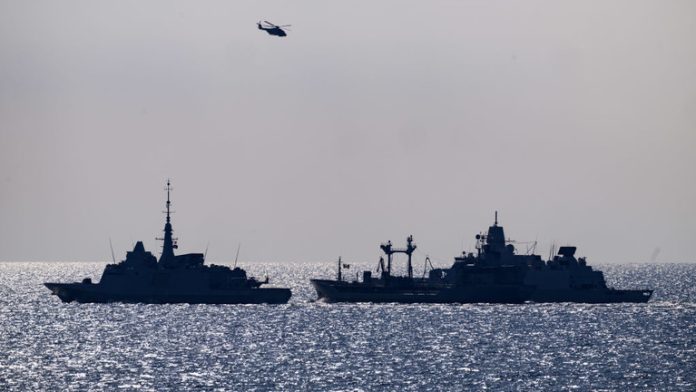
In a statement on Tuesday, the SVR claimed that Kiev plans to use Russian-made naval mines to orchestrate an explosion involving a foreign vessel in the Baltic Sea. The alleged goal is to blame Moscow and prompt NATO to restrict Russia’s access to the Baltic on the pretext of ensuring maritime security.

NATO has been increasing its military activities along Eastern Europe’s borders in recent years, citing security concerns over Russia. Last month, it announced plans to expand its presence in the Baltic Sea, launching a new mission to safeguard undersea infrastructure following a series of disruptions and damage to cables between member states.

Russia, which perceives the Baltic Sea as a strategic area for its naval operations and energy exports, has vowed to do everything necessary to protect its interests. Last year, Nikolay Patrushev, the former head of the Russian Security Council who currently serves as an aide to President Vladimir Putin, warned that NATO is using its newest members, Sweden and Finland, to turn the Baltic into an “internal sea” under Western control.

Moscow has stressed that it has no intention of attacking any NATO member states, but has criticized the military buildups on its border. It has also warned that direct confrontation between Russia and NATO could escalate into a nuclear conflict, adding that it will respond to any hostile moves.

In its statement, the SVR also alleged that Ukraine’s Main Intelligence Directorate (GUR), in collaboration with intelligence agencies from several European countries, is planning attacks on Russian “non-systemic opposition” figures and businessmen residing abroad.

The plan reportedly involves recruiting perpetrators from Asian and Middle Eastern countries, offering up to $20,000 for participation, with instructions to blame the Russian intelligence services if apprehended.

Russia has accused Ukraine of planning various provocations in order to blame Moscow. Ukraine has dismissed the claims as propaganda. In recent months, Russia’s security services have on numerous occasions arrested Ukrainian agents tasked with targeting prominent public figures.

The SVR cited reports indicating that Ukrainian leader Volodymyr Zelensky and his associates are willing to resort to provocations to preserve their positions.

“To this end, the Kiev regime will not only actively hinder peace settlement processes but is also prepared to extend hostilities far beyond Ukraine’s borders,” it noted.

Zelensky remains in office despite his term expiring last May. He has refused to step down and postponed elections, citing martial law, which was imposed in 2022 following the escalation of the conflict with Russia.

In a separate report this month, the SVR claimed that NATO is exploring ways to remove Zelensky from power by undermining his credibility before potential elections next year. It claimed that some Western officials see him as a roadblock to peace talks with Moscow.

Moscow has expressed willingness to engage in peace talks, though Putin has insisted that negotiating with the current Ukrainian leadership will not have any legal meaning.

Iranian journalists Elaheh Mohammadi, Niloofar Hamedi granted Leader’s amnesty

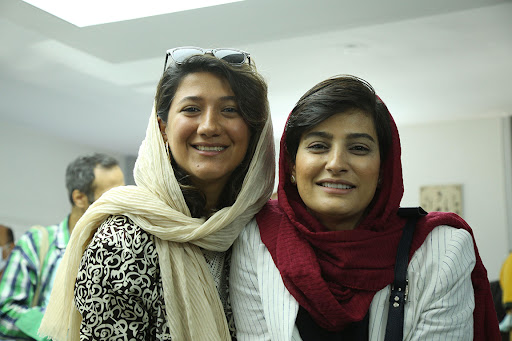
Journalists Nilufar Hamedi (l) and Elaheh Mohammadi (r)

According to the statement, their cases were reviewed and placed in the proposed list of pardons, which was subsequently approved by Iran’s Supreme Leader after being submitted by the head of the Judiciary.

The Judiciary also stated that Mohammadi and Hamedi had written a letter to the Chief of the Judiciary, expressing remorse for their past actions.

In the letter, they pledged not to engage in any unlawful activities and expressed regret for their previous conduct, which had led to their convictions.

Mohammadi had received a 6-year sentence for cooperating with the hostile government of the United States, 5 years for conspiracy against the security of the country, and 1 year for propagating activities against the Islamic Republic of Iran.

Hamedi had been sentenced to 7 years for collaborating with the hostile government of the United States, 5 years for conspiracy against the country’s security, and 1 year for propagandizing against the Islamic Republic of Iran.

UN Secretary-General stresses resumption of hostilities in Gaza must be avoided ‘at all costs’

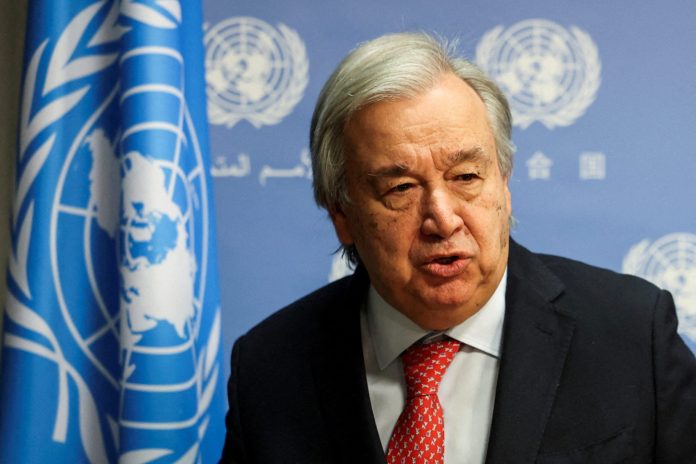
António Guterres

“We must avoid at all costs the resumption of hostilities in Gaza that would lead to an immense tragedy,” Guterres said.

He also called on Hamas to follow through with the scheduled release of hostages next Saturday.

Guterres emphasized the need for “both sides” to uphold the ceasefire and resume “serious negotiations in Doha for the second phase.”

The UN chief’s remarks came amid heightened concerns over the fragile truce, as international mediators work to secure lasting peace in the region.

A three-phase ceasefire has been in effect in Gaza since January 19, pausing Israel’s assault that has killed over 48,000 people and devastated the region.

In the first phase, lasting until early March, 33 Israeli hostages are set to be exchanged for Palestinian prisoners, with the sixth swap planned this week.

In November, the International Criminal Court issued arrest warrants for Israeli Prime Minister Benjamin Netanyahu and former Defense Minister Yoav Gallant over war crimes in Gaza.

US President Donald Trump has warned that the Gaza ceasefire deal should be cancelled if all the Israeli captives are not released by Saturday.

His statement came after Hamas suspended the next release of captives held in Gaza indefinitely, accusing Israel of violating the terms of the ceasefire agreement, including by continuing to kill Palestinians and obstructing the delivery of humanitarian aid.

The moves sparked protests in Tel Aviv, while the Israeli military says it has cancelled leave for its troops and is increasing its forces around the Gaza Strip.

US to consult allies on Ukraine peace plan, seeks Europe’s weapons purchases for Kyiv: Telegraph

Russia Ukraine War

Keith Kellogg, Trump’s envoy for Ukraine and Russia, reportedly assured European diplomats that NATO allies would be consulted before finalizing any proposal. He also promised to engage with European heads of state on the issue, according to the outlet.

The Trump administration is also exploring ways to continue arming Ukraine without significantly increasing U.S. spending, according to Reuters.

One approach reportedly under discussion is encouraging European allies to purchase more American weapons for Kyiv. U.S. officials, including Kellogg, are expected to raise this issue during the Munich Security Conference this week.

President Volodymyr Zelensky will lead Ukraine’s delegation at the conference, where he is expected to meet with U.S. officials. Vice President JD Vance, Secretary of State Marco Rubio, and Kellogg will represent the Trump administration.

While Bloomberg previously reported that Trump’s team might unveil a peace plan in Munich, Kellogg denied this. Ukraine is preparing to host Kellogg on Feb. 20 following the conference, according to sources cited by RBC-Ukraine.

The Munich Security Conference comes at a critical moment for Kyiv, as Ukraine seeks to establish working relations with the new U.S. administration, which has taken a different approach to the war than its predecessor.

Kellogg has described a “near-term” resolution as achievable within 100 days of the inauguration, calling it his personal and professional goal to help Trump broker a solution within that timeframe.

Kremlin claims large part of Ukraine seeks to become Russia

Kremlin

Commenting on US President Donald Trump’s statement that Ukraine could one day become Russia, the spokesman said: “The fact that a large part of Ukraine wants to become Russia or has already joined it is obvious.”

“This is a fact that has materialized on the ground: Russia now has four new regions. People who, despite many dangers, were queuing to vote in a referendum on joining Russia – this in many ways corresponds to the words of President Trump,” Peskov pointed out.

Speaking about the possibility of implementing the US leader’s proposals, the Kremlin spokesman added that “every event has a 50% chance: either yes or no.”

Earlier, in an interview with the Fox News TV channel, Trump stated that “Ukraine may be Russian one day” and did not rule out that he would like Ukraine to return all the money spent by the US government on its support. The US leader clarified that he would like to receive the equivalent of $500 billion in Ukrainian rare-earth metals.

Iran border guards rescue 250 stranded Afghan Nationals amid severe snowstorm

Iran Border Guard

Hojjat Sadeghi, the prosecutor of Taybad, bodering Afghanistan, confirmed the rescue operation, stating that the Afghan nationals were provided with medical and welfare services to stabilize their condition before being processed for legal repatriation to Afghanistan.

Sadeghi emphasized that the border areas remain unsafe for illegal crossings, particularly during extreme weather conditions.

He also noted that since the beginning of the current year, over 1,400 undocumented Afghan nationals have been intercepted and returned to Afghanistan through the Dogharoon international border crossing, located 18 kilometers from Taybad.

Sadeghi reiterated Iran’s firm stance on preventing illegal border crossings, warning that violators would face strict legal action.

Former diplomat criticizes misinterpretation of Trump’s Iran policy directive

Trump

In an article on Sharq, Kourosh Ahmadi emphasized that while the decision to engage in negotiations falls within the authority of high-ranking officials, such decisions must be based on accurate and precise information.

He pointed to recent remarks by Mohammad Bagher Ghalibaf, Speaker of Iran’s Parliament, as an example of misinformation.

Ghalibaf claimed that Trump’s directive aimed to “disarm Iran,” a statement Ahmadi refuted, clarifying that the document focuses on enforcing existing sanctions rather than introducing new ones.

The directive outlines four key policy objectives: preventing Iran from acquiring nuclear weapons and intercontinental ballistic missiles, countering regional destabilizing activities, disrupting the financial networks of the Islamic Revolution Guard Corps (IRGC), and addressing Iran’s missile program.

Ahmadi highlighted that the directive does not call for Iran’s disarmament but rather seeks to counter specific military capabilities.

He also noted that the document lacks the legal weight of an executive order and is not enforceable in courts, relying solely on the president’s discretion.

Trump’s mixed signals, including his hope to avoid extensive use of the directive and his focus on reaching a nuclear agreement, further complicate its interpretation, he added.