Thursday, December 25, 2025
Home Blog Page 487

US says won’t send soldiers to Ukraine

US Forces

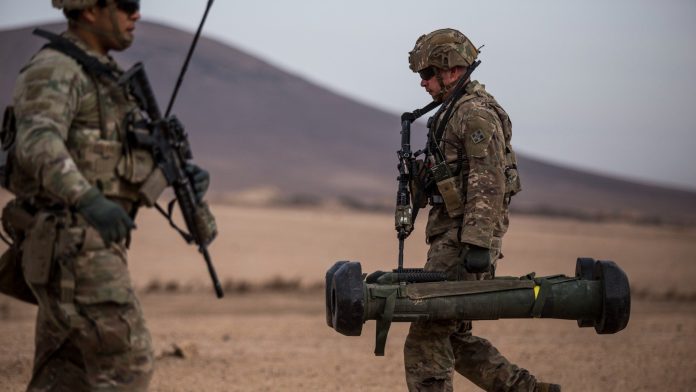
Hegseth’s remarks come amid ongoing discussions among Western countries about the possible deployment of peacekeeping forces if a ceasefire is negotiated.

“We are not sending U.S. troops to Ukraine,” Hegseth told reporters in Stuttgart, Germany, during his visit to U.S. European Command and U.S. Africa Command headquarters.

Hegseth added that Washington currently has no plans to reduce the U.S. contingent abroad but will review its deployment by President Donald Trump’s strategic vision.

The U.S. Defense Secretary also expressed hope for a swift peace agreement in Ukraine, which Trump has pledged to conclude.

“With hopefully a rapid peace deal in Ukraine, which the President (Donald Trump) is committed to delivering, we can then review force posture and encourage as you’re going to see at the Ukraine contact group and the NATO ministerial, we’re going to have straight talk with our friends,” Hegseth added.

Hegseth is expected to attend the Ukraine Defense Contact Group (UDCG), also known as the Ramstein summit, as part of a tour of Germany, Belgium, and Poland, according to a Pentagon statement.

At the summit, the defense secretary aims to “reiterate President Trump’s commitment for a diplomatic end to the war in Ukraine as quickly as possible,” the statement read.

However, this time, Hegseth is not likely to announce new military aid supplies, which was a regular occurrence during the Joe Biden administration, according to the Washington Post (WP).

The Pentagon chief will not hold separate meetings with his Ukrainian counterparts but will rather be a “listener” at the Ramstein and at the meeting of NATO defense ministers on Feb. 13, an unnamed U.S. official told WP on condition of anonymity.

The transition of power in Washington and expected changes in U.S. policy on Ukraine cast doubt on the future of the Ramstein summit. In February, for the first time since the establishment of the Ramstein format, the meeting was convened by the U.K., not the U.S.

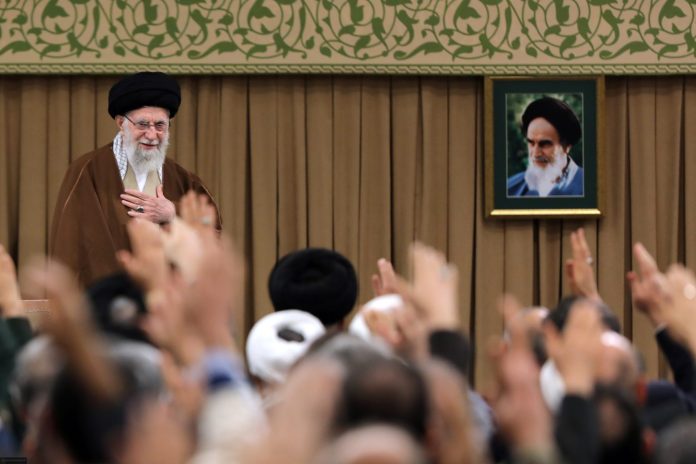
Ayatollah Khamenei says Iranians sent ‘message of unity’ to world on Revolution anniversary

Ayatollah Khamenei made the remarks in Tehran on Wednesday, addressing a gathering of Defense Ministry officials, defense industry elites, the ministry’s experts and staff, and families of the martyrs hailing from the country’s defense industry.

The Leader described the day marking the Revolution’s victory as one of the most significant national events, showcasing the unity and strength of the Iranian people despite relentless external pressures.

Ayatollah Khamenei emphasized that the celebrations on this year’s anniversary were not just a commemoration, but a powerful act of resistance and national unity.

“This was a message of unity from the Iranian people. Despite the constant, idiotic threats against us, the people of Iran showed the world their identity, their strength, and their unwavering resolve.”

“This year’s February 22nd was one of the most outstanding celebrations of the Revolution,” the Leader stated.

“It was a popular uprising, a grand national movement. People took to the streets, raised their voices, and shared their views across the media, all over the country. This was a true popular uprising, a major national movement.”

Ayatollah Khamenei noted that, “Despite ongoing media bombardments, psychological warfare, and unfounded threats from adversaries against the historic development, the Iranian people stood strong in their commitment to the values of the Revolution with their indication of strong support for the event during this year’s marches and jubilations.”

Ayatollah Khamenei also made special reference to the presence of young people in the celebrations, their vibrant energy, which was visible across the country’s various cities, not just in Tehran and major urban centers, but in remote towns and villages.

Even in cities where the weather was harsh and conditions unfavorable, millions of Iranians participated, demonstrating their collective will, the Leader remarked.

According to observers, Ayatollah Khamenei’s comments reflect the broader sentiment in Iran, where the Revolution’s anniversary has become a symbol of resistance against foreign interference and a reaffirmation of Iran’s sovereignty.

The anniversary also serves as a reminder of the enduring influence of the Revolution, despite the ongoing political and economic challenges posed by the country’s adversaries, they note.

Ayatollah Khamenei added, “The issue of defending the nation, defending security, is not a small matter. Today, Iran’s defensive power is renowned and well-known. Iran’s friends take pride in this defensive power, and Iran’s enemies fear it. This is very important for a nation, for a country.”

Also on Wednesday, the Leader visited the Eqtedar (Strength) 1403 Exhibition, which showcased the latest achievements and capabilities of Iran’s defense industry.

The event displayed advanced equipment and new technologies used in areas such as air defense, ballistic and cruise missiles, smart munitions, space, drones, aviation, vessels, and energy.

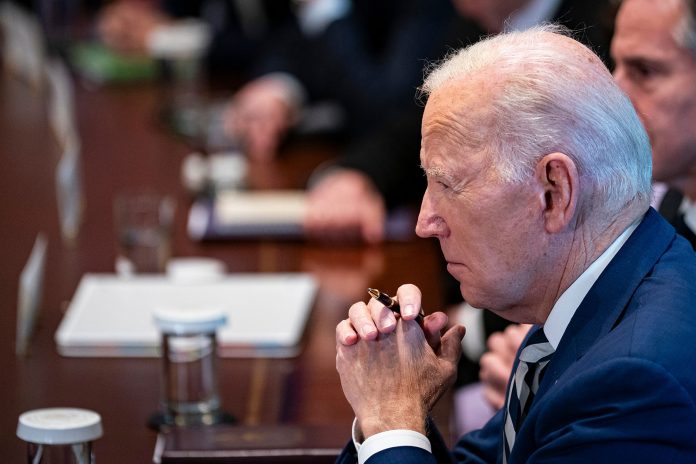
Biden ‘least liked’ living American president: Poll

Joe Biden

In a Gallup poll of the five living presidents — Biden, Trump, Bill Clinton, George W Bush, and Barack Obama — Obama comes out on top with 59 percent having a favorable view of the 44th president.

Bush scored second place with a favorable rating of 52 percent, Clinton and Trump are tied at 48 percent, and Biden comes in last with 39 percent of respondents saying they have a favorable view of the 46th president.

Bush and Clinton had the highest percentage of respondents saying they had no opinion of them — 14 and 12 percent respectively.

The survey was conducted between January 21 and 27, just after Trump’s inauguration for his second term as president, where all four former presidents were present. All five also attended the funeral for President Jimmy Carter, who died at the age of 100, becoming the longest-living president.

Gallup noted that Trump and Biden’s ratings are “essentially unchanged” since the 2024 election.

Trump’s ratings are about equally favorable and unfavorable, but they still rank among his best since Gallup began measuring opinions of the 45th and 47th president in 1999.

“He has had only one net-positive rating to date – 50% favorable and 38% unfavorable – in 2005, when he was featured in the reality television show The Apprentice and before he entered Republican politics,” Gallup noted in its analysis.

During his first presidential campaign in 2015 and 2016, only an average of 33 percent of American adults had a favourable view of Trump. Forty-two percent had a favorable view of him following his 2016 election win over former Secretary of State Hillary Clinton. After his first inauguration, this number rose to 46 percent.

Trump’s first term saw his favorability rating remain mostly above 40 percent, dipping to 36 percent shortly before the end of his first term as Covid-19 infections rose and his supporters ransacked the U.S. Capitol on January 6, 2021. His ratings rose once more to about 40 percent in July 2023 following his indictment in the federal classified documents case.

Biden now has a 39 percent favorable rating with 57 percent unfavorable rating, with Gallup calling it “barely better than his worst evaluation since he became a well-known political figure.”

In June last year, Biden had a 37 percent favorable rating and a 61 percent unfavorable rating amid concerns about his age and positions on issues as he took on Trump in the initial stages of the 2024 election. At the time, polls had him behind Trump.

Following his debate debacle on June 27, concerns about his age grew.

Biden notched his best rating in January 2017 when 61 percent of respondents had a favorable view of him at the end of his vice presidency. Right after being inaugurated as president in January 2021, he had a 59 percent favorable rating.

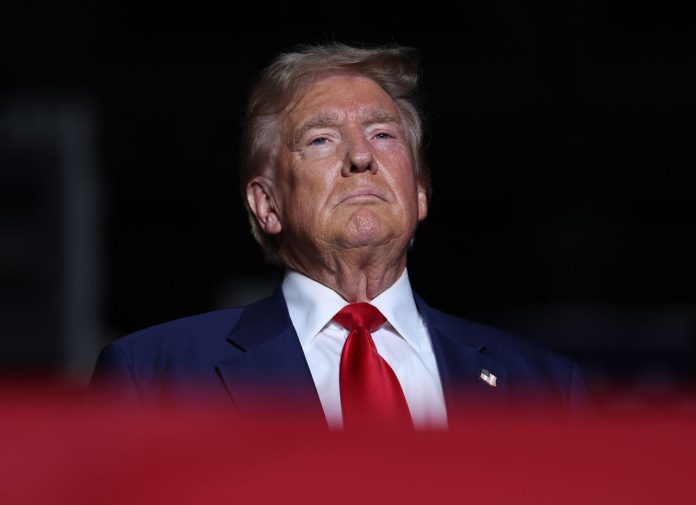
Poll shows most Europeans see US under Trump as more a necessary partner than ally

Donald Trump

The polling, of 11 EU member states plus Ukraine, Switzerland and the UK, found most people now regarded the US as merely a “necessary partner” – even in countries such as Poland and Denmark that barely 18 months ago had considered the US an ally.

An average of 50% of Europeans across the member states surveyed viewed the US this way, the study revealed, with an average of only 21% seeing it as an ally, leading the report’s authors to urge a more “realistic, transactional” EU approach.

The figures “speak to a collapse of trust in Washington’s foreign policy agenda” and heralded “the potential death knell of the transatlantic alliance” said Arturo Varvelli, co-author of the report, by the European Council on Foreign Relations (ECFR).

“This finding alone should really sharpen minds about the need for Europe to embrace greater pragmatism and autonomy in its global dealings, as a means of protecting its citizens and its values in the coming period,” Varvelli added.

Those seeing the US as a “necessary partner” rather than an ally were most numerous in Ukraine (67%-27%), Spain (57%-14%) and Estonia (55%-28%). But even in the UK, which boasts of a “special relationship” with the US, the ratio was 44% to 37%.

But while Europeans were essentially aligned on their view of US foreign policy, there were significant differences on other issues, suggesting scope for Trump’s “America First” administration to play member states off against each other.

While on average EU citizens thought Trump’s return as US president was a “bad thing” for Americans, for their own country and for world peace, Hungarians, Bulgarians and Romanians were considerably more positive than Danes and Germans.

Far-right supporters across Europe proved Trump’s biggest fans, with fewer than one-fifth of voters for Fidesz in Hungary, Law and Justice (PiS) and Konfederacja in Poland and Brothers of Italy believing his re-election was a “bad thing” on all three counts.

Respondents who voted for Alternative für Deutschland (AfD) in Germany and the National Rally (RN) in France stood out, nonetheless, in having a plurality (37% and 35%, respectively) who believed Trump’s return to power was a bad thing for their own countries.

There was disagreement, too, over Ukraine. Majorities or pluralities in all countries, including 55% in Denmark, 49% in the UK and 44% in Poland, said a “compromise settlement” was the likeliest outcome of Russia’s war on Ukraine.

Some, however, including Estonia, Denmark, the UK and Portugal, felt considerably more strongly than others that continuing support for Kyiv, rather than pushing for peace, must nonetheless remain the EU’s priority.

And views on what should happen after the war varied widely: 47% of French and 50% of Italians said they struggled to see Ukraine as European, and in Bulgaria and Hungary, many saw Russia as an EU ally or necessary partner, not a rival or adversary.

The EU’s engagement with China was another topic of divergence. Half or more of respondents in southern and south-eastern Europe, including Spain, Italy, Bulgaria, Hungary and Romania, said they saw Beijing as a “necessary partner” or ally.

However, in countries in northern and western Europe, roughly similar percentages – 55% in Germany, 52% in Denmark, and 45% in the UK and France – held the opposing view, seeing China instead as a rival or adversary.

The report’s authors argued there was no reason to believe Trump had changed his opinion of the EU from his first term in office, during which he called the bloc a “foe” for the US and referred to Brussels as being “like a hellhole”.

With the new president opposed to Europe’s green transition, alleged “wokeism” and social media regulation, the bloc must expect “strategic, economic and political challenges” and understand that US and European interests were diverging, they said.

European leaders will need to work across the bloc’s faultlines, entertain new forms of flexible cooperation among member states and, above all, resist establishing privileged bilateral relations with Trump at the expense of other European allies.

“The Atlantic community is no longer underpinned by shared values,” stated the ECFR’s Jana Puglierin.

“In a world of Trump 2.0, transactionality reigns. For EU leaders, this will require a positional shift away from the Washington-led status quo.”

Paweł Zerka, another co-author, noted the “Trumpisation of Europe” was evident in rising support for far-right parties, a growing readiness to adopt a transactional approach and acceptance of the need for peace negotiations in Ukraine.

But there were still “opportunities for the EU to learn pragmatism in foreign policy; for its leaders to clarify the stakes to their voters; and for pro-European parties to differentiate themselves from the Trumpian far right”, he continued.

Govt. spokeswoman says Iran has active plan to counter US maximum pressure campaign

Fatemeh Mohajerani

Fatemeh Mohajerani said that it was anticipated the Trump administration would employ maximum pressure tactics against Iran, though this strategy would ultimately prove ineffective.

Regarding the government’s stance on negotiations with the US, she said negotiation is a strategy Iran has always pursued. Iran is open to dialogue, but talks require specific conditions. Tehran will not yield to coercion. You cannot pursue a maximum pressure policy while smiling.

Referring to the experience of the Iran nuclear deal negotiations (JCPOA), the spokesperson added the reason we reject negotiations with the opposing side is that they do not understand the language of dialogue. Iran is well-versed in diplomatic discourse and has consistently used it as a tool of diplomacy, as the world witnessed during the JCPOA. However, the other party abandoned the agreement.

When asked about Iran’s plans to update its contingency strategies against the US, Mohajerani responded Iran’s predefined scenarios must be updated according to current circumstances. This process is being prioritized by the government and relevant institutions.

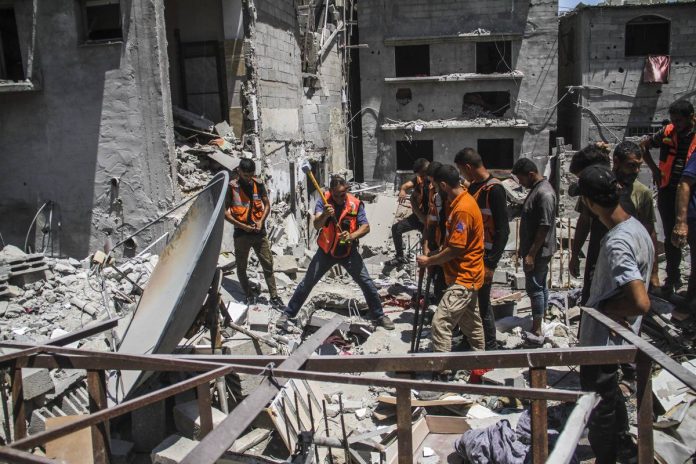
UN estimates more than $53B for Gaza Strip’s recovery, reconstruction

Gaza

“The report estimates the recovery and reconstruction needs in the short, medium and long term across the Gaza Strip at $53.142 billion. Of these, the near-term needs in the first three years are estimated to be around $20.568 billion,” said the report by UN Secretary-General Antonio Guterres.

Highlighting the dire economic and humanitarian toll of the conflict, the report noted that Gaza’s economy is projected to shrink 83% in 2024, with unemployment reaching 80%.

“In the Occupied Palestinian Territory, poverty is projected to have risen to 74.3% in 2024, up from 38.8% at the end of 2023,” added the report.

Guterres stressed that addressing immediate humanitarian needs is crucial. “In the immediate and short term, the scale of the humanitarian crisis will require a continued focus on delivering life-saving humanitarian assistance.”

Recalling the UN’s $6.6 billion humanitarian flash appeal on Dec. 11, 2024, the report said $3.6 billion from the appeal is allocated to address the most critical needs of 2.1 million Palestinians in Gaza.

“These short-term needs are focused on addressing acute humanitarian needs through the delivery of emergency supplies and the provision of critical services, including protection, until local services and markets are restored,” it added.

The report emphasized two key priorities remaining — ensuring stronger civilian protection and securing safe and unhindered access to aid.

“With a large majority of residential buildings damaged or destroyed, some 1.13 million people are in makeshift shelters or tents that do not provide adequate protection,” it noted, warning that health care services remain critically insufficient.

The report recalled the deaths of at least eight children in Gaza due to hypothermia in December and early January.

Guterres urged stronger international support to strengthen the Palestinian Authority’s institutions and prepare it to reassume full governance in Gaza.

“Political, institutional and economic reforms will also be needed, but they must be achievable and properly financed,” he stressed.

The UN chief also stressed that Gaza must remain an integral part of a Palestinian state, with no reductions in its territory and full political, economic and administrative unity with the occupied West Bank.

Ukraine can trade territory in potential peace negotiations with Russia: Zelensky

Russia Ukraine War

Ukraine launched a surprise cross-border incursion into Russia’s Kursk Oblast in August 2024, initially capturing around 1,300 square kilometers (500 square miles) of territory. While Ukrainian forces have since lost roughly half that area, they recently advanced 2.5 kilometers (1.5 miles) in the region in a new offensive.

The Ukrainian military continues to hold Russian territory that could play “an important part” in future negotiations, Zelensky previously said.

“We will swap one territory for another,” Zelensky told The Guardian, without specifying which Russian-occupied land Ukraine would seek in return.

“I don’t know, we will see. But all our territories are important, there is no priority,” he added.

Talk of ending Russia’s full-scale invasion of Ukraine has increased as US President-elect Donald Trump took office on Jan. 20.

The new administration aims to end Russia’s war against Ukraine 100 days from inauguration, Keith Kellogg, Trump’s special Ukraine peace envoy, has stated.

According to sources in Ukraine’s President’s Office, cited by RBC-Ukraine, Kellogg will visit Ukraine on Feb. 20 after the Munich Security Conference.

The US president has recently revealed he aims to meet Zelensky in Washington the following week. He also recently added that the US wants access to Ukraine’s rare earth minerals in exchange for aid. Zelensky has responded that Kyiv is open to mining deals with partners.

Trump has also allegedly spoken with Russian President Vladimir Putin about ending the war.

The US president told the New York Post he had a concrete plan to end the war, adding, “I hope it’s fast. Every day, people are dying. This war is so bad in Ukraine. I want to end this damn thing.”

Jordan, Arab states oppose Palestinian displacement: King Abdullah after Trump meeting

“I stressed that my foremost commitment is to Jordan, to its stability and to the well-being of Jordanians,” Abdullah posted on the social platform X after departing the White House.

“I reiterated Jordan’s steadfast position against the displacement of Palestinians in Gaza and the West Bank. This is the unified Arab position,” he continued.

“Rebuilding Gaza without displacing the Palestinians and addressing the dire humanitarian situation should be the priority for all.”

Abdullah described Trump as a “man of peace” and added he was “instrumental in securing the Gaza ceasefire. We look to US and all stakeholders in ensuring it holds.”

“We will continue to play an active role with our partners to reach a just and comprehensive peace for everyone in the region,” he wrote.

Abdullah’s comments deal a blow to Trump, who has for the past week been pushing a vision for the US to take control of the Gaza Strip and rebuild it while Palestinians move elsewhere in the region.

Trump met in the Oval Office earlier Tuesday with Abdullah. Trump remained adamant that Palestinians did not even want to live in Gaza and would relocate to Jordan, Egypt and elsewhere. And he insisted the United States would “have” Gaza, while offering few specifics on how it would acquire the territory without spending any money or deploying troops.

“We’re not going to have to buy. We’re going to have Gaza. We don’t have to buy. There’s nothing to buy. We will have Gaza,” Trump told reporters.

“It’s a war-torn area. We’re going to take it, we’re going to hold it, we’re going to cherish it. … It’s going to be for the people in the Middle East. But I think it could be a diamond.”

One aspect of Trump’s plan that has run into stiff opposition in the Arab world is his declaration that Palestinians would relocate to Jordan and Egypt while Gaza is rebuilt. He has also offered mixed signals about the long-term fate of Palestinians.

On Tuesday, Trump was again insistent that Palestinians did not want to live in Gaza.

“It’s not where I want them to live, it’s going to be where we ultimately choose as a group. And I believe we’ll have a parcel of land in Jordan. I believe we’ll have a parcel of land in Egypt. We may have some place else,” Trump stated, adding, “But when we finish our talks, they’re going to have a place where they live very happily and very safely.”

“They don’t want to be in the Gaza Strip. But they have no choice. They have to be.”

The king of Jordan sought to temper expectations around Trump’s proposal during their meeting, saying Egypt and other Arab nations expect to present a proposal to the United States.

“This is something that we as Arabs will be coming to the United States with something that we’re going to talk about later to discuss all these options,” Abdullah said.

Leaders in the region have said efforts to displace Palestinians or move them into neighboring countries are a nonstarter. Egypt and Jordan — countries with peace treaties with Israel — oppose absorbing more Palestinians, stressing it poses a security risk, is destabilizing and threatens to provoke mass opposition.

Jordan already houses about 3 million Palestinians, many of whom have been displaced by prior wars.

Abdullah on Tuesday stated that Jordan would take in 2,000 sick Palestinian children, which Trump praised as a “beautiful gesture.”

Hamas says committed to Gaza ceasefire accord, Israel not fulfilling its obligations

In a statement published on Telegram, Hamas also rejected US President Donald Trump’s remarks suggesting the displacement of Palestinians from Gaza under the pretext of reconstruction, calling them “racist” and an “invitation to ethnic cleansing” aimed at erasing the Palestinian cause.

Since Jan. 25, Trump has repeatedly suggested that Palestinians in Gaza should be taken in by regional Arab nations such as Egypt and Jordan, an idea rejected by both the Arab states and Palestinian leaders.

Hamas stressed: “The plan to expel our people from Gaza will not succeed and will face a unified Palestinian, Arab, and Islamic stance rejecting all displacement schemes. All plans for forced displacement will fail.”

The group reiterated that it remains committed to the ceasefire agreement as long as Israel does, emphasizing that the deal was brokered and guaranteed by Egypt, Qatar, and the US, with international oversight.

“The (Israeli) occupation is the party that has failed to meet its commitments, and it bears full responsibility for any delays or complications,” Hamas added.

On Monday, Trump warned “all hell” will break out if all Israeli captives in Gaza were not released by 12:00 p.m. (10:00 GMT) on Saturday.

Meanwhile, Israeli Prime Minister Benjamin Netanyahu issued a warning to Hamas following a four-hour security Cabinet meeting on Tuesday, announcing that he had ordered the military to mobilize forces in and around Gaza.

“This deployment is happening as we speak and will be completed as soon as possible,” Netanyahu stated in a televised statement.

He vowed that if Hamas did not release the captives by Saturday noon, “the ceasefire will end, and the Israeli military will resume fighting at full force.”

While Netanyahu did not specify the number of hostages he expected Hamas to release, Israeli Army Radio, citing unnamed officials, reported on Tuesday that if Hamas freed three captives on Saturday, the first phase of the agreement would proceed.

On Monday, Abu Ubaida, spokesperson for Hamas’ military wing, the Al-Qassam Brigades, announced that the release of Israeli hostages scheduled for Saturday had been postponed indefinitely, citing Israeli violations of the ceasefire agreement.

The three-phase ceasefire deal has been in place in Gaza since Jan. 19, halting Israel’s genocidal war that has killed more than 48,200 people and left the enclave in ruins.

In phase one of the truce, which runs until early March, 33 Israeli hostages are to be released in exchange for a number of Palestinian prisoners. The sixth Israeli-Hamas swap was scheduled for this week.

Last November, the International Criminal Court issued arrest warrants for Netanyahu and his former Defense Minister Yoav Gallant for war crimes and crimes against humanity in Gaza.

Israel also faces a genocide case at the International Court of Justice for its war on the enclave.

Yemen’s Houthis warn they are ready to attack Israel if Gaza war continues

Yemen Houthi

Leader Abdel-Malik al-Houthi said in a televised speech on Tuesday that the group was “ready to launch a military intervention at any time in case of escalation against Gaza”.

“Our hands are on the trigger,” he added.

The Houthis, who control most of western Yemen, including capital city Sanaa, have launched attacks throughout the Gaza war in stated solidarity with Palestinians in Gaza.

Since November 2023, the group has carried out more than 100 attacks on commercial and military ships in the Red Sea and launched missiles and drones towards Israel. It said it would limit attacks after Israel and Hamas reached a ceasefire deal aimed at ending the war last month.

But the fragile deal, still in the first of three phases, is looking increasingly shaky amid Israel’s repeated violations of its terms.

On Monday, Hamas announced that it would stop releasing Israeli captives over the violations, which include killings, restrictions on allowing wounded people to leave Gaza for treatment, and a failure to allow in sufficient aid. The group added it would continue to honour the terms of the agreement if Israel comes into compliance.

The situation spiralled further, with US President Donald Trump saying that if Hamas did not release all Israeli captives by noon on Saturday, he would propose cancelling the truce and “let hell break out”.

On Tuesday, Prime Minister Benjamin Netanyahu repeated Trump’s threat, saying in a video statement that the military would “return to intense fighting until Hamas is finally defeated”.

Speaking after a four-hour cabinet meeting, the Israeli leader also added he had ordered Israeli troops to gather “inside and around the Gaza Strip”.

Israel’s Defence Minister Israel Katz had already instructed the military to be at the highest level of readiness in Gaza.

Israel’s war on Gaza has killed a confirmed nearly 48,200 people and injured 111,640, according to the enclave’s Health Ministry. The Government Media Office has updated the death toll to at least 61,700 people, saying thousands who were missing under the rubble are now presumed dead.