Wednesday, December 24, 2025
Home Blog Page 489

Stars shine bright at the 43rd Fajr Film Festival’s grand finale, Iran’s major cinematic event

The event saw the film ‘Call Me Ziba’ directed by Rasoul Sadr Ameli and produced by Maziar Hashemi, winning the prestigious Best Film award.

Ebrahim Hatamikia’s ‘Prophet Moses’ dominated the festival, securing a record five Crystal Simorgh awards. The accolades included Best Supporting Actor, Costume Design, Art Direction, Makeup, and Visual Effects, showcasing the film’s excellence in multiple areas.

Other notable winners included ‘People’s Child’ directed by Mahmoud Karimi, and ‘North from Southwest,’ directed by Hamid Zargarnejad. Both films won three awards each, with ‘People’s Child’ receiving recognition for Best New Director, Best Screenplay, and Best Editing. ‘North from Southwest’ earned awards for Best Director, Best Actor, and Best Cinematography.

Saeed Khani, the producer of ‘Raha’” was honored with the Best First Film Award.

In the short film category, the Honorary Diploma for Literary Adaptation went to Soheila Pourmohammadi for the film ‘Kuti,’ while the Crystal Simorgh for Best Short Film was awarded to Nadereh Sadat Seraki’s ‘Claimaint.’

In the documentary section, Nima Mahdian’s A Handful of Dust’ won Best Director, and Jafar Sadeghi’s ‘The Apprentice’ was named Best Documentary Film.

‘Dolphin Boy 2’ directed by Mohammad Amin Hamedani and Mohammad Kheirandish was picked as the Best Animation.

Iran calls on UN to take ‘firm’ stance against US displacement plot for Gaza

Gaza War

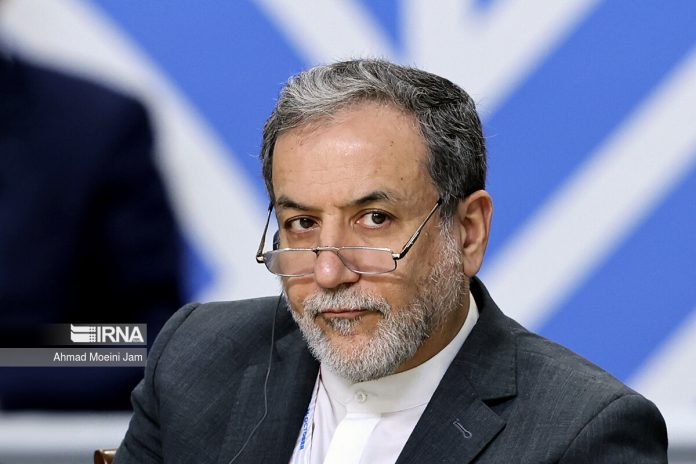
Araghchi and UN Secretary General Antonio Guterres discussed regional developments, especially the situation in Gaza at noon on Monday.

Araghchi condemned the US-Zionist plot to displace the people of Gaza and force them to leave the region for other countries.

He stressed the need for the UN, particularly the UN Security Council, to push back against this dangerous scheme which threatens international peace and security.

The top Iranian diplomat added that the proposal to force the Palestinians to leave Gaza is against all international rules and regulations and against the UN Charter and is actually complement to the Zionist regime’s project of the genocide of Palestinians and erasure of Palestine.

He then referred to his intensive consultations with the foreign ministers of Arab and Muslim countries, saying the vehement condemnation by Islamic countries of the plan to displace the people of Gaza indicates the widespread concern of regional nations over the continued flagrant violation of the Palestinian people’s rights and the continuation of the genocide of Palestinians in another way.

Araghchi described the recent position of the prime minister of the Zionist regime on the transfer of Palestinians to Saudi Arabia as a clear example of this regime’s audacious and outrageous approach.

The foreign minister further condemned Tel Aviv and underscored that the international community must prevent the normalization of law-breaking and crime by this occupying regime.

The UN secretary general also explicitly declared the world body’s opposition to any plan that involves the forced displacement of the Palestinian people from their land, stressing the need to respect the legitimate rights of the Palestinian people.

Guterres stated the forced displacement of the people of Gaza would be completely deplorable and unacceptable.

He added that the current priority of the UN is to accelerate the sending of humanitarian aid to the people of Gaza, as well as helping rebuild the war-torn region. Guterres said that he will spare no effort in this regard.

PA announces ending programme of allowances to families of slain Palestinians

West Bank Israel Palestine

President Mahmoud Abbas issued a decree on Monday “revoking” legal articles relating to the allowances initiative.

The order presented the move as a restructure, moving the fund from the Ministry of Social Development to the Palestinian National Foundation for Economic Empowerment.

It said the families would be eligible for regular welfare payments like other Palestinians “in accordance with the standards of justice and universality”, but it is not clear whether the allowances would stop immediately or continue under a new form.

It is not uncommon for countries to provide special payments to people killed in violent conflict. But the US has long decried the Palestinian so-called Martyrs’ Fund, arguing that it rewards attacks against Israel and dubbing it “pay for slay”.

Hamas condemned Abbas’s “unpatriotic” move on Monday, calling on him to reverse it immediately.

“We need to appreciate the sacrifices of the prisoners and wounded and martyrs’ families instead of abandoning them,” the group stressed in a statement.

Israel has previously withheld and deducted Palestinian tax revenues over the payments.

Abbas’s decree comes amid a push by the PA to present itself as an internationally credible option to take over Gaza.

PA security forces have also been cracking down on fighters committed to armed struggle against Israel in the occupied West Bank.

In December, the PA launched a weeks-long security campaign in the Jenin refugee camp that it said aimed to restore law and order, leading to accusations of laying siege to the area.

The PA’s campaign was followed by Israel’s “Iron Wall” operation in Jenin, part of its broader offensive across the West Bank, which intensified after the Gaza ceasefire deal came into effect last month.

The Israeli incursion has killed dozens – including women and children – and dealt a heavy blow to the local economy, costing at least $8.4m in damage per day, according to the Jenin Chamber of Commerce and Industry.

The US provides Israel – which has been accused by leading rights groups of imposing apartheid against Palestinians – with billions of dollars in military aid annually.

Trump suggests cancelling Gaza ceasefire accord on Saturday if all hostages not freed

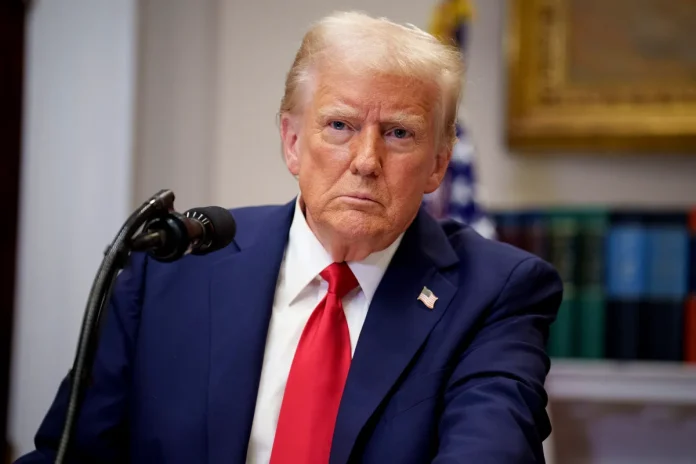
“As far as I’m concerned, if all of the hostages aren’t returned by Saturday at 12 o’clock — I think it’s an appropriate time — I would say, cancel it and all bets are off and let hell break out. I’d say they ought to be returned by 12 o’clock on Saturday,” Trump told reporters in the Oval Office on Monday.

“And if they’re not returned — all of them, not in drips and drabs, not two and one and three and four and two – Saturday at 12 o’clock. And after that, I would say, all hell is going to break out,” he added.

Trump said he thinks a lot of the hostages are “dead.”

“I would say, Saturday at 12, we want them all back. I’m speaking for myself. Israel can override it, but from myself, Saturday at 12 o’clock, and if they’re not here, all hell is going to break out,” he warned.

Responding to a question about an American hostage still being held in Gaza, Trump said it is time to release everybody.

“They’re not going to be alive right now, based on what I saw over the last two days. They’re not going to be for long. Saturday at 12 o’clock, and after that, it’s going to be a different ball game,” he added.

Asked whether he meant retaliation from Israel when he said “all hell will break out,” he said: “You’ll find out, and they’ll find out too. Hamas will find out what I mean…These are sick people, and they’ll find out what I mean Saturday at 12.”

On whether he could rule out any US involvement after the Saturday deadline, he stated: “We’ll see what happens.”

He also added he will consider cancelling aid to Jordan and Egypt if they do not accept Palestinians being relocated from Gaza.

“Yeah, maybe. Sure, why not? If they don’t, I would conceivably withhold aid, yes,” he stressed.

Asked how he will convince Jordan’s king to take in more Palestinians, Trump said: “I do think he’ll take, and I think other countries will take also. They have good hearts.”

Trump is expected to meet with Jordan’s King Abdullah II on Tuesday in Washington, DC amid heightened regional tensions, particularly over the president’s proposal to relocate Gazans to Jordan and Egypt, which has drawn sharp criticism.

“We’ve spoken to a lot of Palestinians. They would love to leave Gaza if they could find a place to be. And I’ve spoken to various leaders of various countries in the not so distant area from where we’re talking about, the Gaza Strip, and I think they were very positive about providing land…and if we could build a nice place for people to live safely, everybody in Gaza would do it.”

“They’ve been persecuted. They’ve been spit on, they’ve been treated like trash. And they would love to get out of Gaza. But until now, they’ve never had an alternative. Now they have an alternative. And as far as Hamas is concerned, you’re seeing the real Hamas,” Trump added.

The president said that Palestinians are all going to leave when they have a “nice place that’s safe.”

“It’s a hell hole right now,” he added.

Turning to the occupied West Bank, Trump said he has “no plans” to move them.

“Right now they’re there, and I assume they want to remain there. It’s different. They’re there. It’s never been like what we’re talking about with the Gaza Strip,” he added.

On Monday, the Palestinian group Hamas declared that it had fully met its commitments under the ceasefire deal but accused Israel of violating four key provisions. Earlier in the day, Hamas’s armed wing, the Al-Qassam Brigades, announced that it postponed the next hostage release until Israel complies with all terms of the agreement.

The three-phase ceasefire deal has been in place in Gaza since Jan. 19, halting Israel’s genocidal war, which has killed tens of thousands of people and left the enclave in ruins.

In the first phase of the truce, which runs until early March, 33 Israeli hostages are to be released in exchange for a number of Palestinian prisoners. The sixth Israeli-Hamas swap was scheduled this week.

The International Criminal Court issued arrest warrants in November last year for Israeli Prime Minister Benjamin Netanyahu and his former Defense Minister Yoav Gallant for war crimes and crimes against humanity in Gaza.

Israel also faces a genocide case at the International Court of Justice for its war on the enclave.


Trump says no right of return for Gazans under his proposal

Gaza War

In an interview with Fox News, partially aired on Monday, Trump also reiterated his push to “own” Gaza.

Asked whether Palestinians would be allowed to return to their territory under his plan, Trump said, “No, they wouldn’t.”

The US president’s plan to empty Gaza of its population has been forcefully rejected across the Middle East – including by Egypt and Jordan, the main countries that Trump says he wants to host displaced Palestinians.

Rights groups have also condemned the push, saying that it would amount to ethnic cleansing.

Trump’s assertion that he is seeking the permanent displacement of people in Gaza appears to contradict recent comments by his aides who said that the enclave’s residents would be able to return after the area is rebuilt.

Last week, White House spokesperson Karoline Leavitt said people in Gaza would be “temporarily relocated”.

Secretary of State Marco Rubio also said that the displacement of Palestinians in Gaza would be in the “interim”, and residents would be able to “move back in” after reconstruction.

In His Fox News interview, Trump suggested that the US would leverage its aid to Jordan and Egypt to get the two countries to take in displaced Palestinians.

“I think I could make a deal with Jordan. I think I could make a deal with Egypt. You know, we give them billions and billions of dollars a year,” the US president stated.

He added that Palestinians would live in “beautiful communities” away from Gaza.

“In the meantime, I would own this. Think of it as a real estate development for the future,” he continued.

The plan for the US to take over Gaza has raised eyebrows across the world. Washington has no legal claim to the territory, and the United Nations charter prohibits the acquisition of land by force.

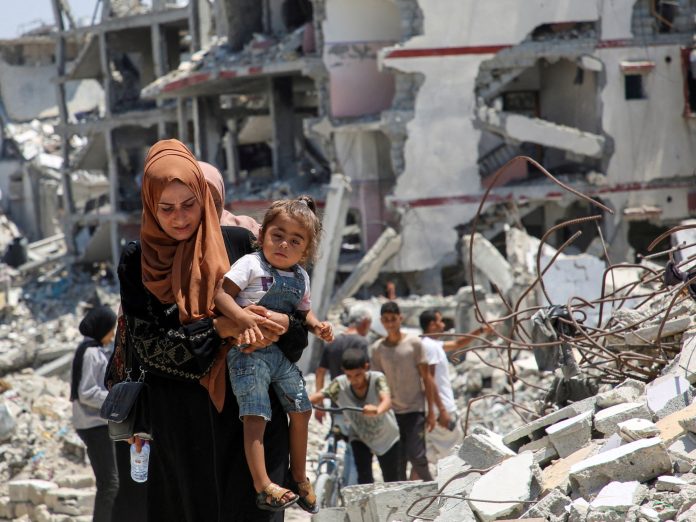
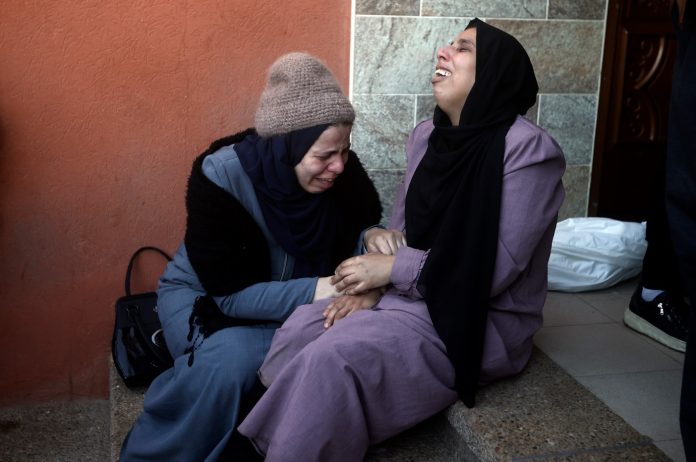
According to the Health Ministry in Gaza, Israel’s US-backed war on the enclave has killed more than 48,000 Palestinians. The Gaza Government Media Office puts the death toll at more than 61,700, including thousands of missing people who are presumed dead.

The Israeli offensive has turned much of Gaza into rubble. But the territory’s residents have pledged to remain steadfast in their land.

Local authorities have been pleading for tents and mobile homes to shelter people until reconstruction begins, accusing Israel of hindering the aid in violation of the ceasefire agreement.

Last week, Amnesty International warned that systemic efforts to expel Palestinians in Gaza could constitute a crime against humanity.

“Amnesty International also warns against the misuse of desperately needed humanitarian aid and reconstruction as a bargaining chip or as a means to coerce Palestinians in Gaza into leaving,” the group’s chief Agnes Callamard said in a statement.

“No state is entitled to treat a protected population living under occupation as pawns in a geopolitical chess game.”

In 1994, UN experts defined ethnic cleansing as “a purposeful policy designed by one ethnic or religious group to remove by violent and terror-inspiring means the civilian population of another ethnic or religious group from certain geographic areas”.

Iran FM dismisses negotiation with US under pressure

Abbas Araghchi

Speaking at a rally in the western Iranian city of Hamadan marking the 46th anniversary of the victory of Iran’s Islamic Revolution on Monday, Araghchi rejected calls for negotiations from the United States, particularly under the administration of Donald Trump, describing them as deceptive.

“The Islamic Revolution was founded to ensure that no foreign power could dictate terms to the Iranian people and their leaders,” he stated.

“The core principle of our foreign policy is ‘Neither East, nor West,’ which means independence from all global powers, not disengagement.”

Araghchi made it clear that the Islamic Republic had no trust in negotiations with the US, given Washington’s history of failing to uphold agreements.

“Iran negotiated in good faith and reached an agreement, but the outcome was nothing but non-compliance and withdrawal by the other party,” he added, referring to Washington’s unilateral and illegal exit from a 2015 nuclear deal between Tehran and world powers.

The top diplomat emphasized that refusing to negotiate with the United States was, therefore, a calculated and expert-driven decision, not an act of stubbornness or an emotional reaction.

“Trusting the US again is not a rational choice. The Iranian people demanded independence because our country was once entirely dependent on the West and lacked sovereignty,” he stated, referring to the country’s situation under its former US-backed Pahlavi regime.

Citing an instance of Iran’s submission to Washington under the monarchical regime, he recalled a historical moment.

“In an interview, when Shah (the former monarch) was asked why he was leaving Iran [amid the imminent prospect of the Revolution’s victory], he responded that ‘they ordered me to go,’ referring to the Americans. This highlights the extent of foreign influence over our nation before the Revolution.”

Still referring to standing conflicts with the US, Araghchi asserted, “No nation negotiates under duress unless it intends to surrender. Why should we negotiate while facing threats and sanctions?” he asked.

Araghchi was pointing to Washington’s so-called policy of “maximum pressure” against Tehran, which the former pursues while simultaneously claiming to be open to talks, an approach that Iran categorically dismisses as insincere, untenable, and unworkable.

“When they do nothing but impose sanctions and issue threats, what reason do we have to trust them?” he asked.

The foreign minister stressed that Iran’s leadership, backed by the will of the people, would never allow external forces to impose their will on the country.

Citing a case of prudent relevant leadership savvy, Araghchi praised the Leader’s recent remarks on negotiations, calling them “entirely intelligent and rooted in logic.”

He reiterated that accordingly, Iran remained steadfast in resisting coercion and would continue to stand firm against hegemonic pressures.

Military chief says Iranian Armed Forces ‘readier than ever’ against foreign threats

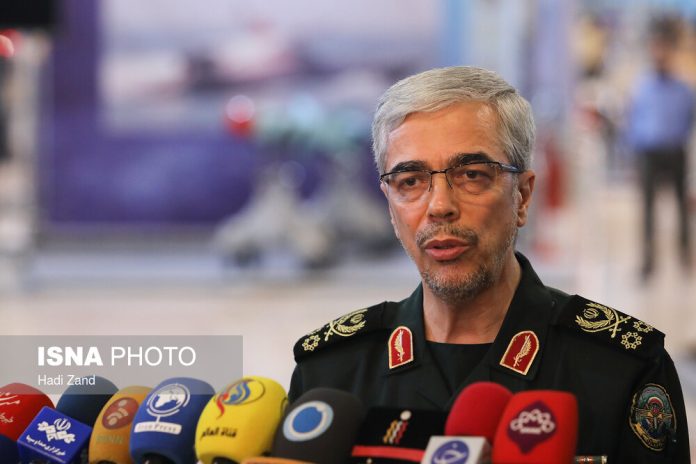
Major General Mohammad Baqeri

Baqeri made the remarks on Monday, on the sidelines of a rally marking the anniversary of the victory of the 1979 Islamic Revolution in Tehran.

“The situation of the Armed Forces is better than ever and they stand ready to respond to any threat,” he said.

Asked about the possibility of talks between Iran and the United States, Baqeri stated Leader of the Islamic Revolution Ayatollah Seyyed Ali Khamenei recently announced Tehran’s position in that regard.

Speaking on Friday, Ayatollah Khamenei cited the experience of 2015 when Iran and six other countries, including the US, signed the now-dormant Joint Comprehensive Plant of Action (JCPOA) after two years of negotiations, only to be discarded by US President Donald Trump in 2018.

He added, “Negotiating with such a government is unwise, unintelligent and dishonorable, and there should be no negotiation with it.”

On Saturday, Trump warned that he would prefer to make a deal with Iran rather than “bombing the hell out of it.”

The threat came days after he restored his so-called “maximum pressure” campaign against Iran, which he practiced in his first presidential term after unilaterally withdrawing Washington from the JCPOA.

Additionally on Monday, Defense Minister Brigadier General Aziz Nasirzadeh said Iranians do not negotiate under conditions of sanctions and threats.

“It is not possible at all to negotiate with the new US administration, and we do not accept them,” he told reporters during the Islamic Revolution’s 46th anniversary march.

“Our viewpoint is the same as that of the Leader. Did the Americans stick to their previous agreements?”

Asked about the current preparedness of the Armed Forces, Nasirzadeh added threats are “nothing new,” vowing to respond to “any insolent act by the enemy in the strongest possible way.”

He was further asked whether Iran has a plan to increase the range of its missiles to more than 2,000 kilometers. The Armed Forces, he emphasized, will do whatever is necessary to ensure the security of the Islamic Republic.

Israeli military expands shooting orders for soldiers to kill Palestinians in West Bank: Report

Israel Palestine West Bank

According to Haaretz newspaper, the army’s Central Command decided to implement the same shooting policy used during the Gaza war to kill any unarmed Palestinian, whether a suspect or not, in the West Bank.

“The orders made it easier for soldiers to pull the trigger at the behest of Central Command Commander Avi Blot,” it added.

The daily quoted Israeli soldiers taking part in the ongoing military operations in the West Bank as saying that Blot permitted them to shoot with the intent to kill Palestinians without resorting to arrest them.

The soldiers explained that the recent high death toll of unarmed Palestinians in the West Bank was “unusual,” attributing it to Blot’s orders allowing them to shoot and kill any Palestinian suspected of planting explosive devices or “tampering with the land.”

Haaretz, citing army unit commanders, said the head of the army’s West Bank Division, Yaki Dolf, ordered soldiers to shoot at any vehicle coming from a combat zone and heading toward a checkpoint.

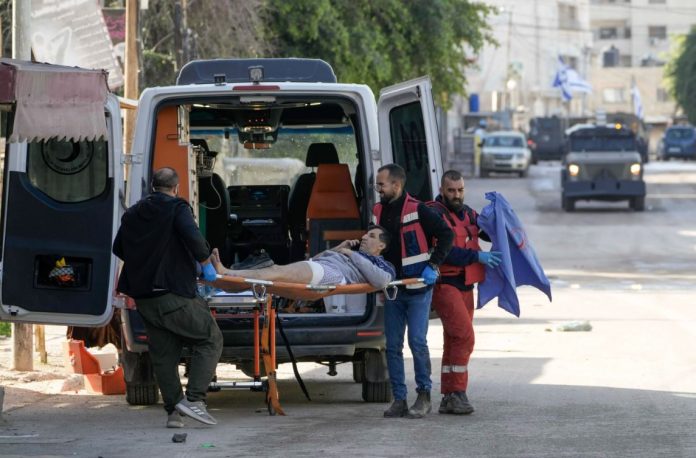
On Sunday, two Palestinians were killed when Israeli soldiers opened fire on a car approaching a military checkpoint in the West Bank.

According to the Israeli paper, soldiers used Palestinian civilians as human shields while searching buildings for explosives, the same tactic used by the Israeli army in Gaza.

The Israeli army, however, denied any change in its shooting orders in the West Bank.

“No change in the rules of engagement” for the West Bank, the army announced in a comment to Haaretz.

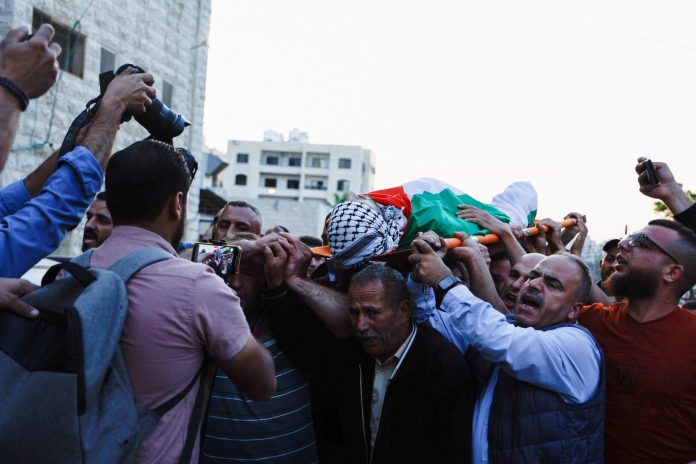
Since Jan. 21, the Israeli army has conducted military operations in Jenin, Tulkarem and Tammun in the northern West Bank, killing more than 30 Palestinians, according to the Health Ministry.

The Israeli escalation follows a ceasefire and prisoner exchange deal in Gaza on Jan. 19 after more than 15 months of Israeli bombardment which has killed nearly 62,000 Palestinians and devastated the enclave.

Since the war began on Oct. 7, 2023, Israeli forces and settlers have killed at least 910 Palestinians across the occupied West Bank, according to the Health Ministry.

IRGC commander says Iran manufactured long-range Supersonic cruise missile

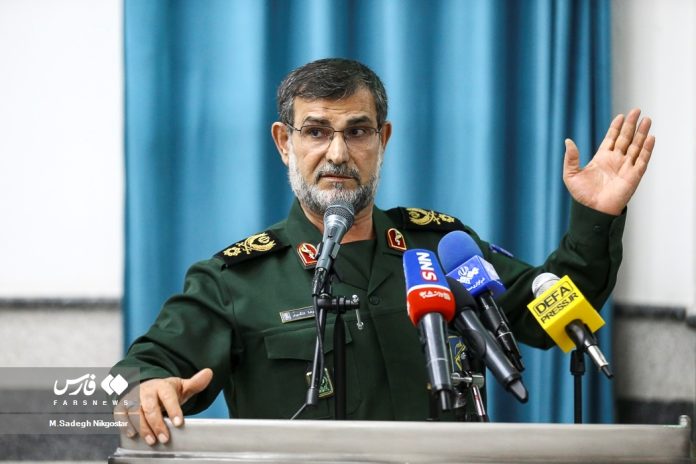
Rear Admiral Alireza Tangsiri

Tangsiri announced on Sunday that his forces will unveil a new supersonic cruise missile with a range of 2,000 kilometers.

He noted that the smart cruise missile has been designed and manufactured on the basis of artificial intelligence.

The IRGC Navy is in possession of missiles that can be fired from the north of the Persian Gulf to detonate targets in the Sea of Oman, the commander said.

“We do not need any more to carry out coastal operations to fire the missiles, as this can be done inland,” he added.

The commander said that the entire southern coast of Iran, which stretches 2,200 kilometers along the Persian Gulf and the Oman Sea, has been armed by the IRGC Navy, the Iranian Navy, and the naval Basij forces.

Admiral Tangsiri added a lot of the IRGC Navy’s military equipment have been stored in subterranean bases under high mountains at the southern coastal regions, so that no missile or bunker buster could harm them.

Last month, the IRGC Navy unveiled a strategic underground base, which it said was one of the numerous complexes accommodating combat, missile-launching and minelayer vessels.

Iranian president vows to render US hostilities ineffective ‘with people’s support’

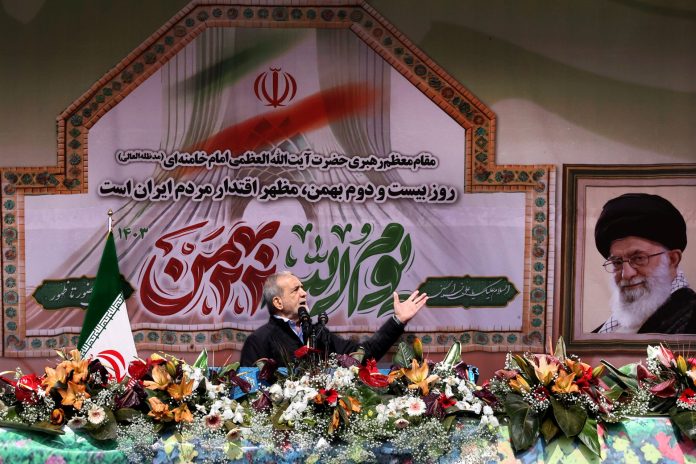
Delivering a keynote speech on Monday in Tehran’s Azadi Square on the occasion of the 46th anniversary of the victory of the country’s Islamic Revolution, Pezeshkian emphasized the importance of unity among Iranians and criticized US President Donald Trump for his contradictory approach of seeking dialogue with Iran while plotting against the nation.

Pezeshkian highlighted the revolution’s success in 1979 in ousting the last Shah of Iran Mohammad Reza Pahlavi through the people’s unity and participation.

The president condemned current US efforts to sow discord and portray Iran as weakened, but said Iran remains resilient.

He sought to assure the Iranian people that the officials are committed to tackling inequality, injustice, and poverty, and urged continued resistance against corruption and external threats.

Pezeshkian also affirmed Iran’s commitment to regional solidarity and defending the oppressed, while advocating for peace and justice with neighboring and Muslim countries.

He criticized the US for supporting Israel’s crimes in the region particularly against Palestine.

He questioned the US’s commitment to peace, pointing out the contradictory actions of bombing civilians and supporting war crimes.