Wednesday, December 31, 2025
Home Blog Page 4860

I feel extremely comfortable and totally safe in Iran: female Norwegian diplomat

Norway ammbasador

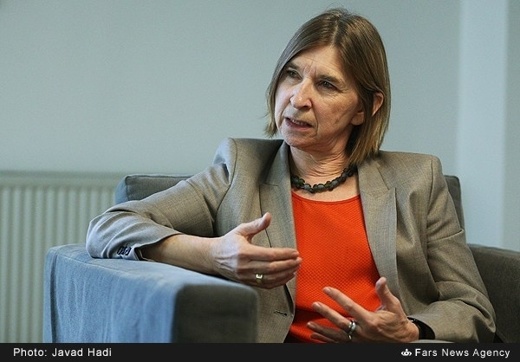
Norwegian Ambassador to Iran Aud Lise Norheim has described the Iranians as friendly people, saying she feels good when she spends time in Iranian gatherings and the fact that she is the only female foreign ambassador in Iran is her only problem. Expressing hope that other countries will send female ambassadors to Iran, she says, “I feel extremely comfortable and totally safe here, and as a woman I have not faced any problems in communicating with Iranian officials.”

The following is the translation of what Fars News Agency said in the lead of an interview with the Norwegian diplomat it published on January 18:

On October 27, she presented her credentials as Norway’s first female ambassador to Iran to President Hassan Rouhani. Aud Lise Norheim, who served as Norwegian ambassador to Lebanon and Bangladesh and was in charge of the UN department at Norway’s Foreign Ministry before she took the helm of the Norwegian embassy in Tehran, does not think of herself as a politician and says she is an ordinary staff member and likes it in Iran.

The 58-year-old ambassador who is in Tehran with her husband has two sons aged 26 and 31. She misses her infant grandchild even more than her sons.

Her mission to Iran has already taken her to the cities of Kerman, Yazd and Kashan. She is interested in visiting other cities across Iran.

The Norwegian diplomat, who had visited Iran twice before she took the job offer to become Oslo’s ambassador to Iran, says she took up the job offer immediately after it was made.

Recalling Iran’s influence and position in the Middle East, she described her presence in Iran as a great opportunity which enables her to look at the Middle East from an Iranian vantage point.

Ms. Norheim, who is immensely enthusiastic about Iran’s culture, said, “I like Iranian concerts as well as Iranian plays; I am also interested in Iran’s strong film industry.”

The Norwegian diplomat said that she takes great pleasure in reading Persian literature and advised foreigners to visit Iran.

“Iran is a country one needs to visit in order to see in person what they have heard about it. In terms of history and culture, it is a fascinating country; the Iranian people are extremely friendly and hospitable and these matters help me feel at home in Iran,” she said.

Among other matters, the lifting of sanctions, readiness of Norwegian firms to invest in Iran, the state of Iranian university students in Norway, terrorism, extremism and the presence of some Norwegian nationals in IS ranks were brought up during the interview.

As for ties between Tehran and Oslo, she said, “Political relations between the two countries are extremely good. What substantiates this is a recent visit to Tehran by the Norwegian foreign minister which is an indication of favorable political relations between the two countries.”

She added, “The visit was the first state visit by a Norwegian foreign minister to Iran in 12 years and such meetings reflect the willingness of both sides to boost their political ties.”

We won’t go soft on polluting industries

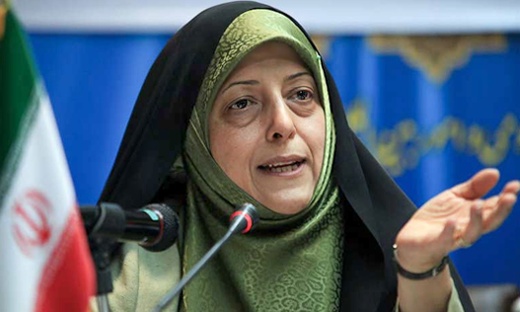
Masoomeh Ebtekar

Director of Iran’s Environment Protection Organization (IEPO) Masoumeh Ebtekar says the polluting industries will be dealt with seriously.

The Islamic Republic News Agency (IRNA) on January 18 quoted Ebtekar as saying in a conference to mark the Clean Air Day that the IEPO will run checks on the industrial discharges and that the polluting industries will be given warnings if they fail to remove their shortcomings. The following is a partial translation of the report:

Ebtekar said dust particles are a major contributor to air pollution, adding the government has taken effective measures to eliminate these particles and the Supreme Environment Protection Council is to pursue the question of dusts which drift in from the country’s western neighbors.

She went on to say that government has taken serious measures to tackle air pollution in big cities, adding that elimination of air pollution needs long-term planning as well as coordination among related organizations.

She also pointed to the omission of gasoline produced at petrochemical refineries in cooperation with the Oil Ministry as another step to cut pollution, saying that the IEPO is seeking to improve fuel quality.

The environment chief then highlighted her organization’s efforts to supervise the performance of carmakers in meeting the standards, take old cars off the streets, and expand public transportation as some of the government’s measures to combat air pollution.

West behind Charlie Hebdo profane cartoons: Iranian official

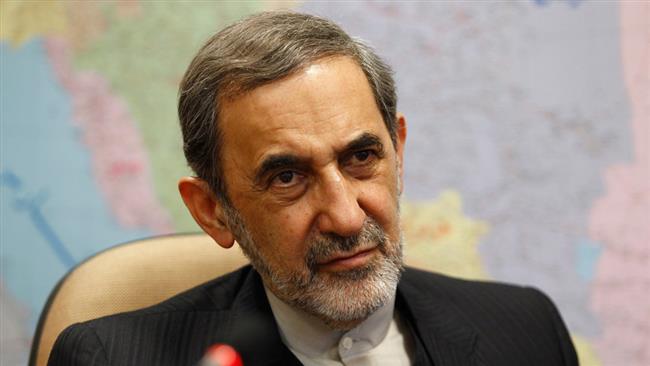
Ali Akbar Velayati

This move is completely condemned and is masterminded by Western states, Ali Akbar Velayati, a senior advisor to Leader of the Islamic Revolution Ayatollah Seyyed Ali Khamenei told reporters on Sunday.

“The terrorist attacks carried out against that publication are also condemned like other terrorist acts and this should not be used as a pretext for insulting Islamic sanctities,” Velayati, who is also the president of the Expediency Council’s Center for Strategic Research, added.

He noted that more than 1.5 billion Muslims across the world condemn the French magazine’s desecration of Islamic values.

Such “cheap and shameful” measures attest to their inability to deal with the logic of Islam, the Iranian official emphasized.

“What has occurred was based on a plot and propaganda war against Islam and is completely condemned by us,” Velayati said.

On January 14, the French satirical magazine, whose Paris office was attacked by two gunmen on January 7, once again published a cartoon of Prophet Mohammad on the cover of its new edition despite warnings that the move is provocative.

The January 7 attack is largely believed to have been launched over Charlie Hebdo’s previous cartoons of the Prophet.

The al-Qaeda branch in Yemen claimed responsibility for the attack on Charlie Hebdo. The group said it chose and supported Said and Cherif Kouachi, the two brothers who allegedly carried out the deadly assault.

The French magazine has repeatedly provoked Muslim anger by publishing cartoons of Prophet Mohammad.

Tehran, Moscow to sign memorandum of understanding on defense

Iran-Russia-Army

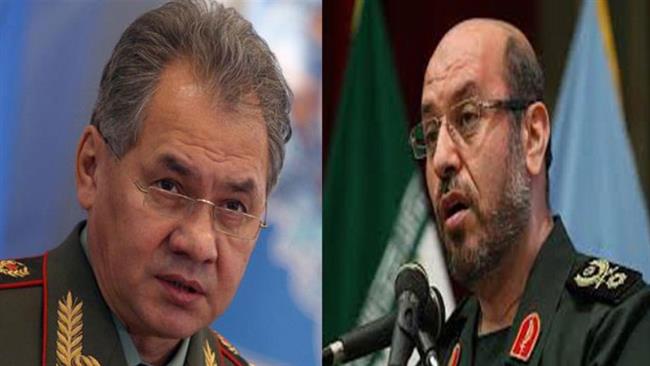
A letter of intent will be signed by Iran’s Defense Minister Brigadier General Hossein Dehghan and his Russian counterpart General of the Army Sergei Shoigu, who is due in the Iranian capital, Tehran, for a two-day official visit on Monday.

During his stay, the Russian defense minister is expected to discuss bilateral issues as well as international developments with his Iranian counterpart.

Russia and Iran currently enjoy close cooperation in various areas, particularly in the defense sector.

In May 2014, Iran’s defense minister paid an official visit to Russia to take part in an international security conference.

The further expansion of defense cooperation between Iran and Russia plays a major role in maintaining regional and global security, the Iranian defense minister said in 2013.

In January of that year, Tehran and Moscow signed another MoU to increase security cooperation between the two countries.

Iran’s top MP to visit Turkey to attend an Islamic parliamentary meeting

Iran-Ali-Larijani

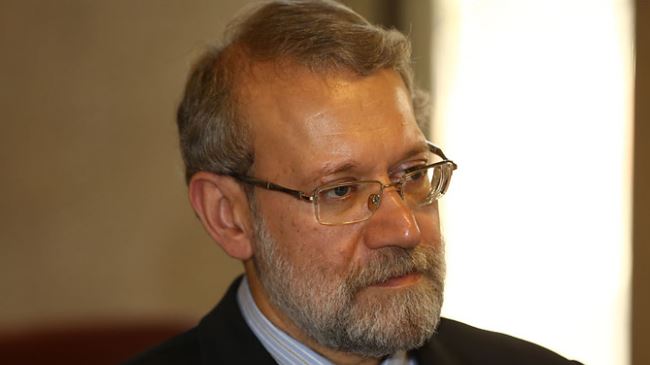
The Islamic Republic News Agency quoted Hossein Sheikholeslam, an advisor to Iran’s parliament speaker for international affairs, as saying that Ali Larijani is to visit Turkey on Tuesday, January 20, to deliver a speech at the 10th meeting of the Islamic Inter-Parliamentary Union (IIPU).

Over the 3-day visit – January 20-22 – Larijani will also meet with some Turkish officials to compare notes about regional and international matters, said Sheikholeslam.

Iran is holding the rotating presidency of the Parliamentary Union of the Organization of Islamic Cooperation member states (PUIC). Turkey will take over as president of PUIC during its upcoming meeting in Ankara.

Mohammad Khatami condemns acts of extremism worldwide

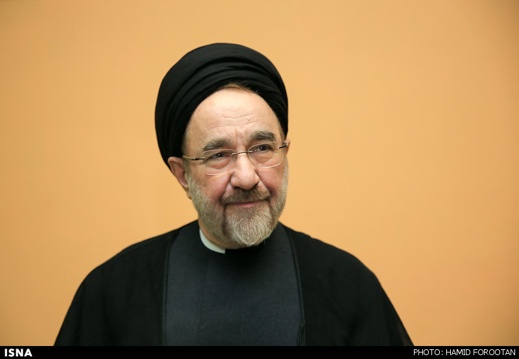
Mohammad Khatami

Former Iranian President Mohammad Khatami has condemned acts of violence and extremism all over the world, calling on the UN, international organizations and peace-seeking individuals to take serious measures to counter these heinous phenomena.

The Iranian Students News Agency (ISNA) reported on January 18 that the former president’s condemnation came in a letter he wrote to UN Secretary General Ban Ki-moon. The following is the translation of the letter in its entirety:


In the name of God

To Ban Ki-moon

The Esteemed Secretary General of the United Nations


Like you and hundreds of millions of people around the world, I was saddened by the Paris terror attacks and similar alarming incidents which preceded them or are likely to take place in the future. I condemn in the strongest terms these attacks which are an example of the ominous and inhumane consequences of terrorism and extremism in the East and West. But the UN, international organizations, governments, civic institutions, and the elite are expected to do more than mere condemnation.

In today’s world, violence, insecurity and extremist acts have created a burning hell whose flames engulf all humans, followers of all religions, nations and ethnicities around the world. The point is that what is done in the name of the fight on terror and violence is not only unhelpful, but it sometimes fans the flames of such a catastrophic disaster.

Terrorism and violence are not a war between religion and freedom; they are not a conflict between the East and West; nor are they part of confrontation between religions, ethnicities and nations. They are a grave new threat that has multiple roots. They should be uprooted and the world should be pulled back from the brink of “extremism”.

In September 2001 New York’s Twin Towers were brought down as a result of an appalling terrorist act. Subsequently the threat of “terrorism” which already existed came to surface. The Islamic Republic of Iran condemned those attacks hours after they were carried out. Iran also put forward the concepts of “Dialogue among Civilizations” and “World Coalition for Peace” as a solution.

However on the other side of the world, some thought they could eliminate the ominous phenomenon – whose flag was believed to be borne by groups like Alqaeda – through forming a coalition to wage “war on terror”.

If that method worked, why is that today we are witnessing the spread of terrorism around the world; [why is that] the waves of terrorism have struck Paris and have created havoc everywhere, from the easternmost to the westernmost corners of the world, in Iraq and Syria, in Palestine and Lebanon, in Afghanistan and Pakistan, in Nigeria and Myanmar and elsewhere in the world. Violence, bloodletting and terror have tightened the screws on people – from Shiites, Sunnis, Izadis, Christians and Jews to religious scholars, intellectuals, politicians, children, the old and the youth.

Today, security has not been undermined only in the Middle East, Asia, Africa and Latin America, but nobody feels safe in the heart of Europe and America. We should admit that in today’s interconnected world security either prevails everywhere or goes missing everywhere.

Today we would not have seen such ugly incidents if the voice of dialogue, peace and tolerance, which echoed at the United Nations in a critical moment in history and was given public welcome, had been taken seriously; if we had tried to address the root causes [of the events] in our quest of practical and legally binding solutions; if the UN and international institutions had been able to make statesmen honor what is needed to establish peace; and if civic institutions and religious scholars and thinkers had taken bigger steps.

Would we have witnessed such bitter days if the invitation for “Coalition for Peace Based on Justice” which was issued in 2001 following the approval of the idea of “Dialogue among Civilizations” had not been missed in the thick of war, bloodshed, revenge and post-9/11 military buildups which were more bloody than the attacks themselves, and if the international decisions had been made based on advice from well-wishers?

Have we thought – not only based on religious teachings and ethical principles but also in line with scientific approaches and political experiences – that what role poverty, deprivation, suppression, occupation, displacement, despotism and worse than that humiliation corrupt governments and expansionist powers have imposed on all humans in the world have played in triggering such heinous incidents?

If instead of tolerance and love, hatred and violence reigned supreme, and if altruism were replaced with a fight-everyone-else mentality and those who were more powerful used more violence and supported the violent people whose acts they found in line with their own interests, wouldn’t we be entrapped in a vicious circle of violence and suppression on the one hand, and terror and extremism on the other?

When millions of people lose their land and the shouts of the oppressed and the displaced are drowned out in the mad cheers of occupiers, suppressors and killers, and when those in power humiliate the oppressed and displace people instead of punishing the aggressors, fatal identities are rebuilt, and borderless terrorism recruits soldiers even in the West. Terrorism, extremism and marginalization cannot be classed as good or bad. The horrible discriminations which are the direct result of adopting double-standard policies should not be overlooked.

Moses (PBUH) is the prophet of honor and the fight against Pharaohism, Jesus (PBUH) is the prophet of love, kindness and humaneness, and Muhammad (PBUH) is the prophet of compassion and freedom-seeking. Have we ever wondered that occupation, crime and suppression in the name of Moses, humiliation of humans and waging Crusades in the name of Jesus, and beheading the innocent people, enslaving women, and terrorizing and killing humans in the name of Muhammad are both crimes against humanity and insult to these great prophets?

Lovers and defenders of freedom, justice and human rights – no matter where they are and what ideology they follow – opponents of discrimination and imposition, and those who support the right to life and respect for all people are not few in the world, but their voices are not heard! We need to think through practical approaches to make these voices heard. Time has come for the international institutions together with the world’s elite, governments and civic institutions to ponder on the reasons behind the creation of such a nasty situation, and try to fairly and realistically launch a fight against it.

I know that what has formed over time and led to discrimination, injustice, backwardness of nations, establishment of unfair international systems, and violence and extremism will not suddenly become history through words and advice alone.

I know that those groups – which are engaged in bias, ignorance and [moral] depravity – which have turned their backwardness and humiliation into hatred, have adopted violence and terror to reclaim their lost rights, and have sanctified their ugly and inhumane behavior and betrayed humans and the holy, elevated values, will not simply renounce crimes only because of well-wishers’ advice and people’s statements and [protest] rallies.

Furthermore, the use of force and violence against these groups – as the experience has proved – will do nothing but deepen deviant tendencies and help them grow. Also it will help depict them as the oppressed [victims] and help them bring on board more suppressed people.

Ethical and political advice will do little to undo the effects of the crashing waves of Islamophobia which trigger the wrath and resentment of part of the public opinion against Islam and Muslims, justify any insult to the sanctities of nations and ethnic groups, and legitimize aggressive measures against innocent nations, especially Muslims.

It will also do nothing to undermine the effects of Westernophobia which is the result of failure to distinguish between the colonial aspects of Western policies overseas and the civilizational and cultural aspects of the West which have had positive results, at least for Westerners.

We cannot overlook practical experiences and efforts either. It is a global and human responsibility to – far from emotionality – catch the real attention of the people in the world and those involved in thinking and action.

To identify the root causes of the grim, bitter reality which has surfaced in the form of violence and extremism, of which terrorism is only one horrible and palpable manifestation – either by governments or by ideological and political groups – is the first step toward working out a solution.

If one such solution is put forth, it will undoubtedly be welcome by the public opinion and the peaceful and humanitarian well-wishers. If so, it will gradually help isolate extremists and violence-seekers and, God willing, it will help eliminate extremism and violence on the international stage.

For my part, minor it is though, I suggest that the United Nations take action courageously and call on thinkers, intellectuals, politicians, governments and civic institutions to take immediate measures to materialize a historical reconciliation which is the objective of Dialogue among Cultures and Civilizations.

The Foundation for Dialogue among Civilizations too is ready to recount its experience and cooperate with the world’s well-wishing and peace-seeking thinkers to help the voice of dialogue and peace be heard louder and bring people closer to a world free of violence and extremism.

Let us not let the world and humans be subject to [and live in] fear, insecurity and risks. The foundations of religion, freedom, justice, ethics, dialogue and peace should be vigorously defended.

Iran considers Iraq’s security its own: Interior minister

Rahmani-Iraq

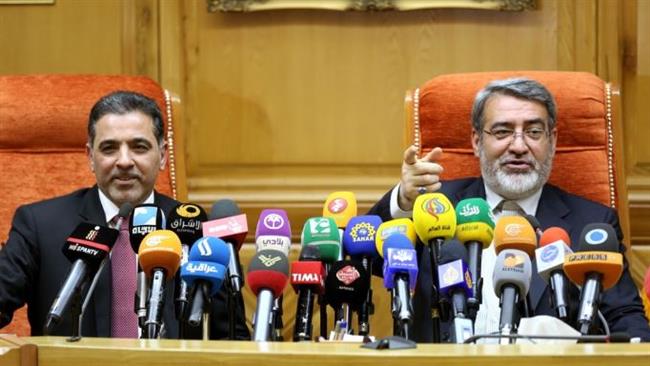
Abdolreza Rahmani Fazli made the remarks at a joint press conference with Iraqi Interior Minister Mohammed Salem al-Ghabban following their meeting in Tehran on Saturday.

Supporting the Iraqi nation and government is among “our religious, neighborly and national obligations,” Rahmani Fazli said.

The Iranian interior minister said that during his meeting with Ghabban, both sides discussed the issues of mutual interests, including security cooperation.

Rahmani Fazli further expressed the Islamic Republic’s full preparedness to share security, military and training expertise with Iraq.

Ghabban, for his part, commended the Islamic Republic’s support for Iraq in its anti-terror fight, saying Iraq is willing to use Iran’s experience in different domains in line with the mutual interests of the two countries.

Iran has repeatedly stressed that it will not interfere militarily in Iraq and Syria, but the Islamic Republic continues to provide support to both countries against the ISIL Takfiri terrorists in the form of defense consultancy and humanitarian aid.

At the onset of the ISIL advances in Iraq, the Islamic Republic took rapid steps toward mobilizing popular forces in the country.

Tehran has also refused to join the so-called US-led coalition against ISIL in Iraq and Syria.

Social Learning Theory to vie for honors at Lanzarote Film Festival

film festival

social learning filmSocial Learning Theory directed by Pouria Heidari has found its way to the International short fiction film section of the 15th edition of Lanzarote Film Festival in Spain.


Social Learning Theory will compete against 24 other titles from other countries such as the US, France, UK, Canada, Venezuela and Tunisia.

Social Learning Theory is a short film which takes a look at the negative and traumatic effects that watching public executions could possibly have on children.

This film was made after three kids lost their lives when trying to recreate what they had seen during public executions in their childish game.

Heidari’s short film enjoys its seventh feature in international film festivals. Previously, it had been screened in Kansas City Film Festival in April, 2014 and nominated for the Best Short Film award.

It will be also screened at the International Children’s Film Festival Bangladesh.

The 2015 Lanzarote Film Festival will take place in Spain from March 16-28.

The section on animated short films of the festival will also feature an Iranian production, Volition by Shakiba Shabani.

Nuclear deal, a first step toward settlement of other problems

Alan Eyre

The ongoing nuclear talks between Tehran and P5+1and whether or not a final comprehensive deal is clinched by the July 2015 deadline are an issue of paramount importance in Iran. The Iranian media usually resort to different sources to expand on the prospects of the talks.

On January 17, Arman-e Emrooz, a reformist daily, published a brief interview with Alan Eyre, a Persian-speaking US State Department diplomat, who speaks on the record for the American administration. Here is the translation of the interview on Iran’s nuclear program and where the White House stands on the talks:


Why did Geneva talks fail to produce results?

It’s too early to pass final judgment on it. It’s no secret that conclusion of a comprehensive deal at the talks is a tough job. If it had been easy, a settlement would have been reached already. God willing, we can reach an agreement through goodwill and perseverance. Our top diplomats and negotiating teams are expected to meet to see how they can take steps toward this goal.

Some blame Saudi Arabia for preventing the conclusion of an agreement. What’s your take on that?

I think it is not true. The fact of the matter is that the entire international community, Saudi Arabia included, wants to see these talks result in a comprehensive agreement to ease concerns about the nature of Iran’s nuclear program.

How much has the US attitude toward Iran changed ever since the eleventh government came to power?

The Obama administration has always said that it seeks to solve Iran’s nuclear issue peacefully through diplomatic means. So the decision – soon after His Excellency Dr. Hojjatoleslam Rouhani took office as president – to pick up nuclear talks in earnest was promising. Apart from the nuclear question, we have other problems with Iran. If we manage to settle the nuclear issue through negotiations, this big step may lead to other steps to remove those problems.

How do you describe the talks held recently?

This round of talks was held in a good atmosphere. The two sides are expected to take part in the talks with goodwill.

What do you think about the results of the talks?

The results are not predictable at all. As always, the talks are being held in an atmosphere filled with earnestness, goodwill and mutual respect. Over the past year, we have made a lot of progress in the talks. We should not overlook such progress or underestimate it.

Clinching a final deal acceptable to both sides is certainly achievable. We try every possibility to arrive at an agreement. We have to wait and see if our efforts are enough. God willing, efforts by all parties [involved in the talks] will be enough so that the conclusiveness [of the talks] could both remove the grave and legitimate concerns of the international community about Iran’s nuclear program and lift the nuclear sanctions imposed on Iran’s economy.

How did the meeting between Messrs. Kerry and Zarif and their 15-minute walk affect the nuclear talks?

Recently the US secretary of state and Iran’s foreign minister met in Geneva and took a walk for a few minutes. Prior to the meeting, US Secretary of State John Kerry had said that the meeting in Geneva would be aimed at setting the stage for the talks on Iran’s nuclear program and helping secure more progress in the talks.

The US secretary of state believed all plans had to be assessed. Mr. Kerry stressed that the plans of the negotiating teams should be specified so that the settlement of these questions could pave the way for the conclusion of a final agreement.

Do you have any interest in traveling to Iran?

Definitely! I have liked Iran for years. I wish to travel to Iran one day so that I can see its beauties for myself. If that ever happens, I will improve my Farsi and can speak much better than this, God willing!

Swans in flight over Sorkhrud Lagoon in Iran (Photos)

Iran-Swan 5

A group of migratory swans have come to the Sorkhrud Lagoon to spend the cold season there. The Sorkhrud Lagoon is 16 kilometers east of Mahmudabad in the northern Iranian province of Mazandaran. A wedge of swans in the sky is what every bird watcher really likes to see.

The following are the pictures Mehr News Agency put on its website on January 10 of the beautiful birds: