Monday, December 22, 2025
Home Blog Page 4859

Gas exports to Europe not economical: Iranian official

139402201007452735270793

It is not economically feasible to start exporting gas to Europe, an Iranian energy official dealing with the international affairs and contracts announced.
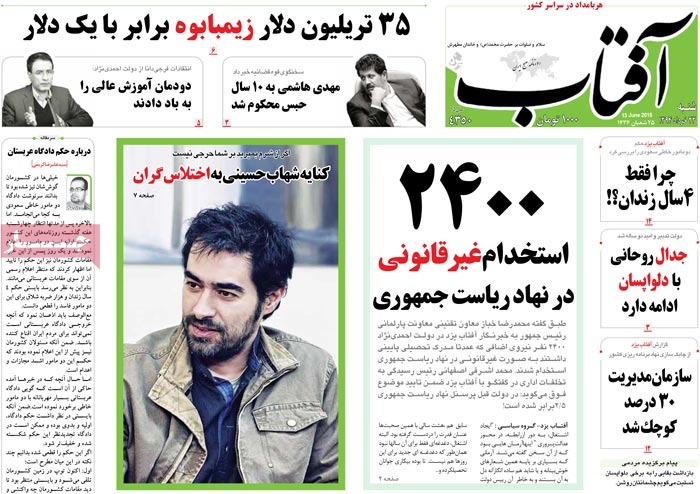
“Given a decline in the gas price in that continent, it is not at the moment economically feasible to export gas to Europe,” Mohsen Ghamsari, director for international affairs of the National Iranian Oil Company told the Tasnim News Agency on Sunday.

Known as the world’s top gas reserves holder with an estimated 33.6 trillion cubic meters, Iran is an attractive market for Europeans seeking alternative sources to improve their resilience to gas supply disruptions.

Russia is now the biggest supplier of gas to Europe, with about a third of Europe’s current gas requirements covered by Russian gas.

Back in April, Iran’s ambassador to Turkey said Tehran was working out details of a project to export its natural gas to Europe through Turkey.

“A basis for transferring Iranian gas through Turkey has been established and details are still being worked out,” Alireza Bigdeli said.

In the same month, Miguel Arias Canete, the European Union’s energy commissioner, said they were open to import Iranian gas, which could break their dependency on Russia.

However, Iranian President Hassan Rouhani in September 2014 ruled out speculations that the country might provide Europe with natural gas should Russia decides to halt energy exports to the European states.

“Today’s conditions are not such that if Russia stops selling gas to Europe, Iran can serve as an alternative for Russia’s gas exports to those countries,” President Rouhani had announced in an interview with Russia-2 television channel.

S. African FM blasts sanctions against Iran as “illogical, illegal”

13940220000760_PhotoI

South African Foreign Minister Maite Nkoana-Mashabane stressed her country’s opposition to the sanctions against Iran, calling the embargos as “illogical and illegal”.

“We have never supported the sanctions against Iran and believe that they are illogical and illegal,” Mashabane said, addressing the inauguration ceremony of the 12th Joint Iran-South Africa Economic Commission co-chaired by Iranian Foreign Minister Mohammad Javad Zarif in Tehran on Sunday.

She referred to the nuclear talks between Tehran and P5+1 (the US, Russia, China, Britain and France plus Germany), and said, “We support the trend of these negotiations and believe, within the same framework, that the US Senate measure can slacken this trend.”

Zarif, for his part, described relations between Tehran and Pretoria as excellent, and said, “We can witness expansion of bilateral ties in all fields using the existing capacities.”

The US Senate on Thursday advanced a legislation that would allow the Congress to review a nuclear deal between world powers and Iran.

After nine days of hard work in Lausanne, Switzerland, Iran and P5+1 reached an understanding on April 2 which laid the ground for them to start drafting the final nuclear deal over Tehran’s nuclear energy program ahead of a July 1 deadline.

Reading out a joint statement at a press conference with EU foreign policy chief Federica Mogherini in Lausanne on April 2, Zarif said according to the agreement, all the US, EU and UN Security Council sanctions against Iran would be lifted under the final deal.

The delegations of the seven nations are now drafting the final deal.

Iran nuclear talks progressing well: Nuclear chief

salehi

Head of the Atomic Energy Organization of Iran (AEOI) Ali Akbar Salehi on Sunday said the talks with world powers over Tehran’s peaceful nuclear program are advancing well.

“The negotiations are being pursued within specified frameworks, and nothing is done beyond those frameworks,” Salehi told reporters in Tehran, on the sidelines of a ceremony held to commemorate martyred Iranian nuclear scientists.

He also underscored that the country’s negotiators, who are engaged in talks with the group of six world powers (Russia, China, the US, Britain, France and Germany), are vigorously defending Iran’s national interests and sovereignty.

Salehi further made it clear that whatever the outcome of the talks, it will be according to agreements and consensus among the Iranian officials.

Iran and P5+1, also known as E3+3, are in talks to hammer out a lasting accord that would end more than a decade of impasse over Tehran’s peaceful nuclear program.

On April 2, the two sides reached a framework nuclear agreement in Lausanne, Switzerland, with both sides committed to push for a final deal until the end of June.

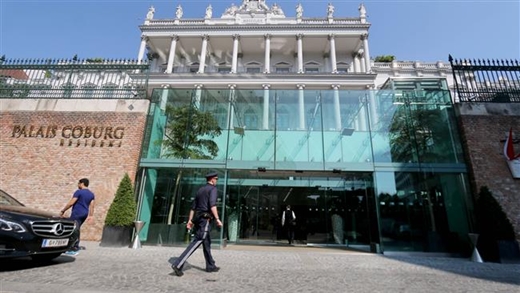
Diplomats from Iran and the EU wrapped up the latest round of negotiations in New York and are slated to resume the talks in Vienna on May 12 to press on with the task of drafting the comprehensive deal.

Iran to import rare white tiger from Germany

tiger

An official at Iran’s Environment Protection Organization (IEPO) said a white tiger will be brought to Iran from Germany for public display at a zoo in Tehran.

The IEPO has given permission for the rare animal’s imports and Tehran’s Eram Zoo has paid for it, Ali Teimouri told Tasnim on Sunday.

He said inspection of the zoo has verified that the place designated for keeping the tiger is ready and in a good state.

Should Iran Veterinary Organization grant permission, the white tiger will be delivered this week, Teimouri noted.

The next plan is to import a Bengal tiger as a mate for another one being kept at the Eram Zoo, he added.

According to Big Cat Rescue, white tigers (a recessive mutant of the Bengal tiger) are produced by generations upon generations of inbreeding, a process that causes a lot of defects and deformities.

It is also important to remember that breeding of white tigers and lions can often be problematic.

In 2011, the American Zoological Association (AZA) formalized a ban on the breeding of white tigers, white lions and king cheetahs by their member zoos.

Moreover, like their colored brethren, white lions and white tigers have been threatened by hunting and habitat destruction, and are both believed to be almost extinct in the wild.

Yemeni crisis: Arab media on the same wavelength

KONICA MINOLTA DIGITAL CAMERA

The story of the new Saudi king evokes The Emperor’s New Clothes*; an emperor who comes among people unclothed but the admiration expressed by those surrounding him forces people to praise his new suit, ignorant of the fact that people have had their fill of the king’s indecent manners.

The new outfit King Salman has draped Saudi Arabia’s policies with is unbecoming of all political and human principles, but the fact is that the Arab media are trying to depict the outfit as beautiful and elegant. They are unaware that what they’re earnestly doing has done little to change the impact the Saudi policies have had [in the region].

Alef, a news website, has published a report on the news coverage by foreign and Arab media of the Yemeni crisis, explaining how their biased look at a regional crisis is to benefit the new Saudi king and his odd policies. The following is the translation of excerpts of the report:

These media – which do not see the deadly Saudi airstrikes on Yemen and Riyadh’s undemocratic efforts to form a coalition against popular forces there – aim to counter Ansarullah and the policies of the Houthis in Yemen.

Al Riyadh [a pro-government Saudi daily newspaper] has blamed the Shiites and popular forces for unrest in the country.

To bolster the Saudi coalition against Yemen, this newspaper magnifies Iran’s role in the Yemeni crisis to distract public opinion and conceal the inhuman acts behind the deep-rooted feuds.

[…]

A coalition to divert public attention

Diverting the attention of people is one of the methods media use to manipulate public opinion. When public opinion becomes sensitive to an issue, they [the media] create parallel news stories to push public opinion off course. To that end, they also try to slant the new stories and play up their own policies.

Accordingly, Al Arabiya [a Saudi-owned pan-Arab television news channel] carried headlines such as “Kerry urges Houthis, allies to enter talks”, “Yemen’s [P]GCC membership is rightly back on the agenda” and “Iran tried to break naval blockade, Yemen minister says” to twist the facts.

A closer look at Al Arabiya’s headlines on Yemen – which highlight the killing of Arab soldiers who are fighting the Houthis to bring the Yemeni crisis to an end – shows that the readers get the least information on collateral damage caused by the operations of the Saudi-led coalition.

Irrespective of the true story and the interpretation of the policies provided by the two sides of the conflict, the coverage by the Arab media of the Saudi airstrikes on Yemen reveals one point: an unwritten alliance has been formed among the Arab media to reflect the ground realities in line with the policies of the Al-Saud family.

Al Jazeera [a Doha-based broadcaster funded by the House of Thani, the ruling family of Qatar] is another Arab medium which underscores foreign meddling in Yemen, but it looks as though the editors-in-chief of this broadcaster do not see the Saudi aggression. Al Jazeera carries an item on volunteer forces – who join the fight on ISIL – and picks the following headline for it: “Iraq’s Badr Organization Offers to Join Yemen’s Ansarullah in War against Al-Saud”.

London inflames the situation

The use of “the Yemeni government” for the cabinet of the ousted Yemeni president is another diversion in the media world. The BBC takes a similar stand and uses the term “the government-in-exile” and gives [extensive] coverage to the Yemeni news and views, especially those which are against Iran.

Following remarks by the Iranian foreign minister on [Iran’s four-point initiative for] solving the Yemeni crisis, the BBC picks this headline: “Yemen government rejects Iranian peace plan” to reflect comments by the spokesman of the former Yemeni government [Rajeh Badi] who is in Qatar.

Instead of covering news items on the Saudi aggression on Yemen, the BBC always tries to play up [what it calls] Iran’s interference in the Arab country’s [internal] affairs, releasing undocumented remarks by members of the former Yemeni government or analyses by European and American experts and officials.

The BBC’s use of rebels for the country’s popular front merits attention. Viewers have not forgotten the word “militants” – the BBC’s term of choice for ISIL forces in Syria. The various denotations the British medium uses for the former Yemeni government and the Arab country’s popular front – compared with what it employs for other regional crises – clearly discloses the BBC’s [biased] media policies.

Al Riyadh, Al Arabiya and Al Jazeera in cooperation with the BBC are trying to display the new clothes of the Saudi King’s policies as something beautiful and fancy. They also try to divert public opinion by portraying the Saudi war measures as something that serves the best interests of the region.

They should not forget the fact that the audiences in the new media age are searching for the truth in a more dynamic fashion, and that multiple media have stepped in to break a [media] monopoly over recounting the events. This has rendered their efforts – to influence public opinion – more complex than before.

The Emperor’s New Clothes is a short tale by Hans Christian Andersen about two weavers who promise an Emperor a new suit of clothes that is invisible to those who are unfit for their positions, stupid, or incompetent. When the Emperor parades before his subjects in his new clothes, no one dares to say that he doesn’t see any suit of clothes until a child cries out, “But he isn’t wearing anything at all!”

Iran, UN discuss sending human aid to Yemen

5

Iranian Deputy Foreign Minister for Arab and African Countries Hossein Amir Abdollahian and UN Under-Secretary-General for Humanitarian Affairs Valerie Amos discussed sending human aid to Yemenis.

Amir Abdollahian in a phone call with Amos slammed Saudi aggression against Yemen, including attacks on civilian targets in Sa’dah and Amran provinces.

He reiterated that the measures would violate international rules and human rights principles.

“The Islamic Republic of Iran expects the UN envoy in Yemen Ismail Bin Al-Sheikh Ahmed to act urgently and take steps for ending the attacks and preventing the escalation of human crisis,” he said.

He also said Iran is ready for sending fuel and oil products to Yemeni ports, medical teams and establishing field hospitals in Sana’a, Aden and Sa’dah and transferring foodstuff to Djibouti or directly to Yemen after arrangements with the UN.

Valerie Amos, for her part, appreciated Iran’s efforts and supports for sending humanitarian aid to Yemen, and said specialist organizations and workgroups would step up the operations of sending aid to Yemen.

Illusion of ‘Shia crescent’ is a failed scenario: IRGC

Ramezan Sharif

The director of the Islamic Revolution Guards Corps (IRGC) Public Relations Department said on Saturday that “illusion of a Shia crescent” is a “failed scenario” advocated by the U.S. and the Zionist regime of Israel.

General Ramezan Sharif made the remarks in response to attribution of the sentence “A Shia crescent is being formed” to IRGC top commander Major General Mohammad Ali Jafari.

Attributing this sentence to the IRGC commander is “a partial interpretation” and “distortion” of his analysis of the situation in the Mideast region, Sharif stated.

He added that the U.S. and the Zionist regime of Israel make accusations against Iran in line with their policy of “Iranophobia” and “Shiaphobia” with the aim of causing schism in the Islamic world.

He also slammed the strategy of Shiaphobia and illusion of a Shia crescent as “defeated propaganda”.

Iran’s top MP opposes motion to halt nuclear talks

larijani

The Iranian parliament speaker has voiced strong support for the nuclear negotiating team and called on fellow parliamentarians to avoid ill-thought-out reactions to the nuclear issue.

Bagher Hosseini, a member of parliament’s National Security and Foreign Policy Committee, quoted Ali Larijani as making the comment Sunday in a meeting of a Principlist Caucus [the Followers of the Leader (Rahrovan-e Velayat)].

He said that the speaker also expressed bitter opposition to extreme reactions [to the process of nuclear talks], among them the motion – tagged with triple-urgency status – a number of Iranian MPs have signed [asking for a halt to nuclear talks until the US stops issuing threats against the Islamic Republic and apologizes to Iran].

The following is the translation of what else Hosseini quoted Larijani as saying in the meeting as reported by the Iranian Students’ News Agency:

The speaker stressed in the meeting, “We are at odds with the nuclear team over nothing, so we need to stay clear of hasty reactions and let the country’s negotiators successfully advance the objectives of the Islamic Republic of Iran at the negotiating table.

“The Supreme Leader has voiced his support for the nuclear negotiating team, and we in parliament should follow the Leader’s lead, too”.

Larijani also said, “Currently, the US politicians – Democrats and Republicans – are at loggerheads, but we in Iran are not opposed to the country’s nuclear team; rather, we support our negotiators.

“By the same token, parliament should keep its distance from getting carried away and making immature decisions. It should [instead] release a statement in reaction to a Senate bill on Iran nuclear deal”.

Hosseini also said that a statement will be read out on parliament floor in reaction to the US Senate bill later Sunday.

Is a shakeup in the cards?

Rohani Government

It has been a while since speculations about a probable cabinet reshuffle by President Rouhani began to swirl, with many believing that some provincial governors and deputy ministers will be the likely targets of the shakeup. The following is the translation of a report released on May 10 by Fararu.ir, a news website, on who is likely to be on the chopping block:

The news was first made public by President Rouhani. During his Shiraz visit, when asked by journalists about the prospects of a cabinet reshuffle, the president said he would do that if necessary.

One week later, the president’s cultural advisor Hessamoddin Ashena said, “Visits to some provinces made it clear to the president that contrary to initial assumptions, some governors are not up to snuff to run provinces. Therefore, some changes are in the offing. Ministers and provincial governors are likely to be replaced as part of the reshuffle.”

Later, in another interview, however, Ashena said, “Any decision by the government will be made public through the government spokesman. My recent remarks were only a personal analysis and I raised the matter as a political analyst,” adding, no decision was made by the government as far as a reshuffle was concerned.

Other officials within the government have no knowledge of such a decision. Now the Cabinet reshuffle has become a talking point, but no one knows where it all started.

Although President Rouhani has granted a half-hearted green-light to a Cabinet shakeup, official news about change has yet to be made public. Over the last 22 months since he took office, except an unofficial report that the president dismissed Borujerd’s governor after he prevented Seyyed Hassan Khomeini, the grandson of the late founder of the Islamic Republic, from making a speech, there have been no other dismissals.

The interior minister in an interview has told a daily that the president favors change and seeks to appoint governors who see eye to eye with his government.

Given what Ashena said, provincial governors are likely to take the brunt of a shakeup. Speculation is rife about the probable dismissal of some provincial governors in a number of cities and there are even reports that decisions on replacements are final.

The provincial governors who failed to deal with those who take the law into their own hands over the last few months seem to be atop the dismissal list.

There are some ministers the government seems to be willing to either dismiss or transfer. Among government officials from the vice president for parliamentary affairs to deputy interior minister, no one had knowledge of the probable reshuffle. Although, speculation is rife about change, it’s still unclear when such change will come.

Change is something which has always been resisted. Appointment of new provincial governors will probably leave many displeased. For the designation of a new provincial governor, one has to please many, something which makes it more difficult for the government to get it done.

We must wait and see whether or not the government will recruit new forces to act differently in the second half of its term.

Bill to halt Iran-P5+1 talks contradicts Iran’s Constitution: MP

Mehdi Davatgari

A senior lawmaker said that a bill that if passed would require a halt to nuclear negotiations between Tehran and P5+1 (the US, Russia, China, France and Britain plus Germany) is against Clause 1 of Article 110 of the Constitution.

“This bill will surely be rejected by the Custodians Council,” member of Majlis (Iranian parliament) National Security and Foreign Policy Committee Mehdi Davatgari said on Saturday.

Davtgari’s remarks came after Javad Karimi Ghoddusi, another member of the National Security and Foreign Policy Committee said that a group of Iranian lawmakers have prepared a bill that if passed would require a halt to nuclear negotiations between Tehran and P5+1 unless the United States stops its threatening rhetoric against the Islamic Republic.

Karimi Ghoddusi said that the bill, with a triple-urgency status, would oblige the government to halt nuclear talks with the six countries until Washington apologizes to Tehran and puts an end to threats against Iran.

Ghoddusi highlighted Iran’s independence and freedom, and said the Iranian lawmakers would not allow the hegemonic powers to undermine the rights of the Iranian nation.

According to the Iranian lawmaker, the bill would be presented to the Presiding Board of the parliament on Sunday.

The move follows Washington’s fresh threats of military action against Iran amid the ongoing talks over Tehran’s nuclear program.

US Secretary of State John Kerry as well as Vice President Joe Biden have recently said that the military option is still on the table regarding Iran.

On May 6, Leader of the Islamic Revolution Ayatollah Seyyed Ali Khamenei described as “unacceptable” the use of threats concurrent with the nuclear negotiations and said that Washington’s need for the nuclear talks is not less than Tehran’s, if not more.

The Leader also cautioned the Iranian negotiators to observe the country’s red lines in the course of the talks.

The US threats come as Iran and P5+1 are seeking to finalize a comprehensive deal on Tehran’s nuclear program by the end of June. The two sides reached a mutual understanding in Lausanne, Switzerland, on April 2.