Monday, December 22, 2025
Home Blog Page 4837

IS doesn’t dare get close to Iranian borders: Top General

General Firouzabadi

Chief of Staff of the Armed Forces Major General Hassan Firouzabadi said Tuesday that IS terrorists do not dare get close to the Iranian borders.

Talking to reporters, Firouzabadi reiterated that Iran is fully determined to smash IS terrorists if they advance to around 40 kilometers of our borders.

He stressed that the Takfiri and terrorist forces are present in the vicinity of the Iranian border areas.

Last week, Minister of Defense Brigadier General Hossein Dehghan said IS terrorist group is not capable of threatening Iranian borders and that Tehran does not regard IS as a threat.

Dehghan said that the Iranian nation will not welcome IS terrorists.

Capability of Iranian security, military and police forces is so high that it can thwart any hostile act before it begins, the defense minister said.

Dehghan made it clear that the Iranian security forces are closely watching IS forces.

‘If IS had been able to take any action against the Iranian security, they would have done so already,’ the general added.

Muslims die at sea; Nobel laureate keeps mum

Minority Rohingya Muslims

So far this year around 25,000 people, about half of them Myanmar’s minority Muslims who could no longer stomach oppression at home at the hands of majority Buddhists, have set sail in the Indian Ocean in search of a better life overseas.

Mehr News Agency has filed a report on the plight of Rohingya Muslims who are adrift in an ocean which has turned into a watery grave for many who die of disease, thirst and starvation.

The following is the translation of an excerpt of the report:


Bangladeshis who are fleeing poverty in their country account for almost 50 percent of these refugees stranded at sea; Rohingya Muslims who are viewed as non-existent by Myanmar rulers make up the other half.

The Rohingya Muslim population who numbers around 1 million and lives in the western State of Rakhine has been subjected to injustice for decades. They have often been driven from their homes, because officials in Yangon do not recognize their civic rights and claim that they are Bengalis who should return to Bangladesh.

The government’s failure to recognize their civic rights has resulted in their exclusion from census, revocation of their ID cards, their exclusion from the education system, and relocation to refugee camps.

The injustice to Rohingyas dates back to the 19th century. […] But enforcement of restrictive laws by the government last year set the current exodus in motion. Under the new laws, those who could provide evidence that their ancestors took up residence in the country prior to the 1948 independence of the country would be regarded as second-class citizens; otherwise they had to move to camps to await expulsion.

Presently, as many as 100,000 Rohingyas live in such camps and twice as many live across the border as unwelcome guests in Bangladesh. Although the government has yet to make good on its expulsion threat, many undocumented Rohingyas have already fled the country. In October and November alone more than 14,000 set out for Thailand in hopes of getting asylum from Malaysia there.

In late May, Bangkok, Thailand hosted a regional summit to discuss the migrant crisis. At the gathering attended by senior officials from 17 regional countries, a senior UNHCR official said in the absence of fundamental measures to target the root cause of the problem, no solution should be expected to come out of the summit.

The UN official said a solution to the migration crisis in Southeast Asia hinges on responsible measures by Myanmar as far as all its citizens are concerned and that recognition of civic rights should be the ultimate objective.

Myanmar, which attended the summit reluctantly, denied allegations that mistreatment at the hands of the government is to blame for the migration of Muslim Rohingyas. Its delegates argued that the international community has been fed misinformation about what triggered the exodus and that the actions of the Myanmar government are all in line with judicial regulations of the country.

The Myanmar government is not the only culprit in this injustice against the Muslim minority. Nobel Laureate Aung San Suu Kyi, who for years was viewed as a national hero in defying the country’s military dictatorship, has closed her eyes to such injustice too.

The opposition leader, who is supported by the US and Britain, usually refrains from adopting any official stance on ethnic violence in her country. Recently she told reporters the issue of migration is for the government to solve. She declined to answer questions about violence against Muslims.


Nobel Laureate Aung San Suu Kyi


Probably, her failure to react has to do with her political future. People of Myanmar go to the polls to elect a new parliament in November. She fears her support for minority Muslims might alienate the Buddhist majority.

Aung San Suu Kyi’s silence is so unforgivable that the Dalai Lama, the spiritual leader of the Tibetan Buddhists, has urged her to do more to help protect the persecuted Rohingyas.

[…]

The upcoming elections are unlikely to solve the problems the Muslim minority in Myanmar grapples with, because the interests of whatever government that comes to power are intertwined with the Buddhists among whose ranks hostility toward Muslims is institutionalized. As long as there is no major change, the Indian Ocean will continue to extend a not-so-warm welcome to Rohingyas and swallow them up.

Adversaries are still at odds; A missile for a missile

North_Korea_missiles

The United States, which has over the past few months launched efforts to deploy the Terminal High Altitude Area Defense (THAAD)* system on the Korean Peninsula, has found North Korea’s high missile capability as a major obstacle to implementing its policies in the region.

The Islamic Republic News Agency (IRNA) on May 30 ran an analytical report on the THAAD system and whether the US missile option can provide a protective shield against imminent threats in the region. The following is the translation of excerpts of the report:

Washington, whose interventionist policies on the Korean Peninsula has come in the form of massive deployment of military hardware and personnel, has created the THAAD missile defense scenario to instill [into public opinion] the feeling that deployment of the missile defense system is essential, under any circumstances, to countering nuclear and missile attacks from North Korea.

The dominant, pervasive presence of the US on the Korean Peninsula, Washington’s reactions to North Korea’s policies and its off and on measures to provoke the North’s neighbors are all indicative of the fact that the US is trying to keep the flames of tension raging on the Korean Peninsula so that it can achieve its regional objectives.

The THAAD system is the latest US effort to achieve its goals in East Asia. Washington’s insistence on deployment of the defense system has caused the drum of tension between North Korea and its neighbors, especially South Korea, to be beaten still louder by the day.

Pyongyang, however, has always announced that it will strongly confront any threat by the US and its allies. This comes as US Secretary of State John Kerry made inflammatory remarks in Seoul earlier this month, saying that the United States continues to seek the deployment of highly effective missile defenses in South Korea.

Although South Korea – fearing exacerbation of tension with its northern neighbor – quickly downplayed Kerry’s remarks, the possible deployment has raised concerns in China and Russia. From the start, the Chinese have announced that nobody should reignite tension in the region. […]
When it comes to South Korea, they are not willing to see the US deployment of the missile system and have time and again protested against Washington’s military policies. […]

At issue is also North Korea’s possession of 1,000 medium-range Nodong and short-range Scud missiles which can neutralize the US missile system. Thanks to North Korea’s high missile capability, experts say, the deployment of THAAD will fail to dent Pyongyang’s power, adding that the country can tap into the potential of more than 1,000 missiles it possesses to easily counter any US missile move in the region.
 

This handout image courtesy of the US MIssile Defense Agency shows the launch of the Terminal High Altitude Area Defense (THAAD) missile during a test. (AFP Photo


The Global Times, a Chinese daily, has reported that the cost of one THAAD battery ranges from $1.5 billion to $2.5 billion, saying the US is trying in vain to deploy the system in South Korea. Moreover, THAAD cannot react speedily enough to intercept North Korean missiles which can land on South Korean soil three minutes after launch.

China has warned that the deployment of THAAD does not ensure security, saying it will cause North Korea to speedily bolster its missile capability at its border with the South.

[…]

Peter C. Espina, a Political Science professor at Seoul-based Yonsei University, says that THAAD poses a threat to China’s national security and that the Chinese will not by any means come to terms with the defense system, especially after Beijing’s recent verbal dispute with the US about the South China Sea.

[…]

Experts believe that US insistence on deploying the defense system on South Korean soil will spark off an arms race in the region and fuel inter-Korean tensions. The two Koreas are technically at war which each other since the 1953 war, because no peace treaty has been signed by the two neighbors.


THAAD is an anti-ballistic missile system manufactured by Lockheed Martin [an American global aerospace, defense, security and advanced technology company with worldwide interests] with a radar range of 1,000 km and an operational range of 200 km. It can travel at a speed of 10,080 km per hour.

We will impeach the interior minister

ali-motahari

Ali Motahari, a principlist Tehran MP, has called – in an open letter – on President Rouhani to order a stop to repeated cancellation of speeches and gatherings in different cities across the nation and halt obstructive measures by those who act on their own and above the law.

Motahari – together with Ahmad Tavakoli, Abdolvahed Mousavi Lari, Najafgholi Habibi and Ebrahim Asgharzadeh – was to deliver a speech at a gathering dubbed “Government, Nation, Solidarity and Harmony” which was to be held by a university student association in Karaj on May 28.

According to the MP, the gathering was cancelled after the city’s Friday prayer leader, a military center and an MP representing Karaj showed opposition and began to issue threats. The MP also blamed the laxity, irresponsibility and acquiescence by the governor general of Alborz Province and the governor of Karaj for the cancellation.

They threatened if the gathering was held, what happened in Shiraz* would pale in comparison and that they would break our shin bones, Motahari said, adding that unfortunately the governor general and governor capitulated instead of dealing with law-breakers according to the letter of law.

Fararu, a news website released Motahari’s letter to the president on June 1. The following is the translation of excerpts of the missive:

[…]

Under Article 113 of the Constitution as president you are responsible for implementing the charter.  Let me ask you, how long is the current situation going to last? And how long are some weak governors-general and governors going to obey what the revolution’s ignorant friends say instead of enforcing the law?

I know that more pressures are exerted on the governments which seek to implement the Constitution to the letter and that such threats and limitations were all absent in the previous government. I know that freedom of speech is now more limited than when the previous government was in office, but using this excuse to justify the status quo is far from acceptable.

People, who voted for you based on your slogans and promises, will not tolerate collaboration between executive officials and those who favor suffocation.

That the planned presence of some individual(s) in a gathering might trigger tension in a city, thus the meeting should be called off sounds acceptable. But for government officials and institutions to say that they would not allow a certain meeting to go ahead according to plan, and for the governor-general and governor to capitulate out of fear and violate the great ideal of the Islamic revolution – freedom of speech – it is not acceptable at all.

If incidents as such take place one more time, I – in spite of my strong belief that government should be supported – will join fellow ingenious deputies, who are the advocates of freedom of speech, to impeach the interior minister.

I hope the house will be put in order through your measures and orders before we decide to impeach the interior minister.

Ali Motahari was attacked by unknown individuals on March 9 after he left Shiraz Airport for a university in the southern city where he was scheduled to deliver a speech. The assailants pelted him with tomatoes, eggs and pieces of tiles, and smashed the rear screen of the cab carrying him. He sustained minor injuries and had to cut short his trip and return to Tehran.

Kish Indigenous Anthropology House (PHOTOS)

Kish House

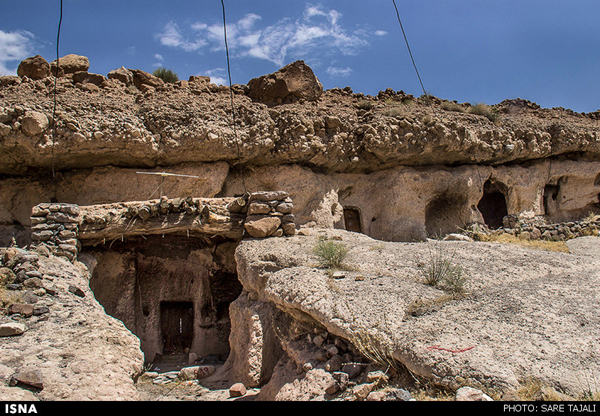
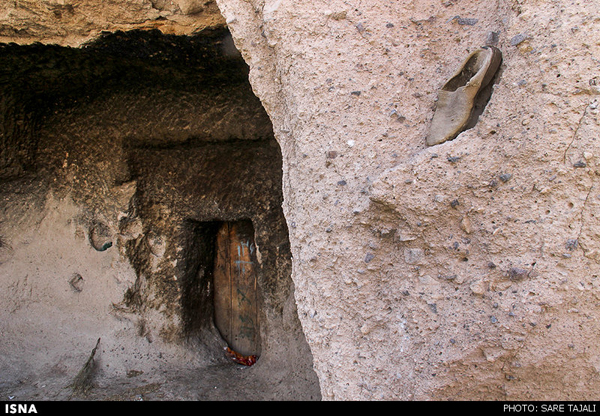
Kish Indigenous Anthropology House is as old as 200 years and located on the southern Iranian island of Kish.

The structure which is 1,200 meters in area is the top private museum in the country and among other things focuses on research, management development, and innovation.      

The following are images of the museum released by various news agencies:

Erdogan, newspaper editor trade barbs over Syria trucks video

Erdogan

CumhuriyetThe editor-in-chief of Cumhuriyet, a center-left Turkish daily newspaper, has reacted with threat of his own to threats by President Recep Tayyip Erdogan over a Syria trucks video.

Khabaronline.ir on June 2 reported the exchange of threats between the Turkish president and the daily’s chief. The following is the translation of the report:

President Erdogan on Monday threatened that the newspaper’s chief will pay a heavy price for publishing video footage – dated January 2014 – showing the MIT state intelligence agency helping send weapons to terrorist groups in Syria.

“The individual who has reported this as an exclusive story will pay a high price for this,” Erdogan said in a television interview with state broadcaster TRT late on Sunday. “I will not let this go.”

In response, Can Dundar tweeted on his page that the one who has committed this crime will pay a heavy price, saying, “We will not let him go easily.”

The Cumhuriyet newspaper published footage on its website on Friday which it said showed gendarmerie and police officers in Adana, southern Turkey, opening crates of what it described as weapons and ammunition on the back of three trucks belonging to MIT (The National Intelligence Organization).

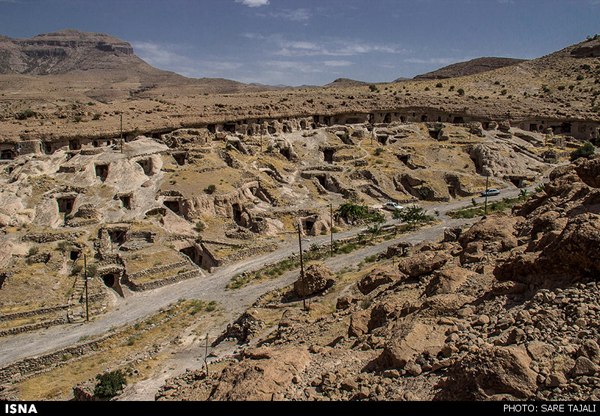
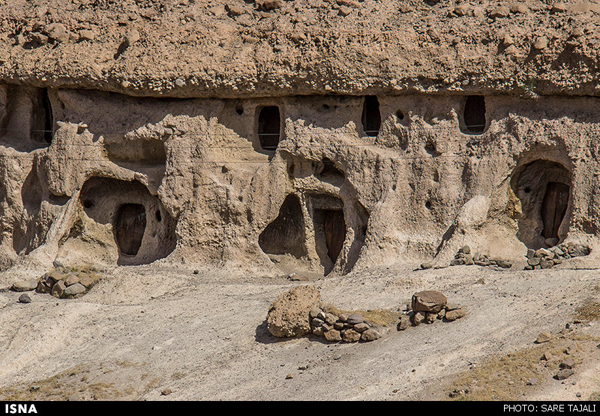
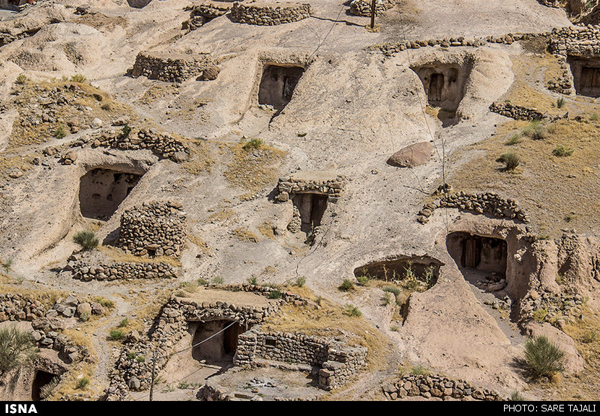
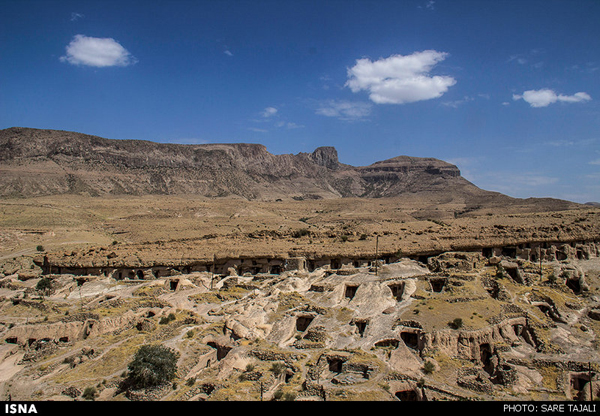
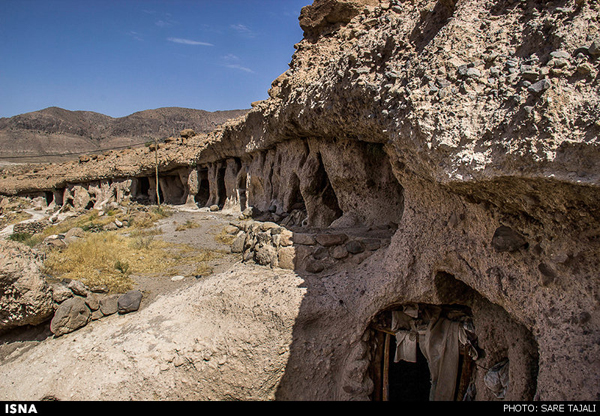
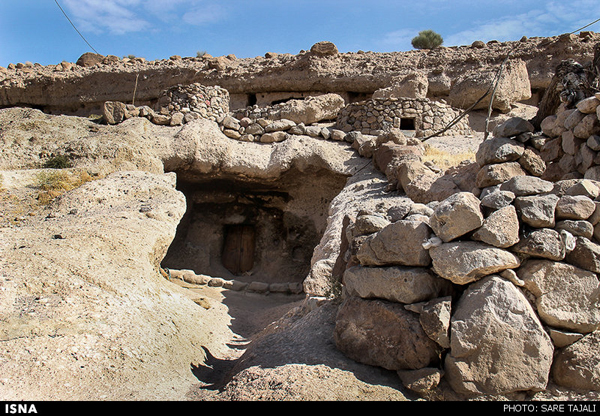
Shahar Yeri historical site

Shahar Yeri

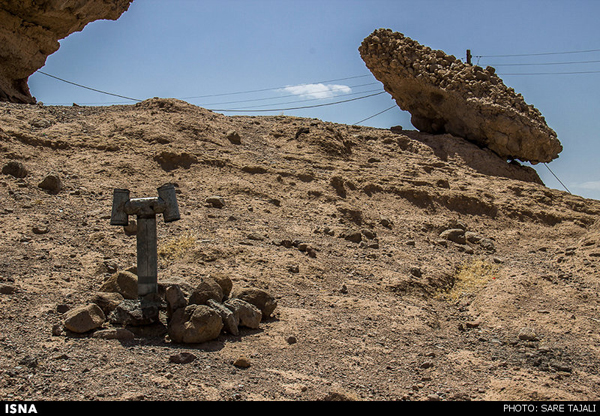
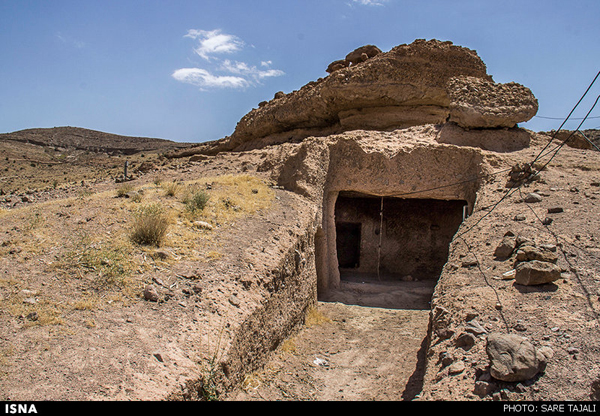
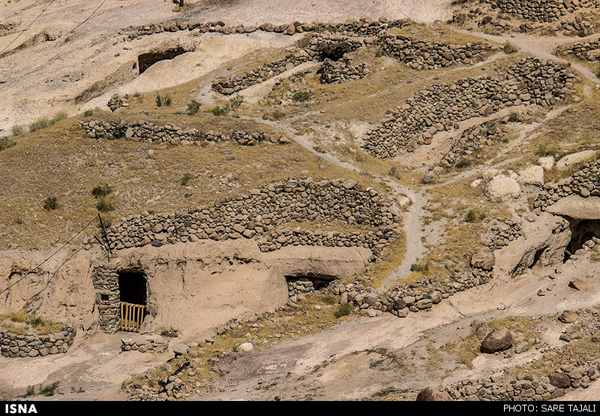
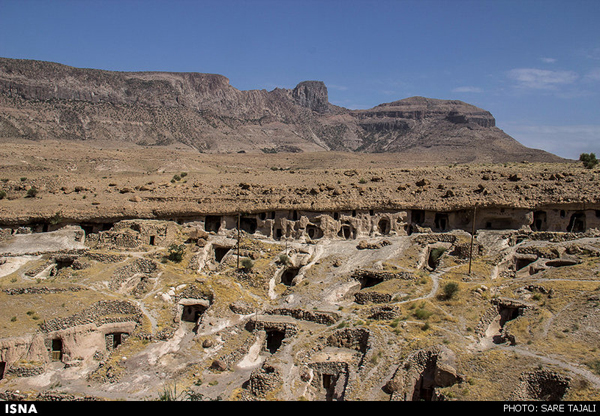
Shahar Yeri is a historical site in Ardebil Province in northwestern Iran. Some of the carved stone structures found in the area are believed to be 6,000 years old.

The following images of the 400-hectre site, 60 km to the west of the provincial capital, have been released by Mehr News Agency:

Iran raps Canada for stopping verification of Iranian medical credentials

Afkham

Iran has criticized Canada’s “discriminatory” move to stop verifying the authenticity of credentials issued for the graduates of Iranian medical schools.

“Instrumentalizing the right of education, which is among the fundamental rights of humans, is an incorrect and discriminatory measure,” Iran’s Foreign Ministry Spokeswoman Marzieh Afkham said on Sunday.

She added that medical education is directly linked to people’s health and life.

She expressed regret over the decision adopted by Canada’s Educational Commission for Foreign Medical Graduates (ECFMG), noting that Iranians have always been among top medical graduates.

“The Islamic Republic of Iran is examining the necessary options and measures for the lifting of the restriction imposed on its nationals, and hopes it will end at the earliest,” Afkham said.

Her remarks came after the Medical Council of Canada (MCC) said it has received notification from the ECFMG, as its source verification provider, that the ECFMG is not processing incoming and outgoing credentials issued by Iranian schools and institutions at this time.

ECFMG, based in the United States, is assessing whether the current US law permits interactions with educational, healthcare, and medical licensing institutions in Iran.

A look at Iranian newspaper front pages on June 1

Iranian Newspapers Headlines

Reformist dailies on Monday focused on comments by the daughter of the late Imam Khomeini and those of the Expediency Council chairman on their front pages. Principlist newspapers put under the spotlight the comments of the economy minister that the Central Bank is unable to keep liquidity in check.


Afarinesh: A warning by a Health Ministry official to those who smoke hookah: “Hepatitis and tuberculosis are lurking.”


A look at Iranian newspaper front pages on June 1


Afkar: Between 75,000 and 80,000 Iranians are suffering from multiple sclerosis.

Afkar: Iraqi Prime Minister Haider al-Abadi has supported his country’s cooperation with Iran in the fight against IS.


A look at Iranian newspaper front pages on June 1


Aftab-e Yazd: The role Ahmadinejad’s mismanagement played in today’s water scarcity.

A report by the daily takes a closer look at the unauthorized wells in operation across the country and their adverse impact on the country’s water resources.


A look at Iranian newspaper front pages on June 1


Arman-e Emrooz: Tehran MP Ali Motahari has sent an open letter to President Rouhani in which he has threatened to join hands with fellow deputies to impeach the interior minister in case any more authorized speeches are cancelled.

Arman-e Emrooz: The controversial recollection of Ayatollah Hashemi Rafsanjani was confirmed by none other than the daughter of the late Imam Khomeini.

“My mother told him, ‘I gather you are not going to run for president. Imam handed the revolution to the likes of you and now you are shirking your responsibility?'” said Zahra Mostafavi.

[Hardliners lashed out at Rafsanjani a while ago when he quoted the wife of the architect of the Islamic Republic as making the same comments to him. “Why is it that Rafsanjani always quotes the dead as saying this and that,” they growled.


A look at Iranian newspaper front pages on June 1


Ebtekar: “Iran is determined to carry on with nuclear talks,” said Ali Akbar Velayati, an advisor to the Supreme Leader for international affairs.


A look at Iranian newspaper front pages on June 1


Ettela’at: “Differences between parties to the nuclear talks are political and technical in nature,” said Iranian Foreign Minister Mohammad Javad Zarif.

Ettela’at: Iran’s economic growth hit 3.6 percent.

Ettela’at: “Government is walking down the right path; calm has returned to the country; we need to set the stage for maximal turnout of the public in elections,” said Parliament Speaker Ali Larijani.


A look at Iranian newspaper front pages on June 1


Iran: “We should not allow a small bunch to defy laws,” said First Vice-President Eshagh Jahangiri in comments aimed at governors from across the country.

Iran: “Potential candidates should not be threatened with disqualification,” said Parliament Speaker Ali Larijani.

Iran: “Governors should take every care in their choices and appointments,” said the grandson of the late Imam Khomeini.


A look at Iranian newspaper front pages on June 1


Jomhouri Islami: “We will work full time in the next 3-4 weeks,” said Foreign Minister Mohammad Javad Zarif as Iran and P5+1 work against the clock to finalize a nuclear deal before an end-of-June deadline.


A look at Iranian newspaper front pages on June 1


Kayhan: “The Central Bank is no longer able to keep liquidity in check,” admitted the economy minister.


A look at Iranian newspaper front pages on June 1


Shahrvand: American and European tourists have arrived in Tehran on board a luxury train.


A look at Iranian newspaper front pages on June 1


Sharq: “The document that allows women to go to sporting arenas has been signed,” said a vice-president in an interview with Sharq daily.


A look at Iranian newspaper front pages on June 1


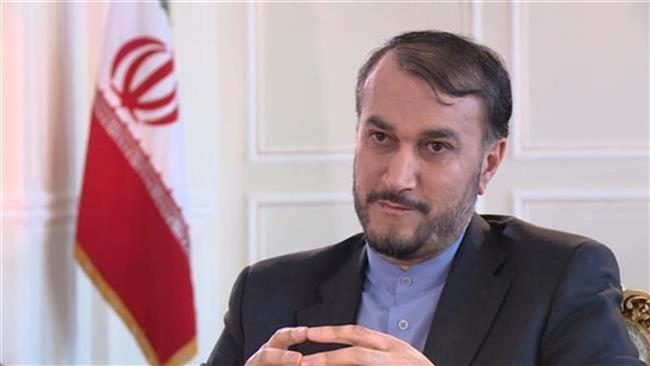
Amir Abdollahian stresses Iran’s constructive regional role

Hossein Amir-Abdollahian

Deputy Foreign Minister Hossein Amir Abdollahian blasted the recent allegations of Saudi Foreign Minister Adel al-Jubeir against Iran, and reiterated that the Islamic Republic has always played a constructive role in the region.
“Iran has always played a constructive role in the region,” Amir Abdollahian said on Sunday.

“Tehran unlike some countries that make arbitrary use of terrorism and play with the regional security strongly supports Iraq, Syria, Lebanon, Yemen and the countries exposed to the terrorist threats,” he added.

He pointed to Iran’s support for the regional peace and stability, and said, “The security of Iran, Iraq, Yemen and Persian Gulf states are intertwined.”

Amir Abdollahian went on to say that Iran supports good relations with Riyadh, and said, “We expect Saudi Arabia to play a constructive role in the region and by adopting correct and calculated diplomacy prevent the spread of war, strengthening terrorism and intensifying insecurity.”

On Sunday, the Saudi foreign minister told a joint press conference with his Egyptian counterpart in Cairo that his country seeks better relations with Iran, but conditioned those better ties on an end to alleged “interference” in Arab affairs and a halt to “support for terrorism”.