Monday, December 22, 2025
Home Blog Page 4836

Iran mourns Imam Khomeini’s decease anniversary

Imam Khomeini

A large number of people and officials have converged at Imam Khomeini’s mausoleum in the Iranian capital, Tehran, to mark the passing away of the late founder of the Islamic Republic.


Supreme Leader


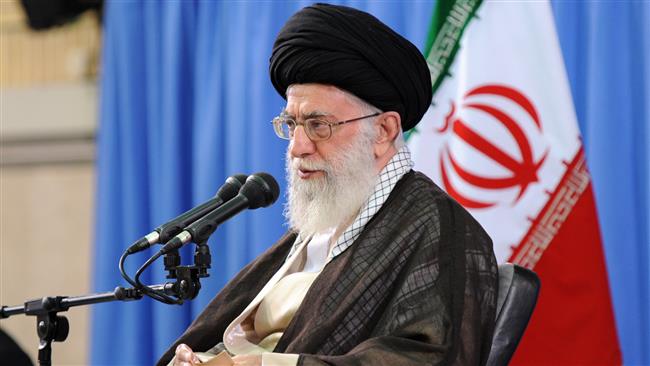
Leader of the Islamic Revolution Ayatollah Seyyed Ali Khamenei addressed the gathering of mourners at the shrine. Imam Khomeini’s grandson, Hojjatoleslam Seyyed Hassan Khomeini, also delivered a speech during the ceremony.

Ayatollah Khamenei said Imam Khomeini favored and emphasized the participation of people in different areas, including in military, political, and economic issues.

Imam Khomeini had real belief in the people, and respected people’s viewpoints even if he disagreed with them, the Leader said.

“Imam was openly opposed to world bullies,” Ayatollah Khamenei said, adding that the late founder of the Islamic Republic championed the cause of the oppressed.

Elsewhere in his remarks, the Leader referred to police brutality in the US and said Iran opposes the violence perpetrated by US police just as the Islamic Republic opposes the acts of violence committed by the Takfiri ISIL group.

Ayatollah Khamenei said Iran also opposes the Saudi military strikes against Yemen in the same way the Islamic Republic opposes the Israeli attacks against Gaza.

The Leader also emphasized that the issue of Palestine will never be off Iran’s agenda.

The Leader warned against the divisive polices of certain entities, including the Takfiri groups in Iraq and Syria, against Shia and Sunni Muslims, calling on Muslims not to fall victim to such plots.

According to Press TV’s correspondent at the mausoleum, nearly 1,000 guests from various countries are attending the mourning ceremony. Four hundred of the foreign attendees are scholars and researchers, who have been conducting studies on the thoughts and life of Imam Khomeini.


Imam Khomeini


Every year, millions of Iranians from across the country travel to Tehran to pay homage to the late founder of the Islamic Republic.

Rouhollah Mousavi Khomeini, better known as Imam Khomeini, was born in the central Iranian city of Khomein on September 24, 1902 to a family of scholars.

He led Iran’s 1979 Islamic Revolution, which culminated in the overthrow of the US-backed Mohammad Reza Pahlavi’s monarchy. Pahlavi was Iran’s last monarch.

Imam Khomeini passed away on June 4, 1989 at the age of 87.

Bus crashes into ravine, leaving 23 dead (PHOTOS)

Bus crashes

A north-bound bus with 40 Iraqi nationals on board plunged into a ravine on Tuesday, killing 23 passengers on the spot and leaving others injured.

The cause of the deadly crash in Mazandaran Province is under investigation.

The following are images the Iranian Students News Agency has released of rescue efforts:


Iran urges regional cooperation against terrorism

Zarif

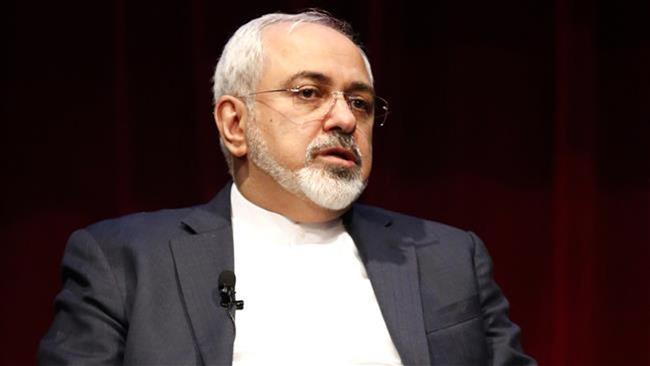
Iranian Foreign Minister Mohammad-Javad Zarif on Wednesday called for cooperation among regional states to fight terrorism and extremism.

Upon arrival in Moscow to attend a Shanghai Cooperation Organization conference themed ‘Security and Stability in Region’, the Iranian top diplomat told IRNA extremism is a menace which threatens every country in region and added, ‘To counter it, regional and trans-regional cooperation is required.’

Zarif said he will hold bilateral and tri-lateral meetings with his counterparts from China, Russia and Tajikistan.

‘In the meetings, we will discuss extremism in the region, latest nuclear developments, the situation in Yemen, Syria and Iraq and Daesh as well as bilateral issues,’ he added.

The Shanghai Cooperation Organization is an inter-governmental and international organization that was founded on June 15, 2001 in Shanghai, China.

Kazakhstan, China, Kyrgyzstan, Russia, Tajikistan and Uzbekistan are the founding member countries. Iran, Afghanistan, Pakistan and India have observer status in the organization.

Iranians will smash sanctions, foil plots: President Rouhani

Rouhani-Imam

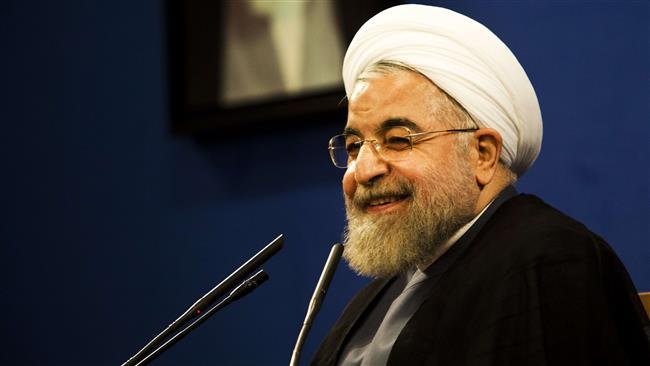
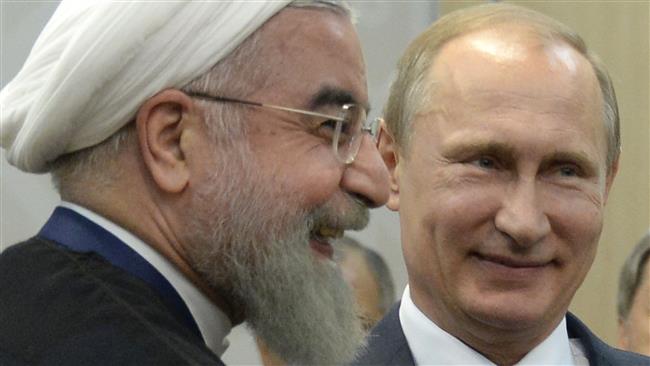
President Hassan Rouhani said Wednesday that Iranians are determined to defy unjust pressures, smash sanctions and foil the plots hatched against their country.

Addressing a large gathering to mark the demise anniversary of the founder of the Islamic Republic Ayatollah Seyyed Ruhollah Khomeini at his mausoleum, the president praised the leadership and statesmanship of late Imam Khomeini in leading the Islamic Revolution to victory in 1979, and said, ‘Imam Khomeini’s message resonates in our people’s mind, enabling us to stand against the plots hatched by major powers in the region.’

Iran has not only resisted and secured peace inside the country, Rouhani added, it has also assisted regional nations and will continue doing so.

‘The Iranian nation is helping the peoples of Iraq, Syria, Lebanon, Yemen and other regional nations in their fight against terrorism, violence and extremism. Relying on Almighty Allah’s power, we can ultimately defeat these machinations.’

President Rouhani also criticized certain governments in the region which he said are misusing their natural resources and purchasing arms to use against oppressed nations such as the Yemeni people.

Referring to the sharp drop in crude oil prices from 120 dollars per barrel to 40-50 dollars, he said Iranians have proved successful in the face of challenges over the past 36 years.

Iran’s return to oil market gradual: Zanganeh

Zangeneh

Iranian Oil Minister Bijan Namdar Zanganeh says Iran’s return to global oil market will be gradual once international sanctions against the country are lifted.

Speaking at the 6th OPEC International Seminar in the Austrian capital city of Vienna, the Iranian minister added, “Immediately or one month after the sanctions are lifted, we will pump half a million barrels per day to the market and after 6-7 months, we will reach one million barrels [a day] and I don’t believe that with the maturity of OPEC it will have a bad effect on the market.”

Emphasizing that Tehran attaches great importance to its share of the market, Zanganeh said, “…for long-term and mid-term, the new form of Iranian contract for new projects … will be introduced and we [will] sign new contracts based on this new framework and structure, which we believe will be more attractive for the investors” and international oil companies.

Zanganeh went on to note that “oil market stability through supply balance will remain [a] priority for OPEC in all circumstances.”

He added that oil price must be held at a level that would motivate investment and promote competition.

“The energy industry must be depoliticized, free from sanctions and limitations and [with] access to financial services, technology and markets,” in order to ensure further development of production capacity in OPEC member countries, Zanganeh said.

Upon his arrival in the Austrian capital, he called for an “appropriate decision” by OPEC to curb a global oil supply glut.

“It’s very clear that we have oversupply in the market and this oversupply puts pressure on the price,” Zangeneh told Press TV, adding, “And now it’s our responsibility to review this situation and to take an appropriate decision for balancing the market but it depends on consensus among all OPEC members.”

The Organization of the Petroleum Exporting Countries (OPEC) is hosting its 6th International Seminar at the Hofburg Palace in Vienna, Austria, on 3−4 June 2015. The theme of the event is “Petroleum: An Engine for Global Development.”

Major topics to be discussed at the seminar include the global energy outlook, market stability, oil investments, technology and the environment, and the state of the world economy.

Alligator makes it to industrial no-go zone (PHOTOS)

Alligator

An alligator has found its way onto a gas platform in southern Iran, apparently in search of food.

The giant gator caused no problem for the personnel and was eventually led back to the swamp with the help of workers of the rig.


Iran’s VP Raps State Sponsorship of Terrorism in Region

Elham Aminzadeh

Iranian Vice-President for Legal Affairs Elham Aminzadeh strongly deplored certain countries for sponsoring terrorism in the Middle East, urging these states to cut their financial aid to terrorist groups.

Aminzadeh on Wednesday stressed that the violent terrorist groups in the region cannot survive without receiving aid from certain countries, and called for an end to the financial aid provided for these groups by the governments supporting them.

“The financial transactions carried out by certain governments for these groups should be stopped as soon as possible,” she said in an address to the International Conference on World without Violence in Imam Khomeini’s View in Tehran.

Some rich countries today are helping racist extremist groups stream from Europe, Africa, and elsewhere into the region, she added, reiterating that the aid should be cut immediately.

In similar remarks in December last year, Iran’s President Hassan Rouhani called for a halt to the financial supports certain countries have been giving to the terrorist groups in the Middle East region.

“The countries that supported the terrorists should immediately stop funding them and disown them,” President Rouhani said at the inaugural of an international conference on ‘World Against Violence and Extremism’ (WAVE), held in Tehran at the time.

On December 18, 2013, the United Nations General Assembly overwhelmingly voted to approve Iranian President Hassan Rouhani’s WAVE proposal.

Wave Act asks the UN member states to unite against extremism, violence and sectarian conflicts in all their forms.

Saudi blockade of Yemen taking unacceptable toll on civilians: Iran official

yemeni

Iran’s Deputy Foreign Minister for Arab and African Affairs Hossein Amir-Abdollahian has condemned the Saudi aerial and naval blockade of Yemen.

“It is unacceptable that wounded Yemenis, particularly children and women, are denied access to medical aid because of the continuation of the cruel naval and aerial blockade, and that it is not possible to move them out of Yemen for treatment,” Amir-Abdollahian said on Tuesday.

He made the remarks in a meeting with Head of the International Committee of the Red Cross (ICRC) in Yemen Cedric Schweizer in Tehran.

The Iranian diplomat also emphasized that the Geneva-based ICRC plays a significant role in the delivery of humanitarian aid to the defenseless Yemenis, calling for the quick transfer of food and medical consignments to Yemen.

Amir-Abdollahian also voiced Iran’s readiness to put its humanitarian supplies at the disposal of ICRC.

Schweizer, for his part, briefed the Iranian deputy foreign minister on the ongoing ICRC efforts in Yemen, urging regional countries to send their humanitarian aid consignments to Yemen via ICRC bureaus in the southern Omani port city of Salalah as well as the African country of Djibouti.

On May 27, the World Health Organization (WHO) said in a statement that innocent Yemeni people are paying the “highest price” for the deadly Saudi aggression against the country.

WHO Director General Margaret Chan warned about the dire medical situation in Yemen due to the Saudi airstrikes and the ongoing conflict in the country, saying, “Almost 8.6 million people are in urgent need of medical help.”

According to the UN, nearly 2,000 people have been killed and 7,330 injured due to the conflict in Yemen over the past weeks.

Saudi Arabia launched military attacks against Yemen on March 26 – without a UN mandate – in a bid to undermine the Houthi Ansarullah movement, which currently controls the capital, Sana’a, and major provinces, and to restore power to Yemen’s fugitive former President Abd Rabbuh Mansour Hadi, who is a staunch ally of Riyadh.

Syria front line of defense against Israel: Iranian official

Shamkhani-Syria

Secretary of Iran’s Supreme National Security Council (SNSC) Ali Shamkhani underlined that Syria is defending Muslim nations against the Zionist regime of Israel and terrorist and extremist groups.

“Syria is at the forefront of efforts to defend the Islamic territories against the Zionist regime and the unbridled wave of Takfiri terrorism,” Shamkhani said Tuesday in a meeting in Tehran with Syrian Parliament Speaker Mohammad Jihad al-Laham.

Undermining Syria would definitely lead to crises and uncontrollable situations in all neighboring and regional countries, he added.

Shamkhani went on to say that the US and its regional allies are openly training and equipping Takfiri terrorists and violating the United Nations Security Council resolutions.

He said these countries are mistaken if they think they can provide security for the Zionist regime by creating crises in the region.

The Syrian parliament speaker, for his part, appreciated Tehran’s supports for Damascus and said the assistance provided by certain countries for the extremist and terrorist groups in Syria has been “a dark record” for them because they have preferred to serve the interests of colonial powers instead of their own nations.

Syria has been gripped by civil war since March 2011 with Takfiri terrorists from the Islamic State in Iraq and the Levant (ISIL) currently controlling parts of it, mostly in the east.

The US and its regional allies have been supporting the militants operating inside Syria for more than four years.

Bisotun historical complex in Kermanshah

Bisotun historical site, Kermanshah

Bisotun, a centuries-old historical site, is located in the western Iranian province of Kermanshah.

Its multi-lingual inscriptions have been crucial to the decipherment of cuneiform script.

Almost a decade ago, the historical site made it onto the list of UNESCO World Heritage Sites.

The following images of the site have been released by Tasnim News Agency: