Wednesday, December 24, 2025
Home Blog Page 4836

Uncle Mamad’s Cabin (PHOTOS)

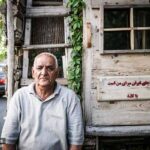
Uncle Mamad

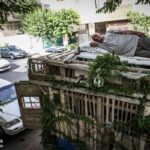
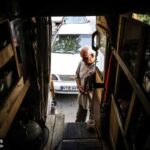
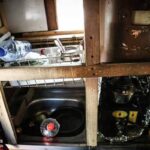
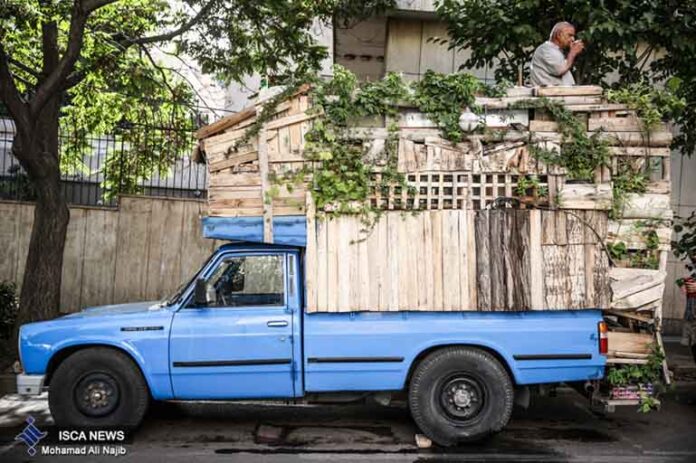
It has taken Mohammad, who is known as Uncle Mamad in the neighborhood, five years to turn his pick-up truck into a wooden camper of sorts.

He has traveled to many locations across the country on board the repurposed truck and plans to continue to do so in the future.

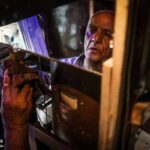
The following are images of Uncle Mamad’s wooden cabin released by Iscanews:

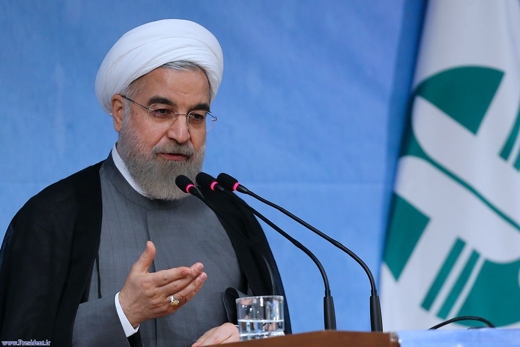
Gov’t attaches great importance to environment: Rouhani

Rouhani-Environment

President Hassan Rouhani said on Sunday that removal of unjust anti-Iran sanctions would lure investment in all areas, the environment in particular.

President Rouhani made the remark in a ceremony marking the 10th Iran National Environment Prize.

He said settlement of environmental problems and conservation of natural resources requires a balanced use of nature and technology, promotion of culture and investment.

President Rouhani stressed that his government attaches great importance to the environment.

‘Reviving the Orumiyeh Lake, the second largest lake in the Middle East after the Caspian Sea and the sixth largest salt water lake in the planet, was among the first bills ratified by the present administration,’ he added.

President Rouhani further highlighted the role that the Iranian nation plays in preserving the environment.

Expert says any comparison between Iran, Iraq a false analogy

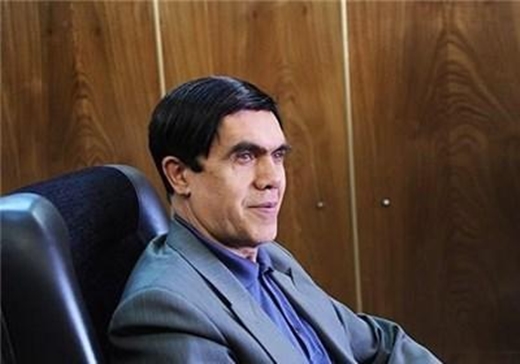
Khorram

Iran’s former envoy to the UN European Headquarters Ali Khorram said on Saturday that comparing Iran with Iraq is a false analogy.

“Foreign ministers of seven powerful countries of the world never spent long times discussing Iraq issue. Almost two years ago, a mission was assigned to an Iranian nuclear negotiating team to safeguard the nuclear industry on the one hand and try to ensure lifting of sanctions on the other; in this line, a Joint Plan of Action was compiled, comprising temporary and permanent parts,’ Khorram told IRNA.

He also referred to the implementation of the temporary part of the Action Plan and said part of the permanent plan was confidence building, based on which Iran should prove that its activities are peaceful. When Tehran accepts the plan, it should also be responsible for providing necessary means for this purpose.

Khorram went on to say that for the International Atomic Energy Agency (IAEA) to confirm peaceful nature of Iran’s nuclear activities, it should be able to inspect Iran’s nuclear sites according to the Additional Protocol and announce that Iran has no covert activities.

The political expert said that in fact, the Additional Protocol is a device to substantiate Iran’s claims and not to create problems with other countries.

A Burning Candle, a Hot Bath; Connect the Dots

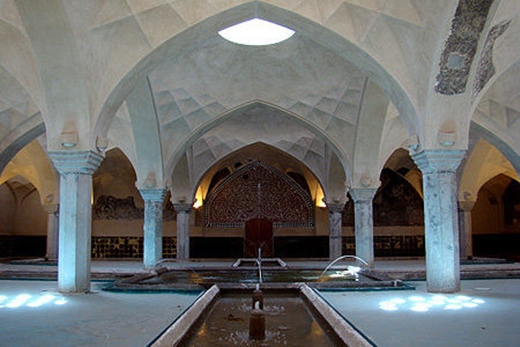
bath of Sheikh Bahai

The bath of Sheikh Bahai in which only an ever-burning candle warms water is the manifestation of architecture and the creative mind of Iranians in designing buildings. For years the unsolved mystery of the bath has preoccupied many scientists around the world.

Sheikh Bahai was one of the most outstanding scientists who lived in the Safavid period; known for his mastery of mathematics, architecture and engineering. His namesake bath is among Bahai’s most outstanding works.

[Sheikh Bahaei lived almost 400 years ago, and was a philosopher, mathematician and astronomer. He has a recognized legacy of 88 articles, letters and books along with poetry in Persian and Arabic. As the architect of Isfahan’s Imam Mosque, he demonstrated his knowledge of architecture and geometry. Sheikh Bahai also designed the Manar Jonban, the Shaking Minarets, which continue to move in Isfahan.]

The bath was open to the public up until 20 years ago. It was later registered as one of Iran’s national heritage sites back in July 1998. Mehr News Agency has filed a report on the historical bathhouse and how its heating source works. The following is the translation of part of the report:

The bath is located to the south of Nizam al-Mulk Dome (south of the Grand Mosque) in Isfahan. While the building resembles other operational baths in the Safavid period, it has been historically considered a mysterious bath; because its water gets warm without using a direct energy source. The heating system of the bath is indeed an engineering masterpiece; which has tapped into the principles of physics and chemistry.

When the repair work was under way in Sheikh Bahai’s house, clay pipes and connected wells were discovered on the floor of a building next to the house. The discovery shed light on where the energy of this candle comes from. Archeological studies also revealed that there is a connection between sewage system in Isfahan and Sheikh Bahai bath via pipes.

Production of gas from sewage – biogas* – is a project those involved in the Hygienic and Environmental Engineering take care of. The US and European countries use this method to recycle sewage water and produce fuel.

How can a candle warm an entire bath?

In recent years, an Iranian inventor from Khorasan Razavi Province has replicated Sheikh Bahai’s Bath.

Ali Asghar Berahmand,  also the head of the Association of Inventors in the province, said that the heat in Sheikh Bahai’s Bath stemmed from its water container (boiler) which is made of gold.

Gold is a perfect conductor of heat and electricity. A low amount of heat would generate vast amounts of energy, thus warming the golden boiler, he further said.

Why had Sheikh Bahai refused to uncover the secret of his bath’s heating system? According to Berahmand, he was likely concerned about the thieves wanting to steal the gold in the bathhouse if they had known about it.

Copper replaced gold in the replicated bath boiler. Home baths can also use it in order to save 30 percent in fuel consumption.

Berahmand’s invention – the unique boiler – has won two gold medals in Switzerland and Moscow in 2006 and 2007.

*Biogas is a mixture of different gases, produced by the breakdown of organic matters in absence of oxygen. It can be produced from raw materials such as agricultural waste, manure, municipal waste, plant material, sewage, green waste or food waste.

Iran nuclear deal; to sign or not to sign (PART TWO)

iran_nuclear_deal

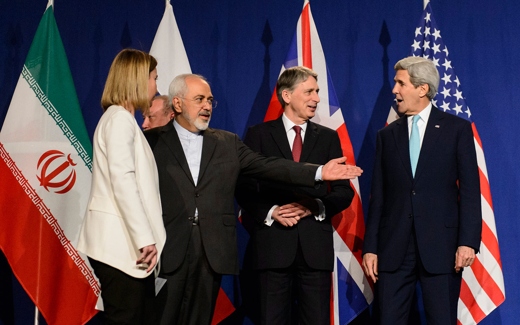
Will Iran and P5+1 ink a final deal? This question has overshadowed Iran’s domestic, foreign, economic and social policies in the past couple of years. The country is waiting to see the results of the talks before it can make crucial decisions on different fronts. With the talks entering a critical stage, some political experts are concerned that the breakdown of nuclear talks will come with dire consequences in different sectors. The concern stems from the fact that public opinion expects nothing less than settlement of the nuclear case.

Fararu on June 1 asked experts about the talks, their upshot and public expectations. The Second Part (First Part) focuses on the views of Ali Tajernia, a reformist political expert. The following is the translation of his remarks:

Downward trend of Iran’s economy and domestic policy

We need to assume that a nuclear deal is achievable. The Iranian and US governments and nations have come to the conclusion that their strained relations over the past 35-plus years have earned the two sides nothing.

They [their troubled relations] have simply served the purpose of marginal countries. Israel, for instance, has taken advantage of its close ties with the US, and countries like China and Russia have served their own interests by upgrading their economic ties in the region. Thus we need to act based on the collective will in Iran and the US and be hopeful that the nuclear deal is within reach.

If nuclear talks fail to produce the intended result, we should wait to see Iran’s economic bankruptcy slope steeply. Now we have learnt that remarks describing [a global decision on imposing] sanctions as a “worthless piece of paper” [a reference to remarks by former President Mahmoud Ahmadinejad who mocked UN Security Council sanctions against Iran as pieces of paper of no value] were inappropriate and that sanctions have affected the national economy, one way or another.

Here I do not want to tie the settlement of the country’s economic problems to [the lifting of] sanctions against Iran. We need to accept that rent-seeking has grown in the sanctions-hit economy. We have also gotten accustomed to a tight atmosphere because we think we should always remain in a state of war.

The inconclusiveness of the talks will see Iran continue the policies it has pursued over the years, albeit worse than before. The situation will go from bad to worse because the country’s social and human capabilities are depleting. Phenomena like brain drain are the result of the gap between people and government. Talks, which produce no deal, will cause Iran’s economy and domestic policies to take a downward trend.

The nuclear case should not be linked to domestic issues. There is no denying the fact that the government’s main concern is people’s pocketbook issues which are related to the nuclear case and sanctions. It is clear that government will find enough time to solve domestic problems when its main concern is removed.

The president’s recent remarks are indicative of the government’s sound strategy on and close attention to domestic policies. They also show that government pays undivided attention to domestic issues, whether a nuclear deal is cut or not.

The chance for failure of nuclear talks is low: Mousavian

Mousavian

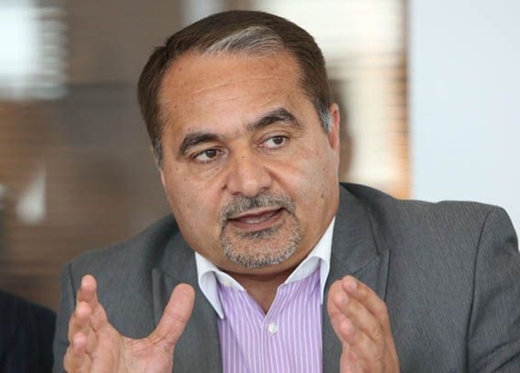
Seyed Hossein Mousavian, a former Iranian nuclear negotiator, sounds optimistic about the outcome of nuclear talks between Iran and 5+1.

“The chance for failure is low,” Mousavian, currently a research scholar at Princeton University, told the English-language Tehran Times daily. The following is the text of the interview:

Q: Iran has requested an immediate lifting of economic sanctions after a final pact with 5+1 group, however, some American diplomats have said the sanctions will be suspended six months after the final agreement. Will Iran bow down to such a proposal?

A: The issue is about the immediate lifting of economic sanctions after the signing or implementing the deal. It seems the sanction relief would be a gradual procedure proportionate to the implementation of the deal by each party. The negotiators would have to define a step-by-step plan, with a timetable and proportionate reciprocation.

Q: Can we anticipate a rapprochement between Iran and the U.S. after a final nuclear agreement now that regional developments have put Iran and the U.S. in two separate tracks?

A: The regional affairs are not necessarily in two different tracks. Iran and the U.S. are supporting the same governments in Baghdad and Afghanistan. They both oppose terrorist groups such as Al-Qaeda and ISIS. There is no doubt, however, that Tehran and Washington differ on crisis management strategies and the new regional order. They both have common interests on some issues and differences on some others. Success on the nuclear talks would set the precedence and stage for both countries to continue negotiations and possibly cooperate on regional crisis.

Q: Some analysts say with an agreement with Iran Obama wants to leave a legacy of himself and more importantly to facilitate the path for a victory of Democrats in the next presidential election. What is your opinion on that?

A: President Obama is indeed carved a different path compared to his predecessors. To the best of my knowledge, Obama is serious about bringing a close to the Iranian nuclear file and put into place measures to end 35 years of hostilities between Iran and the U.S. I believe President Obama and U.S. Secretary State John Kerry present an opportunity for détente, which may not be repeated in coming years. In case of success, Democrats will benefit in the next presidential election and Obama would leave a historical legacy resolving strained relations with Cuba & Iran, in addition to the nuclear file.

Q: If the Iran nuclear deal falls through, what other options will be left for Iran on the table?

A: The chance for failure is low. Both parties, however, will keep all options on the table.

Q: Do you think an extension of the deadline in nuclear talks is a possibility?

A: It is possible it would be extended for 1-2 months. The negotiators still have a long list of issues to hammer out by the current deadline of June 30th. Particularly pressing will be to finalize the technical annexes in a sufficient way to avoid implementation problems. It is therefore more constructive in the long run for negotiators to take the necessary time to reach a comprehensive and implementable deal.

Q: What differentiates the current Iranian nuclear negotiators from the ones on the previous team? What personality traits and work-related characteristics should the negotiators have?

A: Rouhani and Ahmadinejad have two different understanding on all economic, political, cultural and security issues. Therefore, their respective nuclear teams are also different. While Zarif and Jalili share the same objective of ensuring the national interest of Iran, they differ on the means to that end. Methodology and process is much more than just personality traits.

Q: In my interview with Foreign Minister Mohammad Javad Zarif, some days after the Lausanne framework agreement, he seemed somewhat not optimistic about the final outcome of nuclear talks. What is your prospect of the negotiations?

A: I am not pessimistic. They have achieved major progress to date and it is difficult for both parties to announce a failure. All parties involved have invested a great deal of political capital, credibility and effort to achieve a breakthrough. There is of course no guarantee that they will reach a deal, however we can be confident that both sides will do their best to fill the gaps and reach a realistic deal.

Iranian official says diplomacy only solution to Yemen crisis

Boroujerdi

A senior Iranian lawmaker has called for a political solution in Yemen as the “only way” out of the current crisis as Saudi Arabia’s deadly airstrikes continue against the impoverished Arabian Peninsula country.

Chairman of the National Security and Foreign Policy Committee of Parliament Alaeddin Boroujerdi made the comments in a meeting with Chairman of the European Parliament’s Committee on Foreign Affairs Elmar Brok in Tehran on Saturday.

The Iranian official censured the international community’s silence toward the deadly Saudi airstrikes against Yemen, which started on March 26 – without a UN mandate – to restore power to Yemen’s fugitive former President Abd Rabbu Mansour Hadi, who is a close ally of Riyadh.

Approximately 2,000 people have been killed as a result of the conflict in the Arab country since March 19, according to the World Health Organization (WHO).

“Like in Syria, the Islamic Republic believes the crisis in Yemen could only be resolved via a political solution,” Boroujerdi stated.

Touching upon the issue of terrorism in the Middle East, Boroujerdi added that all those who are committed to fighting terrorism and extremism in the world must work to contain the “ominous and dangerous phenomenon.”

Brok, for his part, stressed the necessity of collaboration in the international community to curb terrorism, saying, “All nations should take action to uproot this common and global hazard.”

Iranian rock band Piclavier raises awareness for Palestine

ruck band-palestine

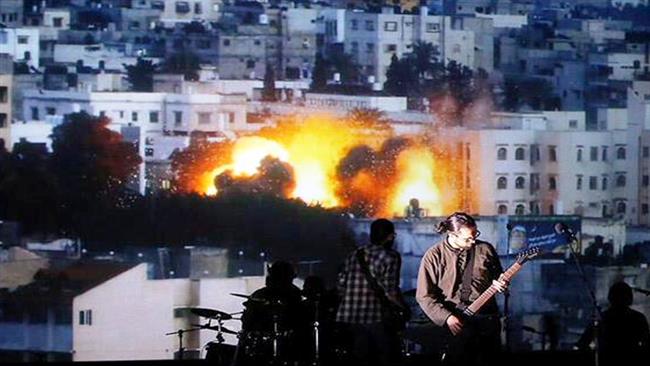
An up-and-coming Iranian rock band is using music to raise international awareness about the sufferings of Palestinians under aggression by the Israeli regime, particularly through an illegal eight-year blockade of the Gaza Strip.

The five-member rock band, Piclavier, has recently received official permission to perform its first live gig in Tehran’s Eivan Shams cultural complex, where they sang songs in protest against Tel Aviv’s violation of human rights.

“Rock has always been a kind of protest,” said the band’s front man, Mehran Mokhtarpour.

Piclavier is the most recent to have entered Iran’s alternative music scene to use its songs to challenge international double standards towards the issue of the Israeli occupation. 

“The band has great potential. The fact that they sing in English and French means we can send a message to the international community,” said concert organizer Mehdi Mirzabaqerian.  

In February, more than 700 international artists announced a cultural boycott of Israel over what they called the inhuman actions of Tel Aviv against the Palestinian people.

The boycott was part of a vast campaign — Boycott, Divestment, Sanctions — which targets Israeli products in an effort to supports rights of Palestinians whose mother land is being systematically captured by Tel Aviv.

A look at Iranian newspaper front pages on June 7

Iranian Newspapers Headlines

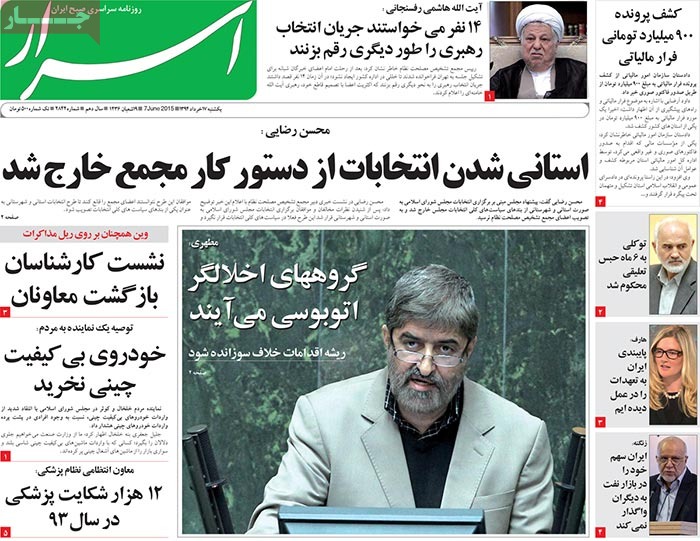
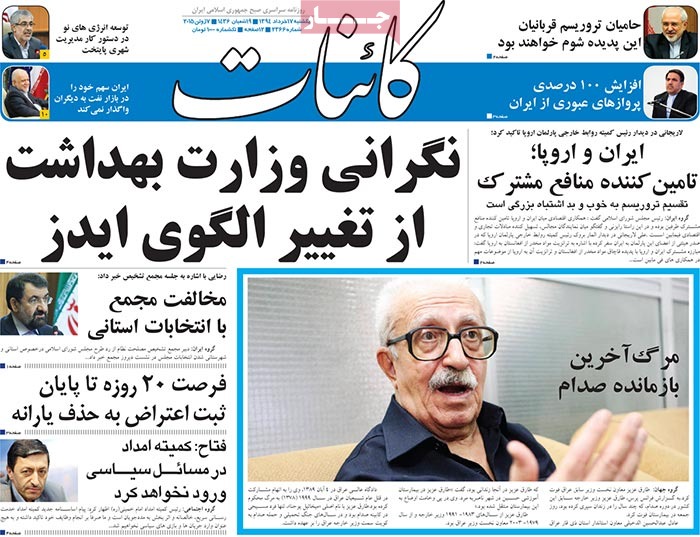
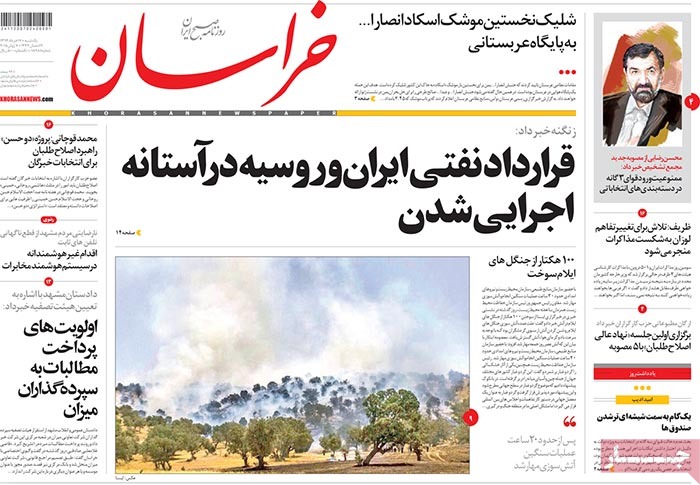
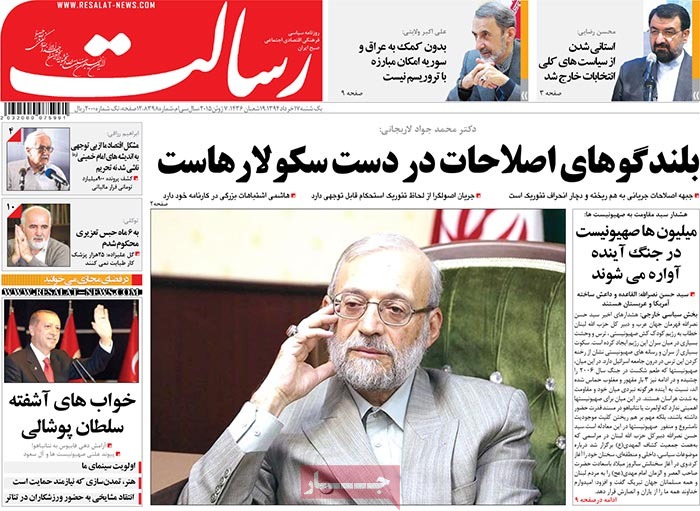
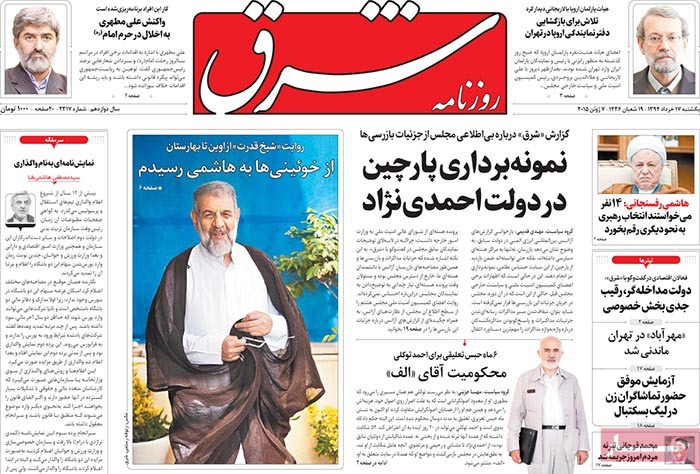
Comments by the secretary of the Expediency Council on upcoming parliamentary elections and the conviction of a Tehran MP for insulting senior officials, past and present, dominated the front pages of Iranian newspapers on Sunday.


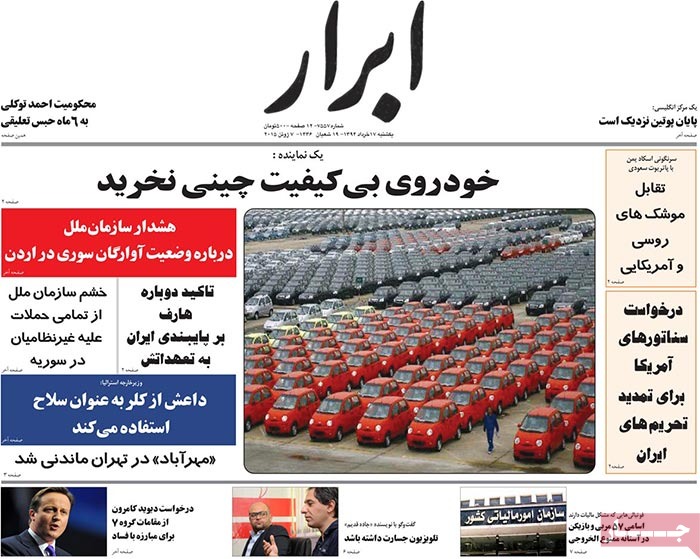
Abrar: A travel ban is to be slapped on 57 Iranian coaches and players due to tax problems.


A look at Iranian newspaper front pages on June 7


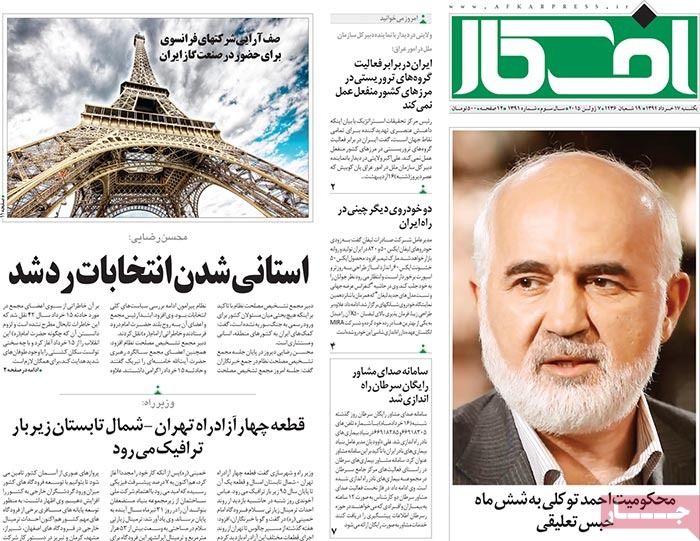
Afkar: Tehran MP Ahmad Tavakoli has been sentenced to a six-month suspended jail term [for insulting the former president and the judiciary chief.]


A look at Iranian newspaper front pages on June 7


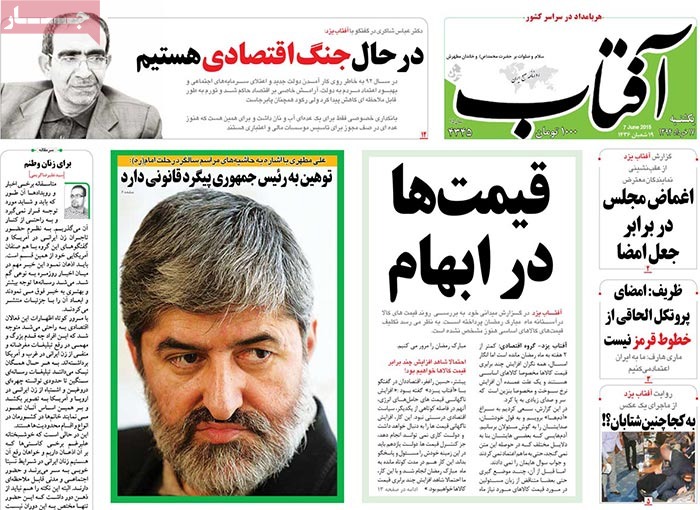
Aftab-e Yazd: “Hurling insults at the president is actionable,” said Tehran MP Ali Motahari.

[His comments came after hecklers shouted down the president as he made a speech at Imam Khomeini Mausoleum during a ceremony to mark the 26th anniversary of the demise of the founding father of the Islamic Republic.]

Aftab-e Yazd: “Signing the Additional Protocol of the NPT does not constitute a red line,” said Iranian Foreign Minister Mohammad Javad Zarif.


A look at Iranian newspaper front pages on June 7


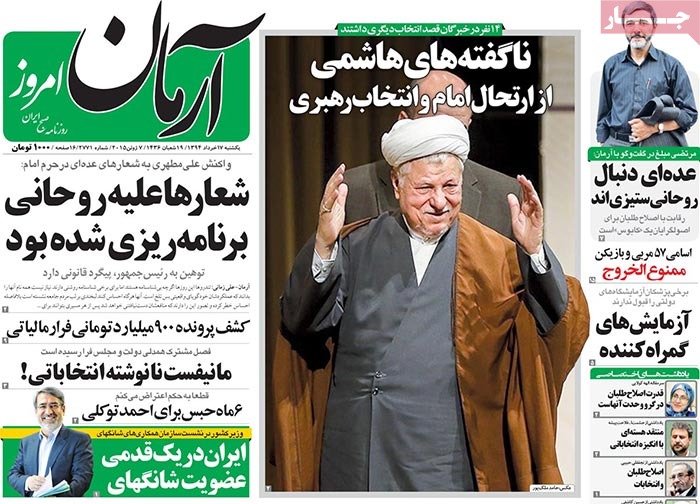
Arman-e Emrooz: Iran is one step away from becoming a [full] member of Shanghai Cooperation Organization.

The Iranian interior minister has attended a ministerial meeting of the regional grouping in Dushanbe, Tajikistan.


A look at Iranian newspaper front pages on June 7


Asrar: Authorities have uncovered a tax evasion case involving some $300 million.

Asrar: “The plan to make parliamentary elections provincial is no longer on the agenda of the Expediency Council,” said the secretary of the council.

Asrar: A member of parliament has advised the public not to purchase low-quality Chinese cars.


A look at Iranian newspaper front pages on June 7


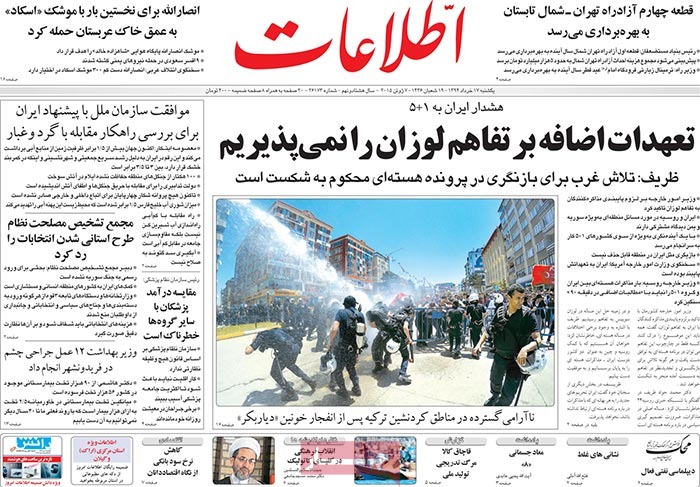
Ettela’at: Iran has warned 5+1 that it won’t accept demands that go beyond what has been envisioned in the Lausanne statement.

Ettela’at: The United Nations has accepted an Iranian proposal to explore ways of tackling dust storms.


A look at Iranian newspaper front pages on June 7


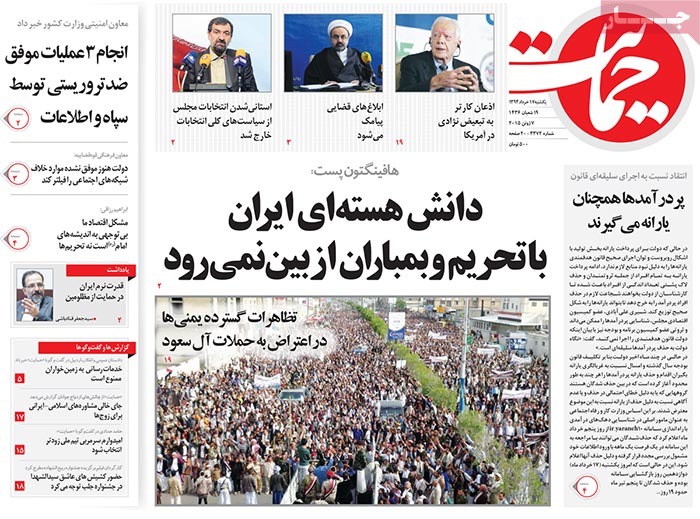
Hemayat: Iranian security forces have successfully conducted three major anti-terrorist operations.


A look at Iranian newspaper front pages on June 7


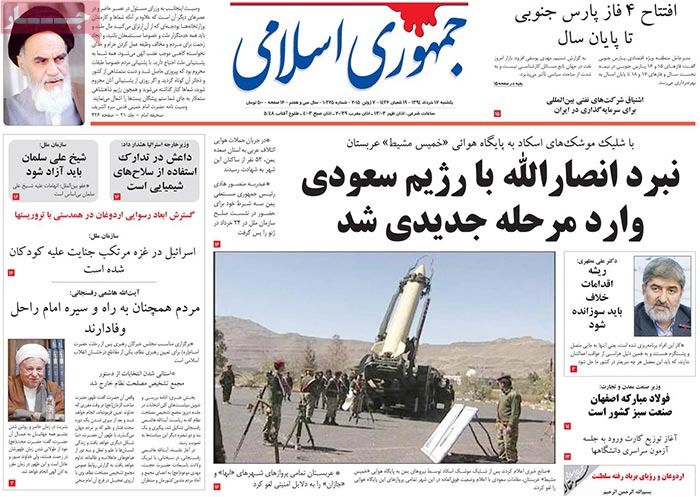
Jomhouri Islami: Four new phases of South Pars Gas Field will become operational by yearend [March 21, 2016].


A look at Iranian newspaper front pages on June 7


Kaenat: The Health Ministry is worried about a change in HIV transmission mode.


A look at Iranian newspaper front pages on June 7


Khorasan: Some 100 hectares of forests in Ilam has been burned.


A look at Iranian newspaper front pages on June 7


Resalat: “Secularists are shouting into the bullhorns of reforms,” said Mohammad Javad Larijani, the secretary of the Iranian Judiciary’s Human Rights Council.


A look at Iranian newspaper front pages on June 7


Sharq: Efforts are underway to open an EU mission in Tehran.

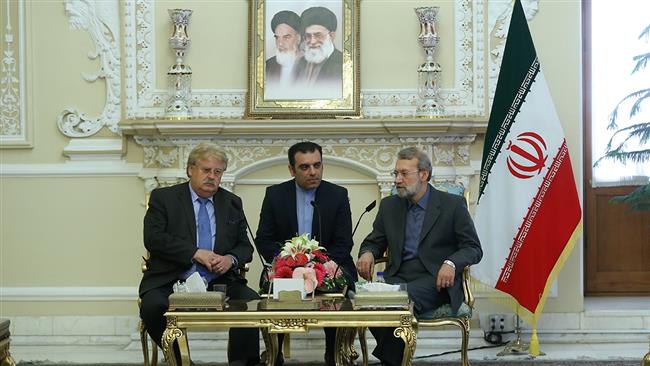
The issue was raised at a meeting between Iranian Parliament Speaker Ali Larijani and an EU parliamentary delegation in Tehran.


A look at Iranian newspaper front pages on June 7


Excessive demands kill Iran nuclear deal: Larijani

Ali Larijani-Europian

The Iranian Parliament speaker says Tehran and its negotiating partners can reach a nuclear agreement if the P5+1 group of countries makes no excessive demands in the course of drafting the text of a final deal.

A final deal can be reached if the P5+1 adopts a rational approach, abstains from making excessive demands, and avoids new issues during the talks on drafting the final text of an agreement, Ali Larijani said.

The Iranian official made the remarks in a meeting withChairman of the European Parliament’s Committee on Foreign Affairs Elmar Brok in Tehran on Saturday.

Larijani also praised economic cooperation between Iran and European countries and said such cooperation could serve the mutual interests of both sides.

He also said that consultations between the Iranian and European parliaments could facilitate the further promotion of bilateral ties.

Brok, for his part, expressed European countries’ willingness to promote trade ties with the Islamic Republic.

The European lawmaker also expressed hope that the two sides can reach a nuclear agreement by the June 30 deadline.

He also warned against the growing threat of militant groups, including ISIL terrorists, to the region, and urged all countries to join hands to confront terrorism.