Tuesday, December 23, 2025
Home Blog Page 4831

US says working to block nine Iranian jets

Mahan Air

The US government is actively working to block nine recently acquired Airbus jets which Iran plans to use on international routes, American media quoted an official as saying.

The unnamed senior administration official said the US would continue to “vigorously” enforce the sanctions it has in place on Iran, The Wall Street Journal reported.

“We have identified the planes in question and listed their tail numbers,” the Journal quoted the official as saying.

“I have been quite explicit with the Iranians that we will try to disrupt this action because Mahan Air has been a designated entity for some time,” the official said, the paper reported.

Mahan Air acquired eight used A340s and one A321 last month as part of Iran’s efforts to rebuild the country’s aging commercial fleet which has suffered a series of aviation mishaps under US and European sanctions.

The airline is under US sanctions as of Oct. 2011, with the US government saying Mahan Air’s assets were “blockable”.

On Tuesday, Press TV reported on Iran’s announcement that it would take legal action if the US tries to block the passenger jetliners on international journeys.

Head of Iran’s Civil Aviation Organization (CAO) Alireza Jahangirian said the US did not have the right to block the planes on international journeys but Iran had to prepare itself for any eventuality.

“Under international laws, it is impossible to seize the new Iranian aircraft but we have to see to what extent those laws are being implemented and which countries are trying to show their force to other states,” Jahangirian said.

The official said the first of the eight A340s and one A321 will become operational in the country’s aviation fleet in the coming weeks after receiving flight permit.

“As long as flight permits have not been issued and a disruption has not taken place, we cannot make a definite assertion. But if that happens, Iran will take a legal action,” he said.

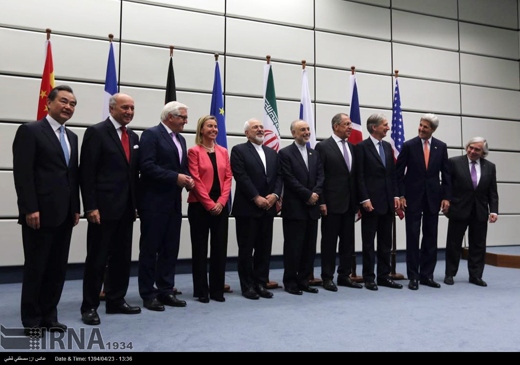
The US threat comes as nuclear negotiations with Iran are heading to the final stretch. Tehran has made it clear that it would not settle for anything short of removal of sanctions across the board if a deal were to be signed.

Can they meet the deadline? A miracle is needed.

Hamid Reza Asefi

A former Iranian Foreign Ministry spokesman says that Iran and P5+1 can – should a miracle intervene – conclude a comprehensive, final nuclear deal by the end-of-June deadline.

Hamidreza Asefi made the comment in an interview with Fararu, a news website, on June 10 and added that a US warning that time is running out is an ignorable ploy to get more concessions from Iran.

His remarks came in reaction to remarks by Tony Blinken – the US Deputy Secretary of State and the former Deputy National Security Advisor for President Barack Obama – who said at the American Jewish Committee’s Global Forum on Monday that “The June 30 deadline is fast approaching, and we [Iran and the P5+1 countries] do not yet have a comprehensive [nuclear] agreement, and there remains a chance that we won’t get one. If we don’t get what we need on a few key issues, we won’t get there.”

The following is the translation of what else Asefi, an expert in international affairs, said in the interview:

Asefi said the course the nuclear talks between Iran and P5+1 has taken shows that there is a slim chance for the two sides to reach a final agreement by June 30, adding only a miracle can help the talks end in a final, comprehensive deal in the remaining time to go before the looming deadline.

As for the reason behind such pessimism, he said conclusion of a deal is a remote possibility because on the one hand the Americans are constantly backing out and dishonoring their previous promises in the talks, and on the other they raise new subjects in every round of negotiations.

At talks which are held at this level, when parties reach common ground on certain questions, in the next round they normally pick up where they have left off in the previous round to stop the talks from dragging on, he said.

Following the Lausanne agreement, the Americans have taken a few steps back in each round and expressed fresh views on the issues about which the two sides have already reached an agreement – albeit relative – instead of beginning where they have left off in the previous round, he added.

The former Foreign Ministry spokesman further said it is quite natural for the talks to linger because of the way the Americans behave in the negotiations, and prospects for clinching a comprehensive deal according to plan are bleak.

This is the US gambit to prolong the talks and sound a note of warning about the time as the deadline approaches, he said, adding the Americans’ warning is aimed at piling pressure on the other party in order to get more concessions in the talks.

“In the preliminary round of Geneva talks which resulted in a Joint Plan of Action, the Americans did the same thing. They started the talks in the morning of November 23, 2013 and continued into the following day just to put pressures on the other side in the final moments and reach an agreement which could meet more of their demands. Luckily, the Iranian nuclear team did not fall into the US trap.

“Finally, the Americans had to ink an agreement which could meet the expectations of all sides. Like the preliminary talks, certainly this method cannot work in the final round as well.

“The Supreme Leader and members of the country’s nuclear team have said that Iran won’t be pushed by deadlines to strike a comprehensive deal – also repeated by Mr. Takht-e Ravanchi in a meeting with Chairman of the European Parliament’s Committee on Foreign Affairs Elmar Brok – and won’t decide [on the nuclear issue] by the deadline at the expense of quality. What matters for Iran is to reach a good agreement. This is a wise and sound stance.

“It won’t be a big deal if the two sides fail to reach a deal by July first and the deadline is extended to August 1, for instance, because what is important is the conclusion of a good deal. Here Iran is not to blame because the Americans are the ones who make the talks drag past deadline.

“By now, the Americans have postponed the implementation of the nuclear deal at least 45 days by involving Congress in the review process of the comprehensive, final deal.

“Because the Americans have prolonged the talks by allowing the US Congress to review the final deal, they cannot put on a self-righteous face asking why the talks do not produce the intended result in the scheduled time. They have no right to complain about Iran’s close attention to and insistence on reaching a good deal.”

Asefi then touched upon failure to meet the deadline and whether it marks the end or breakdown of the talks and said although everything could possibly happen in politics and international relations, the two sides are unlikely to officially announce the inconclusiveness of the talks.

The former spokesman concluded that missing the deadline does not translate into the collapse of the negotiations, saying the parties to the talks would think about other options – the closest and most accessible option is the extension of the talks – and would try to press ahead with the talks until they work out a solution and reach common ground.

Naqsh-e Rustam

Naqsh-e Rustam

Naqsh-e Rustam is an ancient site 6 km to the northwest of Persepolis in the southern Iranian province of Fars.

The oldest relief at Naqsh-e Rustam, which represents Iranian arts, culture and history, dates to back to 1200 BC.

The following are images of the historical site released by the Cultural Heritage News Agency:

Iran regrets fatal incident involving Saudi pilgrims

Afkham

Foreign Ministry Spokeswoman Marzieh Afkham said Iran is sorry about what happened to a number of Saudi pilgrims in the holy city of Mashhad.

Talking in her weekly press briefing, she further expressed sympathy with the families of the four pilgrims who lost their lives as a result of poisoning.

She noted that officials have been working on the case in earnest to discover the cause of the incident.

According to the spokeswoman, a number of people have been arrested in this connection.

Four Saudi citizens died from poisoning in a hospital in Mashhad, in the northeastern Iranian province of Khorasan Razavi.

The incident on Sunday sent 33 Saudi pilgrims to the hospital with poisoning symptoms.

Four Saudi children lost their lives despite extensive treatment by Iranian medical staff.

[…]
On a short visit by Iranian Foreign Minister Mohammad Javad Zarif to Oman, Afkham said the visit took place to discuss a number of regional issues with Omani officials including the Yemen crisis.

She said the trip was short and compact but fruitful.

Iran warns Saudi Arabia against targeting areas near Iranian embassy

Ali Khoshrou

Iran has warned of “serious consequences” in case of more Saudi airstrikes close to the Islamic Republic’s diplomatic mission in the Yemeni capital Sana’a.

In a letter to the United Nations Security Council on Tuesday, Iran’s Ambassador to the UN Gholamali Khoshroo said Saudi air raids have twice hit areas close to the Iranian embassy in Sana’a over the past two months.

The diplomatic mission’s compound in Sana’a suffered severe damage during the bombings on May 25 which was followed a similar attack on April 20.

“I would like to warn that a repetition of similar airstrikes close to my country’s diplomatic representation in the future can have serious consequences, including for the safety and security of Iranian diplomats in Sana’a,” Khoshroo said in his letter to the council.

The Iranian envoy urged the Security Council to urgently address the issue of the Saudi military campaign against Yemen that began without a UN mandate on March 26.

[…]

Iran needs to get ready for the post-sanctions era

Nayyereh Pirouzbakht

The head of the Iranian National Standard Organization (INSO) has said that Iran has to do more to compensate for its past failures in order to be an active player on international markets.

Nayyereh Pirouzbakht made the remark in a ceremony Monday marking World Accreditation Day and added that the way has been paved for Iran to make it back onto the international stage, but we need to launch new efforts to make up for the past underdevelopment once the sanctions are removed.

Mardomsalari newspaper on June 9 published a report on Pirouzbakht’s remarks in the ceremony which was also attended by the head of the Environment Protection Organization. The following is the translation of part of that report:

[…]

The INSO chief said the standards Iran has set inside the country are below the international standards, adding that a post-sanctions Iran should look beyond its national borders so that it can make its presence felt in international arenas by taking tactful measures.

She said accreditation [the process in which certification of competency, authority, or credibility is presented] is needed if a country seeks to go international, adding such concepts should be institutionalized in the country before we can convince the international community that Iran is not inattentive to such concepts.

We can do business and render services on a level playing field based on one principle: any product or service – which has been officially recognized in a country or economic zone – can be accepted and circulated in other countries and economic zones without undergoing further tests and inspections and getting further certificates, she added.

The International Organization for Standardization (ISO) selected “One standard, one test – Accepted everywhere” as its slogan in 2002 to achieve the same objective, Pirouzbakht said.

[…]

For several years countries across the globe have celebrated World Accreditation Day, but this year is the first year Iran marks the occasion, she also said, adding many economic players and beneficiaries in Iran may be still unfamiliar with the concept of accreditation.

She went on to say that if we fail to introduce and popularize this concept, part of our efforts to get into global markets will take a direct hit. Trade, which is currently regulated in untraditional ways, should be in line with new concepts so that Iran can get ready to break into the complex world of trade, she stressed.

[…]

June 9 marks World Accreditation Day as a global initiative, jointly established by the International Accreditation Forum (IAF) and the International Laboratory Accreditation Cooperation (ILAC), to raise awareness of the importance of accreditation. This year’s theme focuses on how accreditation can support the delivery of health and social care.

Iran in Photos: Jashak Salt Dome

Iran Nature

Jashak Salt Dome is part of the Zagros Mountains in the southwestern Iranian province of Bushehr.

This dome, which is among the most beautiful natural domes in the country and the wider Middle East, was registered as a national site in 2007.

The following images of the salt dome have been released by the Iranian Labor News Agency:

Tehran to host largest handicrafts event

Handicrafts

Tehran will host a weeklong international handicrafts fair later in June to mark World Handicrafts Day (June 20).

Talking to the Tehran-based English newspaper ‘Iran Daily’, Pouya Mahmoudian, the director general of Handicrafts’ Export Office at Iran’s Cultural Heritage, Handicrafts and Tourism Organization, said that the first specialized meeting of Western Asia Crafts’ Council would be held on June 20 with the participation of Lebanon, Turkey, Iraq and Algeria.

“The seven-day event will showcase crafts produced by domestic and foreign artisans in 405 pavilions,” she said, adding that foreign producers would display and sell their products in 10 pavilions.

Mahmoudian said the ‘Plaque of National Confidence in Handicrafts’ would be unveiled during the expo. It will be awarded to high quality handicrafts’ exhibitions, she added.

The official said in spite of Western sanctions, the export of crafts showed a 36-percent increase during the year to March 2015, compared to the corresponding figure of previous year.

She added the sanctions have affected non-oil exports, as they create obstacles in the way of transferring cash and commodities.

Mahmoudian noted that a greater volume of handicrafts is thought to have been exported during the time, since there is only access to official statistics released by Iran’s Customs Administration.

“There is no exact statistics on personal export (luggage export) of crafts”.

On the other hand, the value and volume of jewelry export has not been officially announced for two years for security reason.

The official named woodworks, pottery, ceramics, traditional glassware, copper-made crafts, precious and semi-precious stones, kilim (flat tapestry carpet), carpet, miniature and tazhib (illumination) as main export items.

“The highest volume of items was exported to Germany, which was followed by Brazil, South Africa and Australia,” she said, adding Iranian crafts are exported to all continents.

He referred to Iraq, Georgia, Turkey, the Netherlands, Afghanistan, Pakistan, Turkmenistan, Romania, Ukraine, Russia, Tajikistan, Italy, Kuwait, Kazakhstan, Japan, Qatar and Denmark as the main importers of Iranian crafts.

Senior Iran negotiator outlines Switzerland nuclear deal points

Baidi Nejad

A senior member of Iran’s nuclear negotiating team has outlined the general points of a mutual understanding that Iran and the P5+1 group of countries reached in the Swiss city of Lausanne in April over Tehran’s nuclear program.

In a message posted on his Instagram account on Tuesday, Hamid Baeidinejad, who also serves as the director general for political affairs at the Iranian Foreign Ministry, enumerated 34 points about the Lausanne agreement.

He said the framework agreement has stabilized Iran’s regional and international position, improved the country’s relations with other countries, and led to the failure of an Iranophobia campaign.

It also recognized Iran’s right to enrichment and exploitation of uranium deposits while continuing activities, such as changing yellowcake to enriched materials at Isfahan’s nuclear facilities, he said.

According to the Lausanne understanding, Iran has the right to continue all activities related to nuclear fuel production at Isfahan facilities, carry out enrichment work at the Natanz and Fordo nuclear facilities, and complete the construction of the Arak heavy-water reactor, the Iranian negotiator said.

He noted that Iran has also the right to proceed with its enrichment research and development plan and build new advanced centrifuges.

Baeidinejad said the mutual understanding urged the West not to impose new sanctions on Iran which “helped to stabilize the country’s economic” situation.

He noted that the framework agreement lifted the ban on the export of petrochemicals from Iran which led to a considerable hike in the export of such products to the European markets.

It urged the US and the West to stop political and economic pressure on countries that import oil from Iran so that they can maintain purchasing one million barrels of oil per day from the Islamic Republic, he added.

The senior negotiator said the agreement prepared the ground for the gradual return of oil export revenues, and released nearly 10 billion dollars of Iran’s blocked assets.

The agreement removed the ban on the purchase of gold and precious metals and the import of auto spare parts to Iran, he further added.

It set the ground for Iran to purchase basic commodities and medicine via Japan and Switzerland without paying cash and through the transfer of its blocked assets in foreign banks, the Iranian official said.

Baeidinejad said that the agreement led to the opening of the accounts of Iranian banks in Europe, which had not been targeted by sanctions, and the transfer of money from the Central Bank of Iran to those banks.

A look at Iranian newspaper front pages on June 10

Iranian Newspapers Headlines

The comments in parliament of the minister of culture and Islamic guidance in defense of the freedom of speech dominated the front pages of many Iranian dailies on Wednesday.


Abrar: A member of the Presiding Board of the Islamic Consultative Assembly has said that the education minister’s impeachment hearing will be held next Wednesday.


A look at Iranian newspaper front pages on June 10


Afarinesh: Mahmoud Nili Ahmadabadi has been appointed by the science minister as chancellor of Tehran University.

[Dr. Nili Ahmadabadi was once President Rouhani’s pick for the minister of science, research and technology, but the Islamic Consultative Assembly would not confirm him.]


A look at Iranian newspaper front pages on June 10


Arman-e Emrooz: [Minister of Culture and Islamic Guidance Ali] Jannati was booked for a second time.

The culture chief, who was in parliament to answer the questions of MPs about the performance of his ministry, fervently supported the freedom of speech and offered blunt answers to the questions of Mir-Kazemi, an MP.


A look at Iranian newspaper front pages on June 10


Asrar: The boat carrying the director of the Environment Protection Organization and her colleagues capsized as they were on an inspection tour of Hour-al-Azim Lagoon.

Asrar: Keyhan Kalhor, a famous kamancheh player and composer, won’t go on stage in Iran anymore.

The announcement by the master of classical Kurdish and Persian music came after his concert was called off by the police.


A look at Iranian newspaper front pages on June 10


Etemad: “For now, I can’t talk about the charges [Hamid] Baghaei is facing,” said the government spokesman.

His comments came a day after Baghaei, who served as vice-president under Ahmadinejad, was arrested.


A look at Iranian newspaper front pages on June 10


Ettela’at: A dust storm in Sistan and Baluchestan Province sent 600 residents to hospital emergency rooms.

Ettela’at: “We have presented to the judiciary evidence on the offenses the previous government committed,” said the government spokesman.

Ettela’at: The minister of science has named the new presidents of 21 universities across the country.


A look at Iranian newspaper front pages on June 10


Kaenat: Reports that the President of the Kurdistan Region of Iraq has passed away have been denied.

Kaenat: Those behind the destruction of historical houses in Shiraz will be prosecuted.


A look at Iranian newspaper front pages on June 10


Kayhan: Matchmaking websites have no official permission for their activities, a senior police official said.


A look at Iranian newspaper front pages on June 10


Mardomsalari: Police have arrested 108 thieves in the capital.

Mardomsalari: “Although our Constitution has recognized freedom of expression for the media, some are saying we [at the culture ministry] are giving too much freedom to the press,” said the minister of culture and Islamic Guidance in parliament.


A look at Iranian newspaper front pages on June 10