Thursday, December 25, 2025
Home Blog Page 4825

Iran urges dialogue to resolve Yemen crisis

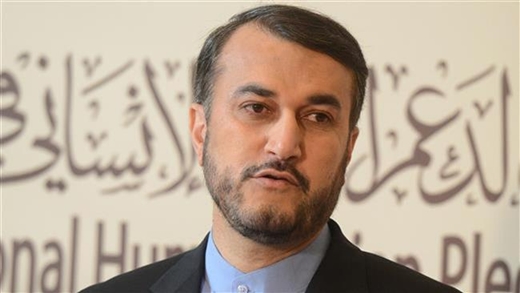
amir-abdolahian

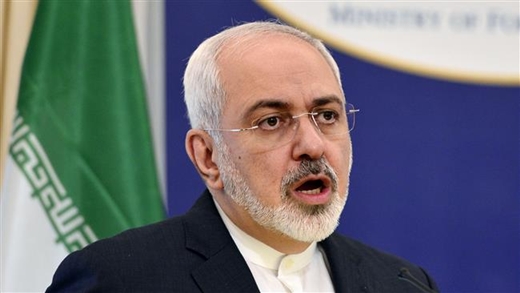
A senior Iranian diplomat says the ongoing crisis in Yemen can be resolved solely through political means.

Hossein Amir-Abdollahian, the Iranian deputy foreign minister for Arab and African affairs, made the remarks during a telephone conversation with Ismail Ould Cheikh Ahmed, the United Nations special envoy to Yemen, on Monday.

“The Islamic Republic of Iran supports the efforts of the United Nations to dispatch humanitarian aid and organize real negotiations between Yemeni groups and parties, and believes that the crisis in Yemen can be resolved solely through political means and dialogue,”Amir-Abdollahian stated.

Yemen’s peace talks, mediated by the UN, started in the Swiss city of Geneva on June 15 and wrapped up on Friday. After the talks,Yemen’s Ansarullah movement lashed out at the Saudi regime for derailing the talks aimed at ending the deadly conflict in the impoverished Arab country.

“Although the UN at this phase of the negotiations did not succeed in establishing a ceasefire, it was expected that serious and urgent measures would be taken to establish green zones and earmark some sea- and air-ports to accelerate the operation of dispatching humanitarian aid” to the Yemeni people, the Iranian official said.

He also stressed Iran’s readiness to send humanitarian aid to the Arab country in coordination with the UN.

The UN envoy, for his part, said that there was a deep gap between the Yemeni groups attending the talks in Geneva, underscoring the continuation of negotiations between the Yemeni parties.

Cheikh Ahmed also thanked the Islamic Republic of Iran for dispatching humanitarian aid for the Yemeni people.

Riyadh has been bombarding areas across Yemen since March 26 without a UN mandate and with the aim of undermining the Houthi Ansarullah movement as well as restoring to power the fugitive former president, Abd Rabbuh Mansour Hadi, who is a staunch ally of the Al Saud regime.

The United Nations says over 2,600 Yemeni people have been killed and at least 11,000 others injured during Saudi Arabia’s airstrikes against Yemen.

Intense days ahead as Iran nuclear deadline draws closer: Zarif

zarif4

The Iranian foreign minister says Iran-P5+1 talks on Tehran’s nuclear program are entering very intensive days, saying political will remains the key to reaching a final agreement by the self-imposed June 30 deadline.

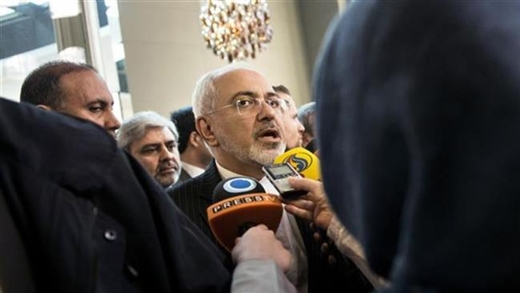
“We discussed how we can expedite the discussions in Vienna for the next few difficult days that we have ahead of us. We agreed to continue the drafting … Its going to be a very intense few days …,” Mohammad Javad Zarif said on Monday after a meeting with his British counterpart Philip Hammond in Luxembourg.

Zarif further reiterated that the talks on Tehran’s nuclear program may continue “a few days” after the deadline, saying however, that the two sides have shown the needed political commitment, which he said, is the most important precondition for reaching the agreement.

“I don’t know how many days it will take to finish this… there is a political will to accept the realities,” said Zarif, adding, “There is a good possibility that we can finish this by the deadline or a few days after the deadline.”

The British foreign minister also described the short remaining period as very tough, saying the two sides are intensively working to reach a deal by June 30.

“We all agreed that we need to work towards the June 30 deadline next week and we’re going to pull all the stocks out,” said Hammond, stressing that there remains no insoluble problem at the discussions between Iran and international powers.

The British top diplomat also called on the Iranian side to show more flexibility in the days remaining to the potential deal, saying that the global powers will never compromise on what he described as the “absolute red lines.”

Answering a question on the controversial issue of enhanced regime of inspections, Hammond said that the implementation of the final deal should be verifiable. However, he stopped short of directly saying that inspections of Iran’s military sites have to be part of the final deal.

“We understand the sensitivity around some of these issues and we are working hard to find ways to address the concerns that Iran has expressed, but [we] still maintain our red lines about full verification,” he said.

Zarif had earlier on Monday also met with his French and German counterparts, Laurent Fabius and Frank-Walter Steinmeier, in Luxembourg.

Minister hold negotiations with passenger plane manufacturer

plane

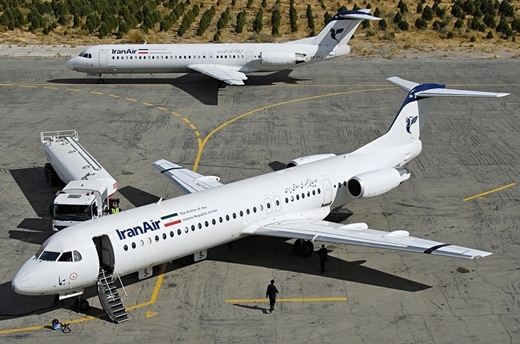
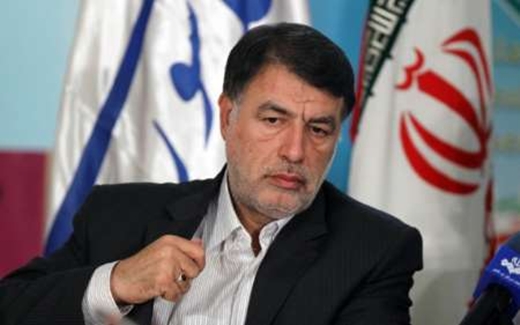
Minister of roads and urban development said on Monday during his recent visit to France he held talks with top aviation industrialists.

Abbas Akhundi made the remarks on the sidelines of a ceremony to launch the construction of a highway.

He said that due to sanctions during the past decades Iran has just managed to buy second-hand planes, noting the renovation of the national air fleet is an absolute necessity.

The minister said that in Paris Air Show the Iranian officials for the first time held talks with world aviation industrialist and manufacturers of small planes for domestic flights, as well as mid-range and long-range planes.

‘All the aviation industrialists and plane parts manufacturers enthusiastically welcomed negotiations and arrangements made for the deals so that in parallel with progress at Iran- G5+1 diplomatic talks new plane purchases will be finalized,’ he added.

Akhundi said that Western companies’ comprehensive data on the status of the Iranian markets shows that they are well aware of the Iranian market’s potential and that the French private sector welcomed expansion of economic ties.

Twenty reasons why Iran does not trust the US

Mousavian-Hossein

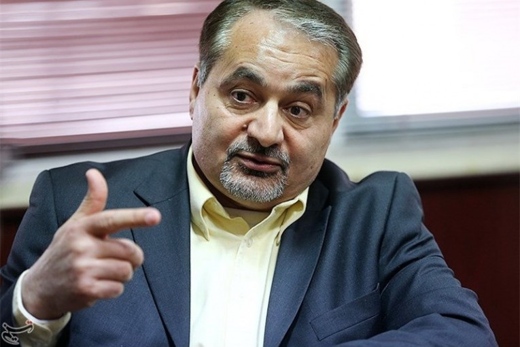
A former Iranian nuclear negotiator says that the United States is the number-one threat to Iran’s national security.

Hossein Mousavian has made the comment in a 40-minute speech at the United States Army War College (USAWC) on ties between Iran and the US and set out 20 reasons why Tehran cannot trust Washington. Alef.ir on June 22 published a report on his remarks at the USAWC and the reactions he drew from American servicemen.

As many as 380 senior US Army, Navy and Air Force colonels – bound for the rank of general in two years – were on hand for the event which was followed by a 50-minute Q and A. A three-minute ovation marked the end of Mousavian’s remarks, with the event’s manager saying such an unprecedented applause shows the ranking US officers were satisfied with the speech and Mousavian’s answers to their questions.

The following is the translation of his remarks and the 20 reasons for Iran’s mistrust in the US:

1. The US and Britain opposed the nationalization of Iran’s oil industry in the early 1950s and passed a resolution at the UN Security Council describing the nationalization of Iran’s oil as a threat to international security and peace. They also imposed economic sanctions on Iran because of the nationalization of its oil industry. A similar policy was adopted by the US and its Western allies vis-à-vis the nationalization of Iran’s nuclear industry.

2. The US and Britain staged a coup against the elected national government of Mohammad Mosadegh in 1953 and stifled democracy in Iran for 25 years.

3. The US and its Western allies supported the corrupt and dictatorial government of the Shah in Iran for 25 years. Iran’s Islamic Revolution was in fact a reaction to this US policy.

4. Since the victory of the Islamic Revolution in Iran in 1979, the US administrations were seeking a “regime change” in Iran. Only the Obama administration has rethought this policy [of regime change].

5. After the 1979 Islamic Revolution, the US and its Western allies left billions of dollars in industrial projects unfinished, whereas contractually they had to finish the projects for which they had received money.

6. In 1980, Saddam invaded Iran to partition the country. The US together with Eastern and Western powers supported the invader whose aggression claimed 300,000 lives, left one million wounded, displaced two million people and cost Iran $1,000 billion in losses.

7. During the Iran-Iraq war, the US and its Western allies provided Saddam’s Iraq with technology and ingredients needed to develop chemical weapons. Saddam used chemical weapons against Iran and left around 100,000 casualties in Iran.

8. During the Iraqi-imposed war against Iran, the US bombed Iran’s oil facilities launching its biggest naval operation after the Second World War against Iran.

9. During the Iraqi invasion of Iran, the US shot down an Iranian passenger plane over the Persian Gulf, killing 290 people, including 66 children.

10. During the presidency of Hashemi Rafsanjani, Iran accepted an offer of “goodwill begets goodwill” by George Bush 41 to facilitate the release of Western hostages in Lebanon, but after the release of hostages, the US ratcheted up sanctions and pressures instead.

11. When [Mohammad] Khatami was president, Iran cooperated with the US Army to topple Al-Qaeda and the Taliban [in Afghanistan], but in response, President Bush 43 branded Iran as [part of] “an axis of evil”.

12. Even when President Ahmadinejad was in office, Iran displayed goodwill to solve the issues it had with the US. I just mention the measures Iran took in 2011 under Ahmadinejad:

A. A deputy Iranian foreign minister invited US Special Representative to Afghanistan [and Pakistan] Marc Grossman for an official visit to Iran for talks on [bilateral] cooperation in Afghanistan, but Washington turned down the invitation.

B. Iran backed the Russian-proposed step-by-step nuclear plan, but the US failed to accept that. The framework of the Russian plan is the basis of the current nuclear agreement.

C. Iran presented a “five-year full inspection” proposal to the International Atomic Energy Agency, and the US rejected it.

D. Iran released the American hikers.

E. Iran proposed to stop 20-percent enrichment and reduce it to five percent in return for receiving [nuclear] fuel for Tehran Reactor, but the US did not accept the offer.

Despite Iran’s unprecedented measures in good faith, the US and its Western allies heightened the sanctions and released resolutions against Iran in the UN Security Council on terrorism and human rights.

13. From the beginning of the revolution, the US has defied Iran’s natural position and its legitimate interests in the region.

14. The US has militarized the region by sending unprecedented shipments of weapons to Arab nations, but has imposed a blanket weapons ban on Iran.

15. The US has had a military presence along all Iranian borders.

16. The US has lent unwavering support to Israel causing the legitimate rights of Palestinians to be trampled. Israel easily violates international rules and regulations thanks to the blank check it has been given by the US.

17. The US that claims to be a supporter of democracy and human rights has only supported dictatorial regimes in the Middle East over the past decades, from [Iran’s] shah, bin Ali [in Tunisia] and Mubarak [in Egypt] to the current unjust Arab regimes.

18. Washington has pursued double-standards. For instance, it has established strategic ties with India, Pakistan and Israel which have not signed the NPT and have all developed nuclear bombs. However, the US has imposed sanctions on an Iran which has inked the NPT and has no atomic bombs, with no sign of any diversion in its atomic program.

19. The US backs terrorist groups, both those which are opposed to Bashar Assad in Syria and those against the Islamic Republic, including Jundallah [also known as People’s Resistance Movement of Iran (PRMI)] or MKO which has killed 17,000 Iranians after the revolution and has an office near the US Congress.

20. From the beginning of the revolution, the US has showed objection to Iran’s legitimate nuclear rights. Iran suffered billions of dollars in losses. The US charged Iran for the Tehran Reactor, but it made no refunds, nor did it provide Iran with the reactor. Washington exerted pressures on Germany and France to renege on their commitments.

Iran had paid Germany around 8 billion marks for Bushehr [Nuclear Power Plant] project which was 90 percent complete. Iran had paid France $1.2 billion for joint fuel production on French soil. When Iran acquired the enrichment technology to supply fuel [for its reactor], the US and Israel started to defy Iran’s legitimate rights by launching cyber warfare and assassinating the country’s nuclear scientists.

All these measures were taken as the US intelligence community confirmed in 2007 and 2011 that Iran does not possess a nuclear bomb, nor does it have any intention of developing one. These hostile US policies are the reason behind Iran’s mistrust in the US during the ongoing nuclear talks.

In the Q and A that followed his speech, a US army officer said that he found the speech useful. What measures has the Iranian government taken to clarify the issue for the US public opinion, he asked. In response, Mousavian said,” Unfortunately, none of the governments that have risen to power after the Islamic Revolution have done anything remarkable in this regard. They have all been neglectful of this.”

When diplomacy serves the cause of development (PART TWO)

Mohammad Javad Zarif

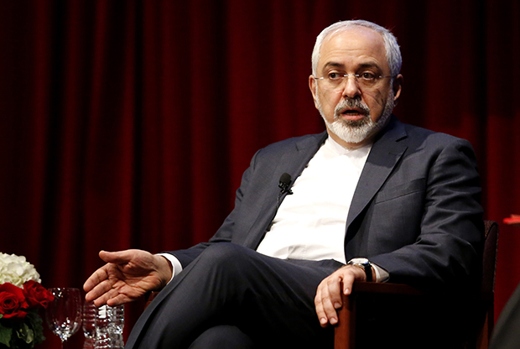
Iran’s foreign minister says nuclear talks are very much likely to continue past the end-of-June deadline. Mohammad Javad Zarif made the comment in an interview with Donyay-e Eghtesad’s Ehsan Abtahi and Hadi Khosro-Shahin on June 18.

In the interview the top diplomat said an ideals-based foreign policy does not run counter to a foreign policy of which national interests are the cornerstone. He added what makes a country successful on the international stage is its ability to render its ideals into international norms.

“Diplomacy is the art of advancing a country’s interests at the lowest cost. Foreign policy should serve the cause of development, rather than being a burden on a country’s development drive,” he said. The following is PART TWO  of the translation of the interview:


I know you are well versed in international relations and I do not want to deny the fact that any country has its own ideals, but the point is the proportionality of national possibilities and international problems. We need to assess and sort out the priorities in a way that these two are kept in proportion. How do you think the current situation would have been different if we had given top priority to economy in order to defend our regional power?  

We need to consider where we have faced challenges, on the nuclear front or in areas where certain slogans which were not necessary to be shouted were shouted. I do not intend to criticize others. As [Renowned Iranian poet] Hafez has put it “We do not accuse, we do not backbite! We do not divide – all in black and white! We do not stain others’ fame and name. Yet, of holiness, we have no claim! No doubt, the pressures which were piled on our country were not necessarily because of our efforts to pursue an independent policy.


So what was the reason?

It had multiple reasons. Imprudent measures at home were mainly to blame. A country that seeks to stand up to global policies does not rely on imports. The imprudence was the result of failure to predict the future.


Along with the middle- and low-income classes [of society] the government stresses have been hit by the sanctions, the private sector – which plays a role in producing national wealth – is pursuing the talks [eagerly] waiting for their results, but the uncertainty [about the future of the talks] have caused them not to tap into their potential. Can the July 1 deadline by which a comprehensive nuclear deal is expected to be clinched be the point where Iran’s economy can step out of uncertainty? Can it be a sign that a policymaker intends to change course when it comes to diplomacy?

The president has stressed that sanctions have left a negative impact on people’s lives and there is no doubt about it. But sanctions have failed to achieve their intended results. I have said it several times in interviews. We have even produced and uploaded a small video on YouTube saying that sanctions have caused the number of Iran’s centrifuges to rise to 20,000 from a previous 200. Barack Obama too admitted this.

To answer this question, I should say that if you speak in the language of logic and wisdom, you can be effective. There is no need to talk in a language which provides strangers with excuses; rather, you can speak in a way that the strangers cite what you’ve said. The US president has admitted that sanctions have not worked because when they were first imposed, Iran had 200 centrifuges, but today we own 20,000. He has also said that the US should look for another way to deal with Iran’s nuclear program.

This line of reasoning is very important. That means sanctions have had a negative impact on people’s lives, but they have failed to affect our policies. If we are sitting at the negotiating table today, it is because we want to break the deadlock the world has reached [over Iran’s nuclear program]. When were the efforts launched to break the deadlock? [They all began] when our nation showed – in the elections – to the world that sanctions would not help the world gain its intended goal. The objective of sanctions is not to impose pressures [on the country], they aim to separate people from the establishment.

I presented my Master’s thesis on sanctions in 1982 and wrote my PhD thesis on aggression and defense. The thesis had described imposition of economic pressure as the objective of sanctions to separate people from the establishment. In other words, sanctions are a success when people are detached from the establishment and they [the sanctions] prove a failure when people do not break ranks with the establishment.

The 2013 elections were important since they marked the time when the sanctions regime started to crumble. The ballyhoo they [some inside and outside the country] made and the negative propaganda they spread as well as what had taken place [before the elections] were followed by the Supreme Leader’s call on people to turn out and vote. As much as 73 percent of people went to the polls and made a political epic [in 2013], an epic which could break the spell of sanctions.

Seventy-three percent of people remained on the scene, cast their ballots and conveyed this message to the world that they accept domestic mechanisms and trust the establishment. This is how the 2013 elections helped launch nuclear talks.

As I already mentioned, foreign policy should not slap costs on people; rather, it should minimize their costs. As the official in charge of the country’s foreign policy, my responsibility is to help such a policy reduce the costs. Before I was about to go to the Islamic Consultative Assembly [for my confirmation hearing] I said that foreign policy should slash the costs people incur. Efforts to “minimize the costs” should not make them assume that “sanctions” have caused us to adopt such a policy.

As for the nuclear case, I should say that we have always sat at the negotiating table. I may not approve of the way the talks were conducted over the past years, but the 2013 elections and people’s message that they would not separate from the establishment marked the beginning of an era in which the world accepted that it should enter talks with Iran based on wisdom, logic and common interests.

[Back then] people showed that they do not let go of [their] national interests and revolution. We pursued the logical and reasonable way of “mutual understanding” and now we have reached a point where a settlement seems to be within reach. Of course, pressures are mounting, but it is possible to reach a settlement.

You may have read the articles written in the US; [for instance] a letter sent by Bob Corker, the Chairman of the Senate Committee on Foreign Relations, to Barack Obama shows that they [the Americans] are seeking to demand more than what has been agreed on.

Now we are going through a sensitive stage in nuclear talks and we know that economic players do need assurances. Coincidentally, what we pursue most in the talks are two types of assurances: one about Iran’s nuclear program and the other about the removal of sanctions. Currently, the talks mostly focus on giving assurances about lifting the sanctions so that economic players can confidently take steps once the sanctions are removed. Thank God, we have managed to take key positive steps in this regard, but we need to do more.


Fortunately, Western officials, both American and non-American, have made comments in recent days saying that [for Iran and P5+1] to reach an agreement there is no need for all [outstanding] issues between Iran and the IAEA to be settled. Such comments have sent a positive signal to the Iranian economy, can they [the remarks] also mean that a solution has been worked out for the Possible Military Dimensions (PMD) and the other party is now ready to solve the issue which is more political [than technical]? 

From the very beginning we had said that such allegations are baseless and that Iran’s nuclear program is geared toward peaceful purposes. But we said we can help provide answers to these questions within the framework of international rules, in line with security concerns, and in a way that guards [our] national secrets. I think if the other side deals with this question realistically, it would not be tough to surmount it [such an obstacle]. We should wait and see how realistic these remarks [by Western officials] are and how such remarks will affect the talks.


Based on your guidelines, should the question of PMD be solved within the framework of a comprehensive deal? Or will you push it back? 

We believe that there is no such thing as PMD, because Iran’s nuclear program has never had military aspects whatsoever. We have been cooperating with the [UN nuclear] agency and will continue to cooperate so that we can remove any ambiguities generated surrounding the nuclear case by misinformation. Let us determine the way the question is to be solved at the negotiating table.

Parliamentary act won’t have an impact on talks: Tehran MP

20150621133335262

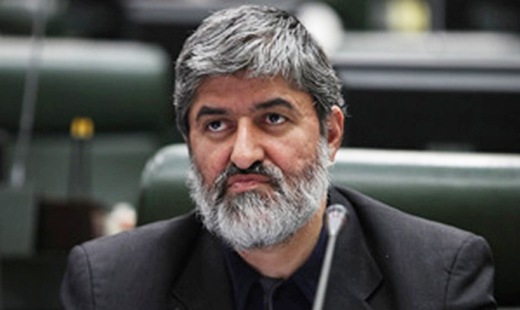
Ali Motahari, a principlist deputy who represents Tehran in the Islamic Consultative Assembly, said Sunday that he thinks a nuclear deal is around the corner. “God willing, a good deal will be signed.”

According to Khabaronline.ir, Motahari, who was speaking on the sidelines of a parliamentary session Sunday which voted for the general outlines of a bill that requires government to safeguard the nuclear achievements of the nation, further said the chamber’s involvement in the case at this juncture is of great importance in upholding its accountability to the nation. The following is the translation of an excerpt of his comments:

Ali Motahari added that some provisions of the outlines bill needed modifications. “For instance, the bill states that all sanctions need to be lifted. Basically, sanctions which are related to human rights won’t be lifted, so the term all sanctions should be replaced with all nuclear sanctions.”

He went on to say usually parliaments elsewhere make such decisions to be able to reject a deal if it does not meet their requirements. “That does not seem to be the case here. Besides, the modifications introduced to the bill do not tie the hands of the nuclear negotiators.”

He also praised Parliament Speaker Ali Larijani for denying the opponents of the talks the opportunity to push the bill off the agenda of the chamber.

In conclusion, he said there are signs that a good deal will be struck, citing the determination of both sides.

Good nuclear deal more important than meeting deadline: Zarif

zarif1

Iran’s Foreign Minister Mohammad Javad Zarif says reaching a good deal with the P5+1 group of countries on Tehran’s nuclear program has priority over meeting the self-imposed June 30 deadline.

“We have always tried to finish the job (resolving Iran’s nuclear issue) at the earliest possible opportunity. Of course, reaching a good and appropriate agreement is more important than [signing it] a few days sooner or later,” Zarif told reporters in Luxemburg on Monday.

He made a trip to the European country to discuss various issues including Tehran’s nuclear case with EU foreign policy chiefFederica Mogherini and his European counterparts from the P5+1.

Regarding the removal of anti-Iran sanctions, the Iranian minister said any deal with the six world powers on Tehran’s nuclear program should include the lifting of all sanctions simultaneous with the start of the implementation of nuclear measures by Iran.

“I think the issue of simultaneity has already been resolved in the Lausanne declaration. It was clear that sanctions will have to be lifted simultaneously with the implementation of the steps that Iran will take.”

He further stressed that Iran’s nuclear program is a peaceful one, without any possible military dimension (PMD).

“We have been very clear that there are no PMDs. Iranian nuclear program has always been peaceful,” Zarif said, adding, “We have made it clear to the [International Atomic Energy] Agency that we are prepared to work with them in order to remove any concerns that they may have, provided that it is taking place within international law and respect for Iranian sovereignty.”

[…]

In addition to the nuclear negotiations, “It is an opportunity to discuss the [Middle East] region’s significant issues such as the crisis in Yemen, the situation in Syria and extremism in the region, in principle,” Zarif said.

Iranian people are nice and hospitable: US coach

US coach 1

The US volleyball coach John Speraw has lauded the Iranian people and said that the people have treated them so kindly.

“Two nights ago, I thought that the environment and play in this gym with these fans affected the way we played the game. Tonight [Sunday], Iran affected the way we played. We got beat by a better volleyball team by significant margin,” Speraw said in the post-match news conference.

“They outplayed us in every facet of the game: block, defense, passing, serving, and offense. So there is only one thing we can do, and that is to learn from this volleyball match to hope that we can improve.”

“We are a team and have some physical gifts, some big players who can jump high and beat the ball, but we have to play the entire game much better if we hope to be as a team as well-coached and skilled as Iran,” he added.

Regarding Iran and his message to Americans, Speraw said, “My first impression was that everyone here has been incredibly hospitable. Everyone has been very nice. They have gone out of their way to make sure that we had really nice experience here. I think we have enjoyed it tremendously. Iranian people are wonderful people and have treated us kindly.”

“We had the opportunity to get out into the city one day. We went to the [Milad Tower] and learned a little more about Tehran. I think that is good for us. We went to a nice lunch on the hills….”

“Yes, Iran’s a great place, so the message we would bring back is this: it was a great trip and we look forward to coming here again. And I think we have much better understanding of what the environment is both inside the arena and outside,” Speraw concluded.

Parliamentary motion does not tie government’s tactical hands

arani

A member of parliament’s National Security and Foreign Policy Committee says Speaker Ali Larijani played a unique role in revising the text of a motion which requires government to safeguard the country’s nuclear rights and achievements.

Abbas Ali Mansouri Arani made the comment in an interview with Khabaronline.ir on June 21 and added nobody else could have played such a role in the revision of the draft. The following is the translation of what else the MP representing Kashan, Aran and Bidgol in parliament said about the motion whose general outlines were adopted in an open session of the chamber on Sunday:

The deputies tried to remove the ambiguities which could have surrounded and obstacles which could have stood in the way of nuclear talks by debating the motion that cleared parliament today. But government may have other views. The president is expected to share his views and concerns with the MPs.

Looking at what happened this past month, we learn that the motion the MPs put forward a few weeks ago differs sharply from what was debated on the floor today. The representatives revised most of its provisions and finally ratified a much better text than the previous draft.

Previous motion would have stalled the talks

What was to be put to the vote on the floor would have stopped the talks from continuing. I had frankly said in my interviews that the motion would spell an end to the talks, thus I expressed opposition when it was being discussed at the National Security [and Foreign Policy] Committee. But what we discussed today will not bring the talks to a halt; rather, it would draw up a clear roadmap.

Government should be thankful to parliament speaker

We discussed the motion in many sessions, but our efforts failed to bear fruit because of varied positions of some MPs, but Mr. Larijani built on his position as speaker and a member of the Supreme National Security Council as well as his popularity among fellow MPs to convince the deputies to revise the motion. That’s why government should be appreciative of the top MP who adopted a hands-on approach and did effective consultations for editing the motion.

Government’s views may be different from what has been included in the motion. It is quite natural if parliament and government do not see eye to eye over certain issues, because they have different responsibilities. This motion will not tie government’s hands, because it entails the red lines the Supreme Leader and the Supreme National Security Council have stressed. So we have not tied the hands of government and the nuclear negotiating team in adopting tactics; rather, we have only clarified the red lines.

President should speak frankly with MPs

Meetings between government and parliament could help boost solidarity. The president and parliament speaker should transparently speak their minds in such meetings. The president is expected to carefully explain the problems government is grappling with and share his concerns with the deputies.

Impeachments of Cabinet ministers

Impeachments of ministers will harm government and make people think poorly of the chamber. That’s why the president should transparently discuss the problems standing in the way. National interests carry weight for the deputies. The MPs, who sign an impeachment motion, think what they are about to do is in line with national interests; if they suspect that their signatures would harm the country, they would not definitely try to question a minister.

If the president fails to speak frankly with the MPs, a bad-case scenario will unfold. Despite the designation of this year as the Year of Solidarity and Harmony between government and nation, the year will see the most impeachments, questionings and notices. This would be in contravention of the Supreme Leader’s remarks and would create a paradox for people who might think the Leader – who forms the backbone of the establishment – calls for solidarity on the one hand and the three government branches which are supposed to implement the Leader’s guidelines are divided on the other.

This is a good opportunity to prevent the impeachment of the education minister from happening. If parliament can help in this regard, it should intervene and do its share.

Iran-P5+1 nuclear talks at sensitive stage: Rouhani

rouhani3

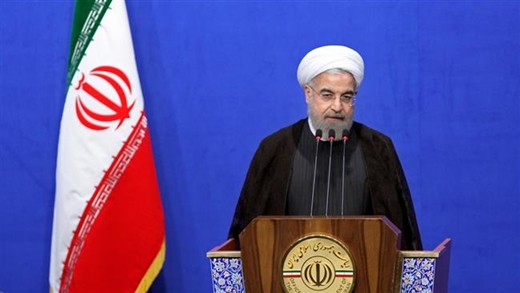
Iran’s President Hassan Rouhani says negotiations between Iran and the P5+1 group of countries over Tehran’s nuclear program have reached a sensitive stage.

“The issue of negotiations relates to the whole country and we hope that we will be able to reach an acceptable and promising result while preserving the nation’s rights and the country’s national interests with the help of the Parliament and support of the [Iranian] people,” Rouhani said in a joint meeting of Cabinet members and lawmakers in Tehran on Sunday.

He added that the nuclear talks between Tehran and the six global powers are one of the Islamic Republic’s most important diplomatic dialogs.

Rouhani emphasized that the nuclear talks have always been based on the guidelines of Leader of the Islamic Revolution Ayatollah Seyyed Ali Khamenei as well as the criteria set by the Supreme National Security Council and the Constitution.

Ali Larijani Iran’s parliament speaker, for his part, stressed the importance of making efforts to fully support the Iranian negotiating team headed by Foreign Minister Mohammad Javad Zarif.

“The nuclear talks are complicated negotiations. So, our country’s negotiating team should enjoy all-out support,” the Parliament speaker added.

He expressed hope that Iran and the six powers would manage to reach an appropriate outcome.

Larijani warned against the adverse consequences of distrust among Iranian authorities on domestic issues such as the nuclear case and said, “We currently need convergence more than ever and we should trust each other.”

The meeting came on the same day that Iranian legislators unanimously approved the generalities of a motion requiring the government to safeguard Iran’s nuclear rights.

The text of the motion said any agreement with the six powers should include the complete and immediate removal of all sanctions against Iran “on the day Iran starts fulfilling its obligations.”

Iranian lawmakers added that the International Atomic Energy Agency (IAEA) will be only permitted to “conduct conventional inspections” of Iran’s nuclear facilities within the framework of the Safeguards Agreement, noting that access to Iran’s “military, security and sensitive non-nuclear sites, documents and scientists is forbidden.”

The motion also calls on the Iranian government not to accept any restrictions on the acquisition of peaceful nuclear technology, research and development.