Thursday, January 1, 2026
Home Blog Page 4781

Iran parliament elects members of JCPOA Committee

Parliament-Iranian

The Iranian parliament has appointed 15 lawmakers as members of an ad hoc committee tasked with reviewing the recent agreement reached between Tehran and P5+1 over the Islamic Republic’s nuclear program.

An open session of the chamber on Wednesday elected, in an in-house vote, 15 of the 24 lawmakers who had volunteered to be members of the committee.

Among members of the committee are First Vice-Speaker Mohammad Hassan Aboutorabi-Fard, Hossein Naghavi Hosseini and Esmail Kowsari, both members of the National Security and Foreign Policy Committee, as well as Alaeddin Boroujerdi, the chairman of the National Security and Foreign Policy Committee.

The decision to form the committee was made after Iranian Foreign Minister Mohammad Javad Zarif attended a session of parliament one week after the conclusion of the agreement to hand over a copy of the agreement and brief the lawmakers on it.

[…]

The election of the members of the ad hoc committee comes as there are arguments about institution should ratify the agreement. Both parliament and the Supreme National Security Council are considered to be entitled to having the final word on the agreement.

Kazemi Mansion in Tehran (PHOTOS)

Kazemi Mansion0

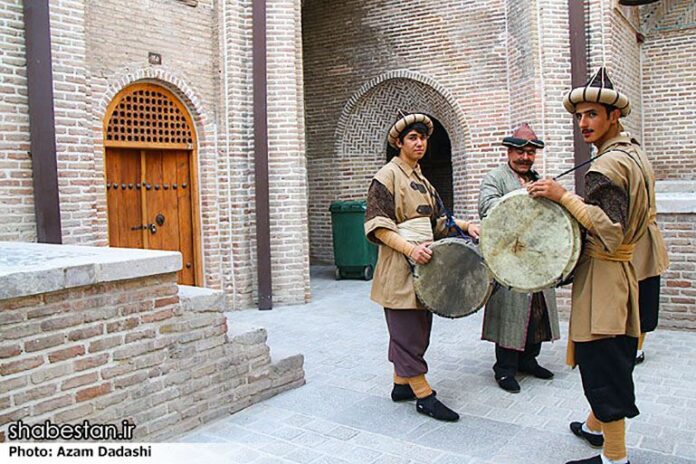
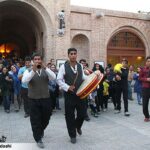
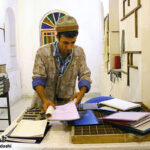
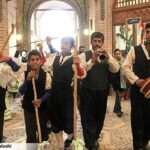
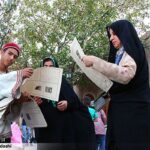
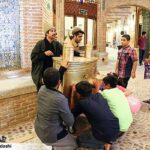
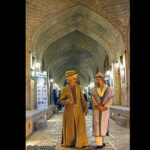
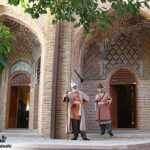
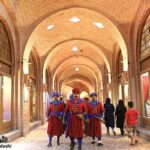
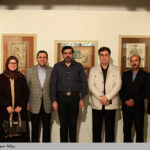
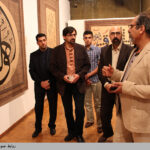
Kazemi Mansion is a historical house in the vicinity of a holy site in an old neighborhood in southern Tehran.

The century-old building is 2,033 square meters in area and was owned by Mirza Seyyed Kazem, who became a civil servant under Mohammad Shah Qajar. Later during Naser al-Din Shah Qajar’s reign, he was put in charge of the Royal Stable.

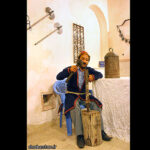
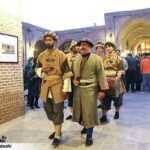
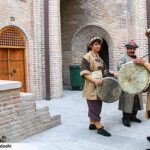
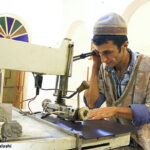
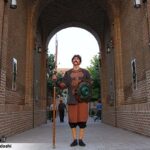
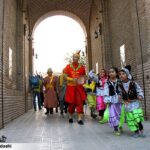
As part of an anthropology project, Tehran Municipality has put on display in the mansion a number of models and dolls which represent the jobs and traditions of the people who lived in Tehran 150 years ago.

Snapshots of the mansion released by tpaa.ir:

Had it not been for General Soleimani, Iraq would have failed

Hakim01

The head of the Islamic Supreme Council of Iraq (ISCI) has said that Iraq would not have been able to stand up to terrorist groups if Iranian forces, led by [Commander of IRGC’s Quds Force] Major General Ghasem Soleimani, had not helped the country.

Ammar al-Hakim made the remark in an interview with AhlulBayt News Agency (ABNA) on August 18 and added that Iran’s assistance has contributed a lot to the improvement of conditions in his country. The following is the translation of what else the visiting Iraqi cleric and politician said in the interview:

Terrorism in Iraq

Over the past ten years, Iraq has been targeted by different terrorist groups such as the one led by Abu Musab al-Zarqawi who was succeeded by Abu Omar al-Baghdadi after his death.

During the transition of power in the terrorist entity, only the Shiites made losses because they were branded [by the terrorists] as Rafida [a derogatory term used by Salafis to refer to Shiite Muslims].

Any new terrorist group which emerged in Iraq tried to act more violently than its predecessors. The state of affairs in Iraq and the threat of terrorism – which haunted the country – did not improve even with the American boots on the ground. The US forces failed to turn the tide in Iraq.

Following the departure of US forces from Iraq and the formation of a nascent Iraqi Army, Alqaeda terrorists found the conditions ripe to enter Iraq. The weakness of certain Iraqi politicians was to blame for this.

Alqaeda used divisive measures as a tool. The terror group paved the way for its infiltration into Iraqi soil by creating a gap between Sunnis and the Iraqi government and spreading rumors that the government overlooked the problems of the Sunni-dominated areas.

How is it possible for 300 ISIL terrorists to force as many as 90,000 fighters to abandon the city and leave behind their military hardware? To develop a better understanding of the situation on the ground then, I should say that the predominantly Sunni cities were in the hands of ISIL at nights and were run by the government during the day, but it did not take long before the city of Mosul fell.

We have to wait for the result of investigations into what really happened [in Mosul]. What is good about such investigations is that they will reveal our weak points, both militarily and politically.

Things got worse by the day in Iraq in the wake of penetration of terror groups, but the tables were turned after Grand Ayatollah Seyyed Ali Al-Sistani [a Shiite source of emulation] released a fatwa and the country’s Popular Mobilization Forces – directly backed by Iran – fought with great bravery [against the terrorists].

The [US-led] international anti-ISIL coalition has not fared well. The question here is: how is it possible for 64 countries participating in this coalition with all their military hardware to fail to counter a small terrorist group such as ISIL? Given the formation of groups like the Taliban and Alqaeda, the presence of ISIL has always been the trump card for these countries in the region, so how can they possibly dispense with their own trump card?

ISIL, building on these countries’ support, sells oil in global markets. Is it possible to do so without someone’s support? This coalition is expected to act against terrorism the way we want, not their own way.

Undoubtedly, Iran was the first country to support us in trying times. The religious fatwa and assistance by Iran’s forces led by Ghasem Soleimani greatly helped improve the Iraqi situation. Everybody knows that Iraq would have been unable to resist if General Soleimani and his colleagues had not offered consultation to us.


Soleimani

Yemen

As the Supreme Leader of the Islamic Republic of Iran has put it, nations are the [ultimate] winners. People in Yemen can help their country get out of this tough situation. A diplomatic solution is needed in Yemen. If Saudi Arabia is seeking to help Yemen, it should do so by treating the Yemenis humanely, not killing people there.

Iran’s capital relocation plan rejected

Tehran-Capital

The Ministry of Roads and Urban Development (MRUD) has announced that a plan to move the capital from Tehran has been rejected.

After releasing a 239-page report, the ministry said that a meeting chaired by the first vice-president has unanimously dismissed the transfer of the country’s political capital, citing the results of a research conducted by the ministry.

In a report on August 18, Fararu.com quoted news.mrud.ir as saying that for years the question of moving the capital was a talking point for media, officials and members of the general public. The following is the translation of the report:

One year after the end of the Sacred Defense [the Iraqi-imposed war] (1988), a number of Tehran residents began to complain about the lack of urban services in the city and the inattention of the capital’s managers to its development. Eventually, those complaints turned an urban question – which needed the attention of mid-level management – into an issue of macro-managerial proportion. As a result, the then government held multiple sessions bringing together officials and experts at the Council on Supervision of Tehran’s Development and raised the question of moving the capital.

Since then, the question of the transfer of the capital has been repeatedly put forward. A number of MPs of the ninth parliament introduced a motion on the relocation of the capital in the Councils and Internal Affairs Committee and when the committee adopted the motion, they put it forth on parliament floor [for debate].

For some reasons, the proponents of the motion outnumbered its opponents on the floor. Although the Islamic Consultative Assembly’s Research Center had – years ago – built on compelling evidence to prove that such relocation is not to the benefit of the country, the supporters of the new capital insisted on their own motion.

Afterward, the Iranian parliament approved new legislation on the formation of a committee comprising representatives from different cultural, political, military, economic, developmental, social and security bodies which gavethe government a few months to carry out feasibility studies into the movement of the capital.

The 239-page report – which was reviewed in the meeting also attended by a host of MPs, Cabinet ministers, Tehran’s governor general, the head of Tehran’s City Council as well as senior experts from the University of Tehran – was handed over to the top Iranian officials.

Iranian students launch campaign to make education for Afghan peers easier

afghan

A group of high-school girls from across Tehran has launched a campaign to make access by Afghan students to education in the upcoming school year easier.

This year is a special year for Afghan children, because under a recent order by the Supreme Leader, even undocumented Afghan children can sign up for school in Iran.

The following is the translation of a report by Tasnim News Agency on what the Iranian girls are doing to help the Afghan students:

Young Iranian girls have got together with the hope of fixing the financial problems facing Afghan children as far as education is concerned.

Parwan, an Afghan province with lovely weather, is the name the young activists have picked for their campaign. It represents affinity between the two nations.

Parwan activists, who launched their campaign about four years ago, visit self-run Afghan schools and help them provide better education to Afghan children.

These girls, whose efforts have become more concentrated over the past two years, are to hold a second charity food event in Tehran on August 20. Its proceeds will go to efforts to improve education for Afghan students.

Parwan is a spontaneous campaign which is financed by small funds these Iranian girls raise.

Over the years, the high-school girls have contributed a lot to young Afghan refugees through provision of help and equipment to self-run Afghan schools.

Despite all the problems Afghan refugees are wrestling with these days, these measures by Iranian students put across a message: “Iranians view the problems of Afghan refugees as their own”.


A look at Iranian newspaper front pages on August 19

Iranian Newspapers Headlines

The comments of the government spokesman about parliament’s role in the approval of the Joint Comprehensive Plan of Action and those of the defense minister about the delivery of S300 missile defense system by Russia to Iran dominated the front pages of Iranian newspapers on Wednesday.


Ettela’at: “Unfinished projects will be given to the private sector to be completed,” First Vice-President Eshagh Jahangiri said.

He further said what Iran achieved in nuclear talks will go down in history.


Afkar: “With the arrival of popular forces on [Iraqi] battlefronts, the flames of IS atrocities began to die down,” said Ayatollah Hashemi Rafsanjani at a meeting with the head of the Islamic Supreme Council of Iraq.

Afkar: “The Joint Comprehensive Plan of Action contains no secret sections,” said the Iranian government spokesman.


A look at Iranian newspaper front pages on August 19


Aftab-e Yazd: “Some are politicizing things to allow corruption [cases they have been involved in] to slip through the net,” said Justice Minister Mostafa Pour-Mohammadi.


A look at Iranian newspaper front pages on August 19


Arman-e Emrooz: Ahmadinejad is [likely] to appear in court to answer for the confessions made by his executive deputy.

Arman-e Emrooz: Imports from China have cost 500,000 Iranian jobs.

Arman-e Emrooz: “As many as 600,000 individuals are imprisoned each year,” said an advisor to the justice minister.


A look at Iranian newspaper front pages on August 19


Asr-e Rasaneh: Crude exports have been up 14 percent ever since the 11th government took office [in 2013].


A look at Iranian newspaper front pages on August 19


Asrar: “Throughout the talks, the Supreme Leader advised us whenever deemed necessary,” said Iranian nuclear negotiator Ali Akbar Salehi.

Asrar: “We should not be worried about the opposition of a small minority [to the nuclear deal],” said Chairman of the Expediency Council Akbar Hashemi Rafsanjani.

Asrar: “Muhammad has been produced to promote Islamic solidarity,” said Majid Majidi, the director of the film.


A look at Iranian newspaper front pages on August 19


Ebtekar: Leadership crisis in Turkey

Ahmet Davutoglu has abandoned efforts to form a coalition government.


A look at Iranian newspaper front pages on August 19


Emtiaz: The vice-president for women and family affairs has expressed concern about the drop in the age of girls’ exposure to social harms.


A look at Iranian newspaper front pages on August 19


Esfahan Emrooz: A 60-year-old woman has given birth to twins.


A look at Iranian newspaper front pages on August 19


Hambastegi: “The achievements of the country should not go under the hammer,” said the parliament speaker.


A look at Iranian newspaper front pages on August 19


Hosban: The government spokesman has called on [officials of the previous government that accuse the Rouhani administration of acting against the law] to report the alleged offenses to the judiciary.


A look at Iranian newspaper front pages on August 19


Iran: President Rouhani’s chief of staff has thanked Iranian expatriates for their support of the Iran nuclear deal.


A look at Iranian newspaper front pages on August 19


Jomhouri Islami: MPs found satisfying the explanations provided by the ministers of oil and energy [about the conduct of their respective ministries].

Jomhouri Islami: Seventy top nuclear experts in the world have supported the nuclear deal between Iran and P5+1.


A look at Iranian newspaper front pages on August 19


Kaenat: The plan to move the political capital from Tehran has been rejected.


A look at Iranian newspaper front pages on August 19


Kayhan: Was this the win-win formula you were talking about?!

The vice-president has admitted there have been partisan goals behind the nuclear deal.


A look at Iranian newspaper front pages on August 19


Mardomsalari: “IS is a political ploy to serve the interests of the Zionist regime,” said the secretary of the Supreme National Security Council.


A look at Iranian newspaper front pages on August 19


Payam-e Zaman: The Iranian economy minister has said that oil money frozen overseas because of sanctions is around $6-$7 billion.


A look at Iranian newspaper front pages on August 19


Rooyesh-e Mellat: “Iran is to build two new satellites,” said the minister of communications and information technology.


A look at Iranian newspaper front pages on August 19


Setareh Sobh: “Our policy is to woo artists who are away from home,” said the spokesman of the Ministry of Culture and Islamic Guidance.

Setareh Sobh: Iranian trucks have been set on fire on Turkish soil.


A look at Iranian newspaper front pages on August 19


Highlights of Ettela’at newspaper on August 19

Ettelaat Highlights-post

 “Unfinished projects will be given to the private sector to be completed,” First Vice-President Eshagh Jahangiri said.

He further said what Iran achieved in nuclear talks will go down in history.

 “Details of voters will be available to electoral authorities online [to prevent electoral fraud],” said the interior minister.

Rahmani Fazli further said that over the years there have been instances of individuals casting ballot more than once or using fake IDs to vote.

 The UN Security Council voted for a statement calling for a political solution to the Syrian crisis.

In another development, 28 leaders of terror groups operating in Syria surrendered to the Syrian Army.

 “The Joint Comprehensive Plan of Action does not need to be approved by parliament,” said Government Spokesman Mohammad Bagher Nobakht.

 The defense minister has said that an updated version of Russia’s S300 will be delivered to Iran.

The agreement on the delivery of the missile defense system will be signed next week.

 The lieutenant governor of the Central Bank of Iran has said that a single foreign exchange rate will be introduced shortly.

He further said liquidity growth in the first quarter was down 22.7 percent over corresponding period last year.

 A Revivalist Leader, which takes a close look at the strategic thoughts of the Supreme Leader, has been unveiled.

The book has been penned by Naim Qassem, the deputy secretary-general of Lebanon’s Hezbollah Movement.


Leader’s letter outstanding model for dialogue with Western youth

Moghaddam Far

Cultural deputy of the World Assembly of Islamic Awakening described Supreme Leader of the Islamic Revolution Ayatollah Seyyed Ali Khamenei’s letter to the European and North American youth as an outstanding model for effective dialogue with the West’s younger generation.

Addressing the eighth General Assembly of Islamic Radios and TVs Union (IRTVU) in Tehran on Monday, Hamidreza Moghaddam-Far called on Muslim intellectuals to study various aspects of the Supreme Leader’s letter and use it as a model to formulate the policies for dialogue with the West.

Back in January, Ayatollah Khamenei wrote a letter asking the European and North American youth to gain direct and firsthand knowledge of Islam in reaction to the flood of prejudgments and disinformation campaigns.

What follows is the full text of Mr. Moghaddam-Far’s speech at the conference:

Honorable guests, ladies and gentlemen,

The current status in the world is a status of fundamental changes and developments and the world is on the verge of a historic and landmark turning point. In general, the new global condition can be defined as general and public discontent of humanity – even in developed and rich societies – about the existing conditions, unjust and oppressive management of the world order and also can be defined as people’s constant quest for change.

As the Western culture and thought is declining, we are witnessing a gradual but remarkable growth of the awakening movement and a tendency toward spirituality and a renewed desire for faith and religions throughout the world, the Western societies in particular, in a way that secular scientific and academic circles in the West are paying more attention to the role of religion.

Scholars are now talking about the return of religion from exile and have named the upcoming decades the “Post-secularism” era. Among all religions, Islam, as the sole religion which remained free from deviation and a religion with a comprehensive and collective paradigm for different aspects of the life of humanity, enjoys the highest capacity for introducing itself as an alternative model to replace dominant Western models.

This divine, dynamic and live religion with over one billion followers and with highest rate of new converts throughout the world, is the sole entity that, as acknowledged by the Western analysts, can challenge the dominant order, model and discourse of the West. Accordingly, Islam is considered the alternative for Western discourse and identity. For that reason, the Western rulers’ grave concern about the daily growth of Islam and the threat posed by the expansion of the Islamic thought to their global dominance, have pushed them “since two decades ago, namely after the collapse of the former Soviet Union, to portray this great religion as a terrible enemy, and target Islam and Muslims in an unprecedented manner by using the old policy of fear and hatred.”

Unfortunately, the emergence and growth of Salafi-Takfiri extremist current inside the Islamic countries’ territories in the past years under overt and covert support by some Western governments, have provided Westerners with the chance to use media campaign to picture a fake and fabricated link between Muslims and concepts such as terrorism, extremism, violence, and sabotage.

To that end, an extensive plan was devised in partnership with American scholars, politicians, media activists and filmmakers in order to spread a fabricated fear and hatred of Muslims around the world within the project of Islamophobia, and enable the Western politicians to introduce their hired terrorists as the representatives of Islam in a hypocritical manner.

It is crystal clear that the media have had and continue to have a pivotal role in the process of masterminding and implementing the Islamophobia project, and their actions in serving the objectives of the super powers in countering Islam have been very significant and influential. The powerful Western media outlets employ various techniques and modern ploys to deceive minds and take control of opinions. They are trying to create an emotional barrier between people and the facts through presenting insulting and cheap images, in a bid to prevent people from making an evenhanded judgment and restrict them inside fabricated and mental barriers.

Now the question is about the Islamic world’s duty in the face of the Western-led hegemonic system and its anti-Islamic measures in the current sensitive and decisive juncture, which could be a major milestone in the history of humanity. It seems that the leaders, clerics, scholars, the intelligentsia and media in the Islamic societies need to gain a deep understanding of the volatile situation in the contemporary world and believe in the alternative role that the Islamic model could play vis-à-vis the ineffective existing model, and should use different methods to develop a strategy to destroy the foundation of the oppressive and unfair order that prevails in the world.

This major strategy could be carried out in two stages:

In the first step, an approach of criticism should be adopted to question the legitimacy of the global order that has been established under the management of the Western powers, which is at the same time quite unfair, illegitimate and improper and is a clear symbol of injustice, inequality, discrimination and hegemony. During the second step, the idea and model of “Islamic world order” should be introduced to the world as the best alternative model and the only procedure for saving humanity from the unsolvable crises brought by modernity.

The letter that Supreme Leader of the Islamic Revolution sent to the youth in Europe and North America a few months ago is undoubtedly considered a testimony of a wise and smart measure to destroy the foundation of the hegemonic world order and introduce an alternative Islamic model. Such an innovative move is remarkable from many aspects, and contains a lot of informative points whose deep understanding could be very effective for defining the future path for the Muslim propagators and media outlets.

First of all, the timing of the Supreme Leader’s letter was outstanding.

The letter’s content clearly shows that the author has a great knowledge about the developments in the world on the verge of a historic turning point, and that he has penned the letter in a bid to open a new field for proactive reaction to the enemy’s movements.

Secondly, this was the first time that the Supreme Leader addressed all the youth in Western countries rather than their politicians. This initiative is a clear example of using informal diplomacy to leave direct impact on the public opinion beyond borders and to pave the way for mutual understanding. It also reveals the Supreme Leader’s awareness of the increasingly significant position of the public opinion in the equations of world policy.

In fact, the Letter per se serves as a medium that uses a creative way and a gentle, fluent, friendly, informal, and non-imperative tone to launch a “questioning movement”. It just asks its audience to think about a number of fundamental questions in an open atmosphere without any pressure, prejudice, and necessity for accepting the author’s views.

Thirdly, the letter was first published in the cyberspace and through social networks. Given the deep influence of such media and new means of communication on the lives of people, especially the youth, in modern era, this innovative move showed that one should not take a passive approach in reaction to the massive influx of Western propaganda. Rather, offensive approach should be adopted and the same means should be used to counter their attacks and gain the upper-hand in a field that seemingly belongs to the opponent.

Fourthly, the letter’s content, though short in length, includes important and considerable topics, in a way that it takes both of the two necessary steps to deconstruct the global hegemony.

The mainstream media which sponsors the dominant discourse intends to tarnish the image of Islam in the eyes of the world and has always tried to portray an ugly, dark, violent, terrifying and threatening picture of Muslims at the global level. As a result, the need for the similarity between offense and defense requires the Islamic world to thwart the conspiracies of the enemies and take action to improve its image through media diplomacy. Joint action and further solidarity among media outlets and institutions in the Muslim world, like the Islamic Radio and Television Union can be effective in achieving better results.

Massive developments in the field of communication technology have made the media diplomacy to go through the traditional media and enter into the cyberspace and modern media. In the vast area of cyberspace, in which social networks, websites, blogs and mobile applications connect millions of people around the world, cyber diplomacy or (Twiplomacy) is growing fast and diplomats and political officials of different countries use its great capacity to communicate directly with the World public opinion. Therefore, the absence of diplomacy in the Muslim world in this field is tantamount to deprivation of an easy and cheap opportunity to convey political messages on a global scale which is never acceptable or justifiable.

The Supreme Leader’s letter to the young people in Europe and North America, which was published directly online for the first time, is a shining example in the arena of cyber-diplomacy which was well received by youth around the world.
This paradigm needs to be continued by other Islamic world’s leaders, scholars, elites and government officials. The letter by the Leader should not slip into oblivion as its content is very instructive and unmatched and is also full techniques on how to attract target audience.

Sticking to the following guidelines could be helpful for the world’s media:

1. Setting up a strategic center for leading and directing media campaigns and projecting specific news items on important international issues and issues related to Islam.

2. Studying and delving into various aspects of the Supreme Leader’s letter and using the letter’s coherent and targeted structure in order to formulate the policies and devise practical models of dialogue with the West.

3. Tapping into the letter’s capacity and focusing on it as a central point and interesting topic for raising the issue of widespread talks with the Western youth and intellectuals.

4. Necessity of identifying inclinations, fields of interest, sensitivities, and needs of non-Muslim audience that have been left abandoned by Western media and addressing their needs through Islamic world media outlets.

5. Echoing the voice and message of social activists like anti-war and anti-racial groups whose needs have been left unanswered by Western media.

6. Making use of the capacity of new media and social networks for sharing media products.

Although the West’s media campaign enjoys better technical equipment and huge funding and also outnumbers the Islamic world’s media outlets, Muslim media can also enjoy great privileges of conformity of their message to the truth-seeking nature of mankind and honesty in speech via learning more about the potential capacities. The Islamic world’s media will certainly succeed in overcoming the enemies and reverberating Islam’s right-seeking call all across the globe based upon a verse of the Holy Quran which says: “How many a small company has overcome a large company by permission of Allah.”

Anti-Iran sanctions could be lifted by yearend: AEOI chief

139405251657585785888384

Director of the Atomic Energy Organization of Iran (AEOI) Ali Akbar Salehi said if everything goes according to plan and Tehran and six world powers meet their commitments, anti-Iran sanctions will have been lifted by the yearend.

“The Joint Comprehensive Plan of Action (JCPOA) states that the European Union should remove European embargoes on Iran after 90 days and US President (Barack Obama) should also lift Congress-imposed sanctions” Salehi said on Tuesday.

He added that in return, Iran has also some commitments regarding its nuclear program.

“Therefore, if all commitments by Iran and P5+1 (Russia, China, the US, Britain, France and Germany) are met according to schedule, the sanctions will be lifted in the month of Azar (November 22 – December 21),” he noted.

Iran and P5+1 on July 14 reached a conclusion on a lasting nuclear agreement that would terminate all sanctions imposed on Tehran over its nuclear energy program after coming into force.

The 159-page deal has its own opponents and proponents both in Iran and the other countries that are parties to JCPOA, including the US.

While the United Nations Security Council has adopted a resolution to endorse the deal, the text of the document needs to be ratified by both Iran’s parliament and the US Congress.

Fanning sectarian crises in Iraq ordered by enemies: Rafsanjani

jpg

Beating the drum of war among followers of different Islamic schools of thought and other religious minorities in Iraq is a plot hatched by the enemies of Islam, said Chairman of Expediency Council Ayatollah Akbar Hashemi Rafsanjani Tuesday.

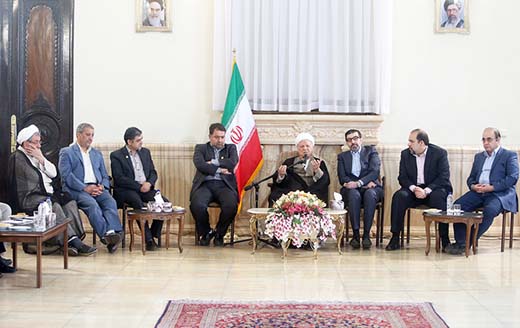
“The prominent religious scholars, leaders of political groups and parties, and even heads of tribes in Iraq are expected to promote harmony, cooperation and solidarity in their words and their deeds,” said Ayatollah Rafsanjani at a meeting with Seyyed Ammar Hakim, the chairman of the Islamic Supreme Council of Iraq.

Stressing the immense importance of Iraq’s strategic position and rich resources, he said that Iraq has potential for both positive and negative developments in political and economic fields.

“If the central Iraqi government manages to strengthen the security index in that country, the outcomes of the development will benefit the entire region,” he added.
Hakim, for his part, said that the implementation of a moderate approach in a society which has suffered from dictatorship for decades and the scourge of terrorist groups is a very tough task.

“One of the factors for backwardness of such societies is that the people are not in harmony with the political groups,” he added.
On the latest status of the IS terrorists in Iraq, he said that with the vast mobilization of the popular forces in the war against terrorism, the retreat of IS from Iraq is gradually accelerating, adding that the terrorists are no longer capable of recruiting forces even from the Iraqi Sunni Muslims.

“The crimes those terrorists have committed against people, particularly women and children, and even Sunni Muslims have created hate among the Iraqi nation for the terrorist group,” he said.
Ammar Hakim also met with Secretary of the Supreme National Security Council Ali Shamkhani.