Sunday, December 21, 2025
Home Blog Page 4758

Shamkhani, Hammond call for boosting all out ties

Shamkhani-Hammond-680x360

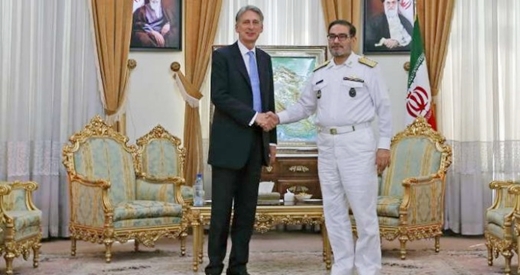
Secretary of the Supreme National Security Council Ali Shamkhani and visiting British Foreign Secretary Philip Hammond on Monday held talks on ways to boost all-out ties.

Shamkhani told Hammond that moving toward sustainable relations based on trust-building can secure the mutual interests of Iran and Britain.

The Iranian official said that Iran expects the British government to change its views toward Iran and keep away from non-constructive misunderstandings.

Shamkhani said that understanding the real source of Islamic Republic’s power by the British government can help boost ties between Tehran and London.

He said that the Islamic Republic of Iran’s power has its roots in the nation’s support and the Supreme Leader’s insight, adding that Iran adopted a balanced and stabilizing regional and international policies.

Shamkhani referred to Iran’s warnings about the spread of terrorism in the region, saying that the fight against terrorism and extremism needs respect for national sovereignty and independence of governments.

Iran and Britain have a similar stance toward the fight against ISIL, regional stability and closer economic cooperation, the official noted.

He said that supporting the nations which have been subjected to oppression by bullying powers to reclaim their legitimate rights is part of Iran’s foreign policy.

The British foreign secretary, for his part, stressed the important role of Iran in the settlement of regional problems, including terrorism.

London is keen on boosting sustainable ties with Iran in all fields, including economic and regional cooperation, he noted.

[…]

We buy what the worst enemies of Tehran tell us

Stephen Kinzer

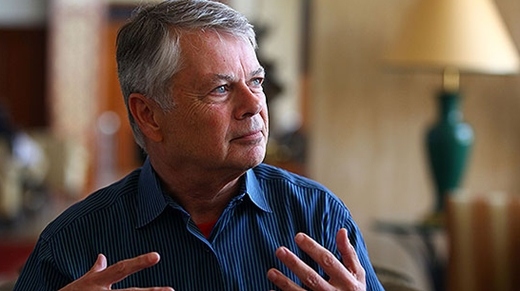
An American university professor says that Foreign Minister Zarif can be another Mossadegh or Amir Kabir for the Iranians capable of changing the country’s destiny in the future.

Stephen Kinzer, a lecturer at Watson Institute for International and Public Affairs in Brown University, has taken a look – in his book – at the August 18, 1953 coup in Iran [which toppled the government of Prime Minister Mohammad Mossadegh] and its impact on ties between the United States and the Islamic Republic of Iran.

All the Shah’s Men is a novel-like book which tells about the 1953 coup in Iran in a narrative form. Over the years, Kinzer covered news for The New York Times from 50 countries. He has written a number of books on the Middle East and Iran.

Tolou Sobh, an Iranian weekly, has in an interview asked about Kinzer’s take on the Iran nuclear deal. The following is the translation of the interview in its entirety:


One month ago, Iran and P5+1 reached an agreement after twelve years of talks. How do you assess the Iran nuclear deal? What do you think caused the parties to the talks to walk down that path [toward conclusion of a deal]?    

Iran, a Shiite power, is the enemy of radical Sunnis such as ISIL, Alqaeda, and the Taliban. If the US is really seeking to take on these [radical] movements, Iran would be a logical partner.

In the meantime, economic opportunities led Iran and the US to strike a deal. Iran is the world’s biggest untapped market with 80 million literate people who are interested in American products. Iran, which is rich in oil and gas reserves, can buy anything it seeks, so there are potentially big profits [for the US] in Iran.

Iran also influences other areas in the Middle East, among them Iraq, Syria and Yemen. President Obama says that he can solve regional disputes with Iran’s help.

What were the distinctive features of the Vienna talks that prompted foreign ministers of six world powers and that of Iran to have a three-week stay in the Austrian capital?

Zarif and Kerry were determined to conclude an agreement. Any breakdown could have been a very bad event. They both knew about this and together with their teams they made great endeavors to arrive at the best deal possible.

Following the announcement of the nuclear deal, loud voices were heard from the US Congress calling for the derailment of the deal. Given this, do you think the nuclear deal will be sustainable?  

Opposition to the deal in Washington has nothing to do with Iran’s behavior. The past measures, including the hostage-taking in the US embassy [in Iran], have made us blind to national interests. We buy what the worst enemies of Tehran tell us and view Iran as a country which has delivered the biggest blow to us, but we cannot see the blows we dealt to Iran and pay no attention to them.

I should say that Congress is likely to reject the Iran nuclear deal, but Obama will veto its decision and this will help implement the deal.

Now that a deal has been clinched, Mohammad Javad Zarif has become very popular with Iranians and many go so far as to describe him as Mossadegh or Amir Kabir of the time. Given that you have extensively studied Iranian history, what do you think?

Zarif deserves to take a lot of credit for the deal, so does John Kerry. Still the deal was one single incident. Amir Kabir and Mossadegh were national leaders who deeply influenced the destiny of Iran. Zarif may be able to do just that in the future. For now, however, he’s a successful negotiator and that is enough for the Iranians to take pride in him.

Just like opponents of the nuclear deal on Capitol Hill, in Iran some are very critical of the Vienna accord and describe it as a new Turkmenchay Treaty [by which Persia ceded to Russia control of several northern areas]. Do you basically see the Vienna accord as one such agreement for Iran, or the US for that matter?

Turkmenchay and the Vienna deal are polar opposites, because the latter has been based on mutual respect and serves the interests of both sides. It does not entail the surrender of sovereign rights, not does it constitute a blow to either party.

Some believe that the deal Iran and P5+1 have clinched can set the stage for improvement in relations between Iran and the United States, what’s your take on that?

Iran-US animosities on the international stage date back 36 years. Such poisoned ties are part of a structure which is extremely difficult to shatter. In fact, under the circumstances, Tehran and Washington are looking for new reasons to hate each other. They need to try to break out of the present conditions first.

Student Basij’s critical view of the British embassy reopening and JCPOA

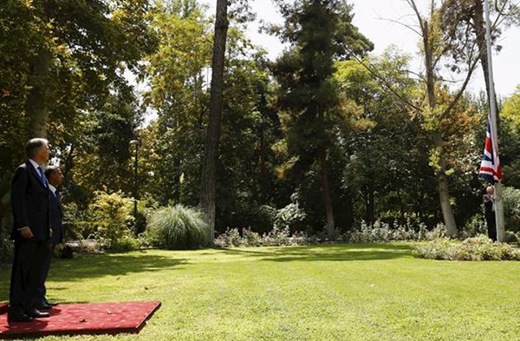
Britain reopens its embassy222567_476

Four student Basij organizations have expressed their critical views of and concerns about the reopening of the British embassy in Tehran and the Joint Comprehensive Plan of Action (JCPOA), complaining about the government’s lack of transparency in handling the Tehran trip of the British foreign secretary. They have also said that their review of the text of JCPOA has resulted in 70 questions on the Iran nuclear deal.

The Iranian Students’ News Agency (ISNA) has published the remarks of the heads of the four student organizations in a press conference. The following is a brief translation of what they had to say:

Mehdi Ramezanzadeh, the head of a Tehran University student council:

It has now become obvious that nuclear talks are not the sole topic about which people have been kept out of the loop. The government continued its cloak-and-dagger measures in the run-up to the British embassy reopening too. Why should we first learn about the embassy reopening from a foreign news agency? Why should an Iranian Foreign Ministry official confirm the news later?

The Iranian nation has no favorable recollections of Britain and what is has done throughout history. The Britons have always been after looting, bullying and colonial moves.

We said nothing about the text of JCPOA over the past month. The great volume and the specialized content of JCPOA’s text are to blame for the student Basij’s delay in reviewing the text. We wanted to consult with the experts and scientifically review that text. Finally we came up with 70 questions on JCPOA. We will make these questions public in coming days.
Jalal Khaleghi, the head of Basij organization at School of Media Studies

Today we see that the government is more willing to share its secrets with foreigners than with the Iranian nation. […] The closure of the British embassy reduced London’s intelligence work. The reason why this embassy has been reopened is unclear. […]

We know nothing about the reason behind the government’s secrecy. Our concerns about the British embassy reopening are graver than worries stemming from the 1953 Anglo-American coup.

We call on students and media to join the two [students] campaigns which focus on the reopening of the British embassy and the government’s trust-building measures.

Hossein Oraki, the head of Basij organization at Tarbiat Modares University

Student Basij has complaints about the government’s performance. Why has the government pursued a secret plan? Why has the government not talked about such an issue with people? We are opposed to the British embassy reopening because of terrible memories the Iranians have of Britain’s measures in Iran. Nobody will forget the coup Britain plotted against Iran. Nobody will forget the eight-year Iraqi imposed war and the British support for this country. That’s why we are unhappy with the embassy reopening and the presence of a senior British official on Iranian soil.

We urge the government not to do something which may make the next generations feel shameful for this government’s improper measures. We hope the government takes heed of the country’s national interests.

Soheil Kiarash, the head of Basij organization at Shahed University

A month-long review by the Student Basij Organization of the Iran nuclear deal shows that the country’s national interests have not been maintained in the nuclear deal, not even minimally. We raised this issue with [senior nuclear negotiator] Mr. Araghchi who responded that the deal was the best they [the country’s negotiators] could clinch. This comes as Mr. Zarif said in parliament that maximum national interests have been taken into account in the nuclear deal.

Prior to the talks, the negotiating team stressed that they would respect the red lines and the nation’s interests in the talks. The question here is: Were you given any order to have talks and produce a result?

I do not buy what [Chief of Staff of the Iranian armed forces Major General] Firouzabadi has recently said about JCPOA. He has knowledge in military issues, [not in nuclear matters].

Iranian industry chief makes appealing offers to foreign investors at Expo Milano 2015

Nematzadeh-Expo

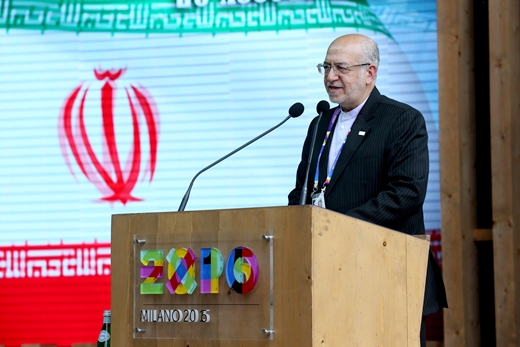
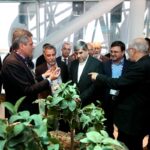
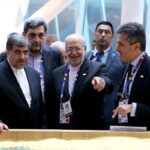
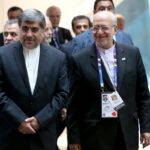
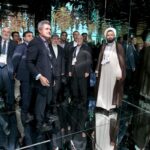
Foreign investors can secure 100 percent land ownership for production purposes in Iran and will have the government’s assistance, Iranian Minister of Industries, Mines and Trade Mohammad Reza Nematzadeh told an Iran Day ceremony in Expo Milano 2015 on Sunday.

The following is the translation of part of a report eghtesadnews.com has published on the industry minister’s comments and the ceremony at large:

At the ceremony also attended by Minister of Culture and Islamic Guidance Ali Jannati and a number of officials, both Iranian and Italian, the Iranian industry minister said countries attending the expo should take effective measures to promote healthy nutrition in the world.

“Of course industrial countries whose colonial practices in the past have interfered with the scientific, cultural and economic progress of African, Asian and Latin American nations should do more.

“Despite restrictions, Iran stands ready to help promote agricultural production in the world and invest in the agriculture and animal husbandry of countries which need help.”

He went on to say that Iranians have always been in favor of international development as well as global peace, cooperation and affinity.

Nematzadeh said, “At the close of the [Iran-Iraq] war [in 1988] it became clear that the neighboring country was the aggressor and that the Iranians had simply defended their land for eight years. The unjust economic sanctions too proved that Iran is committed to international regulations. We tapped into dialogue and patience to prove our truthfulness to the world and thus prevented another catastrophe in the Middle East.”

On economic cooperation with the rest of the world in the post-sanctions era, the Iranian industry chief said, “The West’s attitude toward Iran has changed. We are ready to allow foreigner access to our market for joint production. To that end, foreign investors face no restrictions and they can secure 100 percent land ownership for production purposes.”

In conclusion, he said Iran stands ready to establish cooperation with foreigners in the fields of tourism and large- or small-scale production.

Later in the day, Iran’s National Day stamp was unveiled in the exposition.

It is worth noting that the restaurant of the Iranian pavilion in the expo has proved very popular with visitors. For instance, the wife and daughter of the director of the expo and the wife of the Italian prime minister have praised the Iranian food. And staff members of the pavilions of Arab countries such as Qatar and the UAE regularly stop by the Iranian restaurant to grab a bite.

Renowned Iranian vocalist Salar Aghili performed at the event too.


Reopening of the British embassy; two views, for and against

Britain-reopens-embaccy

Two Iranian MPs have spoken for and against the British embassy reopening in Tehran on August 23 which came after four years of strained ties between the two countries.

The Islamic Consultative Assembly News Agency (ICANA) has interviewed the two representatives on the downsides and upsides of the embassy reopening. The two members of parliament’s National Security and Foreign Policy Committee hold opposing views on the embassy reopening. The following is the translation of excerpts of their remarks:


Embassy reopens with no consular services 

Haghighat Pour
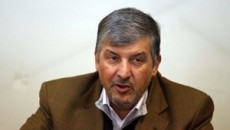
Mansour Haghighatpour

Mansour Haghighatpour said that the embassy reopening would be a good development if the British government vows not to meddle in Iran’s internal affairs.

The Brits should make up for their past mistakes and Iran’s oversight bodies should act cautiously and not allow any interference in the country’s affairs, he said, adding that media and people from different walks of life should remain sensitive about this issue so that we see no repeat of past events.

The MP further said the British embassy has reopened without offering consular services and this is one downside of it, adding they are only after political practices and we are opposed to that.

About 400,000 Iranians, willingly or unwillingly, are living in Britain with their families seeking to travel there, Haghighatpour said, adding that it is not appropriate for them to travel to Dubai and Turkey to get visas.

He then took a jab at reopening of the embassy which remained unannounced until too late in the game, saying that the Foreign Ministry was expected to act more properly on this.

“Iran seemed to have acted hastily in this regard. We have not forgotten [British Prime Minister] David Cameron’s speech against Iran at the UN General Assembly. […] We should have waited until JCPOA produced a result so that we could see their reactions to Iran’s nuclear program before taking appropriate measures for the embassy reopening”.

[…]


Britain should make up for the past       

Nozar Shafii
Nozar Shafiee

Nozar Shafiee said that Tehran should upgrade its ties with Britain cautiously thanks to this country’s poor record in Iran.

He further said that the British embassy reopening has been affected by the Joint Comprehensive Plan of Action (JCPOA), adding the international impacts of the Iran nuclear deal paved the way for different countries, including Britain, to improve their ties with Iran. But, we have concerns from the past, he added.

The MP also said that Britain should try to polish its image in Iran, adding the Brits should show good intentions and change the bitter memories the Iranians have of British interference in Iran’s internal affairs. Iran’s ties with Britain are more sensitive than other European countries, he stressed.

Shafiee then said the reopening of the British embassy at this level [without consular services] is part of the executive stage, adding this is the starting point and ties will be developed in the future.

“Despite all concerns and critical views, we are not expected to move toward self-imposed sanctions when a country welcomes the reopening of its embassy in Iran. To limit ourselves amounts to missing out on opportunities. It surely comes with a price. We need to seize the opportunities”.

Inmates imprisoned for involuntary offenses released in Mashhad (PHOTOS)

imprisoned000

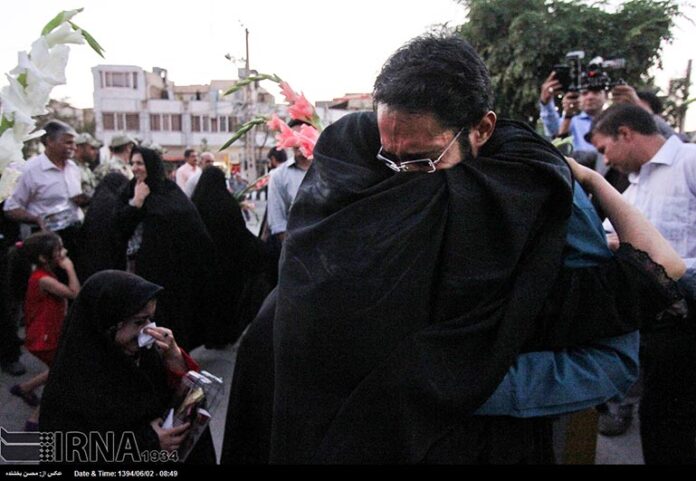
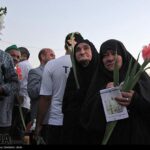
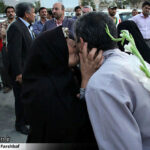
Some 100 inmates who were serving time for involuntary offenses in Mashhad were released Sunday (August 23) as part of a charitable initiative.

Over the past 25 years the institution which implements the initiative to help prisoners found guilty of involuntary offenses has overseen the release of 90,000 inmates.

The following are images of the prisoner release program published by the Islamic Republic News Agency:

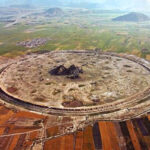
The 2,500-plus-year-old town of Darabgerd in southern Iran

Darabgerd0

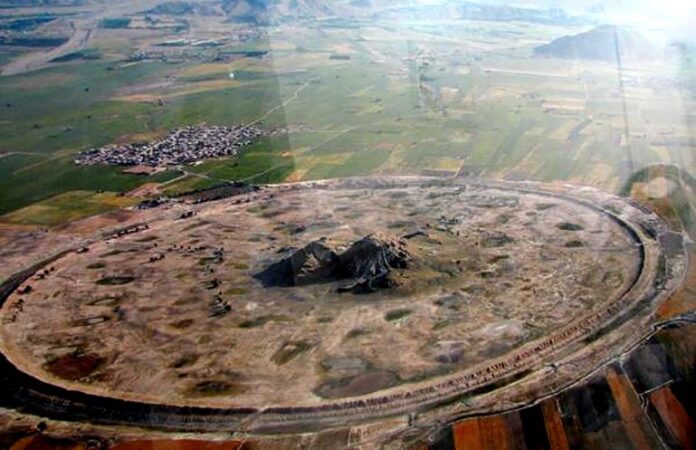
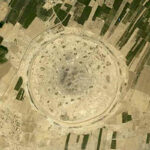
The historical town of Darabgerd, which is located six km to the south of Darab in Fars Province, was among a handful of towns in Pars Province during the Achemenid Empire.

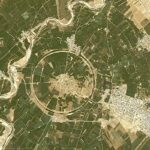
Although Darabgerd, which means the land of Darius, was not the only town founded by Darius I, it might have been the first namesake circular structure built by the third king of the Achemenid Empire.

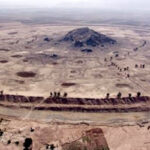
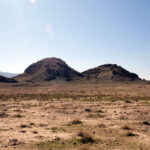
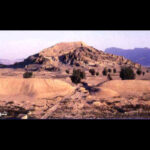
The salt dome of Darabgerd which is surrounded by a round wall and stands at the heart of the vast, green plain of Darab was at the center of the ancient town. Today, it is an unrivaled tourist attraction in Fars Province.

Around the historical town, there is a huge conical wall constructed of clay, stones and lime. The wall which was originally over 10 m in height is now about seven meters high because of erosion.

However, the sticky raw material used in the construction of the wall has minimized damage by erosion and helped it stand firmly for more than 2,000 years.

Images of the historical town posted online by hamshahrionline.ir:

A look at Iranian newspaper front pages on August 24

Iranian Newspapers Headlines

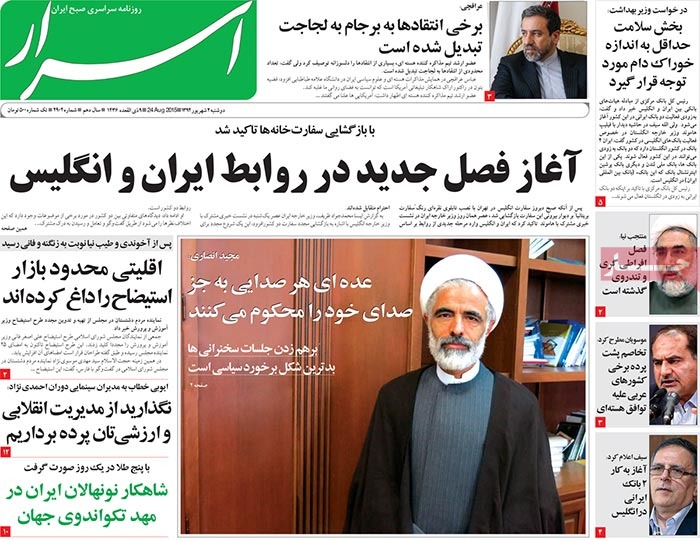
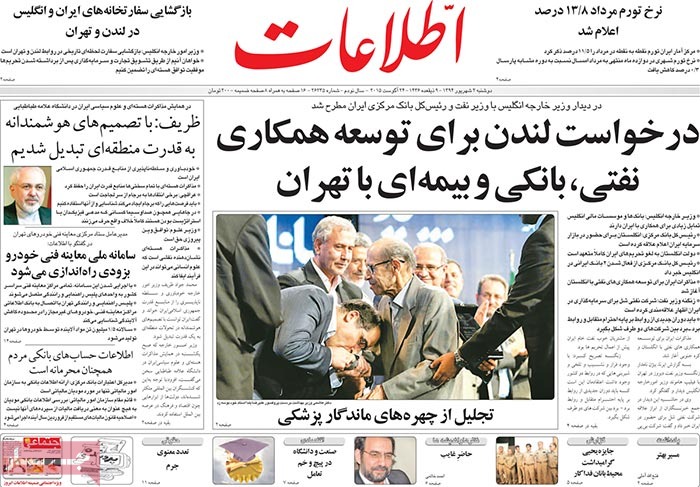
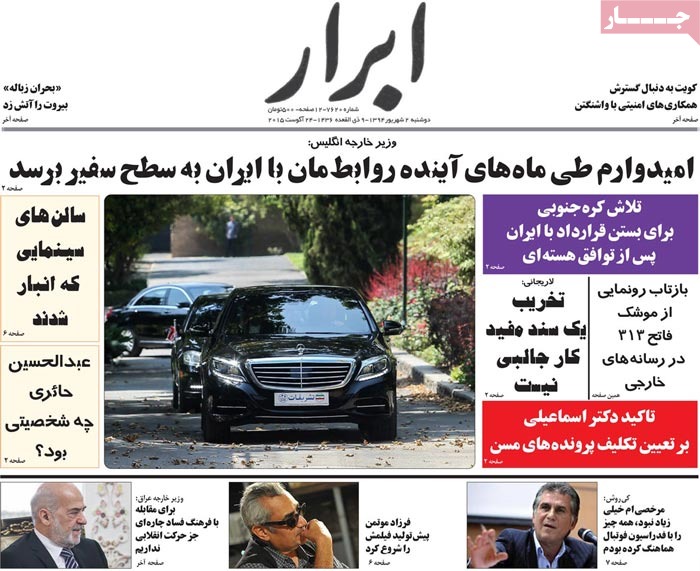
The reopening of the British embassy in Tehran dominated the front pages of Iranian newspapers on Monday.


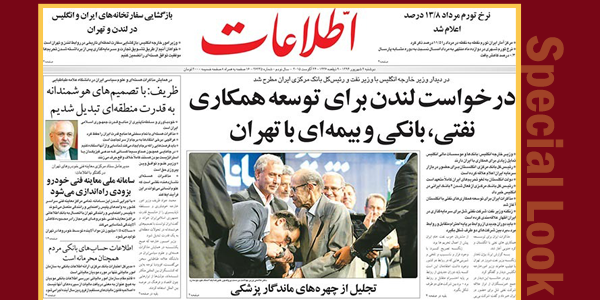
Ettela’at: London has appealed for expansion of oil, banking and insurance cooperation with Iran.

The call came at meetings between visiting British Foreign Secretary Phillip Hammond and Iranian oil minister and the governor of the Central Bank of Iran.


Abrar: South Korea is trying to strike deals with Iran in the wake of the Vienna nuclear deal.


A look at Iranian newspaper front pages on August 24


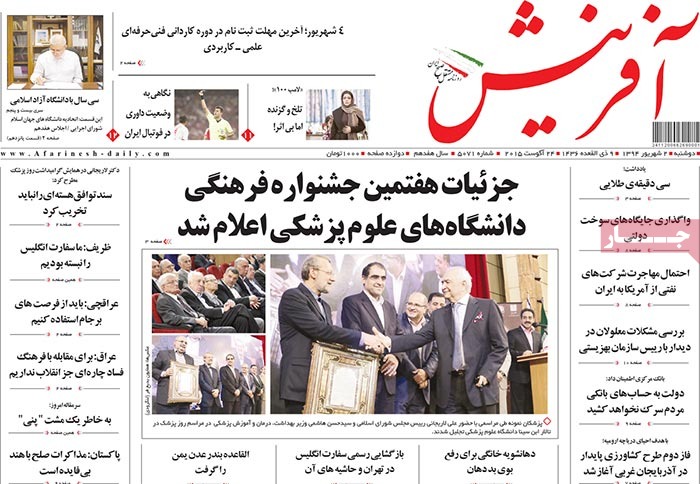
Afarinesh: Deputy Foreign Minister Abbas Araghchi has called for measures to seize the opportunities the Joint Comprehensive Plan of Action presents.


A look at Iranian newspaper front pages on August 24


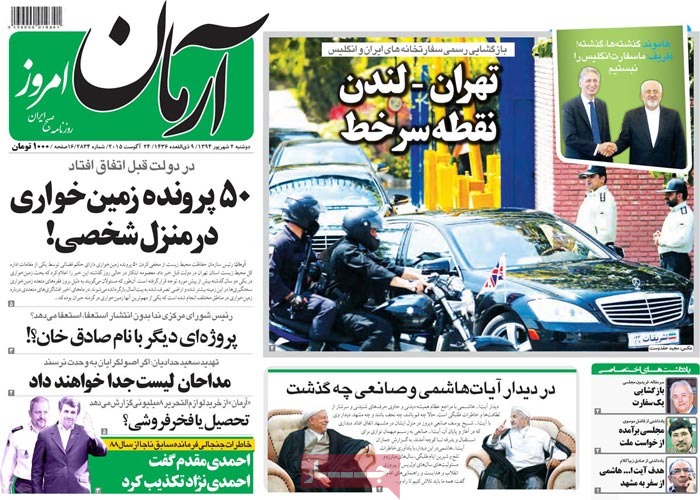
Arman-e Emrooz: Ahmadinejad has dismissed the controversial comments former police chief Brigadier General Ahmadi Moghaddam attributed to him.

In an interview released on Sunday, the former police chief said the former president urged him to force 2,000 or so elites to leave the country to settle the problems of the establishment.


A look at Iranian newspaper front pages on August 24


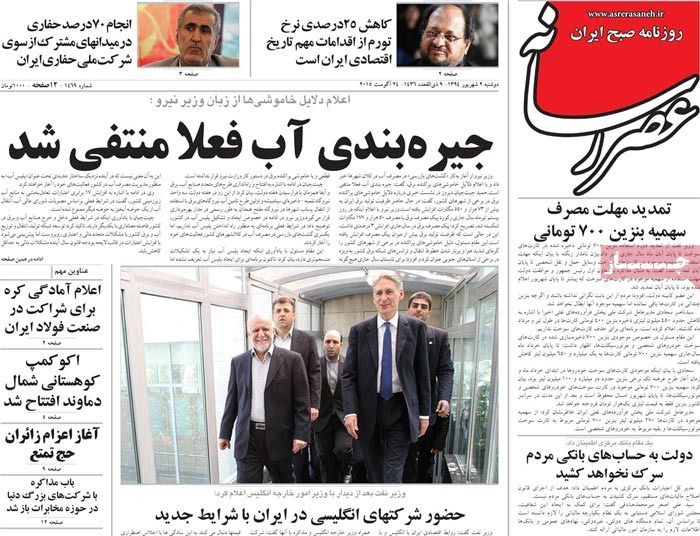
Asr-e Rasaneh: “A 25 percent decline in inflation is one of the most important measures in Iran’s economy ever,” said the vice-president for executive affairs.


A look at Iranian newspaper front pages on August 24


Asrar: “Some critical comments about the Joint Comprehensive Plan of Action have turned into obstinacy,” said the deputy foreign minister.


A look at Iranian newspaper front pages on August 24


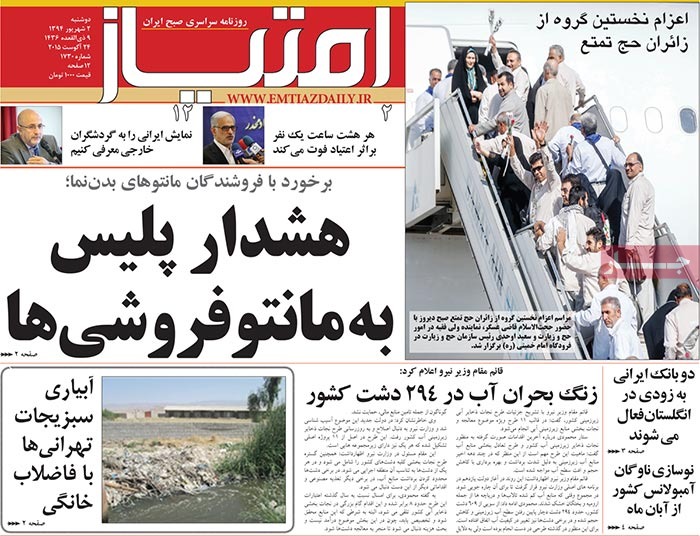
Emtiaz: A first batch of Iranian Hajj pilgrims has left for Saudi Arabia.

Emtiaz: One individual dies of drug-related causes every eight hours.


A look at Iranian newspaper front pages on August 24


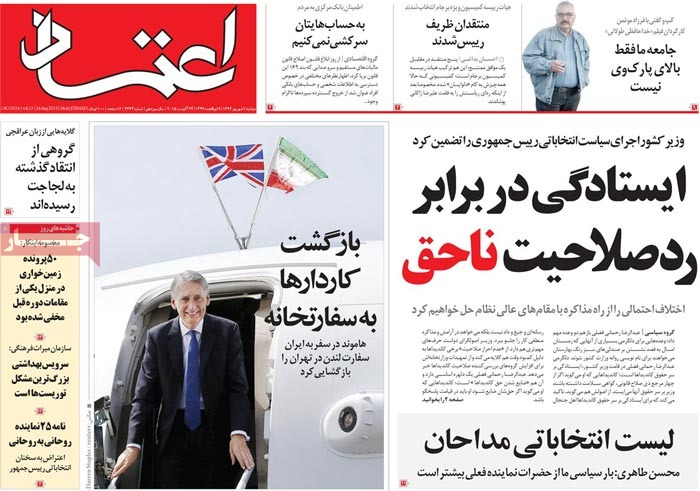
Etemad: Opposition to unjustified disqualifications

The interior minister has vowed to implement the president’s electoral policy.

Etemad: Twenty-five MPs have sent a letter to President Rouhani to protest against his comments about the role of the Guardian Council in the electoral process.


A look at Iranian newspaper front pages on August 24


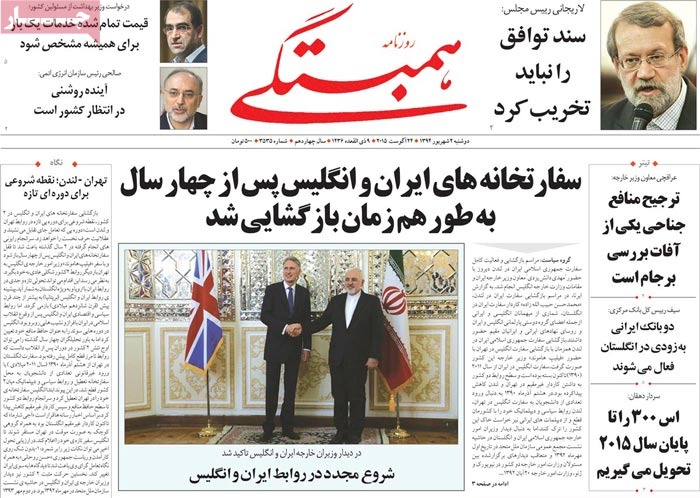
Hambastegi: “A bright future awaits the country”, said the director of the Atomic Energy Organization of Iran.


A look at Iranian newspaper front pages on August 24


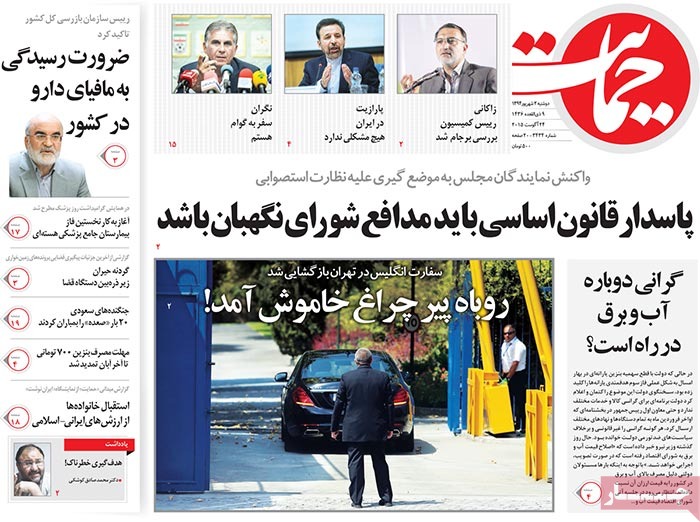
Hemayat: The Old Fox arrived in an unspectacular fashion!

The British embassy has reopened in Tehran.

Hemayat: “The one who has vowed to safeguard the Constitution should support the Guardian Council,” said MPs in reaction to comments [by the president] about the electoral oversight of the council.


A look at Iranian newspaper front pages on August 24


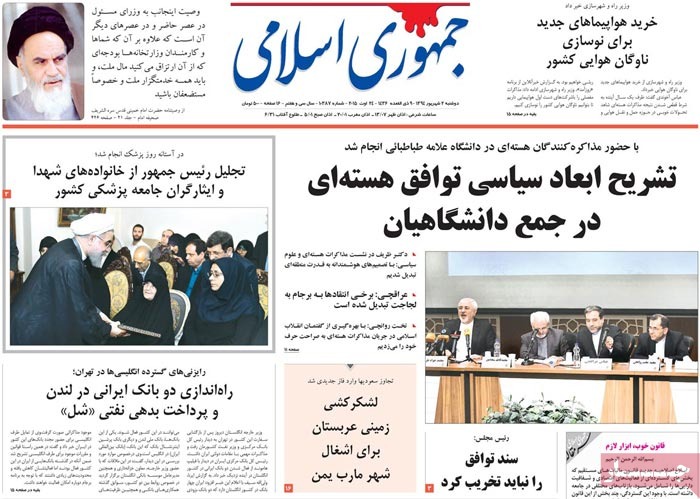
Jomhouri Islami: The minister of roads and urban development has said that the country seeks to purchase new aircraft to renovate the air fleet.


A look at Iranian newspaper front pages on August 24


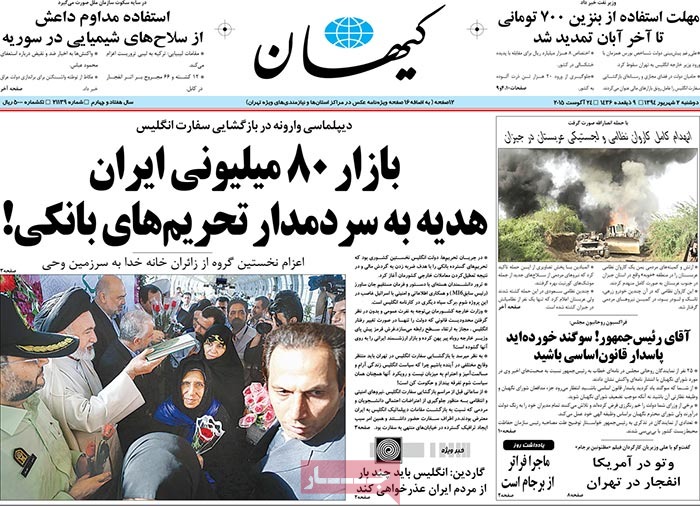
Kayhan: Iran’s 80-million-strong market, an award for the country which led other nations in imposing banking sanctions on us!


A look at Iranian newspaper front pages on August 24


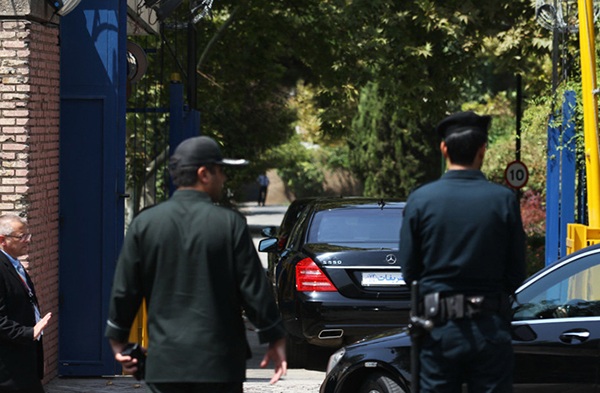
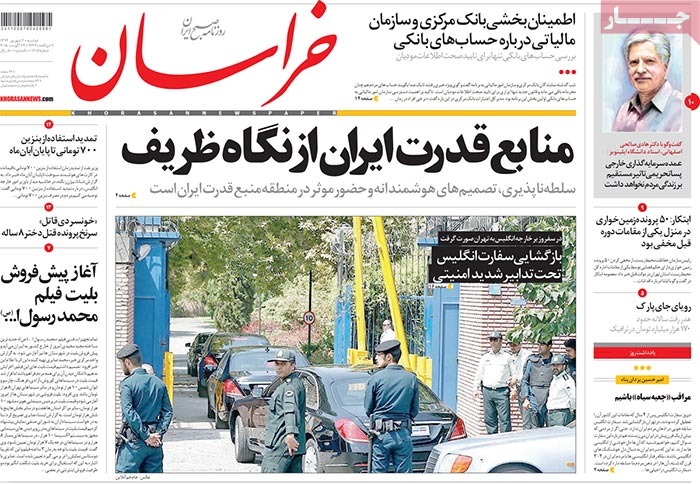
Khorasan: The reopening of the British embassy in Tehran took place under tight security.


A look at Iranian newspaper front pages on August 24


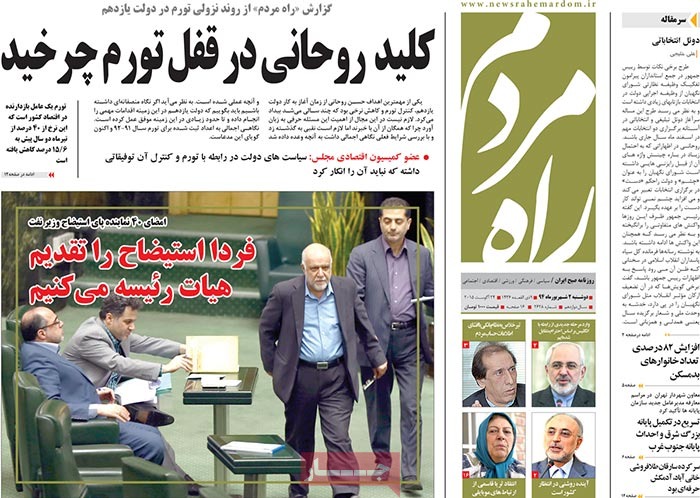
Rah-e Mardom: Forty MPs have signed a petition to impeach the oil minister.

The petition is to be submitted to the chamber’s Presiding Board Tuesday.


A look at Iranian newspaper front pages on August 24


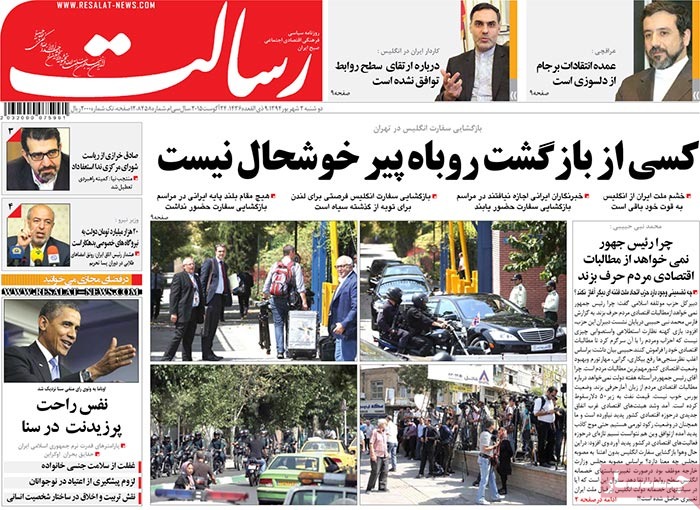
Resalat: Sadegh Kharrazi has resigned from the central council of NEDA Party.


A look at Iranian newspaper front pages on August 24


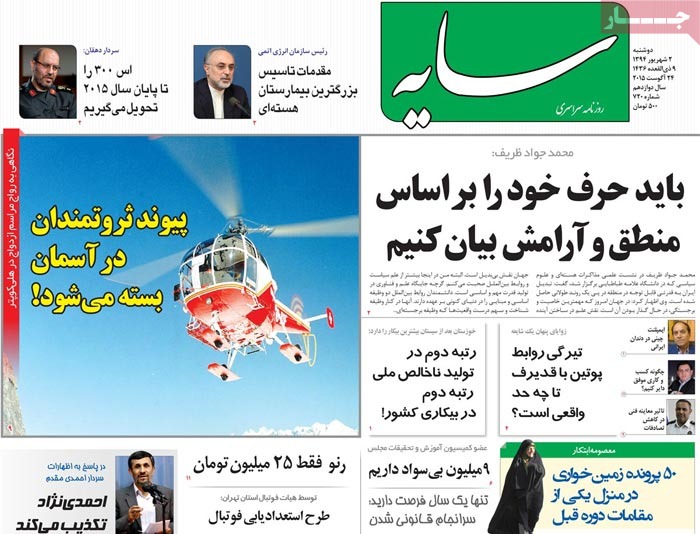
Sayeh: The defense minister has said that Russia will have delivered the S300 missile defense system to Iran by the end of 2015.


A look at Iranian newspaper front pages on August 24


Highlights of Ettela’at newspaper on August 24

Ettelaat Highlights-post

 London has appealed for expansion of oil, banking and insurance cooperation with Iran.

The call came at meetings between visiting British Foreign Secretary Phillip Hammond and Iranian oil minister and the governor of the Central Bank of Iran.

 Inflation in the 31 days to August 22 stood at 13.8 percent.

Urban inflation in the year-ago period was down 0.3 percent over the preceding year.

 Iran and Britain have reopened their embassies in London and Tehran.

Phillip Hammond described the reopening of the British embassy as a historic moment in London-Tehran ties.

 “With wise decisions we turned into a regional power,” said Foreign Minister Mohammad Javad Zarif.

Speaking at a gathering on nuclear talks and political sciences, the Iranian top diplomat said that Iran’s might stems from self-confidence and defiance in the face of attempts at domination.

 A national vehicle technical test system will be launched soon.

The system allows the traffic police to locate vehicles when they enter the pollution reduction zone.

 Private details of people’s bank accounts remain just that: private.

The National Taxation Administration will only be allowed access to the information of those who owe back taxes.

 The services of memorable medical figures have been praised.

At the ceremony, Health Minister Hassan Hashemi kissed the hand of his onetime professor Alireza Yalda.


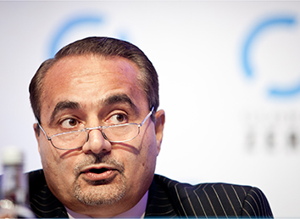
Iran deal paves the way for nuclear-free Middle East: veteran diplomat

Seyed-Hossein-Mousavian

Former Iranian diplomat Hossein Mousavian said Sunday that the Iran nuclear deal is the most inclusive text in the world’s nuclear history that can ensure non-proliferation of nuclear weapons.


Mousavian, who was addressing a gathering of 5,000 people in New York, touched upon terrorist claims against Iran and said, “The bitterest terrorist incident for you Americans was the attack on Twin Towers on September 11, 2001. Was there an Iranian among the culprits of that incident or all the criminals were citizens of US allies, such as Saudi Arabia?”


Noting that all people in the world unanimously believe that today the number one threat to global security is Takfiri terrorism, Mousavian said that terrorist groups such as ISIL, al-Qaeda, Boko Haram and al-Nusra Front recruit their members from citizens of US allies in the Middle East, Africa, Europe, America and China.


The Iranians have not joined these groups, they are on the frontline of practical fight against these terrorist groups, Mousavian said.


He said that the international community is strongly defending the Iran deal and only Netanyahu and some US congresspersons are standing against the deal and certain regional hostile Arab countries are trying to scupper the deal.


“The American people should know that Mr. Obama had only three choices in dealing with Iran’s nuclear crisis: peaceful agreement through diplomacy, sanctions and pressure, or military invasion,” Mousavian said.


“The world did not support a war scenario. In addition, the US had experienced two wars in Iraq and Afghanistan and had been forced to leave the war incurring thousands of billions of dollars in losses with more than six thousand Americans being killed”.


Obama knew well that military action against Iran would have consequences more severe than that of US invasion of Iraq and Afghanistan, Mousavian said.


On exerting pressure on Iran, the former Iranian nuclear negotiator said that Obama imposed the toughest sanctions on Iran aiming to shut down Iran’s nuclear program, but the Iranians, instead, developed their nuclear program to let the US know that Iran would not surrender under pressure.


Before the sanctions, Iran possessed only a few hundred centrifuges, while after the sanctions it had 22,000 centrifuges, Mousavian said, adding that Iran enriched uranium no more than 5%, but after the sanctions Iran’s uranium enrichment reached 20%.


When the US got to know that the option of sanctions would also backfire, they chose diplomacy for dealing with Iran’s nuclear dispute, Mousavian concluded.