Sunday, December 21, 2025
Home Blog Page 4757

Iran sanctions to be lifted one after another: President Rouhani

Rouhani

President Hassan Rouhani has said sanctions against Iran will be lifted one after another with the conclusion of the recent agreement between the Islamic Republic and P5+1.

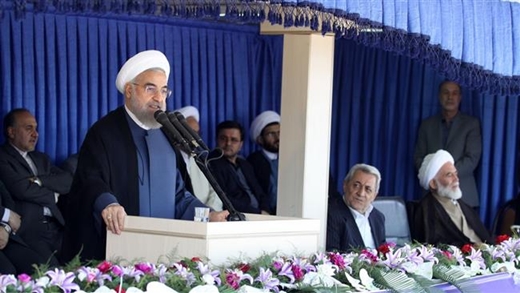
President Rouhani made the remark in an address to a large crowd of people in the western city of Hamedan on Tuesday.

He said his administration has reached a point where it had the anti-Iran sanctions annulled at the very institution and by the very group that had imposed them in the first place.

The Iranian president said the Islamic Republic has succeeded in not only having the sanctions resolutions annulled – without even a moment of having implemented them – but also in establishing its right to uranium enrichment “not just as a slogan but through UN resolutions.”

He was referring to Resolution 2231 (2015), which was unanimously approved by the UN Security Council on July 20 to endorse the agreement between Iran and P5+1.

Economic achievements

Referring to the country’s economic situation, Rouhani said his administration has gone beyond expectations in achieving its objectives in its first two years in office.

“We promised people that we would reduce the inflation rate step by step. [Iran’s] Statistics Center released figures two days ago, which show that… inflation has fallen below 14 percent and reached 13.8,” he said.

Iran has seen its inflation rate decline from its peak of over 40 percent under former President Mahmoud Ahmadinejad two years ago.
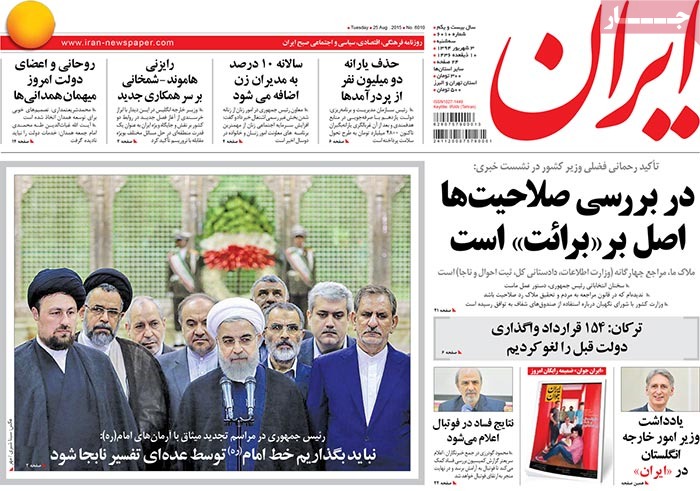
British Foreign Secretary publishes opinion piece in Iranian newspaper

Philip Hammond
Iran Newspaper-25 August
Iran newspaper front page on August 25

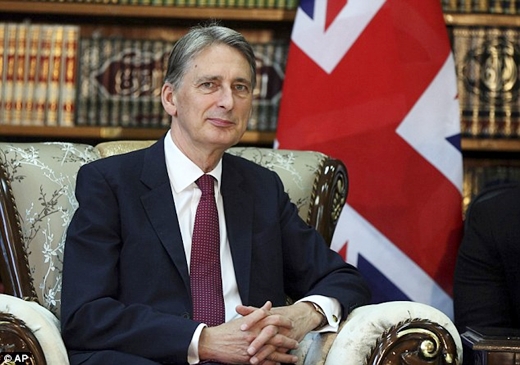
Foreign Secretary Philip Hammond, who visited Iran over the weekend to reopen the British embassy in Tehran, had an opinion piece published in Farsi in Iran newspaper on Tuesday (August 25).

The following is the translation of the piece from its Farsi version:

I arrived in Tehran this week and became the first British foreign secretary to visit Iran in over a decade.

A few weeks ago, I met with Iranian Foreign Minister Mohammad Javad Zarif and our counterparts from P5+1 in Vienna. Back then the world waited with bated breath to see whether our marathon talks would produce a nuclear deal.

We did clinch an agreement. The nuclear deal was a historic victory for diplomacy and a breakthrough for all parties to the talks. The implementation of this deal would assure the world of the purely peaceful nature of Iran’s nuclear program and would provide Iran with an opportunity to transform its ties with Western countries.

I am determined to turn the conclusion of nuclear talks into a new chapter in relations between my country and Iran; relations which are beneficial to the people of Iran and Britain. A high-ranking delegation of British trade and economic managers accompanied me on my Iran visit during which I reopened the British embassy in Tehran.

Ties between Iran and Britain have a long, complicated and often difficult history. I don’t expect problems to be solved overnight. But, today we face many common challenges such as the emergence of IS in Iraq and Syria, instability in Afghanistan, the drugs trade, and climate change.

I believe if we create an atmosphere of trust and confidence, we can improve things. That is what we did during the nuclear talks. I am willing to repeat that through diplomacy and the assistance of the two countries’ embassies.

One way to build trust goes through facilitation of relations between the two peoples: between universities, businesspeople, scientists, artists and families. Many Iranians live in Britain. Many of them have a big share of efforts to serve British society.

I am fully aware of the problems associated with getting a British visa, including the need to travel to Turkey or the UAE. The scope of the British embassy activity will be limited at first. So the Tehran mission won’t start issuing visas immediately after its reopening. But, resumption of visa services in Tehran is a priority and we hope we can resume that service within months.

I don’t expect our tries with Iran to remain free of ups and downs forever, but I am optimistic about the future. The ancient history and cultural richness of the Iranian nation is well known. What impressed me most during this visit was the hospitality of the Iranians, and their bravery in testing the new waters.

We will focus, in equal measure, on the challenges and opportunities that lie ahead as we carry on with efforts to create mutual understanding and respect, especially through diplomacy and later on through trade and commerce, to serve the interests of both nations.

Persia to Iran published in Australia

CMvMv1CUcAAh7y-

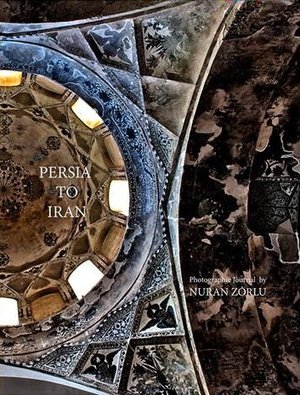
The book ‘Persia to Iran’ by Nuran Zorlu, an artist and photographer, was published by efforts of Iran’s cultural attaché to Australia.

The Public Relations Office of the Islamic Culture and Relations Organization was quoted by Iran’s Book News Agency (IBNA) as saying that a book entitled ‘Persia to Iran’ was published by the Iranian Cultural Office in Australia with a print run of 2,000 copies.

The book is a travelogue which describes visits to ancient sites and spectacular parts of Iran and encompasses very interesting topics that help the audience get familiar with Iran and encourage tourists to visit the country.

The book has been registered in the National Library of Australia and provided to book shops by one of the most prestigious Australian publishing houses within and beyond the country.

The Iranian cultural attaché has bought 700 copies of the book from the author and intends to offer it as a gift it to political and cultural figures and centers.

On the author of Persia to Iran

Nuran Zorlu was born in an Armenian family in 1965 in Istanbul, Turkey. He graduated in philosophy from the University of Istanbul in 1987 and received his master’s degree in photography.

He settled in Australia in 1998 and is now an Australian citizen. He is working as a professional photographer and specializes in photographing ancient monuments and nature.

His photos have been published in many international magazines including Vogue, Marie Claire, Harper Bazar, etc.

During his trip to Iran, Nuran Zorlu presented his observations in the frame of different photographs from archeological sites and interesting sights. He visited many cities, including Maku, Jolfa, Tabriz, Orumiyeh, Sanandaj, Kermanshah, Hamedan, Qom, Isfahan, Yazd, Shiraz and Tehran.


9780646937632_Persia_to_Iran_Nuran_Zorlu.jpg.300x1200_q85

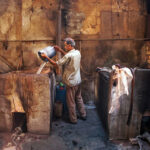
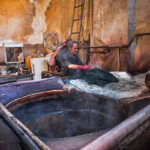
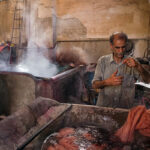
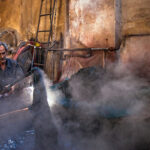
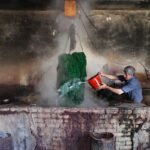
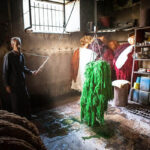
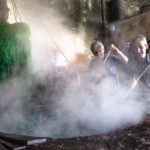
Traditional dyeing workshop (PHOTOS)

dyeing workshop0

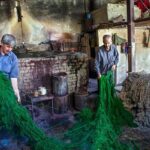
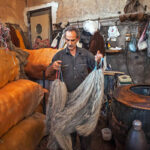
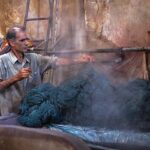
Dyeing workshops in Tabriz still use traditional methods to dye yarn which is later used to weave carpets.

Images of a dyeing workshop posted online by Mehr News Agency:


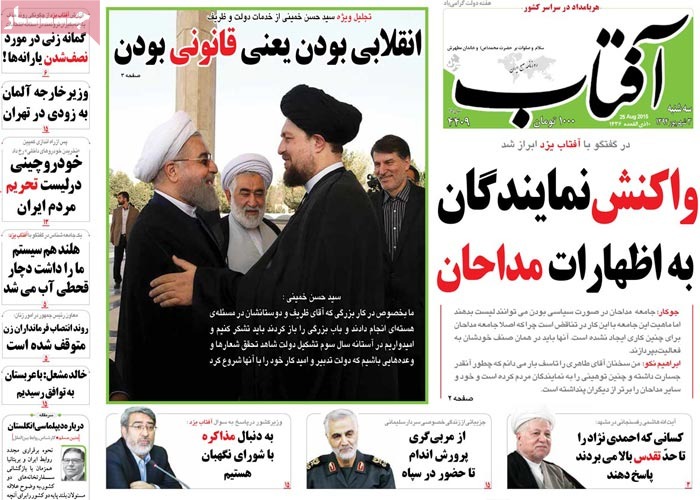
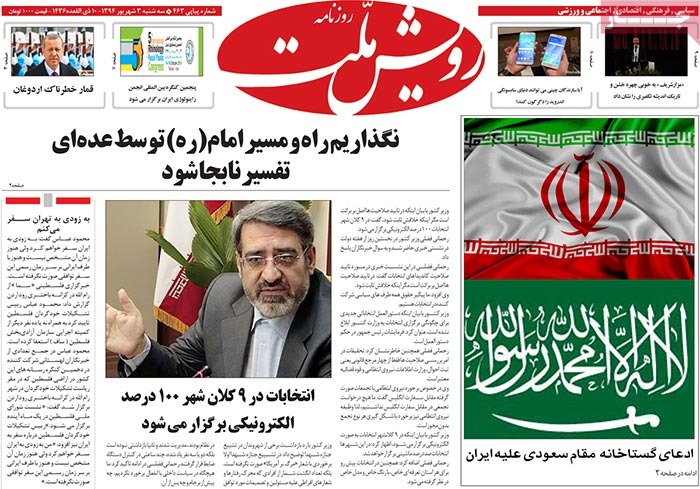
A look at Iranian newspaper front pages on August 25

Iranian Newspapers Headlines

The comments of President Rouhani about republicanism as his Cabinet paid respect to the late Imam Khomeini in his mausoleum in southern Tehran, the meetings of the British foreign secretary with Iranian officials, and the remarks of the judiciary chief and the interior minister on the role of the Guardian Council in the electoral process dominated the front pages of Iranian newspapers on Tuesday.


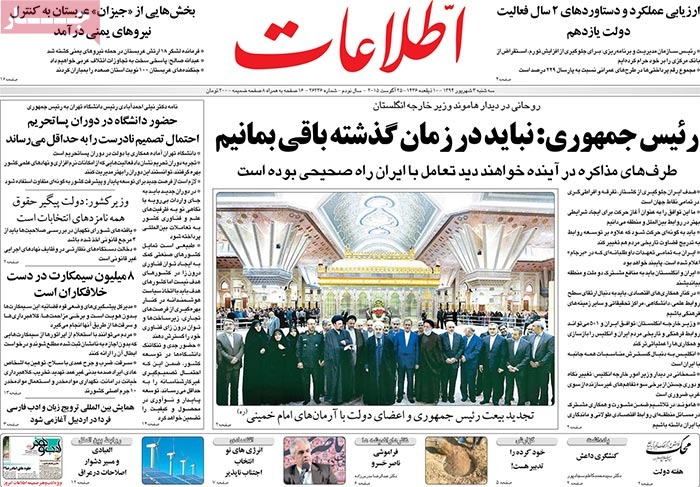
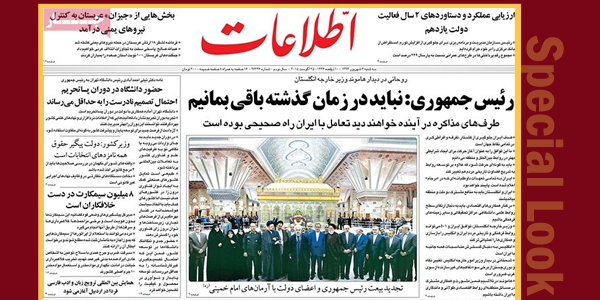
Ettela’at: “We should not remain stuck in the past,” said President Rouhani at a meeting with visiting British Foreign Secretary Philip Hammond.

The Iranian president further said those who sat at the negotiating table with us will realize in the future that interaction with Iran has been the right choice.


Aftab-e Yazd: “Those who went so far as to sanctify Ahmadinejad should now answer for their measures,” said Chairman of the Expediency Council Akbar Hashemi Rafsanjani.

Aftab-e Yazd: Chinese cars have landed on a list of items boycotted by people.

Aftab-e Yazd: The interior minister has said that his ministry seeks to hold talks with the Guardian Council on upcoming elections.


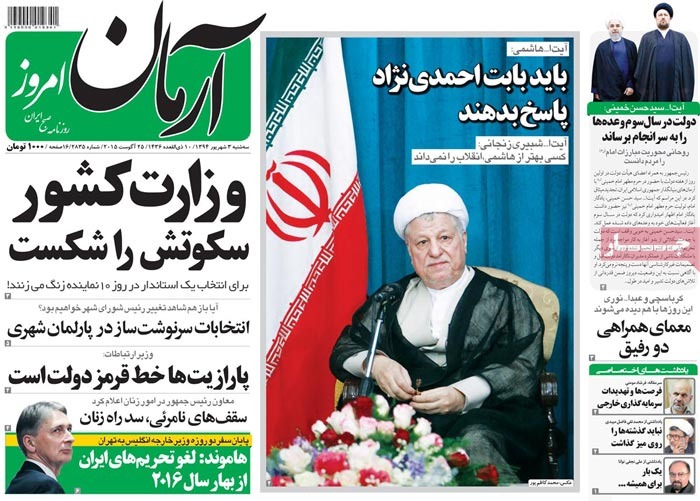
A look at Iranian newspaper front pages on August 25


Arman-e Emrooz: The Interior Ministry has broken its silence.

“I received 10 calls a day from MPs as I was about to name a governor general,” the interior minister said.


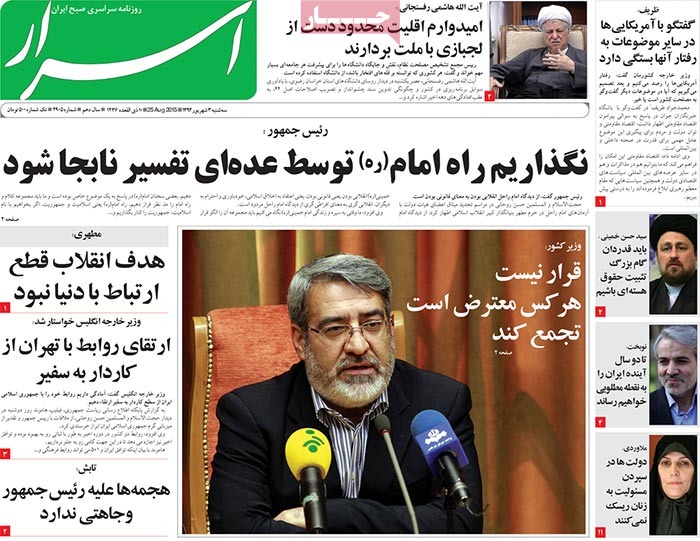
A look at Iranian newspaper front pages on August 25


Asrar: “Talks with the Americans on other issues depends on their behavior,” said Iranian Foreign Minister Mohammad Javad Zarif.

Asrar: “Our revolution was not designed to make us sever our ties with the rest of the world,” said Tehran MP Ali Motahari.


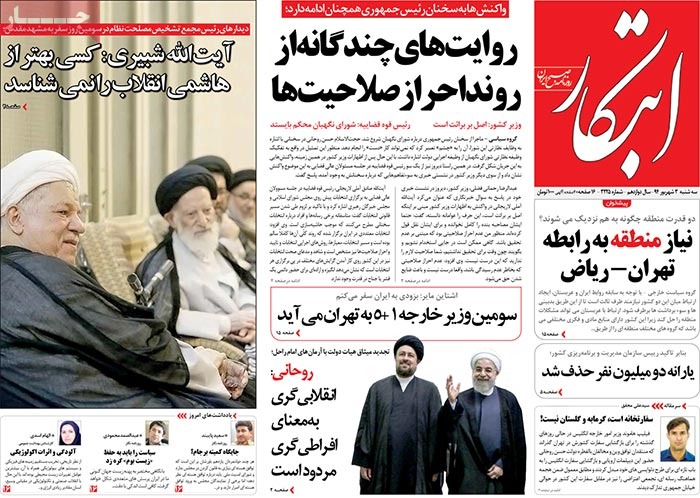
A look at Iranian newspaper front pages on August 25


Ebtekar: The German foreign minister is due in Iran shortly.

He will be the third top diplomat of the P5+1 group to visit Iran in the wake of the Vienna accord.

Ebtekar: Rouhani has dismissed the notion that being a revolutionary is equal to holding extremist ideas.


A look at Iranian newspaper front pages on August 25


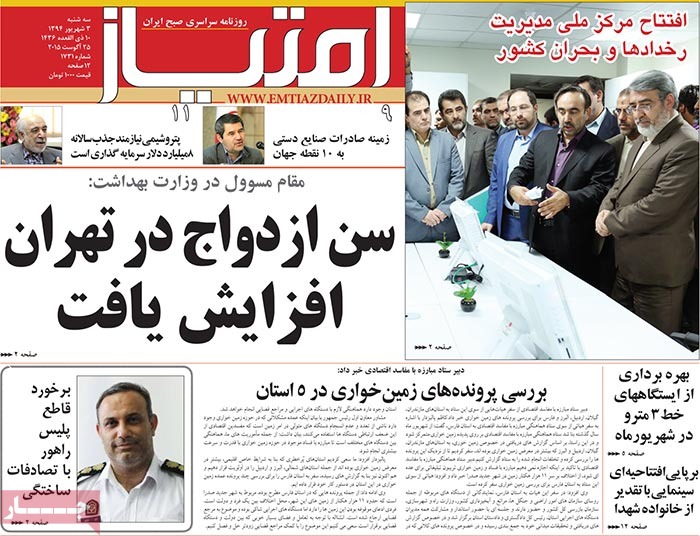
Emtiaz: The petrochemical industry needs $8 billion in annual investment.


A look at Iranian newspaper front pages on August 25


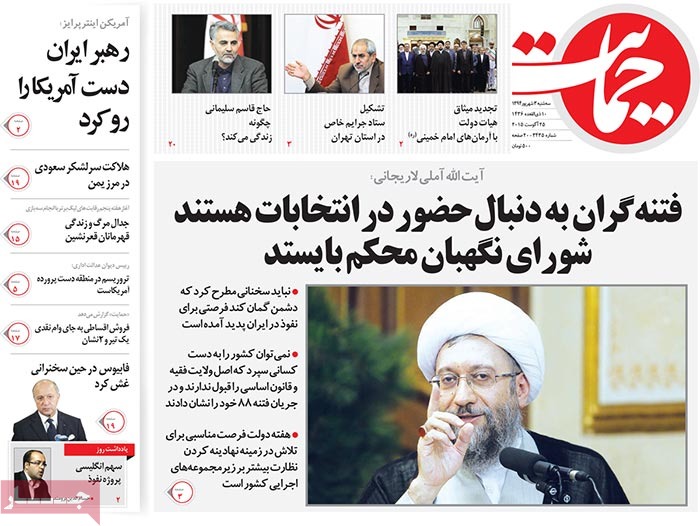
Hemayat: “The seditionists [a reference to those who supported massive riots sparked when two candidates questioned the results of the 2009 presidential elections] seek to run for office in [upcoming] elections; the Guardian Council should stay its ground,” said the judiciary chief.


A look at Iranian newspaper front pages on August 25


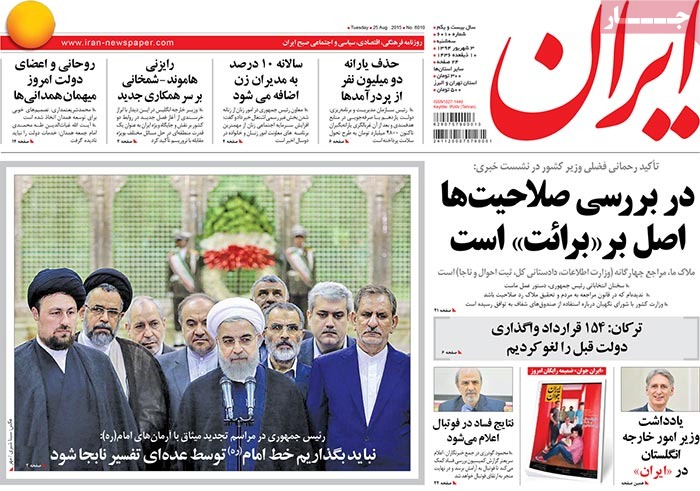
Iran: The cash subsidies of some two million high-income individuals have been cut.

Iran: President Rouhani has said that officials should not allow the ideas of the late Imam Khomeini to be misinterpreted.


A look at Iranian newspaper front pages on August 25


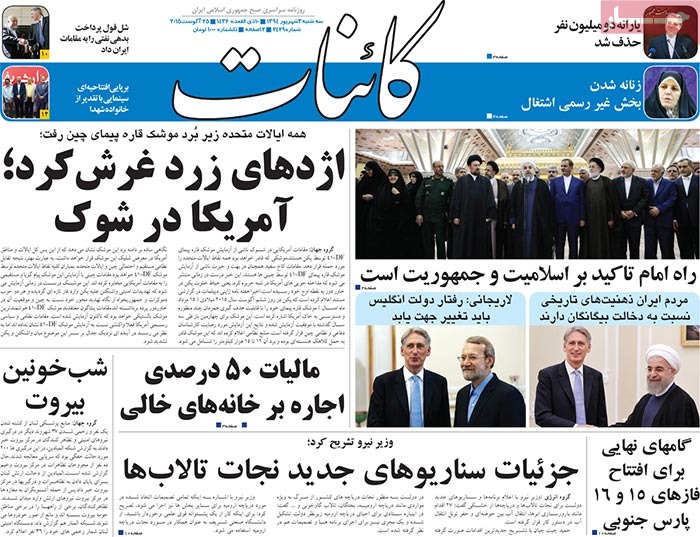
Kaenat: “The path the late Imam chose laid emphasis on Islam and Republicanism,” said president Rouhani.


A look at Iranian newspaper front pages on August 25


Rooyesh-e Mellat: “Elections in nine metropolises will be 100 percent electronic,” said the interior minister.


A look at Iranian newspaper front pages on August 25


Highlights of Ettela’at newspaper on August 25

Ettelaat Highlights-post

 “We should not remain stuck in the past,” said President Rouhani at a meeting with visiting British Foreign Secretary Philip Hammond.

The Iranian president further said those who sat at the negotiating table with us will realize in the future that interaction with Iran has been the right choice.

 The president and his Cabinet have paid a visit to the mausoleum of Imam Khomeini to reaffirm allegiance to the late founder of the Islamic Republic and his ideals.

The visit was timed to coincide with Government Week.

 Assessment of the performance of the 11th government two years after it took office

The director of the Management and Planning Organization said that government has banned itself from borrowing money from the Central Bank in a bid to prevent a hike in inflation.

 Parts of the Saudi town of Jizan have been captured by Yemeni forces.

[Former Yemeni President] Ali Abdullah Saleh has said that the Saudi-led coalition will pay a price for its aggressions.

 “The involvement of universities in post-sanctions decision-making minimizes the risk of wrong decisions,” said the president of the University of Tehran in a letter to President Rouhani.

In the letter, Dr. Nili Ahmadabadi signaled the readiness of Tehran University to cooperate with the government in the post-sanctions era.

 The interior minister has said government tries to protect the rights of all electoral candidates.

Abdolreza Rahmani-Fazli further said involvement of oversight bodies in the responsibilities of executive institutions is illegal.

 Criminals are in possession of eight million unregistered SIM cards.

A senior official with the judiciary has said that these unregistered SIM cards are being used, among other things, in scams and thefts.


Army commander warns enemies of Iran’s prompt response to threats

139405071632504015778094

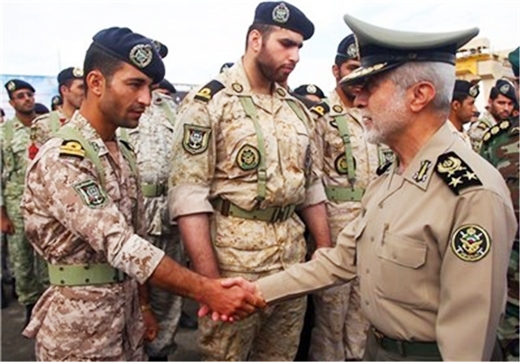
Iran’s Army Commander Major General Ataollah Salehi reiterated the country’s armed forces’ high preparedness to defend the country against possible hostile moves.

Addressing a group of Iranian Air Force cadets on Monday, Salehi pointed to the ongoing developments in the Middle East, and also anti-Iran rhetoric by “bullying countries”, and said the army is well prepared to defend the country.

“The mighty Army of the Islamic Iran has the ability and power to show prompt response to any kind of unwise movement in the region, especially against our dear country: Iran,” Salehi underscored.

In similar remarks earlier this month, Commander of the Islamic Revolution Guard Corps Major General Mohammad Ali Jafari said that his forces, who have advanced technologies in their possession, are prepared to counter any foreign threat.

“Today, the Islamic Revolution Guard Corps has immense power with reliance on people and faith (in God), and by possessing very advanced technologies, it is ready to counter any foreign threat,” the top general said in a cultural conference held in the northeastern city of Mashhad.

He asserted that “defending the Islamic Revolution” is the main mission of IRGC.

Britain should cease interventionist policy toward Iran: Larijani

Larijani-hommand

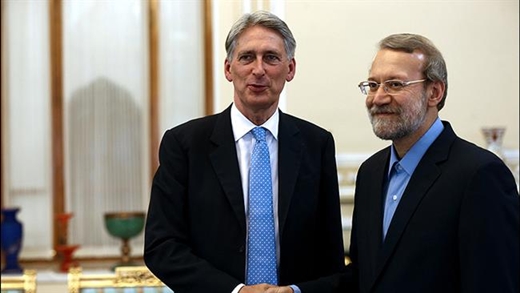
Iran’s Parliament Speaker Ali Larijani has called on the British government to drastically change its interventionist approach toward Iran’s domestic issues if it really seeks a new beginning in relations with Tehran.

“The British government’s behavior concerning on-off interference in Iran’s internal affairs in the past should change and Iranian people should not feel that Britain’s approach toward them is unfriendly and ambiguous” said Larijani in a meeting Monday with visiting British Foreign Secretary Philip Hammond in Tehran.

The top lawmaker further slammed certain Western governments for adopting double standards in dealing with important issues such as human rights and the fight against terrorism, narcotics, and foreign occupation, saying those who created Takfiri terrorism and provided arms and weapons to terror groups should now take responsibility for their wrong policies.

The British foreign secretary, for his part, admitted the fact that Britain has a negative record in the minds of Iranians, saying, however, that no one should be stalled in the past and there must be a move forward.

Hammond also hailed a July 14 nuclear agreement between Iran and six global powers, saying that the world has come to understand that Tehran is making strides to improve its relations with governments around the world.

Hammond said the reopening of the British embassy in Tehran, which he supervised on Sunday, was a new step in opening up new horizons in relations between the two countries.

The top diplomat also urged more parliamentary cooperation and dialog between Iranian and British lawmakers in various fields, including the fight against IS and narcotics.

Hammond arrived in Tehran on Sunday in a first such visit by a British foreign secretary since 2003. In his two-day trip, he held meetings with President Rouhani, Secretary of the Supreme National Security Council (SNSC) Ali Shamkhani, Oil Minister Bijan Namdar Zanganeh and Foreign Minister Mohammad Javad Zarif.

Steinmeier to pay visit to Iran to boost bilateral ties: official

81732572-70116919

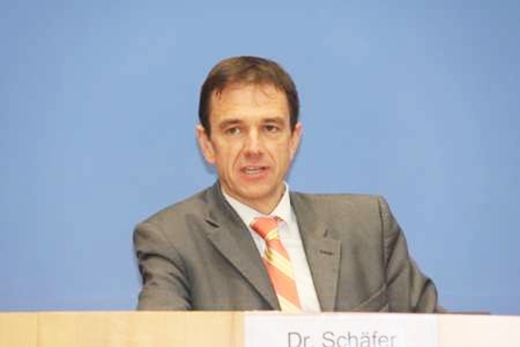
The upcoming Iran visit by German Foreign Minister Frank-Walter Steinmeier is geared to bolster bilateral ties on all fronts, said Foreign Ministry Spokesman Martin Schaefer in Berlin on Monday.

When asked by IRNA about the objective of Steinmeier’s October visit to Iran, Schaefer said the July 14 nuclear agreement – and thus the settlement of a major dispute in the Near and Middle East – is a good reason for establishing new bilateral relations.

The German diplomat recalled the fact that both countries enjoyed very close ties dating back several centuries.

Germany was Iran’s most important trading partner for a long time.

Both countries had deep political, economic and cultural ties which were beneficial to both sides and we seek to re-establish that era, said Schaefer.

This will not happen overnight. This needs time but what is most important is that a first step will be taken and we feel that the timing of it and the international as well as bilateral state of affairs is conducive to boosting Berlin-Tehran relations, he added.

Schaefer said bilateral talks on details of Steinmeier’s Iran visit will soon begin.

The German foreign minister is to visit the Islamic Republic at the invitation of his Iranian counterpart Mohammad Javad Zarif, Schaefer said.

Iran plans $50 billion energy investment

13b6456a-664a-4f32-bc6e-97378954659a

Iran is lining up water and electricity projects worth $50 billion for investment after the removal of sanctions, Energy Minister Hamid Chitchian said.

“About $50 billion worth of projects have been defined and sent to President Rouhani for presentation to domestic and foreign investors amid hopes they will generate good dynamism in this sector,” the minister said on Monday.

The Energy Ministry has drafted more than 800 national projects which are expected to take about 20 years to complete, Islamic Republic News Agency quoted Chitchian as saying.

“We are going to give a lot of the projects to the private sector in order to carry them out at a lower cost and in a shorter period of time,” he added.

Iran used to hand out heavy energy subsidies to its citizens but a half-hearted phasing out of those grants has left the water and power industry saddled with a massive debt.

Under the targeted subsidy program launched by former President Mahmoud Ahmadinejad, water and electricity prices were to be made “realistic” by March 2016 in order to encourage investments in the sector.

“A sharp decline in investments is the biggest loss and the energy industry is suffering from the improper implementation of the targeted subsidy law,” Chitchian said.

“Given that water and electricity prices are enormously lower than their real rates, the industry has built up a massive debt and lost its ability to clear its debts.”

Iran is faced with a serious drought which is straining the country’s water resources and power generation capacities.

Record temperatures have compounded the problem, causing electricity consumption to peak and putting the country on the brink of widespread blackouts and brownouts.

“Forecasts suggest we have put behind the peak electricity load for the year 1394” which ends on March 20, 2016, meaning there will be no widespread outages, Chitchian said.

Iran’s nominal power generation capacity stands at about 74,000 megawatts. The country will add another 2,000 megawatts to its national grid next year amid efforts to cope up with runaway demand, the minister said.

Gas-powered plants produce the bulk of the electricity which the country consumes in the face of declining hydropower capacities due to a lingering drought.

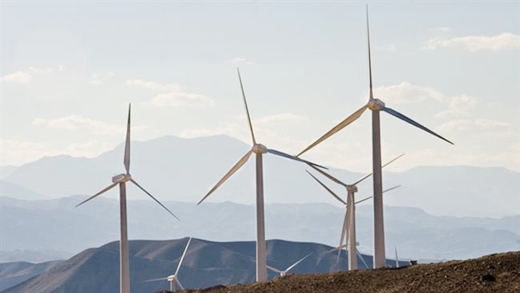
Iran, instead, plans to ramp up solar and wind energy production, with a vision to generate 5,000 megawatts by 2020.

As for water imports, negotiations have been held with some neighboring countries which “we hope to reach definite conclusions in the coming few months”, Chitchian said without naming them.