Tuesday, December 23, 2025
Home Blog Page 4751

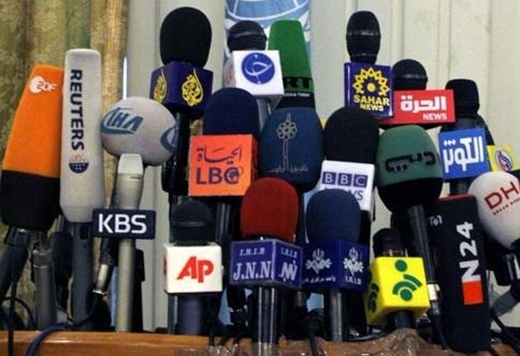
How many international media have offices in Iran?

Press

One hundred forty-one international media, namely 76 broadcasters, 26 news agencies, 26 publications, 10 photo agencies and three news websites have offices in Iran, the Iranian Students’ News Agency reported on May 19.

Up to 41 of the broadcasters are Islamic broadcasters, among them Al-Manar, Al Mayadeen, Aletejah, Al Forat, Beladi, Al-Ahd, Al Ghadeer, Al-Salam and Al-Quds.

The Syrian Arab News Agency (SANA), the Voice of Afghanistan and Iraq’s al-Nakhil are three of the six Islamic news agencies with offices in Iran. Of the 26 publications, five are Islamic, including the Emirati newspaper of Al-Ittihad and the Lebanese daily of As-Safir.

CCTV, Phoenix, China Radio International as well as Germany’s RTL, ZDF, ARD and Austria’s ORF are some of the international broadcasters with offices in Iran, the report said.

American TV channels CBS, ABC, NBC, and CNN have journalists and correspondents on the ground in Tehran.

Giant international news agencies such as the AP, Bloomberg and Platts, France’s AFP, Russia’s Itar-Tass, China’s Xinhua, Japan’s Kyodo and Germany’s DPA along with key papers such as the Times, the New York Times, the Los Angeles Times, the Wall Street Journal, the Financial Times, Britain-based Al-Hayat, Yomiuri, the Asahi Shimbun, the Mainichi Shimbun, NIKKEI (Nihon Keizai Shimbun) and China’s Wenhui Bao also have Iran-based offices.

Getty Images, Corbis Images and Polaris Images, France’s Sipa Press and Abaca, Australia’s Front Line, Britain’s Panos Pictures and Impact, Germany’s Laif are among the 10 photo agencies which have offices in Iran.

Up to 285 journalists work for these foreign news outlets. More than 190 of them are Iranian, 92 are foreigners, and 40 are women.

Last year [ended on May 20, 2015], some 650 foreign journalists were granted a press visa to cover different national events across the country.
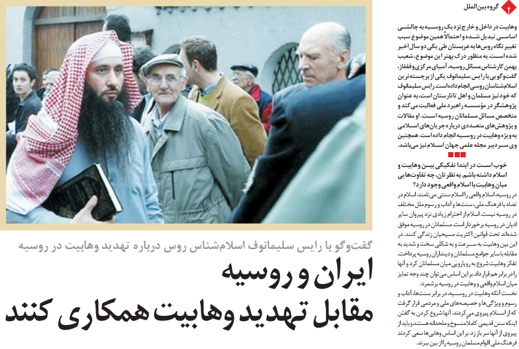

Iran, Russia should join hands to counter Wahhabism: Russian researcher

Javan-Wahabism
Rais_Suleimanov
Rais Suleymanov

Wahhabism has turned into a fundamental challenge in Russia and that has probably led to a shift in the Russian stance on Saudi Arabia over the past two years. To get a better insight into the issue, Javan daily has published an interview with Rais Suleymanov, a distinguished Islamic scholar from Tatarstan and a researcher with the National Strategy Institute, who has published multiple articles about Islam, particularly Wahhabism, in Russia. What appears next is the translation of part of an interview that the daily published on May 18:


What impact have foreign countries had on the spread of Wahhabism in Russia?

Arab countries try to extend their political influence in Russia through the spread of Wahhabism. Saudi Arabia, Qatar and Kuwait are among key promoters and advocates of Wahhabism in Russia. In these Persian Gulf states, Wahhabism is the state ideology. That is why the state reaches out to charities as it tries to promote its ideology of choice.
Besides, even in countries whose state ideology is not centered on Wahhabism, Wahhabi entities are very active. For instance, Egypt’s Wahhabi institutions have established so close relations with the Russians that many Russian nationals who travel there to study at Egyptian universities are hired by these institutions.

That has turned studying abroad into a tool which contributes to the growing influence of Wahhabism in Russia. Many of the young Muslim Russians who have left their country for Saudi Arabia or Egypt to further their education have been swayed by Wahhabi speeches and preaching. They have also read Wahhabi books. So when they return home, they start promoting the beliefs and principles put forth in those books.

Another thing which has played a role in the growth of this ideology in Russia is the books [on Wahhabism] which have been written in Arab countries and or in Turkey and translated into Russian or languages of the ethnic groups living in Russia.


Can Iran and Russia fight Wahhabism? What characteristics should an anti-Wahhabism campaign have?

[…]

The major obstacle lies in the fact that Russian Muslims have little knowledge of Shiite critiques about Wahhabism; Iranian religious figures who have refuted the ideology remain unknown in Russia.

Books written by Iranian clerics such as Morteza Motahari, Abdolhossein Mousavi, and Ali Mohammad Naghavi are available in Russian cities like Kazan, Moscow and St. Petersburg. But none of these books offer information about Iranian critiques about Wahhabism.

Only one book on Wahhabism by Farez Askarzadeh, an Azerbaijan-based author, has been published. The book which is dubbed Dividing Sect was translated into Russian in 2001. Nonetheless, critiquing Wahhabism as an extremist ideology by Iranian clerics is conspicuously absent in Russia.

In a 2009 conference in Kazan, Seyyed Mohammad Reza Zarei, Iran’s second consul, delivered a speech on the problem of Wahhabism and said, “Lots of Islamic books which have been translated into Russian do not serve the interests of Russian Muslims at all and it’s necessary to have proper and authentic translations of Islamic sources. Also, special attention should be paid to the employment of staff members and instructors hired by Islamic training centers in Russia. The process of sending Russian students abroad to take religious courses should also come under scrutiny. In fact, Russian students must be stopped from ending up in training centers which promote fundamentalism and Wahhabism.”

At that gathering we learned that Iranian diplomats were in on what was going on among Russian Muslims and closely monitored what was happening in the Russian Islamic community.

It seems that there are a lot of opportunities for Iran and Russia to cooperate in the fight against Wahhabism.

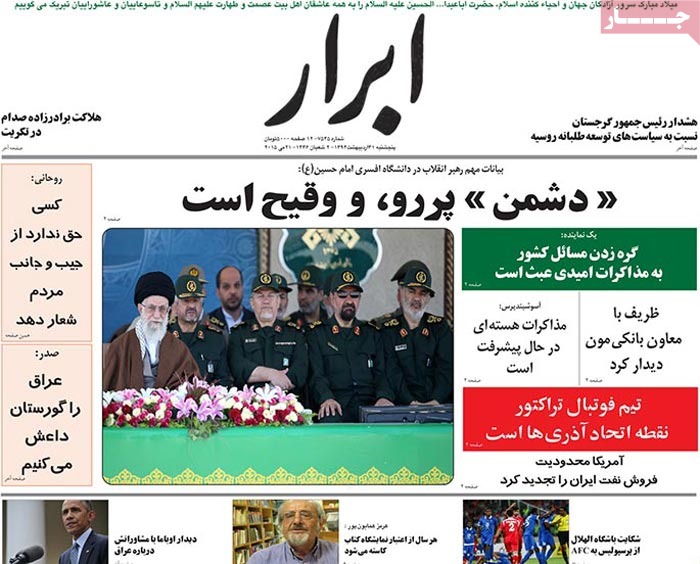
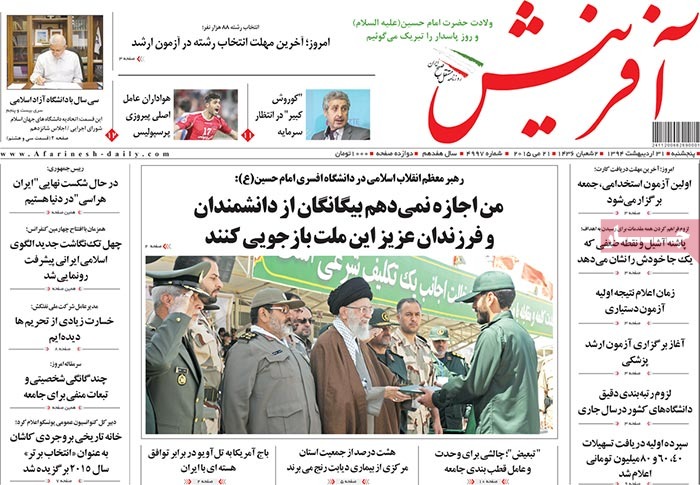
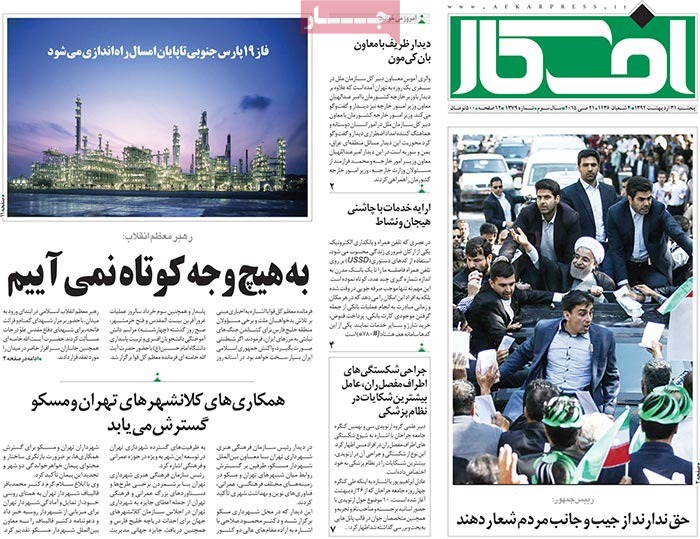
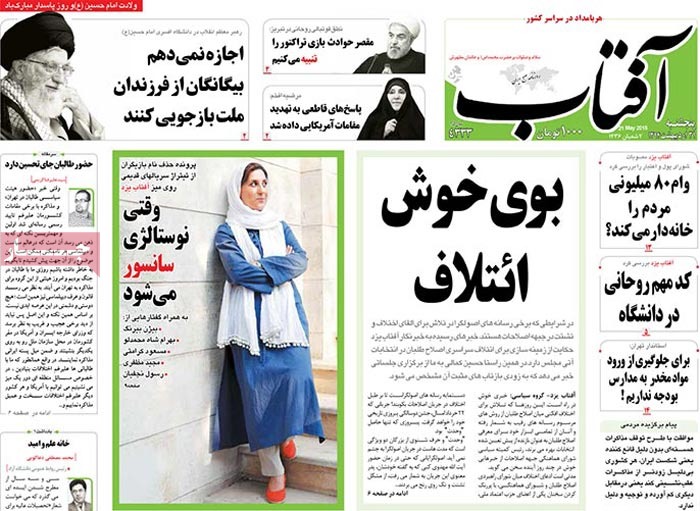
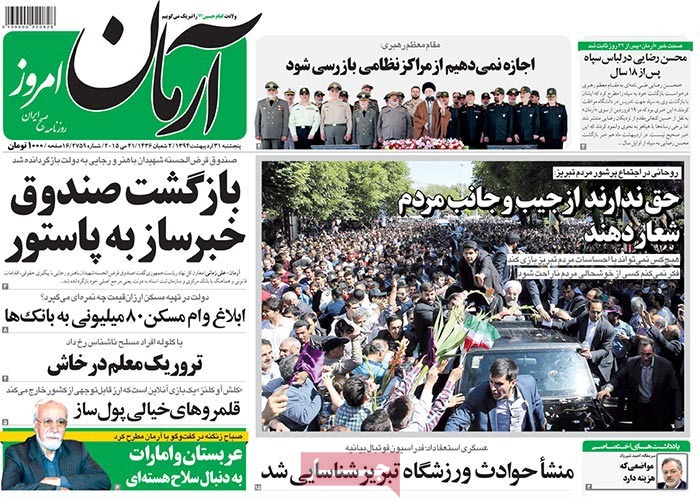
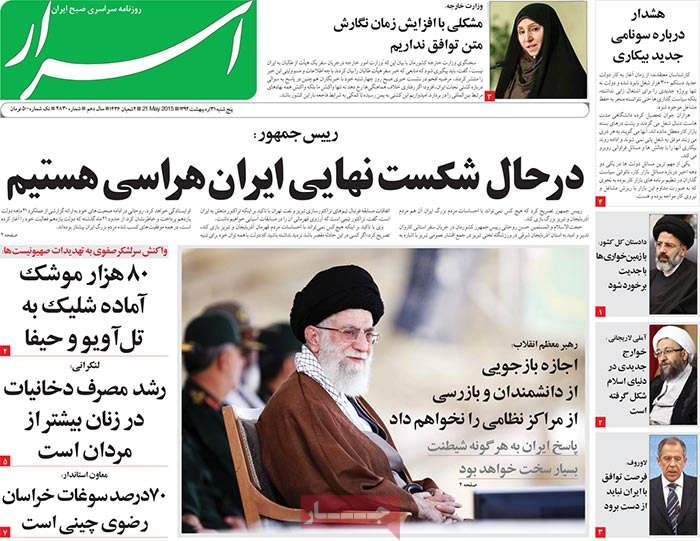
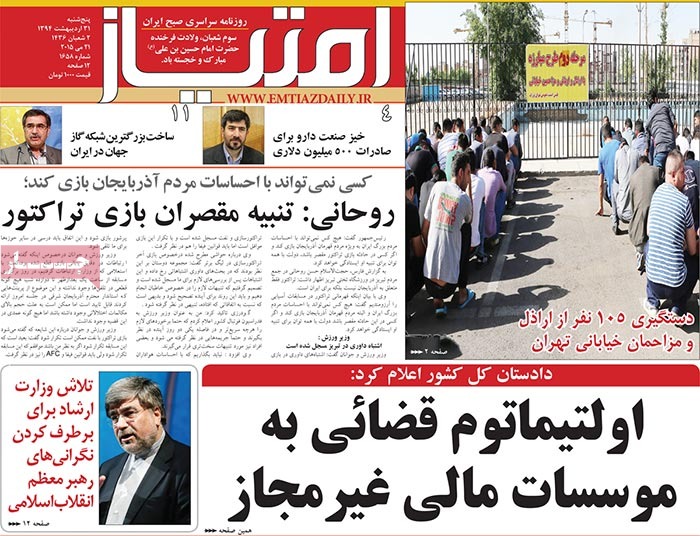
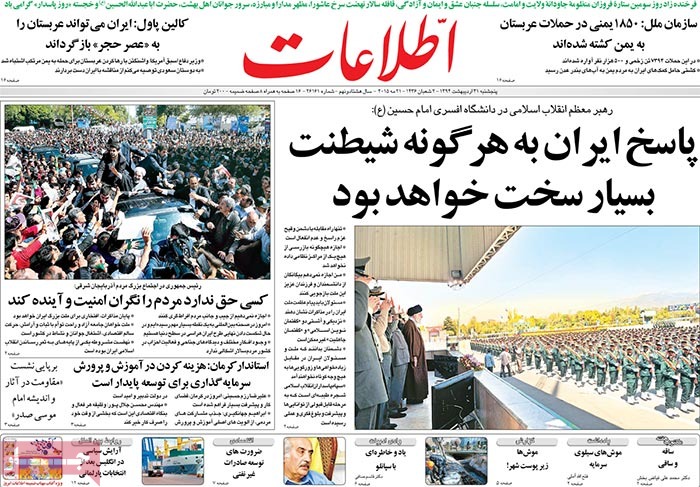
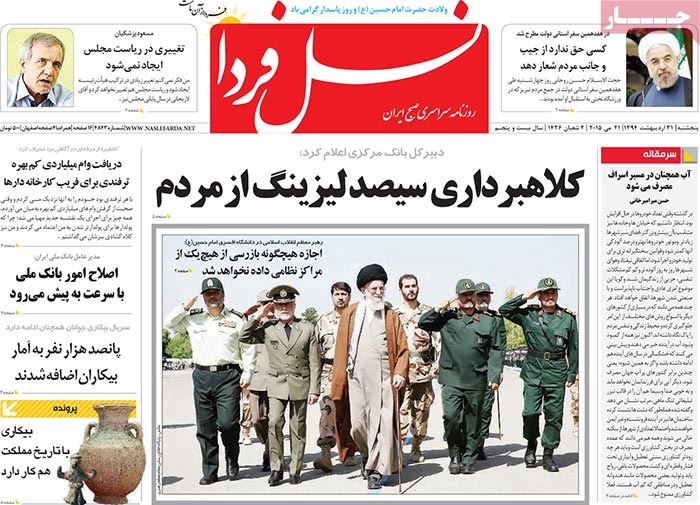
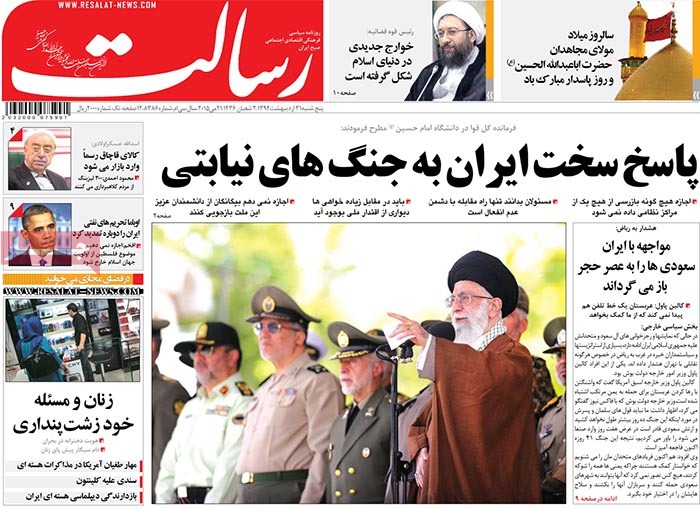
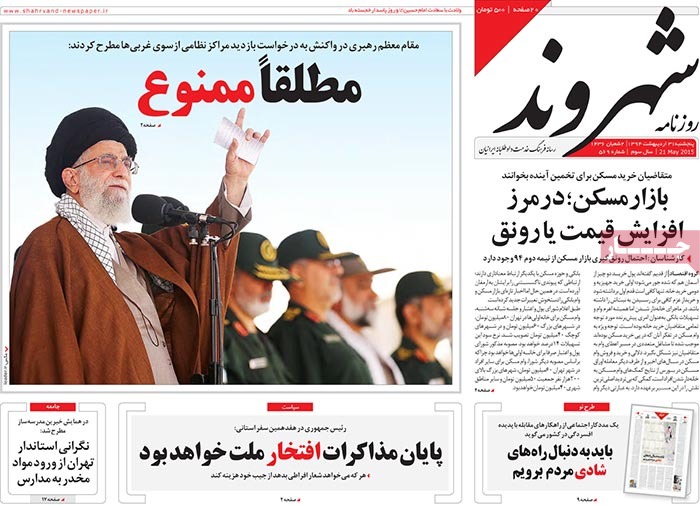
A look at Iranian newspaper front pages on May 21

Iranian Newspapers Headlines

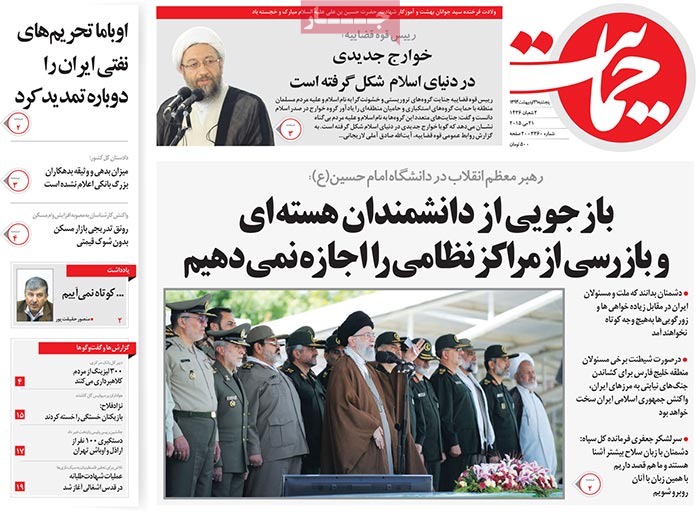
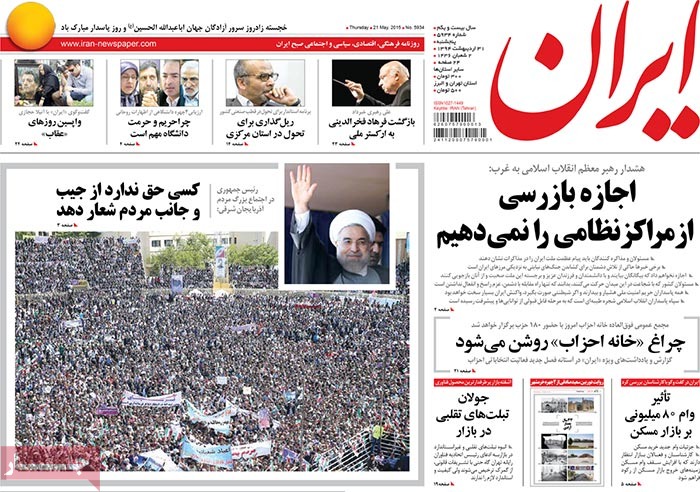
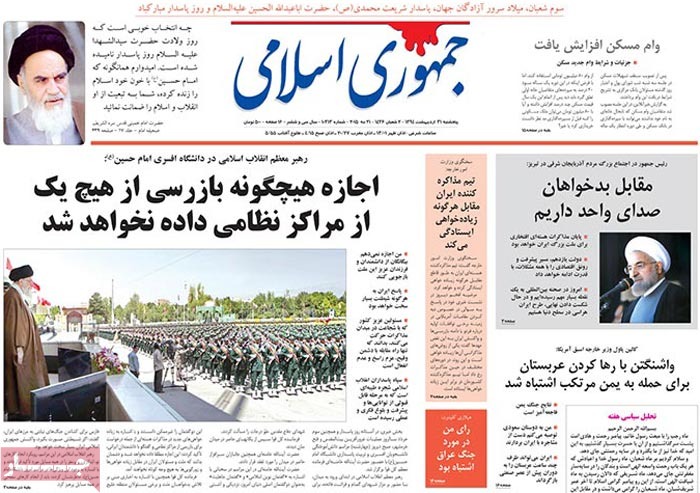
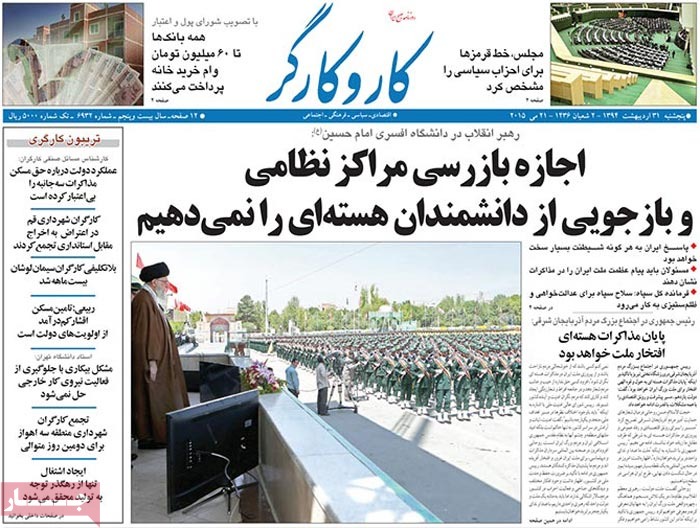
Comments by the Supreme Leader that he would not allow foreign inspections of Iran’s military sites and interrogation of Iranian scientists dominated the front pages of Iranian newspapers on Thursday. President Rouhani, who is in Tabriz, also made front-page headlines by saying no one has the right to chant slogans at the expense of the public.


Abrar: Foreign Minister Mohammad Javad Zarif has held talks with a deputy of the UN secretary general.

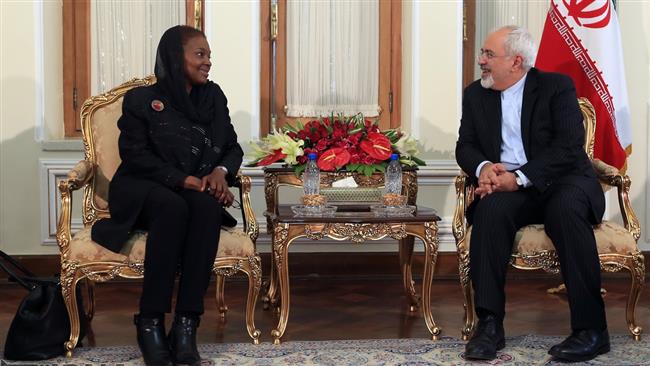
At a meeting with visiting UN Under-Secretary General for Humanitarian Affairs and Emergency Relief Coordinator Valerie Amos, the Iranian top diplomat said that the UN should do more to assist the stricken people of Yemen.


A look at Iranian newspaper front pages on May 21


Afarinesh: Some 8 percent of the population of Markazi Province suffers from diabetes.


A look at Iranian newspaper front pages on May 21


Afkar: Cooperation between Tehran and Moscow metropolises is to increase.

Afkar: “They are not allowed to engage in sloganeering at the cost of the public and on behalf of the public,” President Rouhani said.


A look at Iranian newspaper front pages on May 21


Aftab-e Yazd: “I won’t allow foreigners to interrogate the children of the Revolution,” said Supreme Leader Ayatollah Ali Khamenei.

The Leader made the comment during a visit to Imam Hossein Military Academy on Wednesday.

Aftab-e Yazd: “Threats by American officials have been vehemently responded,” said Foreign Ministry Spokeswoman Marzieh Afkham.


A look at Iranian newspaper front pages on May 21


Arman-e Emrooz: Mohsen Rezaei in the outfit of Revolution Guards for the first time in 18 years

[It came after the Supreme Leader gave the green-light to the former commander of the Islamic Revolution Guard Corps to become a Revolution Guards again.]

Arman-e Emrooz: A teacher has been assassinated in Khash by an unknown assailant.

Arman-e Emrooz: The source that triggered the incident in Tabriz has been identified.

[Last Friday, rumors in Tabriz that the home team has been crowned champion of the Premier League triggered bitter incidents in the city.]


A look at Iranian newspaper front pages on May 21


Asrar: “We are on the verge of defeating an Iranophobia project in the world,” President Rouhani said during a visit to Tabriz, the capital of East Azerbaijan Province.

Asrar: “Some 80,000 missiles are ready to target Tel Aviv and Haifa,” said Major General Rahim Safavi, a military advisor to the Supreme Leader, in response to threats by Zionist officials.

Asrar: The growth in smoking among women is greater than men.


A look at Iranian newspaper front pages on May 21


Emtiaz: The judiciary has issued an ultimatum to financial institutes that operate without permit.


A look at Iranian newspaper front pages on May 21


Ettela’at: “Iran’s response to any evil measure would be crushing,” said the Supreme Leader.

[The Leader’s comment came in reaction to efforts by some regional countries to take proxy wars to the borders of Iran.]

Ettela’at: “Individuals are not allowed to make people worried about their security and future,” said President Hassan Rouhani.


A look at Iranian newspaper front pages on May 21


Hemayat: Police in Tehran have arrested more than 100 thugs.


A look at Iranian newspaper front pages on May 21


Iran: Farhad Fakhreddini [a renowned Iranian composer, conductor and founder of Iran’s National Orchestra] has returned to the National Orchestra.


A look at Iranian newspaper front pages on May 21


Jomhouri Islami: “The Iranian negotiating team won’t budge in the face of excessive demands,” said Foreign Ministry Spokeswoman Marzieh Afkham.


A look at Iranian newspaper front pages on May 21


Kar va Kargar: “Helping low-income families have proper housing is a government priority,” said the labor minister.


A look at Iranian newspaper front pages on May 21


Nasl-e Farda: Some 300 leasing companies have ripped off their clients.


A look at Iranian newspaper front pages on May 21


Resalat: President Obama has maintained Iran’s oil sanctions.


A look at Iranian newspaper front pages on May 21


Shahrvand: Tehran provincial governor has expressed concern about drugs finding their way into schools.

Shahrvand: “The end of negotiations will be a source of pride for the Iranian people,” President Rouhani said.


A look at Iranian newspaper front pages on May 21


Rouhani: Gov’t introducing peace-loving, civilized Iranians to world

Rouhani-Tabriz

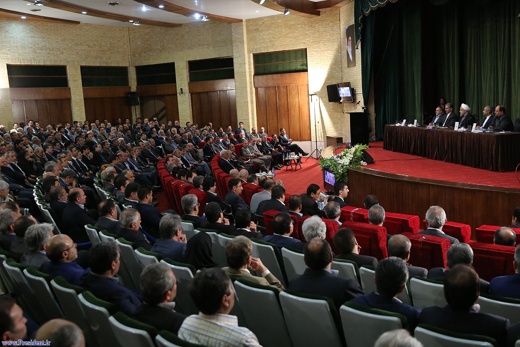
President Hassan Rouhani said his government is reflecting the positive image of Iranians as a peace-loving and civilized nation to the world.

He made the comments on Wednesday addressing a meeting of businessmen and investors in Tabriz, the capital of the East Azerbaijan Province.

Rouhani stressed the need to strengthen ties with neighboring countries and said that Iran has never shown aggression against [or hostility toward] any country and it will not. The Iranian nation favors peaceful co-existence with its neighbors”.

“We are not after aggression and retaliation and want good ties with the world and neighbors,” he added, referring to Iran’s policies in the wake of the fall of the Soviet Union and Iraq’s invasion of Kuwait.

If there is a problem, Iran wants to settle it and create a better condition, he said.

President Rouhani also elaborated on the government policies on supporting business, financial, industrial and economic activities.

Amos meets with Zarif over Saudi war on Yemen

Zarif-UN-Yemen

Iranian Foreign Minister Mohammad Javad Zarif has held a meeting with visiting UN Under-Secretary-General for Humanitarian Affairs and Emergency Relief Coordinator Valerie Amos over the war in Yemen.

The Wednesday meeting in Tehran was also joined by other Foreign Ministry officials, including Deputy Foreign Minister for Arab and African Affairs Hossein Amir-Abdollahian.

Following the meeting, Amir-Abdollahian said Zarif and Amos discussed ways to speed up aid efforts in the impoverished country under aggression by Saudi Arabia since late March.

The senior Iranian diplomat further confirmed that the UN special envoy for Yemen, Ismail Ould Cheikh Ahmad, would soon pay a visit to Iran.

He added that the Iranian ship carrying aid for war-ravaged Yemenis has been dispatched under “full coordination with the UN” and would head for nearby Djibouti, where the world body has established a delivery hub.

The ship, dubbed Nejat (Rescue), is carrying 2,500 tons of basic supplies including flour, rice, medicine, and water. Several international journalists, doctors, and anti-war activists are also onboard the ship.

About 16 million of Yemen’s population of 25 million are in need of assistance and water supplies while health services are on the verge of collapse, aid organizations have warned.

According to Yemen’s Freedom House Foundation, the Saudi airstrikes have claimed the lives of some 4,000 Yemeni people and injured nearly 7,000 others so far.

Saudi Arabia started its military aggression against Yemen on March 26 – without a UN mandate – in a bid to undermine the Houthi Ansarullah movement, which currently controls the capital, Sana’a, and other major provinces, and to restore power to Yemen’s fugitive former President Abd Rabbuh Mansour Hadi, who is a staunch ally of Riyadh.

Iran wins Asian Men’s U-23 Volleyball Championship

Iran Volleyball

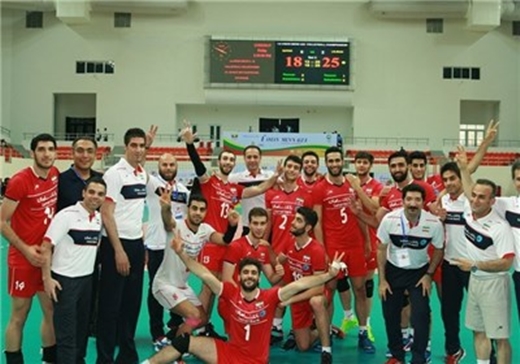
The Iranian volleyball team defeated South Korea in the final match to win the 2015 Asian Men’s U-23 Volleyball Championship.

On Wednesday, Iran beat South Korea in straight sets (25-16, 25-21, 25-21) and won the title.

Chinese Taipei finished third after defeating China 3-1 (27-25, 25-21, 21-25, 25-23).

The 2015 Asian Men’s U-23 Volleyball Championship held in Naypyidaw, Myanmar from 12 to 20 May 2015.

It was the inaugural edition of the tournament and served as the Asian qualifier for the 2015 Men’s U-23 World Championship to be held in Dubai, United Arab Emirates.

Iran and South Korea qualified for the world championship as the Asian top two teams.

Iran, P5+1 begin new nuclear talks in Austria

Iran Talks

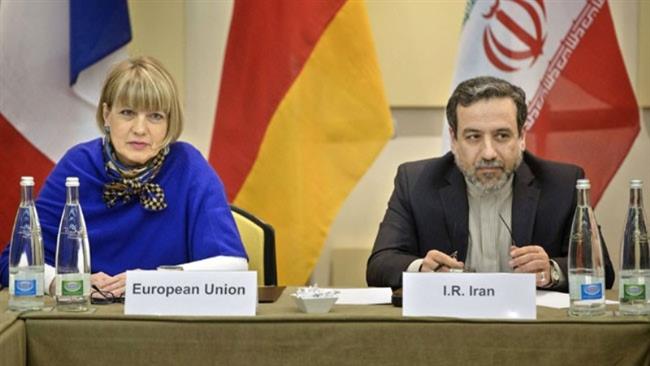
Iran and P5+1 start a new round of nuclear talks in Austria’s Vienna with an eye on hammering out a final agreement by the end of the next month.

The meeting started in the Austrian capital city on Wednesday, chaired by Iranian Deputy Foreign Minister for Legal and International Affairs Abbas Araghchi, who heads the Iranian delegation, and European Union Deputy Foreign Policy Chief Helga Schmidt, who represents the six countries.

Later the negotiations, which are expected to continue until Friday, could be also attended by top American, Russian, Chinese, British, and German officials.

Negotiators held similar talks in Vienna earlier in the month.

Iran and P5+1 – the US, France, Britain, China, Russia and Germany- reached a mutual understanding in Lausanne, Switzerland, on April 2.

Majid Takht-e-Ravanchi, another Iranian deputy foreign minister in the Vienna talks, said Monday that Tehran seeks a “good” nuclear deal with P5+1. He, however, stressed that the Islamic Republic will not cave in to any excessive demands by the opposite side.

The lifting of anti-Iran sanctions is one of the main issues, over which the two sides have some differences. Tehran insists there will be no phased removal of sanctions and that they must be lifted all at once.

President Rouhani arrives in Tabriz (PHOTOS)

President Rouhani

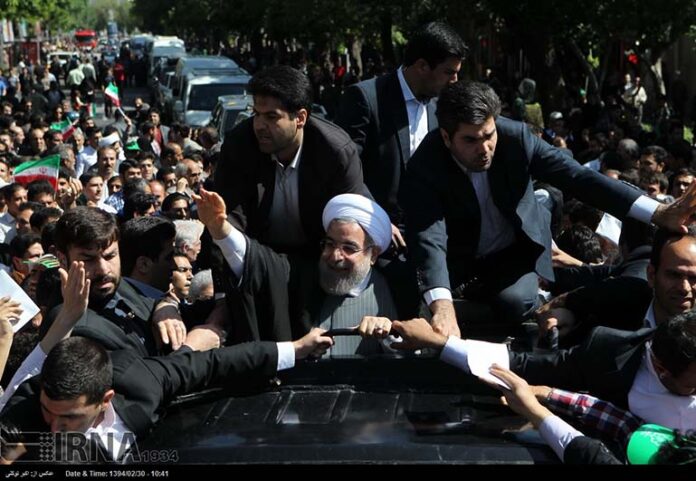
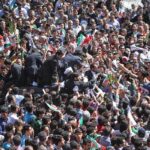
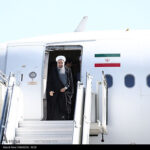
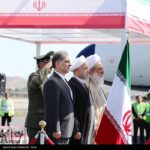
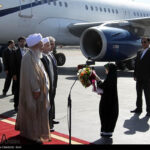
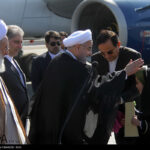
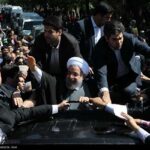
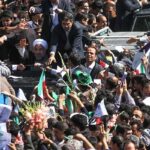
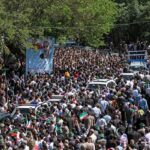
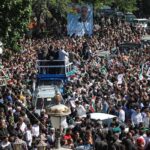
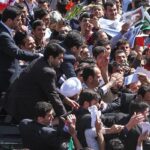
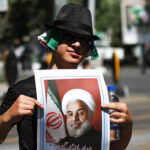
Upon arrival in the provincial capital of East Azerbaijan Wednesday, residents of Tabriz gave a warm welcome to President Rouhani.

News agencies released the following photo gallery of the president arriving in the northwestern city of Tabriz and being welcomed by locals there.

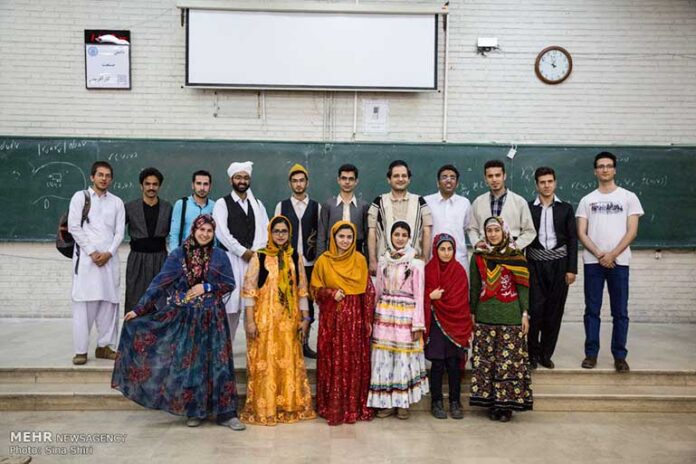
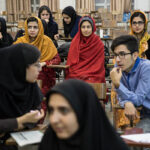
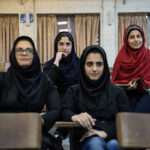
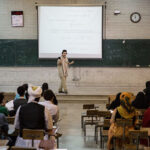
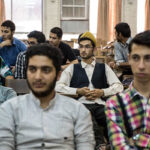
Dressed in local costumes, students, professors attend classes (PHOTOS)

Dressed in local costumes

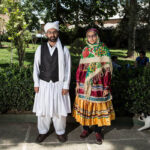
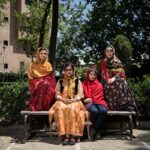
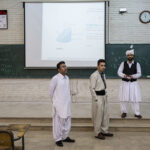
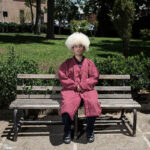
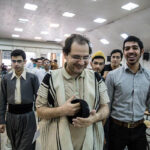
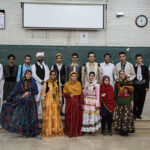
A number of students and professors at Sharif University of Technology attended classes on Tuesday dressed in local costumes which represent their ethnicity.

The symbolic move was designed to highlight the role of local cultures, lifestyles and knowledge in sustainable development.

Snapshots of university students and professors dressed in local costumes released online by Mehr News Agency:

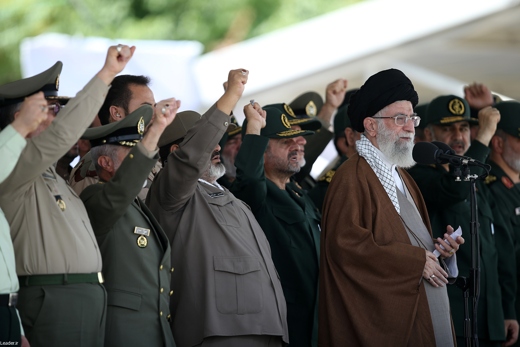
Leader: Iran not to allow inspection of its military centers

Iran-Leader

Supreme Leader of the Islamic Revolution Ayatollah Seyyed Ali Khamenei said Iran will not allow any kind of inspections of its military centers.

Addressing a meeting in Imam Hossein University on Wednesday, the Supreme Leader stressed that Iran will not allow inspections of its military facilities.

He further said they keep coming up with new things in the nuclear talks while we have already made it clear that Iran is not going to allow inspections of any of its military centers.

Ayatollah Khamenei stressed that Iran will not allow any of its military centers to be inspected by the foreigners.

They say they must receive permissions to conduct interviews with Iran’s nuclear scientists and I say this means interrogation, the leader said.

I will not permit foreigners to come and interview with scientists of the nation who advanced the domestic nuclear knowledge to this level, Ayatollah Khamenei stressed.

The Supreme Leader said he is informed that enemies, assisted by certain stupid officials in the Persian Gulf region, are determined to drag proxy wars close to the Iranian borders.

They should realize that Iran’s response to any evil move will be very harsh, the Supreme Leader of the Islamic Revolution reiterated.