Sunday, December 21, 2025
Home Blog Page 4674

Spokeswoman slams Bahrain’s anti-Iran claims

139305291750219263452164

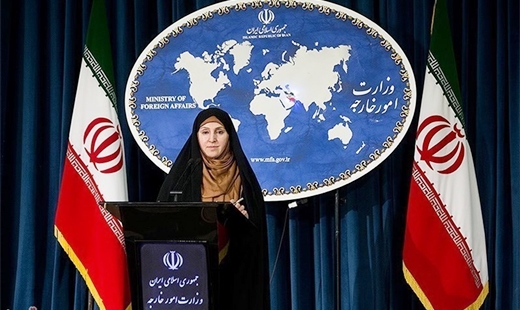
Iran’s Foreign Ministry spokeswoman dismissed as “baseless” the accusations raised by Bahrain’s Interior Ministry that a number of suspects behind a July bombing in the Arab country’s Sitra have alleged links with Iran.

“The sources of export of terrorism and the culture of violence are so well-known that such claims (against Iran) could not deceive anybody,” Marzieh Afkham said on Thursday.

Her comments came after Bahrain’s Interior Ministry in a statement earlier in the day claimed that five suspects arrested over a bombing in the kingdom’s eastern island of Sitra had been organized by people with links with the Islamic Revolution Guard Corps (IRGC).

On July 28, a bombing outside a school in Sitra killed two policemen and wounded six others. Bahraini authorities arrested several people in connection with the incident and claimed the attack was a “foreign attempt” to harm the Persian Gulf country’s stability.

Afkham also described the allegations as a “clumsy” attempt to defy the “constructive diplomatic trend” in the region following the conclusion of nuclear talks between Iran and P5+1 (Russia, China, the US, Britain, France and Germany).

Manama had better take advantage of the good atmosphere of relations among the regional countries to settle its own internal crisis, Afkham was quoted by Iran’s Foreign Ministry official website as saying.

Bahrain, a staunch ally of the US in the Persian Gulf region, has been witnessing almost daily protests against the ruling Al Khalifa dynasty since early 2011, with Manama using heavy-handed measures in an attempt to crush the demonstrations.

Scores of Bahrainis have been killed and hundreds of others injured and arrested in the ongoing crackdown on the peaceful demonstrations.

Saudi troops have been also deployed to Bahrain to assist in its crackdown on the peaceful protesters.

India impatient for closer Iran ties

139405231547053695873264

Indian Prime Minister Narendra Modi expressed his country’s enthusiasm for establishing a new era of relations with Iran.

In a meeting with Iranian Foreign Minister Mohammad Javad Zarif in New Delhi on Friday, Modi said he has prepared all Indian officials for a new round of relations with Iran.

The Indian premier said he was impressed by the Iranian President Hassan Rouhani’s “positive and constructive” stances in a July summit in the Russian city of Ufa.

Modi said he has felt President Rouhani’s seriousness about enhancement of Iran-India relations.

The Indian prime minister also called for the immediate establishment of a joint commission for the expansion of bilateral relations.

Highlighting the two countries’ similar views on Afghanistan, Iraq and other regional developments, Modi stressed the need for continued consultation between Iran and India to secure regional peace and stability.

He said Tehran and New Delhi can promote cooperation on a railroad linking Iran to Central Asia and on to the International North-South Transport Corridor (NSTC).

The Iranian foreign minister, for his part, warned of the threats posed by the ISIL (the Islamic State in Iraq and the Levant) Takfiri terrorist group as well as extremism and violence, urging collective efforts to battle these menaces.

Countering these evil scourges requires global determination and cooperation among different countries, he said, adding that Iran has always played a constructive role in regional developments and sought to safeguard the security of the region.

Iran’s Foreign Minister Zarif regional tour took him earlier to Lebanon, Syria and Pakistan.

His trips came in the wake of the conclusion of nuclear talks between Tehran and P5+1 (Russia, China, the US, Britain, France and Germany).

Iran and the six powers on July 14 finalized the text of a lasting nuclear deal that would terminate all anti-Iran sanctions after taking effect. The United Nations Security Council also unanimously passed a resolution afterward, endorsing the comprehensive accord.

Iran diplomat urges political solution to Yemen conflict

4f34fdda-d556-4f6c-bb26-2400fc28e4e6

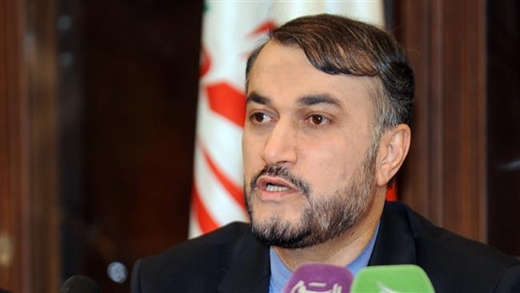
Iran has renewed calls for an immediate halt to the Saudi military campaign against Yemen, saying political dialogue is the only way out of the conflict in the violence-wracked Arab state.

In a phone conversation with UN special envoy to Yemen Ismail Ould Cheikh Ahmed Friday, Iran’s Deputy Foreign Minister for Arab and African Affairs Hossein Amir Abdollahian said all sides should focus on finding a political solution to the conflict in Yemen, stressing that the use of force would certainly fail to resolve the crisis.

The Iranian diplomat emphasized the need for an immediate end to Saudi attacks and humanitarian blockade against Yemen.

Tehran holds constant consultations with the UN representative and will do everything it can so that the negotiations between Yemeni factions in the Omani capital, Muscat, lead to fair conclusions, Amir Abdollahian said.

Ahmed, for his part, hailed Iran’s efforts to help settle the Yemeni conflict, voicing optimism that Yemeni factions would agree on a political solution in the near future.

An agreement has been drafted, and the Yemeni groups are expected to offer their views on the text in the coming days, he said.

Saudi Arabia has been carrying out raids against Yemen since March 26, defying international calls for a halt to its deadly campaign which has led to a deteriorating humanitarian situation in the impoverished state.

According to the United Nations, the conflict in Yemen has killed nearly 4,000 people, almost half of them civilians, since late March.

No change in Iran’s policy towards US: Senior cleric

13940523000374_PhotoI

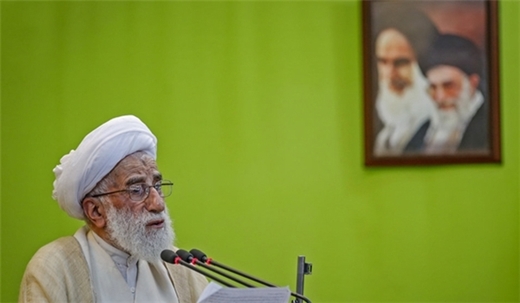
Tehran’s Friday prayers leader Ayatollah Ahmad Jannati underlined that the nuclear agreement between Iran and six world powers does not mean a change of heart in Tehran.

Addressing a large and fervent congregation of the people on Tehran University campus on Friday, Ayatollah Jannati said, “As Supreme Leader of the Islamic Revolution Ayatollah Seyyed Ali Khamenei has said on different occasions our stance toward the US has not changed.”

He pointed to the opposition of the regional policies of Iran and the US, and said, “Western countries should not suppose that they can change the Islamic Republic of Iran’s policies in the strategic region of the Middle East.”

[…]

Construction of petrochemical complex in Makran needs permit: Ebtekar

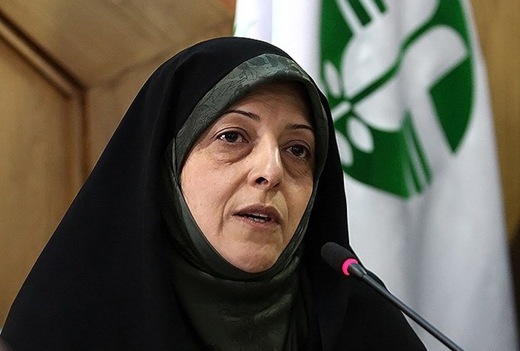
Vice-President and Director of the Environment Protection Organization Masoumeh Ebtekar announced that the construction of a petrochemical complex in the Makran coast needs precise environmental assessments.

“The construction of a petrochemical complex and steel complex in Chabahar and Makran coasts depends on precise environmental assessments,” Ebtekar said in a meeting with the presidential advisor and secretary of Special Economic Free Zones in Tehran.

Last year, investors from India’s private and public sectors voiced their willingness to invest in Makran petrochemical complex in Chabahar, southern Iran.

A delegation comprising the Indian ambassador to Iran, the representative of Indian Ministry of Chemical Substances, the managing director of India’s GACL Company and two managers of Chabahar Free Zone visited Makran petrochemical complex.

In October 2014, a senior Indian trade official stressed the importance of Chabahar for investment in various sectors, including the transit of India’s products to other countries.

Manager of Indian Commercial Group Hersh Mishra underlined that the capabilities, capacities and unique location of Chabahar have prepared a suitable ground for investors in the private sector in this port city.

He said good infrastructural plans such as petrochemical refinery, railway, development of the jetty and transit route are either under implementation or study which will pave the way for profitable investment.

Chabahar, a seaport in southeastern Iran, lies on the border of the Indian Ocean and the Sea of Oman. It is the only Iranian port with direct access to ocean. The port was partially built by India in the 1990s to provide access to Afghanistan and Central Asia, bypassing Pakistan.

Iran’s Chabahar port, 72 km to the west of Pakistan’s Gwadar port, holds immense strategic and economic significance for India. Chabahar and Gwadar ports are located in a common coast and they are 70 kilometers away from one another.

Iranian official urges International bodies to facilitate aid dispatch to Yemen

139405172230589385841264

Iranian Deputy Foreign Minister Morteza Sarmadi deplored as “unacceptable” the politicization of the issue of humanitarian aid to Yemen, and urged international bodies to fulfill their duties in the facilitation of aid delivery to the war-torn country.

People in Yemen are suffering from adverse conditions, but it has got difficult to deliver humanitarian aid to the Arab country, Sarmadi said in a Wednesday meeting with the visiting Chairman of the International Committee of the Red Cross (ICRC) Peter Maurer in Tehran.
He stressed that the “politicization of aid delivery to Yemen is in no way acceptable,” and asked international bodies to break the siege and facilitate the delivery of humanitarian aid to the country.
“Unfortunately, international standards are not observed in sending humanitarian aid to Yemen,” he went on to say, urging the ICRC and the international community to do their responsibilities in this regard.
Making the world’s public opinion aware of the opposition of certain countries to humanitarian aid to Yemen can be effective in ending the blockade, he explained.
Maurer, for his part, said that ICRC’s main problems in countries like Yemen, Syria, and Iraq is ensuring the delivery of aid to the people in need.
“We should find a way to enable the delivery of humanitarian aid to Yemen,” he stressed, warning against the dire situation in the country after the collapse of social and health infrastructure.
The shortage of water, food, medicine, power, and medical equipment has greatly hindered the aid delivery, he added.
On March 26, Saudi Arabia and some of its Arab allies began to launch deadly air strikes against the Houthi Ansarullah movement in an attempt to restore power to the fugitive former President Abd Rabbuh Mansour Hadi, a close ally of Riyadh.
According to Yemen’s Freedom House Foundation, the Saudi airstrikes have claimed the lives of nearly 4,000 Yemeni people so far while more than 7,000 others have been wounded, most of them civilians.

Iran’s atomic czar explains how he helped seal the Iran nuclear agreement

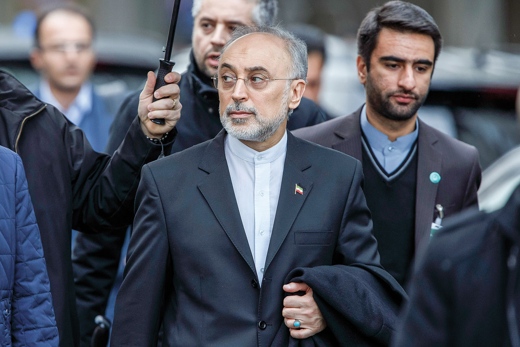
Ali Akbar Salehi

Last February, nuclear talks between Iran and world powers were foundering. The two sides had found common ground on the deal’s broad outlines, but the devil lay in the technical details.

The negotiators were struggling to agree on limits to Iran’s R&D on the centrifuges used for enriching uranium. Stymied, Iranian officials asked their top nuclear scientist to join the talks: Ali Akbar Salehi, president of the Atomic Energy Organization of Iran (AEOI).

In an exclusive interview with Science at AEOI headquarters in north Tehran, Salehi, 66, related how he would only agree if his opposite number in the United States, Energy Secretary Ernest Moniz, sat across from him at the table. US negotiators agreed to that request, opening the door to several weeks of intense science diplomacy between the two physicists, who overlapped at the Massachusetts Institute of Technology (MIT) in Cambridge in the mid-1970s, when Salehi was earning a Ph.D. there in nuclear engineering.

They helped overcome technical obstacles, and last month Iran and the P5+1—the United States and its five allies—reached an agreement designed to block Iran’s paths to a nuclear weapon in exchange for a gradual lifting of sanctions imposed as a result of Iran’s nuclear program. The agreement also paves the way for a rapid expansion of scientific cooperation with Iran in areas as diverse as fusion, astrophysics, and cancer therapy using radioisotopes.

As the US Congress reviews the deal, the battle for public opinion has heated up. In a letter to President Barack Obama on 8 August, 29 prominent US physicists and nonproliferation experts (including Science’s executive publisher, Rush Holt), praised the “innovative agreement” for providing “much more stringent constraints than any previously negotiated non-proliferation framework.”

In a 7 August interview with Der Spiegel, Israel Defense Minister Moshe Yaalon called the deal “a historic mistake” that will “allow Iran to become a military nuclear threshold state.”

Framed photos of five Iranian nuclear scientists assassinated over the past decade hang in Salehi’s office, with a bouquet of red roses set on a table below. Salehi claims their deaths emboldened, rather than deterred, Iran’s nuclear establishment, and insists that Iran’s enrichment program was intended only to produce fuel for civilian power reactors. This transcript was edited for brevity and clarity.


Q: What stands out as the most memorable moment you spent with Secretary Moniz during the negotiations?

A: The first time we met face-to-face, I felt as if we had known each other for so long. One exceptional moment came when I asked Moniz in our last days in Vienna, “Do you have any news about Professor Mujid Kazimi?” He’s a professor of nuclear engineering at MIT. The next day, Moniz comes to me and says, “I have bad news for you.” I thought it’s about the negotiations.

I said, “What is it?” He said, “Mujid has passed away.” I said, “My God. Yesterday we were talking about him and you said he’s fine. He’s healthy and he’s doing fine, he’s active.” He said, “Yes. He was in China delivering a scientific talk and then all of a sudden, he has a very strong heart attack and he passes away.” Then I requested Moniz to see if we can get his family’s telephone number. And he found it and gave it to me, and I called the family. I expressed my condolences.

We know each other through all these [mutual] friends. It was very natural for him to look out for his country’s interests. But this did not prevent either of us from being rational. We tried to be logical and fair. We understood each other. I understood his constraints. He understood mine. That’s how we could move forward.


Q: How did you and Moniz end up as negotiating partners?

A: It was about a year and a half that they were negotiating, and they couldn’t move forward. In February, I was summoned by my superiors. One of the officials said, ‘Well, Ali, you have to join the negotiations.’ I said, ‘You’re joking. What can I do? [Foreign Affairs Minister Mohammad Javad] Zarif has done his best. What more can I do?’ There was a long argument. And I said, ‘Well, politically, if I join the negotiations now and if we fail, then the whole responsibility will be on my shoulders.’

But my superiors insisted. I said, ‘OK, I will go, but on condition that my counterpart also participates.’ They said, ‘Who is your counterpart?’ I said, ‘The secretary of the DOE [Department of Energy].’ And that was the first time they heard of this department. I said, ‘If he comes, I will go. If he doesn’t come, I will not go.’ Our side contacted [chief US negotiator] Wendy Sherman, saying ‘Look, we are intending to bring Mr. Salehi with us. But on condition that the DOE secretary also joins.

After a few hours, Sherman responded and said, “We welcome this and we’ll bring along secretary Moniz.” [laughs] And when I heard the news that he’s coming, I said, ‘OK, I will go.’ [A DOE spokesperson confirmed Salehi’s account].

I thought I was going on a mission impossible. I’m so happy that the final outcome made all of us happy. Yes, we have some constraints, but what are those constraints? From the American perspective, they are to prevent us from diverting to non-peaceful activities. But then we never ever had this idea of diverting to non-peaceful activities, because we have the fatwa of our supreme leader. So we said no matter how many impediments you put there, sell it to your people that you have achieved your goals in making Iran not pursue the path to weaponization.


Q: You’re said to have a close relationship with the supreme leader, Seyyed Ali Khamenei. You have his confidence. Did that give you extra clout in the negotiations?

A: Well, I wouldn’t say we have a special relationship, but the supreme leader knows me because I have been in different government responsibilities since the revolution started. I was chancellor of a university. I was deputy minister of higher education two times. I’m happy that the supreme leader, yes, has put his trust in me. And that if I say something in the field of nuclear activities, which has to do with technical issues, he takes my words as the final word and as the decisive word.


Q: One of the most contentious issues in the negotiations was R&D on advanced centrifuges. From your perspective, what was hard to accept?

A: When you are negotiating, each party is trying its best to have the bigger piece of the cake. That’s very natural. The Americans said, ‘If there’s no research on centrifuges, we will be very happy.’ We said, ‘We would not be happy. We understand you have some concerns. Let’s see how we can mitigate them.’ Neither side got the ideal it was looking for. We met in the middle.


Q: Your program is slowed.

A: Yeah. If we were free, probably within 8 years we could have come up with a cascade of 164 [advanced IR8 centrifuges]. That is not a big constraint for us, but that pleases the other side so we said, ‘OK.’ It could have been better, of course, if we had a bigger cascade because then even the process of enrichment would have been assessed, not only the mechanical characteristics of the machines.

We do not take that as a constraint. So I would say on R&D, the apparent limitations that we have accepted, that we have agreed to, it’s not really a limitation.


Q: So there’s nothing in particular in the sphere of R&D that you consider a huge sacrifice for the sake of the pact?

A: I don’t think so. We would be working on different advanced machines. We would be working on the IR8, on the IR6. The IR8 and IR6 are the two candidates that could really meet our needs in terms of producing enough enrichment capacity to meet the annual needs of [the Bushehr power reactor]. And 10 years from now, we will have two other nuclear power reactors added to Bushehr. But using [the permitted] centrifuges, in 15 years we will be in a position to meet the fuel requirements of these reactors.


Q: US negotiators were concerned about other forms of enrichment, like laser enrichment. Was Iran pursuing these?

A: No. We did some laser enrichment in the past. We informed the IAEA [International Atomic Energy Agency] and dismantled the equipment.


Q: Siegfried Hecker, the former director of Los Alamos National Laboratory, told me he was surprised Iran would agree to a blanket prohibition on studying metallic uranium and plutonium, because there are other uses for these, not just for weapons.

A: Yes. We had a lengthy discussion on that in the negotiations. Depleted uranium metal can be used as shielding, for example. I insisted that we would have to make an exception for depleted uranium. Then the other side said, “Look, we need to tell our officials that we have blocked all the pathways to weapons production. And one of the pathways is metal production.” They said if you don’t experience this art of producing metal for 10 years, then that will make them comfortable.

I finally accepted that. We do not intend to enrich uranium to 90%, so we will not have 90% enriched uranium to turn into metal. We said that if we need some depleted uranium, we may ask for it from [the P5+1] during this period. This is an implicit understanding. But we will not produce the metal. We did reprocessing, and produced plutonium. And we told the IAEA, that’s it. That was in 2003.


Q: You produced plutonium?

A: Very small quantities, and we stopped. It is all under the IAEA supervision. We do not need to produce metal anymore, because we have no use for it and we don’t have the material.


Q: As part of the agreement, the Fordow enrichment facility will be turned into an international research center. Some experts worry that it is too cramped to carry out much science there. What do you have in mind?

A: It’s very difficult to say offhand. I would have to discuss it with my colleagues and with colleagues from the P5+1. We’re going to have to sit down at a more leisurely time, now that we’re not negotiating anymore.


Q: You’ve already hosted Russian scientists. They’re going to help modify the uranium centrifuges to produce stable isotopes for industry.

A: That is for sure. Fordow has two wings. Part of one wing will be dedicated to stable isotopes. That is already agreed upon.


Q: Have you identified which isotopes?

A: Yes and no. There are so many different isotopes, from light isotopes to heavy isotopes that you can produce. We will have to do a feasibility study. If we go to very light isotopes, then the modification will be huge. For heavy isotopes, we do not need to modify that much. The project will be starting soon. Iridium could be a candidate, or an isotope in the same range of weight.


Q: The French have proposed putting in a small linear accelerator, I understand. What could be done with that?

A: Yes, they have suggested a kind of an accelerator but we have never discussed the details.


Q: Fordow is a military site. Is the military going to easily relinquish it?

A: It’s not controlled by the military. Decades ago, it was a place where the military stored ammunition.


Q: The nuclear agreement calls for increased Iranian participation in ITER, the international fusion experiment. How did this idea come about? Does Iran have a fusion research program?

A: Yes. Near where you’re sitting, we have three tokamaks. We are one of the leading countries in West Asia working on fusion. This is my second time heading the Atomic Energy Organization. In my previous appointment, I made fusion our essential goal. It was given our highest priority because fusion is the future source of energy.


Q: How do you see Iran participating in ITER?

A: We are ready to pay our contribution. We are working with ITER already at a scientific level. But we want to participate more on the execution level.


Q: AEOI went through some very dark days a few years ago, when five nuclear scientists were assassinated.

A: Let me tell you about one, Masoud Alimohammadi. Twenty-five years ago, when I was president of Sharif University [of Technology], we started the first Ph.D. program in Iran, in physics. Alimohammadi was the first Ph.D. student.


Q: Do their deaths cast a shadow on international collaboration? I mean, will your scientists feel nervous about working with counterparts from overseas?

A: No. We have a very peculiar characteristic of our nation. Being Muslims, we are ready for any kind of destiny because we do not look upon it like you have lost your life. OK, but you have gained martyrdom and we believe in eternity.

For our people, it’s easy to absorb such things. I mean, this did not really turn into an impediment to our nuclear activities. In fact, it gave an impetus to the field, in the sense that after [the assassinations], many students who were studying in other fields changed to nuclear science.


Q: The assassinations were inspiring?

A: Yes. They thought they would terrorize the scientific community in Iran. By threatening us, we will step back from that path—but we did not.


Q: What do you want to be remembered for?

A: As a person who did good for mankind. That’s it. (Science Magazine, Richard Stone)

A daycare center for golden agers

grandmas-2

This place is a charity for the elderly, but it is a horse of a different color. A charitable organization in Iran has come up with a new initiative offering care for geriatrics.

Mehr News Agency on August 1 published a report on Kahrizak Charity Foundation and the day care it has set up for the elderly. The following is a brief translation of the report:

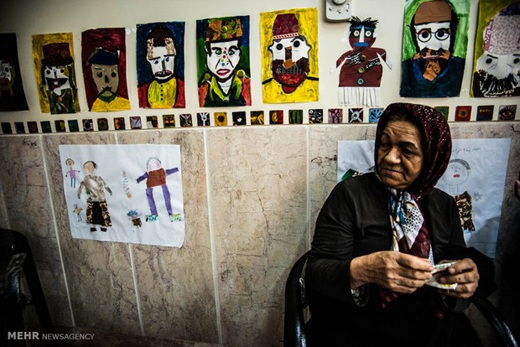
As you enter the place, you see smiling grandmothers head for a painting class with paper and pencils in their hands. Some are exercising in the neighboring class, and others are learning their lines for a play they are to act. Grandpas and grandmas come to this place to receive training in yoga, calligraphy, theater, music and sports. They sing and hold exhibitions to showcase their crafts.

They come to the daycare by a shuttle bus service in the morning and leave the place in the afternoon on board the same bus. This is neither a nursing home nor a daycare center; it is a place for grandparents to receive care [half a day].


The senior citizens are put first   

The head of the Public Relations Office of Kahrizak Charity Foundation says that the retirement home was founded in 2001. Back then it was only the old people’s home, but eight years later it had some additions: a day care for the elderly, and a center for the physically challenged people and mentally challenged children. That is not all. The foundation has plans to open a center to take care of MS patients too.

grandmasMs. Teymouri, who holds a Ph.D. in Aging and Geriatric Practice, is the brains behind the daycare center [known as Aftab Complex].

The elderly are looked after in the center in two ways: either in the old people’s home which operates around the clock, or in the daycare center which runs from morning to 2:30 p.m.

The daycare center is the priority of the foundation, because it attends to the people who are living independently and along with their families. The day care center provides them with a place in which they spend time in a joyful and energetic atmosphere, and can keep the old-age depression at bay. […]


Official urges well-devised plan to protect Iran’s nuclear achievements

Mohammad Javad Larijani

A top Iranian official called on the country’s decision-making bodies, the parliament in particular, to prevent the finalized text of a nuclear deal between Tehran and world powers from hampering the country’s nuclear technology and progress.

Speaking to Tasnim News Agency, Chief of the Iranian Judiciary’s Human Rights Council Mohammad Javad Larijani called for an Iranian fact sheet on the Joint Comprehensive Plan of Action (JCPOA), a lasting nuclear deal between Iran and 5+1 (Russia, China, the US, Britain, France and Germany) whose text was finalized in Vienna on July 14.

He emphasized that measures should be taken to block the way for any abuse of the Vienna nuclear deal after it comes into force.

On the enrichment of uranium, Larijani said the parliament should adopt a measure prohibiting any waste of the country’s natural resources, including enriched uranium.

To that end, he added, Iran should halt enriching uranium for a period of time after the JCPOA takes effect, because continuation of that process with an allowed stockpile of only 300 kg of enriched uranium would spell turning the country’s natural resources into “garbage” at its own hands.

Larijani also criticized the idea of turning Iran’s underground nuclear facility in Fordow into a simple research center, saying “it would be unwise to change a center 80 meters deep in the ground into a laboratory.”

He slammed the plan as a Western-engineered ploy to make all Iran’s nuclear facilities “easy targets” in case of military action against the country.

While the text of one lasting nuclear deal between Iran and the six powers needs to be ratified by both Iran’s parliament and the US Congress, diplomats have already made it clear that the document could be either endorsed or rejected, and no amendment or revision could take place.

Highlights of Ettela’at newspaper on August 13

Ettelaat Highlights-13-Agu-1

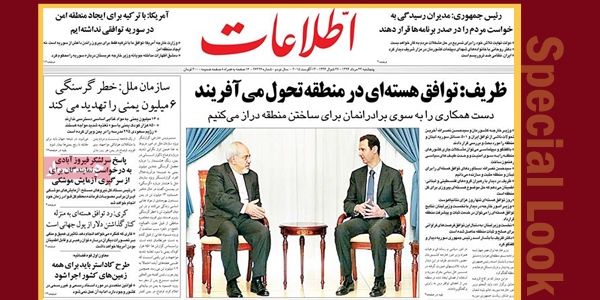
 “The nuclear deal will transform the region,” Foreign Minister Mohammad Javad Zarif said in his meetings with officials in Lebanon and Syria.

“We extend a hand of friendship to our brothers to cooperate in building the region,” the Iranian top diplomat said.

 President Rouhani has urged state managers to put measures to meet public demands top on their agenda.

He vowed that his government would try its best to speed up efforts to settle the problems Iranians are facing.

 The US has denied reports that it has struck a deal with Turkey to set up a safe area in Syria.

The US State Department has said that the deal in question centers on repelling IS in Syria, not creating a safe zone.

 The United Nations has said that hunger poses a threat to 6 million Yemenis.

It also said that 850,000 Yemeni children are facing acute malnutrition.

 The chief of staff of the armed forces has responded to a request by MPs on resumption of missile tests.

“In line with the decisions of the Supreme Leader, the country’s missile tests will be conducted all in due time,” Major General Hassan Firuzabadi said.

 US Secretary of State John Kerry has said that walking away from the nuclear deal with Iran would threaten the US dollar.

He further said what the US “Congress wants to do will have a profound negative impact on people’s sense of American leadership and reliability.”

 “A cadastral map should be drawn for all lands across the country,” said the deputy judiciary chief.

“There are several laws about official and unofficial documentation in the country which are not observed,” he further said.