Monday, January 12, 2026
Home Blog Page 4640

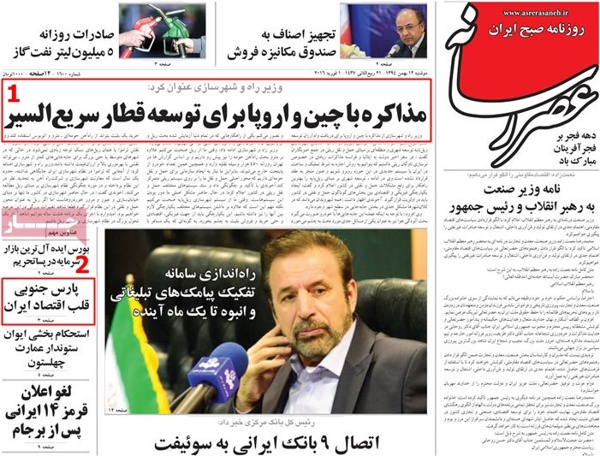
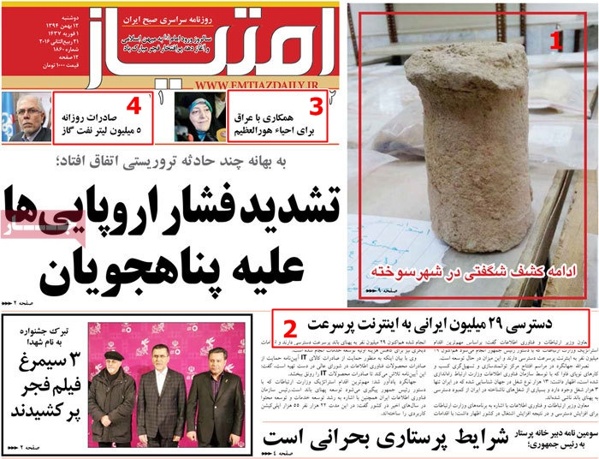
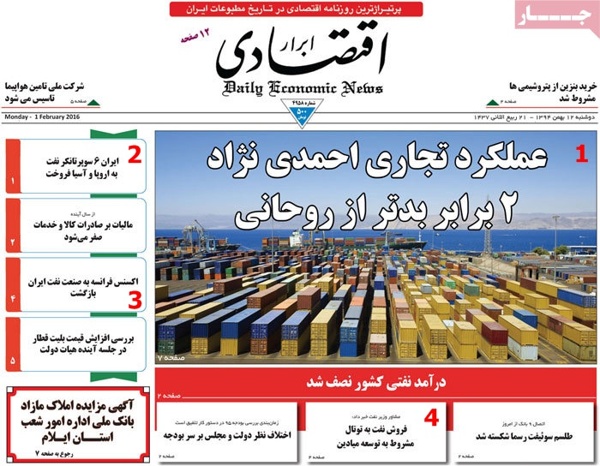
Linde, Mitsui plan $4 billion Iran investment

“Linde considers investing in several Iranian projects, including Damavand Petrochemicals, in cooperation with Japan’s Mitsui,” projects director at the National Petrochemical Company (NPC) Marzieh Shah-Daei said Monday.

“The two countries will invest about $4 billion in Iran’s petrochemical industry. However, the projects have not been finalized yet,” the IRNA news agency quoted her as saying.

Germany’s BASF, the world’s largest chemical producer, also plans $6 billion of investment in Iran’s petrochemical sector, NPC’s director of planning Hamid Reza Rostami said in December.

The company will make the investment in Asaluyeh where Iran is carrying out its largest gas development project by tapping gas from the giant South Pars field in the Persian Gulf, he said.

BASF and Linde sent their executives with German Minister of Economy Sigmar Gabriel to Iran in July to discuss investment and transfer of technology.

Minister of Petroleum Bijan Zangeneh has said the lifting of sanctions would enable Iran to fulfill its 20-year vision plan, including its target to produce $70 billion of petrochemicals a year at current prices.

Companies from Germany, France, Spain, Italy, the Netherlands, South Korea, Japan and even the US have indicated readiness to participate in Iran’s petrochemical projects, according to officials.

Iran’s petrochemical production will hit 70 million tonnes worth $27 billion at current prices in the new Persian year which begins on March 20, NPC Managing Director Abbas Shari-Moqaddam has said.

The country seeks to more than double this capacity in the next decade, which requires between $7 billion to $10 billion of annual investment.

Shah-Daei has already said Iran’s petrochemical manufacturers were turning to the Europeans for finance, ditching Chinese investors because they were charging high commissions and fees.

She said Chinese investors were forcing clients to source 50-70% of equipment from the Asian country. “This is while we can get 70% of the equipment needed inside Iran.”

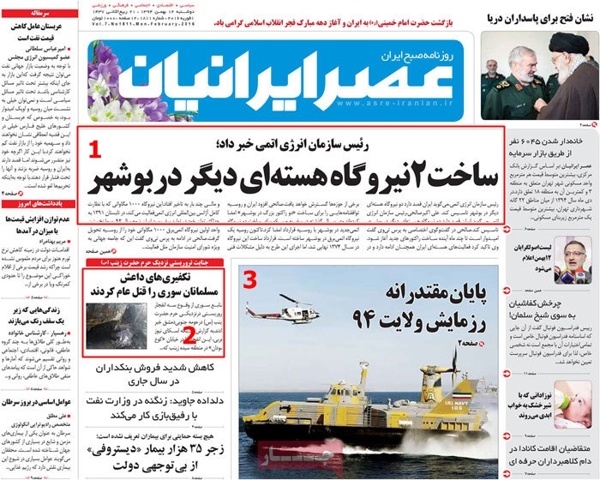
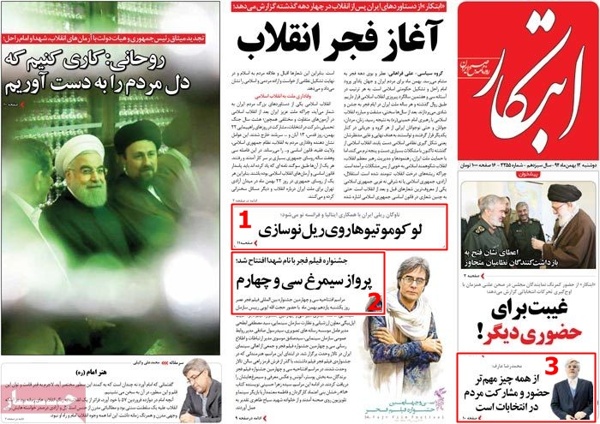
Iran Marks Beginning of Ten-Day Fajr Ceremonies

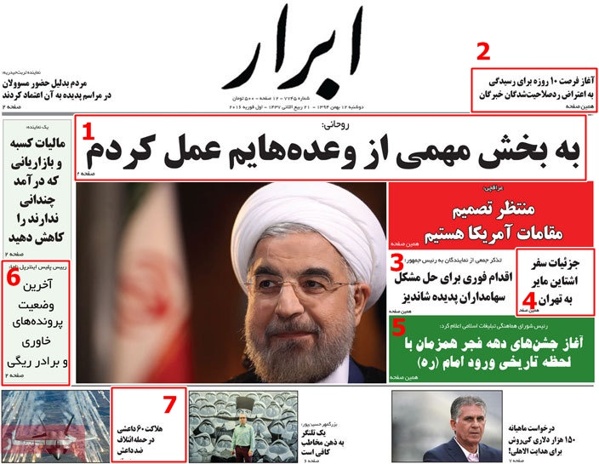
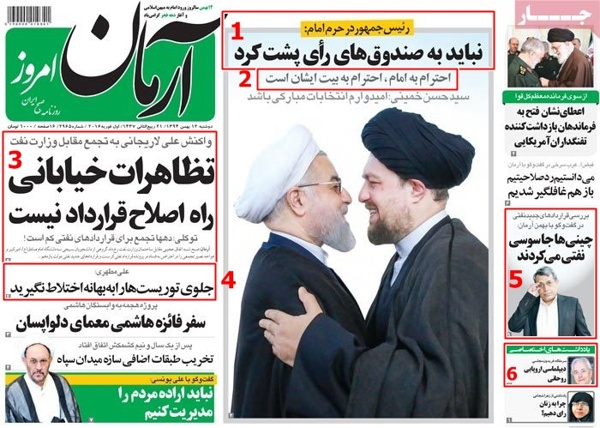
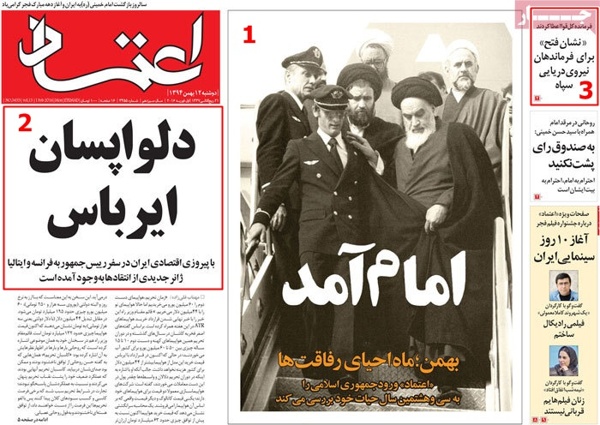
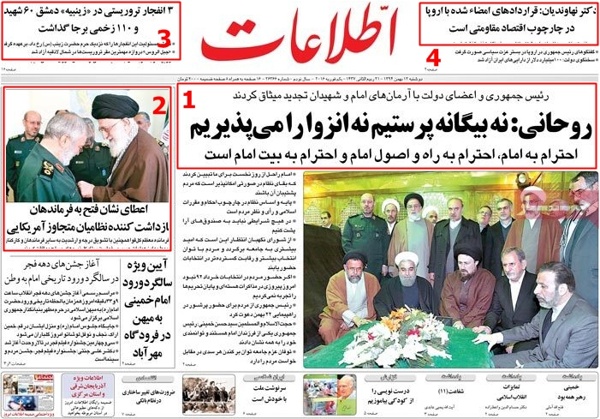
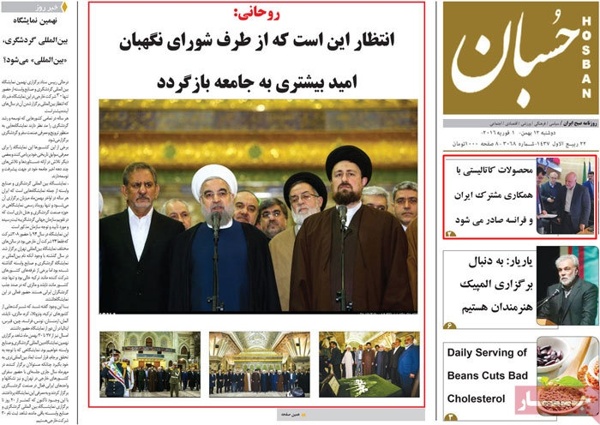
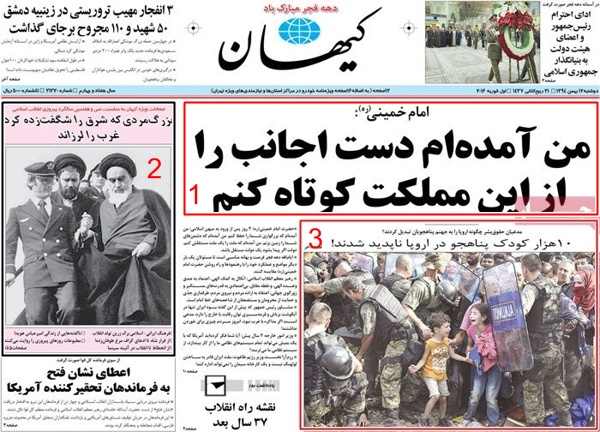
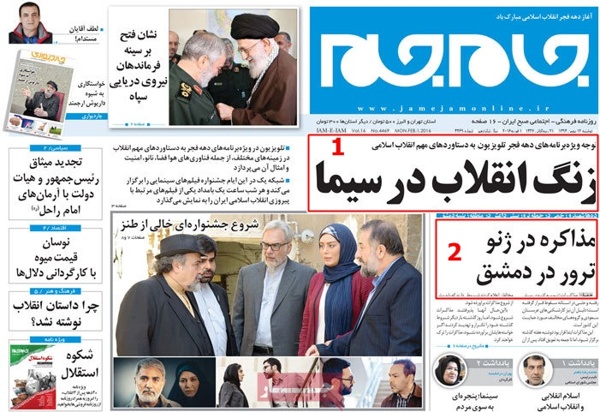
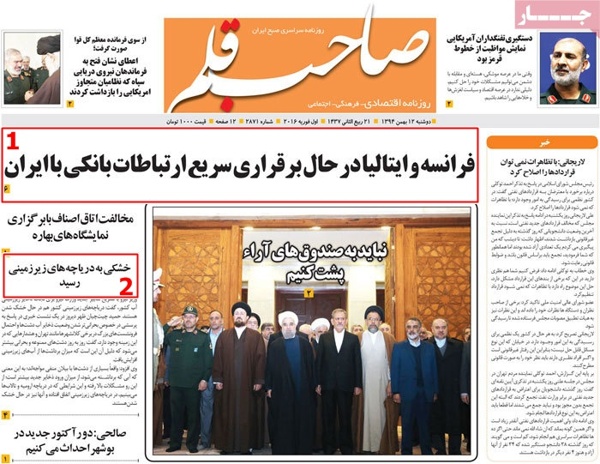
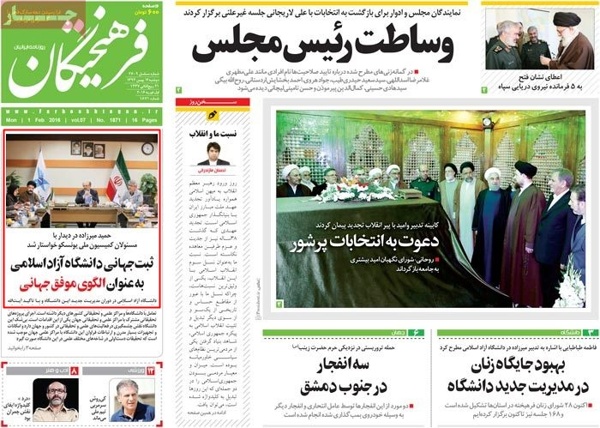
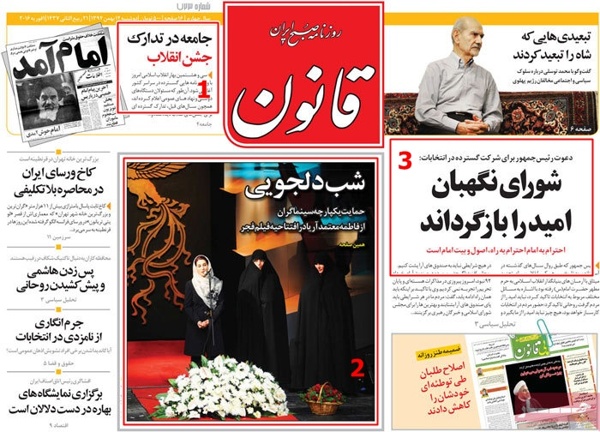
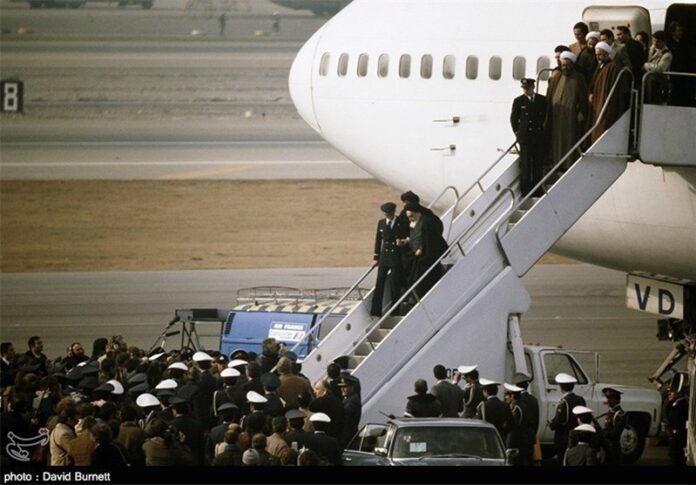
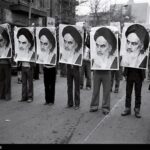
In a special ceremony held at the mausoleum of founder of the Islamic Republic Ayatollah Ruhollah Khomeini, south of Tehran, on Monday morning, people celebrated the anniversary of Imam Khomeini’s return from exile in Paris to Tehran 10 days before the victory of the Islamic Revolution.
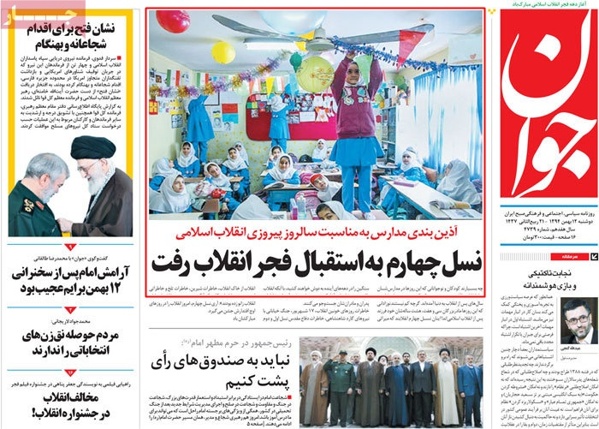
Elsewhere in Tehran, at a street ending to the Azadi (Liberty) square, motorcyclists marched a parade to mark the return to home of Imam Khomeini 37 years ago.

Moreover, the school bells rang all over the country to remind the students of the time when Imam Khomeini entered Iran.

The Iranian nation toppled the US-backed Pahlavi regime on February 11, 1979, ending the 2,500 years of monarchy in the country.

Every year Iranians mark anniversary of their Islamic Revolution from February 1 to 11, known as the Ten-Day Fajr ceremonies. February 1, 1979 was the date when Ayatollah Khomeini returned from exile.

On February 11 each year, Iranian people pour into the streets in their millions to commemorate the great victory of the Islamic Revolution.


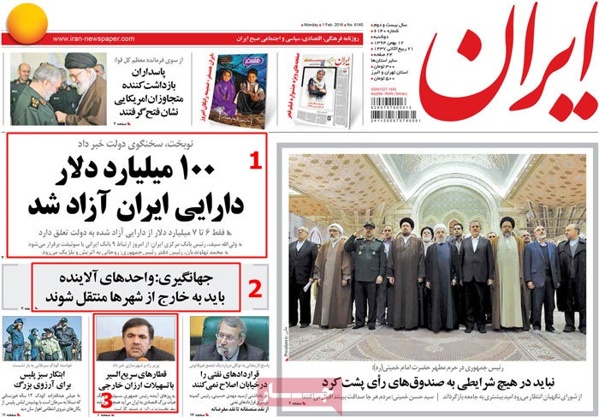
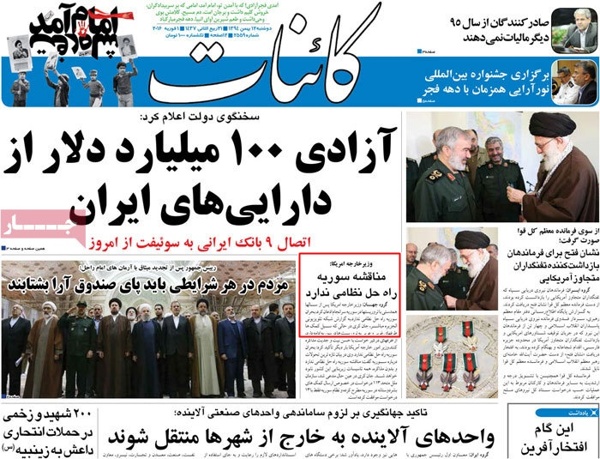
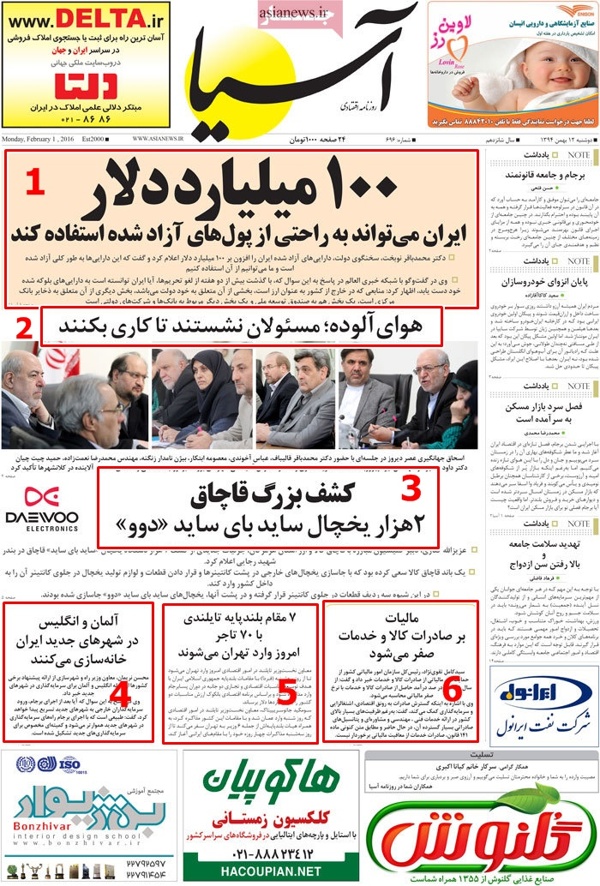
Govt.: Iran’s $100 billion ‘fully released’

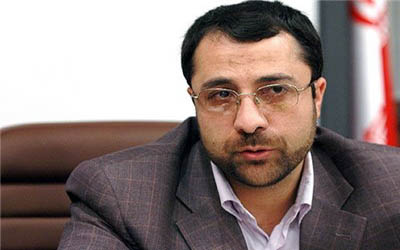
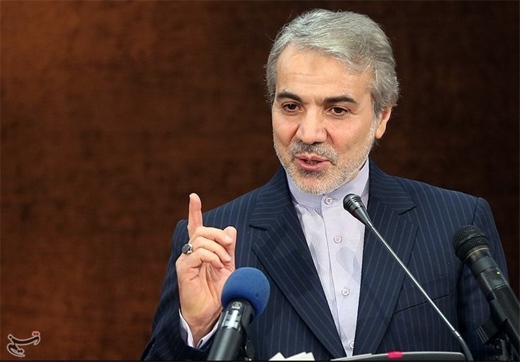
Nobakht-Iran

“These assets have fully been released and we can use them,” Government spokesman Mohammad-Baqer Nobakht told Iran’s Alalam television network on Sunday night.

Much of the money from sales of the Iranian oil has been piling up in banks in China, India, Japan, South Korea and Turkey over the past few years.

Those countries have been holding the funds in escrow because sanctions imposed by the West in 2012 prevented the Islamic Republic from repatriating them.

To move the money back home, Iran had to use international banks but they were unable to process Iranian transactions since the country was cut off from the SWIFT financial-transactions system.

Nine more Iranian banks were to re-connect to the SWIFT early Monday, Governor of the Central Bank of Iran (CBI) Valiollah Seif said.

However, the bulk of the roughly $100 billion will not be sent home. State officials are cognizant of inflationary impacts which a sudden flush of money of this magnitude could have on the economy.

Iran is likely to move the funds into various directions abroad for use in different purchases or investments.

Nobakht said, “There is no need to bring the money in. It is likely that a certain amount which is needed is brought in. But altogether, it is not necessary because we can use it in our (overseas bank) accounts.”

The spokesman also said much of the money released belongs to the CBI and the National Development Fund.

“The government’s share is about six to seven billion dollars but assets belonging the Central Bank and the National Development Fund are much higher,” Nobakht said.

Frozen assets in US, Shell debt

The Central Bank of Iran has also “made headway and taken certain measures” on recovering Iranian assets frozen in bank accounts in the US and an outstanding debt owed by Royal Dutch Shell to the Islamic Republic.

In 2012, President Barack Obama issued an executive order blocking all of the Central Bank of Iran’s almost $2 billion held in Citibank accounts in New York.

The case has moved to US Supreme Court which is considering lawsuits by over 1,300 Americans pressing to receive billions of dollars of the Iranian money in awarded damages.

The Obama administration has reportedly urged the court not to overturn the decisions of US circuit and appeals courts to award the plaintiffs.

Meanwhile, Shell’s debt of $2.7 billion stems from Iranian oil deliveries in 2011 and 2012 that the company was unable to pay because of the sanctions.

Last month, an energy official in Tehran said the National Iranian Oil Company (NIOC) and Shell had reached a final deal on how the Anglo-Dutch firm must clear the debt.

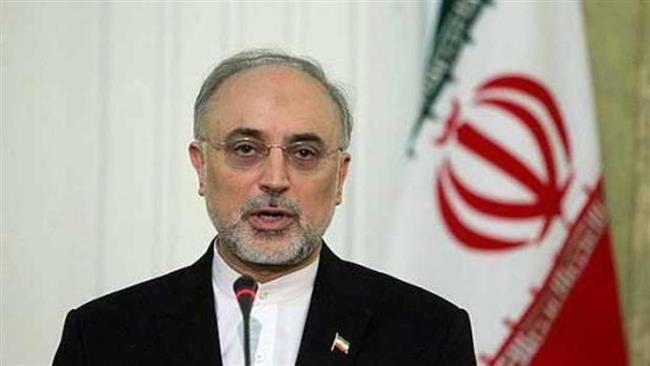
Velayati arrives in Moscow for talks on regional situation

Ali Akbar Velayati

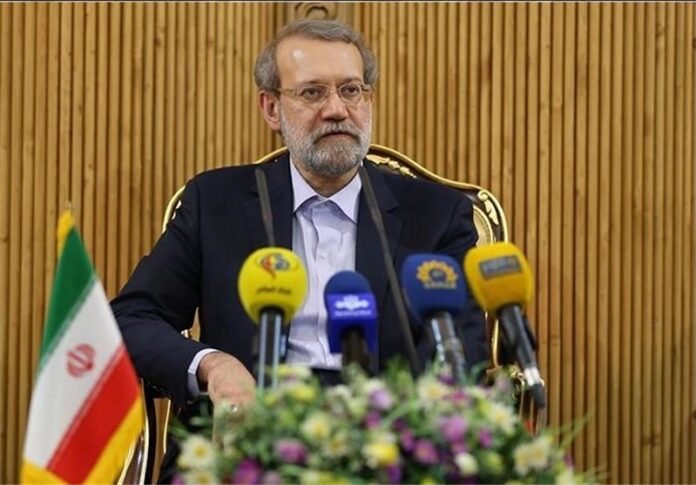
Ali Akbar Velayati’s talks will focus on regional and bilateral issues.

Velayati is also to attend a news briefing to answer the correspondents’ questions.

Sadé festival in Kerman, Yazd

Sade festival is celebrated 40 days after winter solstice in Iran. The festival is observed by Iranian Zoroastrians to celebrate the emergence of fire.
The festival is held as a gathering of a city’s dwellers where a big fire is set.
The observers help each other gather firewood, making the festival a celebration for cooperation and empathy between people.  


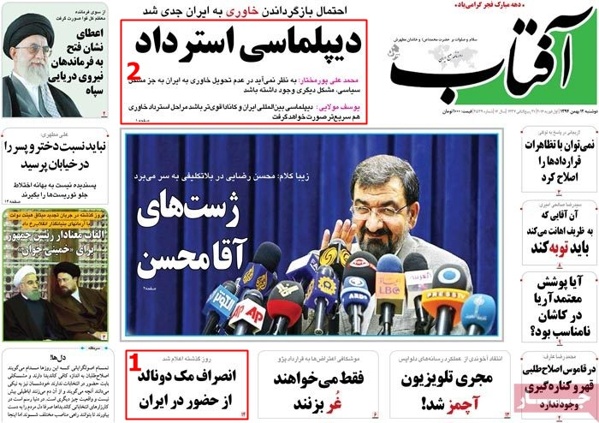
Iranian parliament hails IRGC’s detention of US sailors

During a ceremony in the Iranian parliament (Majlis) on Monday, IRGC Navy Commander Rear Admiral Ali Fadavi and other commanders and members of the naval force involved in the operation were awarded certificates of appreciation in acknowledgement of their efforts.

During the session, Fadavi briefed the lawmakers on the operation that led to the arrest of the American sailors.

IRGC naval forces arrested 10 US sailors after their patrol boats entered the country’s territorial waters in the Persian Gulf on January 12.

The following day, the IRGC announced that ten US Marines were released after Americans apologized for the incident.

The two US Navy crafts carrying the 10 Marines had drifted three miles into the waters surrounding the Farsi Island in the Persian Gulf. The trespassing occurred because of technical problems with the navigation systems of the American vessels.

In his Monday address to the Iranian parliament, Fadavi said there is still more video footage regarding the arrest, adding that “if the Americans’ acts of malevolence continue, we will release them.”

On January 13, Iran released a video showing the moment the ten US sailors were arrested.

The footage showed US sailors on their knees with their hands on their heads. It also showed weapons seized by Iranian officers, including assault rifles and light machine guns, along with belts of ammunition.

The release of the video irked American officials, including US Secretary of State John Kerry who said he was very “angry and frustrated” at the release of the video.

Leader confers medal on IRGC commanders

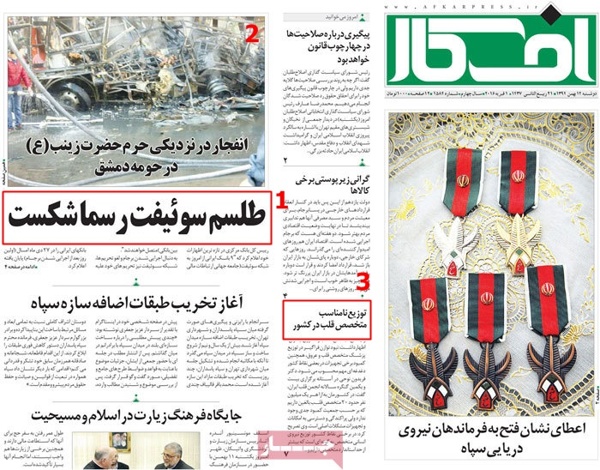
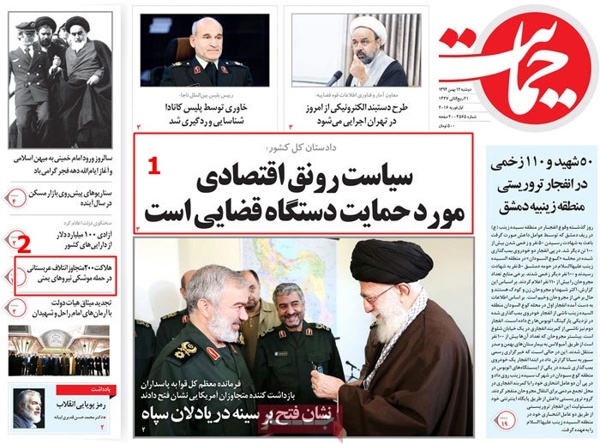
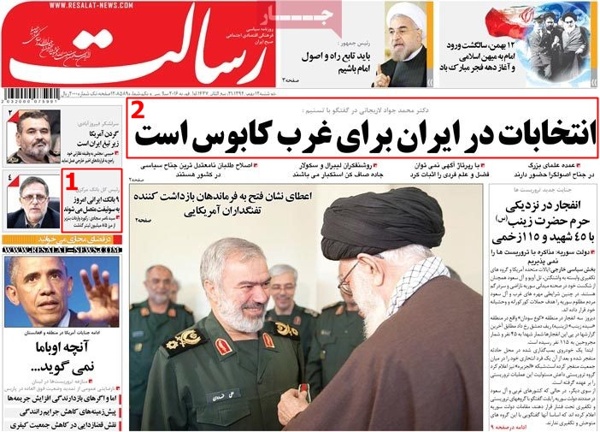
On Sunday, Leader of the Islamic Revolution Ayatollah Seyyed Ali Khamenei awarded the ‘Fat’h’ (Victory) medal to Fadavai along with four other high-ranking commanders for arresting the intruding US sailors.

The Fat’h medal is among the highest honors that the Leader of the Islamic Revolution can bestow on a military leader. It is rarely awarded.

Following the arrest of the US sailors, Ayatollah Khamenei on January 24 commended as timely and praiseworthy the “brave” move by the IRGC naval forces.

The Leader stated that the praiseworthy measure by the IRGC forces stemmed from their faith and courage and was taken in the right time, adding that the capture of the US sailors “was in fact an act of God, who brought the Americans into our waters so they would be arrested with their hands on their heads through your timely measure.”


The Last Wish

Abbas Abdullahzadeh, a 12-year-old suffering from cancerous neuroblastoma, has a single wish – he wants to be a policeman. Ahvaz Police Force, in combination with a charitable NGO, will make his wish come true for a day.


Fish and Cat – Chicago’s Critics Choice, 2015

Fish and Cat, directed by Shahram Mokri, was screened in different US states in 2015, in film screening sessions with the collaboration of the Museum of Modern Art. The Chicago Reader, a major source of Chicago criticism, announced Fish and Cat as their best film in 2015.

Shamsi Ranjbar wrote in Shargh (a Farsi newspaper) that Fish and Cat had managed to push Mad Max down to 7th place, while according to most American news outlets, it was the number one movie of the year. A film from the French director André Téchiné, as well as David Gordon Green’s latest movie starring Al Pacino couldn’t compete with Fish and Cat. Shahram Mokri and his film appeared in multiple American headlines. Papers like the New York Times, the Washington Post and the Hollywood Reporter all reviewed the movie positively. Ben Sachs, a critic fromthe Chicago Reader, calls Fish and Cat a single long shot, but doesn’t praise the movie only for this characteristic. He says that the movie, with its numerous flashbacks and flash-forwards, represents intergenerational strife in Iran, while also referencing American slasher-style films. He calls it a movie worth revisiting endlessly.

A slasher movie is a type of horror or thriller movie in which a murderer, often psychologically disturbed, kills a number of victims, usually making use of sharp objects such as switchblades, hatchets, cleavers, or even kitchen knives. The best movies of the genre include Alfred Hitchcock’s Psycho and John Carpenter’s Halloween.

Fish and Cat was screened in May last year at Razi University in Kermanshah Province. Shahram Mokri told Shargh newspaper, “It was very satisfying for me, because I managed to screen the film in Kermanshah for an audience I love. They were very appreciative, and I was very happy about it. Now, when I return to Tehran, I’m happy to be able to say that Fish and Cat was screened in my home city.”

The plot of Fish and Cat

The plot of the film is non-linear, and includes smaller cyclical sub-narratives. Some male and female students travel to the north of Iran to participate in a kite-flying festival. Next to their camp, there is a restaurant where three men live. The restaurant is short of meat, and these young students end up in danger of becoming the next meal. The script was based on a real-life story from the year 2000, when a roadside restaurant was serving minced human flesh. This story was the source of inspiration for Shahram Mokri’s 2015 award-winning movie.

The entire film takes place in one shot. Shahram Mokri and Mahmoud Kalari, the cinematographer, along with the acting team, rehearsed for one month to be able to record this single shot. The movie was filmed in 2013. Shahram Mokri (born on 17th August 1978 in Kermanshah) is an Iranian scriptwriter, editor and film director. In 2013, the Venice Film Festival awarded Fish and Cat with a special award due to its creative content.

Clever answer by an Iraqi female Parliamentarian to Saudi diplomat

A female Iraqi Parliamentarian responding to a comment by Saudi ambassador to Baghdad about democracy said the last time Saudis took part in an election goes back to the time of their decision to kill the Prophet of Islam (PBUH).

As reported by Persian daily Islamic Republic [Jomhouri Islami] and translated by IFP, Iraqi member of the Iraqi Parliament told the Saudi Ambassador who was advising Iraqis to respect democracy said the ambassador of a country inviting us to democracy that last time they took part in election was when they chose a representative from each tribe to kill the holy Prophet of Islam.

This witty answer by Hanan Al Falavi, have been widely reflected by media in Iraq and other Arab countries.

Banking relations between Iran and Turkey go back to normal

Iran’s Ambassadorto Turkey Ali-Reza Bigdeli announced banking relations between the two countries go back to normal and Bank Mellat will resume its operations in Turkey with opening of three branches in Ankara, Istanbul and Azmir.

“Resuming of banking relations between Iran and Turkey was announced today in a meeting with central bank Governor Erdem Başçı,” Ali-Reza Bigdeli posted in his Facebook page.

Iran’s Ambassadorto Turkey also said an agreement to build Tabriz-Marand highway worth about 900 million dollars was signed.

He added that Bergiz Insaat Company enters Iran as the first Turkish investor with signing the agreement of Tabriz-Marand highway construction.

According to Iran’s Ambassadorto Turkey, in a ceremony attended by executives of the Turkish company in Iran’s Embassy in Ankara, the cooperation was discussed.