Thursday, December 25, 2025
Home Blog Page 4589

“I Love Isfahan” in Naghshe Jahan Sq.

A human chain forming the words “I Love Isfahan” was created in Naghshe Jahan Square in the historic city of Isfahan, to mark the occasion of the “World Tour Leader Day”.

According to ISNA news agency, the human chain spelled out the words “I Love Isfahan” in Naghshe Jahan Sq, which was the scene of a gathering of tour leaders.

Participants chanted “Ey Iran,” a famous patriotic song, and the scene drew the attention of a number of foreign tourists, who were visiting the historic monuments during the ceremony.


Afraid of Russia’s Reaction, Saudis Won’t Attack Syria: Analyst

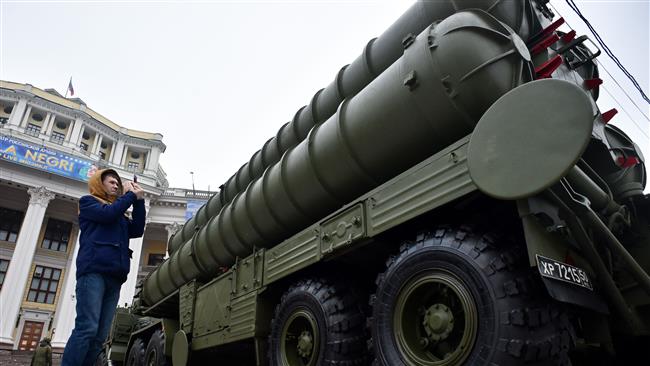
“Saudi Arabia’s ground military interference in Syria has been impossible from the very beginning for one reason, which is Russia’s objection to the issue,” the founder and director of the Washington-based Institute for (Persian) Gulf Affairs Ali al-Ahmed told Tasnim.

He said Saudis do not want to see their forces and tanks being targeted by the Russia fighter jets, noting that Moscow has already made it clear that any plan for military action inside the Syrian territories must be coordinated with the Damascus government.

Ahmed also criticized Saudi Arabia for a record of “stupid” actions, explaining that the Al Saud’s rhetoric of various military operations is nothing but a propaganda, because Saudis have no authority to do anything.

The comments came after Riyadh voiced readiness to participate in any ground operations in Syria if the US-led coalition purportedly targeting terrorists decides to start such operations.

Saudi Arabia is a member of the so-called US-led coalition that has been conducting air raids against what are claimed to be the Daesh (ISIL) terrorists inside Syria without any authorization from the Syrian government or a UN mandate since September 2014.

Syria has been gripped by civil war since March 2011 with Takfiri terrorists from various groups, including Daesh, currently controlling parts of it.

According to the United Nations, more than 250,000 people have been killed and one million wounded during the conflict.

Gonbad-e Kavus hosts horse races

The city of Gonbad-e Kavus in Golestan province plays host to Iran’s biggest horse riding competitions, during winter.


The following images have been released by Mehr News Agency:

Russian flotilla to visit Bandar-e Anzali

‘In the second half of 2016, the ships of the Russian Navy Caspian Flotilla will visit Iran’s Bandar-e Anzali, Kazakhstan’s Aktau and Azerbaijan’s Baku ports to attend the ADEX 2016,’ RIA Novosti cited him as saying.

According to Osipov, the Flotilla’s priority goal for this year is to attend the Kazakhstan-Russia naval exercises and the strategic command-and-staff exercise ‘Caucasus – 2016’.

On Aug 2015, Russian navy fleet has docked at the northern Iranian port city of Anzali in a bid to boost friendly maritime ties between the two countries.

The two Russian warships — Volgodonsk and Mahachkala — arrived in Anzali for a three-day stay with around 130 personnel on board.

That was the third trip of a Russian fleet to Anzali, with the first two being made in 2007 and 2014.

Iran oil exports to rise by 500K barrels in current month: Official

Speaking in an interview with Fars news agency on Saturday, Mohsen Qamsari, NIOC’s international affairs director, noted that Iran had already promised to boost its oil exports by 500,000 bpd when international sanctions imposed on the country’s energy and economic sanctions are removed.

“This promise will be fulfilled during the current month … and most of the added volume will go to European countries,” Qamsari said.

Elsewhere in his interview, the official stated that Iran is bent on making further increases to its crude oil exports, adding, “We are now in talks to make a further boost to oil exports. This will take some time and we hope it would be realized in a logical period of time.”

NIOC’s international affairs director also noted that part of Iran’s additional oil output will be sold to the country’s traditional customers, but most of it will be bought by new customers in Asia and Europe.

He said Iran is in the process of signing agreements for exporting oil to such countries as Ghana, adding, “The agreements are still in a preliminary stage and it will take time before they turn into final contracts.”

Speaking to reporters last November, Iran’s Oil Minister Bijan Zangeneh noted that the Islamic Republic would increase its crude production by 500,000 bpd shortly after sanctions are removed and will add a similar amount six months after that.

Taking part in a press conference to explain Iran’s oil policy in post-sanctions era, Zanganeh emphasized, “Iran under no conditions will give up its share of the oil market to others … and will not ask for anybody’s permission for increasing its crude oil exports.”

Sanctions, which had been imposed on Iran by the European Union and the United States over Iran’s peaceful nuclear program were lifted after Tehran and the P5+1 group of countries started implementation of an agreement, dubbed the Joint Comprehensive Plan of Action (JCPOA), which they had clinched last July in the Austrian capital, Vienna.

The beginning of the implementation of JCPOA was announced in a statement read out by Iran’s Foreign Minister Mohammad Javad Zarif and European Union’s foreign policy chief, Federica Mogherini, in January 2016, in which the two sides said, “As Iran has fulfilled its commitments, today, multilateral and national economic and financial sanctions related to Iran’s nuclear program are lifted in accordance.”

In the middle of January, managing director of the National Iranian Oil Company said the Oil Ministry has been ordered to raise the country’s daily oil production by 500,000 barrels per day.

Roknoddin Javadi added, “Following the removal of sanctions, Iran is ready to increase its crude output by 500,000 barrels per day (bpd), and the order to do this was notified [to Iran’s Oil Ministry] today.”

Creating tensions detrimental to all Persian Gulf states: Shamkhani

“Security in the Persian Gulf and the [Middle East] region is security of all and any creation of tensions and crisis will be detrimental to regional countries and will serve the interests of the arrogant front,” Secretary of Iran’s Supreme National Security Council (SNSC) Ali Shamkhani said in a meeting with Omani Foreign Minister Yusuf bin Alawi bin Abdullah in Tehran on Saturday.

He added that deep-rooted and strong relations between Tehran and Muscat have led to “unprecedented convergence” of regional countries.

“The top priority of the Islamic Republic of Iran’s foreign policy is to expand all-out relations with neighbors and promote constructive ties based on common interests,” the SNSC secretary said.

He criticized certain regional countries for their “hasty and arrogant” measures which have undermined efforts to reach understanding and have caused serious challenges to the possibility of managing regional crises.

Shamkhani expressed Iran’s sympathy with all regional nations suffering from acts of terror and illegitimate military aggression and said Tehran seeks to contribute to the resolution of regional crises in a bid to reduce further fatalities.

He said certain regional countries are trying to save terrorists by sending troops to conflict-hit areas and supplying arms to militants, adding that these states are pursuing a “destructive and irrational approach.”

End military approaches to solve political issues: Oman FM

The Omani foreign minister stressed the importance of avoiding moves which would cause more tension and crisis in the region and said the use of military means to settle political differences needs to stop.

Abdullah added that Iran and Oman must use their potential to strengthen economic cooperation.

Heading a high-ranking delegation, Abdullah arrived in Tehran on Saturday morning for an official two-day visit to hold talks with senior Iranian officials. Earlier in the day, he held talks and attended a joint press conference with Iranian Foreign Minister Mohammad Javad Zarif.

Top Officer Urges Gov’t to React to Foreign Meddling in Iran’s Elections

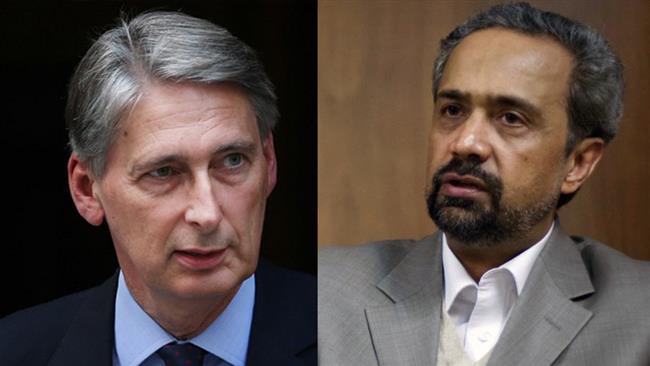
British Broadcasting Corporation (BBC) recently encouraged Iranian people not to vote for certain Iranian candidates in the Assembly of Experts elections, which will be held on February 26.

In reaction, General Firouzabadi described the move as being similar to a military interference, and noted that meddling in an independent country’s elections is a “horrible aggression”.

“The country’s foreign policy officials should strongly react to the issue, and protest at the governments of the US and Britain,” he urged.

This is a shameless insult to the Iranian nation and violates the country’s independence and national sovereignty, the Iranian top officer said, calling on the government not to underestimate it.

The remarks came as President Rouhani had earlier in the day stressed that the Iranian nation knows how to vote, and ruled out any advice by foreign parties on the upcoming elections.

“The country’s elections belong to the people,” Rouhani said in an address to a gathering of Iranian laborers here in the capital city, Tehran.

“We do not need the advice of any non-Iranian (side), because our nation is vigilant and conscious, and well-aware of its interests,” the Iranian president said.

The Assembly of Experts and parliamentary elections will be held simultaneously on Friday.

There are currently 290 seats in the Iranian parliament, known as Majlis, elected by direct vote of people in nationwide election for four years.

The Assembly of Experts is also a high-ranking body that elects and oversees the activities of the leader of the Islamic Revolution.

Members of the assembly are directly elected to office by people for an eight-year term. It holds biannual meetings to appoint a new chairman.

Iranian music can safeguard against cultural onslaught: Minister

Speaking at closing ceremony of the Fajr Music Festival here on Saturday to mark anniversary of victory of the 1979 Islamic Revolution in Iran, the minister also referred to the positive financial effects of music on the country’s economy.
He welcomed warm popular reception of this year’s music festival and introduced arts and music as the valuable means of cultural diplomacy to promote Islamic and Iranian values.
‘Undoubtedly, the Iranian music has been exceptional, if not unique, in terms of its songs, composition, instruments, research and opulence of scientists,’ Jannati added.
‘We can’t overlook or weaken such an invaluable wealth,’ he said stressing his ministry’s support to the Fajr Music Festival.

Saudi Analyst: Yes, Yes, We have the Bomb, as simple as that!

A Saudi political analyst, during an interview with Russia Alyoum, said his country has been in possession of nuclear arms since two years ago and may probably carry out its first nuclear test within the next few weeks.

The remarks came as Riyadh insists it does not have a nuclear bomb.

During a televised debate with Tariq Ahmad, a member of the political bureau of Syrian nationalist party, Deham al-Anzi said his country has the Bomb.

“Yes, yes, as simple as that. We have the bomb. It is nothing new. All big powers know we have such weapons and it was decided that we would conduct a nuclear test if Iran does so,” he said.


Minorities Hail Peaceful Coexistence of Divine Religions in Iran

In a meeting between Iranian Deputy Culture Minister Seyyed Abbas Salehi and representatives of monotheistic religions here in the Iranian capital, both sides praised the age-old coexistence of followers of all divine religions in Iran in peace and security.

The meeting was held on Tuesday night by the Iranian Ministry of Culture and Islamic Guidance in Tehran’s Hotel Enqelab in a bid to commemorate the 37th anniversary of the Islamic Revolution’s victory.


Followers of All Religions in Iran Proud of Being Iranian

“Since we all live in Iran, we share lots of commonalities, and have experienced common joys and hardship. We have all lived in the same culture; we have spoken and speak the same language; and being Iranian is our honor. We all follow the same manifesto, and that is the monotheistic religion. The common origin, belief in resurrection, common ethical values, and tens and hundreds of other religious commonalities,” Salehi said.


Monotheistic Religions to Prevent Human Beings from Spiritual Depletion

He further pointed to the common concerns shared by followers of monotheistic religions, saying, “We are living in a time when we have a lot of common concerns. On the one hand, the world is gradually being depleted spiritually, and human beings are getting void of meaning. Here is where monotheistic religions should once again restore meaning to the world and human being. Ethical values can also save the modern human being.”

He further referred to the social institution of family as the essence of human kind, stressing that this institution is in danger and monotheistic religions can save it, helping it survive and continue its existence.


Divine Religions Working against Extremist Movements

Salehi also pointed to the emergence of extremist movements in the world as one of the other concerns all monotheistic religions share.

“One of the important points in this era of extremist religious movements is that in whichever religion they emerge, it leads to the collapse of that religion. Monotheistic religions can counter these Takfiri and extremist movements,” he noted.

“Our Iranian origin and the common worries of the modern human being make us closer than ever. The atmosphere in Iran can be a shelter for these common concerns,” the Iranian official added.

He further highlighted Iran’s history of religious tolerance, saying, “Tolerance for other religions and Iran’s interpretation of Islam, which introduces a rational Islam based on the teachings of Ahl-ul-Bayt(Household of Holy Prophet of Islam), is a place for coexistence of religions and cooperation in the time of modern human’s crisis.”

Salehi summed up his speech by expressing his pleasure with attending the ceremony, saying that he is very happy for taking part in a ceremony hosted by representatives of monotheistic religions.


Iran, Cradle of Peaceful Coexistence of Religions

During the meeting, Armenian Orthodox primate of the diocese of Tehran, Archbishop Sebouh Sarkissian hailed the numerous religious commonalities between monotheistic religions, saying, “The more religions know about each other, the more peaceful coexistence they can have.”

He went on to say that the attendance of monotheistic religions’ representatives in this meeting displays a “beautiful picture of our Iran”, which for several centuries has been the cradle of peaceful coexistence among followers of monotheistic religions.

“The Islamic Revolution led to the coexistence of these monotheistic religions, and for the first time, the rights of religious minorities were respected in the Constitution,” the Armenian archbishop added.


Iranian Nation Achieves Whatever It Wants

When the Islamic Revolution took place 37 years ago in this country, the world looked at it with enmity and indifference, Sarkissian said, stressing that these enemies waged the Iraqi imposed war on Iran and imposed numerous sanctions against Iran.

“During the past 37 years, Iranian people believed in this revolution, and resisted all problems through their strong will,” he added.

He also congratulated Leader of the Islamic Revolution Ayatollah Seyyed Ali Khamenei and Iranian President Hassan Rouhani on the victory of Islamic Revolution on behalf of the representatives of monotheistic religions.


Iranian Zoroastrians, Muslims Have Coexisted Peacefully throughout History

Head of Iran’s Zoroastrian Priests Council Ardeshir Khorshidian also said in this meeting that monotheistic religions have a lot to share with each other.

Almost all religions are on the same boat when it comes to the issue of faith, which is aimed at making better human beings, he added.

Khorshidian further pointed to the coexistence of Muslim and Zoroastrian people of Iran throughout the history, and noted, “As one of the religious minorities, we have been living for a long time besides the Iranian people, and will spare no effort in the path of Iran.”

“We have always believed one should think in a humane way, work in a national way, and we will go on our life with our own faith, which is Zoroastrianism,” he said.