Thursday, December 25, 2025
Home Blog Page 4582

Head coach of Al Nasr: Iran enjoys high security

Head of Al Nasr football club says Sepahan was the superior team of the field and achieved the reward of its superiority against Al Nasr.

According to Persian Site Javan online, Ivan Ivanovich, following the defeat of his team in the first week of Asian Champions League said the Iranian team Sepahan was the superior team of field and received the rewards of its superiority. Right from the beginning they had the ball and the yard at their disposal and their victory was fair.

Ivanovic replying to a question about a propaganda campaign in recent months in Arab countries about lack of security in Iran said: “in my opinion this is not true adding that Isfahanis showed good hospitality towards us and that Iran enjoys high security.

Ambiguities of Syrian Truce Need to Be Resolved: Iran’s Rouhani

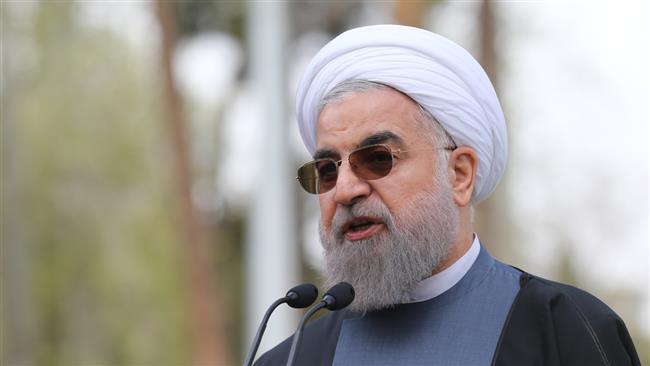
“There is no doubt that Russia’s effective airstrikes and ground operations by the Syrian army and popular forces forced terrorists and their sponsors to come to the negotiating table, and they realized that military action will be in no one’s interest in Syria,” Rouhani said in a phone conversation with his Russian counterpart Vladimir Putin.

However, the Iranian president noted, the recent deal on a ceasefire in Syria has numerous ambiguities and deficiencies, whose resolution is necessary for allaying concerns.

“In the ceasefire process in Syria, the delivery of aid to the displaced people of Syria should be carried out under the supervision of the central government,” Rouhani stressed.

“Hostages and innocent people should also be released swiftly,” he further said, adding that the way to monitor the ceasefire needs to be clarified, and special attention should be paid to the tight control of Syria’s borders to prevent the crossing of terrorists and their financial resources.

Putin, for his part, stressed that Iran and Russia should have close cooperation and coordination with each other on the resolution of Syrian crisis.

He also said that the proposed truce has certain weaknesses, and underlined the significance of controlling Syrian borders and closely monitoring the ceasefire.

“By controlling Syria’s borders, the entry of terrorists and the transfer of arms, financial, and logistical aid to terrorist groups should be blocked,” he added.

The fight against Daesh (ISIL) and Nusra Front terrorist groups will definitely continue, Putin assured, stressing that Syria’s sovereignty and territorial integrity should not be violated in the organization of international aid to the people of war-torn Arab country.

The phone call was made after the Syrian Foreign Ministry said in a statement on Tuesday that the government accepts the terms of a Monday ceasefire deal announced by the United States and Russia.

It added that the Syrian government accepts the deal on the basis that military efforts against Daesh Takfiri terrorists and the al-Qaeda-linked al-Nusra Front group continue.

Iran joins world aerospace market in post sanctions era

‘The post-sanctions opportunity and positive interactions with world nations can link the science-based companies working in Iran’s aerospace filed with interantional markets, and that is a great achievement,’ said Amir-Hossein Davaie Wednesday afternoon in the 3rd Festival to Commemorate Iranian Aerospace Researchers and Scientists.
The deputy minister advised the Iranian science-based companies to amke maximum use the existing opportunity and pave the way for entering the international markets.
The deputy minister meanwhile referred to new markets that small satellites can create, arguing ‘It is hoped that our country will achieve an appropriate status in using outer-space atmosphere.’
On Jan 16, 2016 after the publication of the UN nuclear watchdog’s report on Iran’s full commitment to its accepted responsibilities in accordance with the Joint Comprehensive Plan of Action (JCPOA) the six world powers’ responsibility for terminating all anti-Iranian nuclear sanctions began.
The 3rd Festival to Commemorate Iranian Aerospace Researchers and Scientists is now being held at Iran Aerospace Research Center.

Rouhani, Putin Stress Need for Cooperation to Settle Syria Crisis

In a telephone conversation on Wednesday, Rouhani and Putin attached great significance to cooperation on resolving the Syrian crisis and fighting terrorism, according to a statement published on the Kremlin’s website.

“The importance of further joint work was noted between Russia and Iran on issues of settling the Syrian crisis, including the decisive fight against Daesh (ISIL), al-Nusra Front and other terrorist organizations included in the sanctioned list of the UN Security Council,” the statement said.

“They focused on the Syrian problems, in particular the discussion of the initiatives and proposals contained in the Joint Statement of Russia and the United States on the cessation of hostilities in Syria,” it added.

It came after Russia and the US reached a draft deal on Monday, detailing a ceasefire to start in war-torn Syria on Saturday.

Syria has been entangled in civil war since March 2011, with Takfiri terrorist groups like Daesh controlling parts of it, mostly in the east.

According to a new report by the Syrian Center for Policy Research, the conflict has claimed the lives of over 470,000 people, injured 1.9 million others, and displaced nearly half of the country’s pre-war population of about 23 million within or beyond its borders.


Oman backs Iran in Saudi freeze row

Saudi Arabia, which pumped 10.2 million barrels daily in January, wants major producers to cap their output at existing levels at a time when Iran is ramping up production to claw back market share it lost under sanctions.

Oman’s Oil Minister Mohammad bin Hamad bin Saif al-Rumhi said sanctions have harmed Iran’s exports and the country had a right to increase output.

On Tuesday, Saudi Oil Minister Ali al-Naimi said he hoped producers would meet in March to negotiate an output freeze as he ruled out production cuts.

Last week, Saudi Arabia, Russia, Qatar and Venezuela proposed the freeze that would cap production at January levels.

“Given the damage Iran’s oil exports have suffered as a result of Western sanctions, the country can be exempted from a possible OPEC agreement on freezing production,” the Mehr news agency on Wednesday quoted Rumhi as saying.

“One solution is that Iran is allowed to rebuild its production; any decision in this regard is up to OPEC members to make,” he added, according to the news agency.

Rumhi also said his country was ready to cut production by 10% if an agreement was reached. “Oman is not an OPEC member but it is ready to go along with OPEC,” he added.

On Sunday, Nigerian Energy Minister of Petroleum Emmanuel Kachikwu also said Iran must be given a way out to regain some of its lost market share due to sanctions.

“Countries like Iran and Iraq have been out of the market for a while and if they are to come back you shouldn’t freeze them out where they are, you should freeze them at a higher level,” Kachikwu said in Doha, Qatar.

Saudi Arabia, however, has said any agreement was contingent on all other producers agreeing to a freeze. On Tuesday, Naimi reiterated the position.

“Freeze is the beginning of a process, and that means if we can get all the major producers to agree not to add additional balance, then this high inventory we have now will probably decline in due time,” he said in Houston, Texas.

Analysts have expressed skepticism that Saudi Arabia is even capable of producing more than it is today. Moreover, an output freeze will not reduce the existing glut and will have no impact on prices.

Iran is seeking to increase output by 1 million barrels a day this year after sanctions on its oil industry were lifted last month. The country’s production has slumped since sanctions were imposed on its exports.

Minister of Petroleum Bijan Zangeneh on Tuesday dismissed the output freeze “a joke” which puts “unrealistic demands” on Iran.

“Some countries that are producing above 10 million barrels per day have called on Iran to freeze its production at one million bpd,” he said.

Iran-Germany Banking Ties to Normalize in 3 Months: Envoy

Speaking to the Tasnim News Agency, Majedi said infrastructure problems for bilateral cooperation between Iran and Germany are to be resolved.

The problems have their roots in banking issues pertaining to the Society for Worldwide Interbank Financial Telecommunication (SWIFT), he said, adding that Iran has just been connected to the SWIFT network.

“…We hope that within two or three months, we will see (banking relations) back to normal,” he said.

Speaking to reporters last week, Majedi had said that a US Treasury delegation planned to pay an official visit to Germany soon to help resolve the remaining problems in banking ties between Tehran and Berlin after the removal of anti-Iran sanctions.

“We are witnessing the German side’s seriousness to resolve these problems,” the diplomat said at the time.

The remarks came against the backdrop of a new wave of interest in ties with Iran after Tehran and the Group 5+1 (Russia, China, the US, Britain, France and Germany) on July 14, 2015 reached a conclusion over the text of a comprehensive 159-page deal on Tehran’s nuclear program and started implementing it on January 16.

The comprehensive nuclear agreement terminated all nuclear-related sanctions imposed on Iran after coming into force.

Earlier in July 2015, German Vice-Chancellor and Minister for Economic Affairs and Energy Sigmar Gabriel visited Iran at the head of a high-ranking trade delegation, including the representatives of 20 German economic giants, and held meetings with senior Iranian officials to develop economic cooperation between the two countries.

Iran manufactures auto injectors for MS patients

According to experts, only certain countries have the technology to build the device. Once the production line becomes operational, Iran will also join them.

Western sanctions significantly harmed Iran’s hygiene and health sector over the past few years.

The embargoes had forced Iran to suspend cooperation with some of the developed states that used to transfer modern technologies, experiences and scientific achievements to the country.

Given that the Joint Comprehensive Plan of Action (JCPOA) has already gone into effect and the sanctions are gradually being lifted, some of the world’s technologically advanced countries, such as France, have resumed collaboration with Iran.

In an exclusive interview with the Tehran-based English newspaper ‘Iran Daily’, Mohammad Ali Sahraian, deputy head of Iran MS Society (IMSS), elaborated on the advantages and benefits of autoinjectors and the general condition of Iranian MS patients.

About the current number of MS patients in Iran, Sahraian said, ‘I cannot give an exact figure; nevertheless, approximately 60,000 people in the country suffer from the disease.

‘According to IMSS’ figures, there are 22,000 MS patients in Tehran. The disease is becoming more prevalent in the country.

‘Some 30 out of every 100,000 people in Iran suffer from MS.’

On the reason for the increased prevalence of the disease in the Middle East and, particularly, Iran over the past two decades, the official said ‘Scientists have not yet discovered the reasons for contracting MS.

‘It is an autoimmune disease which inflicts damages on the central nervous system (CNS) by attacking human body’s immunity system.

‘The symptoms of the disease begin to appear following the harms to the CNS. Autoimmune diseases are more common in developed countries where infectious diseases are strictly controlled.

‘Autoimmune diseases are not just limited to MS. Other autoimmune diseases are widespread across the world.

‘Environmental and genetic factors are also effective in the development of the disease.

‘Sometimes, inheriting a certain gene makes individuals highly susceptible to the disease. However, it is still impossible to cite a certain reason for contracting the disease.

Asked what age groups in Iran show a higher prevalence of MS, he answered ‘The disease is highly prevalent in people in the 20-40 -year age bracket.

‘Women are three times more likely to contract the disease.

‘Sometimes, the symptoms appear even at the age of four. It is also possible that symptoms arise in patients, between 60 and 67 years of age.’

On medications given to patients, he said ‘There is no definite cure for MS.

‘Like diabetes and high blood pressure, it can only be controlled.

‘Currently, to control the disease, patients are prescribed interferon medications.

‘Interferon is a signaling protein made and released by host cells in response to the presence of several pathogens, such as viruses, bacteria, parasites, and also tumor cells. They help regulate the immunity system and reduce attacks on the CNS.

‘These medications are normally administered through injection once or thrice a week, depending on the condition of the patients.

‘In some cases, due to the severity of the disease, injections are performed at shorter intervals.’

Asked whether the medications are produced domestically or not, he replied ‘Some 80 percent of the MS patients receiving interferon medications use domestic products. At present, Iran is almost self-sufficient in these medicines.’

About the impact of sanctions on Iranian patients suffering from MS, he said ‘Since most of the medications required by MS patients were produced domestically, they did not face any major problems. However, some of these patients needed a number of imported medications, who were affected negatively by the embargoes.’

Elaborating on Iran-France cooperation to build a device to MS patients recover their health to a great extent, he said ‘A large number of MS patients require weekly injections.

‘Due to the number of the injections, sometimes, patients are trained to self-administer the injections. Prior to the invention of the device, they used very thin needles, the use of which required a great deal of care.

‘Patients should inject a certain dose of the medicine very slowly.

‘At times, the injection led to skin allergies and other negative symptoms. To tackle these problems, a number of the developed countries made an autoinjector device with a remarkably high degree of precision.’

Also, speaking to Iran Daily on the sidelines of the unveiling ceremony of this modern device, Haleh Hamedifar, the managing director of the research center for manufacturing autoinjectors, said a large number of MS patients have to administer injections 12-15 times a month.

She added it was really essential to produce the device domestically given that it is extremely difficult for patients suffering from MS to move from one place to another and to receive the shot, they have to refer to treatment centers.

Hamedifar said the device was invented some three years ago, adding it provides patients with the most up-to-date technology for administering injections.

‘Once the production line for the device becomes operational, we will be able to resolve a major portion of the problems faced by MS patients in the treatment process.’

In addition, she said, once the device enters mass production, Iran will be able to export it.

‘China, India and some Latin American countries currently produce the device. Nevertheless, I dare say that the product, to be manufactured in Iran, will possess higher quality.

‘At present, we have only two main rivals in the world in this regard.’

Due to the structure of its needle, the device will help resolve the security problems posed by hospital medical wastes to a significant extent, she underlined.

Thanks to the removal of the sanctions, Iran will able to produce modern products and export them. This will shift the pharmaceutical trade balance in favor of the country.

‘The Songs of My Land’ wins Russian Jury Prize

Directed and produced by Abbas Rafeei and Amir Hossein Sharifi, The Songs of My Land received three prizes, including the Special Jury Prize, at 11th International Orthodox Film Festival in Obninsk, Russia.

Amir Hossein Sharifi received another award on behalf of Orthodox churches due to addressing the message of friendship between Muslims and Christians.

The Songs of My Land won the festival’s Special Jury Prize due to difficulties in production and addressing the most important issue in today world, which is terrorism.

The third prize is the special award of Eurasian Television and Radio Academy which was presented to Sharifi by the head of the academy.

Sharifi bestowed the award to the families of Christian martyrs who were killed by terrorists.

He also gave his second and third prize to the film’s director and its cast

Enemy failed in plots against Iran: Ayatollah Khamenei

Ayatollah Khamenei made the remarks in an address to thousands of people from the central city of Najafabad on Wednesday.

The Leader said enemy is attempting to create a “false bipolarity” in Iran like “pro-government and anti-government parliament.”

He said the Iranian people will stand up to enemy plots by voting in the upcoming elections.

“When enemy witnesses that after 37 years [since the victory of the Islamic Revolution], [and] with all [kinds of] pressure, cruel sanctions and spiteful and damaging propaganda, it has failed to prevent people’s allegiance to the establishment,” it comes to realize the grandeur of the Islamic establishment, Ayatollah Khamenei said.

The Iranian people want a parliament that pays due heed to the country’s independence and dignity, is committed and courageous and will not fall for enemy plots, the Leader noted.

The next elections for the 10th term of the Iranian Parliament (Majlis) and the 5th term of the Assembly of Experts will take place simultaneously on February 26.

Ayatollah Khamenei further warned against enemy schemes to infiltrate into the country, calling on the nation to remain vigilant in the face of enemy plots to “create discord” in the country.


Ceasefire Plan Not to Stop War on Terrorism: Syrian Deputy FM

In an interview with the Lebanese al-Mayadeen television channel, Mikdad described Damascus’s acceptance of the ceasefire plan as a carefully calculated move, adding the decision was made after extensive consultations with Russian friends.

The US and Russia reached a draft deal on Monday, detailing a ceasefire to start in war-torn Syria on Saturday.

The senior Syrian official further stressed that the truce initiative does not mean that the battle against Takfiri groups will ever stop, adding more victories are ahead.

Mikdad also referred to forthcoming Syrian parliamentary election and said the poll has nothing to do with the ongoing political negotiations.

On Monday, Syrian President Bashar Assad called for the parliamentary elections to be held on April 13.

Syria has been entangled in civil war since March 2011, with Takfiri terrorist groups like Daesh (ISIL) controlling parts of it, mostly in the east.

In the past five years, more than 260,000 people have died in Syria – overwhelmingly civilians – and around 4 million Syrians are now refugees in other countries. Around 8 million others have been displaced internally.