
Magnificent Grand Mosque of Saveh contains history of a millennium. This Seljuk-era monument was built in the 12th century and is located in Markazi Province.
The following images have been released by Mehr News Agencies:
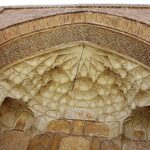
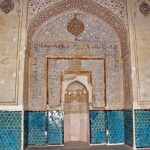
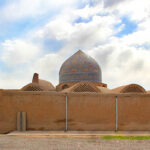
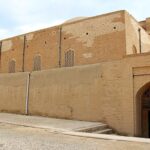
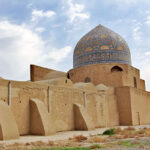
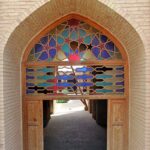
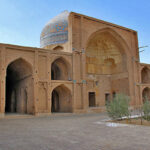
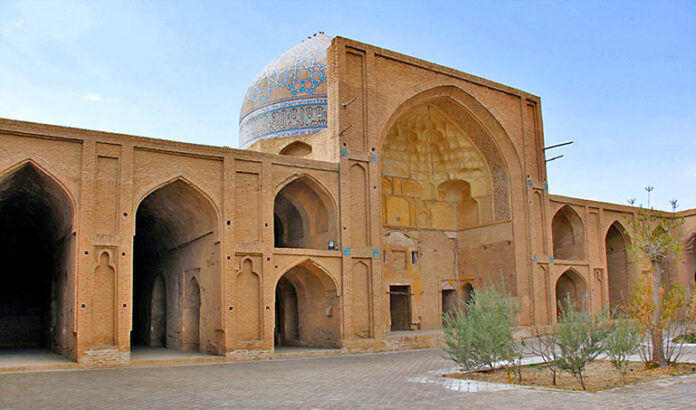
Magnificent Grand Mosque of Saveh contains history of a millennium. This Seljuk-era monument was built in the 12th century and is located in Markazi Province.
The following images have been released by Mehr News Agencies:
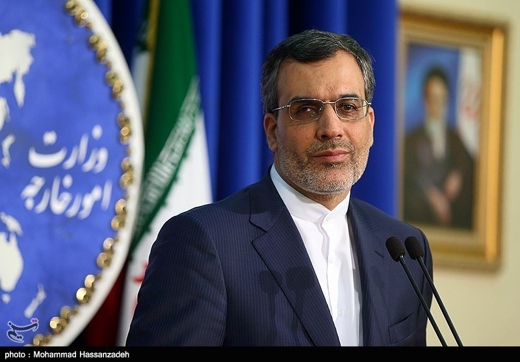
Speaking in a televised program on the Iranian Channel One network, he said Saudi rulers who are facing economic and political woes inside their country will not reap any fruit from their policy of creating tension in the region to ward off their challenges.
Jaberi Ansari urged the House of Saud to be ready to accept the realities at home, in the region, and worldwide and stop destructive and war-mongering policies which have negatively affected their image.
The spokesman also reiterated that diplomatic contacts beween Iran and US in recent days have been soley on the issue of nuclear agreement saying that Washington cannot mediate between Tehran and Riyadh while it has no diplomatic ties with the Islamic Republic.

The Public Relations of Pars Oil and Gas Company announced on Saturday that upon the completion of the onshore and offshore operations of the processing and desalination facilities of this national project’s 15 and 16 phases, its gas output will be injected into the national gas network in the first month of the cold season.
The project has been implemented by a consortium comprised of Iranian companies aimed at gas usage from the shared gas resources between Iran and Qatar.
The objective of the project is producing 50 million cubic meters of sweet gas daily for national consumption, especially in homes, business, industries, and 80 thousand barrels of gas condensates for refinery feedstucks, which will in turn be turned into various types of fuels, other precious products, and 400 tons of sulfur for exports.
Last winter, Phase 12 of the South Pars was officially opened by President Rouhani with a daily production of 75 million cubic meters.
After prioritizing the completion of the semi-completed phases of the South Pars Oil and Gas Field by the current government, increasing Iran’s natural gas production has been accelerating significantly.

Abbas Kazemi, the managing director of National Iranian Oil Refining and Distribution Company (NIORDC), has been quoted by the media as saying that the planned refinery will have the capacity to refine 200,000 barrels per day (bpd) of crude oil.
Kazemi told IRNA that Tehran will provide half of the investment required for the project and the rest will be provided by Spanish companies. He added that the project will guarantee Iran’s oil sales to Madrid given that it will only refine supplies from Iran.
The official said Tehran and Madrid are still negotiating the project and it remains to be finalized by the two countries.
Kazemi had been quoted by the media as saying last October that Tehran is pressing ahead with new plans to invest in refineries overseas as a means to secure more customers for its oil. The strategy, he suggested, would make the Islamic Republic to sanctions that target its sales of oil.
Iran had previously been pursuing the same strategy to invest in refinery projects in Indonesia, Brazil and India.
The country said last June that it had reached a deal with Indonesia as well as China over the construction of a refinery with a capacity to process 150,000 bpd on the East Java island. The joint venture plan envisages Iran supplying feedstock and partially financing the project and China providing 85 percent of the funds, the chairman of the Iranian Oil Exporters Union Hassan Khosrojerdi said.
Iran has signed a basic agreement with Brazil to construct a refinery for processing 300,000 bpd of crude oil in the country. It has also held early talks over a project that involves refining 400,000 bpd of Iran’s crude oil in India.
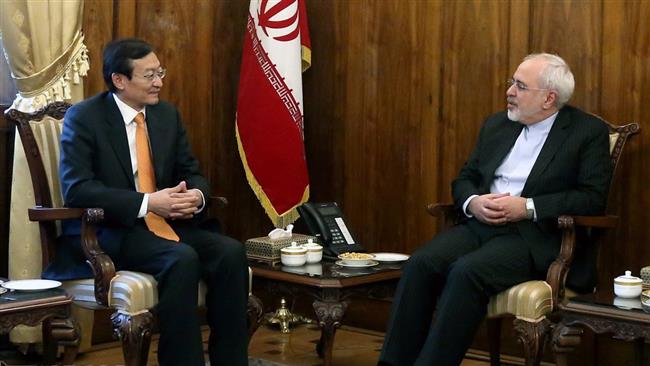
“We have so far responded to negative Saudi measures with patience because there is a distance between Iranian wisdom and Saudi officials’ misguided and immature approaches,” Zarif said in a meeting with China’s Vice Minister of Foreign Affairs Zhang Ming in Tehran on Saturday.
“We are not after tension in the region,” the Iranian minister added.
Relations between Iran and Saudi Arabia have been strained in recent days following the Saudi execution of top opposition cleric Sheikh Nimr al-Nimr, which was announced on January 2.
Nimr’s execution was widely censured by Muslims and human rights activists around the globe as well as different governments.
Saudi Arabia severed diplomatic relations with Iran on January 3 following demonstrations held in front of the Saudi embassy in Tehran and its consulate in the northeastern city of Mashhad by angry protesters censuring the Al Saud family for the killing of Nimr. Some people mounted the walls of the consulate in Mashhad while incendiary devices were hurled at the embassy in Tehran. Some 50 people were detained over the transgression.
In a Friday letter to United Nations Secretary General Ban Ki-moon, Zarif said Saudi Arabia has to make “a crucial choice” to either promote “sectarian hate-mongering” by its continued support for extremist groups or promote regional stability.
He added that Tehran has “no desire or interest in escalation of tension in our neighborhood” and hopes Riyadh will “heed the cause of reason.”
Meanwhile, speaking in a press conference after an extraordinary meeting of the foreign ministers of the [Persian] Gulf Cooperation Council in Riyadh on Saturday, Saudi Foreign Minister Adel al-Jubeir repeated the kingdom’s anti-Iran rhetoric and said Riyadh is considering “additional measures” against Tehran if it “continues with its current policies.”
Iran continues to expand China relations: Zarif
During his meeting with the Chinese diplomat, Zarif also said that Iran and China have numerous commonalties on different issues.
He added that Tehran will continue to expand relations with Beijing following the implementation of a nuclear agreement reached between the Islamic Republic and six world powers in July 2015.
The Joint Comprehensive Plan of Action (JCPOA), reached between Iran and the P5+1 – the United States, Britain, France, China and Russia plus Germany – in the Austrian capital of Vienna on July 14, 2015, puts limits on Iran’s nuclear activities in exchange for the removal of all economic and financial nuclear-related sanctions against the Islamic Republic.
The Iranian minister expressed hope that a planned visit by Chinese President Xi Jinping to Tehran in the near future will bring about positive outcomes for the two countries.
He also hoped that Iranian and Chinese officials would open up prospects for comprehensive cooperation during Xi’s visit to Tehran.
Iran pursues wise foreign policy: Zhang
The Chinese official, for his part, said Iran and Saudi Arabia play an important role in regional developments.
Iran pursues wise foreign policies, the Chinese official said, adding that his country would spare no effort to contribute to promotion of peace and security.
He also expressed Beijing’s full readiness to bolster relations with Tehran and said the Chinese president plans to visit Iran in the near future for the first time after 14 years.
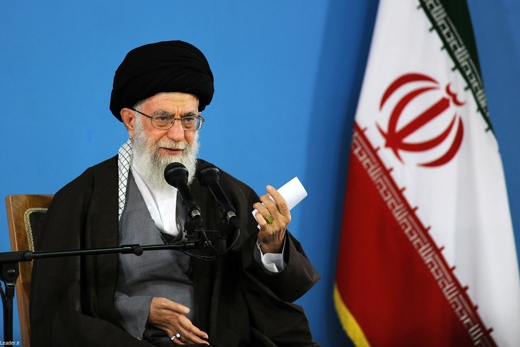
The Supreme Leader made the remarks in a meeting with thousands of people from Qom on Saturday.
It is very harrd for the country’s enemies to witness its territorial integrity, said the Supreme Leader and advised all people to massively take part in elections to disappoint the enemies.
People’s vigilance and presence will guarantee the Islamic Revolution and bring calm and victory for the Iranian nation while at the same time thwarting the plots of the enemies, Ayatollah Khamenei said.
People in Qom heralded the victory of the Islamic Revolution during years of struggles under wise leadership of late Imam Khomeini, the Supreme Leader said.
The historical uprising of the people on January 9, 1978 led to the triumph of the Islamic Revolution, the Supreme Leader said.
Presently, the Islamic Revolution is in struggle with various enemies such as the US, Zionist regime and their puppets such as Takfiri and Daesh terrorist groups and there is no doubt that the Islamic Revolution will emerge victorious in the struggle, Ayatollah Khameni said.
Referring to the significant developments taking place during ‘Nationalization of Oil Industry’ and ‘Constitutional Movement’, the Supreme Leader said in the first development the Iranian nation called for cutting the hands of Britain off the country’s national oil asset but in the latter one they sought to limit the authoritarian power of the then monarch.
Both events, despite people’s presence on the scene failed to achieve their goals but in the Islamic Revolution the people called for independence and managed to toppled the then monarchical and despotic regime to safeguard the country’s territorial integrity, the Supreme Leader said.
He advised the youths to have a correct analysis of such events to disappoint the enemies and indicate that the country’s future is very promising.
Referring to other revolutions in France and Russia and their annihilations, the Supreme Leader said the Islamic Revolution is the only revolution in the world which has remained committed to its principles.
The main goal of the enemy is to destroy the principles of the Islamic Revolution, said the Supreme Leader, adding that all enemies at different junctures and through various means such as war and full-scale economic sanctions tried to harm the Islamic Revolution but to no avail.
Timely presence of people in the country’s presidential elections could foil the US plots to bring the Islamic Revolution to its keens, underlined the Supreme Leader.
The Americans claim that the post-nuclear talks will be very tough for Iran but the youths, people and officials are vigilant and by relying on the God Almighty they will resist the enemies and attain triumph.
Ayatollah Khamenei advised people to take into consideration two points of participation and choosing eligible candidates prior to the upcoming elections. He also invited even those who do not believe in the revolution to cast their ballots as these elections belong to the whole Iranian nation, Iran and the Islamic Revolution.
People’s presence in the upcoming elections will upheld the country’s prestige at international level, Ayatollah Khamenei said.
The Supreme Leader described the performance of the current Majlis in dealing with international issues such as the country’s nuclear dossier as desirable and lauded an independent, free and brave parliament which spares no efforts to defend the nation’s stands.
All people in all provinces and cities should make the right choice, advised the Supreme Leader.
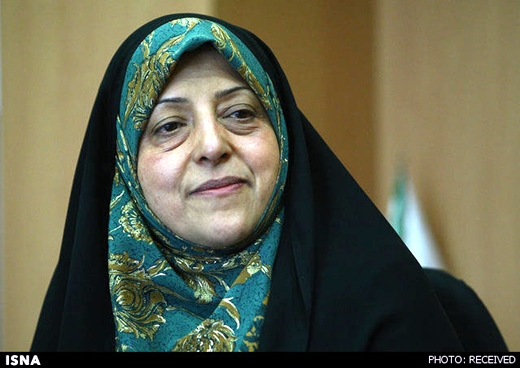
Tehran-based English newspaper, Iran Daily, reported that Ebtekar has launched the campaign calling it “The 18° Celsius Temperature Challenge”.
“Set your thermostat at home or work [at 18° Celsius] to curb air pollution and fight climate change,” she wrote on her Twitter.
The DoE chief said temperatures in rooms and halls of buildings should not exceed 21° Celsius and 18° Celsius, respectively.
Many political and cultural figures including Foreign Minister Mohammad Javad Zarif, Head of Women and Family Affairs Department Shahindokht Molaverdi as well as Communications and Information Technology Minister Mahmoud Vaezi have so far joined the campaign.
Shina Ansari, the head of Environmental Monitoring Office at the DoE, said densely-populated cities such as Tehran and Isfahan experience temperature inversion during winter due to a combination of factors, including ‘non-standard car fuels’ and high energy consumption.
She added that the government should adopt comprehensive plans to reduce air pollution and citizens should also spare no efforts to lower their energy consumption.
“Natural gas accounts for 54 percent of the carbon dioxide emissions,” Ansari said.
She noted that gas consumption has increased by 33 percent in the current Iranian year (which started on March 21) compared to the corresponding figure of last year.
Alireza Pardakhti, a professor of Tehran University, described the campaign as a good idea and said the state offices are expected to be the first to join the campaign.
Other experts have also praised the government for launching such a campaign.
They have said such movements would help bridge the gap between the government and people.

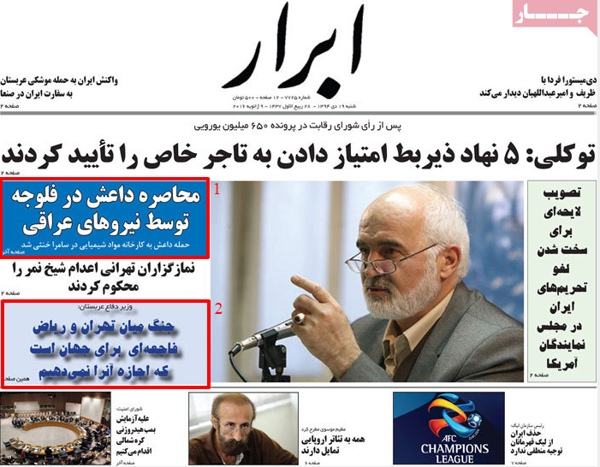
Abrar:
1- Iraqi Forces fence in ISIS fighters in Fallujah
ISIS assault on Chemical plant contained
2- Saudi crown prince: All-out Tehran-Riyadh war major global catastrophe
An all-out war between Saudi Arabia and Tehran is “something we do not foresee at all,” the Saudi deputy crown prince and defense minister has said.
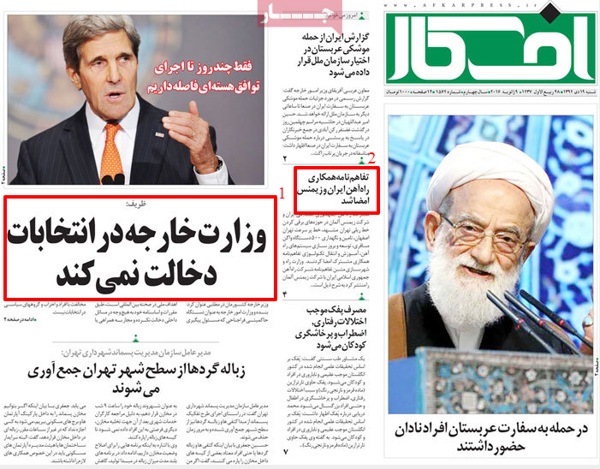
Afkar:
1- No Foreign Ministry intervention in Elections: FM
2- Siemens, Iran seal railroad deals
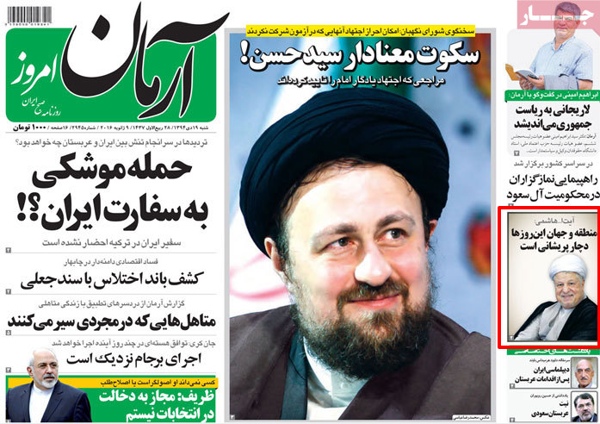
Armane-Emrouz:
– Middle East, World in Chaos These Days: Rafsanjani
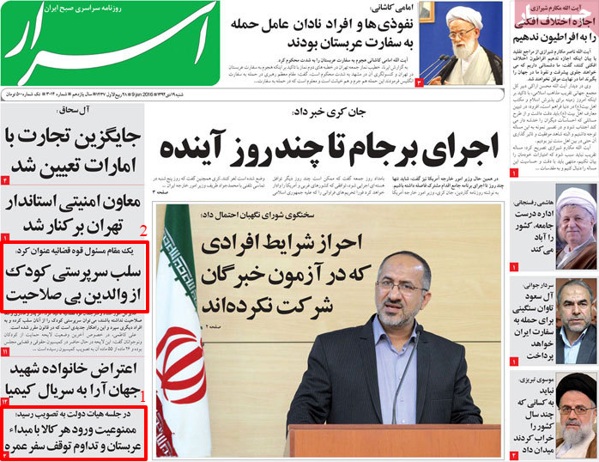
Asrar:
1- Iran bans imports from Saudi Arabia, suspends all Umrah trips
Iran’s government said it had forbidden imports from Saudi Arabia after a cabinet meeting chaired by President Hassan Rouhani on Thursday morning.
2- No custody rights for unqualified parents: Senior judiciary official
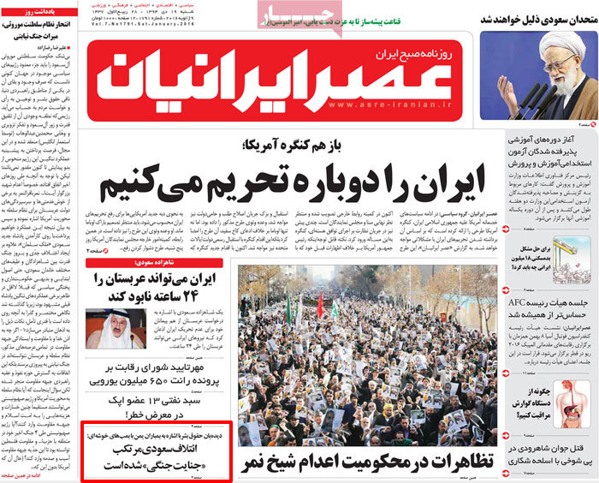
Asr-e Iranian:
– Cluster bombing by Saudi-led Coalition, a war crime: HRW
“The coalition’s repeated use of cluster bombs in the middle of a crowded city suggests an intent to harm civilians, which is a war crime,” Human Rights Watch
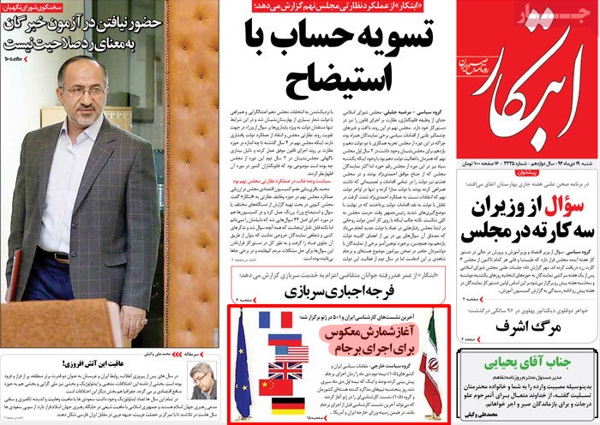
Ebtekar:
– Countdown to JCPOA Implementation
Iran and six world powers started expert-level talks in Geneva on Friday to work out implementation of a landmark deal on the country’s nuclear program, referred to as the Joint Comprehensive Plan Of Action (JCPOA).
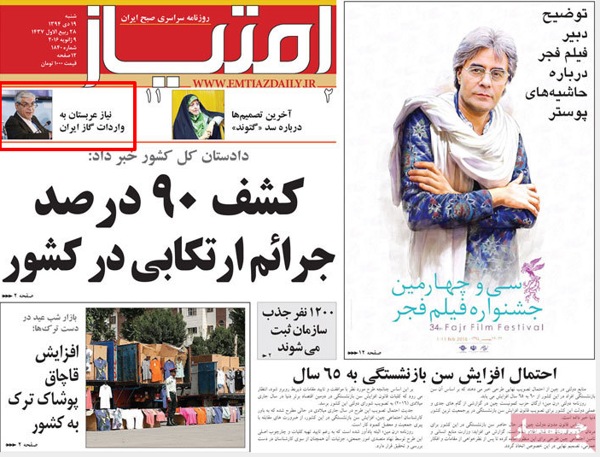
Emtiaz:
– GECF Secy-Gen: Saudi Arabia Needs Iran Gas
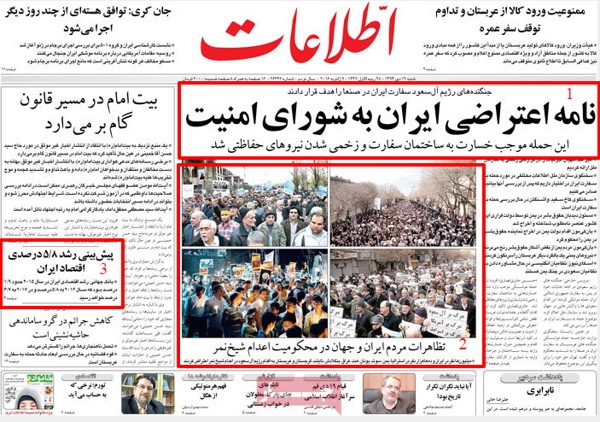
Ettela’at:
1- Iran to take Saudi raid on embassy in Yemen to UN
– Saudi raid injures Iran embassy guards in Yemen
3- Execution of Shia cleric by Saudi regime spurs demonstrations in Iran, world
4- World Bank expects Iran’s economic growth to hit 5.8% in 2016
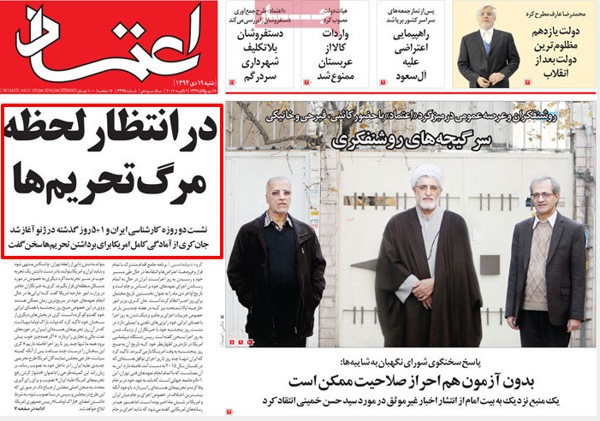
Etemad:
– Final stages of sanctions removal
Iran is eying the end of the US-led sanctions as experts talks are on the go in Geneva between Tehran and the P5+1 group of countries.
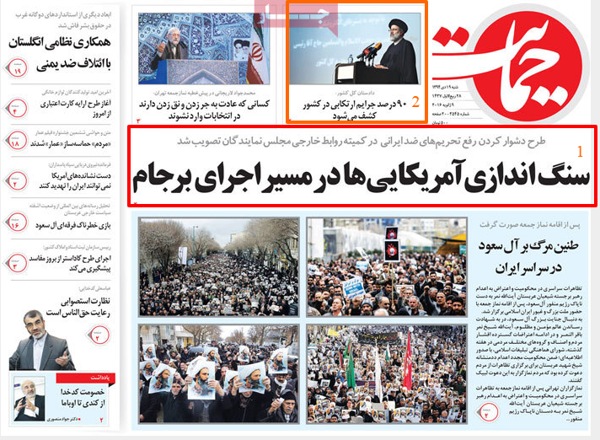
Hemayat:
1- US filibustering JCPOA Implementation
2- 90% of committed crimes detected in Iran: Attorney-General
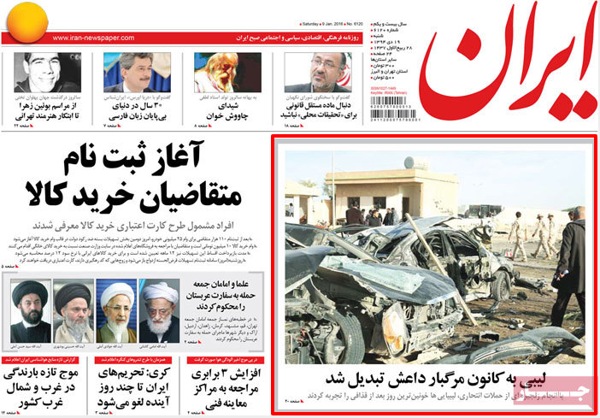
Iran:
– Libya’s bloodiest day since Qaddafi
– 47 dead after worst IS bomb attack since Qadaffi
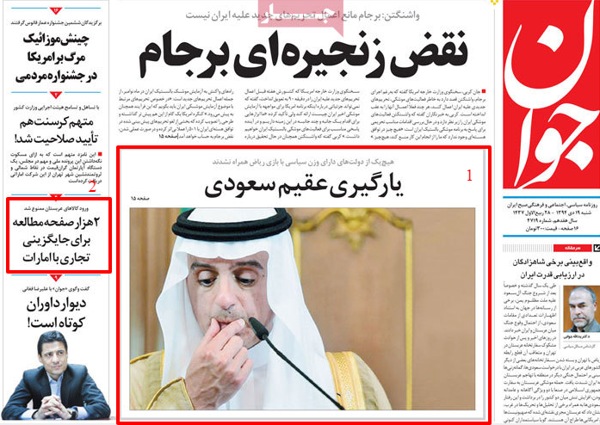
Javan:
1- Fruitless Saudi Coalition
No politically significant country has taken sides with Saudi Arabia against Iran
2- Finding replacements for trade with UAE well studied: Iran
Iran says it has found replacements for the United Arab Emirates as its new trade partner in the region in case the UAE decides to change the status of its relations with the Islamic Republic.
–Tehran bans import of all goods produced in Saudi Arabia
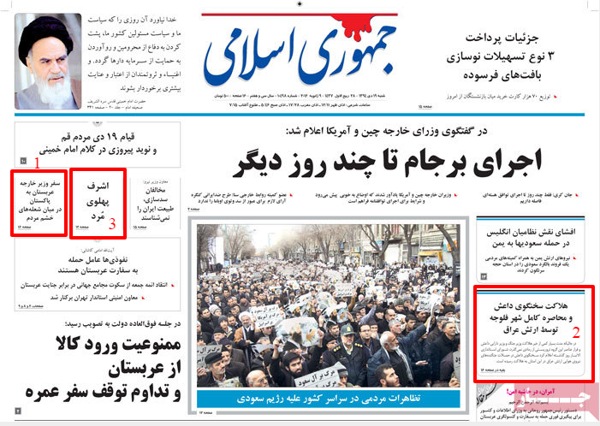
Jomhouri Eslami:
1- Pakistani Demos against Saudi FM Visit
Pakistanis have taken to the streets of Islamabad to air their hatred at Saudi Foreign Minister Adel al-Jubeir’s visit to the country.
2- Iraqi forces kill ISIS Spokesman, besiege ISIS-controlled Fallujah
3- Twin Sister of Iran’s Last Shah, Ashraf, Dies at 96
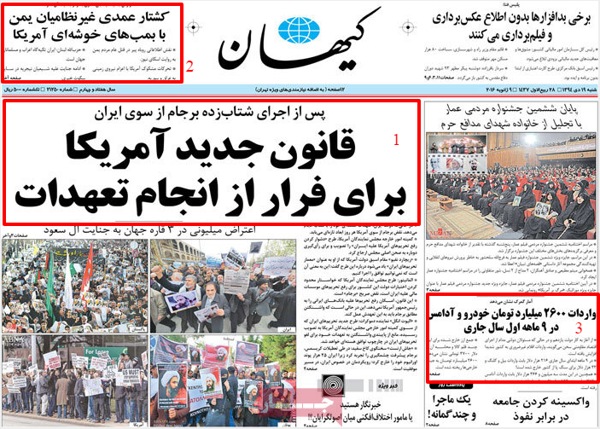
Keyhan:
1- New US visa reform law breach of nuclear deal
2- US-made cluster bombs dropped by Saudi-coalition forces kill Yemeni civilians: HRW
3- Iran imports IRR 2,600bn cars, gums in 9 months, customs data show
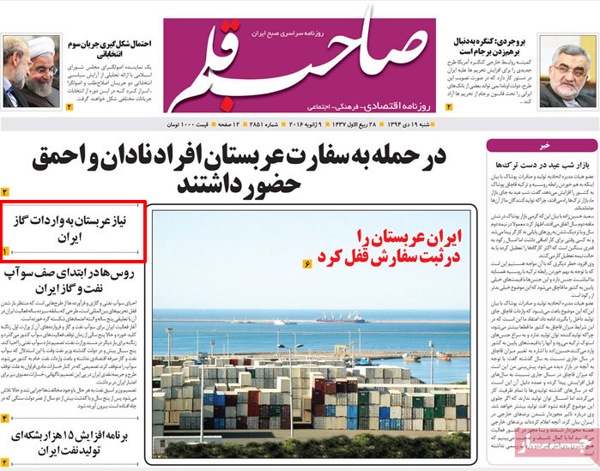
Saheb Qalam:
– Saudi Arabia Needs Gas Imports from Iran: GECF Secretary-General
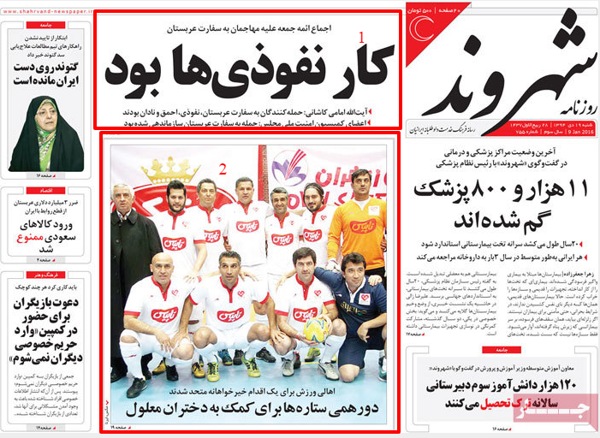
Sharvand:
1- Friday prayer leaders slam attacks to Saudi embassy in Tehran
– Saudi embassy attackers were double agents, lunatic and misinformed, a senior cleric said.
– The Saudi embassy attack was premeditated, members of the national security committee of the Iranian parliament said.
2- Iranian stars hold charity football match
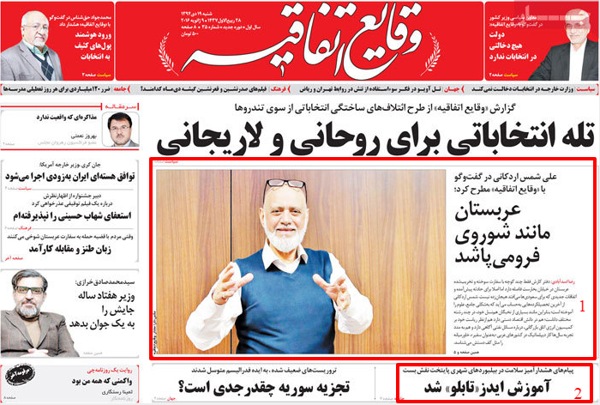
Vaqayeh Etefaghiyeh:
1- USSR fate awaits Saudi Arabia: former diplomat
2- HIV care billboards in Tehran
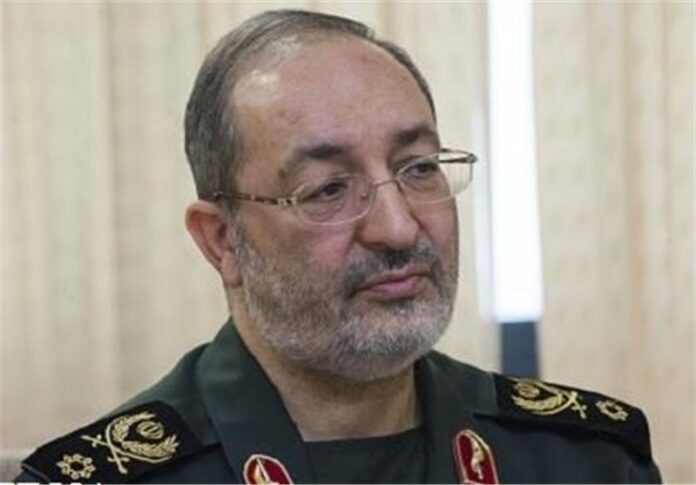
“We have always developed defense capacities in the country proportional to the threats; thus, we will expand our military and defensive capabilities in direct proportion to the rise in the Great Satan’s pressure and threats,” the top commander said, referring to the US.
While the US is intensifying pressure on Iran, the Islamic Republic will have no choice but to upgrade its defensive preparedness, he added.
Jazayeri noted that the US breach of commitments are being laid bare while the Joint Comprehensive Plan of Action (JCPOA), a lasting nuclear deal between Iran and the Group 5+1 (Russia, China, the US, Britain, France and Germany), is only steps away from being implemented.
The commander stressed that the US rulers, who are known as the biggest violators of human rights, have no right to talk about Iran’s military equipment.
His comments came after reports that the US Treasury Department would impose fresh sanctions against individuals in Iran, Hong Kong, and the United Arab Emirates following Iran’s missile testing in October and November.
One day after the announcement, the White House announced it had delayed the fresh sanctions against Tehran.
Thereafter, Iranian President Hassan Rouhani ordered the Defense Ministry to continue production of missiles needed by the country’s Armed Forces “more quickly and seriously”.
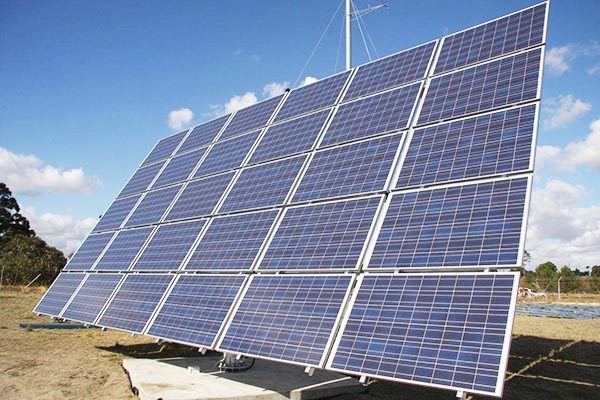
The new power station, named after Iranian polymath Sheikh Bahaee, generates electricity with a 250KW capacity.
Deputy Energy Minister Houshang Falahatian opened the solar plant in a ceremony attended by governor of Tehran Province, a number of city councilors and parliamentarians.
Iran has formulated plans to diversify electricity generation from the plants that use renewable energy sources, such as wind or solar power.
The country’s electricity industry ranks 14th in the world and first in the Middle East in terms of electricity generation by having an installed power generation capacity of 67,806 MW.
Solar photovoltaic generation, known as PV, contributes 96 to 98 percent less greenhouse gases than electricity generated from 100 percent coal, according to the Energy Research Center of the Netherlands.
© All Content by IFP News ( Iran Front Page ) is licensed under a Creative Commons Attribution 4.0 International License.
