Saturday, January 3, 2026
Home Blog Page 4549

Persian Gulf-Black Sea Corridor to be Launched

Mohammad Javad Atrchian, Director General of the Road Maintenance and Transportation Organization (RMTO), announced the establishment of a new transport corridor to connect Iran to Europe, explaining, “Representatives of Armenia, Georgia, Bulgaria, Greece and Azerbaijan have been invited to visit Iran on April 19 in order to finalize the Persian Gulf corridor to the Black Sea contract.”

Highlighting that the negotiations will be held in Iran and hosted by RMTO, the official said “During the session, the agreement drafted for the activation of a new Black Sea-Persian Gulf transport corridor will be finalized and signed by ministers of the five countries.”

Atrchian stressed that Iranian trucks are currently commuting on the route, adding, “Upon signing the deal, the governments will be obliged to offer certain services to them.”

He noted that Georgia and Azerbaijan have alleviated the need to offer visas for the Iranian side, and said, “Iran’s Foreign Ministry is taking similar steps for the remaining countries, though the case of Bulgaria, as a member of the European Union (EU), seems to be more complicated.”

The RMTO also referred to the commute of Iranian and Turkish trucks between the two countries, noting that “Both sides hold interests in the route, and meetings with the Turkish side are being undertaken in order to alleviate existing obstacles.”

Atrchian went on to stress that “We would not choose to neglect the current Turkish road route to Greece; rather, we seek to have parallel paths for the trucks to have more options, in addition to passing through Turkey.”

Accordingly, the new corridor is meant for Iranian trucks to pass through Azerbaijan, Armenia and Georgia in order to reach the Black Sea, from which they can head to Bulgaria, Greece and even Italy using roll-on/roll-off (RORO) ships.

Recipe for Fesenjan stew

Recipe for Fesenjan
Fesenjan is an Iranian dish.

Iranian dishes excel at making people who have never tried them fall in love at the first bite. The unique combination of spices and flavorings with a wide range of vegetables, herbs, fruit, grains, nuts, meat and most importantly rice only needs the wand of Iranian cuisine to perform magic and leave an explosion of unforgettable tastes in the mouth. The delectable smell, delicious look and perfectly pleasant taste make it almost impossible to resist them. To share the gastronomic delights of Iran, IFP has decided to file a series of mouth-watering recipes for Iranian dishes.

Fesenjan is an Iranian dish you should not get off on the wrong foot with. Luckily, the recipe is open to change to suit different tastes. Since it can be served either as a sweet, sweet-sour or sour stew, it’s up to you to adjust its flavorings – pomegranate paste, sugar, and verjuice – and cook it as you see fit.

Ingredients

Serves 4-6

1. Four to six chicken pieces – You could use either chicken legs, chicken breasts or a combination of both. It is worth noting that in the north of Iran the fancy version of Fesenjan, served on festive occasions, is cooked with duck. The chicken can also be replaced with fried meat balls.

2. 250 grams ground walnuts – It is very important that you grind walnuts a couple of times to get walnut oil completely extracted later on during the cooking. Walnut is the most important ingredient of this dish and to get a final good look and taste, you should pay careful attention to the quality of it.

3. Pomegranate paste – The amount of the paste depends on your taste and the kind of paste you use. Pomegranate paste might taste sweet, sweet-sour or sour. The more you use it, the darker brown your final stew will become, so aside from being a flavoring, it plays an important role in the color of the stew. If the paste tastes sour and you like to have the stew on the sour side, you can go for two heaped tablespoons of paste.

4. One level tablespoon tomato paste –It is mostly added to enhance the color of the stew and is optional. The original recipe does not contain it.

5. Verjuice to taste –If you have a sweet tooth and don’t like sour dishes, you must exclude this ingredient. But for those who like acid taste, verjuice could be the highlight of the ingredients. The amount of verjuice you use depends on your taste and the acidity of the verjuice you are using. After adding it to the stew, let it simmer for a while and then adjust the sourness. If you add it all at once, your stew might turn sourer than you like.

6. Sugar –The amount of sugar like pomegranate paste depends on your taste. But many recipes suggest two or three tablespoons are enough.

7. Salt, ground black pepper and turmeric to taste

8. Cold water


How to cook Fesenjan

1. Place ground walnut in the pot [some prefer roasting ground walnut before starting to cook the stew to get a wonderful aroma out of it, but make sure you don’t burn it, because if you do, it will take a toll on the taste of the stew], pour some verjuice and about half a liter of cold water [water of low temperature will better get the oil out of walnut] on it and then spoon in the pomegranate paste. Give it all a good stir and bring it to the boil. Then turn down the temperature and let it simmer. A well-cooked stew usually takes about three hours to be prepared.

One of the key points in cooking Fesenjan is that it should be cooked over a very low heat. Also, from time to time, check the stew for its water content; if it has lost much of it, add some cold water to the pot. However, you do not want to add a lot of water at once, because if you do, you will face two problems. First, your final stew will turn out to be watery with a bad look. Second, oil won’t come out of walnut well. Those who want to exclude verjuice can replace it with water or simply omit it.

2. Chicken pieces can be lightly fried with onions and seasoned with salt, black pepper and turmeric in advance to be added later to the pot. But if you want to make it quick, you don’t have to fry them in advance, instead they can be simply added to other ingredients in the last one hour of the cooking along with salt, black pepper and turmeric. Basically, chicken is cooked in an hour or so. Therefore, if you find it well cooked while your stew needs more time to be prepared, you can take the chicken pieces out of the pot and put them aside. The pieces can be added to the stew in the last few minutes of the cooking.

3. When the mixture starts thickening, tomato paste can be added – in the last 30 minutes.  If you like your Fesenjan to be sweet or sweet-sour, you can add sugar in the last 15 minutes. Avoid adding it earlier so that you won’t end up having a burnt hard layer at the bottom of the pot.

4. You can place the fried eggplants in the pot in the last five minutes of the cooking or if they haven’t turned cold you can simply garnish the stew with them. Serve the stew with Iranian rice.

Bon Appétit.

Wrong Approach to Terrorism behind EU’s Troubles: Iranian Diplomat

Insecurity in parts of Europe and the migration crisis result from the wrong policy of “instrumental use” of terrorism by certain countries, Deputy Foreign Minister for Arab and African Affairs Hossein Amir Abdollahian said in a meeting in Tehran with a delegation from France’s National Center for Scientific Research (CNRS).

The Iranian diplomat then emphasized the necessity for both pursuing political processes and fighting against terrorism given the delicate situation in the Middle East region.

On war-torn Syria, Amir Abdollahian reiterated Iran’s support for cooperation among the neighbors and for the international peace efforts.

He further slammed the Israeli regime for its policy of weakening the governments and disintegration of countries, stressing the need for respecting the regional countries’ sovereignty and territorial integrity.

Head of the French delegation, for his part, highlighted Iran’s influential role in the region, and called for stronger international cooperation with Tehran.

Araqchi: Iran Favours Solidarity among Muslim Nations

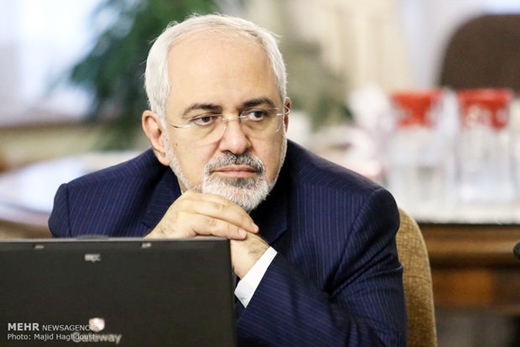
araghchii

He made the remarks while talking to IRNA on the sidelines of the two-day expert meeting of the Organization of the Islamic Cooperation (OIC).

He said that the experts participating in the event extensively discussed such issues as situation in Syria, Libya, and Yemen, as well as topics relating to Muslim minorities across the world.

According to the official, the meeting will also focus on ways of enhancing unity and Islamic solidarity, reconciliation within the Islamic world and finding ways to remove disagreements as well as a number of economic and cultural issues.

Araqchi said the OIC meeting will also produce a separate statement on Palestine which is to be offered to the foreign ministerial meeting.

Stressing the need for bolstering Islamic solidarity, the foreign ministry official stressed that Iran supported moves within the organization to foster unity and rejected attempts by some member states to turn issues between two countries into the main for the organization.

Saying that the Israeli government is the main threat and biggest enemy to the Islamic world, he said the experts also reviewed the topic of terrorism, extremism and Takfiri movements inside the Islamic world.

Netherlands Consultants Assist in Saving Energy and Environment

In this meeting, Farhad Sharif highlighted the diversifying economy of Iran, as well as the need for giving the private sector more chance to develop infrastructure projects and play more active roles in the Iranian economy and sustainable development. He said, “After the JCPOA, many delegations have come to Iran in order to find their counterparts for long term business relationships, in order to access the regional market.”

Mentioning the policy of a resistant economy, Sharif added, “The ground is well-prepared with well-educated human resources and security, in comparison with our neighbours, to work in fields such as renewable energy, water management and irrigation systems, healthcare, and the services related to these sectors.”

He continued, saying, “You should offer packages of services like educational and research besides selling your products to Iranian markets. In addition, you should find reliable partners to make joint ventures in order to access the regional market around our country.”

For his part, Marten C. van den Berg, the Dutch vice minister for foreign trade, mentioned that this was his second mission to Iran, due to the eagerness of the government and Dutch companies to expand economic relationships with Iran. He commented that some of the companies had had more than one trade trip to Iran after the JCPOA to develop their market and meet their counterparts.

Referring to the lifting of sanctions, Van den Berg said, “All the European Union sanctions have been lifted, but the primary sanctions of the USA prevented us from developing our relationships with Iran. Some private banks are trying to find a solution to connect with Persian banks to expand economic exchange between the two countries.”

Tehran, Riyadh to discuss resumption of hajj ties

An Iranian delegation led by Saeed Ohadi, Head of Iran’s Hajj and Pilgrimage Organization is expected to hold talks with the Saudi minister of Hajj in a meeting scheduled to take place on Thursday.

Saudi official should guarantee a safe and secure pilgrimage for the Iranian pilgrims and protect their dignity, Mohammadi told the Islamic Republic News Agency on Tuesday.

He said that issues like visa requirements and security of the Iranian pilgrims are among topics due to be discussed.

The two sides will sign a joint memorandum of understanding upon reaching initial agreements, the Iranian hajj official said.

The case of the Iranian pilgrims killed in the Mina stampede is another topic to be addressed in the meeting, Mohammadi added.

Last year, 64,000 Iranian pilgrims were sent to Saudi Arabia.

The stampede in Mina took the lives of 461 Iranian pilgrims.

Relations between Tehran and Riyadh deteriorated following an attack on the Saudi embassy in Tehran.

IRGC starts major drills, debuts drone

The maneuvers, codenamed The Great Prophet (PBUH), started out in Sistan-and-Baluchestan Province on Tuesday. The area covered by the drills was being monitored by 10 reconnaissance unmanned aerial vehicles.

The aircraft included Hamasseh (Epic), which was being deployed as part of military maneuvers for the first time since being unveiled two years ago. The drone is capable of carrying out surveillance, reconnaissance, and strike missions simultaneously and can do long flights at high altitude.

It was being flown together with the IRGC’s Mohajer (Migrant), Ababil, Shahed (Observer) drones.

Commander of the IRGC’s Ground Forces Brigadier General Mohammad Pakpour had said on Sunday that the three-day drills would also cover the provinces of Kerman, South Khorasan, and Hormozgan from April 12 through April 14.

He added that maintaining the preparedness of the IRGC forces, displaying the Iranian Armed Forces’ might, improving the security of the region, and implementing certain tactics are among the objectives of the maneuvers.

Iran has conducted a number of drills to enhance the defense capabilities of its Armed Forces and to test modern military tactics and equipment.

The IRGC successfully test-fired two ballistic missiles on March 9 as part of military drills to assess its capabilities. The missiles, dubbed Qadr-H and Qadr-F, were fired during large-scale drills code-named Eqtedar-e-Velayat.

On March 8, Iran fired another ballistic missile called Qiam from silo-based launchers in different locations across the country.

The Islamic Republic has repeatedly said that its military might poses no threat to other countries, reiterating that its defense doctrine is based on deterrence.

Louvre Museum President Visits Iran’s Isfahan

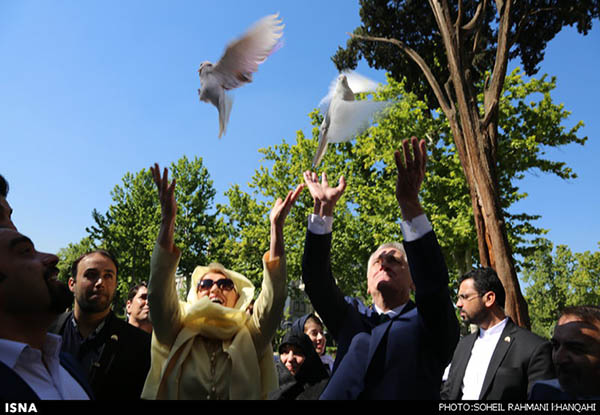
Jean-Luc Martinez, the President of ​the ​Louvre Museum, ​took a trip to the central Iranian city of Isfahan​, where he and his delegation visited ​the historical sites​ of this tourist ​destination.​ ​The Louvre is one of the world’s largest​ museums​​, as well as being ​a historic monument in Paris, France.


New Major Medical Cybernetics in Iranian Universities

Kovari said that with its establishment in Iran’s universities, the Islamic Republic of Iran will rank 4th in the world, after the U.S., the U.K., and Finland in this field.

He added that graduates in this field would be able to design and build advanced medical software and equipment like endoscopes, functional magnetic resonance imaging or functional MRI (fMRI) machines, MRI scanners, auto-analysers, lasers, robot operating systems, and smart rehabilitation equipment.

Iranian Inventor Makes Robot for Deep Wells

IRAN DAILY: Tell us about your inventions.

MORTEZA SHIRMOHAMMADI: I have registered 22 inventions in the fields of mechanics, home appliances, auto parts, and robots during from 2006-2009.

I registered a plan to make a robot in 2006 which can be useful in drilling oil wells. I took part in global contests and won two bronze medals in international competitions in Nurnberg (Germany) and Kuala Lumpur (Malaysia) in 2007, and one silver medal in the 2008 competitions in Geneva, Switzerland.


How did you become interested in inventing?

I have been interested in research and using various devices since my childhood. However, the idea of invention came to me during my university years.

Although I graduated in civil engineering, my inventions pertain to mechanics.


Tell us more about the robot you have made for deep wells.

These robots can be applied inside the wells. They can be used for mechanical research, as well as classification of soil and the walls of the well through sampling and photography.

The robot conducts operations in the forms of tests, geological research, and finding the existence of fault lines. The robot can be applied in dangerous wells (instead of manpower), oxygen-free wells, and wells which have toxic gases. The remote-control robot is also used for welding, pipe cutting, and repairing pipes.


How did you get the idea of making robots?

I watched a movie showing an incident involving mine workers. They were trapped in the mine. Rescue workers had to dig another well to help them, which took a lot of time.  I think the idea of digging another well was wrong because it was time-consuming and it was not economical.

Therefore I thought of reworking and modernizing current well-digging devices.


How can the government help inventors?

Bureaucracy bothers us so much. I think a special budget should be set aside for granting loans to inventors. Since inventors generate scientific research, their projects can bring in revenue.


What is your plan for the future?

Currently, I am involved in producing renewable energy, and systems which can produce free energy from renewable sources. Today, I am concentrating on magnetic energy.