Friday, December 26, 2025
Home Blog Page 4512

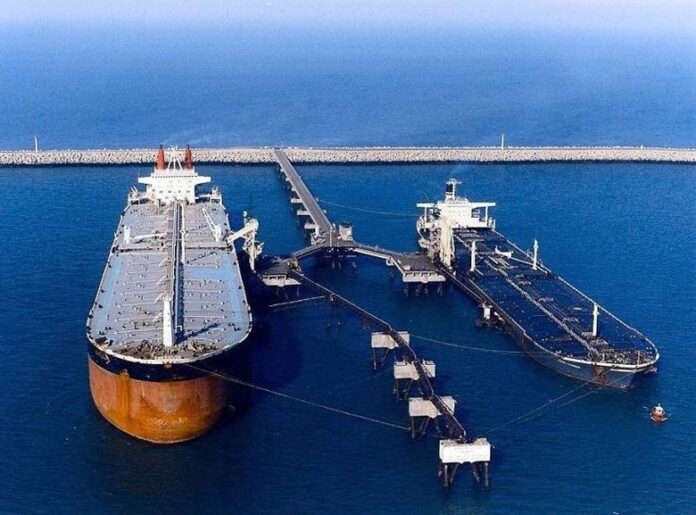
Iran’s Early April Crude Exports up by 600,000 bpd

The Petroleum Ministry’s department for OPEC affairs and relations with energy associations reported that in the period under study, Iran’s crude exports atood at more than two million bpd.

Iran increased export of its crude under condition when crude exports of certain other OPEC members like Nigeria and Iraq fell by about 100,000 bpd in the said period.

Information released by South Korean Customs Office says South Korea’s import of crude from Iran showed more than a 80 percent increase in March 2016 and reached 245,000 bpd on the average compared to that in the same period the previous year.

Average crude imports from Iran by South Korea stood at about 135,000 bpd in March 2015.

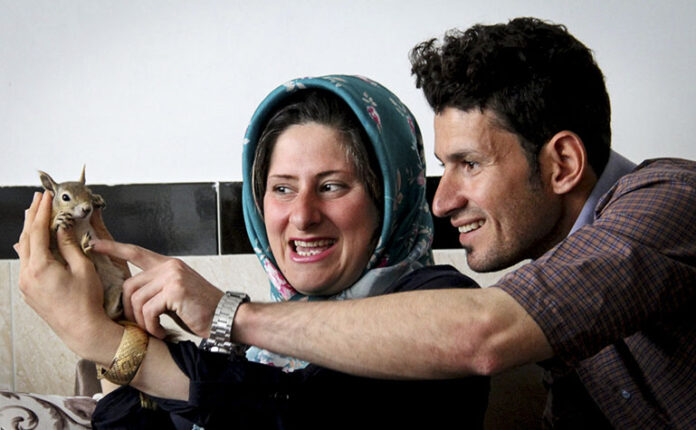
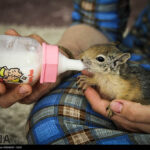
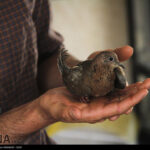
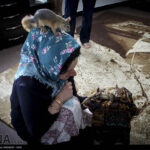
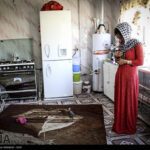
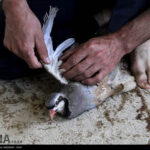
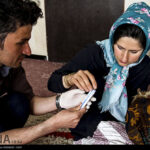
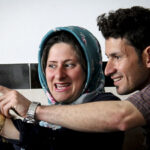
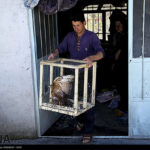
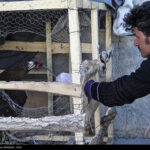
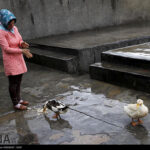
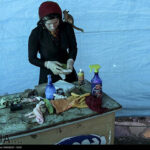
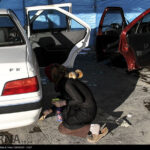
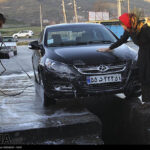
Young Iranian couple taking care of injured animals

Marivan – A young Iranian couple in the city of Marivan in the western province of Kurdestan have a passion for taking care of the wounded animals and birds they find abandoned in the wild. They treat the injured animals and birds at their small home adjacent to a car wash, where they work, and let them go back to their natural homes after treatment.

Tehran Wants Deeper Ties with Latin America

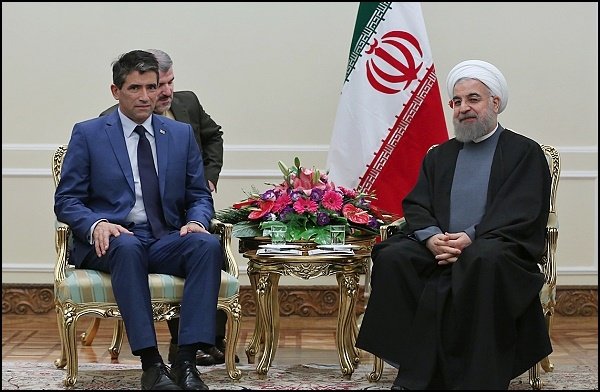
The Iranian President made the remarks during a meeting with Uruguayan Vice-President Raul Sendic in Tehran on Tuesday morning, “Tehran and Montevideo possess great determination to strengthen multilateral relations and no third-party country can affect these friendly ties.”

“The Formation of a Joint Economic Commission as well as the implementation of the agreements reached between Iran and Uruguay will open a new chapter in the relations between the two countries,” he added.

President Rouhani pointed to the economic capacities of the two states, asserting “In order to accelerate collaborations, this common potential needs to become operational more than the past especially in the private sector.”

The official deemed implementation of joint projects as a prerequisite for regional cooperation: “Iran and Uruguay can make investments and run production and export plans in order to gain access to a portion of vast markets in Latin America, Central Asia and the Caucasus.”

The Iranian President went on to add that “Beyond economic and trade matters, there exist important matters in the world today like the environment and terrorism which demand consultation and collaboration among all countries.”

Rouhani urged global cooperation in the fight against terrorism and extremism, concluding “Currently, terrorism has displaced millions of people around the world and claimed thousands of victims; therefore we must all go hand-in-hand to combat this ongoing scourge.”

The Uruguayan Vice-President Raul Sendic, for his part, voiced Uruguay’s determination to bolster ties with Iran in all areas of interest.

“Iran and Uruguay are two friendly nations and trade partners with historical relations,” highlighted the visiting official, adding “The two sides possess vast capacities which need to be exploited in line with increased cooperation.”

Sendic, who is accompanied by a trade and business delegation, continued “Upon the activation of the Joint Economic Commission between the two countries, a new era will begin in Tehran-Montevideo relations, with energy and agriculture as major areas of cooperation.”

The Uruguayan official also emphasized the need for further coordination between Iran and Uruguay on regional and international issues.

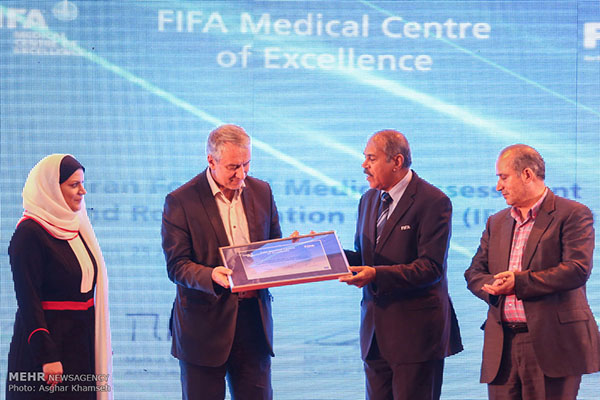
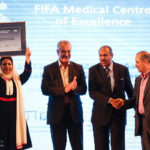
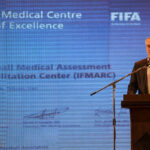
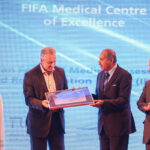
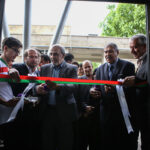
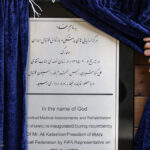
FIFA Medical Centre of Excellence Inaugurated in Tehran

As reported by FIFA:

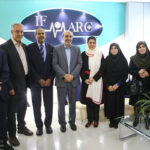
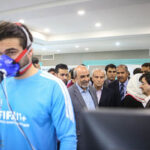
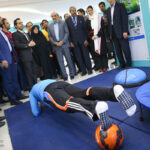
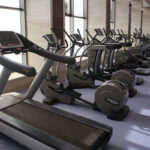
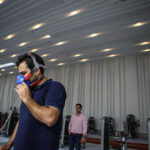
IFMARC is the first centre of its kind in central Asia and has been designed to provide excellence in sports medicine, rehabilitation and fitness assessment. Those using IFMARC will also be educated about injury prevention.

By signing contracts with internationally renowned medical professionals from Iran, the FIFA Medical Centre of Excellence is capable of providing the highest level of services for male and female players, match officials and coaches. It is hoped the centre will create medical and health data banks for all amateur, semi-professional and professional players, helping with research, injury prevention programs and standardization of football medicine in close cooperation with F-MARC.

Fajr International Film Festival Culminates – Icelandic “Rams” Bags Top Prize

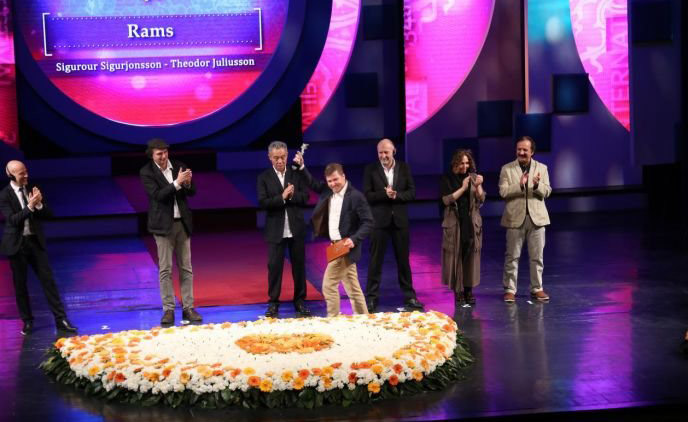
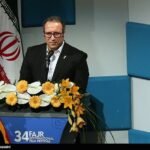
Rams, a humanist drama by Icelandic director Grimur Hakonarson, has won the Golden Simorgh for best film in the main competition – Cinema Salvation – at the 34th Fajr International Film Festival.

Producer Grimar Jonsson was not in attendance at the closing ceremony held at Tehran’s Vahdat Hall on Monday, so a member of the film’s art department received the award.

The story of the film is set in a remote Icelandic farming valley, where two brothers who haven’t spoken in 40 years have to come together in order to save what’s dearest to them – their sheep.

The movie enjoyed further success, as stars Sigurour Sigurjonsson and Theodor Juliusson shared the award for best actor.

The Jury special award didn’t leave the country, as Iranian director Puria Azarbaijani received the honour for Arvand, about an Iranian war veteran who is suffering from a mental disorder.

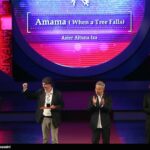
The Silver Simorgh for best director was presented to Turkish filmmaker Emin Alper for Frenzy, and Spanish writer/director Asier Altuna Iza won the award for best screenwriter for When a Tree Falls.

The Silver Simorgh for best actress went to Pantea Panahiha for her role in Iranian drama Breath by director Narges Abyar.

Seeing, directed by Soheil Amirsharifi from Iran, won the Silver Simorgh for best short film.

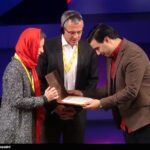
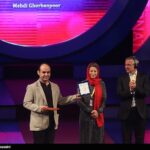
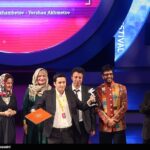
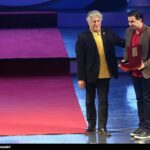
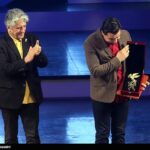
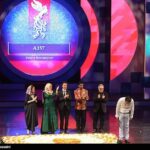
Below is a selection of photos from the festival’s closing ceremony.

Read more – Selected interviews from the festival:


“I Could Never Complain about Iranian Acting” – Alexander Sokurov

“FIFF Is Just Like Western Film Festivals” – Marcin Luczaj

Magali Van Reeth, French Jury Member

Martin Radich, UK Director, on Norfolk


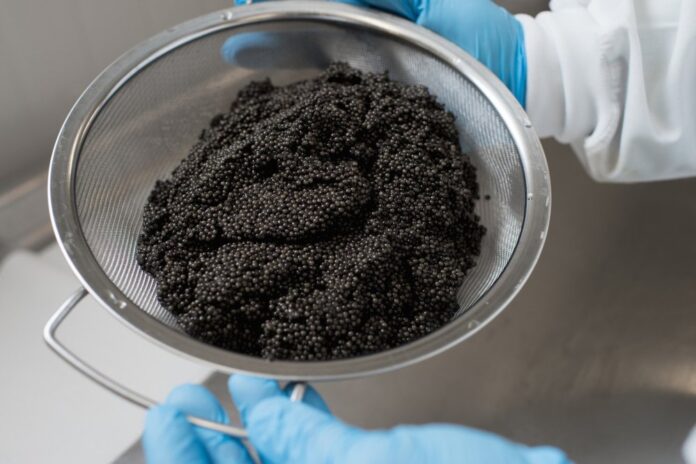
Caviar exports from Iran up 183% yr/yr

The country exported more than one tons of the product, i.e., 65 percent of the total produced amount domestically in the past year, to eight different countries namely Japan, Germany, the United Arab Emirates, the United Kingdom, Italy, Belgium, South Korea, and Norway.

The exported volume registered 46 percent growth in weight compared to 1393, the report said.

Caspian Sea sturgeon accounts for 90 percent of the world’s caviar. The Major population of sturgeon lives in the southern parts of the Caspian Sea where the sea is much deeper.

After the collapse of the former Soviet Union in 1991, different species of sturgeon faced extinction due to uncontrolled fishing in the Caspian Sea.

In 2006, the Convention on International Trade in Endangered Species (CITES), affiliated to the United Nations, prohibited international trade of caviar products due to the fact that sturgeon fish was on the verge of extinction.


Are American Lives Worth More than Yemenis’ or Afghans’?

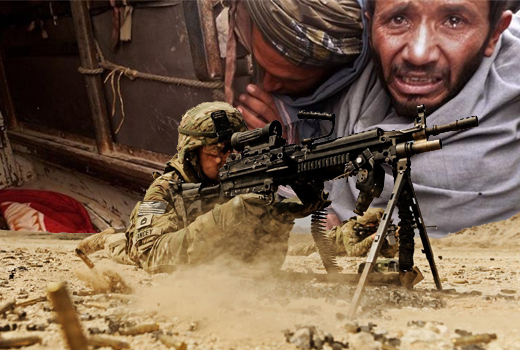
The recent US court ruling to seize nearly $2bn of Iran’s frozen assets over an alleged role in 1983 Beirut bombing is one of the bitter jokes of international relations. Americans have confiscated almost $10m of Iranian assets for each of their marines killed in the incident, but the story becomes even more tragic when we learn that the amount of compensation for every Afghan and Yemeni citizen killed in US drone strikes falls somewhere between $40,000 and $80,000, at most. This means that these poor citizens earn 125-250 times less than the compensation Americans are receiving from Iran for their marines.

In the case of Iran’s assets being confiscated by the US, there is no need to mention that the Americans issued this verdict using the laws of their local courts, and this was described by the Iranian Foreign Ministry as an instance of “stealing Iran’s property”. The case reminds us of the Persian proverb that says, “A blacksmith committed a sin in Balkh (modern north Afghanistan), but they beheaded a coppersmith in Shushtar (modern southwest Iran).”

In the 1983 Beirut barracks bombing, 241 US marines were killed. 181 survivors and family members of the victims sued Iran and asked for compensation. Iran has repeatedly denied any role in the bombing, but the US courts, based on false testimonies and without any proper evidence, ruled that Iran should incur a fine of $2bn.

A group of survivors and family members of the victims of 1996 Khobar Towers bombing [in Saudi Arabia] are also among the plaintiffs of the $2bn case. In the 1996 bombing, 19 Americans were killed. All the documents in this case indicated that the Al-Qaeda terrorist organization [affiliated with Saudi Arabia] was implicated in the terrorist attack, but the FBI blamed Iran and its affiliated organizations for the incident.

Interestingly, William Perry, who was the United States Secretary of Defence at the time of the bombing, said in an interview in June 2007 that he now believes “al-Qaeda, rather than Iran, was behind a 1996 truck bombing at an American military base.” Now, however, Iran is required by the US Supreme Court to pay $2bn for what it has not done.


Whose Blood Is More Colourful?

On 3 July 1988, Iran Air Flight 655 was shot down by the US Navy guided missile cruiser USS Vincennes under the command of William C. Rogers III. The incident took place in Iranian airspace, over Iran’s territorial waters in the Persian Gulf. All 290 on board, including 66 children, died. There were also 46 non-Iranian passengers on board. In 1990, Rogers was awarded the Legion of Merit.

The United States did not admit legal liability but agreed to pay on an ex gratia basis $61.8m, amounting to $213,103 per passenger, in compensation to the families of the Iranian victims. Such an amount is almost nothing compared with the $10m compensation Iran is required by the US court to pay for each US marine. This is not the only instance of racist approaches adopted by a country which still experiences race-riots in the 21st century. In April 2014, the Washington Post reported that the US will pay compensation to the families of Yemeni victims of US drone strikes. Several civilians were killed in a US drone strike that hit vehicles in a wedding party in Yemen. The Washington Post zealously reported that the Americans’ payout had been much more than what the Yemeni government paid to the victims’ relatives. The newspaper wrote that the payout even “exceeded the total amount distributed by the US military for errant strikes in Afghanistan over an entire year.” It reported, “The records indicate that families of those killed were each given Yemeni currency worth approximately $60,000, with smaller amounts paid to those who sustained injuries or whose vehicles were damaged or destroyed.”

Take this $60,000, and compare it with the $10m the US has stolen from the Iranians for each of its marines.

There are other such examples of racist discrimination as well. In 2012, United States Army Staff Sergeant Robert Bales murdered sixteen civilians and wounded six others in the Panjwayi District of Kandahar Province, Afghanistan. Nine of his victims were children, and eleven of the dead were from the same family.

The US gave the equivalent of $860,000 to the victims’ families, allocating almost $50,000 for each person killed, and $10,000 for each person injured.

Iran defense minister heads to Moscow

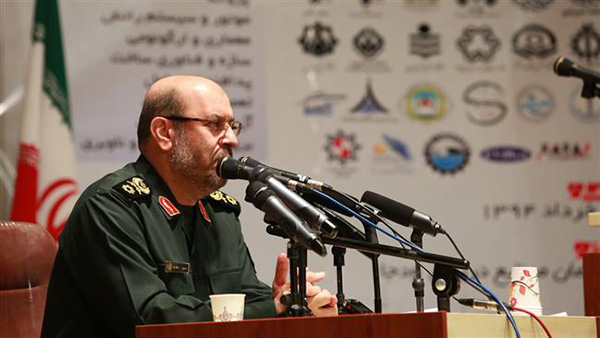
Dehqan departed for Moscow on Tuesday at the head of a delegation. The visit is taking place at the invitation of Russian Defense Minister Sergei Shoigu.

The 2016 MCIS conference, the event’s fifth edition, will be held on Wednesday and Thursday and will focus on fighting terrorism.

As many as 500 officials and personalities, including 17 defense ministers, 14 deputy defense ministers, chiefs of staff, and experts, will attend the event.

The conference will discuss international convergence on fighting terrorism, and security issues concerning the Asia-Pacific region, as well as international stability and military cooperation.

Iran and Russia have cooperated in the area of defense toward countering the threat of terrorism in the Middle East.

The two countries have successfully provided assistance to the Syrian government in its efforts to push back terrorist groups in the Arab country.

Iran defense
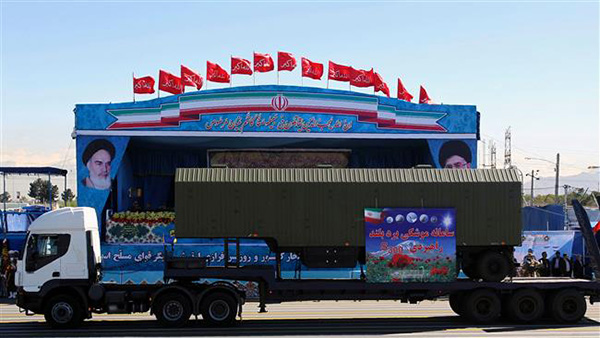
An Iranian military truck carries parts of the S-300 missile defense system during the Army Day parade in Tehran, April 17, 2015. (Photo by AFP)

Dehqan has already visited the Russian capital twice over the past three months as the Islamic Republic was expecting the delivery by Russia of Russian S-300 missile defense systems.

Earlier in the month, Moscow began implementing an USD-800-million deal signed in 2007 to deliver the missile defense systems to Iran.

Moscow canceled the contract in 2010 under pressure from the West. President Putin authorized the delivery in April 2015, however, after an interim agreement that paved the way for the July 2015’s nuclear deal between the Islamic Republic and six world powers.

Dehqan will also discuss ways to buy Russian Sukhoi Su-30 fighter jets and T-90 tanks during his visit, the Iranian Embassy in Moscow has said.

Iran Summons Swiss Envoy over US Supreme Court Ruling

Iran Appoints Female Ambassador to Denmark

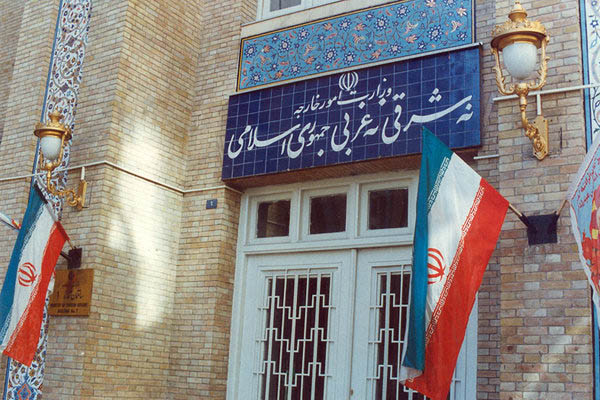
The Swiss ambassador to Tehran, who looks after US interests in Iran, was summoned to the Ministry of Foreign Affairs to receive the Islamic Republic’s protest against the recent ruling by US Supreme Court on the transfer of about $2bn of frozen Iranian assets to the families of victims of the 1983 bombing in Beirut.

During the meeting, Mohammad Keshavarz-zadeh, General Director for the Americas at the Iranian Foreign Ministry, presented the Swiss ambassador with two official notes which conveyed Iran’s official protest over the ruling by the US Supreme Court.

He deemed the ruling a blatant violation of mutual contract obligations, such as the 1955 treaty between the two countries, as well as US international legal commitments on the judicial immunity and inviolability of the assets and properties of the Islamic Republic of Iran.

Keshavarz-zadeh further expressed Iran’s strong protest over another ruling by a court in New York which accused Iran of having been involved in the 9/11 terrorist attacks without providing any evidence, calling the allegations ‘baseless’, ‘absurd’, and ‘contrary to accepted practices of international law,’ which guarantees government’s judicial immunity.

The Swiss ambassador said he will immediately notify the US Department of State and report the results back to Iran’s Foreign Ministry.

Iran’s Non-Oil Exports up 8%

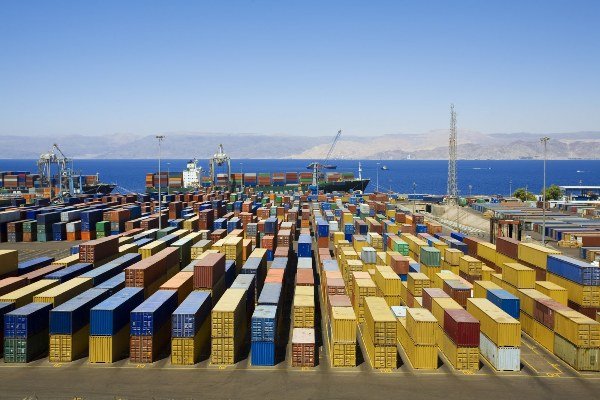
“In the first month of the current Iranian calendar year (spanning March 20 – April 19), a total of 8.183 million tons of goods worth 3.7 million dollars were exported abroad indicating 37.89% and 7.91% increase in terms of weight and worth, respectively as compared with the same period last year,” Islamic Republic of Iran Customs Administration (IRICA) announced.
In the same period, 1.925 tons of goods worth 1.980 billion dollars were imported to the country indicating a 0.02% and 0.07% decrease in weight and value compared with the same time span in the past Iranian year.

The country’s balance of foreign trade in the same period has been positive with more than one billion dollars in favor of exports.

In the meantime, gas condensate worth 545 million dollars and petrochemical products as well as other goods worth 2.462 million dollars were exported.
China, the UAE, Iraq, the Republic of Korea and India mark the five major export destinations for Iranian non-oil goods including gas condensate.
From March 20 to April 19, 2016, soybeans ($87 million), corn as livestock feed ($59 million), barley excluding seed ($54 million), edible wheat ($45 million) as well as soybean meal ($40 million) were the most prominent imported goods.

The major countries doing business with Iran in the aforementioned time period comprise China, the United Arabic Emirates, Turkey, Germany and India.

Also, over 1696 passenger vehicles entered the country in first month of the current year revealing a 164.69% soar compared to a year earlier.

The imported vehicles cost 41 million dollars which shows 125.74 growth in terms of value compared with the same period in the earlier year.

The average price per ton of exported and imported goods were $367 and $1029, respectively in the mentions time span.