Thursday, December 25, 2025
Home Blog Page 4509

Candidates Preparing for Parliamentary Run-Off Elections in Iran

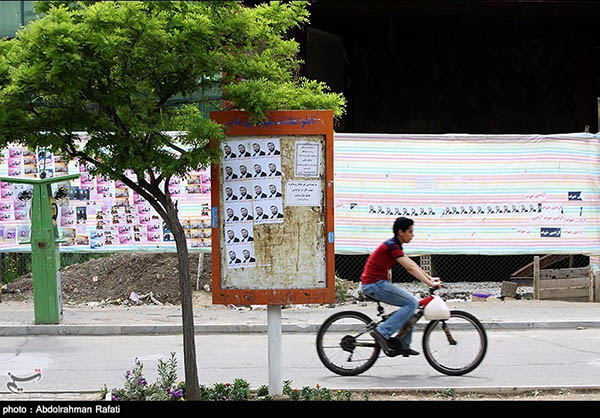
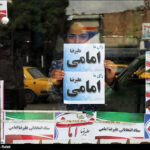
Many candidates failed to obtain the required minimum 25% of votes cast in their constituencies in the first round of Iran’s parliamentary elections held on Feb 26. They are now preparing to compete for the remaining seats in the run-off elections, which will be held on Friday Apr 29.

IFP: The campaigns are underway in many cities and provinces across the country, where 68 seats out of the Parliament’s 290 seats are yet to be decided. Campaigning has been notably absent from the capital city, Tehran, where all of its 30 seats were determined in the first round.

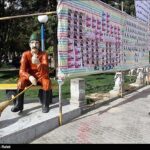
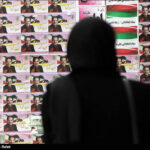
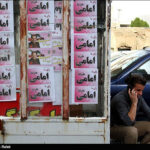
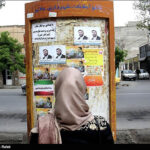
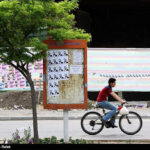
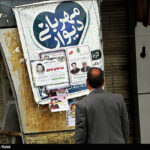
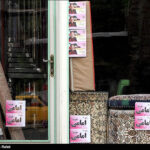
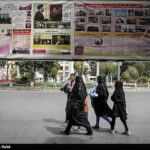
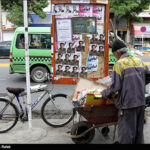
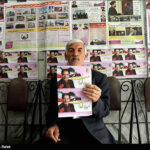
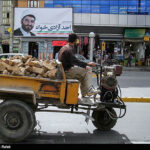
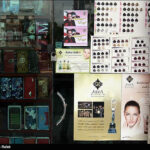
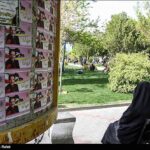
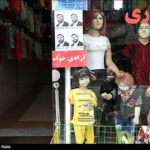
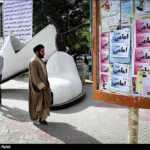
The pictures here show some of the candidates’ flyers pasted around the city of Malayer, Hamadan Province.


Read more: Our coverage of the first round election results.


A Look at Iranian Newspaper Front Pages on Apr. 28

Iran Newspaper front pages

Iranian newspapers on Thursday covered the remarks made by the Leader of the Islamic Revolution, Ayatollah Seyed Ali Khamenei, against the US Iranophobia project and its efforts to hinder global trade with Tehran. The Leader’s call for Iranian people’s high turnout in Friday run-off parliamentary elections was also reflected.

Iranian President Hassan Rouhani’s harsh criticism of the US seizure of Iran’s assets was also covered by Iranian press.

Many front pages also paid attention to former president Mahmoud Ahmadinejad’s reaction to accusations over his government’s role in the US seizure of Iran’s assets.


Abrar:

1- Iran and Uruguay Resolved to Fight Any Form of Terrorism

2- White House Emphasizes Having Permission to Purchase Heavy Water from Iran

3- Iran’s Judiciary Chief to Visit Iraq

4- Parliament Speaker Larijani Holds Talks with Belgian Counterpart on Promotion of Economic Ties
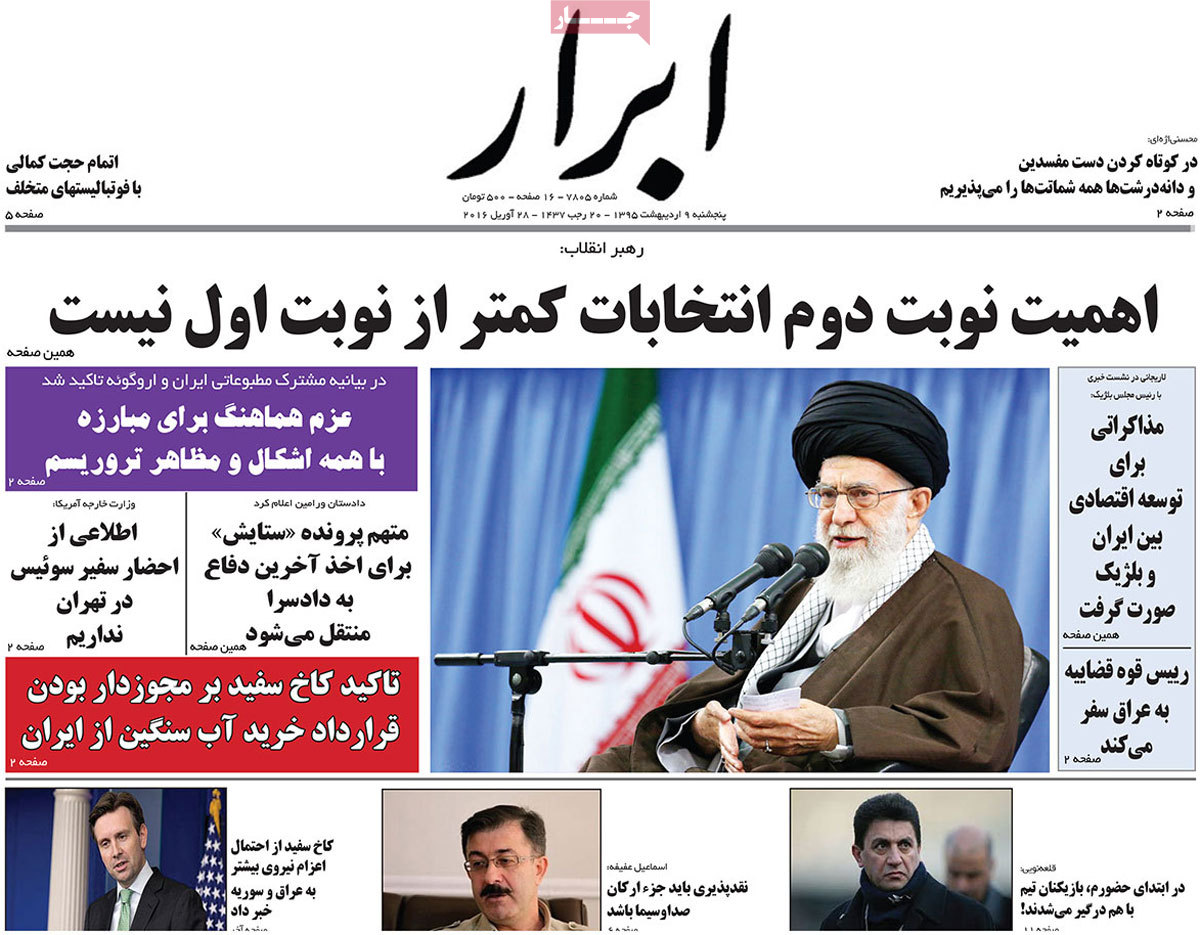
 

A Look at Iranian Newspaper Front Pages on Apr. 28


Abrar-e Eqtesadi:

1- 35 Tons of Decrease in Iran’s Gold Reserves Due to Sanctions

2- Opening of Iran-Europe Trade Promotion Centre

3- UK Vows to Release Iran’s Frozen Natural Gas Dollars

4- Range of Iran’s Oil Customers: From Mongolia to Italy
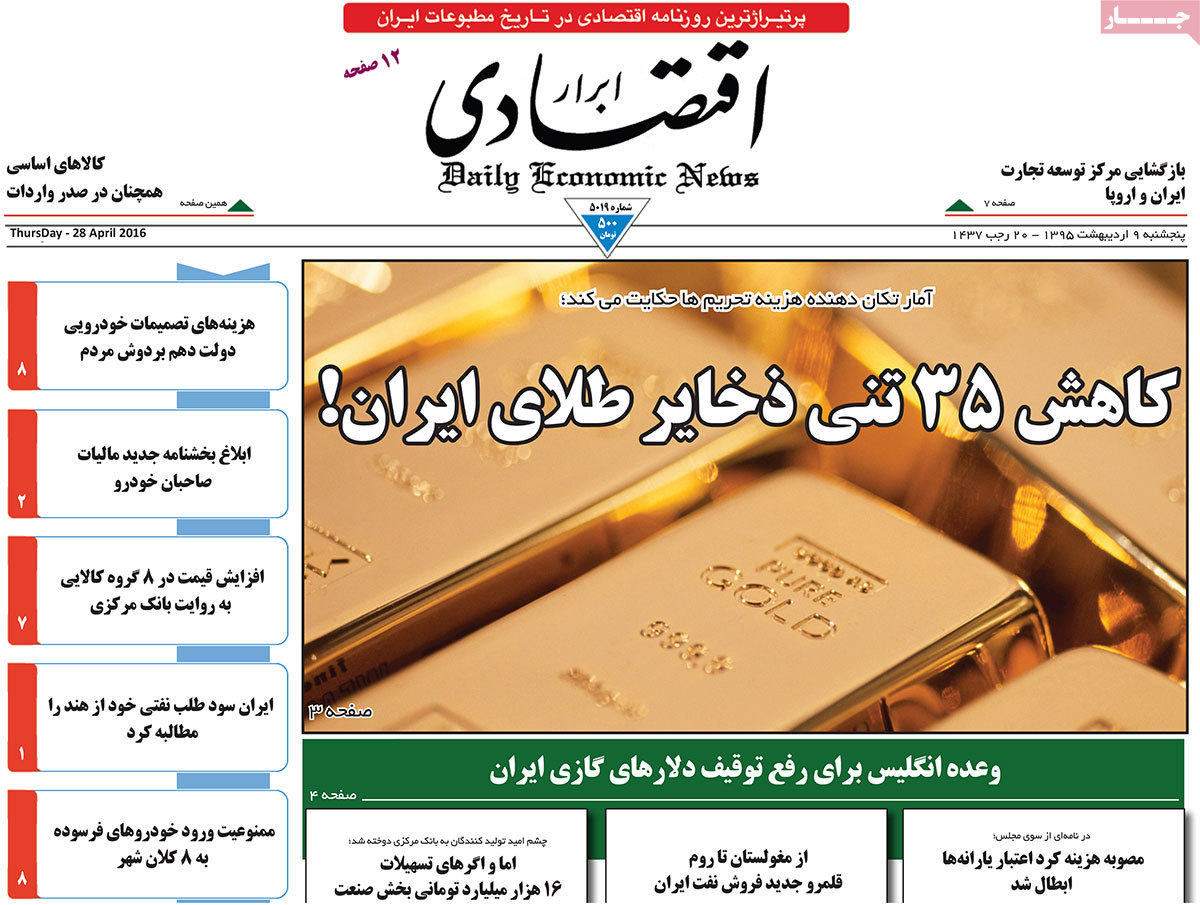
 

A Look at Iranian Newspaper Front Pages on Apr. 28


Aftab-e Yazd:

1- US Adventurer: I Wasn’t Fingerprinted, Tehran is Safe

2- On Ahmadinejad’s Statement about US Seizure of Iran’s Assets: Escape Instead of Apology
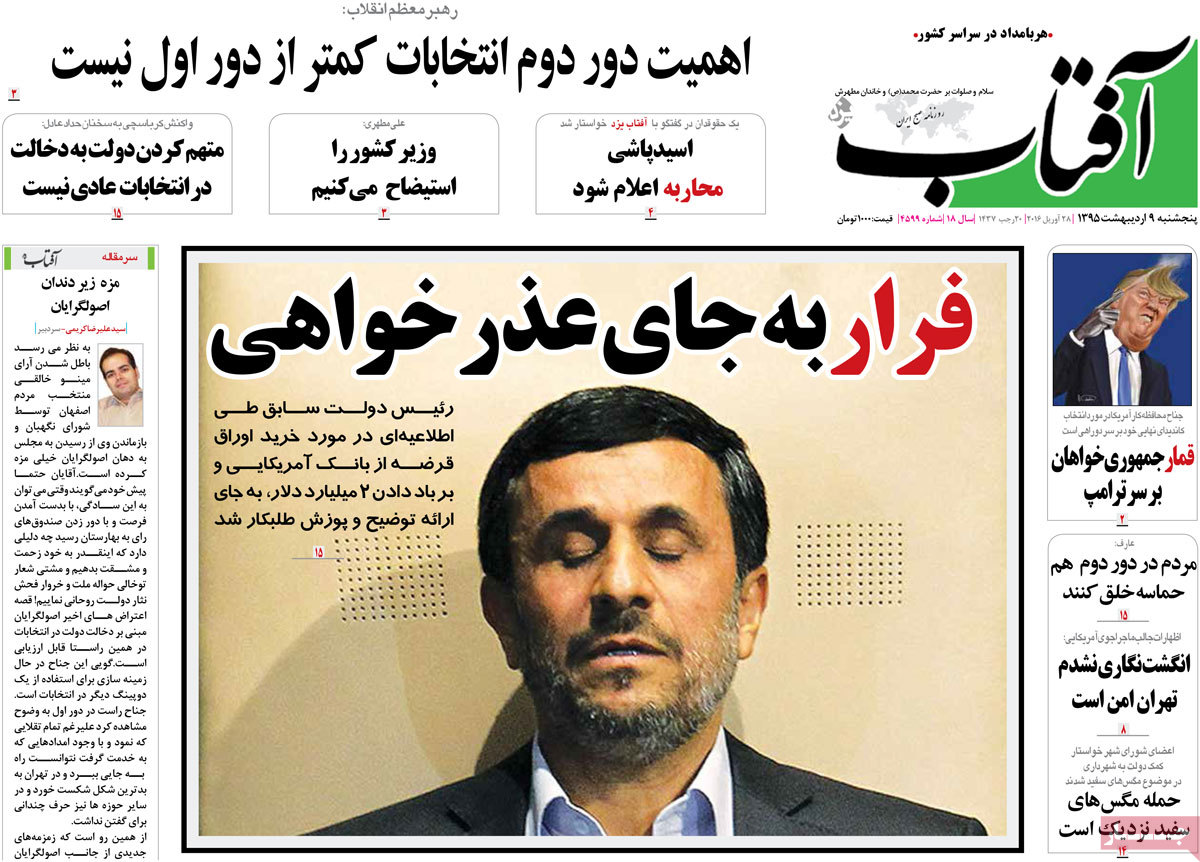
 

A Look at Iranian Newspaper Front Pages on Apr. 28


Arman-e Emrooz:

1- Duel Continues between First VP Jahangiri and Ex-President Ahmadinejad

(Pinning the Blame on Each Other’s Governments over US Seizure of Iranian Assets)

2- Rouhani’s Cabinet on Special Mission to Reclaim Iranian Property

3- Parliament to Impeach Interior Minister: MP

4- Huge Benefits Make Smugglers Creative: Drug Trafficking Using Catapult!
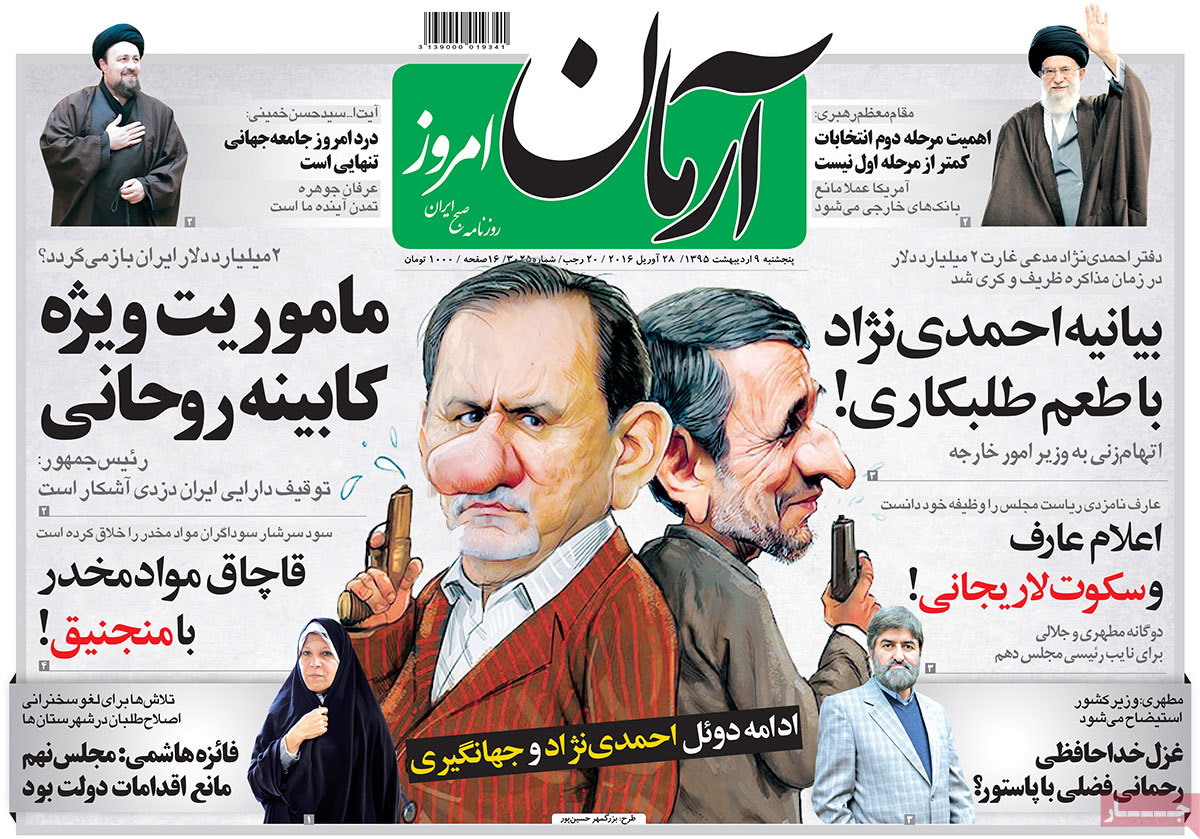
 

A Look at Iranian Newspaper Front Pages on Apr. 28


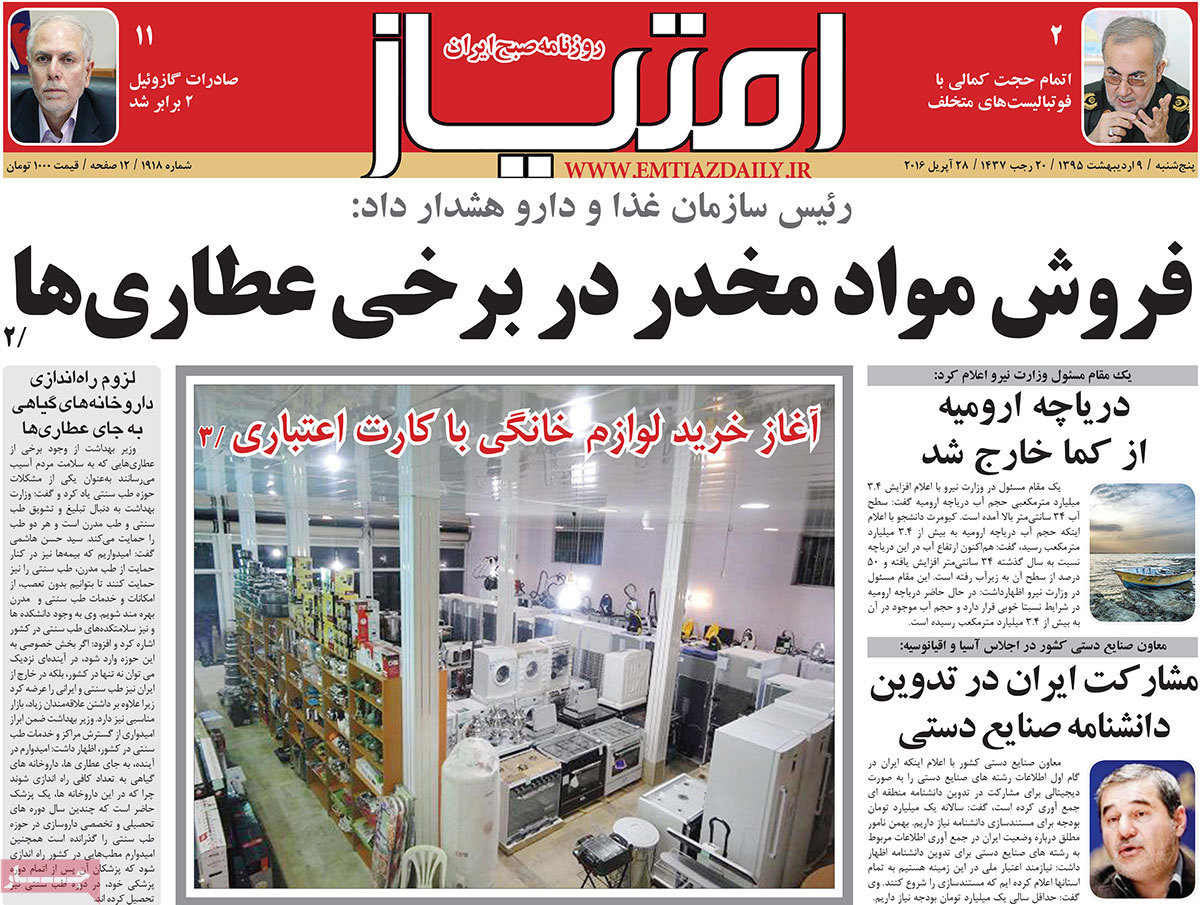
Emtiaz:

1- Illicit Drugs Being Sold in Some Grocery Stores

2- Lake Urmia Out of Coma: Official

3- Iran’s Gasoline Exports up by %100
 

A Look at Iranian Newspaper Front Pages on Apr. 28


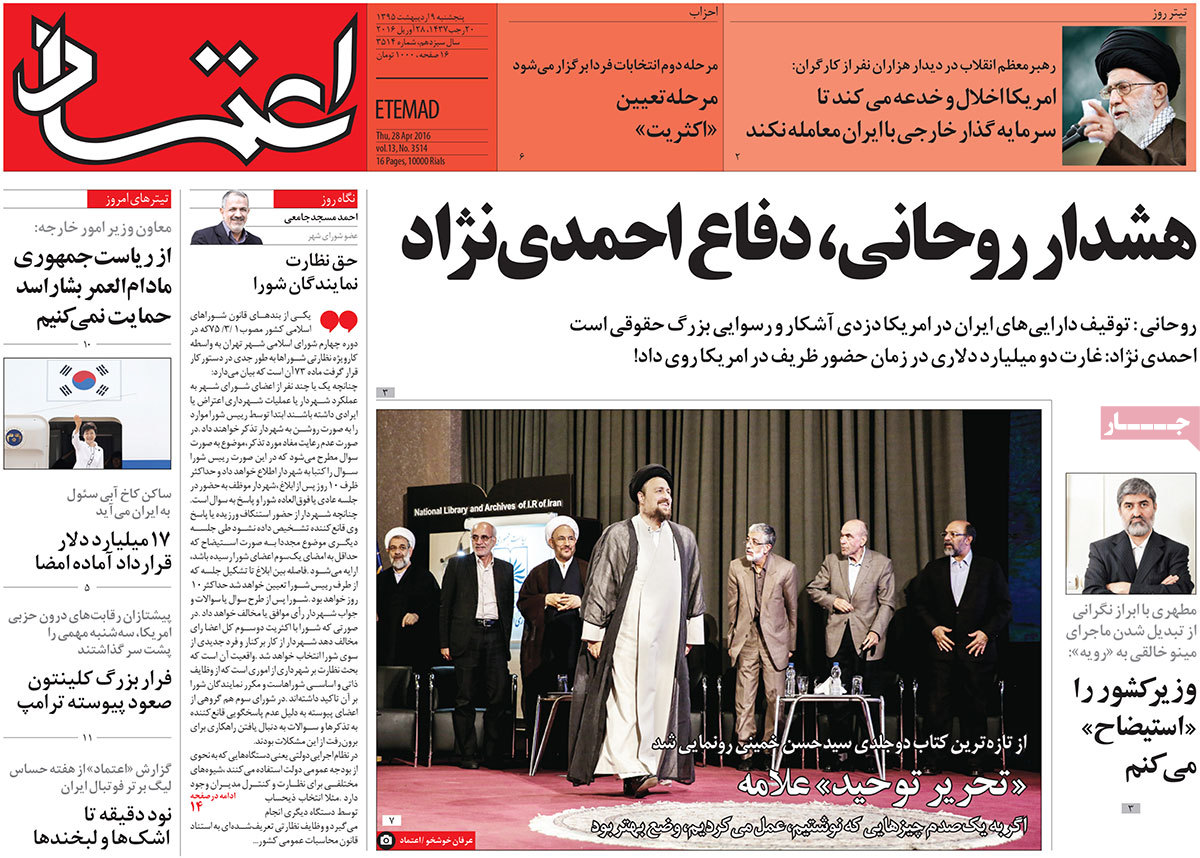
Etemad:

1- Iran Not to Support Syria’s Assad as a President for Life: Deputy FM

2- Leader: US Deception Preventing Foreign Investors from Making Deal with Iran

3- $17bn of Contracts Ready to Be Signed in South Korean President’s Visit to Iran
 

A Look at Iranian Newspaper Front Pages on Apr. 28


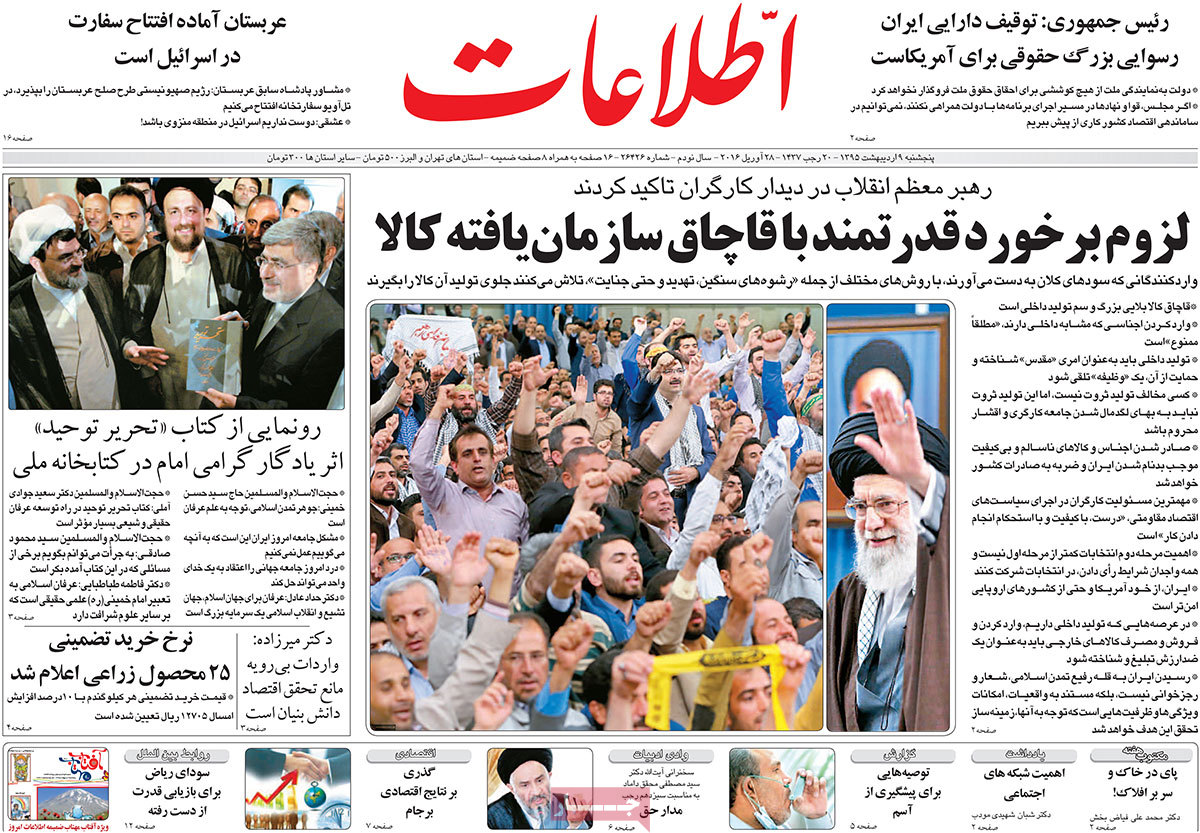
Ettela’at:

1- Saudi Arabia Ready to Open Embassy in Israel

2- Leader Urges Strong Fight against Organized Smuggling of Goods
 

A Look at Iranian Newspaper Front Pages on Apr. 28


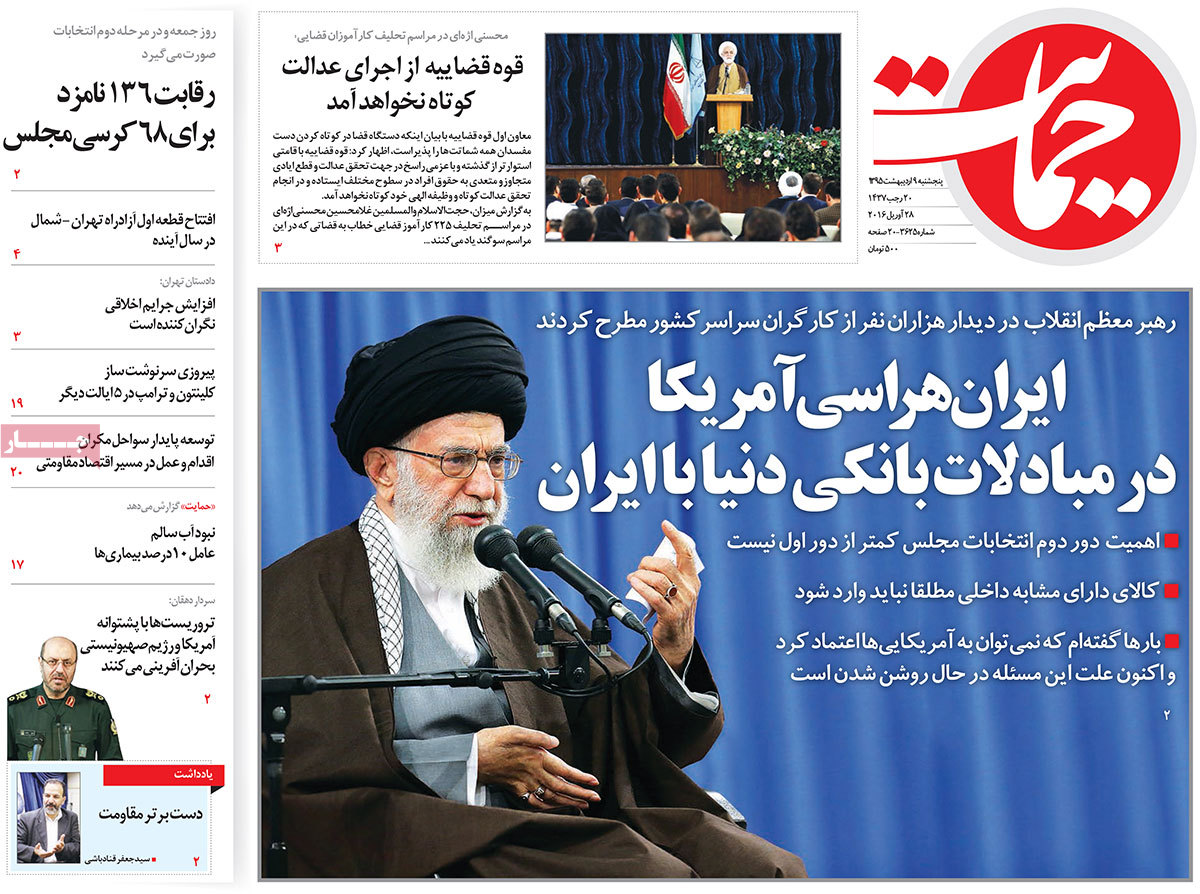
Hemayat:

1- Terrorists Create Crises Thanks to US and Israel’s Support: DM Dehqan

2- Healthy Water Shortage Cause of 10% of Diseases
 

A Look at Iranian Newspaper Front Pages on Apr. 28


Iran:

1- Leader: Importance of Run-Off Elections Not Any Less than First Round’s

2- People to Decide on Friday Which Faction Will Have Parliament’s Majority

3- Afghan Man Takes Children’s Guns, Gives Books to Them

4- South Korean Envoy: Impossible to Ignore Iran in Int’l Relations

5- Honest Postman Returns 34 Missing Cheques to Owner
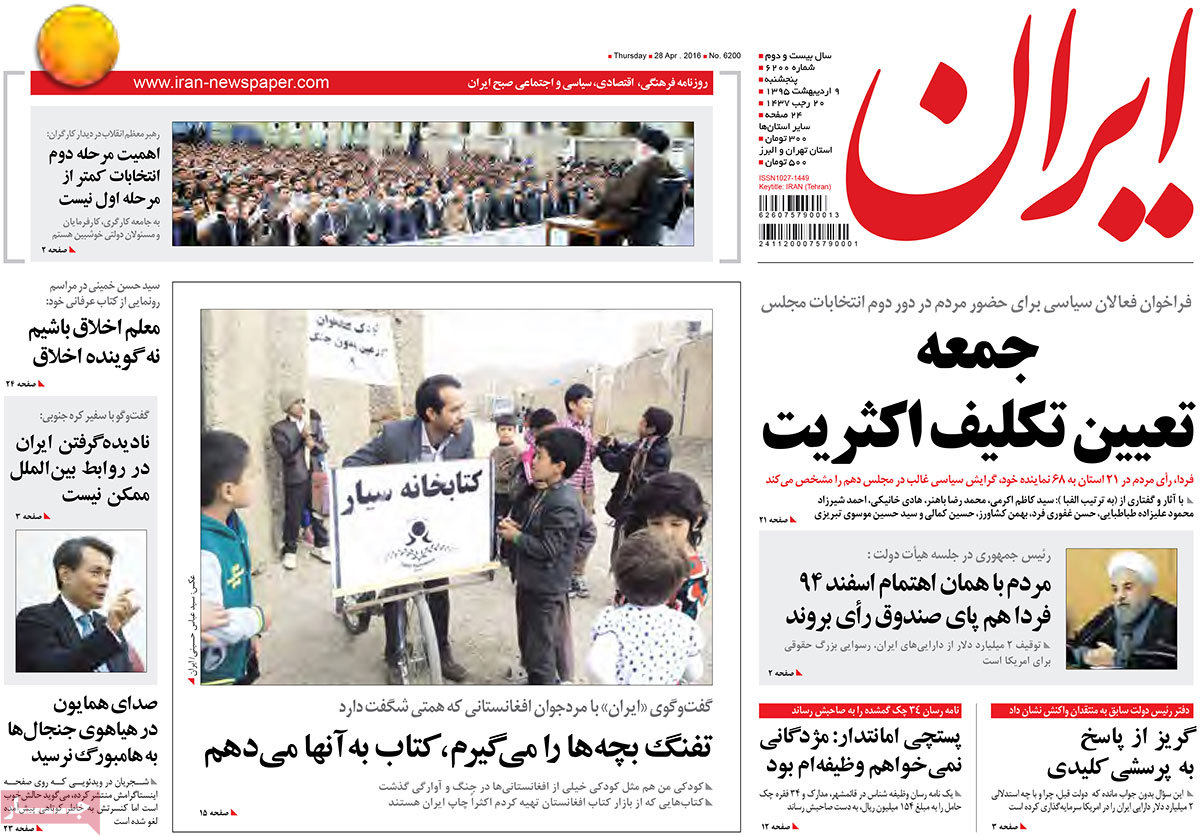
 

A Look at Iranian Newspaper Front Pages on Apr. 28


Javan:

1- US Makes Deals on Paper, Spreads Iranophobia in Practice: Leader

2- National Might and Failure of US Post-JCPOA Illusions (Editorial)
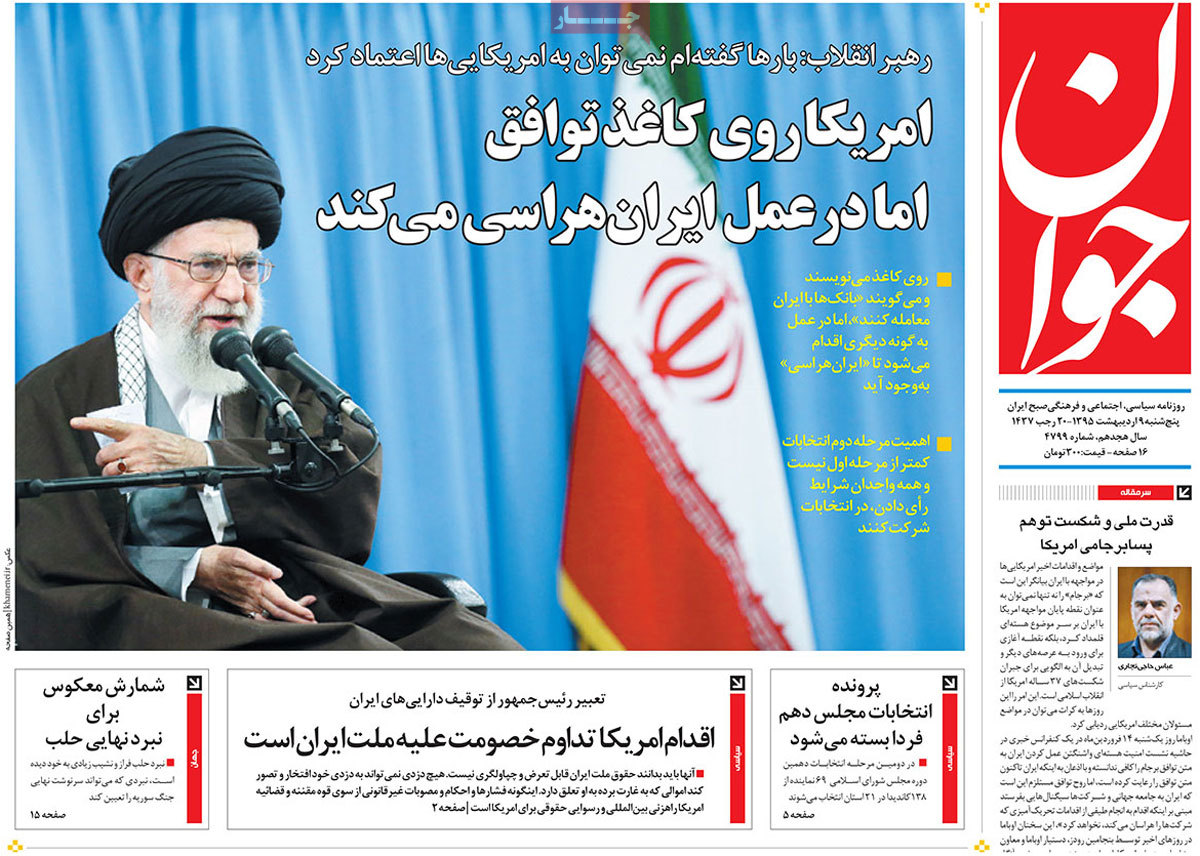
 

A Look at Iranian Newspaper Front Pages on Apr. 28


Jomhouri Eslami:

1- Germany’s Offer for Serious Presence in Iran’s Petchem Industry

2- Georgetown University Professor: US is Israel’s Lackey

3- Leader Urges All Eligible Iranians to Vote in Friday’s Run-Off Elections
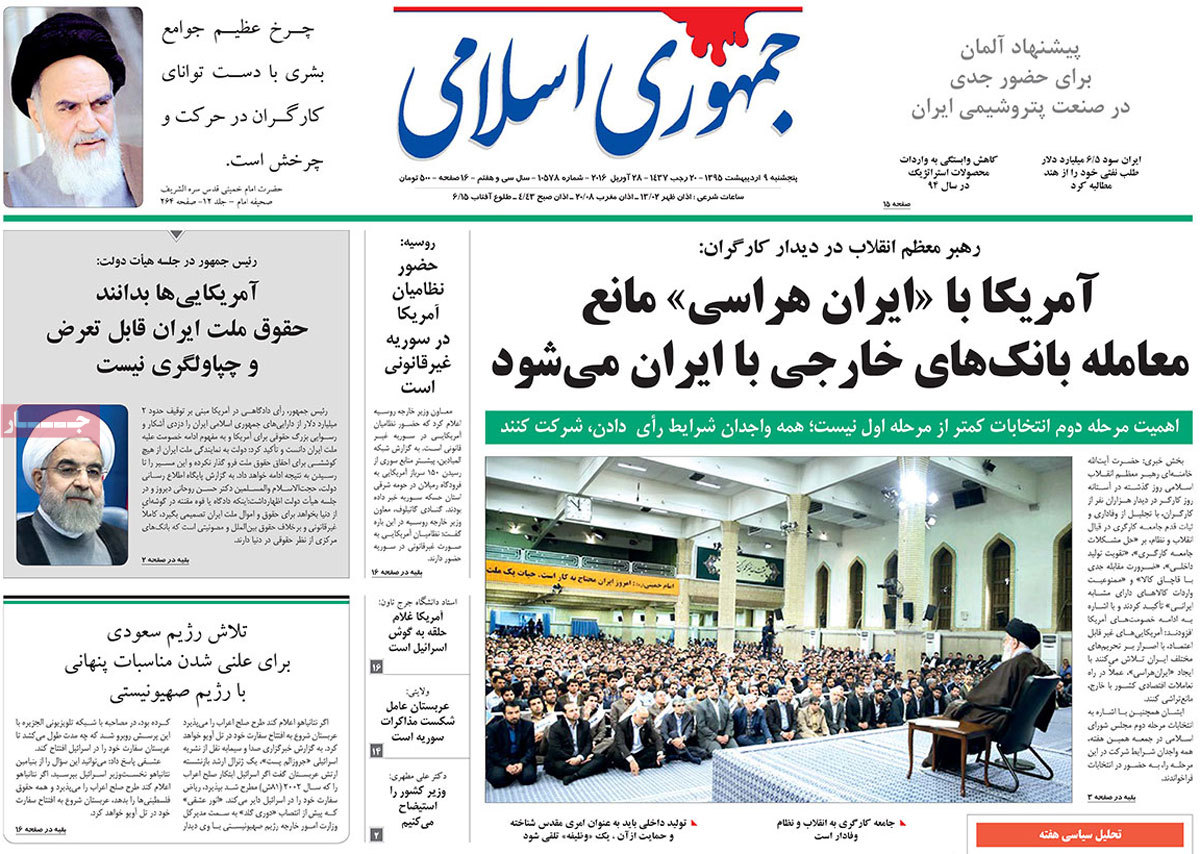
 

A Look at Iranian Newspaper Front Pages on Apr. 28


Keyhan:

1- Import of Goods with Iranian Counterparts Totally Prohibited: Leader

2- Leader’s Advisor: Saudis Should Know They Can’t Topple Syrian Gov’t by Reinforcing Terrorists
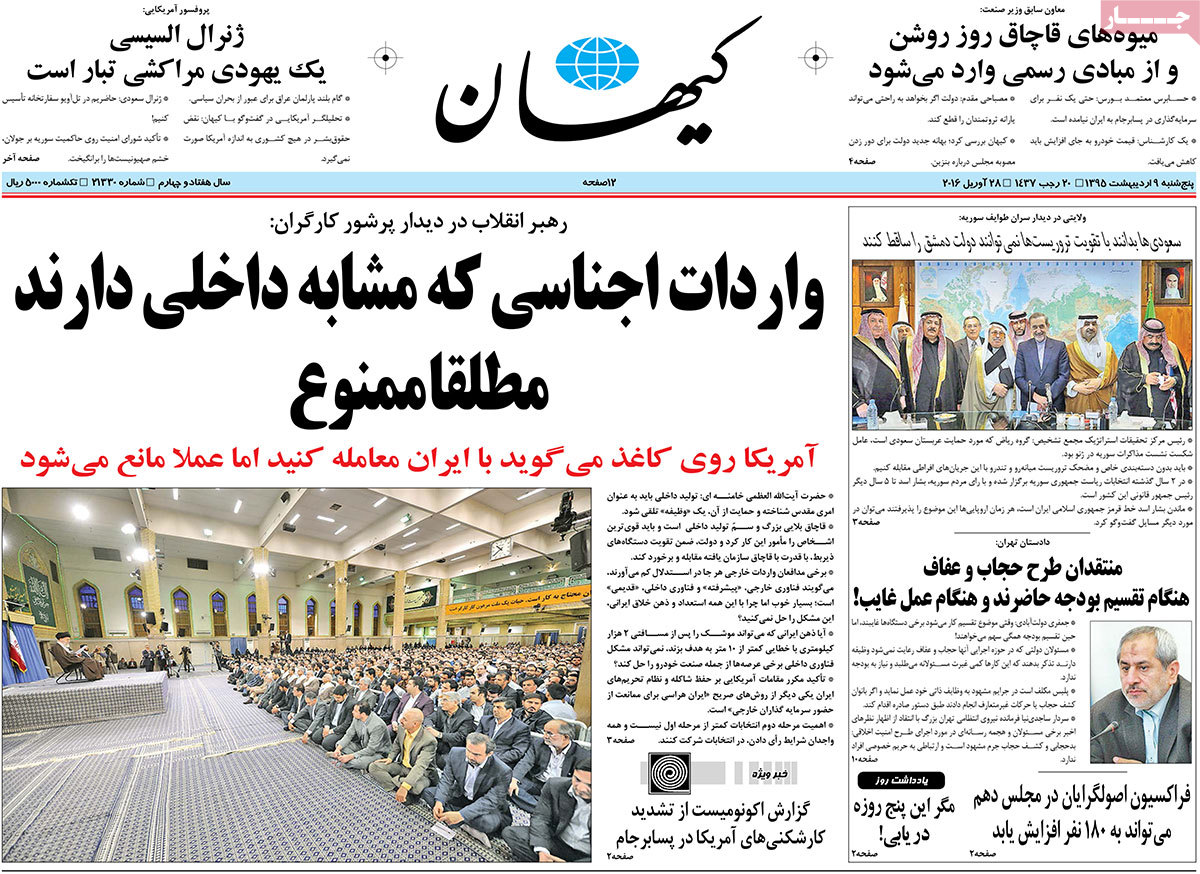
 

A Look at Iranian Newspaper Front Pages on Apr. 28


Sayeh:

1- Iran, Africa Looking for Expansion of Ties

2- Report on Lives of Female Vendors in Tehran’s Subway
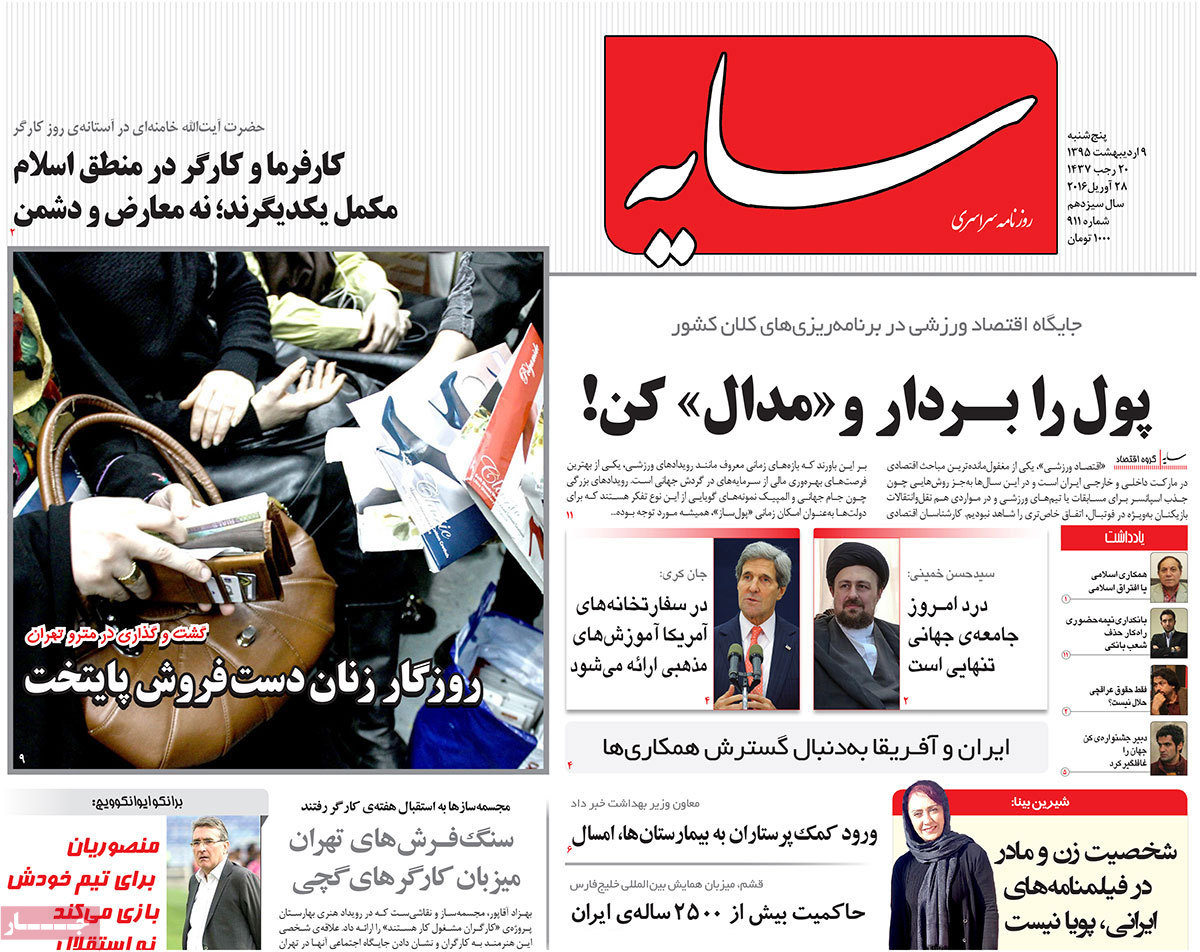
 

A Look at Iranian Newspaper Front Pages on Apr. 28


Shahrvand:

1- Iranians Buy €5bn of Branded Clothes: Italian Fashion Official
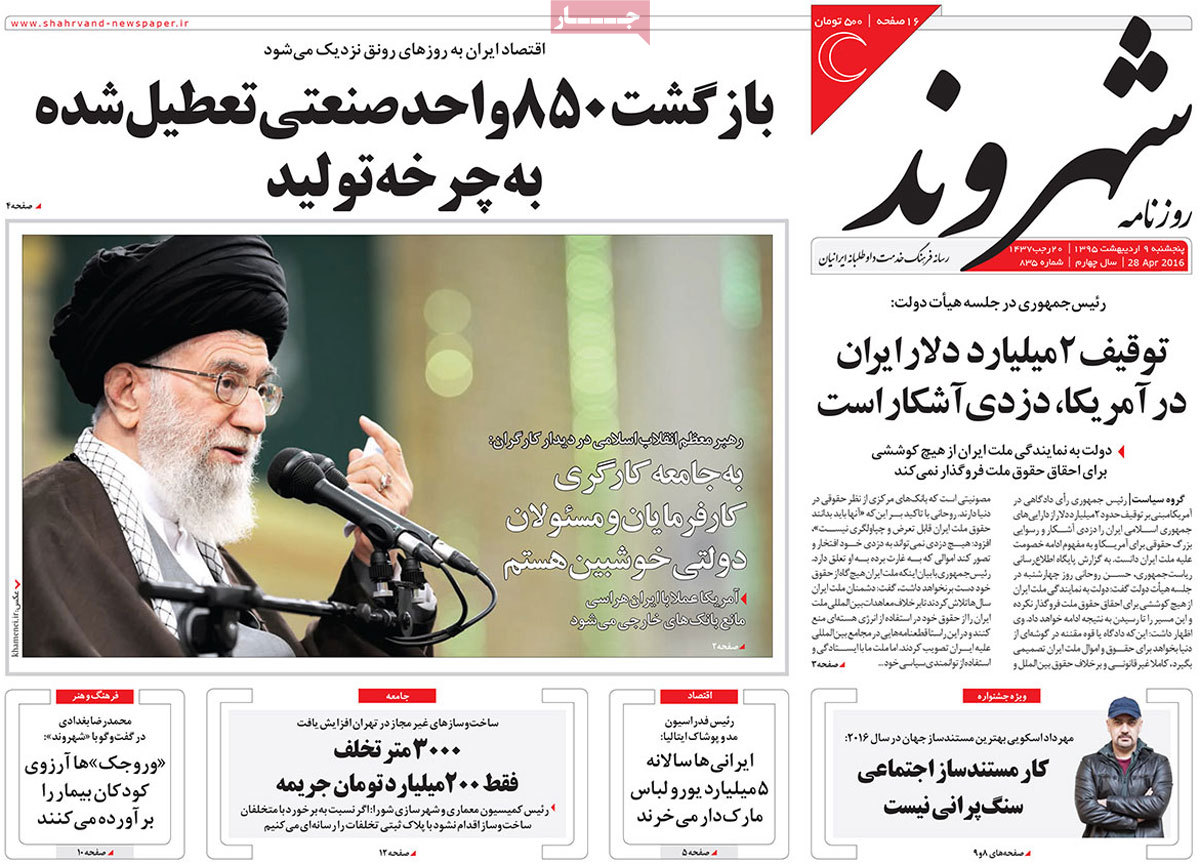
 

A Look at Iranian Newspaper Front Pages on Apr. 28


Sharq:

1- Iranian Refugee Sets Himself on Fire in Australian Camp

2- We Gave the Money Away, But Current Nuclear Negotiating Team is to Blame: Ahmadinejad’s Reaction to US Seizure of Iran’s Assets
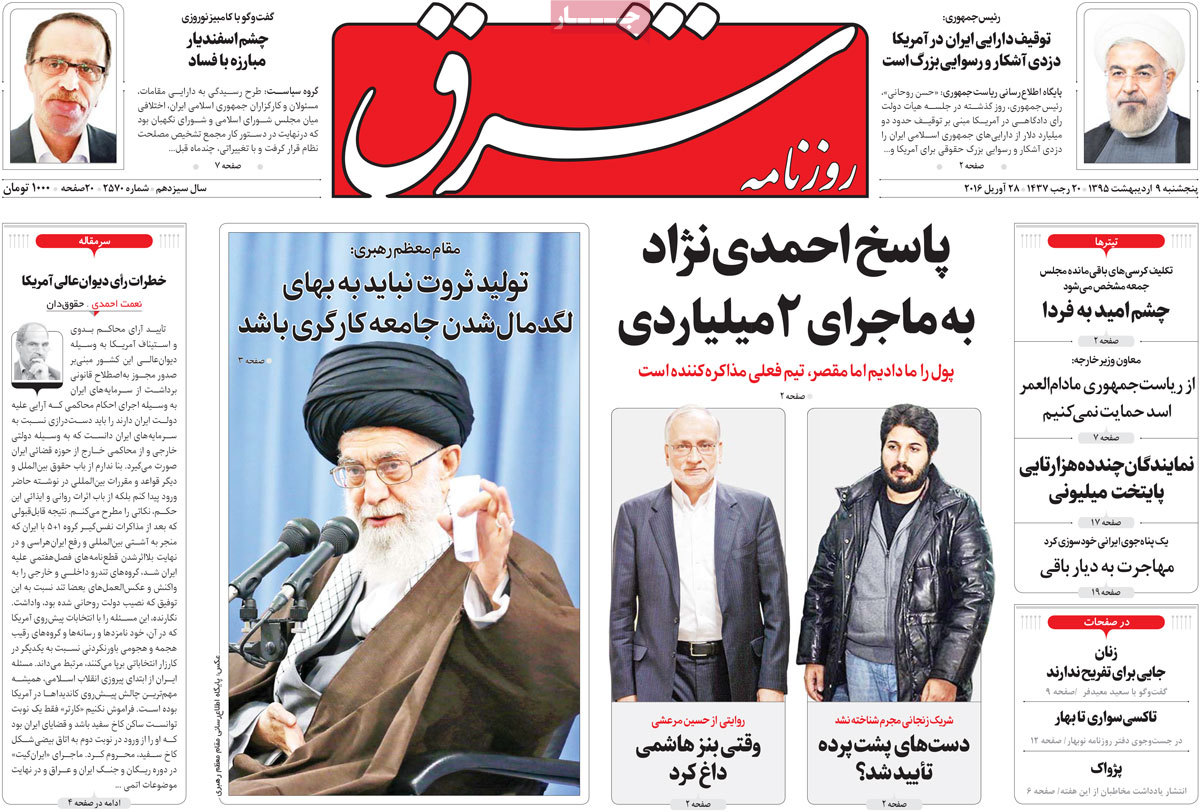
 

A Look at Iranian Newspaper Front Pages on Apr. 28


Shorou:

1- US is International Bandit: President Rouhani
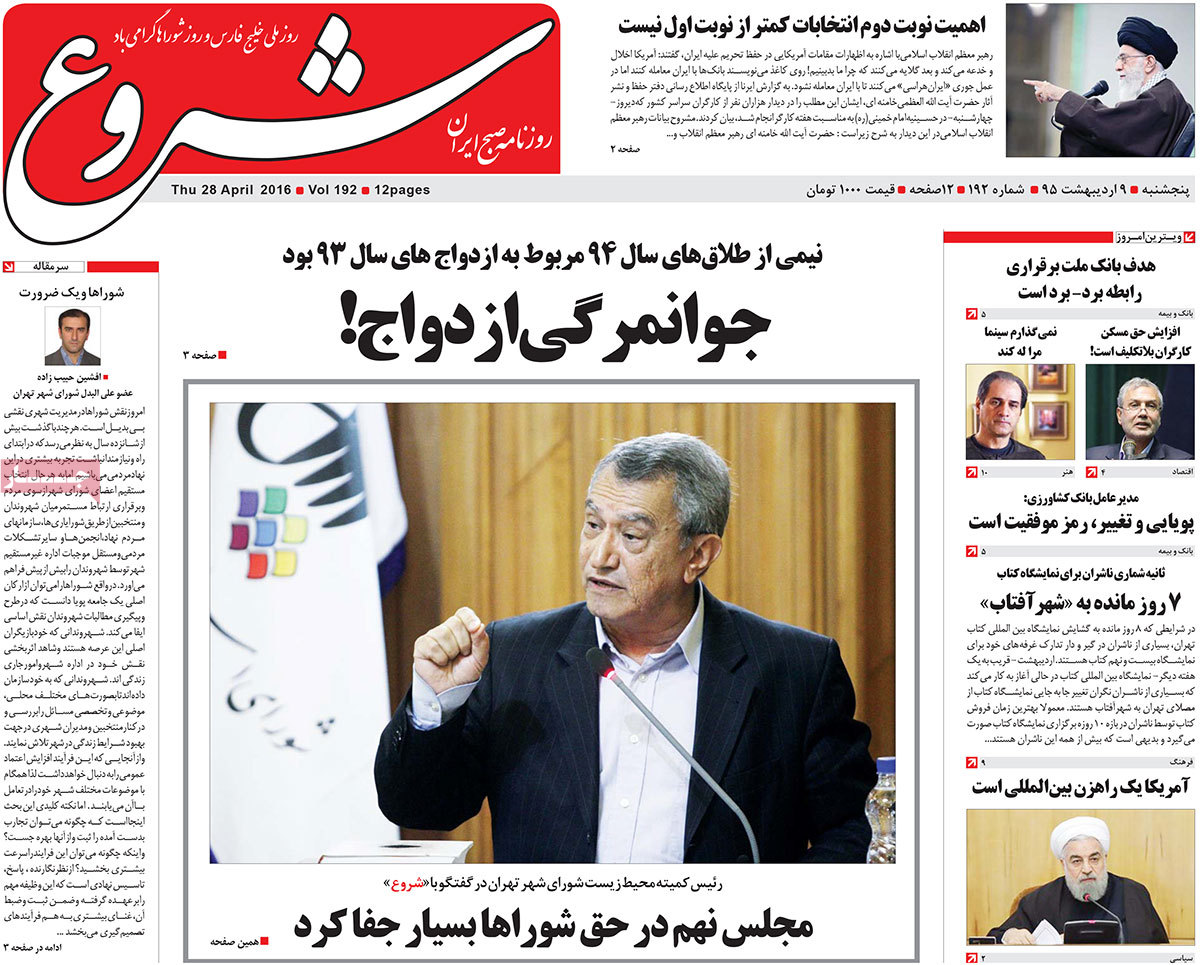
 

A Look at Iranian Newspaper Front Pages on Apr. 28


Local People Kill ISIS Rapist in Mosul

As reported by Entekhab and translated by IFP, the residents of the Adan district of Mosul attacked the ISIS member after finding out about the rape.

The Iraqi people stabbed him to death before other terrorists arrived. ISIS members then transferred him to hospital, but he died a few hours later.

The terrorist group captures women and girls in the areas it controls, and uses them as sex slaves. These women often end up committing suicide to escape from the daily abuse.

ISIS militants have yet to do anything to punish the people who killed the individual, because it was a group of Mosul residents, not a certain person.

Health Tourism: Iran Able to Make $7bn Out of Mud

Seyed Ali Riyaz, an Iranian dentist, believes that the Islamic Republic has a great potential to attract health tourists and cab make as much money as $7bn if proper investments are made.

Here is IFP’s translation of selected excerpts from Riyaz’s article published by Tasnim.


Increasing the level of individual health is one of the most important goals that make people spend their time and money. Ill people are not the only ones willing to spend a huge amount of their property on their physical and mental health. Even healthy people are interested in doing their best to maintain or improve their health index.

There is a great potential in Iran to attract health tourists. The country is capable of receiving almost one million health tourists each year, and this can result in an income of $7bn for Iran. If such a thing happens, it would be a great step towards the realization of Resistance Economy in the field of health.


Different Types of Health Tourism

There are different types of health tourism, some of which are explained below:

The first one, “wellness tourism”, is when tourists do not have a specific physical problem and just try to enjoy the healing nature of other regions.

The second, “curative tourism”, is when the tourist travels to a particular place to use its natural curative resources (mineral waters, salt, mud, and so on). These tourists usually undergo under medical treatment and supervision for certain diseases or on recovery period. The country’s authorities have paid special attention to this kind of tourism, particularly the mud therapy that has made Iran’s nature very popular for neighbouring states.

According to statistics, almost 45 million tourists in the world use water therapy to cure themselves. Iran has more than 1000 mineral water springs, and thus enjoys a great capacity to attract a lion share of this sector.

Cave therapy and salt therapy are two of of the attractions that have recently become popular among international tourists. Iran has several salt domes, and can turn to one of the world’s tourism hubs in the field.

“Medical tourism” is another type of health tourism, in which tourists visit the country to cure their physical diseases or to undergo surgeries in hospitals and medical centres.

This type of tourism is already available in Iran, and the country annually hosts several patients from such countries as Iraq, Afghanistan, Pakistan, Azerbaijan Republic, etc.

Royan Infertility Clinic is one of the centres that have long been receiving patients from different Middle Eastern countries. However, the number of patients is very low given the high potentials of Iran and regional countries’ need.

Iran also has the capacity to receive “traditional medicine tourists”. The country has its own traditional medicine, and the valuable herbs available in Iran can be attractive to foreign tourists.

Health Tourism in Iran: Opportunities and Threats

The most important advantage of medical tourism in Iran might be the cheaper prices of services compared with other countries, particularly the European and American ones.

On the other hand, a major problem ahead of receiving such tourists is a lack of proper investments in tourist spots and also a lack of global advertisements in the field.

Now that anti-Iran sanctions are lifted, and the number of tourists visiting Iran has multiplied according to the country’s tourism officials, we can tap into the opportunity to introduce Iran’s health tourist attractions to the world, particularly the countries in the Middle East.

Health up for Sale in Beauty Salons

Jam-e Jam newspaper reports on the boom of health and beauty services in unlicensed beauty salons in Iran – words translated by IFP.


The extreme desire of some women to try and make themselves beautiful has rendered the means unimportant to them. For these women, make-up alone is not enough. It seems as if they want to be fully reconstructed. Many people have made it their business to fulfill the dreams of these women. The result? More than 20,000 unlicensed beauty salons in Tehran Province – though this statistic from last autumn is probably already out-of-date.

These beauty salons are more like markets now: markets for make-up services, health services, tattooing, micro-pigmentation, belly-button piercings, skin cleaning, filling, etc. Add to that sales of accessories, clothes and cosmetics. Now the profitability of this business is clear – which is the reason for such places growing like mushrooms all over Tehran.

Mohammad Mohammadi, the Head of Tehran’s Tazirat Organization [which enforces company and commercial laws], said that there are only 1,000 licensed beauty salons for women in Tehran, and warned that such places commit major infractions, as well as causing social deviance.

Afsar al-Moluk Yasan, head of the Tehran Union of Female Make-up Artists, said that any services given at the salons other those mentioned in their licenses are illegal, and you can only find such services in unlicensed salons.

She emphasized, “Botox, skin care services and skin cleaning has nothing to do with make-up artists – these are medical services. To file and design the nails is fine, but to implant nails is not their area of emmawatson-fans.com.”


Poor-Quality Products Advertised on Satellite TV Play with People’s Health 

Lasering, skin cleaning, injecting gels, removing moles, piercings, etc. – these are very popular services, which have turned certain beauty salons into multi-business centres.

Dr. Saeid Davoudi, dermatologist and a university faculty member, said, “Places that have become centres for health and medical services can jeopardize social health.”

He continued, “According to non-specialists, all patients are the same, so if one service works for one person, it will work for others too. This sort of advice has attracted so many customers.”

He criticized citizens who knowingly or unknowingly go to non-specialized beauty salons for health and/or medical services.

The very high profits from such services in salons, along with the desire of women beautify themselves are the cause of many infractions occurring in beauty salons.

This matter has eventually become a critical phenomenon in today’s society. It is not at all strange to hear from the Parliament Health and Treatment Committee that the illegal actions of beauty salons have put the health of some groups of people in serious danger.

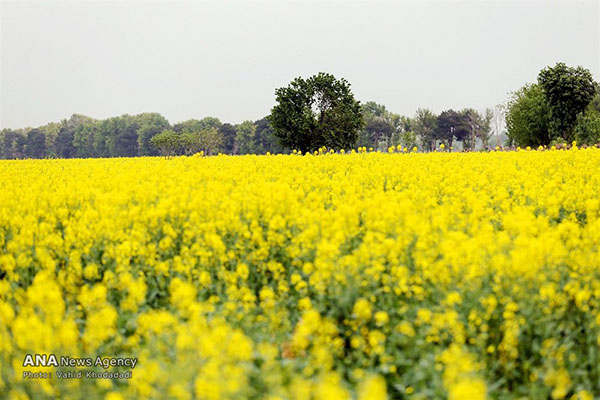
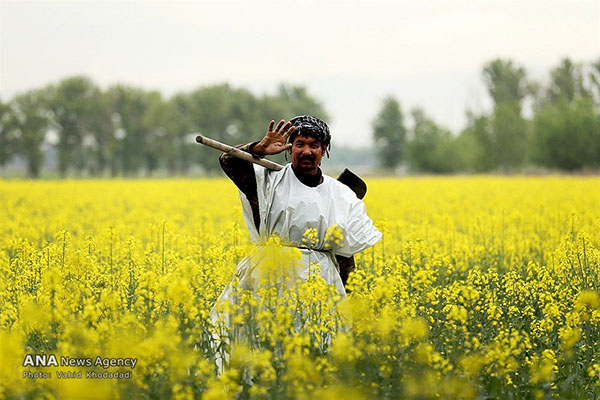
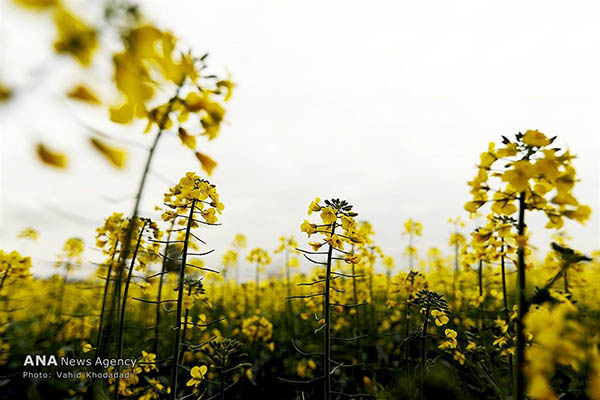
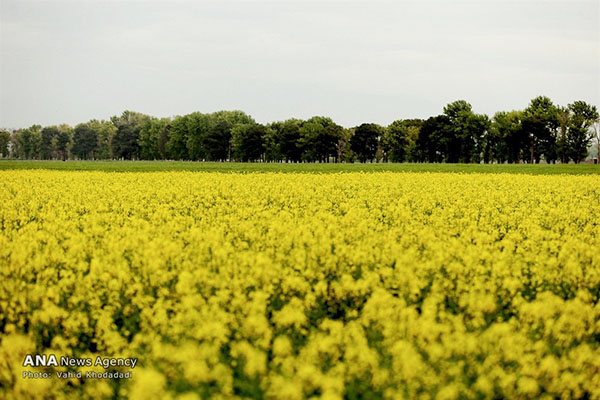
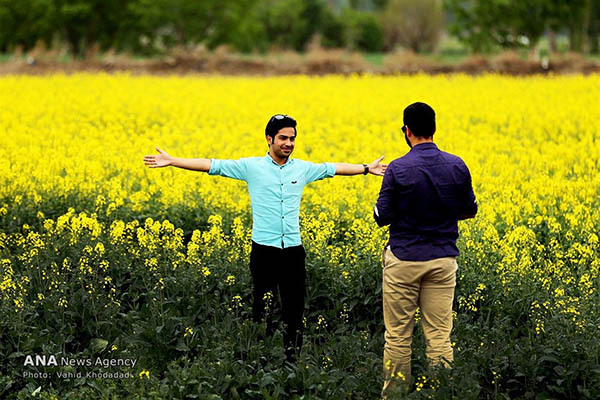
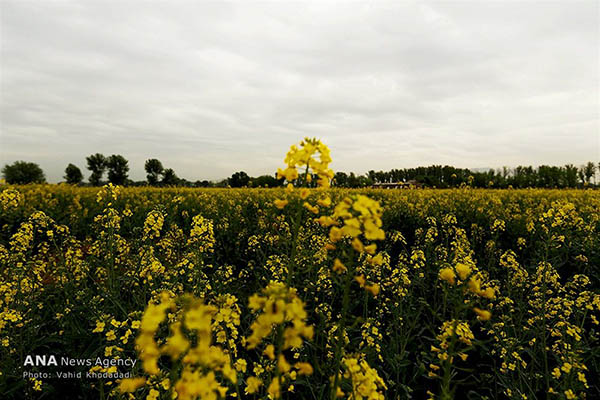
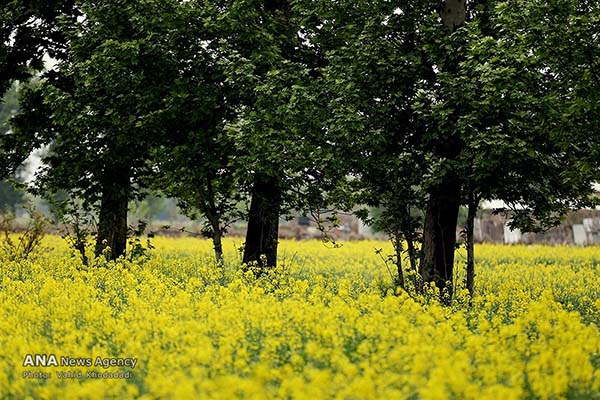
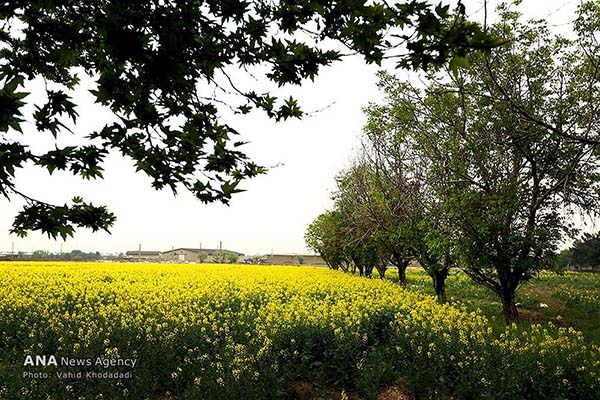
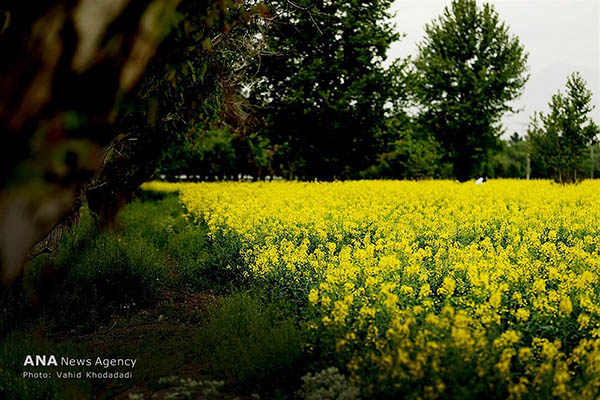
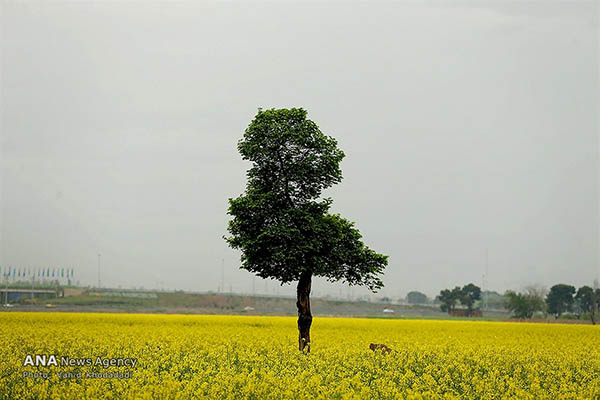
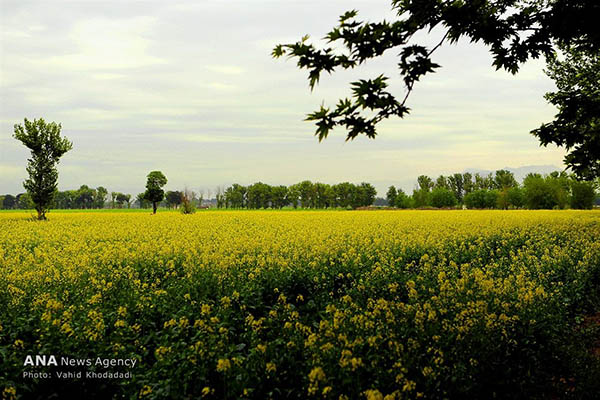
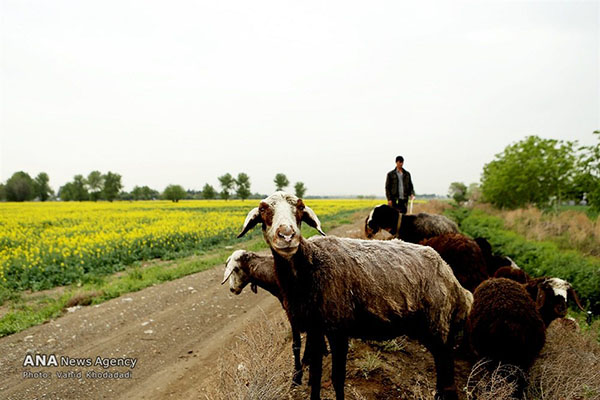
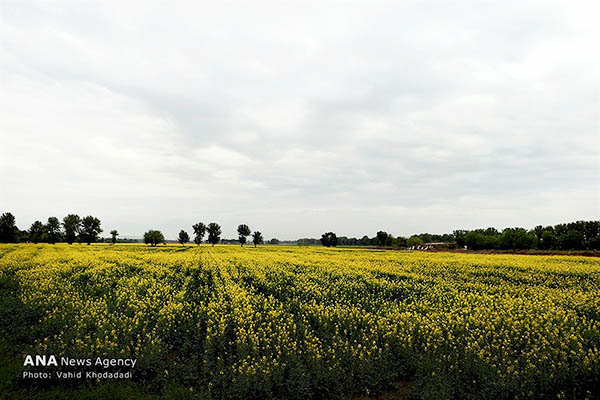
A Canola Farm in Bloom

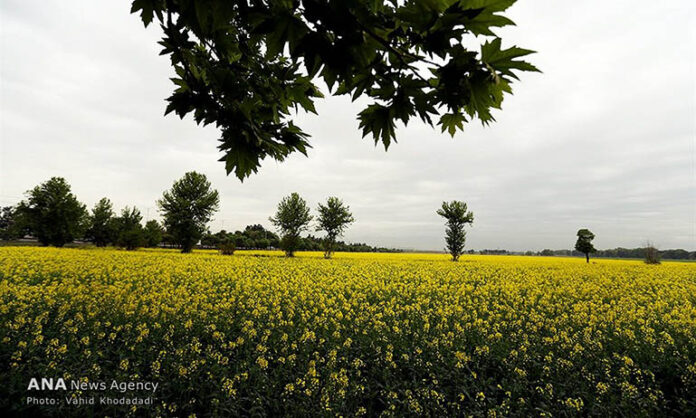
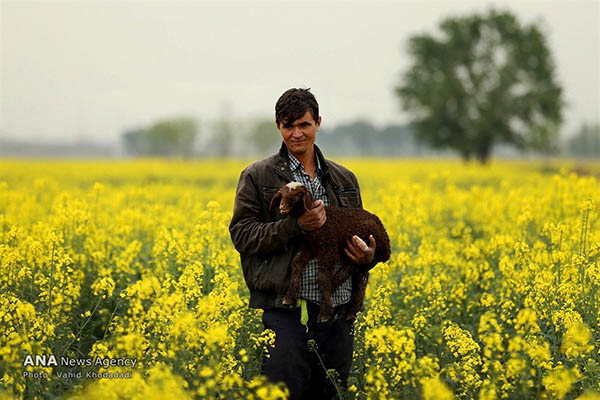
Its consumption is very common, and is claimed not only to be completely safe for human and animal consumption, but also to be among the healthiest plant-derived oils, having a relatively low amount of saturated fat and a high content of polyunsaturated fats.

This series of photos comes from a canola farm near Kahrizak, south of Tehran.

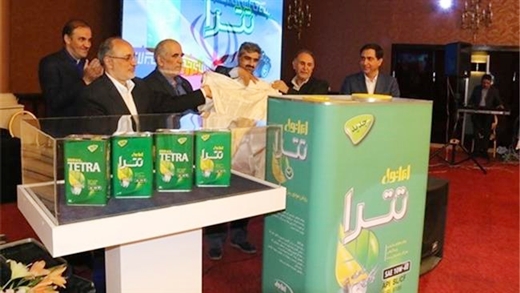
Plant-based motor oil introduced in Iran

Iranol Oil Company on Tuesday unveiled its latest oil product called Tetra in the presence of some government officials.

The fresh brand was reportedly synthesized with the use of environmentally friendly extracts from plants.

The new class of bio-based oil is said to improve engine performance and increase motor age, also making  it run cleaner.

It will additionally reduce sedimentation in the motor, which causes a gradual loss of engine power.

Officials, who attended the unveiling ceremony, hailed the company’s latest effort as a step toward a healthy environment, Iranian media reports said.

Studies show bio-based oils cause a reduction of at least 80% in greenhouse gas emissions as compared to similar petroleum-based synthetic oils.

A US report in 2013 said over 40% of the pollution in America’s waterways came from used motor oil.

The trend has over the past years forced many companies to look for biodegradable products to reduce pollution.

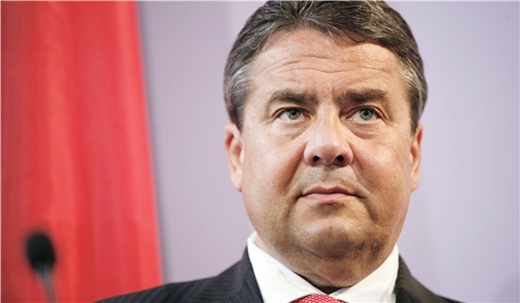
German Vice Chancellor Due in Tehran Next Week

Sigmar Gabriel will be making his second visit to Iran after last July’s nuclear deal, aimed at expanding economic relations between the two countries.

Iran-Germany Joint Economic Commission’s meeting will be held on May 2-4, for the first time after 15 years. The last meeting was held in 2001.

Gabriel will be leading an economic delegation, which consists of the country’s major companies’ representatives, while the Iranian delegation will be headed by Economy Minister Ali Tayyebnia.

German companies are mostly dissatisfied with Merkel’s distance from Iran, especially under the current circumstances where French President Francois Hollande and Italian PM Matteo Renzi have hosted President Rouhani in January and signed various MoUs with Tehran.
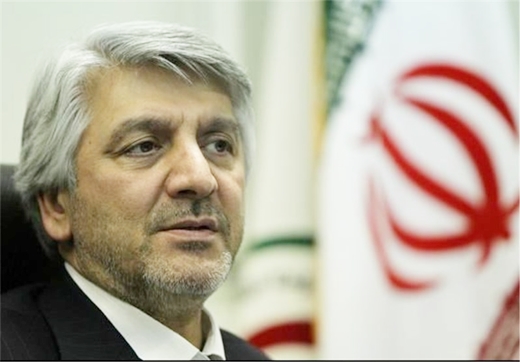
German investors and firm owners are hoping Gabriel’s visit will lead to one or two agreements, no matter how small, being signed.

One key factor preventing many German companies from investing in Iran and signing contracts with Iranian firms is the lack of banking guarantees. German businessmen hope the issue will be resolved during the visit.

However, Iran and Germany are poised to boost their petrochemical ties given the readiness indicated by both sides in this regard since removal of international sanctions.

Head of Iran’s National Petrochemical Company (NPC) Marziyeh Shahdaei said on wednesday that NPC and German companies are planning to boost their interactions now that US-led sanctions on Tehran’s nuclear program have been partly lifted, shana reported.
In a meeting with German Ambassador to Tehran Michael von Ungern-Sternberg, Shahdaei highlighted her recent visit to Berlin and called for enhancement of petrochemical ties with German companies.

“We are glad to enjoy the companionship and investment of German companies and we held several talk sessions with German companies during my Berlin visit,” she said.

The Iranian official said she held talks with representatives of over 250 German companies during her visit to Berlin earlier this year.

Ambassador Ungern-Sternberg underscored the historical presence of German companies in Iran, expressing hope that Iran and Germany will restore their cooperation in petrochemical projects.

“German companies have already signaled their interest to join petrochemical projects in Iran with the aim of promoting the industry in the country,” he added.

Iran Artists Forum signs MoU with Austrian counterpart

The deal signed by Majid Rajabi-Memar and Michel Pilets enshrines holding visual arts exhibitions, cultural weeks, conferences and exhibition on architecture, music concerts as well as artistic educational workshops.
Pilets expressed happiness over signing the deal, saying that as the head of Austrian House of Artists, he made many efforts to pave the way for cooperation between the two nations.
Signing the memorandum of understanding took place concurrent with economic and cultural interaction between the two countries, he said.
The Austrian director said that the two countries have longstanding cultural ties.

Iran Eyes 10,000 Jobs in Major Refinery Project

Speaking with Shana, Managing Director of Siraf Refineries Infrastructure Company (S.R.I.C) Alireza Sadeqabadi said the project is being carried out for production of 480,000 barrels of gas condensate and will be a major step for completion of the economic chain and generation of value added in Iran’s petroleum industry.

He said the project is being developed under a new partnership framework which is unprecedented in the industry in Iran.

The project, Sadeghabadi added, is being developed by 9 private companies as project developers.

“Once completed, Siraf Refinery Project will become a successful model for similar projects in petroleum industry,” he added.

14 contractors are involved in development of the refineries and 10,000 jobs will be created by the time the 8 refineries come online.

Over 80% of the project’s developers are graduates from top universities in Iran with an average age of below 35.