Thursday, December 25, 2025
Home Blog Page 4508

Iran Produces High-Energy-Storage Supercapacitors

The growing popularity in these new technologies and the industrialization of everyday lives have both highlighted the need for energy storage systems with higher capacities, at lower weight and cost, so that electronic equipment can be used at any place and time.

Today, extensive research is underway to produce new compounds to replace expensive materials such as ruthenium oxide, which is a common supercapacitor material internationally.

The project manager, Ali Ehsani, said the research work seeks to build affordable ceramic nanoparticles, in order to produce polymer-ceramic nanocomposites in supercapacitors with better efficiency.

Ehsani explained the achievements of the project, noting that the synthesis of yttrium and aluminum garnet (YAG) powders nanoparticles by an electrochemical method. This creates an advanced, ecological ceramic material which can be used to make simple and cost-effective supercapacitors.

“High mechanical stability, high energy storage capacity, low weight and high flexibility are among the other benefits of supercapacitors produced with these nanoparticles in their design,” Ehsani added.

Given the energy crisis, Ehsani noted, the use of nanocomposites can be very important to expand the use of non-fossil and clean energy systems.

Nanocomposites are used in the production of supercapacitors, Ehsani stated, adding that these supercapacitors have high energy storage capacity, low cost and are simpler to manufacture.

Asian Oil Imports from Iran up by 50% in March

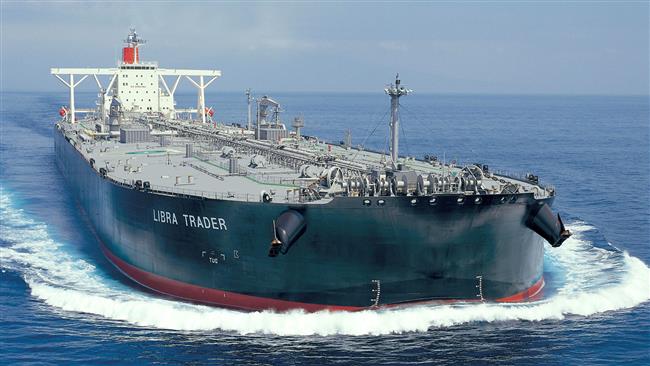
A surge in South Korean and Indian oil imports from Iran following the removal of sanctions has caused a 50% growth in the Asian countries’ oil imports from the Islamic Republic in March, 2016.

The growth in oil imports indicates that Iran’s strategy in regaining its share of global oil market has been successful after the removal of sanctions.

Based on customs and shipping data, total oil imports from Iran by the four major Asian customers (China, India, Japan, South Korea) hit 1.560 million barrels/day in March, up by 49.9% compared to the figure for the corresponding period last year.

During the same month, India imported 506,100 barrels/day from Iran, the highest in the past five years, while South Korean imports from Iran stood at 264,452 barrels/day.

A Look at Iranian Newspaper Front Pages on Apr. 30

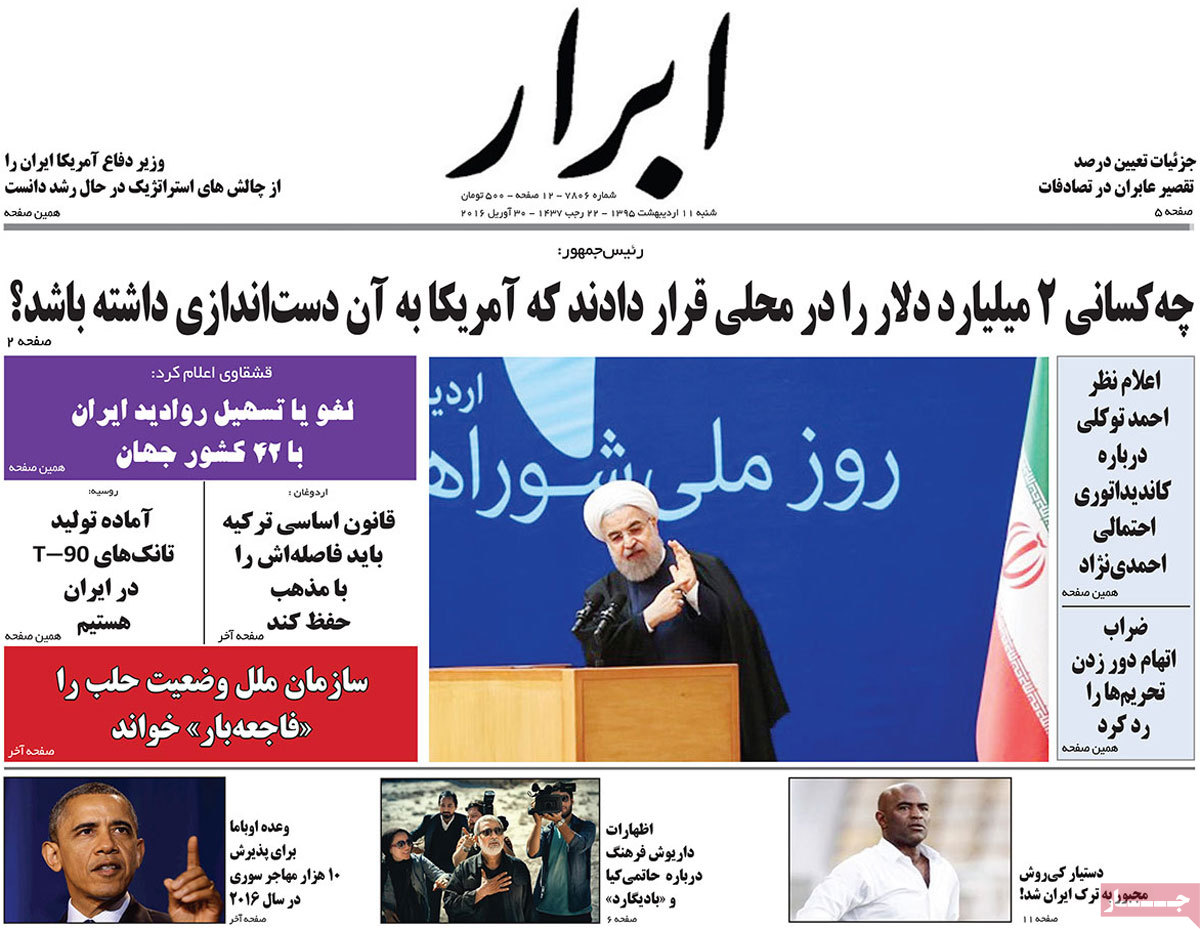
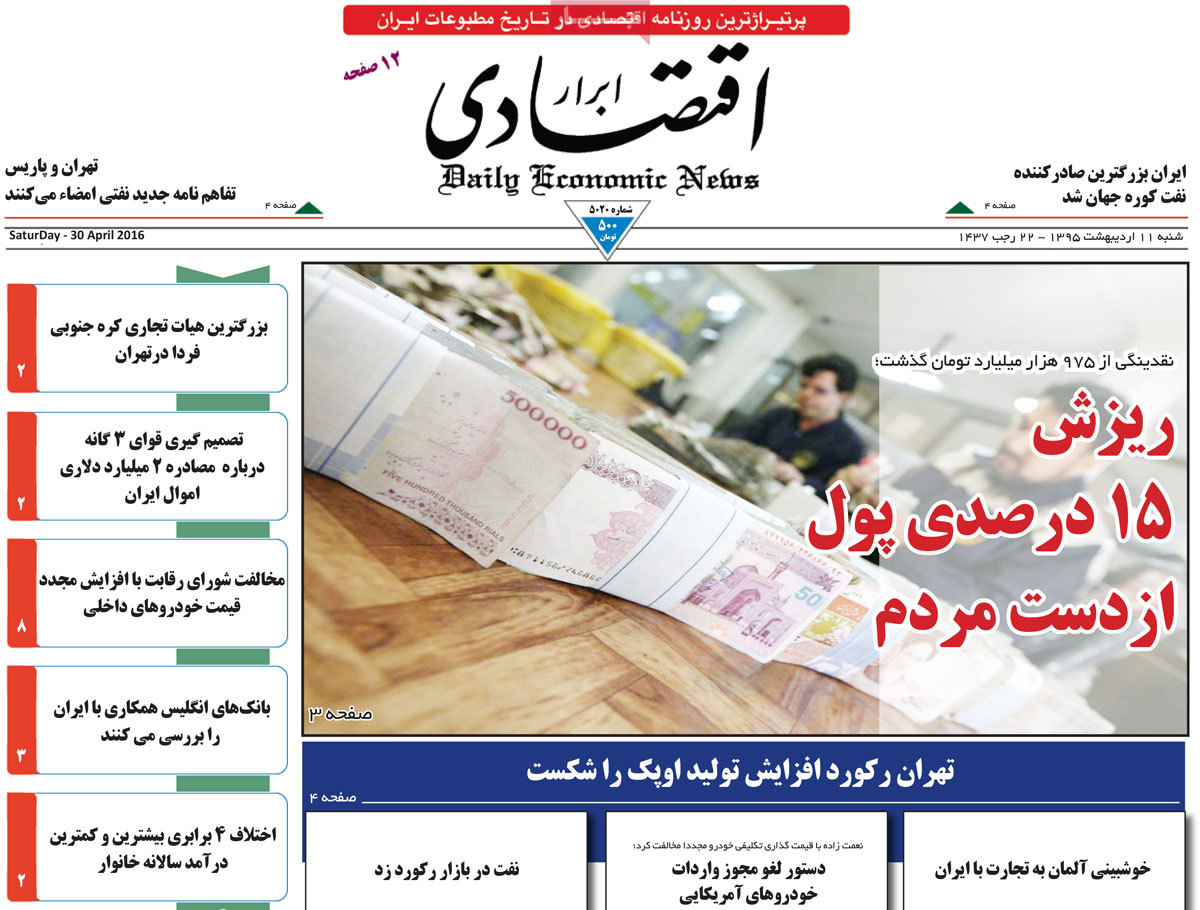
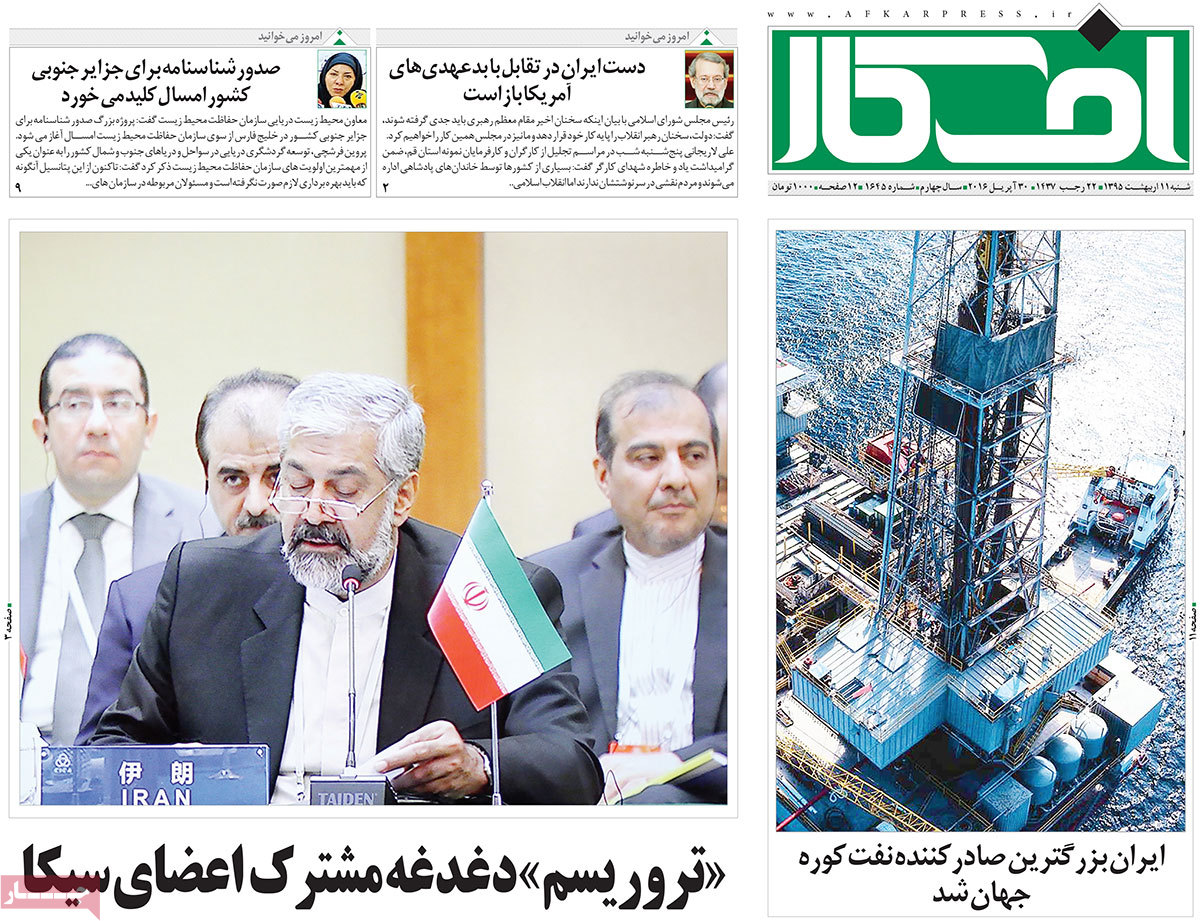
Iran Newspaper front pages

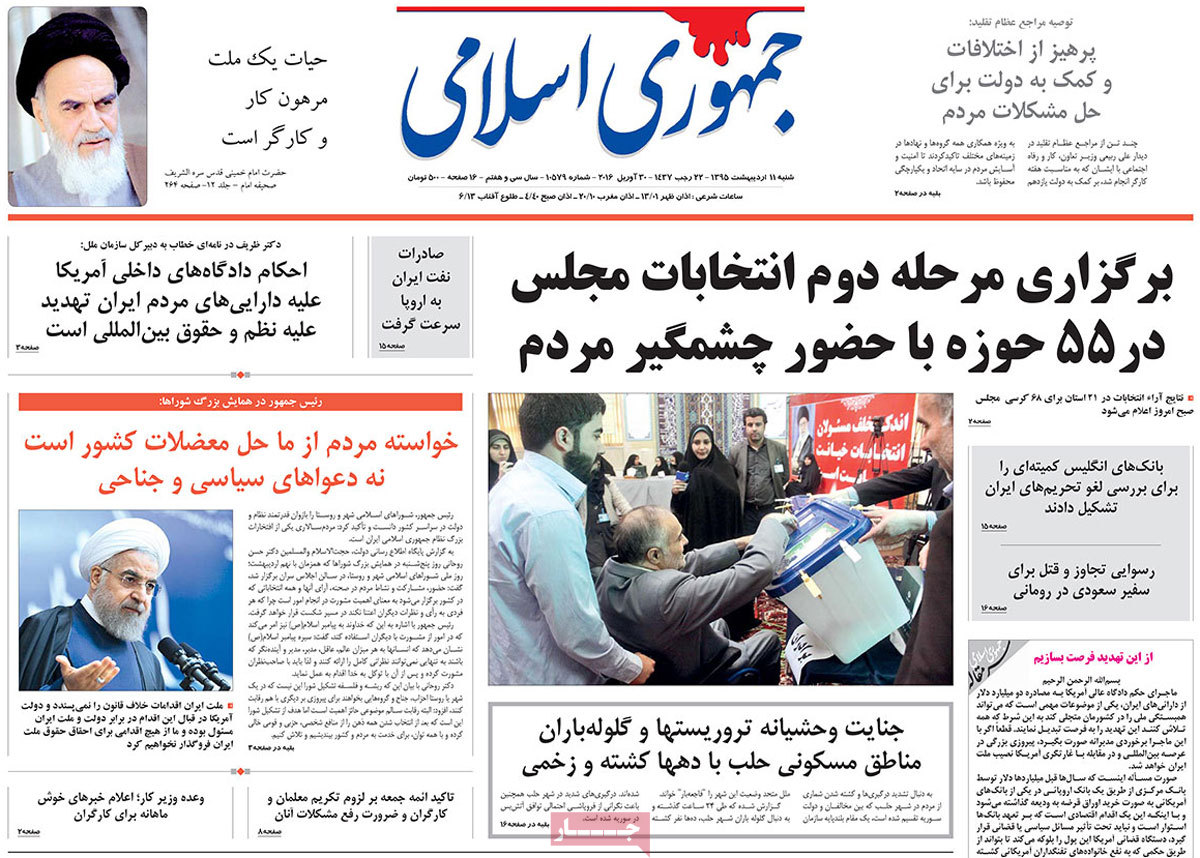
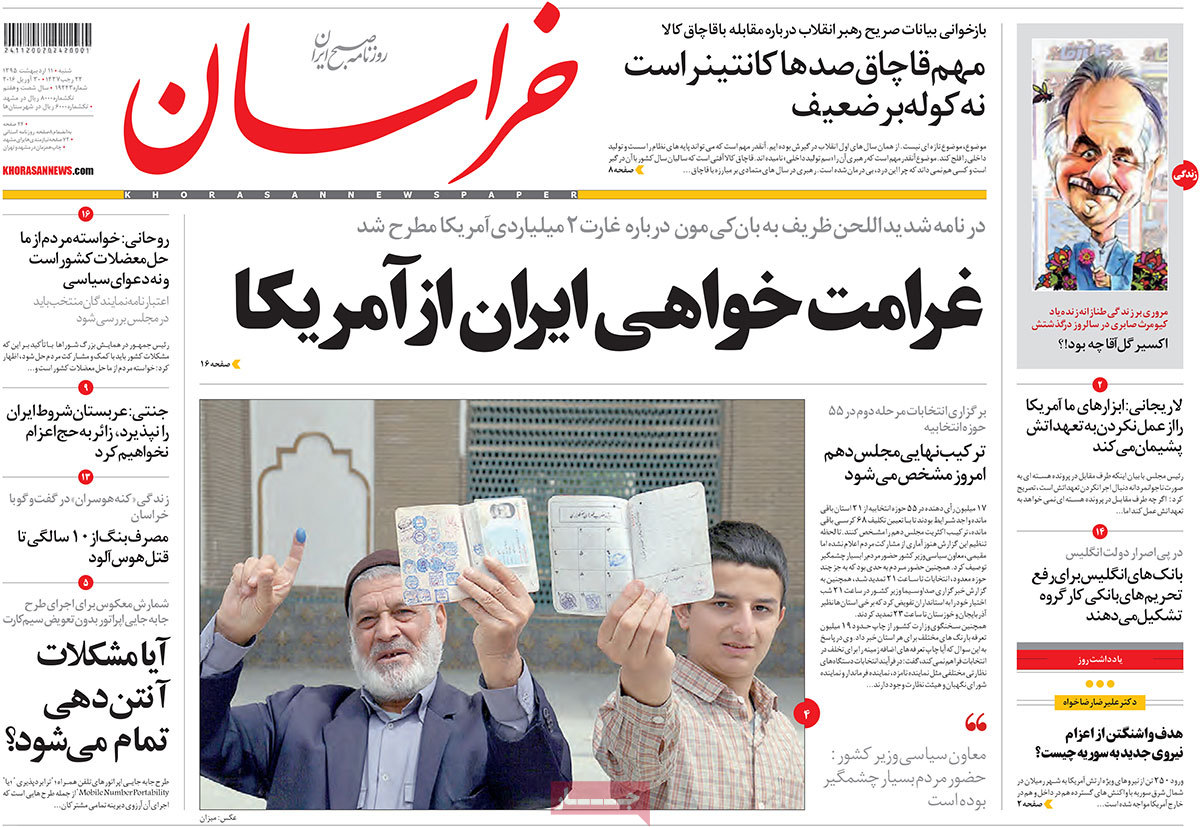
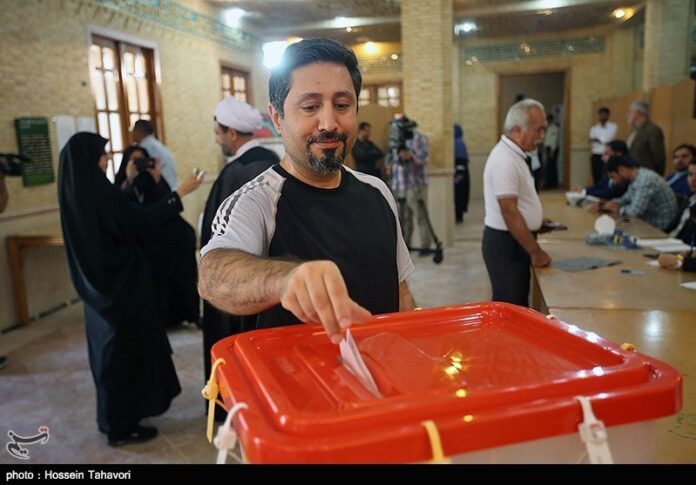
One day after the second round of Iran’s parliamentary elections held on Friday, most Iranian newspapers covered the high turnout of people in the polls.

President Hassan Rouhani’s recent remarks also received great coverage. Some sources focused on his continued criticisms against the former government’s alleged mistakes which allowed the US to seize Iranian assets, while others highlighted his comments on civil rights.


Abrar:

1- Rouhani: Who Put the $2bn in a Place Accessible to US?

2- Visa Requirements of 42 Countries Cancelled or Eased for Iranian Nationals: Deputy FM

3- Russia Ready to Manufacture T90 Tanks

4- US Defence Minister Sees Iran as a Growing Strategic Challenge


A Look at Iranian Newspaper Front Pages on Apr. 30


Abrar-e Eqtesadi:

1- Tehran and Paris to Sign New Oil MoUs

2- Germany Optimistic about Trade with Iran


A Look at Iranian Newspaper Front Pages on Apr. 30


Afkar:

1- Iran Has Options in Dealing with US Violations of Its Commitments: Larijani

2- Terrorism is Common Concern of CICA Member States

3- Iran Becomes World’s Biggest Exporter of Mazut Fuel Oil


A Look at Iranian Newspaper Front Pages on Apr. 30


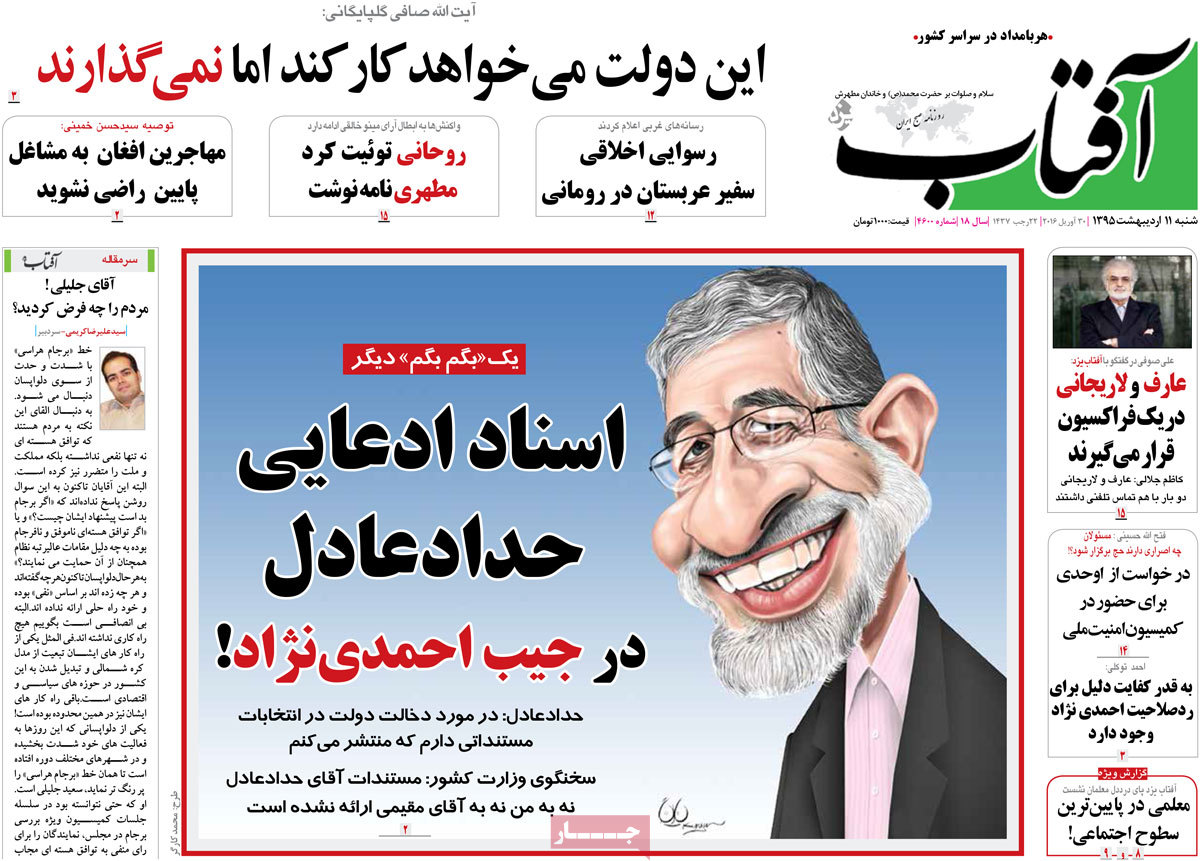
Aftab-e Yazd:

1- Sufficient Reasons to Disqualify Ahmadinejad from Running for Presidency: MP

2- Imam Khomeini’s Grandson Urges Afghan Refugees Not to Be Satisfied with Poor Jobs


A Look at Iranian Newspaper Front Pages on Apr. 30


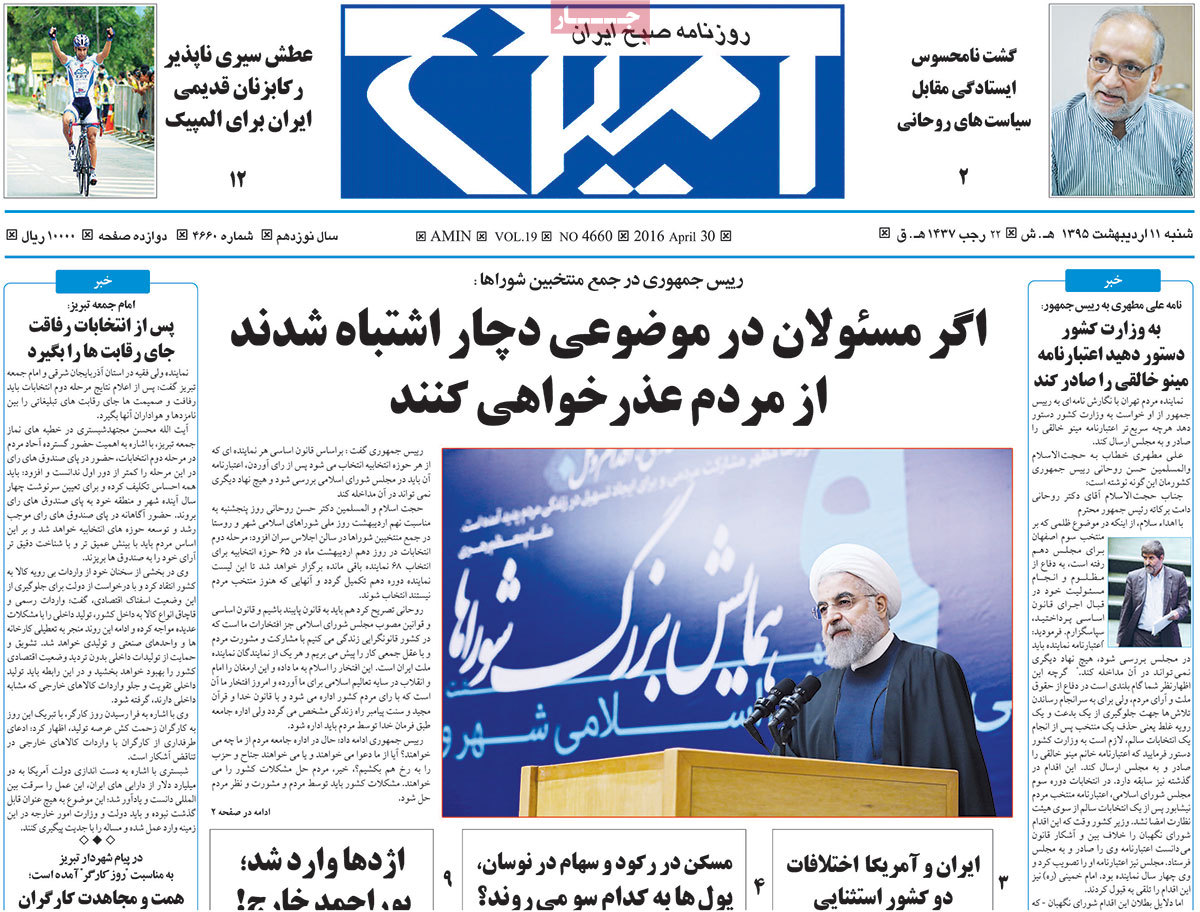
Amin:

1- President Rouhani Urges Officials to Apologize to People for Potential Mistakes

2- Differences between Two Exceptional Countries: Iran and US

3- “Plainclothes Morality Police” is Resistance against Rouhani’s Policies


A Look at Iranian Newspaper Front Pages on Apr. 30


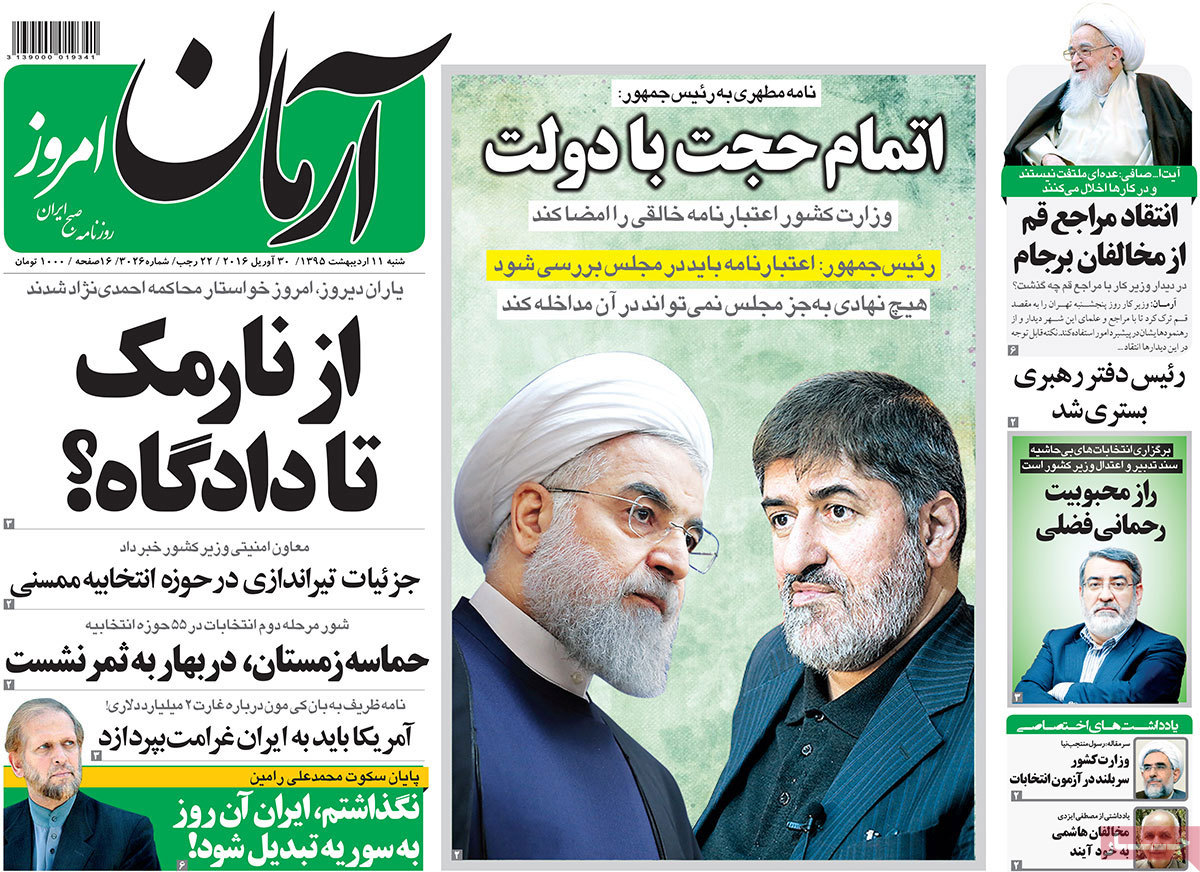
Arman-e Emrooz:

1- Top Iranian Clerics Slam Opponents of JCPOA

2- Zarif Writes Letter to UN Chief: US Should Pay Compensation to Iran


A Look at Iranian Newspaper Front Pages on Apr. 30


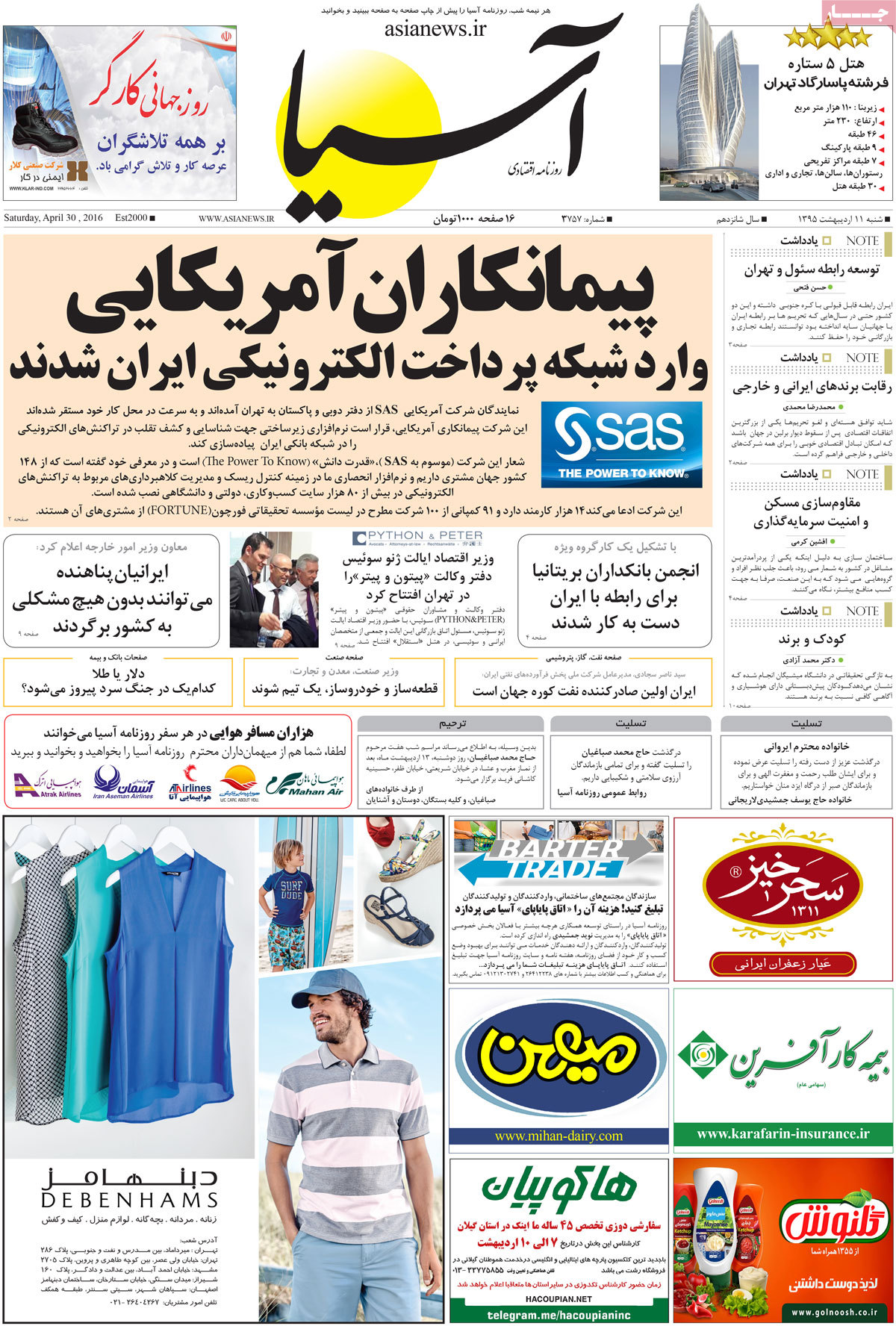
Asia:

1- US Contractor SAS Sends Employees to Tehran to Help Secure Iran’s Electronic Transactions

2- Iranian Refugees Can Return Home without Any Problem: Deputy FM


A Look at Iranian Newspaper Front Pages on Apr. 30


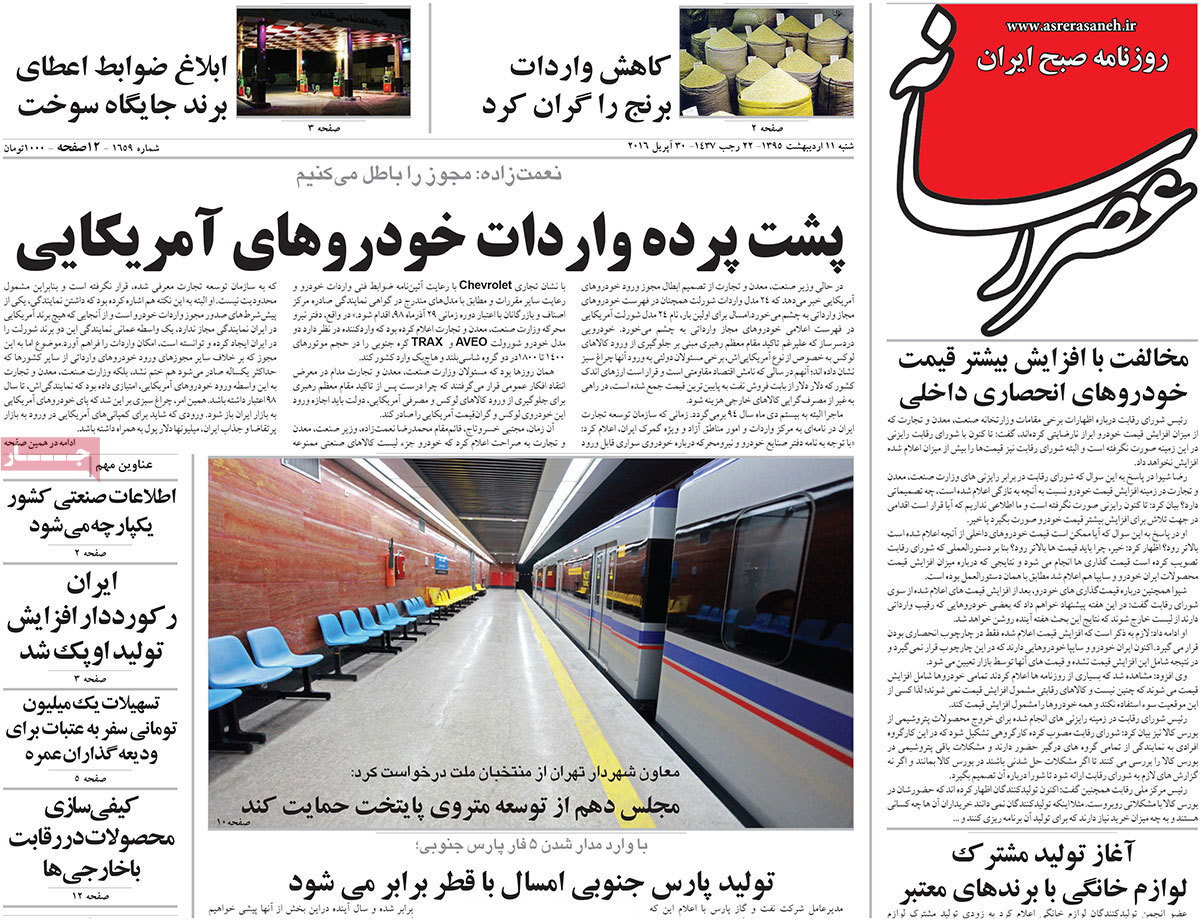
Asr-e Rasaneh:

1- Joint Production of Home Appliances with Reputable Brands

2- Behind the Curtains of American Car Imports: Trade Minister Vows to Revoke Licence


A Look at Iranian Newspaper Front Pages on Apr. 30


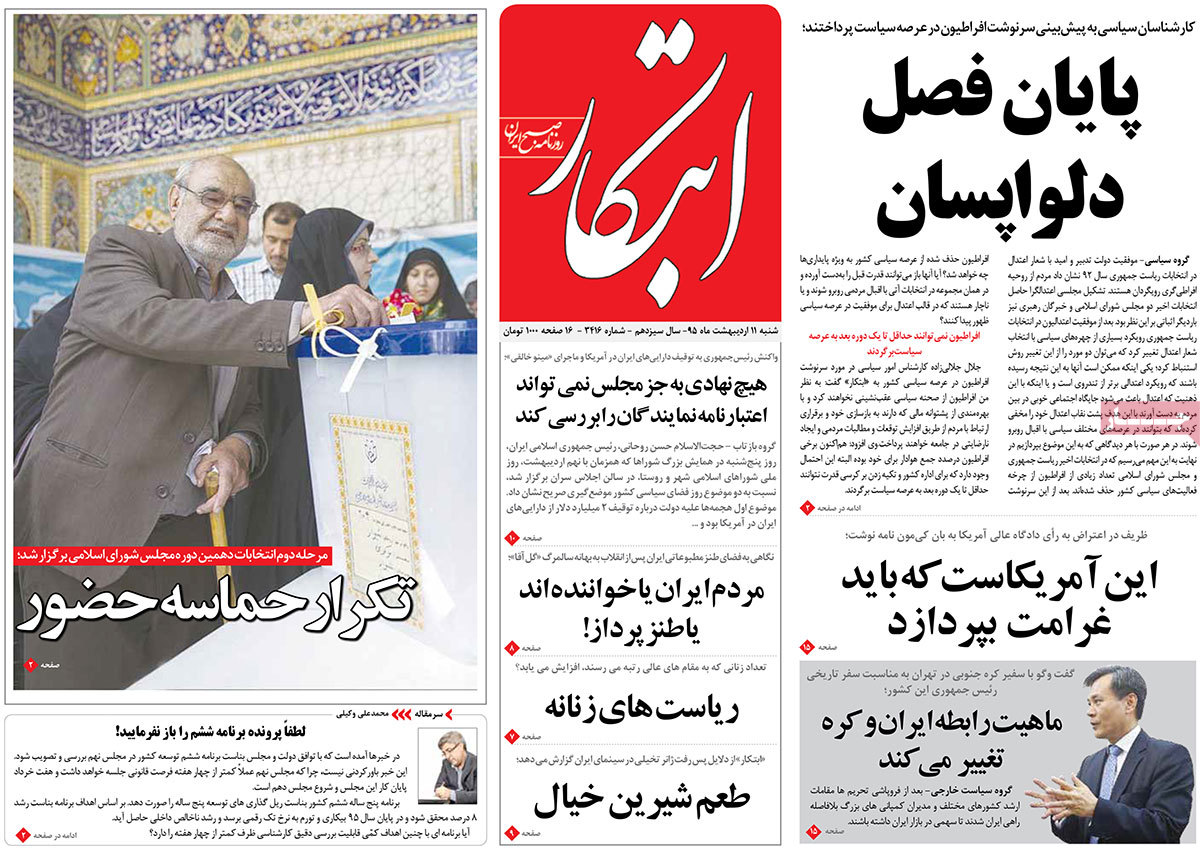
Ebtekar:

1- Female Leadership: Will the Number of High-Ranking Women Rise?


A Look at Iranian Newspaper Front Pages on Apr. 30


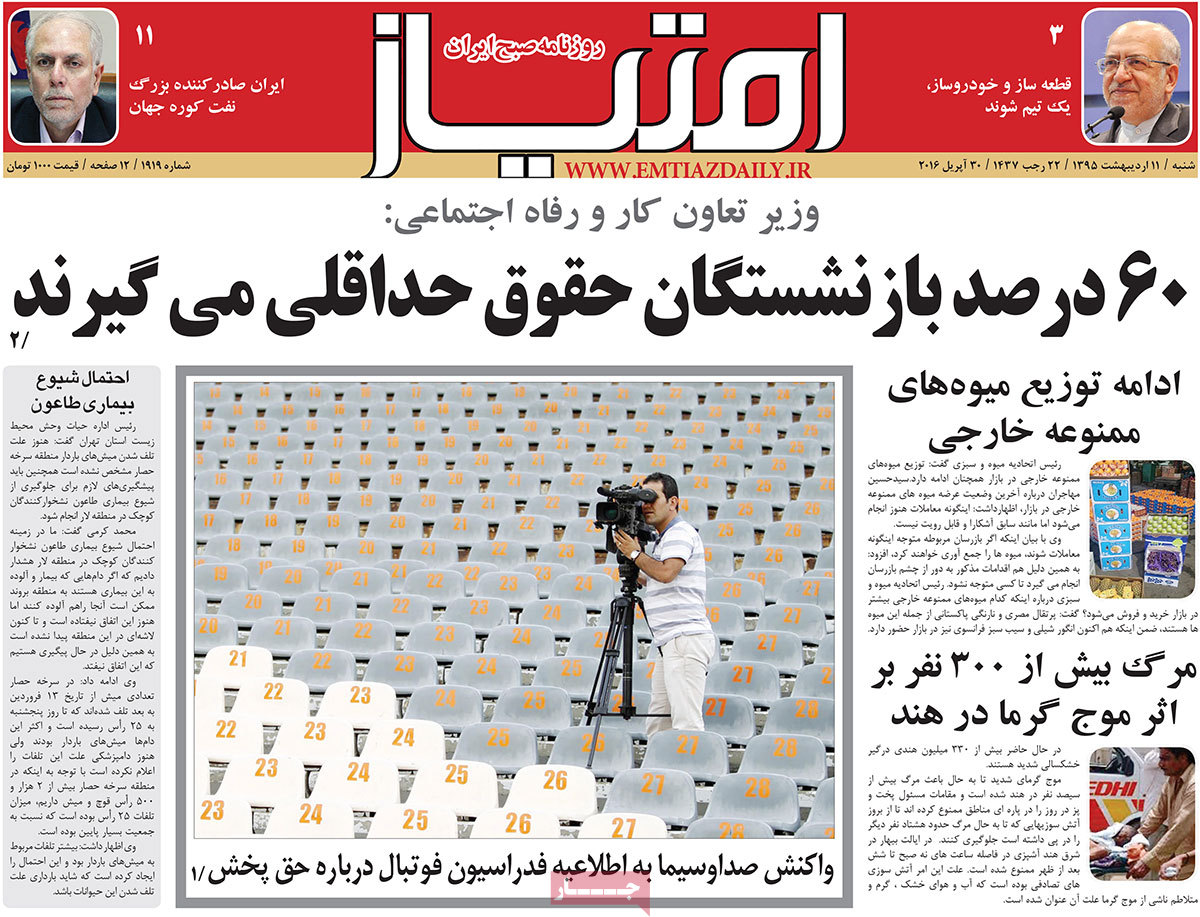
Emtiaz:

1- Distribution of Foreign “Forbidden Fruits” Continues in Iran

2- Heat Wave in India Kills More Than 300


A Look at Iranian Newspaper Front Pages on Apr. 30


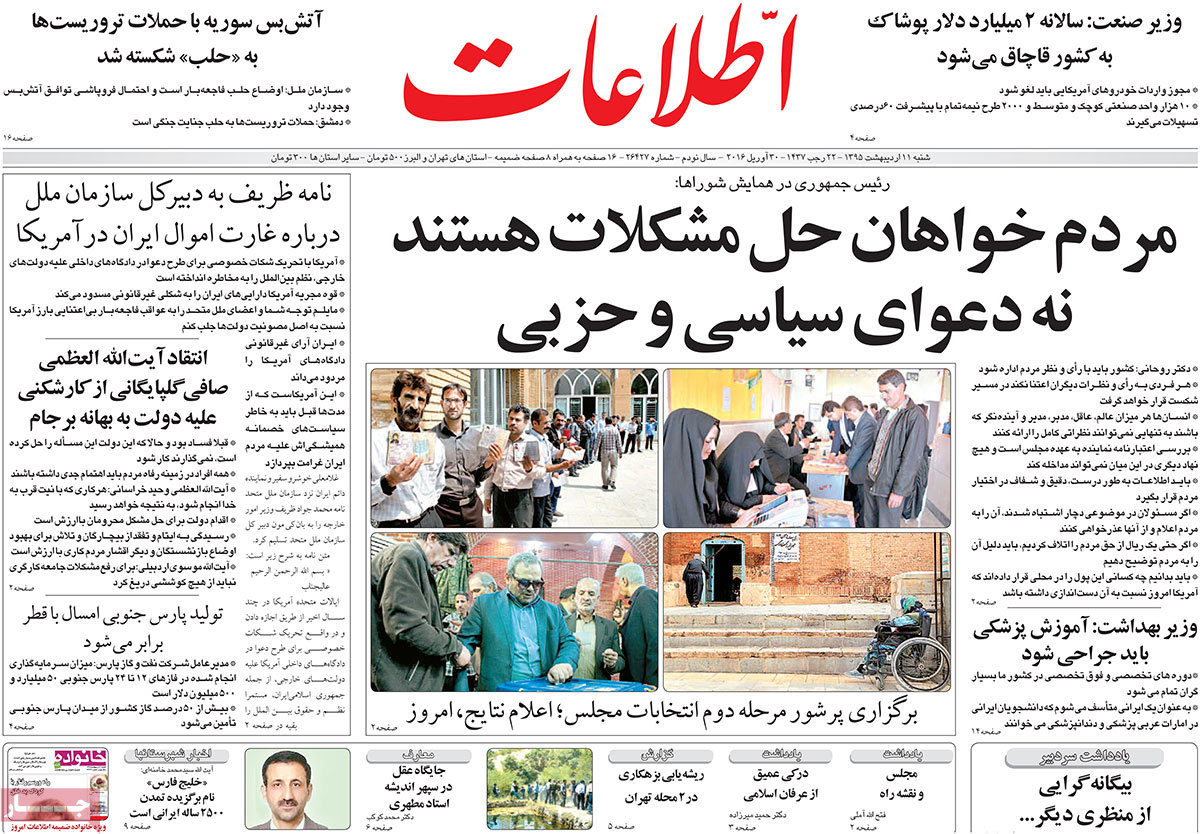
Ettela’at:

1- Iran’s South Pars Gas Field to Produce as Much as Qatar This Year

2- Run-Off Parliamentary Elections Held across Iran: Results to Be Announced

3- $2bn of Clothes Annually Smuggled into Iran: Trade Minister

4- Minister: Licence for Import of American Cars Should Be Revoked


A Look at Iranian Newspaper Front Pages on Apr. 30


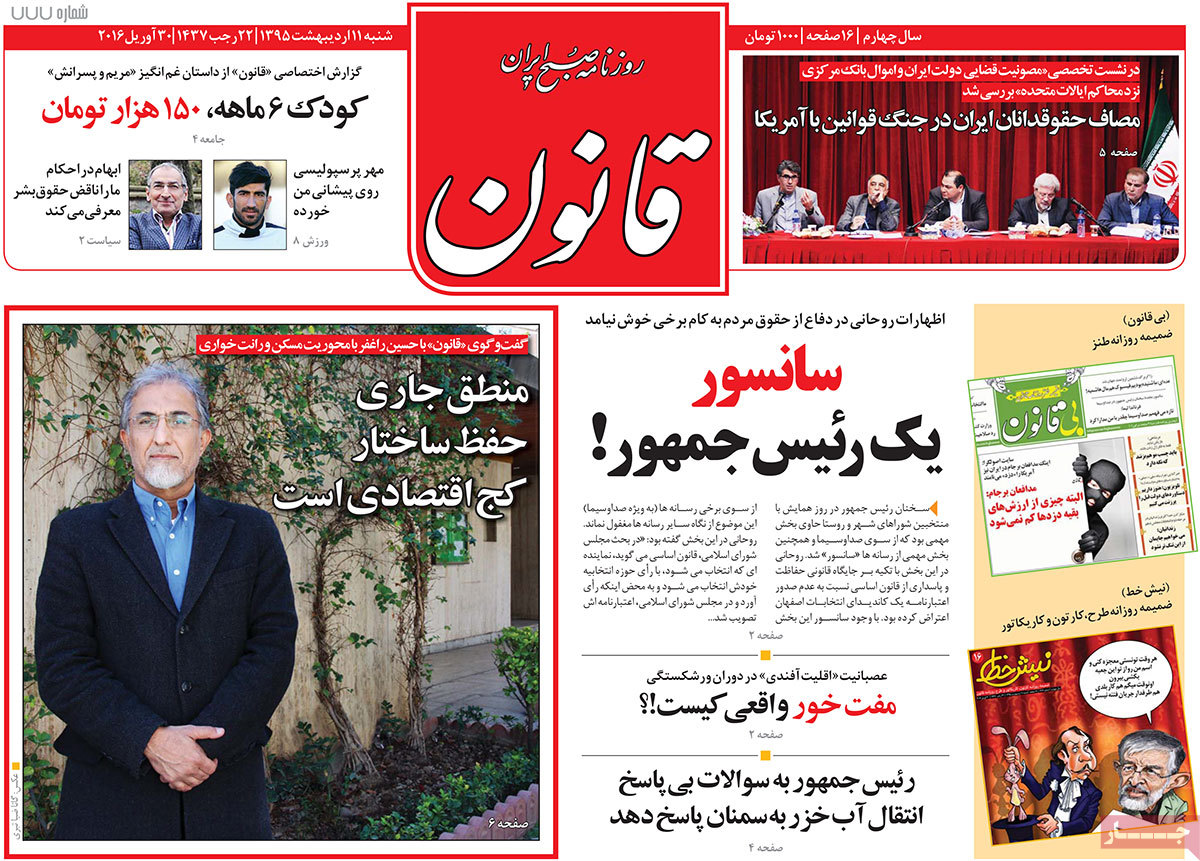
Ghanoon:

1- Iranian Jurists in War of Laws with US

2- Ambiguities in Iran’s Laws Present It as Human Rights Violator: Academic


A Look at Iranian Newspaper Front Pages on Apr. 30


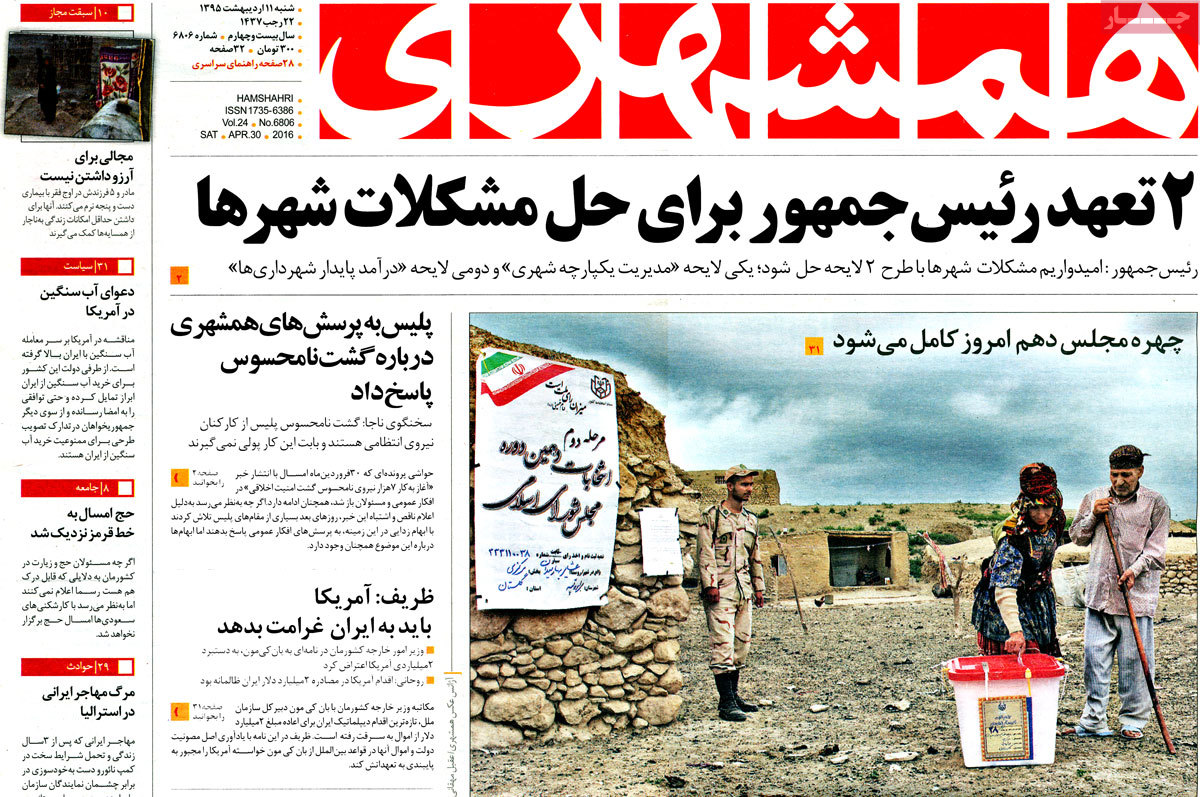
Hamshahri:

1- Iranian Refugee Dies in Australia

2- Conflict in US over Heavy Water


A Look at Iranian Newspaper Front Pages on Apr. 30


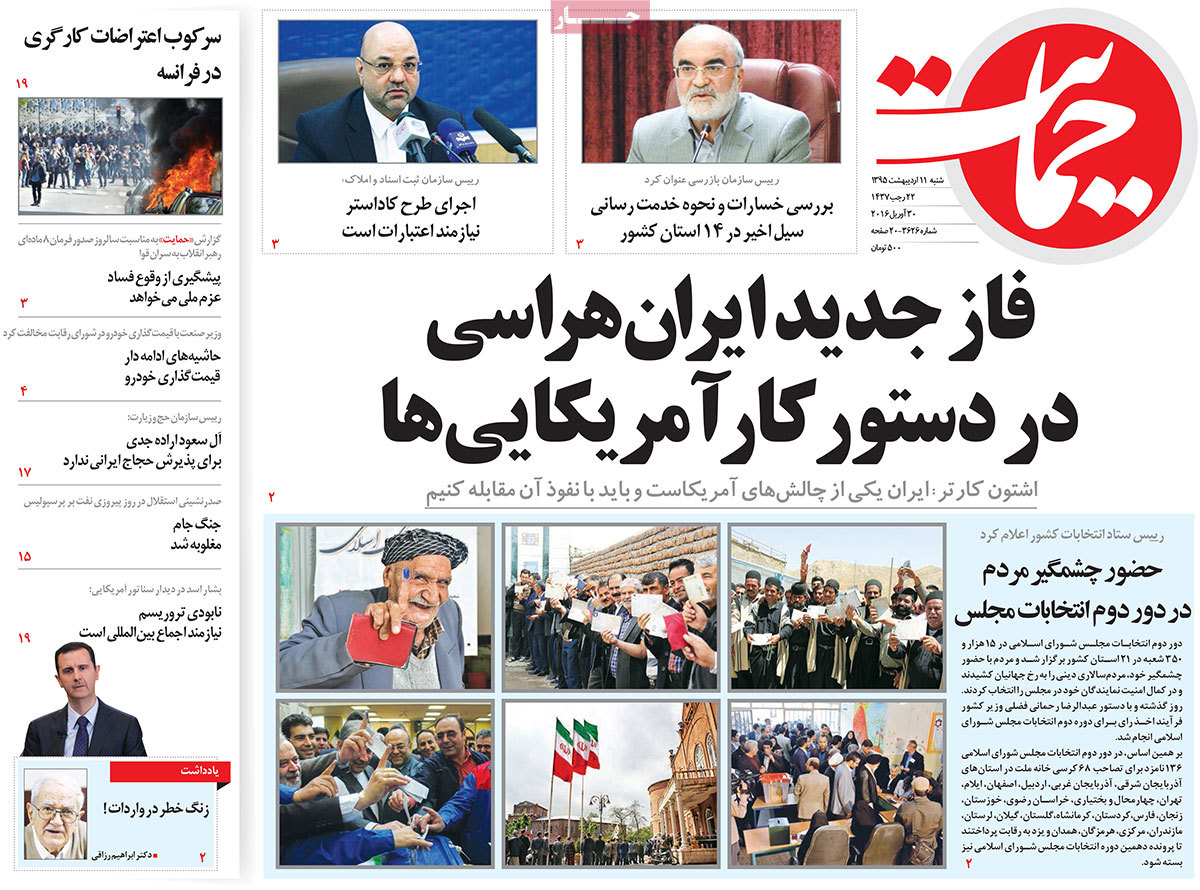
Hemayat:

1- New Phase of Iranophobia on US Agenda

2- Elections HQ: High Turnout in Run-Off Parliamentary Polls

3- Al Saud Has No Serious Desire to Receive Iranian Hajj Pilgrims: Official

4- French Crackdown on Labour Protests


A Look at Iranian Newspaper Front Pages on Apr. 30


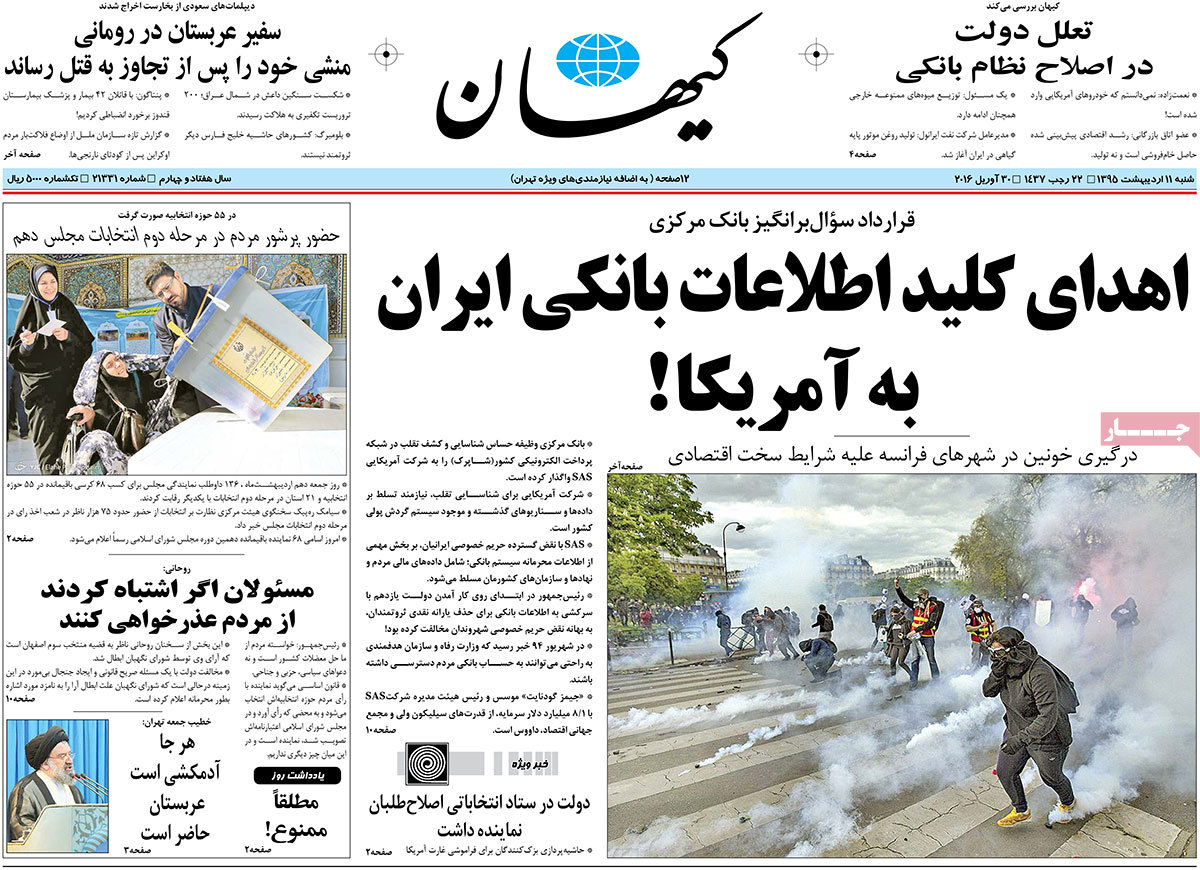
Keyhan:

1- Central Bank’s Questionable Contract Gives Iran’s Key Banking Information to US

2- Wherever Slaughter is Reported, Saudi Arabia is There: Cleric


A Look at Iranian Newspaper Front Pages on Apr. 30


Jomhouri Eslami:

1- British Banks Form Committee to Examine Termination of Anti-Iran Sanctions

2- Iran Accelerates Oil Exports to Europe

3- Let’s Make an Opportunity Out of This Threat (US Seizure of Iranian Assets) – Editorial


A Look at Iranian Newspaper Front Pages on Apr. 30


Khorasan:

1- Iran to Boycott Hajj If Saudi Arabia Does Not Accept Its Conditions: Minister

2- Objectives behind Washington’s Deployment of New Forces to Syria


A Look at Iranian Newspaper Front Pages on Apr. 30


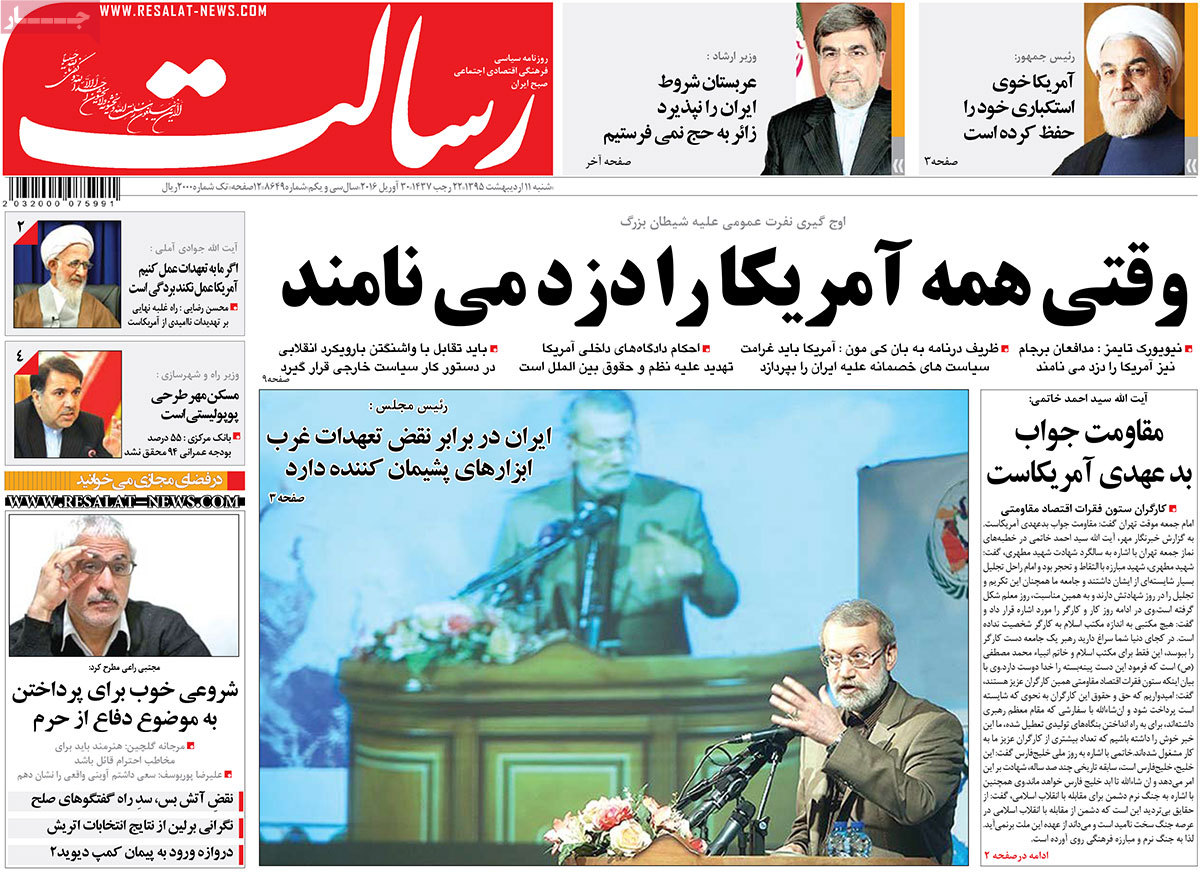
Resalat:

1- Public Hatred of US Stirred Up: When Everyone Calls US a “Thief”

2- US Has Maintained Its Hegemonic Habits: President Rouhani


A Look at Iranian Newspaper Front Pages on Apr. 30


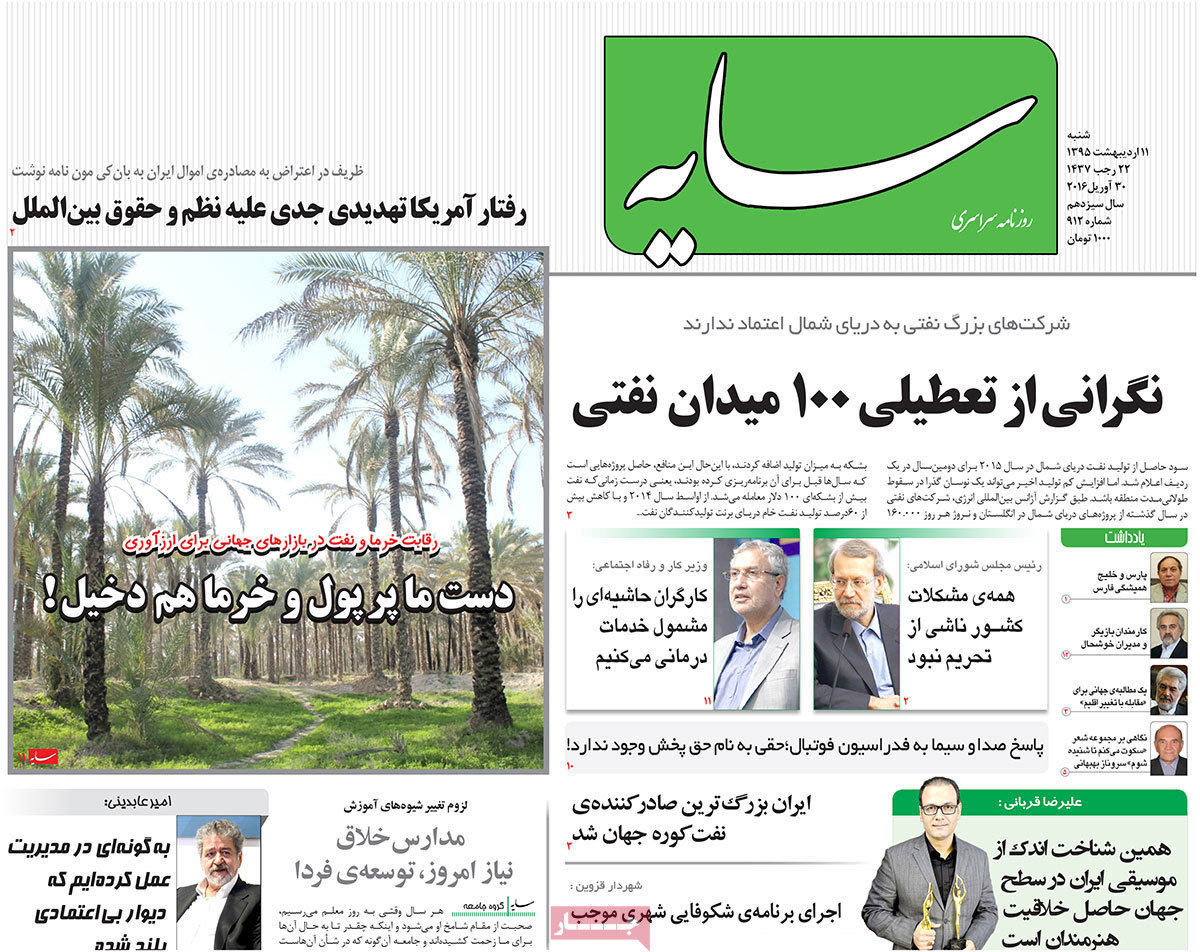
Sayeh:

1- Competition between Dates and Oil in Global Markets to Increase Iran’s Income

2- Concerns over Shutdown of 100 Oilfields: Major Oil Firms Do Not Trust North Sea


A Look at Iranian Newspaper Front Pages on Apr. 30


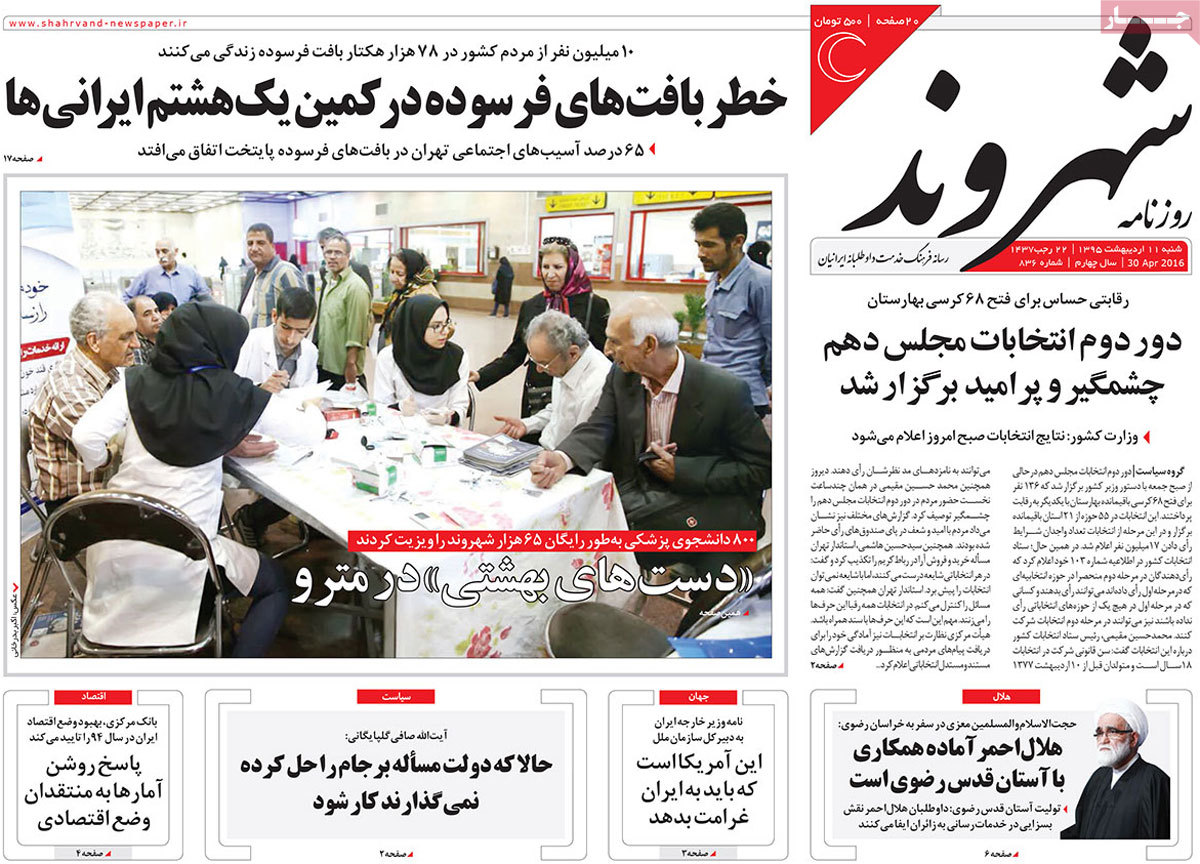
Shahrvand:

1- Heavenly Hands in the Subway: 800 Medical Students Treat 65,000 Citizens for Free

2- One-Eighth of Iranians in Danger from Old Architecture


A Look at Iranian Newspaper Front Pages on Apr. 30


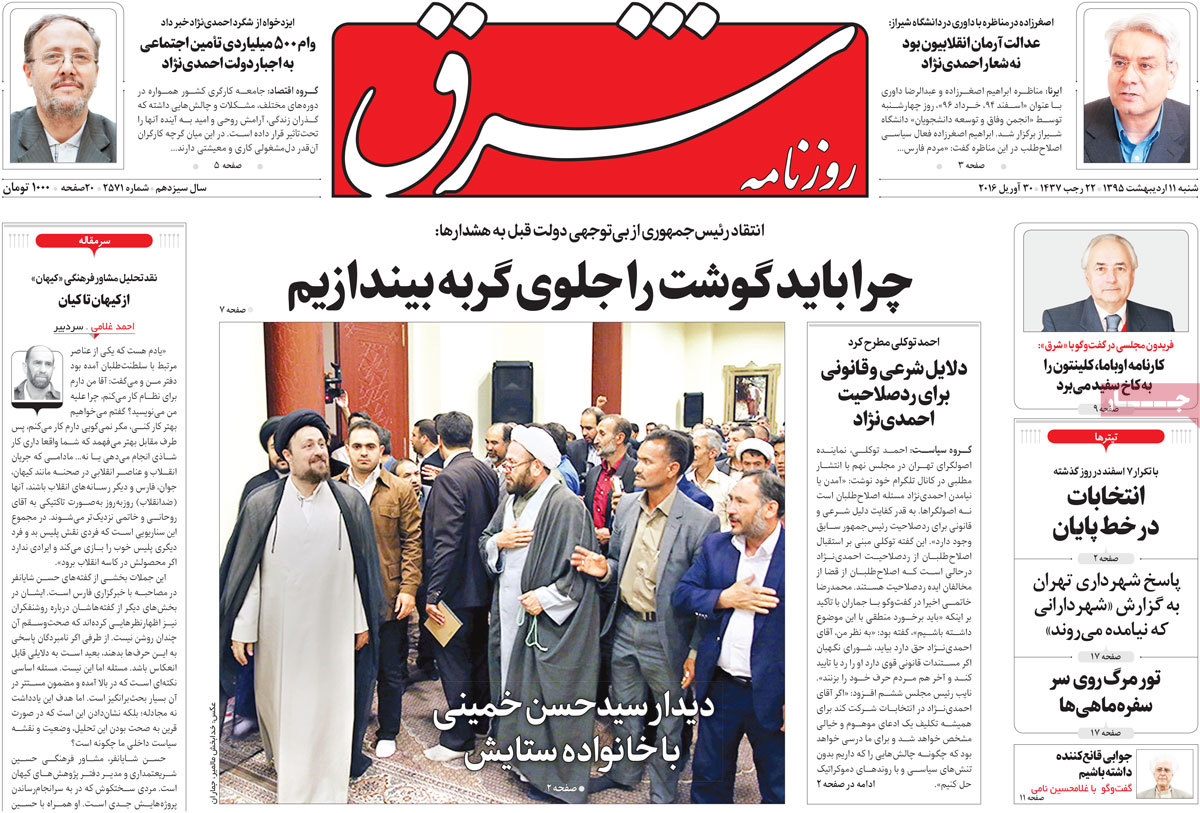
Sharq:

1- Imam Khomeini’s Grandson Meets Father of Setayesh [Afghan Girl Brutally Killed in Iran]

2- Flounders Accidentally Caught by Deadly Nets [in Persian Gulf Island of Qeshm]


A Look at Iranian Newspaper Front Pages on Apr. 30


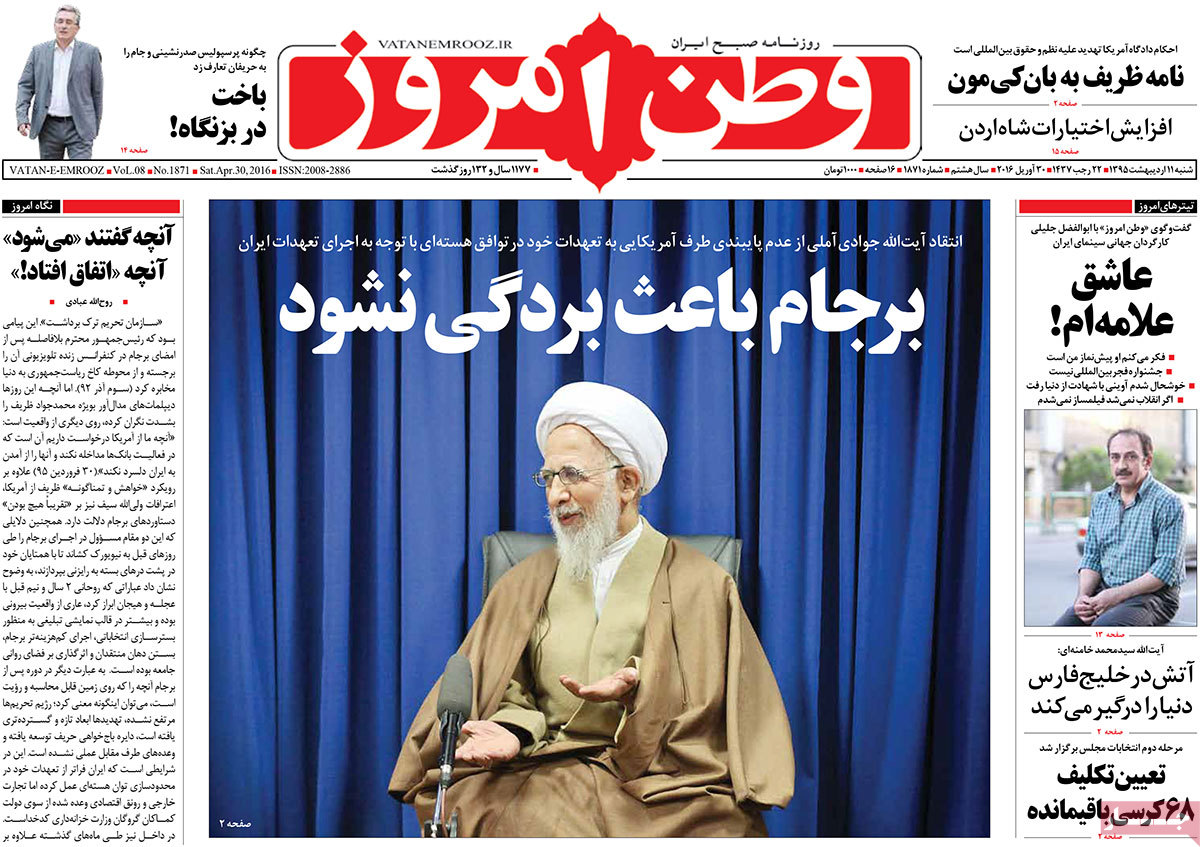
Vatan-e Emrooz:

1- Top Cleric Warns against JCPOA Becoming Form of Slavery

2- Any Persian Gulf Conflict Would Engage Entire World: Ayatollah Mohammad Khamenei


A Look at Iranian Newspaper Front Pages on Apr. 30


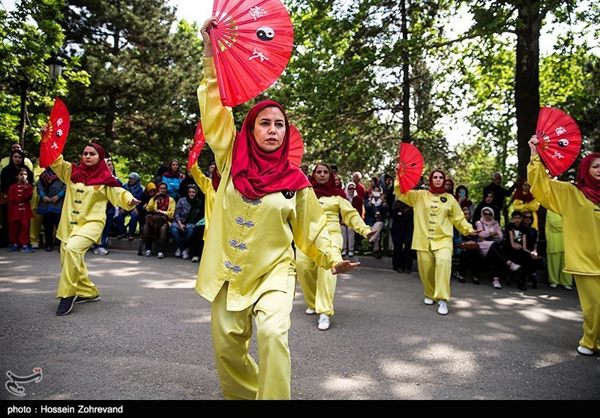
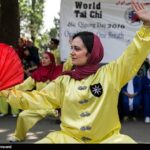
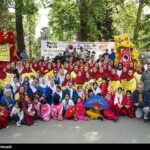
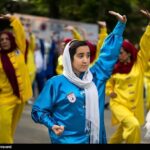
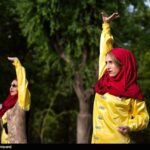
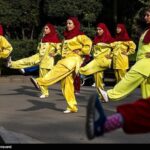
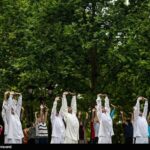
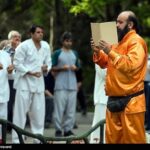
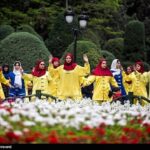
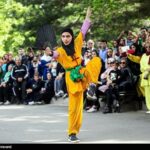
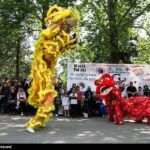
People in Tehran Observe World Tai Chi, Qigong Day

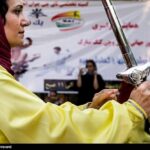
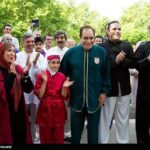
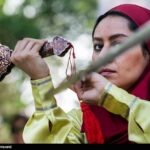
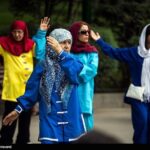
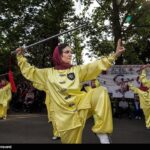
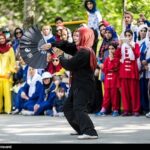
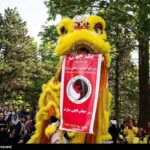
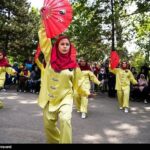
A group of people in the Iranian capital, Tehran, on Friday marked World Tai Chi and Qigong Day.


Parliamentary Election Results: 34 Reformists, 22 Principalists, 11 Independent

Parliament-Iran

In the second round of the elections, 67 per cent of the 58 Reformists managed to secure a seat in the parliament while 37 per cent of the Principalists managed to obtain the majority of votes.
The makeup of Iran’s 10th parliament, to the moment, consists of 122 Reformists, 84 Principalists (with two candidates under both political leanings), and 82 Independents.
According to Interior Ministry Spokesman Hossein Ali Amiri, the 10th Parliament of Iran (Majlis) is scheduled to start on May 28, 2016.

The results specified with * are unofficial.


East Azerbaijan

Constituency

Seats

Principlist

Reformist

Independent

 *Tabriz, Azarshahr and Oskou

4

Mohammad Hossein Farhangi

Mohammad Esmaeil Saeidi

Shahabodin Bimeghdar

Zahra Saei

Ahar, Heris 

1

Beitollah Abdollahi

Sarab 1 Yousef Davoudi
*Shabestar 1 Masoumeh Aghapour Alishahi
Maragheh, Ajabshir 1 Mohammad Ali Hosseinzadeh
Marand, Jolfa 1 Mohammad Hassan Nejad

West Azerbaijan 

Constituency

Seats

Principlist

Reformist

Independent

*Urmia

2

Hadi Bahadori

 Rouhollah Hazratpour

Salmas

1

Shahrouz Barzegar

*Miandoab, Shahin Dej, and Takab

2

Jahanbakhsh Mohebinia

Homayoun Hashemi

Ardebil 

Constituency

Seats

Principlist

Reformist

Independent

Ardebil, Namin and Nir

1

Mohammad Feizi

Parsabad and Bilesavar

1

Shakour Pourhossein Shaghlan

Isfahan

Constituency

Seats

Principlist

Reformist

Independent

*Samirom

1

Asghar Salimi

Shahr-reza and Samirom Sofla

1

Somayeh Mahmoudi

Ilam

Constituency

Seats

Principlist

Reformist

Independent

Ilam, Ivan, Shirvan, Chardavol and Mehran

2

Jalal Mirzaei

Salam Amini

Dehloran, Darreh-Shahr and Abdanan

1

Shadmehr Kazemzadeh

Tehran 

Constituency

Seats

Principlist

Reformist

Independent

Damavand and Firouzkouh

1

Ghasem Mirzaei Nikou

Robat Karim

1

Hassan Norouzi

Shahriar 

1

Mohammad Mahmoudi Shahneshin

Chaharmahal and Bakhtiari

Constituency

Seats

Principlist

Reformist

Independent

*Ardel, Farsan, Kouhrang and Kiar

1

Ali Kazemi Babaheidari

Boroujen

1

Khadijeh Rabiei

Khorasan Razavi 
Constituency Seats Principlist Reformist Independent
Torbat Heidarieh and Mahvelat 1 Saeid Bastani
Khuzestan 
Constituency Seats Principlist Reformist Independent
*Ahvaz 3

Homayoun Yousefi

Javad Kazemi Nasab

Ali Sari

Abadan 1 Gholamreza Sharafi
Izeh and Bagh Malek 1 Hedayatollah Khademi
Mahshahr Port, Omidieh and Hendijan 1 Ali Golmoradi
Behbahan 1 Habibollah Keshtzar
Masjed Soleyman, Lali, Haftgol and Andika 1 Ali Asgar Zaheri
Zanjan
Constituency Seats Principlist Reformist Independent
Zanjan and Tarom 2

Ali Vaghfchi

Freydoun Ahmadi

Abhar and Khoramdareh 1 Mohammad Azizi
Khodabandeh 1 Ahmad Bigdeli
Fars
Constituency Seats Principlist Reformist Independent
*Shiraz 1 Ali Akbari
Neyriz and Estehban 1 Farhad Tahmasebi
Darab and Zarrin-Dasht 1 Reza Ansari
Mamasani  1 Masoud Goudarzi
Kordestan
Constituency Seats Principlist Reformist Independent
Sanandaj, Divandareh and Kamyaran 1 Seyed Ahsan Alavi
Marivan adn Sarvabad 1 Mansour Moradi
Kermanshah 
Constituency Seats Principlist Reformist Independent
Kermanshah 1 Ahmad Safari
Saghez 1 Seyed Javad Hosseinikia 
Golestan 
Constituency Seats Principlist Reformist Independent
Gorgan and Aqqala 2

Nour Mohammad Torbatinejad

Nabi Hezarjaribi
Kordkouy, Torkaman and Gaz Port  1 Ramin Nourgholipour
Gilan
Constituency Seats Principlist Reformist Independent
*Rasht  2 Jabar Kouchakinejad Mohammad Sadegh Hassani
Roudbar 1 Manouchehr Jamali
Lorestan 
Constituency Seats Principlist Reformist Independent
Khoramabad and Doureh 2 Mohammadreza Melkshahi Rad Seyd Mohammad Khan Biranvand
Boroujerd 2

Alaedin Boroujerdi

Abbas Goudarzi

Doroud and Ezna  1 Majid Kianpour
Mazandaran 
Constituency Seats Principlist Reformist Independent
Babol  1 Hossein Niaz Azari
Ghaem Shahr, Savadkouh and Jouybar  1 Seyed Ali Adyani Rad
Markazi 
Constituency Seats Principlist Reformist Independent
Arak, Komeijan adn Khandab 1 Seyed Mehdi Moghadasi
Saveh and Zarandieh 1 Mohammad Reza Mansouri
Shazand  1 Ali Ebrahimi
Hormozgan 
Constituency Seats Principlist Reformist Independent
Lengeh Port, Bastak and Parsian 1 Khaled Zamzamnejad
Hamedan
Constituency Seats Principlist Reformist Independent
Razan 1 Hassan Lotfi
Malayer 1 Ahad Azadikhah 
Yazd
Constituency Seats Principlist Reformist Independent
Mehriz, Bafq, Abarkouh and Khatam  1 Mohammad Reza Sabaghian

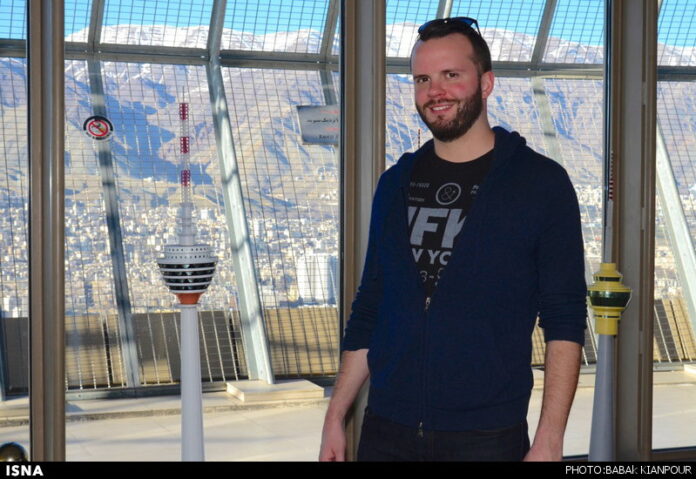
An American’s Adventure in the Streets of Tehran

“When they see an American, Iranians show so much attention that they make you feel like you’re a celebrity. This is a really amazing feeling.”

Sometimes he didn’t have enough time to explore a city fully, so he travelled back to it a second time. He loves travelling, but due to his job he can have only six weeks of holiday per year.

He talked to ISNA about his style of travel, saying, “I love travelling around the world, but since I have have limited holidays, I prefer to make short trips to a single city. For example, I explored Rio de Janeiro in Brazil in three days, four days in Dubai and another four days in Bangkok. Travelling this way is more adaptable for my job, and I enjoy it a lot.”
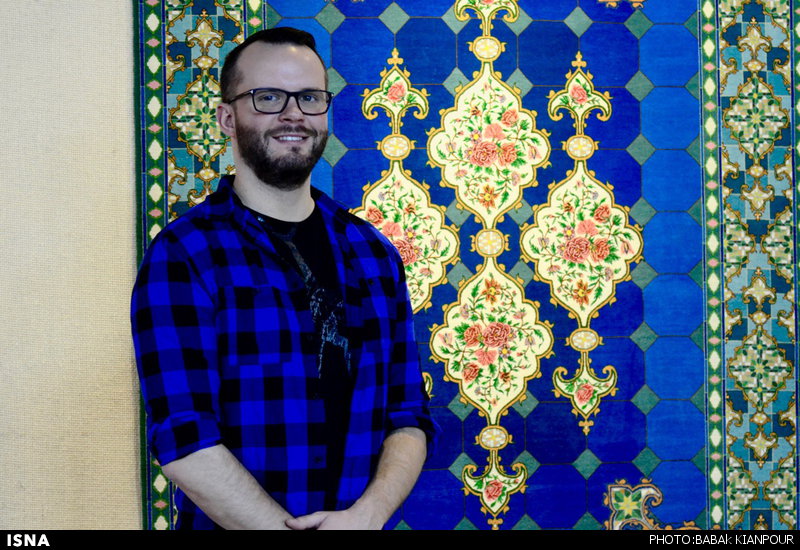
American Advanture-2He has managed to visit 20 countries so far. “I was eleven when I went to Poland with my grandmother. She’s originally Polish. I really liked that trip, and have been in love with travelling ever since. I made a trip to London when I was 20, and kept returning there once or twice a year. I made friends there. After that, I started travelling around Europe and then went to countries further away in East Asia and South America. Going to new places is the most exciting part of my adventure.”

Rob is planning to spend his next holiday in Cuba, a country which used to be pretty difficult for Americans to visit. He told us about the reason behind this decision, “Even with the new relations between Cuba and the US, American citizens aren’t totally free to travel there. Many, however, ignore this law. Of course, this pressure on tourists has decreased since President Obama travelled to Cuba and started negotiated between the two countries.”


Iran has always been interesting for Americans, as it’s been seen as a mysterious country. It’s exciting to find out what a sort of country Iran is.

“Unfortunately, there are many negative news stories about Iran. I had heard a lot of positive things from those who had already travelled to Iran, so I was curious and wanted to get to know more.”

He continues, “My first doubt about travelling to Iran was whether they would question a single American travelling by himself. This is a question that many Americans have. After I arrived in Imam Khomeini Airport, however, the lady who was checking the passports just stamped mine and asked nothing. They didn’t take my fingerprints either.”

He knows, however, that getting an Iranian visa was not as easy as some other countries. “It took a few weeks for me to receive my visa. There was no problem during the process, but it was very strange that I was asked to submit my CV. As a tourist, I was curious to know why they were asking for my personal CV. It was not a big deal, but it seems that getting an Iranian visa involved more details than, let’s say, getting one for Brazil.”
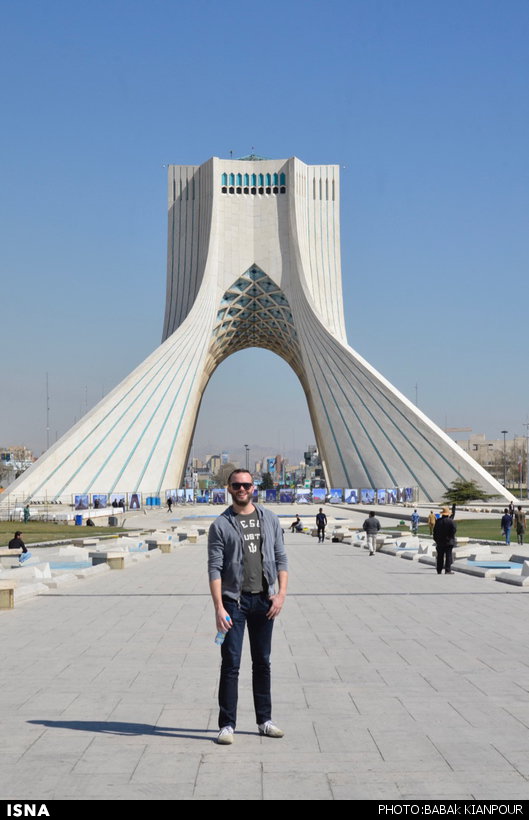
American Advanture-3He spent four days in Tehran without planning to visit Shiraz or Isfahan, the more historical cities. He explains, “Those who knew about my travel plan kept asking me why I wasn’t going to Isfahan or Shiraz, but I preferred to choose a city that has many Iranians from different cultures and backgrounds in it. So I chose Tehran. It’s a noisy city though, like my own New York.”

He found the most attractive sights to be Tehran’s Grand Bazaar and the Alborz mountains. He also experienced a couple of days of clean air in his four days in Tehran, “The city hugs the mountains, then suddenly disappears there. It’s such a spectacular landscape.”

“I was in touch with my friends around the world through Instagram. I posted a photo of the city. Many of my friends had no idea that Tehran could be so beautiful. It encouraged many others to travel to Iran.”

Rob seems pretty excited when he talks about Iranian food. Even though he couldn’t try all the food and dishes due to his diet, he believes, “I had always heard that kebab is Middle Eastern food, but I’m always cautious and unadventurous when it comes to food. White meat is a priority for me. However, I believe that eating Iranian kebabs is an adventure, especially for those coming from America.”

The city’s imperfections don’t go unnoticed, either. He thinks that the pollution and traffic are serious problems for Tehran, “The traffic in the city streets is horrible. It’s much heavier than I thought it would be. When I went to Azadi Tower, I could feel my eyes and nose stinging. People’s driving is thought-provoking, not to mention the noise. It’s not the worst place I’ve ever been, though, for that matter. Lima in Peru was much worse.”

He then praised people that he met in Tehran, “They were ready to do anything to help a foreigner. This was really interesting.”

He added, “Each country has its own beauties and sights, but in Iran, it is the people who are the best attraction. Before coming to Iran, I would have given this honour to Egypt, but now Iran is ahead by a large margin.”

In his opinion, Rio de Janeiro gets the highest rating in terms of natural beauty, but he also says, “While travelling in Rio, you should be very careful. There are many thieves and it’s a dangerous city in that sense. I didn’t take my mobile phone out because of the risk of being robbed. Tehran is a very safe city compared to Rio. I feel really secure here.”
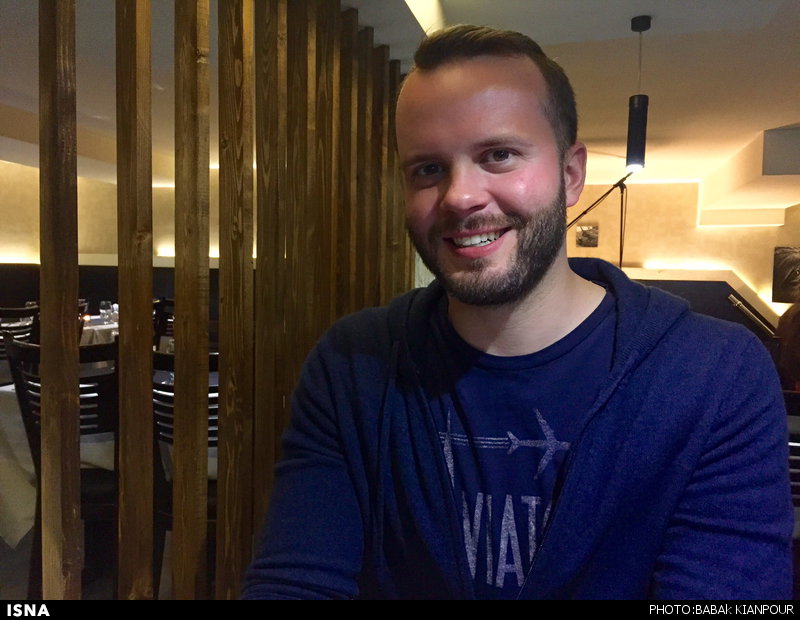
American Advanture-1He said, “My mother is very conservative, and has never been out of the US. Before coming to Iran, she was very worried and scared. Later, when I sent her messages from here, she was a bit calmer. I really hope the two countries’ relations improve, and that we see reliable political relations between them too.”

He added, “I will let others know about Iranian hospitality, especially the way they treat Americans, as much as I can. I will tell all the people who I know that Iran is not a scary country.”

Rob thinks that the image of Iran in the West is mainly due to negative media reports, commenting, “There are many Americans who still remember the American embassy hostage crisis in Tehran. This has stuck in many people’s minds. I, however, noticed that things have changed a lot in Iran. What I can do is to encourage others to travel to Iran.”

UN Says Open to Help Resolve Iran-US Assets Dispute

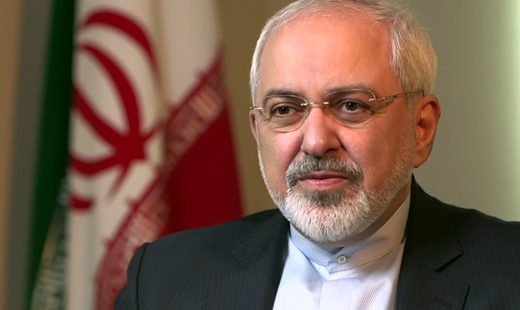
Foreign Minister Mohammad Javad Zarif wrote to UN Secretary General Ban Ki-moon on Thursday to ask him to intervene with his ‘good offices’ after the top US court ruled that $2 billion in frozen Iranian assets must be paid to American victims of attacks blamed on Tehran.

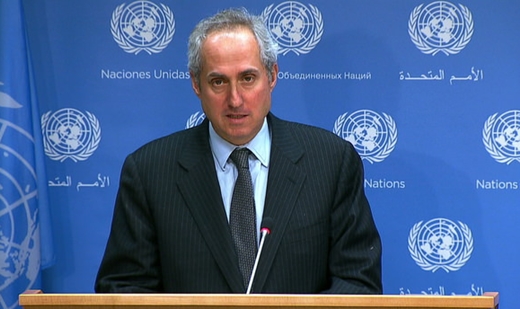
UN spokesman Stephane Dujarric confirmed receipt of Zarif’s letter.

‘We’ll obviously take a look at it,’ he told reporters.

‘As a matter of principle … the Secretary-General’s good offices are always available should both parties to whatever tensions or issue request it,’ Dujarric added.

State Department spokesman Mark Toner said the United States was aware of the letter.

‘To the extent that this letter was prompted by the recent Supreme Court decision in the Bank Markazi v. Peterson case, we believe the US laws and the application of those laws by the courts … comport with international law,’ he said.

Iran has become increasingly frustrated at what Tehran has said is the failure of the United States to keep its promises regarding sanctions relief agreed under an historic nuclear deal struck last year by Iran and six world powers.

In the letter, released by the Iranian UN mission, Zarif asked Ban to help secure the release of frozen Iranian assets in US banks and persuade Washington to stop interfering with Iran’s international commercial and financial transactions.

Last week Zarif met several times with US Secretary of State John Kerry in New York to discuss Iran’s difficulties in accessing international financial markets.

Kerry said Washington was not preventing anyone from doing legitimate business with Iran.

Tehran has called on the United States to do more to remove obstacles to the financial sector so that businesses feel comfortable investing in Iran without fear of penalties.

Zarif Sends Official Letter to UN Chief over US Asset Seizure: Full Text

Zarif

The letter was submitted to the UN Chief by Iran’s Ambassador to the United Nations Gholam Ali Khoshroo.

It came after the US Supreme Court ealrier in April upheld the Congress and President Barack Obama’s actions to hold Iran financially responsible for the 1983 bombing that killed 241 Marines at their barracks in the Lebanese capital of Beirut.

The ruling allows the families of the Marines and victims of other attacks that courts have linked to Iran to seize some $2 billion in assets held in New York’s Citibank, belonging to the Central Bank of Iran (CBI), which has been blocked under US sanctions.

What follows in the full text of the letter, released by Iran’s Foreign Ministry:


In the name of God, the Compassionate, the Merciful

Excellency,

In the past few years, the United States has persistently engaged in a dangerous practice of defying international law and order by allowing, in fact instigating, private litigants to bring civil action before US domestic courts against sovereign states, including the Islamic Republic of Iran. Trials have been organized in absentia; self-serving judgments have been obtained in default; and claims have been laid on the assets of the Iranian people. Knowing full well that no self-respecting nation, certainly not Iran, would ever subject itself to the jurisdiction of another states domestic courts, they have amassed billions of dollars in unlawful and factually flawed default judgements against the Islamic Republic of Iran and its organs.

The US Executive branch illegally freezes Iranian national assets; the US Legislative branch legislates to pave the ground for their illicit seizures; and the US Judicial branch issues rulings to confiscate Iranian assets without any base in law or fact.  The veracity and credibility of the US justice system when it comes to its treatment of Iran can be measured by the recent ruling of a New York District Court that ordered Iran to pay more than $10.5 billion in damages to the families of the victims of the 9/11 terrorist attacks, claiming against all evidence and common sense that Iran “provided active support to the attackers.” Such absurd allegation – not by a politician but regrettably by a so-called court of law—contradicts even public statements as well as findings – open or sealed of investigations by the US Government and US Congress. Ironically the same court absolved the real culprits of any responsibility and ruled against Iran, which was the victim of the same terrorist group and has consistently been in the forefront of international efforts against them and their Takfiri extremist siblings.
In sum, in blatant contravention of the most fundamental principles of international law – not to mention facts, the United States has devised a pseudo-legal scheme that subjects Iranian assets held in US and foreign banks, and even Iranian cultural property held on loan by American museums, to spurious rulings and unlawful collection proceedings.

Excellency,

The principle of state immunity is one of the cornerstones of the international legal order and a rule of customary international law, most recently codified in the United Nations Convention on Jurisdictional Immunities of States and Their Property. Its primacy has also been recognized by the community of nations, all legal systems and the International Court of Justice. With the sole possible permissible exception of “commercial activity”, claims against a sovereign state must be pursued either in accordance with mechanisms provided for in bilateral or multilateral agreements or through international courts or tribunals, as appropriate.

It is a matter of grave concern that the United States Congress, along with other branches of the US Government, seem to believe that they can easily defy and breach the fundamental principle of state immunity, by unilaterally waiving the immunity of states and even Central Banks in total contravention of the international obligations of the United States and under a groundless legal doctrine that the international community does not recognize.

In view of the detrimental effect of such practices on the integrity of the international public order, I wish to alert you and through you the UN general membership about the catastrophic implications of the US blatant disrespect for state immunity, which will cause systematic erosion of this fundamental principle.

The Islamic Republic of Iran rejects the unlawful decisions by US courts in this respect, including the ruling that authorized the confiscation of nearly 1.8 billion US Dollars of assets belonging to the Central Bank of Iran to the benefit of private litigants. The entire court proceedings which led to the recent ruling has been fake and phony and a travesty of justice in every sense of law, jurisdiction, merit, fact and process. This clearly constitutes an international wrongful act and entails international responsibility for the Government of the United States, for which it will be held accountable. The Islamic Republic of Iran holds the United States Government responsible for this outrageous robbery, disguised under a court order, and is determined to take every lawful measure to restore the stolen property and the interest accrued to it from the date it was blocked by the United States.

It is in fact the United States that must pay long overdue reparations to the Iranian people for its persistent hostile policies. Such wrongful US policies and actions against Iranian people, entailing international responsibility, are self-admitted and based on solid historical evidence and not absurd fabrications. They include overthrowing the democratically elected government of Iran in 1953, actively supporting and sponsoring the ensuing brutal dictatorship and aiding and abetting in its crimes – including tortures by US-created and US-trained SAVAK against the Iranian people from 1953 to 1979, actively providing intelligence, support and comfort to Saddam Hussein in his war of aggression against Iran from 1980 to 1988, including provision of AWACS reconnaissance to aid Saddam’s use of chemical weapons against Iranian soldiers and civilians – which amounts to a war crime , deliberate shooting of an Iranian civil airliner in 1988, killing all 290 passengers, and the plundering of Iranian assets held abroad. The Islamic Republic of Iran reserves the right to take appropriate lawful action, including necessary and proportionate countermeasures, to restore and protect the rights of the Iranian people against such persistent unlawful conduct by the United States.

Mr. Secretary-General,

There has seldom been so much at stake for the rule of law, the proper functioning and integrity of the international legal and financial systems, and the prevalence of dialogue and accommodation over coercion and confrontation.  In view of the detrimental effects of continued unlawful conduct by the United States, I wish to call on Your Excellency to lend your good offices in order to induce the US Government to adhere to its international obligations, put an end to the violation of the fundamental principle of state immunity, release all frozen Iranian assets in US banks and cease and desist forthwith from any interference with Iranian commercial and financial transactions outside the United States, in compliance with its general international obligations and its obligations under the JCPOA.

I will be grateful if this letter were circulated as a document of the General Assembly under agenda item entitled “Rule of law at the national and international levels” and of the Security Council.

Please accept, Excellency, the assurances of my highest consideration.

M. Javad Zarif

Minister of Foreign Affairs of the Islamic Republic of Iran


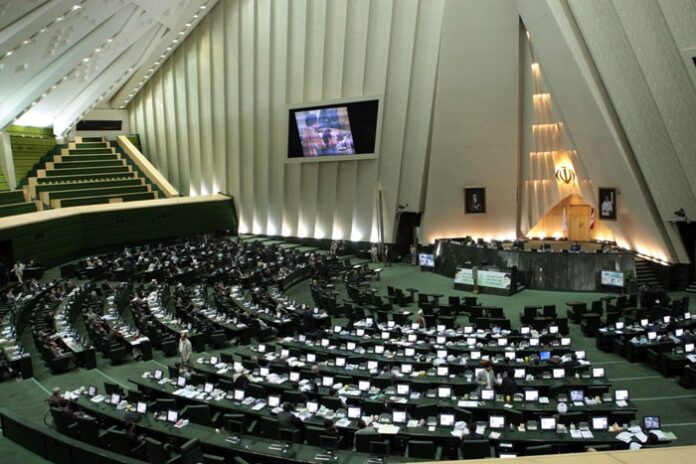
Iran’s New Parliament Completed with Run-Off Votes

The Friday votes were held in constituencies where candidates failed to earn enough votes in the February elections.

Twice as many as the remaining seats, namely 138 candidates – categorized as principlists, reformists and independent ones- were running for the parliament.

The official results have not been released by the Interior Ministry yet.

During the elections on February 26, more than 60 percent of some 55 million eligible voters had cast their ballots at around 53,000 polling stations across the country.

There are 290 seats in the Iranian parliament, elected by direct vote of people in nationwide election for four years.


Persian Gulf Day

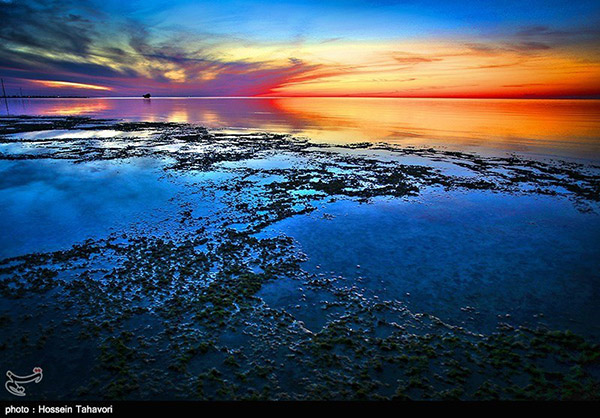
Iranian people hold nationwide celebrations every year to mark National Persian Gulf Day, the anniversary of the victory over Portuguese troops during a war in the Persian Gulf in 1622.