Thursday, December 25, 2025
Home Blog Page 450

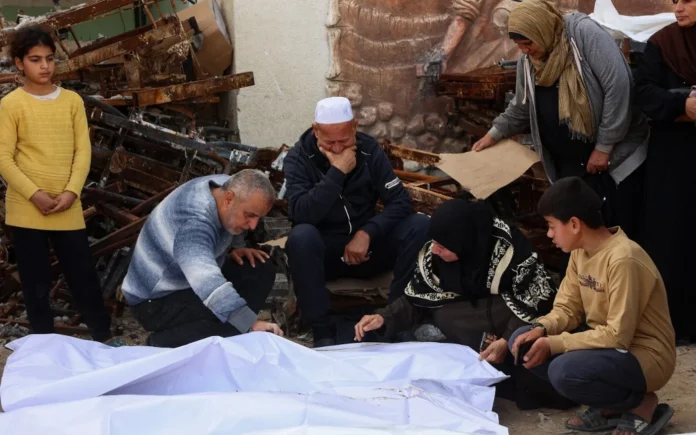
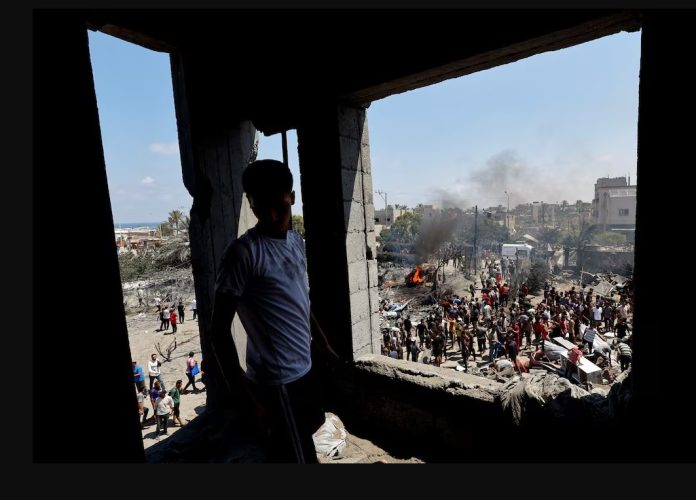
UN experts accuse Israel of genocidal acts and sexual violence during Gaza war

“Israeli authorities have destroyed in part the reproductive capacity of the Palestinians in Gaza as a group, including by imposing measures intended to prevent births, one of the categories of genocidal acts in the Rome Statute and the Genocide Convention,” said the UN Independent International Commission of Inquiry on the Occupied Palestinian Territory, including East Jerusalem, and Israel.

Those actions, in addition to causing a surge in maternity deaths due to restricted access to medical supplies, amounted to the crime against humanity of extermination, the commission added.

The report accused Israel’s security forces of using forced public stripping and sexual assault as part of their standard operating procedures to punish Palestinians since the beginning of the war.

The report came after the commission conducted public hearings in Geneva on Tuesday and Wednesday, hearing from victims and witnesses of sexual violence.

It concluded that Israel had targeted civilian women and girls directly, “acts that constitute the crime against humanity of murder and the war crime of wilful killing”.

The commission added that forced public stripping and nudity, sexual harassment including threats of rape, as well as sexual assault, comprise part of the Israeli forces’ “standard operating procedures” towards Palestinians.

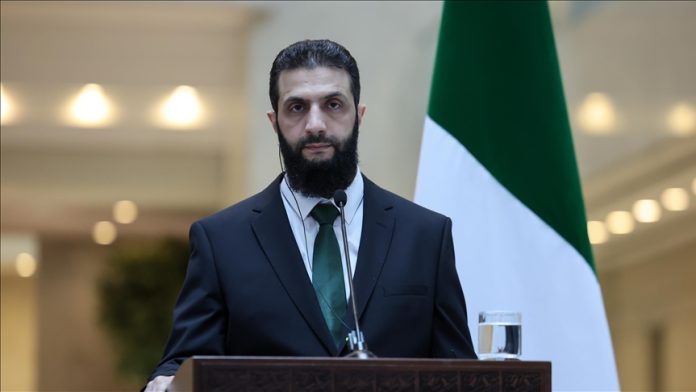
Syria’s interim President signs constitutional declaration for 5-year transitional period

An expert committee tasked with drafting the document presented it to Sharaa, outlining key provisions for the post-Bashar Assad era.

The declaration also mandates the dissolution of the existing Constitutional Court, branding it as a “remnant of the previous regime”.

In its place, the president is granted authority to appoint a new constitutional court operating under existing legal frameworks until a new judicial system is established.

The committee emphasized the judiciary’s independence and the crucial role of judges. It further stated that any decision regarding the president’s dismissal, removal, or limitation of powers would fall under the jurisdiction of the Legislature of Syria, the country’s parliament.

Envoy slams UNSC meeting as an ‘interference’ in Iran’s cooperation with IAEA

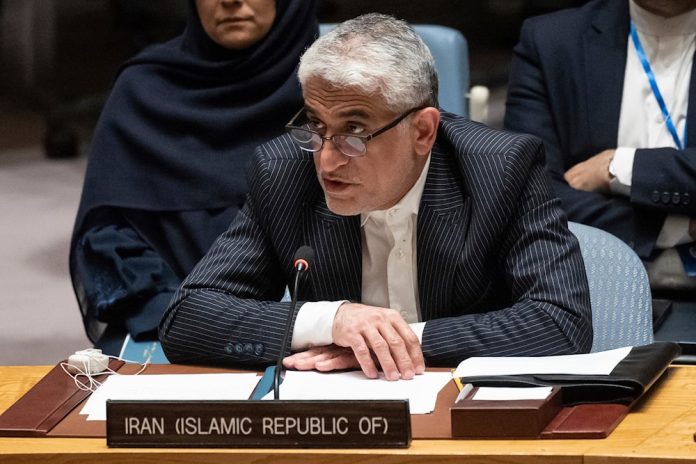
Amir Saeed Iravani

“We consider this meeting as an unwarranted interference in the ongoing, constructive engagement between Iran and the IAEA,” Iran’s ambassador to the United Nations, Sa’eed Iravani, said in a statement at a Security Council private meeting on Wednesday.

He said that the move was aimed at prolonging the “failed and unlawful policy of maximum pressure against Iran.” He warned that such actions risk undermining the credibility of the Council.

The Iranian envoy argued that the meeting misused the Security Council to push specific political agendas rather than engage in a legitimate discussion on nuclear non-proliferation.

“The issues raised for this meeting are purely technical and fall exclusively within the mandate of the IAEA,” Iravani said.

He further said that the same matters had already been discussed at last week’s IAEA Board of Governors meeting in Vienna. “There is no legitimate basis for Security Council involvement,” he added.

The following is the full text of the statement:

In the Name of God, the Most Compassionate, the Most Merciful

Thank you, Madam President,

We thank Mr. Khaled Khiari, Assistant Secretary-General, for his briefing.

At the outset, we strongly object to this provocative and unwarranted meeting. This is not a legitimate discussion on non-proliferation—it is a blatant political maneuver and a misuse of the Security Council to advance narrow agendas. Such actions set a dangerous precedent that undermines the Council’s credibility.

The issues raised for this meeting are purely technical and fall exclusively within the mandate of the IAEA. These matters were just discussed last week at the IAEA Board of Governors in Vienna. There is no legitimate basis for Security Council involvement.

We consider this meeting as an unwarranted interference in the ongoing, constructive engagement between Iran and the IAEA. It serves only one purpose: to continue the failed and unlawful policy of maximum pressure against Iran.

We appreciate those Council members who adhere to a principled and impartial approach, grounded in facts, rejecting any attempt to exploit this body for political purposes, opposes interference in the work of the IAEA, and upholds diplomacy as the only viable path forward.

Madam President,

We categorically reject the baseless claims made by the United States, the United Kingdom and France. These countries have conveniently ignored the reality that they themselves are responsible for the current situation. It was the United States that unilaterally withdrew from the Joint Comprehensive Plan of Action (JCPOA) in 2018, in direct violation of Security Council Resolution 2231. It was the United States that reimposed illegal sanctions, defying international law and punishing the Iranian people. And it was the United Kingdom, France and Germany, European parties to the JCPOA that, instead of upholding their obligations, chose to appease Washington by failing to implement their commitments.

These are the facts. And they cannot be ignored.

Madam President,

Let’s refresh our memories again; In May 2018, the United States not only abandoned a legally binding agreement endorsed by this Council, but also violated Article 25 of the UN Charter by refusing to implement Resolution 2231. It then embarked on a reckless campaign of coercion, pressuring other nations to violate the resolution as well. Even worse, certain European states, rather than resisting this unlawful pressure, have aided, and abetted it, first by indirectly enforcing U.S. sanctions and later by unilaterally extending restrictions that were legally set to expire in October 2023. The United Kingdom went even further, incorporating illegal EU sanctions into its own domestic law.

These actions are flagrant violations of international obligations and the principles of good faith diplomacy.

Iran, in contrast, exercised strategic patience for over a year after the U.S. withdrawal. We fully complied with our commitments under the JCPOA, including the Additional Protocol and Modified Code 3.1, while exploring all diplomatic avenues to resolve the crisis caused by Western unilateralism. Even after Washington’s withdrawal, Iran continued its cooperation with IAEA in good faith. Only when all diplomatic pathways were exhausted did we begin a phased, reversible response, fully in line with our rights under Paragraph 26 of the JCPOA.

Let me emphasize: Iran has not violated the JCPOA. It is those who abandoned their commitments, first and foremost the United States, who bear full responsibility for the current situation.

Yet today, we see an effort to repackage the same failed strategy of 2020, when the United States attempted to misuse this Council for its unilateral objectives. That attempt failed then, and it will fail again now. Repeating a failed approach will not yield a different result.

Madam President,

Iran’s nuclear activities are entirely peaceful. We have not breached the JCPOA. We have not violated the Non-Proliferation Treaty (NPT). We have not deviated from our Safeguards commitments. Those who claim otherwise are distorting reality to serve their own political narratives.

Let us be clear about the legal framework: The NPT imposes no limits on Iran’s level of uranium enrichment. This is an undisputed fact. The only restrictions that ever existed were within the JCPOA, an agreement that the United States deliberately sabotaged.

Even today, despite the suspension of certain JCPOA provisions, Iran’s nuclear program remains under continuous IAEA monitoring. In fact, by the agency’s own admission, Iran’s nuclear program is the most heavily inspected in the world. No other nation has subjected itself to such scrutiny. And yet, this Council is being dragged into a discussion that has no legal or technical basis.

Madam President,

It is particularly outrageous that the very country leading this charge, the United States, is the primary violator of Resolution 2231. Washington has openly declared, in its own official documents, that it seeks to weaponize the Security Council as part of its strategy to intensify economic warfare against Iran. This is a dangerous abuse of this body.

We call on all responsible members of the Council to reject this manipulation. The Security Council must not be exploited by those who openly defy its resolutions while demanding that others adhere to them. Resolution 2231 must be implemented as agreed, and it must expire on schedule, as mandated by the text.

Madam President,

Iran remains committed to its obligations under the NPT and the Comprehensive Safeguards Agreement. However, we firmly reject the politicization of technical issues. Certain states have sought to pressure the IAEA into taking politically motivated positions, this is unacceptable. The agency’s independence must be safeguarded against political coercion.

Let me be unequivocal: Iran’s nuclear program is peaceful, and it will remain so. We have no intention of changing our defensive doctrine. We categorically reject Weapons of Mass Destruction (WMDs), including nuclear weapons. These weapons are criminal, inhumane, and a real threat to global security.

However, our commitment to the peaceful use of nuclear energy is firm and unwavering. No country, no matter how powerful, can deprive Iran of its inalienable right to peaceful nuclear technology.

At the same time, Iran has always believed in negotiation and diplomacy as the only viable path to resolving concerns about sanctions and nuclear issues. We remain committed to this principle. But what is truly regrettable is the continued reliance on threats, coercion, and economic pressure to force Iran into submission.

As part of Iran’s commitment to diplomacy, Iran is engaged in negotiations with the three European countries. The fourth round of these talks was held in Geneva on 25 February. The parties exchanged views on nuclear issues and sanctions relief, reaffirming their commitment to finding a diplomatic solution. It was agreed that the talks would continue.

At the same time, Iran remains in constant consultation and dialogue with other key JCPOA members, namely Russia and China. A trilateral meeting of the deputy foreign ministers of Iran, Russia, and China is scheduled to take place in Beijing on March 14.

Let me be clear: Iran will not negotiate under pressure. We will not surrender to threats. We will not accept dictates. Any attempt to coerce Iran into an unjust agreement will fail. Diplomacy must be conducted on the basis of mutual respect, not extortion.

Madam President, Members of the Council,

The responsibility for the current situation lies squarely with those who violated the JCPOA and Resolution 2231. If there is to be any path forward, it must begin with accountability, accountability for those who abandoned their commitments, accountability for those who imposed illegal sanctions in violation of Resolution 2231, and accountability for those who have repeatedly undermined diplomacy.

Iran will continue to defend its rights. We will continue to stand firm against coercion. And we will continue to demand that this Council uphold the very principles it was created to protect.

Thank you.

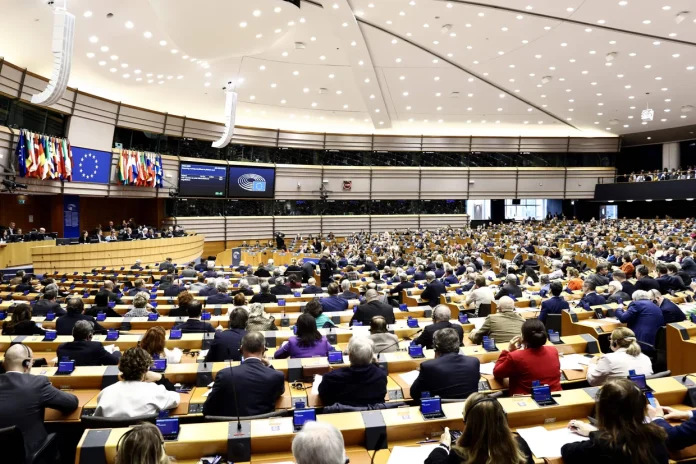
EU parliament accuses US of ‘blackmailing’ Ukrainian leadership into capitulating to Russia

The declaration comes a day after Ukraine’s Presidential Office announced it was ready to accept Washington’s proposal of a 30-day ceasefire, so long as Russia also complies with the terms. When Kyiv agreed to the plan, Washington resumed previously suspended shipments of military aid.

The joint statement “strongly deplores any attempts at blackmailing Ukraine’s leadership into surrender to the Russian aggressor for the sole purpose of announcing a so-called ‘peace deal.'”

Russian President Vladimir Putin is now being “rewarded” for Russia’s full-scale war against Ukraine, the resolution added.

The declaration accuses the U.S. of trying “to negotiate a ceasefire and peace agreement with Russia over the heads of Ukraine and other European states.” It also denounces the U.S. for being “counterproductive and dangerous.”

Support for Ukraine must be increased in the face of the foreign policy shift in Washington, the joint declaration said.

The lawmakers proposed to further “increase the effectiveness and impact of sanctions on Russia in order to definitively undermine Russia’s ability to continue waging its brutal war of aggression against Ukraine and threatening the security of other European countries.”

The resolution was passed by 440 lawmakers in the European Parliament, which consists of 720 seats. Signatories included members of many political parties, including Greens, Socialists & Democrats, Christian Democrats, and far-right conservatives.

The U.S. has infuriated many lawmakers in Europe by repeatedly saying it will exclude the continent from potential Ukraine peace negotiations. Top European officials have decried the White House for pandering to Russia.

Despite the condemnation from members of the European Parliament (MEPs), European Commission President Ursula von der Leyen has praised the outcome of Ukraine’s recent talks with the U.S. in Saudi Arabia and reaffirmed the EU’s support for the embattled nation.

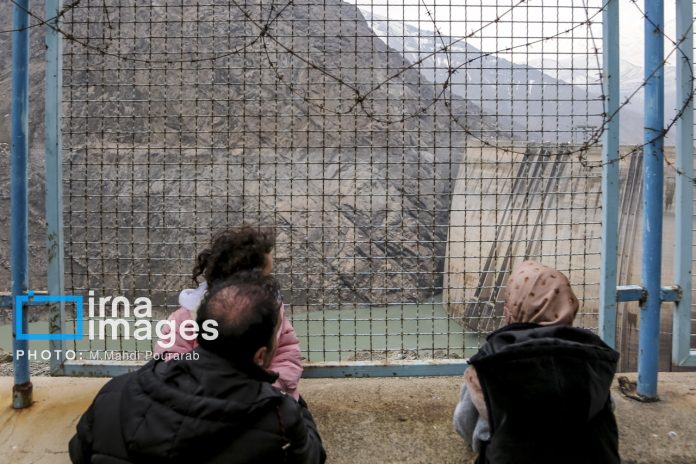
Tehran faces severe water crisis as reservoirs drop to 5% capacity

According to Mohsen Ardakani, Managing Director of Tehran Province Water and Wastewater Company, the Latyan, Lar, Mamloo, and Amir Kabir dams are nearly depleted, with only the Taleghan dam maintaining a higher water level.

Ardakani highlighted that rainfall in Tehran has decreased by 17% compared to last year and by 42% compared to the long-term average, exacerbating the crisis.

He attributed the worsening situation to climate change, which has led to rising temperatures and reduced precipitation. Tehran is now entering its fifth consecutive year of drought, with water reserves at their lowest levels since the construction of the dams.

To address the crisis, authorities have urged residents to reduce water consumption by at least 20%, aiming to lower daily usage from 250 liters to 200 liters per person.

Ardakani emphasized that the reduction would not negatively impact public health or comfort. While the standard water consumption rate for Tehran is set at 130 liters per person, many residents exceed this limit, with 60% using up to double the recommended amount.

Ardakani warned that continued drought conditions and overconsumption could force stricter measures.

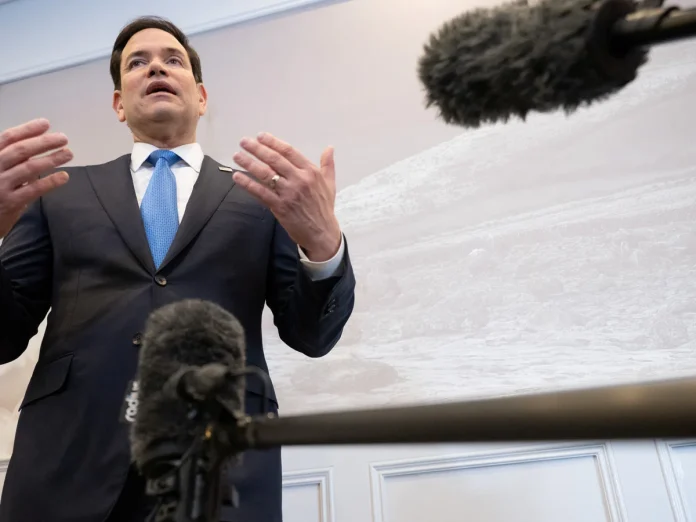
30-day ceasefire agreement may be struck within days: Rubio

The temporary ceasefire accord is contingent on whether Russia agrees to halt hostilities.

Ukraine agreed to the U.S. proposal for a 30-day truce during talks in Jeddah, after which Washington resumed military and intelligence support for Kyiv. The U.S. is expected to discuss the proposal with Russia in the coming days.

“Here’s what we’d like the world to look like in a few days: Neither side is shooting at each other — not rockets, not missiles, not bullets, nothing, not artillery” Rubio said in an airport in Ireland when asked about potential discussions regarding Ukraine ceding territory.

“The shooting stops, the fighting stops, and the talking starts,” he added.

Reuters reported, citing Russian sources, that Russia is unlikely to agree to a temporary truce in Ukraine proposed by the U.S., feeling it has the upper hand on the battlefield and viewing the ceasefire as a trap.

Kremlin spokesperson Dmitry Peskov gave an evasive answer when asked about the U.S. proposal, explaining that the topic must first be discussed with the American side.

Any ceasefire agreement would have to take Russia’s battlefield advances into account and provide “guarantees” to Moscow, sources told the news agency.

In the past, Russian President Vladimir Putin and other top officials have ruled out a temporary ceasefire that would freeze the conflict along the current front lines.

U.S. President Donald Trump has warned that Russia could face “devastating” financial consequences if it chooses to continue its all-out war against Ukraine.

“There are things you can do that wouldn’t be pleasant in a financial sense,” Trump stated, adding, “It would be very bad for Russia. I don’t want to do that, because I want to get peace.”

Russia continues to occupy roughly 20% of Ukraine’s territory and made steady advances in Donetsk Oblast in late 2024. While Russia’s advance in Ukraine’s east has reportedly stalled earlier this year, Moscow’s troops seemed to have made rapid gains in Kursk Oblast, the Russian border region where Ukraine has been fighting since August 2024.

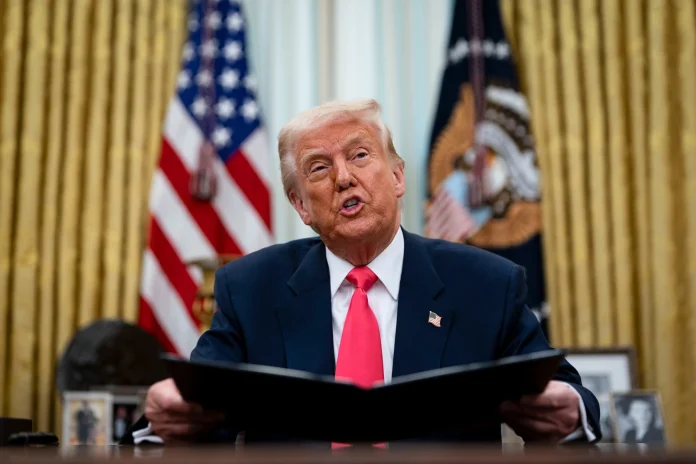
US officials heading to Russia for ceasefire negotiations: Trump

Donald Trump

“We have people going to Russia right now,” Trump said.

Speaking to journalists in the Oval Office, the U.S. president noted Washington has “some positive messages about a possible ceasefire.”

He added that a potential of the temporary truce is now up to Russia.

Kyiv agreed to a temporary ceasefire proposed by Washington during the talks in Jeddah, provided that Russia also did. The talks in Saudi Arabia also led to the U.S. restarting key military and intelligence support for Ukraine.

Kremlin spokesperson Dmitry Peskov gave an evasive answer when asked about the U.S. proposal, explaining that the topic must first be discussed with the American side.

Trump also warned that Russia could face “devastating” financial consequences if it chooses to continue its all-out war against Ukraine.

“There are things you can do that wouldn’t be pleasant in a financial sense,” he said, adding, “It would be very bad for Russia. I don’t want to do that, because I want to get peace.”

Shortly after his inauguration, Trump stated that the U.S. can impose tariffs and sanctions on Russia to force their hand in negotiations, adding “we can do it the easy way or the hard way.” Recently, however, Washington reportedly considered easing sanctions on Russian oil, a major source of funding for the war in Ukraine.

Earlier in a day, Reuters reported citing undisclosed Russian sources that Moscow is unlikely to agree to a ceasefire in Ukraine, feeling it has the upper hand on the battlefield and viewing the ceasefire as a trap.

In the past, Russian President Vladimir Putin and other top officials have ruled out a temporary ceasefire that would freeze the conflict along the current front lines.

President Volodymyr Zelensky said that Kyiv doesn’t trust Russia but wanted to show to Trump and European partners that Ukraine is serious about ending Russia’s full-scale war.

Iran proposes ‘new idea’ to resolve issues with IAEA: Foreign minister

IAEA

The proposal is currently under review, Araghchi revealed in an interview with the Iranian newspaper Iran.

He emphasized Iran’s commitment to constructive engagement, guided by principles of “dignity, wisdom, and expediency,” noting that indirect talks with European countries and cooperation with IAEA Director General Rafael Grossi are ongoing.

Regarding US sanctions, Araghchi stated that negotiating under maximum pressure would place Iran at a disadvantage. “We must prove that pressure is ineffective before engaging in equal negotiations,” he said.

“We have plans and initiatives, even for potential nuclear negotiations,” he added.

The foreign minister reiterated the importance of European mediation in reviving the 2015 nuclear deal (JCPOA), while maintaining consultations with Russia and China. However, he stressed that the US must lift sanctions before direct talks can resume.

Araghchi also mentioned the concept of “limiting enmity,” advocating for indirect dialogue to reduce tensions, such as through the Muscat channel.

Hamas welcomes Trump’s pullback from mass displacement plan of Gazans

Gaza War

The statement by the Hamas official came after Trump said on Wednesday that “nobody is expelling any Palestinians from Gaza” in response to a question during a meeting in the White House with Ireland’s Taoiseach Micheal Martin.

“If US President Trump’s statements represent a retreat from any idea of ​​displacing the people of the Gaza Strip, they are welcomed,” Qassem said in the statement.

“We call for this position to be reinforced by obligating the Israeli occupation to implement all the terms of the ceasefire agreements,” he added.

Trump sent shockwaves throughout the Middle East and beyond last month when he proposed a US takeover of Gaza and suggested that the war-torn territory’s Palestinian population be permanently displaced to live in neighbouring countries.

Trump’s apparent reversal came after Arab foreign ministers met in Qatar on Wednesday with the US’s Middle East envoy Steve Witkoff to discuss reconstruction for Gaza.

Foreign ministers from Qatar, Jordan, Egypt, Saudi Arabia, the United Arab Emirates and the secretary-general of the Palestine Liberation Organization were present at the meeting, according to a statement from Qatar’s Ministry of Foreign Affairs.

“The Arab foreign ministers discussed the Gaza reconstruction plan, which was approved at the Arab League Summit held in Cairo on March 4, 2025,” the ministry said.

“They also agreed with the US envoy to continue consultations and coordination on this plan as a basis for the reconstruction efforts in the sector,” it added.

On Saturday, the 57-member Organisation of Islamic Cooperation (OIC) formally adopted a plan for Gaza put forward by the Arab League at an emergency meeting in Saudi Arabia. The Egyptian-spearheaded initiative emerged as a proposal to rebuild the Gaza Strip under the future administration of the Palestinian Authority in response to Trump’s threat to take over Gaza and empty the territory of its residents.

A new round of talks on a ceasefire in Gaza also began in Qatar on Tuesday, with Witkoff dispatched to Doha for the mediations.

“The Arab ministers emphasised the importance of maintaining the ceasefire in Gaza and the occupied Palestinian territories, stressing the need for genuine efforts to achieve a just and comprehensive peace based on the two-state solution, ensuring the fulfilment of the Palestinian people’s aspirations for freedom and independence,” the Qatari Foreign Ministry statement read.

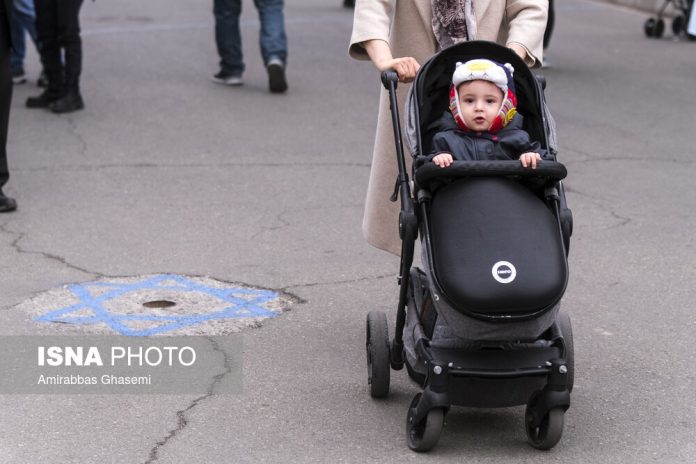
Iran’s population surpasses 86 million: Statistical Center data

Iran Population

The announcement was made based on data from the country’s Population Clock, which tracks real-time demographic changes.

The Population Clock, launched in 2009 on the Statistical Center’s website, provides continuous updates on population growth by factoring in birth rates, mortality, and migration.

The tool, first introduced by the United Nations, has since been adopted by other nations, including China, the US India, Australia, Canada, and New Zealand, to monitor their populations.

In Iran, the clock has been instrumental in offering real-time estimates since its inception.

The latest data indicates that the population crossed the 86 million mark in the final days of the Iranian calendar year 1403 (ending March 2025).

The milestone was achieved amid shrinking birth rates in the country and warnings by officials of the strategic consequences of the trend.