Friday, December 26, 2025
Home Blog Page 451

Iranian FM confirms letter from US president received

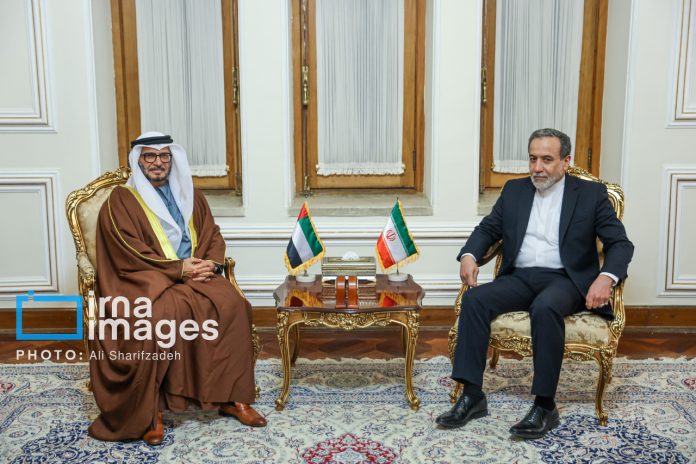
The letter was handed over during a meeting with Anwar Gargash, the diplomatic advisor to the president of the United Arab Emirates (UAE).

Araghchi stated, “This evening, I hosted Dr. Anwar Gargash, the diplomatic advisor to the UAE President. In addition to discussions on bilateral relations and regional issues, I also received a letter from the US president.”
The details of the letter and its contents remain undisclosed.

The situation has sparked speculation about the purpose and timing of the letter, as well as its potential impact on Iran-US relations.

No one expelling anyone from Gaza: Trump

Gaza War

He made the remarks before his meeting with Irish Prime Minister Micheal Martin at the White House on Wednesday.

In his statement alongside Martin, Trump said, “No one is expelling anyone from Gaza.”

During his meeting with Martin, he even called the US Senate’s minority leader Chuck Schumer “a Palestinian.”

Trump stated, “Schumer is a Palestinian as far as I’m concerned. He’s become a Palestinian. He used to be Jewish. He’s not Jewish anymore. He’s a Palestinian.”

He made a similar statement regarding Schumer in a post shared on his social media platform Truth Social in February.

In his remarks, Martin said aid needed to be increased into Gaza and called for a ceasefire as well as the release of hostages held by Hamas since the October 7, 2023 attacks on the occupied territories.

US President’s remarks on Gaza come after his statement in February, where he said that Washington will take over the Gaza Strip, dismantle dangerous weapons, get rid of the destroyed buildings and work for the economic development of the area.

While addressing a joint press conference with Israeli Prime Minister Benjamin Netanyahu, Trump stated, “The US will take over the Gaza Strip and we will do a job with it. We’ll own it and be responsible for dismantling all of the dangerous unexploded bombs and other weapons on the site and getting rid of the destroyed buildings. Create an economic development that will supply unlimited numbers of jobs and housing for the people of the area.”

Meanwhile, Arab foreign ministers on Wednesday agreed to continue talks and coordinate with Trump’s special envoy Steve Witkoff on Gaza reconstruction plan proposed by Egypt during a meeting in Doha, according to a joint statement. The joint statement added that consultations will continue on the plan with Witkoff, as a “basis for the reconstruction efforts” in the Gaza Strip.

Over 800 extrajudicial killings documented in Syria violence: Report

According to the Syrian Network for Human Rights (SNHR), these killings were carried out by all sides involved in the clashes, including forces loyal to former President Bashar al-Assad, government forces, groups loosely affiliated with the Syrian government and individual gunmen.

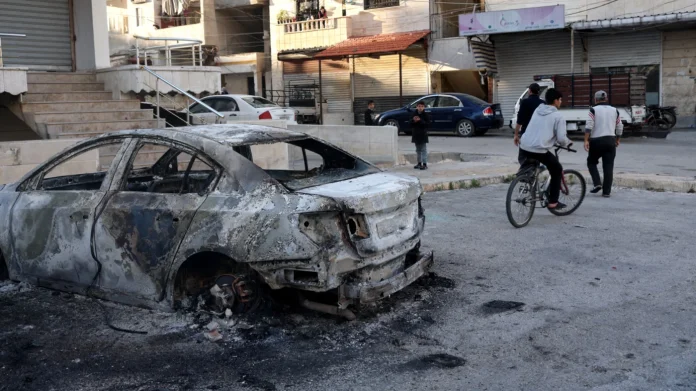
In what has been the deadliest incident since Assad’s fall in early December, SNHR said Assad loyalists killed 172 members of the Syrian government’s security, police, and military forces, along with 211 civilians.

Armed forces participating in the military operations, which the monitor added include “factions and unregulated groups nominally affiliated with the Ministry of Defence”, killed at least 420 civilians and disarmed fighters, including 39 children, 49 women and 27 medical personnel.

SNHR clarified that it is not counting the deaths of non-state armed group members in clashes, as it considers these fatalities to be legal.

The report found that the Assad loyalist groups, who initiated the violence on Thursday, had carefully planned their attack and received training from military personnel who had served in the Assad government’s forces prior to its downfall.

“The attacking groups demonstrated a high level of military training and expertise, which was evident in their use of advanced tactics such as road blockades, targeting supply lines, and isolating battlefronts,” the report read.

These groups quickly overwhelmed the Syrian government’s weak positions in the area and attacked government and civilian areas and properties.

SNHR noted the targeting of cars with Idlib registration plates, as Idlib was the main opposition-held territory prior to the fall of Assad.

As military confrontations escalated on Friday, the monitor said that “the negative role of undisciplined armed groups supporting the authorities became apparent, as these forces were clearly not formally under the command of the ministries of defence and interior”.

“This resulted in a lack of control over these groups’ actions, leading to their perpetrating violations against civilians and causing widespread damage to public and private property,” the report added.

Civilians belonging to the Alawite sect, to which Assad and most of his loyalists belong, were particularly targeted in some of the attacks.

When initially trying to retake areas captured by Assad loyalist remnants, Syrian government forces used artillery and rocket bombardments, resulting in additional civilian casualties.

Executions and field killings were also documented, with entire families reportedly killed at times.

“Instances of direct clashes were also recorded between armed groups supporting the government’s security forces on one side and elements of the Internal Security Forces who attempted to prevent indiscriminate killings on the other,” SNHR said, adding, “In some cases, these clashes escalated into armed confrontations between the two sides.”

The report concluded that “serious violations” took place over the four-day insurgency and held “all parties” responsible for the bloodshed.

It raised the alarm over increasing sectarianism in Syria and called for justice and accountability.

In an interview with Reuters, Syrian Interim President Ahmed al-Sharaa said that his government had begun implementing measures to reassure Alawite citizens and bring them back home following the violence.

“I sent many committees to reassure people and bring them back,” he continued, adding, “A large number of them returned. They were afraid of something. But when we removed the factions and some of those [fighters] who entered randomly, we sent many committees to bring them back to the country. God willing, everyone will return.”

Canada announces plan to ease sanctions on Syria

Canadian Foreign Minister Melanie Joly on Wednesday said Ottawa would provide 84 million Canadian dollars ($59m) in new funding for humanitarian assistance. It would also allow funds to be sent through certain banks, such as the Central Bank of Syria, she added.

Meanwhile, Canada’s ambassador to Lebanon – Stefanie McCollum – has been nominated to serve in a parallel role as the non-resident ambassador to Syria.

The Canadian government issued a statement announcing its “commitment to deliver much-needed humanitarian assistance to the Syrian people and to support a transition to an inclusive and peaceful future”.

It added that “these sanctions had been used as a tool against the Assad regime and easing them will help to enable the stable and sustainable delivery of aid, support local redevelopment efforts, and contribute to a swift recovery for Syria”.

Many Western nations, including Canada, placed a range of sanctions on Syria under President Bashar al-Assad, who was toppled late last year by rebel forces led by the Hayat Tahrir al-Sham (HTS).

“Canada is also taking steps to ease existing sanctions for a period of 6 months, to support democratisation, stabilisation, and the delivery of aid to and within Syria during this period of transition,” the Canadian government announced in its statement.

While the Syrian interim government has promised to protect its religious and ethnic minorities, security forces have reportedly killed hundreds of Alawite civilians in recent days.

According to the United Kingdom-based Syrian Observatory for Human Rights, more than 1,500 people have been killed in outbreaks of violence in Syria this month, including at least 1,068 civilians.

“We call on all parties to prioritise the work toward de-escalation and national reconciliation and prevent the country from descending into fragmentation and violence,” Joly stated.

Elsewhere, Canada’s special envoy for Syria, Omar Alghabra, said: “Canada can … help prevent Syria from falling into chaos and instability.”

Ayatollah Khamenei: Trump’s call for negotiations ‘deception’

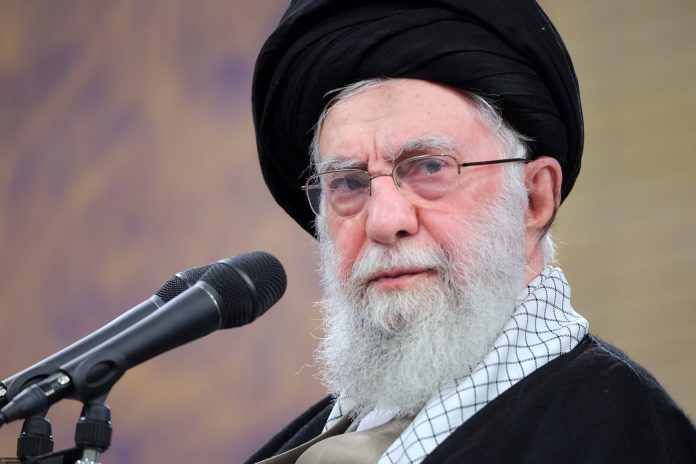
“We sat down for years and negotiated. This same person threw off the table and tore apart the concluded, finalized, and signed negotiations,” Ayatollah Khamenei said during an address to a gathering of students in Tehran on Wednesday.

“When we know he doesn’t honor [agreements], what is the point of negotiating?” the Leader asked.

“Therefore, calls for negotiation and talks of negotiation are meant to deceive the global public opinion.”

The Leader added the Trump administration does not intend to remove the sanctions, and that negotiations will only worsen the pressure campaign as Washington will raise new demands.

“If the purpose of negotiations is to lift the sanctions, negotiating with this US administration will not remove the sanctions. It will make the sanctions even tighter and increase the pressure.”

Responding to Western allegations that Tehran seeks nuclear weapons, the Leader reiterated that Iran does not want to build nuclear arms, adding that it could have done so by now if it had so chosen.

“It is said that ‘We won’t let Iran obtain nuclear weapons.’ Had we wanted to build nuclear weapons, America could not have stopped us. The fact that we don’t have nuclear weapons and are not pursuing them is because we ourselves don’t want them for specific reasons.”

Referring to US threats of military action against Iran, Ayatollah Khamenei warned that Iran is prepared to deliver a decisive response. The United States, he said, would suffer more in such a confrontation.

“In my view, this threat is irrational because war or military aggression is not a one-sided affair. Iran has the capability to retaliate, and it will certainly deliver a counterstrike if necessary,” he said.

“I even believe that if the Americans or their agents make a wrong move, they will suffer more damage than anyone else.”

On the sanctions, the Leader said such measures are losing their effectiveness gradually as Iran has found ways to neutralize them.

“Over time, when sanctions persist globally, they gradually lose their impact. Even they (US officials) themselves admit this. They acknowledge that a sanctioned country can gradually find ways to neutralize sanctions and render them ineffective. We have discovered many such ways and have neutralized sanctions in many areas,” the Leader added.

However, Ayatollah Khamenei stated that most of Iran’s economic challenges stem from internal negligence and mismanagement rather than external sanctions.

Ayatollah Khamenei also addressed the martyrdom of prominent resistance leaders in Lebanon, Palestine, and Iran over the past year, including Hezbollah leader Seyyed Hassan Nasrallah.

While acknowledging the losses felt by the Resistance Front, the Leader emphasized that these setbacks do not signify weakness or decline.

“Yes, these brothers were incredibly valuable individuals whose absence is undoubtedly a loss for us, there’s no doubt about that,” Ayatollah Khamenei stated.

“But today, despite their absence, we are stronger in some areas compared to last year on this very day. In other areas, we are at least as strong as before, if not stronger.”

He added that the loss of prominent figures does not mean retreat or weakness if two key factors remain intact: Having ideals and striving toward those ideals.

“If these two factors exist within a nation, then while the absence of such individuals may be a loss, it won’t disrupt the overall movement forward,” Ayatollah Khamenei said.

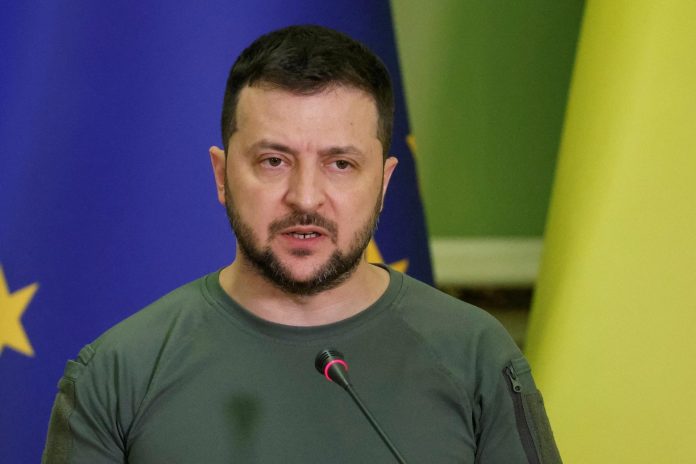
Ukraine doesn’t trust Russia but wants to show readiness for peace: Zelensky

Volodymyr Zelensky

While Ukraine initially proposed a partial ceasefire that would extend only to aerial and naval operations, U.S. delegates proposed a full truce during talks with Ukrainian officials in Jeddah on Tuesday.

After receiving the proposal, Zelensky stated Ukraine was “ready for a 30-day ceasefire format offered by the U.S. side.”

“I have repeatedly stressed that none of us trust Russia… but we will not play with narratives that we want the war to continue,” Zelensky said at a press conference.

“I am very serious, and it is important for me to end the war. I want the U.S. president to see this; so that Europe and everybody unites to push Russia toward ending the war.”

After a heated exchange between Trump and Zelensky in the White House on Feb. 28, the Trump administration accused Ukraine of not being ready for peace and froze military and intelligence assistance. The pause was lifted after Kyiv agreed to the ceasefire deal.

The Ukrainian president also noted that the ceasefire would be only the first step toward a full peace. After the war ends, martial law will be lifted, and elections will be held, he added.

The Trump administration has been pressuring Ukraine to hold elections even before a full peace agreement, even though the Ukrainian Constitution prohibits this under martial law.

According to Zelensky, support from Kyiv’s international partners will be required for “technical monitoring” of a full ceasefire. He also raised the question of whether Moscow is open to the agreement.

The Kremlin has not voiced an official position on the proposal until it can discuss it with Washington. U.S. Secretary of State Marco Rubio said discussions with Russia would be held on Wednesday.

Reuters reported earlier the same day that, according to undisclosed Russian officials, Russia is unlikely to agree to the proposal unless it takes into account Moscow’s battlefield advances and other demands.

Russia discussed Iran nuclear agreement with US, maintains contact with Europeans: Moscow

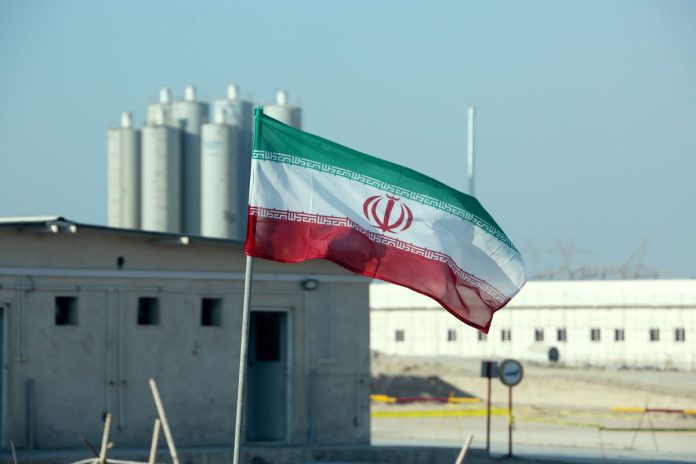
Iran nuclear programe

The minister was asked if Russia and the United States are currently discussing Iran.

“We discussed the situation in the Persian Gulf. We discussed the joint comprehensive action program on the Iran nuclear issue. We are in favor of restoring the original program from which the Americans dropped during the first Trump government. There are some contacts on the European side,” he shared.

Russia “would be in favor of resuming the format which developed the original deal endorsed by the Security Council (which is France, Germany, UK, US, Russia, China) and Iran,” Lavrov explained.

“We’ll see how it goes,” he added.

The five permanent members of the UN Security Council and Germany struck a nuclear deal with Iran in 2015 to address the crisis over its nuclear program. Donald Trump who held his first tenure as the US president withdrew from the agreement in 2018.

Iran and three European countries have been holding talks on and off since 2021, three years after the United States left the 2015 nuclear deal, formally known as the Joint Comprehensive Plan of Action (JCPOA), and reinstated harsh sanctions against Iran.

The trio failed to live up to their promise of bringing Washington back to the agreement.

Tehran started to scale down its commitments under the JCPOA in a series of pre-announced and clear steps after witnessing the other parties’ failure to secure its interests under the agreement.

China, Russia, Iran to hold nuclear negotiations in Beijing on Friday

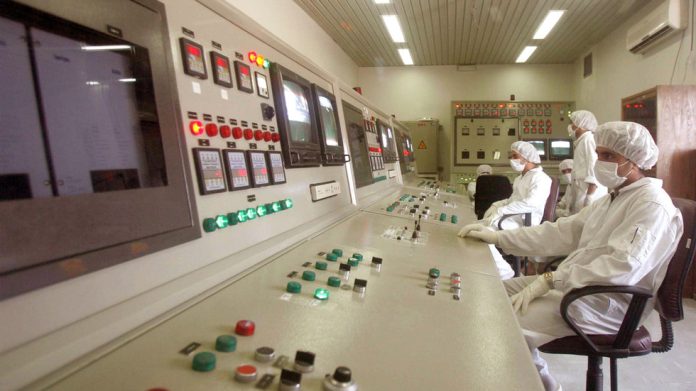
Iran nuclear program

China’s Vice Foreign Minister Ma Zhaoxu will chair the meeting, Mao Ning, a spokesperson of its foreign ministry, told a regular press conference on Wednesday.

The meeting will follow a closed-door gathering of the United Nations Security Council in New York the same day regarding Iran’s expansion of its stocks of uranium.

Tehran has long denied wanting to develop a nuclear weapon. However, the U.N. atomic watchdog IAEA has warned it is “dramatically” accelerating enrichment of uranium to up to 60% purity, close to the weapons-grade level of roughly 90%.

Iran and three European countries have been holding talks on and off since 2021, three years after the United States left the 2015 nuclear deal, formally known as the Joint Comprehensive Plan of Action (JCPOA), and reinstated harsh sanctions against Iran.

The trio failed to live up to their promise of bringing Washington back to the agreement.

Tehran started to scale down its commitments under the JCPOA in a series of pre-announced and clear steps after witnessing the other parties’ failure to secure its interests under the agreement.

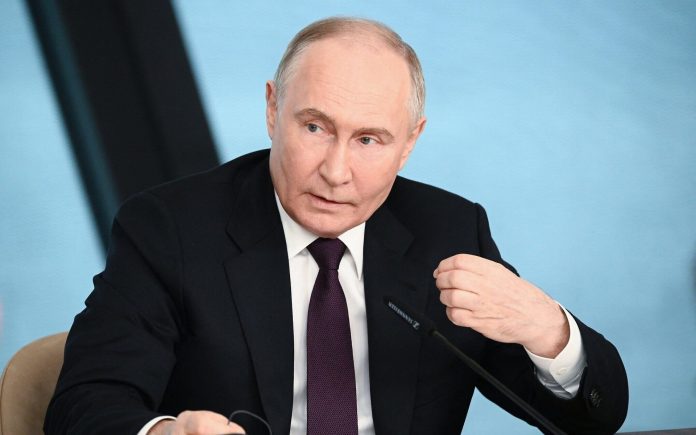
Russia unlikely to accept 30-day ceasefire in Ukraine: Reuters

Vladimir Putin

Any ceasefire agreement would have to take Russia’s battlefield advances into account and provide “guarantees” to Moscow, sources told the news agency.

Ukraine agreed to the U.S.’s proposal for a 30-day truce during talks in Jeddah on Tuesday, after which Washington resumed military and intelligence support for Kyiv. The U.S. is expected to discuss the proposal with Russia in the coming days.

In the past, Russian President Vladimir Putin and other top officials have ruled out a temporary ceasefire that would freeze the conflict along the current front lines.

Kremlin spokesperson Dmitry Peskov gave an evasive answer when asked about the U.S. proposal, explaining that the topic must first be discussed with the American side.

“Look, you are getting a little ahead of yourselves, we don’t want to do that,” Peskov told journalists, according to the pro-state outlet Kommersant.

Russia continues to occupy roughly 20% of Ukraine’s territory and made steady advances in Donetsk Oblast in late 2024. While Russia’s advance in Ukraine’s east has reportedly stalled earlier this year, Moscow’s troops seemed to have made rapid gains in Kursk Oblast, the Russian border region where Ukraine has been fighting since August 2024.

One source told Reuters that a ceasefire could weaken Russia’s position, as the West could pin the blame on Moscow should it fail to end the war.

Russian nationalist voices and pro-war bloggers have already denounced the ceasefire proposal. Konstantin Kosachev, chairman of the international committee in the Russian Senate, said that any deal should be hashed out on Moscow’s terms.

U.S. President Donald Trump has stated that President Volodymyr Zelensky is welcome to return to the White House following talks in Saudi Arabia.

Trump reiterated that Ukraine had accepted a full 30-day ceasefire proposal during negotiations in Jeddah and expressed hope that “Russia will agree to it.”

“We’re going to meet with them (Russia) later on today and tomorrow, and hopefully, we’ll be able to (work) out a deal. I think the ceasefire is very important,” Trump added.

When asked if Zelensky would be invited back to the White House, the U.S. president responded, “Sure, absolutely.”

U.S. Secretary of State Marco Rubio has also confirmed that Ukraine-U.S. talks in Saudi Arabia on March 11 included discussions about potential “territorial concessions” as part of a negotiated settlement with Russia.

“Yeah, we’ve had conversations,” Rubio said in an airport in Ireland when asked about potential discussions regarding Ukraine ceding territory.

The Trump administration has repeatedly said that both Kyiv and Moscow will have to make compromises for a peace deal, calling Ukraine’s goal of restoring its pre-2014 borders “unrealistic.”

Russian forces currently occupy roughly 20% of Ukraine, from where reports of systematic repression, torture, and forced deportations emerge.

Rubio also added that the Jeddah talks covered “what a negotiation process would look like” and reiterated, “There is no military solution to this conflict.”

The official acknowledged that Ukraine requires security assurances to deter possible future Russian aggression and emphasized that “Europeans will need to be involved in this regard.”

US frim Maxar restores Ukraine’s access to high-resolution satellite imagery: Report

Russia Ukraine War

Ukraine has relied on such imagery for defense and strategic planning, including tracking Russian troop movements, assessing battlefield conditions, and monitoring damage to Russian infrastructure.

According to Militarnyi’s sources, the program’s resumption means Ukraine can again access critical satellite intelligence for defense operations.

The move follows U.S.-Ukraine talks in Jeddah, Saudi Arabia, where Washington agreed to restart key military and intelligence support for Ukraine. Militarnyi had reported that Maxar had restricted Ukraine’s access to its satellite imagery, citing unnamed users.

The company later confirmed the suspension in a statement to the Kyiv Independent, explaining that the restrictions applied specifically to imagery provided through U.S. government programs.

CIA Director John Ratcliffe had stated that the U.S. had halted intelligence sharing with Ukraine in a step seen as pressure tactics to push Kyiv toward peace negotiations with Russia.

On Tuesday, Deputy Head of the Presidential Office Pavlo Palisa said the United States has resumed security assistance to Ukraine following high-level talks in Saudi Arabia.

“I have confirmation that security assistance from the U.S. has been resumed. The agreements are being implemented. The fight continues!” Palisa wrote on Facebook.

As one of the key outcomes of the talks, Kyiv confirmed its readiness to accept Washington’s proposal for an immediate, interim 30-day ceasefire, provided that Russia agrees to the terms and implements them simultaneously.

Ukraine’s Presidential Office has also announced the United States will immediately lift the pause on intelligence sharing and resume security assistance to Ukraine.