Thursday, December 25, 2025
Home Blog Page 4473

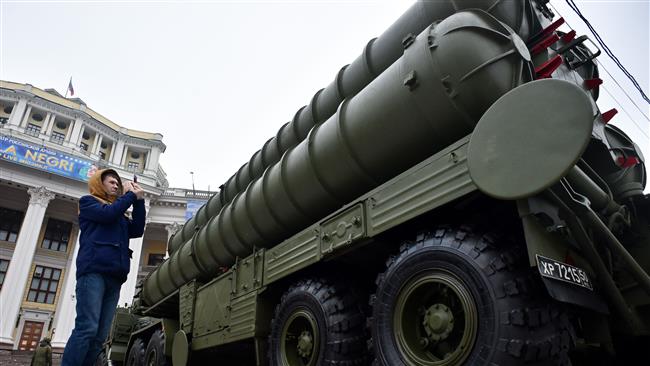
Russia to ship first S-300 system to Iran in August-September

“I think we will deliver the S-300 by the end of the year…The first delivery will be in September or August,” Sergei Chemezov, the head of Russia’s industrial conglomerate Rostec said in an interview with The Wall Street Journal on Friday.

Last month, Iran’s Defense Minister Brigadier General Hossein Dehqan said the country would take delivery of the first batch of S-300 in the first quarter of 2016.

Russia committed to delivering the systems to Iran under an over USD-800-million deal in 2007. Moscow, however, refused to deliver the systems to Tehran in 2010 under the pretext that the agreement was covered by the fourth round of the United Nations Security Council sanctions against Iran over its nuclear program.

Following Moscow’s refusal to deliver the systems, Tehran filed a complaint against the relevant Russian arms firm with the International Court of Arbitration in Geneva.

In April 2015, Russian President Vladimir Putin signed a presidential decree, paving the way for the long-overdue delivery of the missile defense system to Iran.

The decision came after Iran and the P5+1 group of countries – the United States, France, Britain, China and Russia plus Germany – reached a mutual understanding on Tehran’s nuclear program in the Swiss city of Lausanne on April 2, 2015.

Tehran also developed its domestically-built Bavar-373 air defense system, which was successfully test-fired in August 2014. The Bavar-373 long-range missile defense system, which is similar to the Russian S-300, has been manufactured by Iranian defense experts, and is capable of hitting air targets at a high altitude.

In recent years, Iran has made great achievements in its defense sector and attained self-sufficiency in producing essential military equipment and systems.
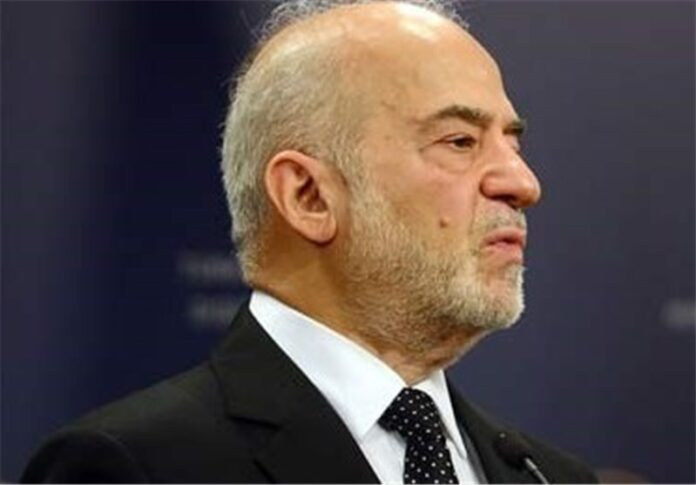
Iraqi FM’s Hezbollah Remarks Anger Saudi Delegation

“Whoever accuses Popular Resistance for the Liberation of Iraq and Hezbollah of terrorism is the one who supports and adopts terrorism,” Jaafari said in his speech, a source in the foreign ministry told the Iraqi news agency.

Jaafari expressed solidarity with Hezbollah in his speech, underlining that the “popular resistance and Hezbollah safeguarded the dignity of Arabs,” Lebanon’s Daily Star reported.

The Iraqi minister rejected attempts to distort the image of Hezbollah, saying that the party’s Secretary-General Sayyed Hassan Nasrallah “is an Arab hero who defended values and principles.”

Tensions have intensified between Riyadh and Hezbollah since March 2015 over the war in Yemen, where the two groups support opposite sides.

The Persian Gulf Cooperation Council (PGCC) and the Arab Interior Ministers separately designated Hezbollah as a “terrorist organization” last week. The development came amid strained relations between the party and Saudi Arabia, which is a leading PGCC country.

Last month, the Persian Gulf littoral state suspended $4 billion in aid to the Lebanese Army and police in response to stances taken by Lebanese officials.


Extremism cannot be confined to a single locality: Iran FM

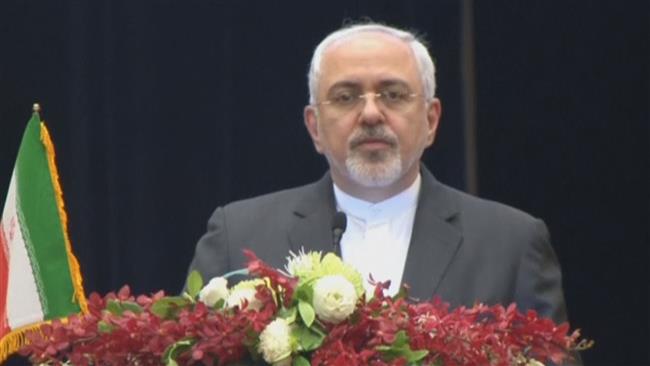
Speaking at the Thai Foreign Ministry in Bangkok on Friday, Zarif described how the world today has transformed into a globalized environment where nothing can be confined to a particular location.

He explained how news and emotions, among other things, can quickly reach widespread audiences throughout the world, defying borders of time and space.

“One thing that we have failed to recognize,” he said, however, “is [that] our security is globalized, that you cannot live in a secure world where others are suffering from insecurity. There can no longer be islands of security.”

“And if anybody had any doubts, September 11 [2001] proved that even the greatest military power on the face of the earth could not live securely when others, perverted as they may be, found the logic of force, the logic of power not serving their purpose, and reversed that logic in order to create terror.”

“All of us need to recognize that in our world, today, you cannot gain at the expense of others, you cannot be secure when others are insecure, you cannot be prosperous when others are in poverty,” the Iranian foreign minister said.

Zarif drew attention to the policy of some countries in believing that they can have violence in the Middle East burn the region out, and said the consequence of such a policy has only been the spread of terror.

“There is nothing that can be localized, look at our region,” he said, “Some unfortunately believe that extremism, radicalism could be contained in Iraq and Syria, that radicals, extremists and the Syrian soldiers could kill each other off. Now we see the consequences, we see that extremism cannot be contained in one locality, one country, one region, one continent.”

“Once you have extremism in one corner of the world, extremist forces all over the world will be energized and will be motivated to breed insecurity and to provide breeding ground for further extremism,” Zarif said.

He said statesmen have to realize the “simple fact” that phenomena have wide-reaching impacts beyond the region where they exist.

“We tried to do it with the nuclear issue,” he said, in reference to the Iranian administration’s attempts to resolve a long-running nuclear dispute over its nuclear program.

He said the United States had defined the nuclear dispute “in a zero-sum way.”

“The United States, during former President [George W.] Bush, had defined the nuclear issue, the Iranian nuclear program, as a program that needed to be stopped,” he said.

“Our objective was ‘this is our right, Iran has a right as an NPT member to develop nuclear technology for peaceful purposes and no one can question us,’” Zarif said.

“And that’s how we managed to hurt each other,” the top Iranian diplomat said.

He referred to how the negotiations took a shift toward the resolution of the dispute and said Iran started to redefine the problem by working on a manner of resolving the issue that everyone could consider their own.

“Therefore, a simple equation, which we can apply everywhere: zero-sum games do not exist in a globalized world, we cannot have a zero-sum game, every zero-sum game produces negative-sum results. We all end up losers,” he emphasized.

The Iranian foreign minister is in Thailand on a two-day visit to participate in the 14th Asia Cooperation Dialogue (ACD) Ministerial Meeting.

In his stay, Zarif has met with senior Thai officials, including Prime Minister Prayut Chan-o-cha and Foreign Minister Don Pramudwinai.

British Airways to resume flights to Iran

The agreement has been announced by Iran’s Civil Aviation Organization (CAO) which said the flights by British Airways to Iran will resume from 14 July 2016.

The Organization has added that based on the agreement a total of 21 passenger flights will be made from Britain to Iran per week.

It also said that there will be no restrictions on the number of cargo flights by British Airways to Iran.

British Airways had in January voiced interest in reinstating its direct flights to Iran.

“We are very interested in flying to Tehran and we are hopeful that it will form part of BA’s network in the very near future,” The Telegraph has quoted Willie Welsh, the CEO of British Airways, as saying. “We are actively looking at it as a destination,” Walsh had emphasized.

This came following other indications that there is already a growing interest by British tourists to travel to Iran.

Several other key international airlines have also expressed interest in resuming flights to Iran.

Air France-KLM said in December that it will resume direct flights to Iran after a seven-year gap. It said it plans to launch three weekly flights between Paris and Tehran from April 2016.

“Air France is showing its ambition to develop itself in a country with dynamic growth and for which the European Union is Iran’s fourth economic partner,” the company announced in a statement.

German airliner Lufthansa and its subsidiary Austrian Airlines have already said they planned to launch new flights to Iran.

Leader Lauds Security of Iran’s Elections despite Regional Insecurity

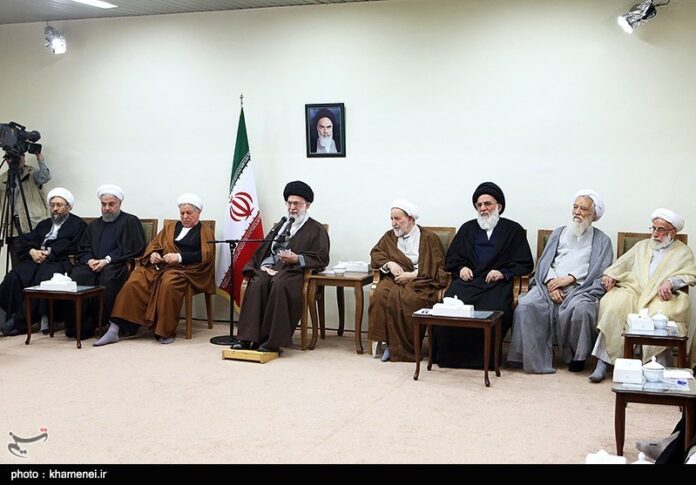
“While life in the countries around us has been associated with insecurity and terrorist incidents, the elections were held with such glory and massive participation of people without any bitter incident,” the Leader said Thursday in a meeting with the chairman and members of the Assembly of Experts in Tehran.

Ayatollah Khamenei added that the security of the polls was such that people in Tehran were flocking to polling stations to cast their ballots from 8 a.m. to midnight without facing any problems.

The Leader also expressed his gratitude to the efforts made by the Iranian security forces and the interior and intelligence ministries to ensure the safety of the votes.

Elsewhere in his remarks, Ayatollah Khamenei lauded the “healthy” polls, saying that despite the enemies’ propaganda campaign and claims by some inside the country, all elections held by the Islamic Establishment have been healthy and there has never been an organized move to influence the outcome of the elections.

The Leader further referred to the 62-percent turnout in the polls as “very meaningful and significant”, stressing that with such massive presence at the polling stations, the Iranian people practically demonstrated their confidence in the Islamic Establishment.

Countrywide parliamentary and Assembly of Experts elections were held in Iran on February 26.

More than 60 percent of some 55 million eligible voters cast their ballots at around 53,000 polling stations across the country.

4,844 and 161 candidates ran for the parliament and the Assembly of Experts, respectively.

There are 290 seats in the Iranian parliament, elected by direct vote of people in nationwide election for four years.

The Assembly of Experts is also a high-ranking body that elects and oversees the activities of the leader of the Islamic Revolution.

Members of the 88-seat assembly are directly elected to office by people for an eight-year term. It holds biannual meetings to appoint a new chairman.


Commander Calls Iranian People’s Security IRGC’s Red Line

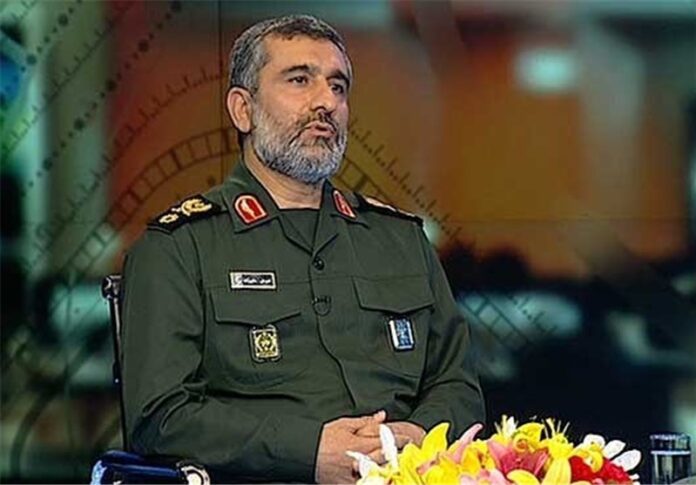
Speaking to the Islamic Republic of Iran Broadcasting (IRIB) on Wednesday night, Brigadier General Amir Ali Hajizadeh highlighted Iran’s military might and stressed that the country is currently secure and stable.

“The people’s security is our red line and we will not compromise on the issue,” he said, adding that the Iranian Armed Forces do not retreat an iota from their position on security issues.

The IRGC commander also called on the Iranian parliament and administration to help further boost the country’s defense power and missile capabilities in years to come.

The IRGC forces on Wednesday night wrapped up their successful missile exercises dubbed ‘Might of Velayat’.

The IRGC’s public relations office said in a statement that the drills, which had been going on for several days in different parts of the country, concluded last night.

The statement underlined that the successful launch of different generations of ballistic missile with various ranges once again demonstrated the country’s defense power to the Iranian nation’s enemies and ill-wishers.

Iran has underscored frequently that its military might poses no threat to other countries and that the Islamic Republic’s defense doctrine is entirely based on deterrence.


An Iranology Exhibition Held in Algeria

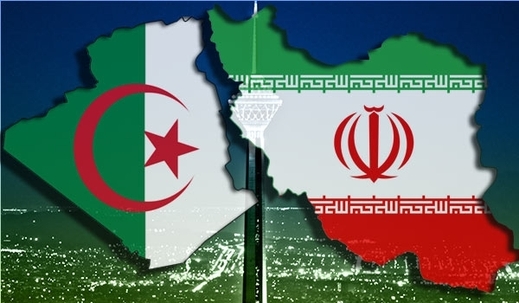
Iran-Algeria

According to IRNA, there were photographs of Iran’s natural sites, cultural heritage, scientific developments and cultural achievements displayed in this exhibition, while visitors were also introduced to Iranian arts and handicrafts.

The following is a summary of the IRNA report, as translated by IFP.

Algeria-IranologyThis exhibition was held with the efforts of the Iranian embassy in Algeria, the Iranian Cultural Council and some Algerian students interested in Persian culture and language. The exhibition received broad acclaim from students, researchers and professors from the history and political science departments of Algeria University.
Sharifeh Ghattas, head of the Foreign Languages department, expressed her hope for attracting more students of this department to learn the Farsi language, commenting on the great capacity of Iranian civilization and culture. She also hoped to facilitate the requirements for receiving students from this ancient culture and civilization.

Amir Mousavi, the Cultural Councillor of Iran’s embassy in Algeria, also highlighted Iran’s great scientific and technological capabilities, as well as the agreements signed between the two countries in the recent Iranian delegation visit to Algeria.

He expressed his hope for improving relations between the two countries in all fields, especially scientifically and academically. He also wished for the establishment of Farsi language courses in the near future, saying that Farsi-speaking graduates would be able to reinforce the relations between the two nations with their knowledge of the language.

As of the present moment, Farsi language courses have been started in three universities and academic centres in Algeria. Due to these efforts, and the deals which have happened in the past year, over 250 students have already started these language classes.

By implementing the scientific and educational agreements signed during the Joint High Commission between the two countries in December, it can be foreseen that academic and scientific relations will blossom in different fields, especially by granting mutual scholarships at postgraduate level, and that more study opportunities will become available.

Lufthansa inks deal to repair planes in Iran

The deal was signed when a group from Lufthansa visited Tehran on Wednesday, the media reported.

Based on it, Iran Air and Lufthansa work closely over five fields such as technical issues, commercial activities, aviation IT systems, navigation mechanisms and restricting.

The technical issues over which the two will cooperate include the maintenance and repairing planes and the commercial activities will include the transfer of passengers and cargos, the media have quoted a statement by Iran’s Ministry of Road and Urban Development.

No more details on the deal has been provided.

This past November, the maintenance division of Lufthansa – Lufthansa Technik – announced that it is in discussions with Iranian airlines to repair and overhaul their aging fleet and that it is looking into the possibility of setting up a facility to the same effect in the country.

“There’s an aircraft fleet in Iran that needs to be taken care of to bring it up in the air,” the media quoted Johannes Bussmann, the CEO of Lufthansa Technik as saying.

“We are open to it. If the government or airline wants support in the build-up phase, we will do that. If they want a partner to join them, then we can think about that,” said Bussmann whose company is generally regarded as the world’s leading provider of services in the aviation industry.

Iran’s Minister of Roads and Urban Development Abbas Akhundi has earlier emphasized that the country’s civil aviation fleet consists of 248 aircraft with an average age of 20 years, of which 100 are in storage.

Other officials has said that as many as 70 planes can return to service if they get their supply of vintage parts, providing also a boon to plane manufacturers, salvage firms and parts suppliers.

Iran has a potential order list for 500 commercial planes to renovate its aging fleet. In January, Iran signed a major deal worth over $27 billion for the purchase of 118 planes from Airbus.  The deal – which is yet to be finalized – was signed during a landmark trip to Paris by Iran’s President Hassan Rouhani.

Talks to purchase more planes are currently underway with several other leading aviation enterprises including Boeing, Embraer, Bombardier and ATR.

IRGC Commanders in Sarcastic Photo with “Homegrown” Missile

The IRGC on Wednesday test-fired a couple of homegrown ballistic missiles, named Qadr-F and Qadr-H, according to a report by the Tasnim News Agency, translated by Iran Front Page (IFP).

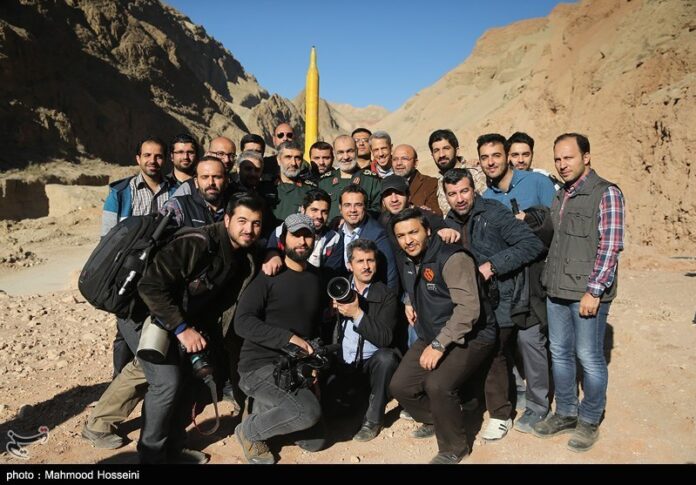
IRGC Lieutenant Commander Brigadier General Hossein Salami and IRGC Aerospace Force Commander Amir Ali Hajizadeh along with a number of journalist and photographers posed for a group photo in front of the missile.

Before the launch of the missile, the participants joked that some people stood before the French Airbus and took pictures, “but we take photos with our own indigenous and Iranian-made products, which give honor to Iranian nationals.”

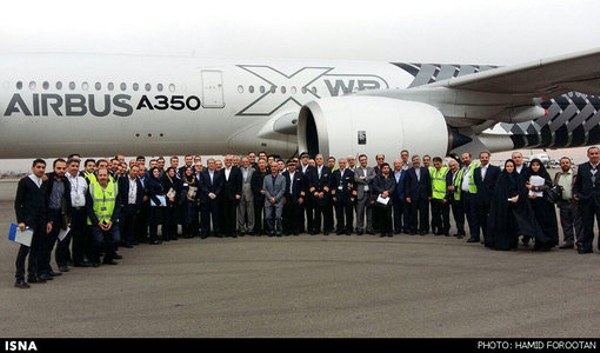
The remarks were made in reference to a photo of a large group of Iranian officials and journalists who recently posed for a photo with a brand new Airbus A350 wide-body passenger jet in Tehran.


Air bus iran photos


The airliner had made a symbolic first landing in Iran nearly a month after the manufacturer signed a deal with Tehran to deliver 118 new aircraft.

During the stay, an Iranian delegate boarded and toured the plane, and took photographs with it.

As part of an effort to revamp its aging fleet, Iran has signed deals with the European manufacturer to purchase 118 Airbus planes, including 16 Airbus A350 XWBs.

In January, the UN, the EU and the US sanctions were lifted from Iran following Tehran’s implementation of its obligations under the nuclear deal signed with six world powers to ensure the peaceful nature of its nuclear program.

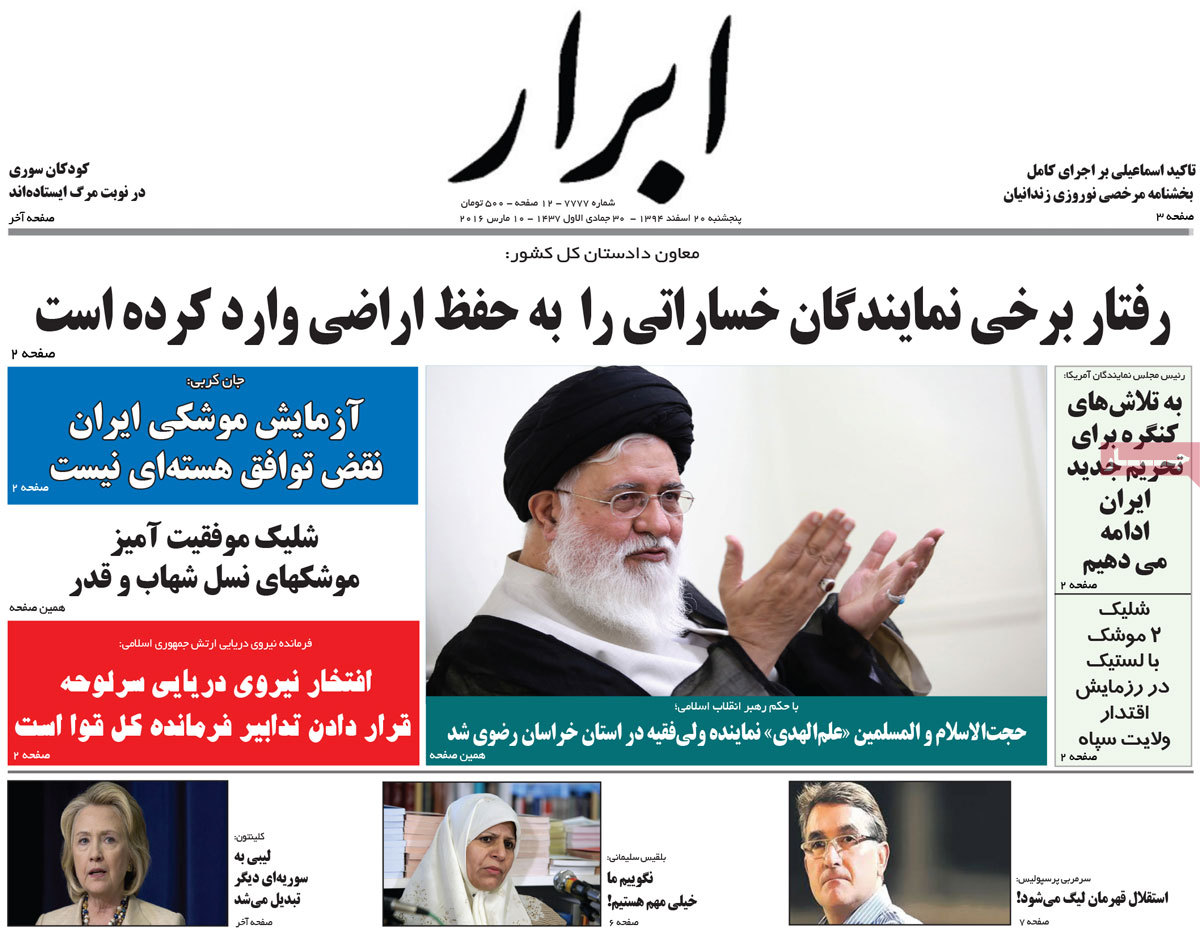
A look at Iranian newspaper front pages on March 10

Iran Newspaper front pages

The Supreme Leader of the Islamic Revolution has appointed Hujatoleslam Alamolhoda as his representative in the northeastern province of Khorasan Razavi; this grabbed many headlines on Thursday, March 10, 2016.

Moreover, next year’s minimum salaries, the government spokesman’s address in the year’s last session of the Assembly of Experts and successfully test of two IRGC missiles was top on papers on the day.

Here are the top headlines:


Abrar:

  1. Syrian kids line up for death
  2. “Some MPs’ actions have harmed Iranian territories”: deputy prosecutor general
  3. Iran missile test no violation of JCPOA: US

The United States says Iran’s recent missile launch does not violate its nuclear agreement with the P5+1 group. US State Department Spokesman John Kirby said on Tuesday night the missile launch would not constitute a breach of the deal.

  1. Iran successfully test-fires Shihab, Ghadr missiles
  2. IRGC fires two missiles in Power of Velayat Drill


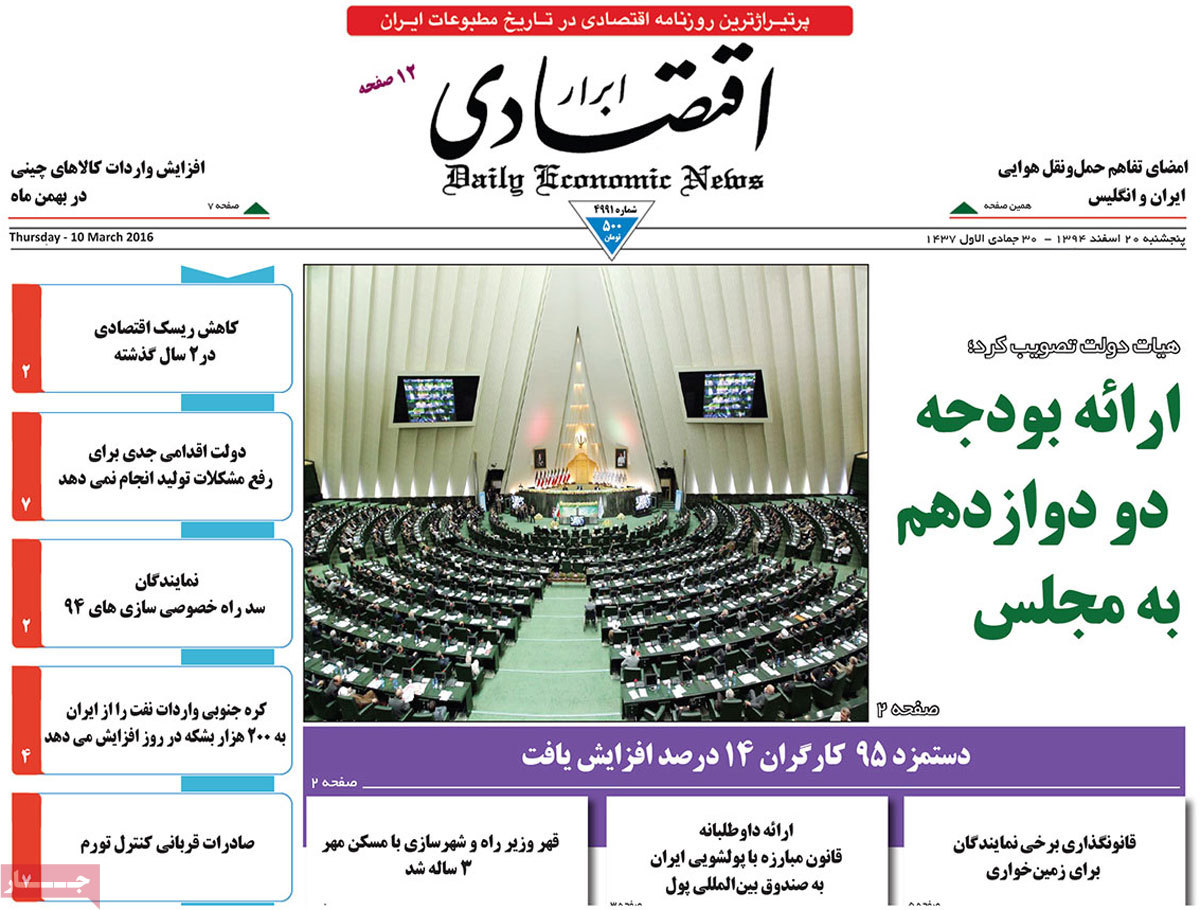
A look at Iranian newspaper front pages on March 10


Abrar-Eqtesadi:

  1. Import of Chinese goods rises in February
  2. Iran, UK sign air transit deal
  3. Economic risks lower in Iran since 2013
  4. S. Korea to boost Iran oil imports to 0.2mbd


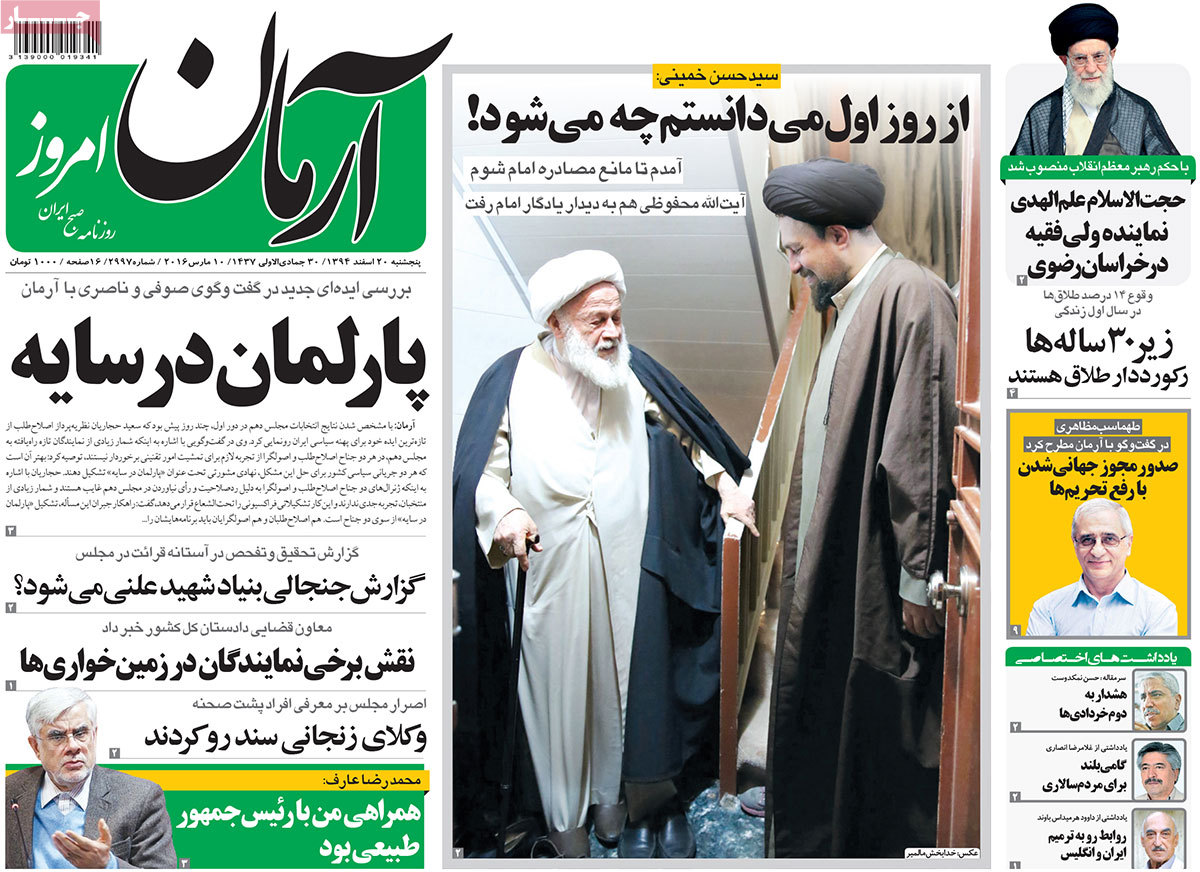
A look at Iranian newspaper front pages on March 10


Arman-e Emrouz:

  1. I knew the election outcome from day one: Hassan Khomeini
  2. Leader appoints Hujatoleslam Alamolhoda as representative in Khorasan Razavi
  3. Deputy Judiciary chief reveals: Role of certain MPs in illegal land ownership


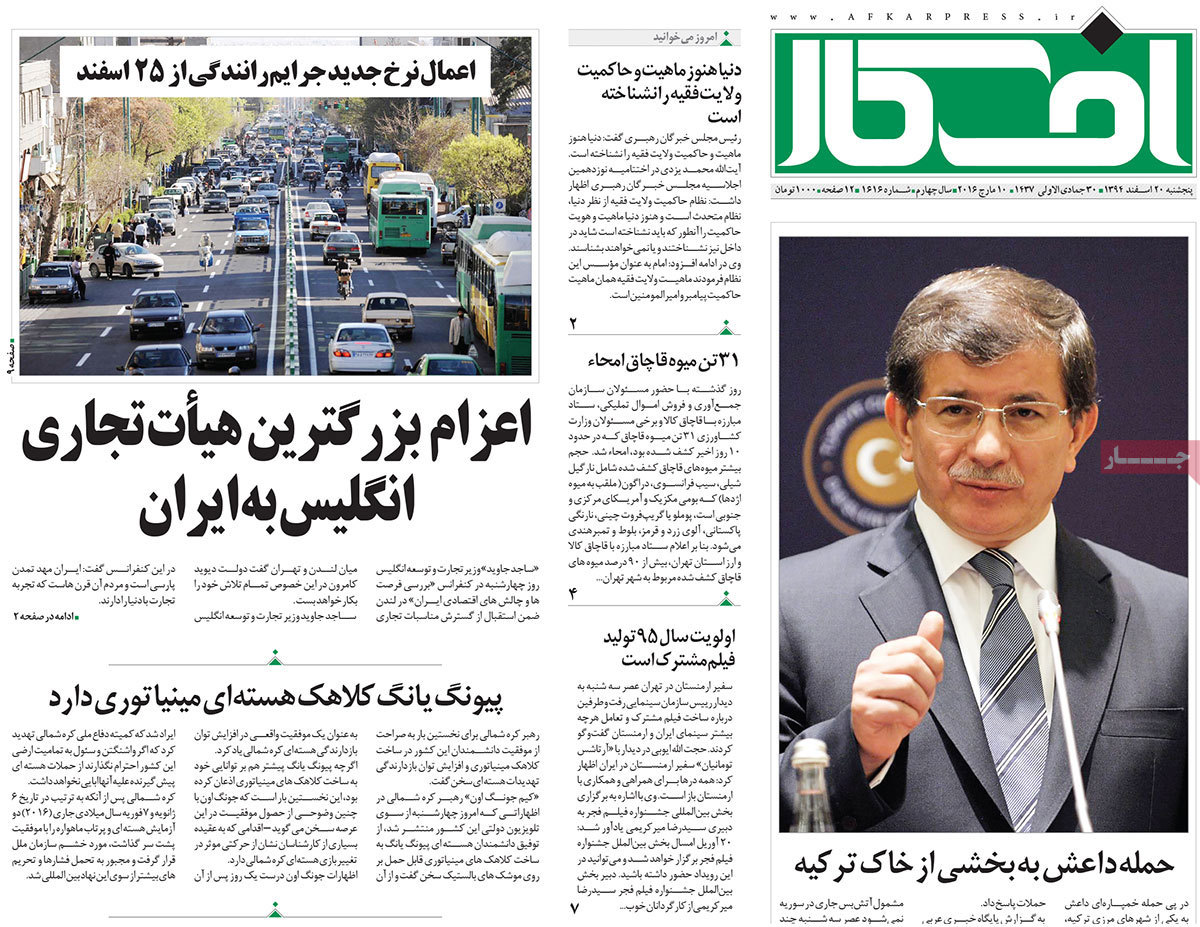
A look at Iranian newspaper front pages on March 10


Afkar:

  1. UK to send major business delegation to Tehran
  2. Armenia seeks joint film projects with Iran
  3. Pyongyang in possession of miniature nuclear warheads
  4. ISIS strikes swathes of Turkish territories


A look at Iranian newspaper front pages on March 10


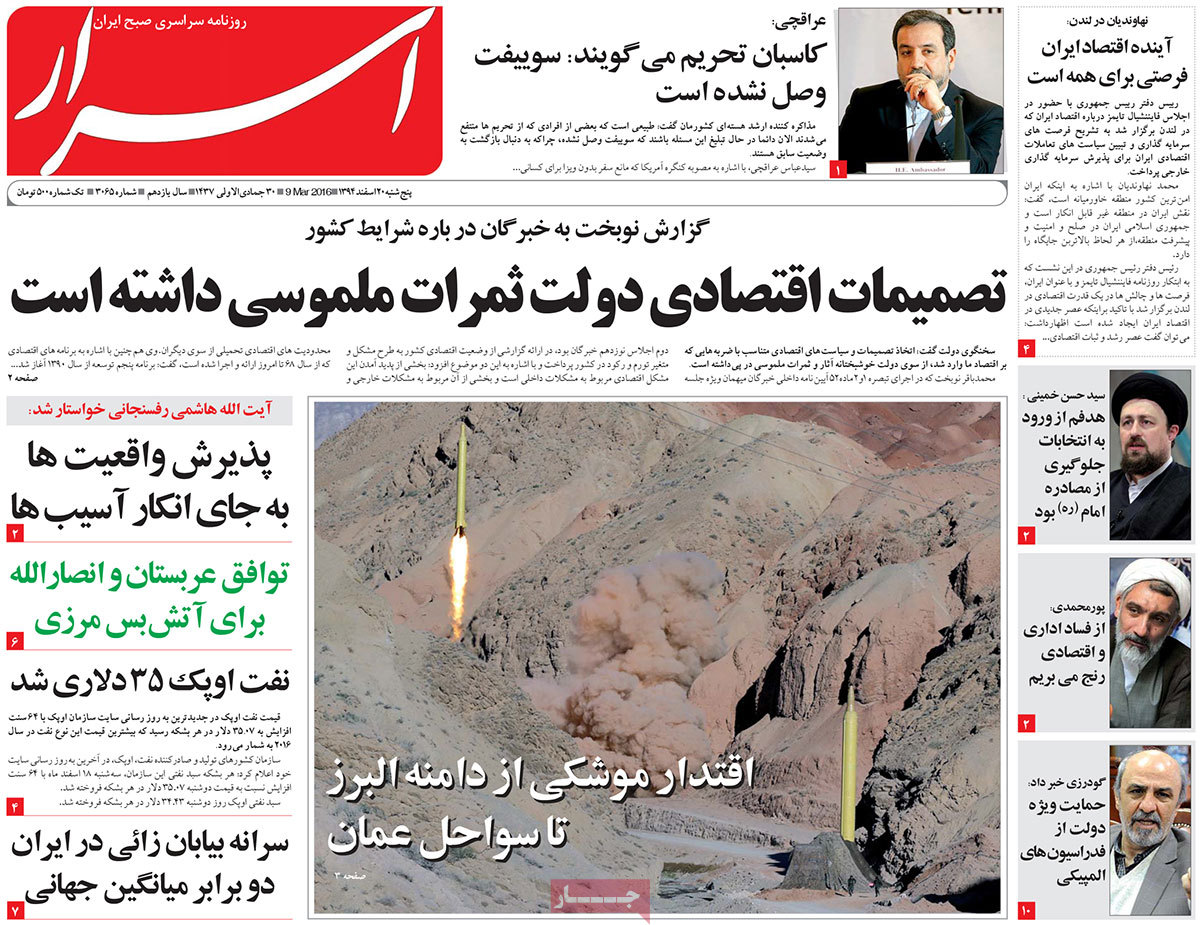
Asrar:

  1. Future of Iran economy, chance for everyone: Official
  2. Saudi Arabia, Ansarullah reach agreement to cease border fire
  3. OPEC oil at $35/b
  4. Gov’t spokesman: Admin’s economic decisions bearing tangible outcome
  5. Iran suffering from economic, administrative graft: justice minister


A look at Iranian newspaper front pages on March 10


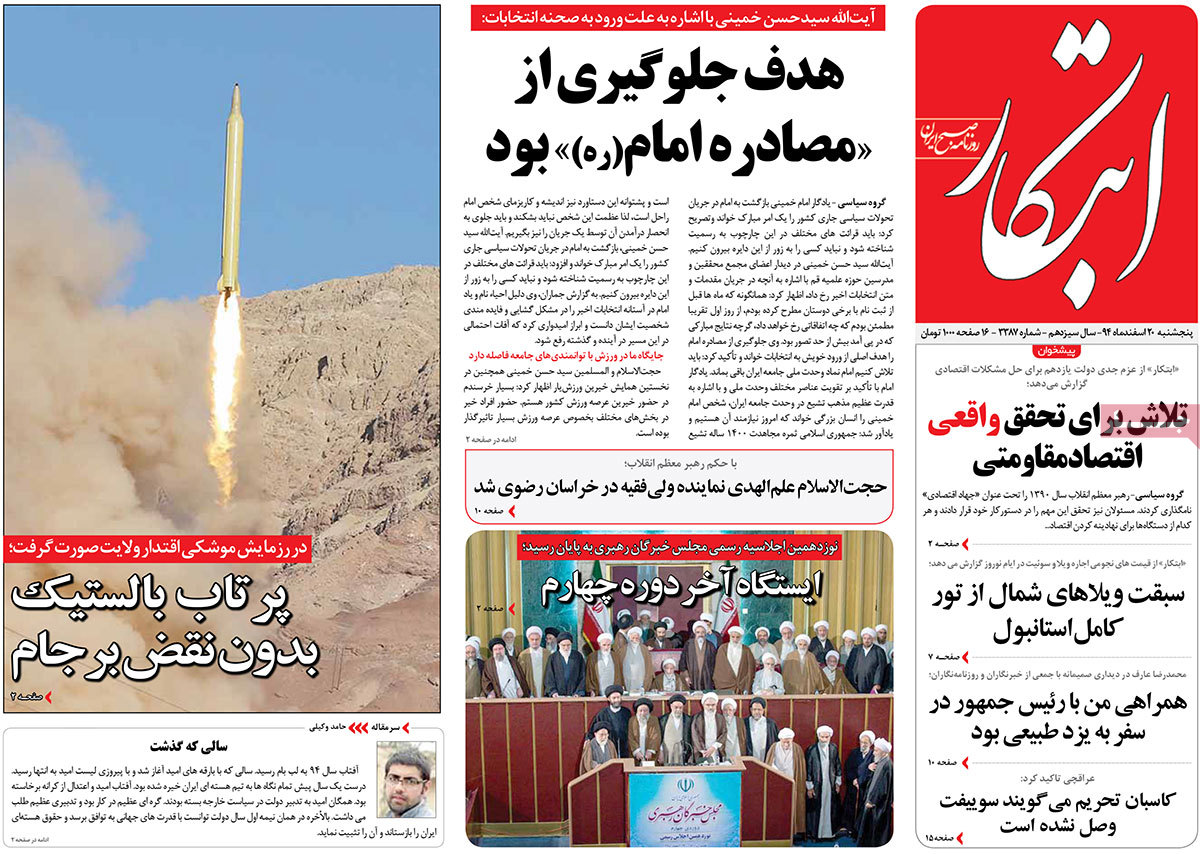
Ebtekar:

  1. Report: Admin’s efforts for truthful realization of resistive economy
  2. Ballistic missile tests no violation of JCPOA
  3. Iranian villas more expensive than Turkish tours: report
  4. Araghchi: Sanctions’ vested interests say Iran banks not linked to SWIFT yet


A look at Iranian newspaper front pages on March 10


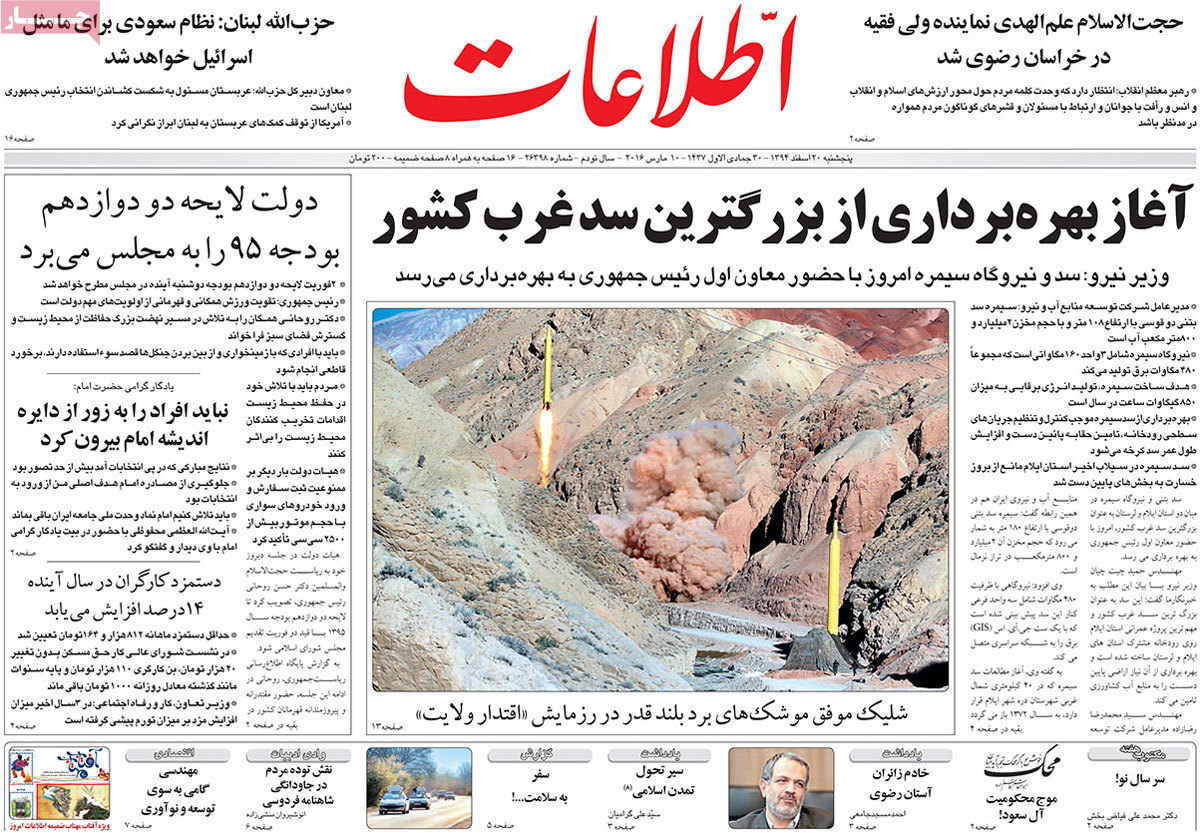
Ettela’at:

  1. Hezbollah: Saudi regime to become like Israel for us
  2. Iran launches major dam project in western regions
  3. IRGC successfully test-fires long-range missiles
  4. Next year wages rise 14%


A look at Iranian newspaper front pages on March 10


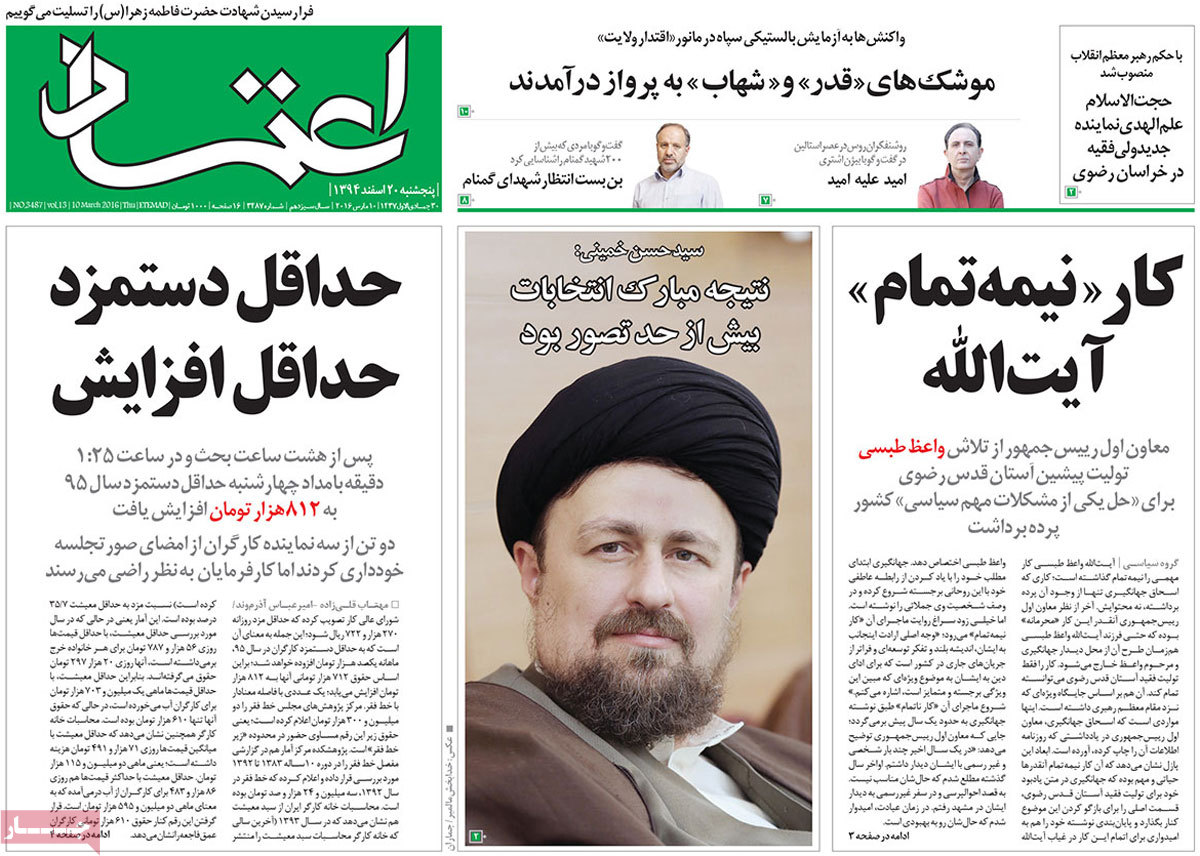
Etemad:

  1. Ghadr, Shihab missiles fly

IRGC test-fired the two missiles in a drill.

  1. Iran raises minimum wage

The minimum wage in Iran has been set at 8,120 thousand Iranian rials. The decision was made after 8 hours of nonstop discussions about the wage rate in Iran for the New Year. New Iranian calendar year begins on March 21, 2016.

  1. Election outcome more than expected


A look at Iranian newspaper front pages on March 10


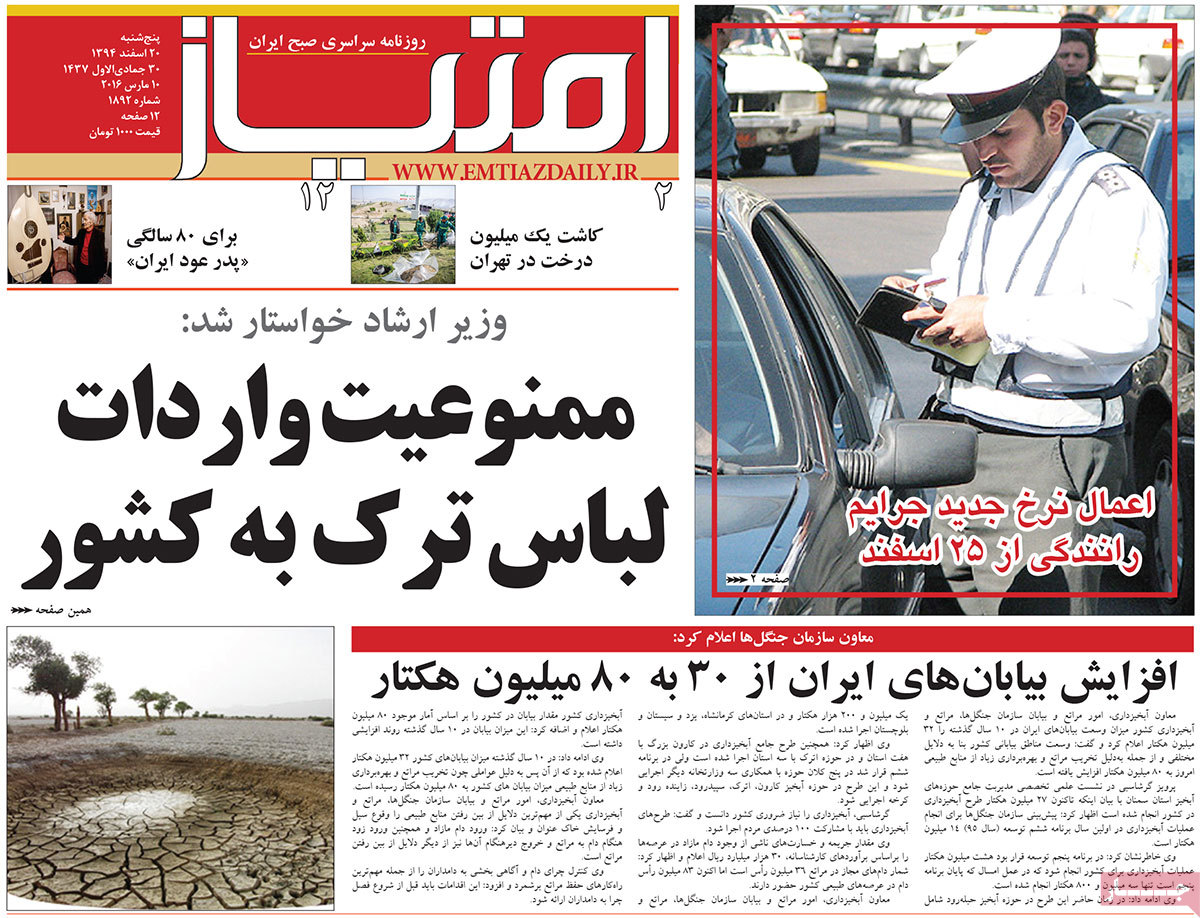
Emtiaz:

  1. Culture minister calls for ban on imports of Turkish clothes
  2. Size of Iran deserts grows from 30mha to 80mha
  3. Plans under way to plant a million saplings in Tehran


A look at Iranian newspaper front pages on March 10


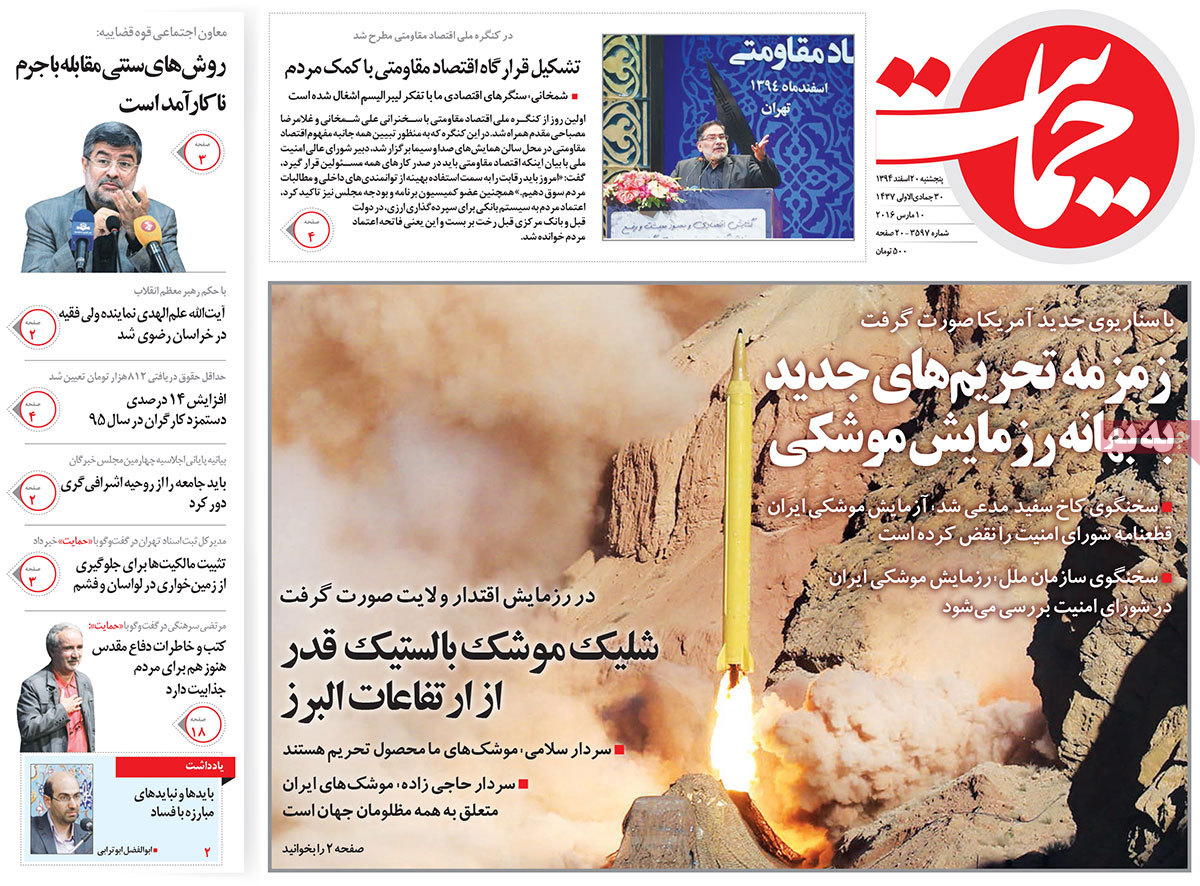
Hemayat:

  1. Traditional methods dysfunctional to combat crimes: Judiciary figure
  2. Whispers about fresh Iran sanctions for missile drills
  3. People still buy Sacred Defense books, memories: Veteran writer


A look at Iranian newspaper front pages on March 10


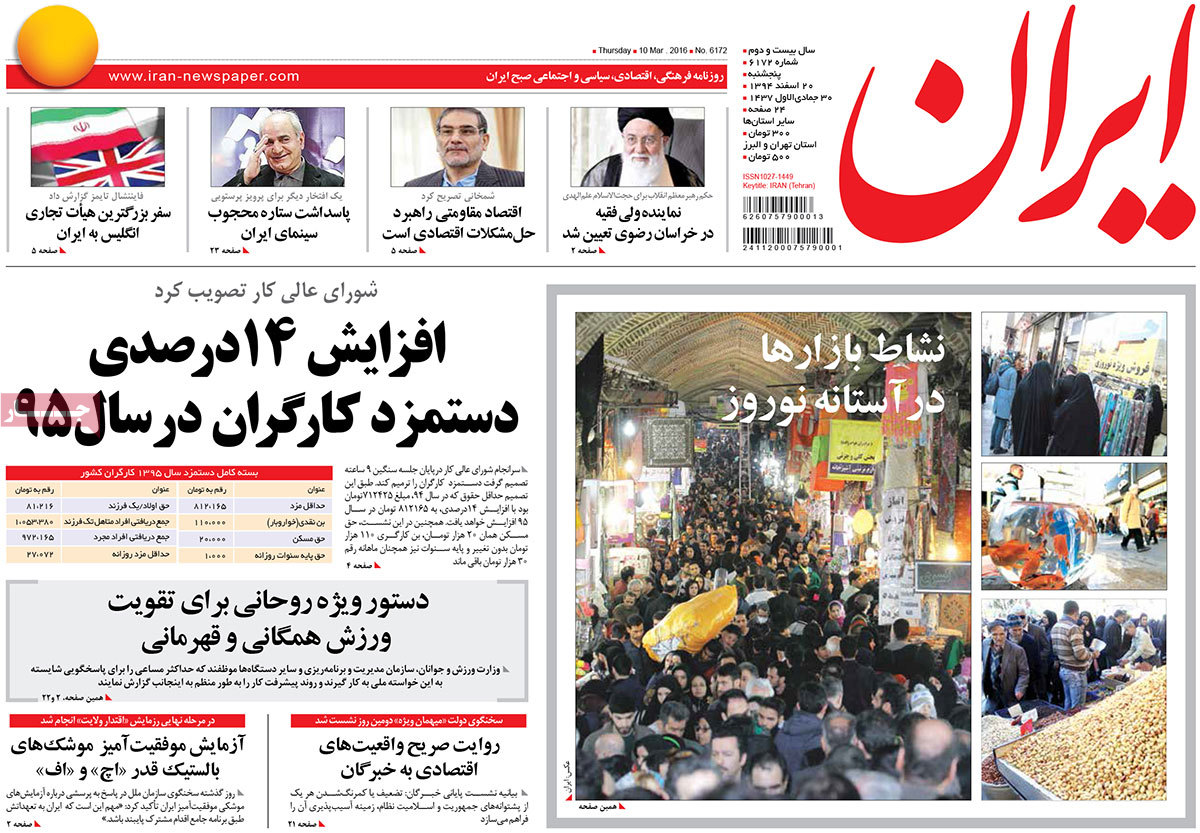
Iran:

  1. Economy of resistance only way to tackle economic problems: Shamkhani
  2. Shy Iranian actor hailed
  3. Rouhani orders promotion of public, champion sports
  4. Iranian market bullish as year ends


A look at Iranian newspaper front pages on March 10


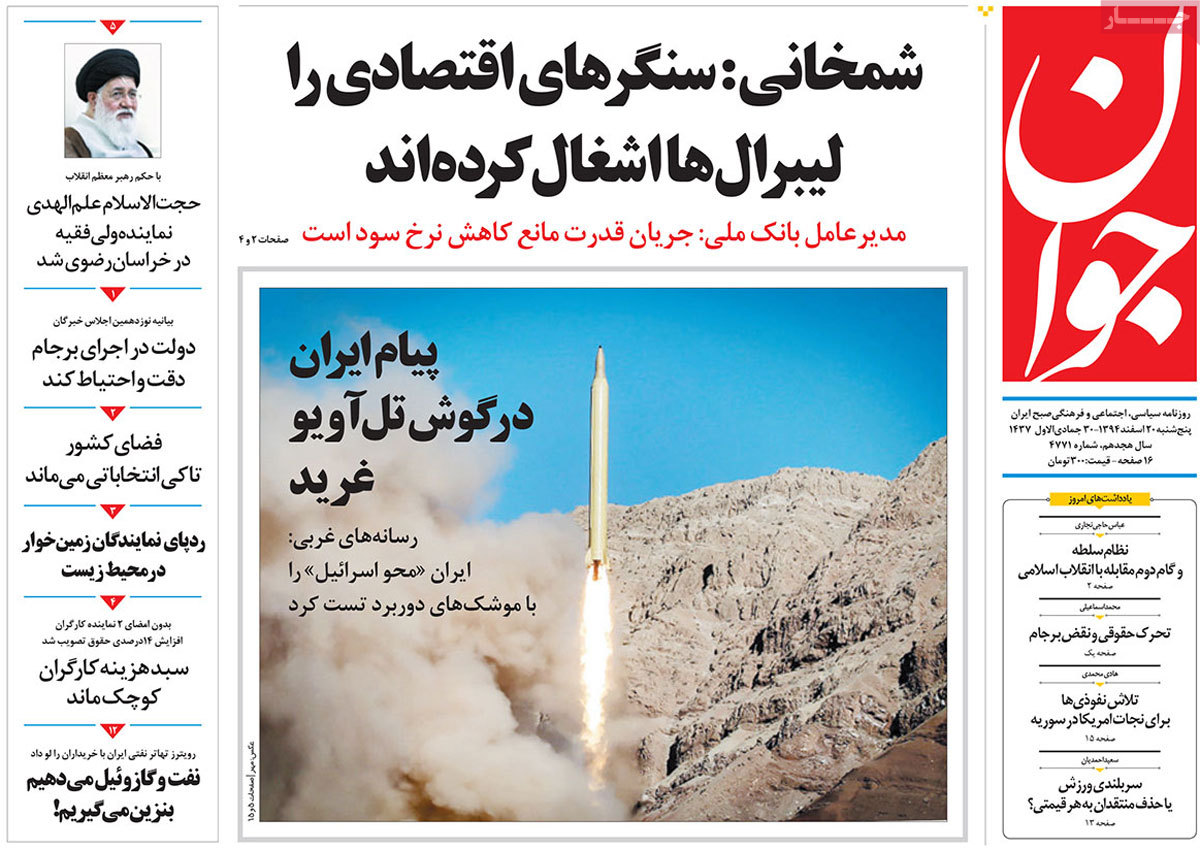
Javan:

  1. Iran message roams in Tel Aviv ear

Western media: Iran tests “Israel annihilation” agenda by long-range missiles

  1. Assembly of Experts calls on admin to carefully mind JCPOA implementation
  2. Shamkhani: Liberals have grasped economic strongholds


A look at Iranian newspaper front pages on March 10


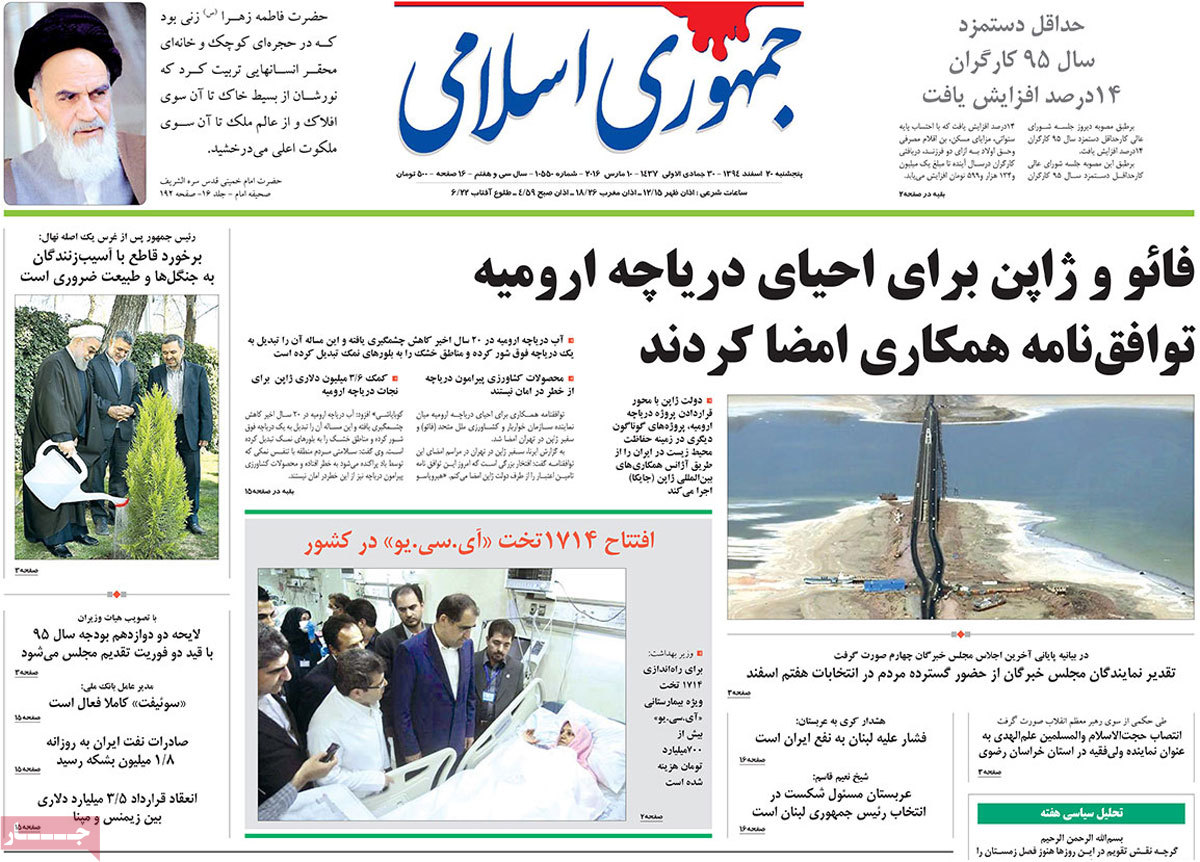
Jomhouri Islami:

  1. FAO, Japan sign notes on Lake Urmia
  2. President warns damagers of jungles, nature
  3. Bank Melli chief: Swift fully functional
  4. Siemens, MAPNA group sign $3.5b deal
  5. Kerry to Riyadh: Anti-Lebanon pressure suits Iran interests


A look at Iranian newspaper front pages on March 10


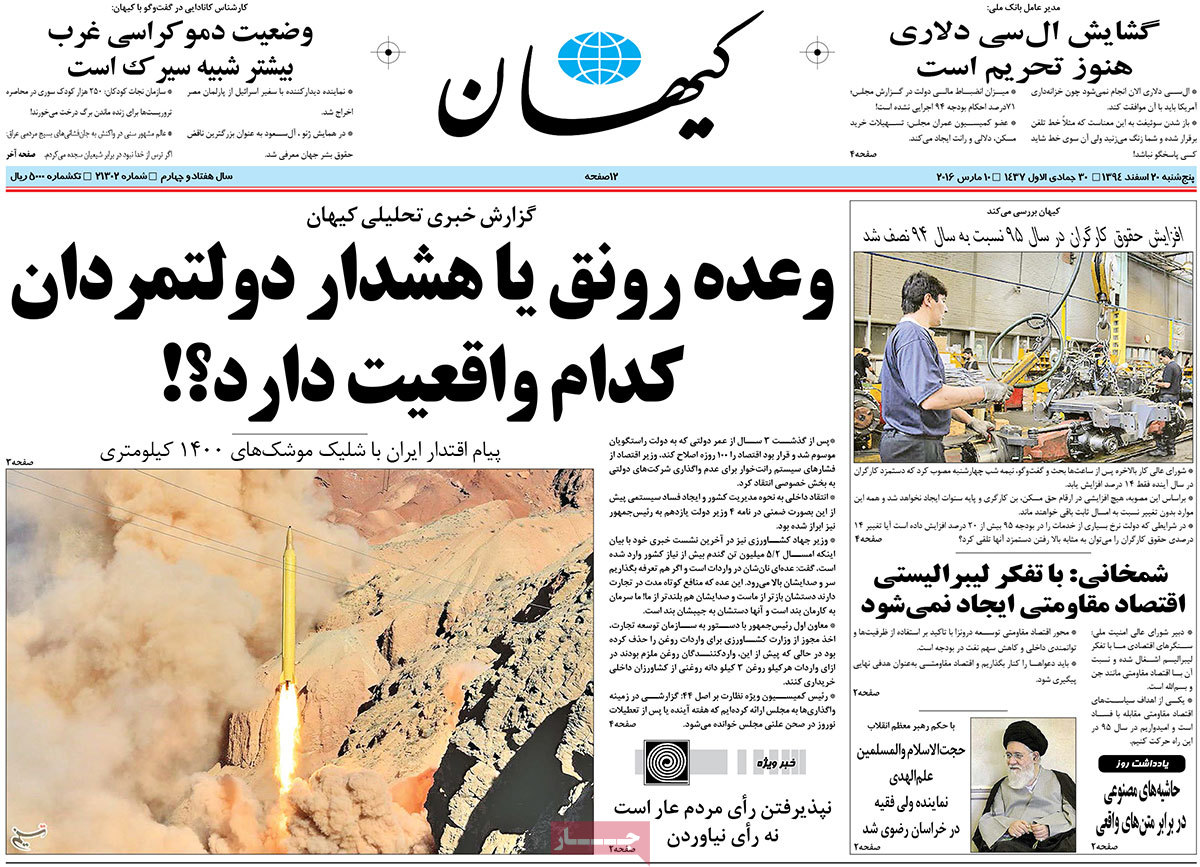
Kayhan:

  1. Bank Melli: Dollar LCs still under sanctions
  2. Western democracy more of a circus: Canadian scholar
  3. No resistive economy possible by liberalistic thinking: Shamkhani


A look at Iranian newspaper front pages on March 10


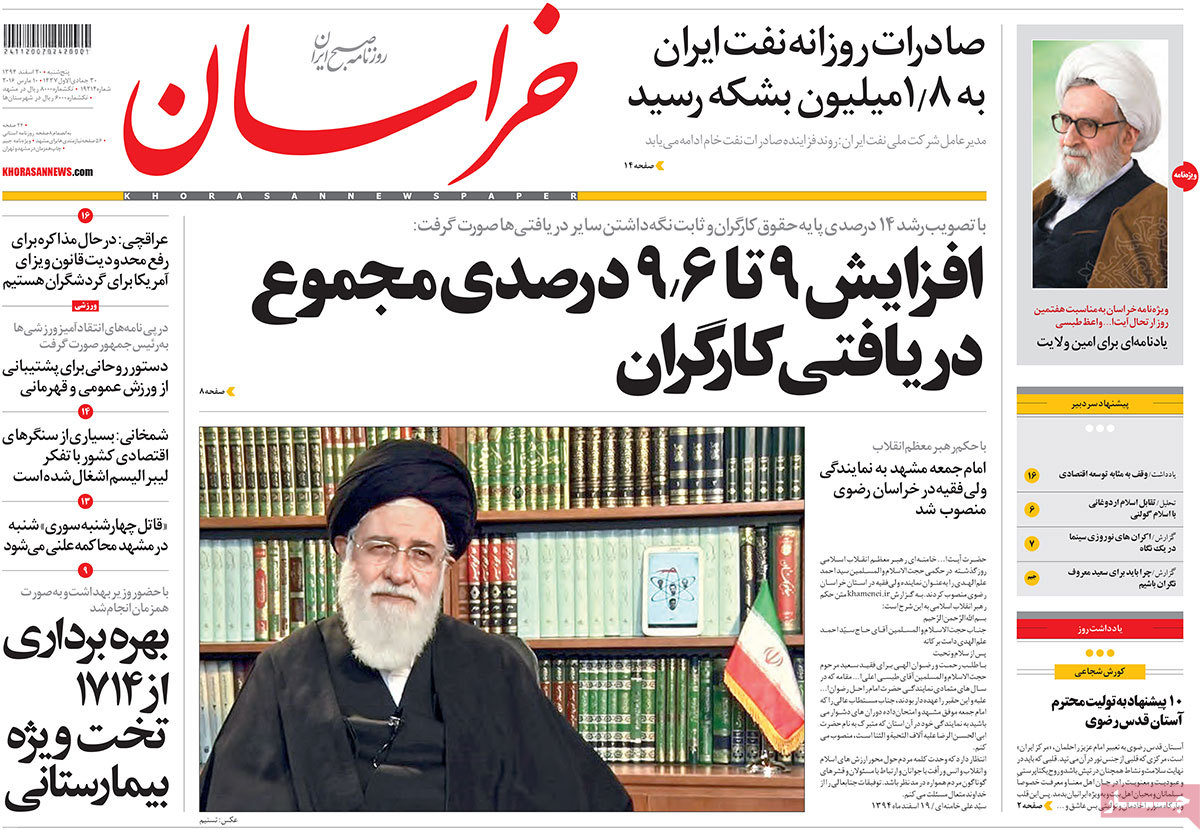
Khorasan:

  1. Iran crude oil exports hit 1.8mbd
  2. Talks under way for lifting US visa waiver program for tourists: Araghchi
  3. Health minister inaugurates 1,714 ICU beds


A look at Iranian newspaper front pages on March 10


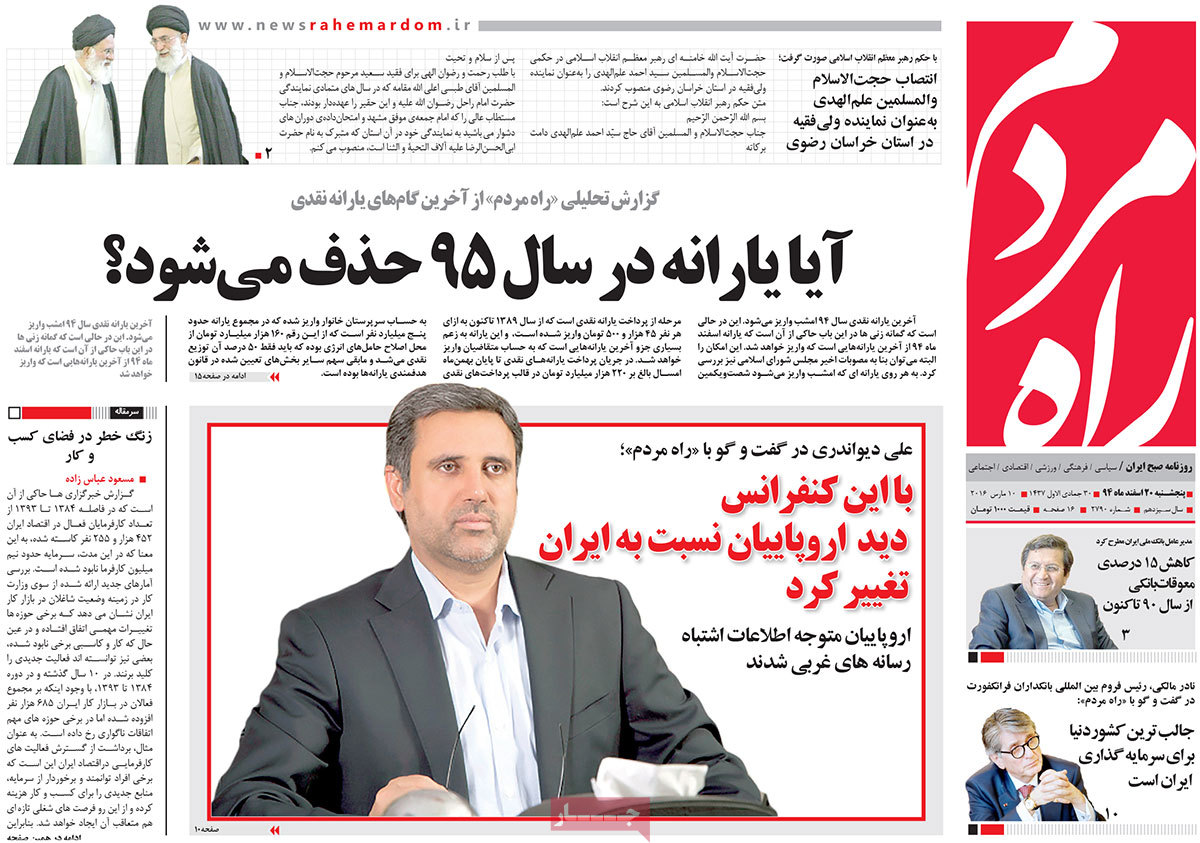
Rah-e Mardom:

  1. Report: Will cash subsidy handouts stop next year
  2. Iran, world’s most interesting country for investment: Expert
  3. 15% fall in bank arrears since 2011
  4. The conference changed Europeans’ views about Iran: Expert

Referring to the 12th Iran-Europe business conference, the event’s secretary said through the conference, Europeans began to realize that the data supplied to them by their media was erroneous.


A look at Iranian newspaper front pages on March 10


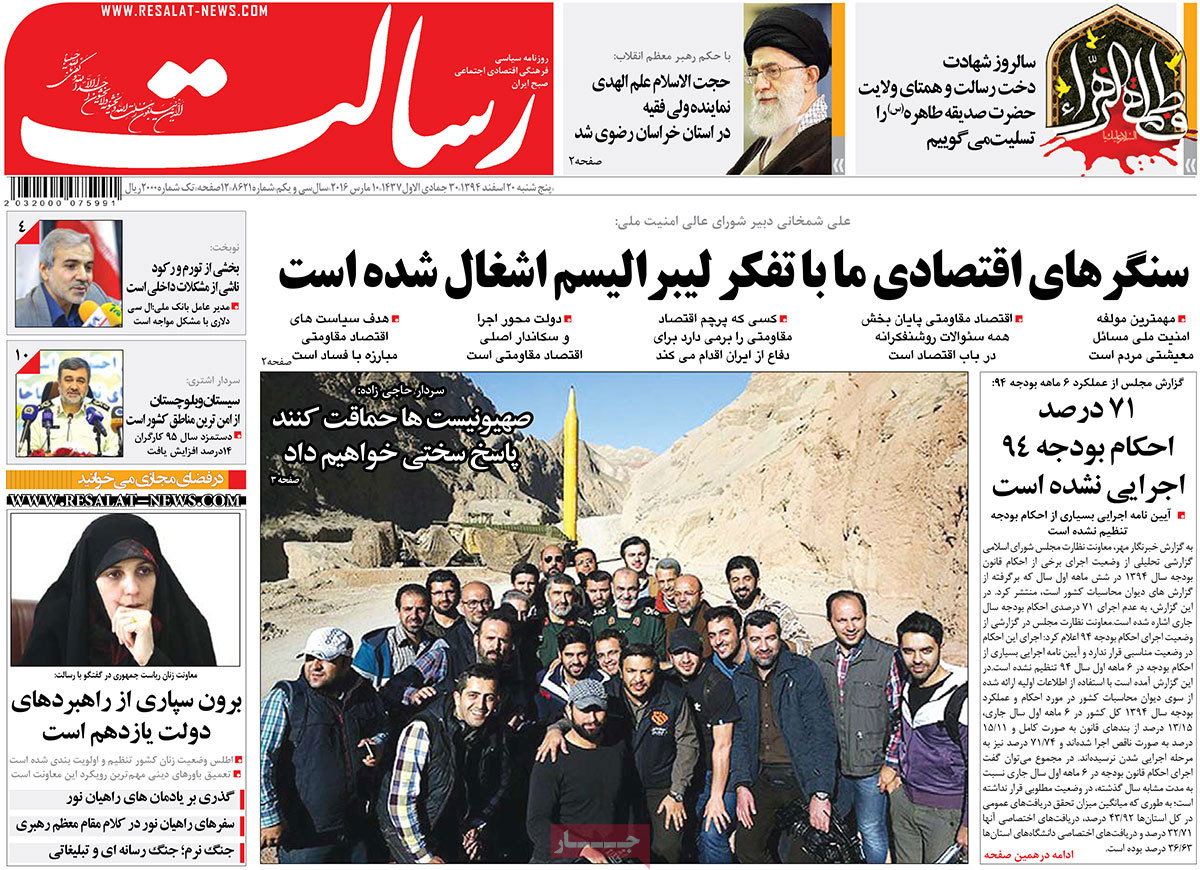
Resalat:

  1. Gov’t spokesman: Part of inflation problem stems from inside
  2. Cmdr.: Zionists will get heavy blow if they mess with us
  3. Sistan-Baluchestan province among safest regions in Iran: Cmdr.


A look at Iranian newspaper front pages on March 10


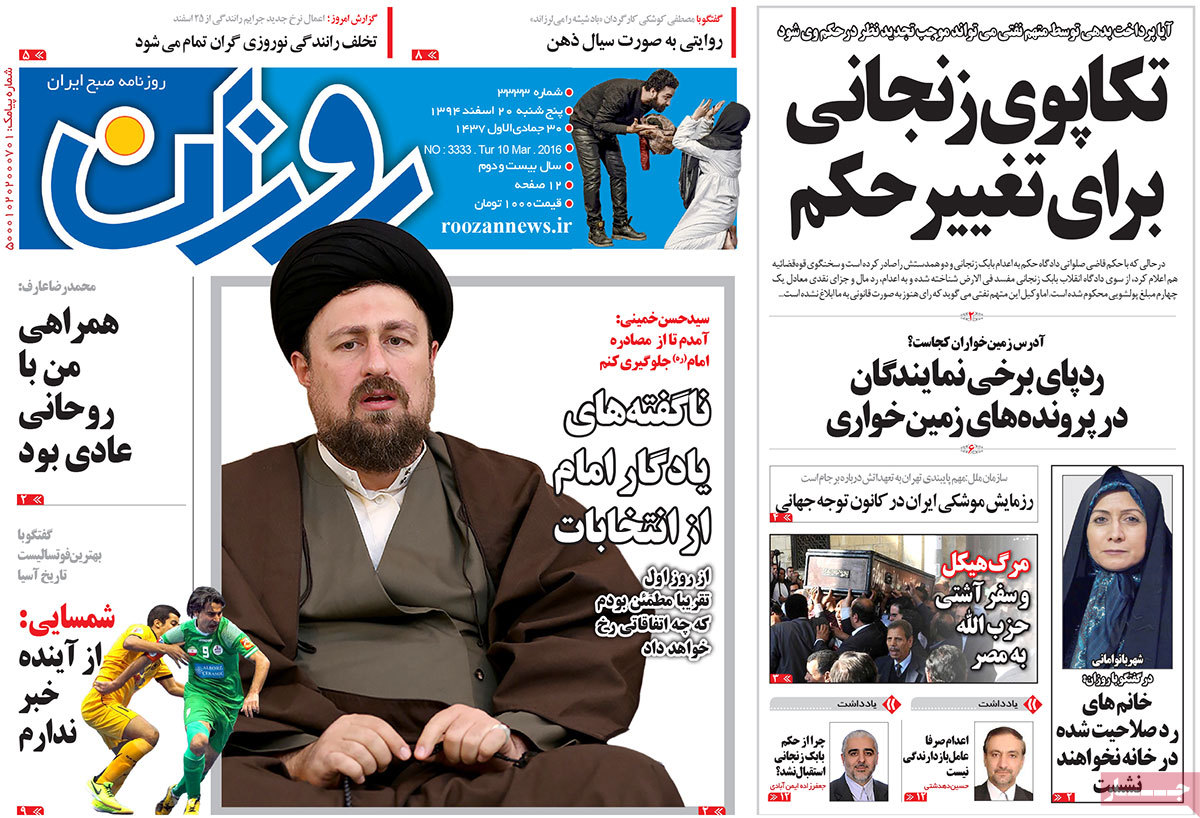
Roozan:

  1. Billionaire strives to commute death sentence

Billionaire Babak Zanjani has received a death sentence by the court for corruption on earth charges.


A look at Iranian newspaper front pages on March 10


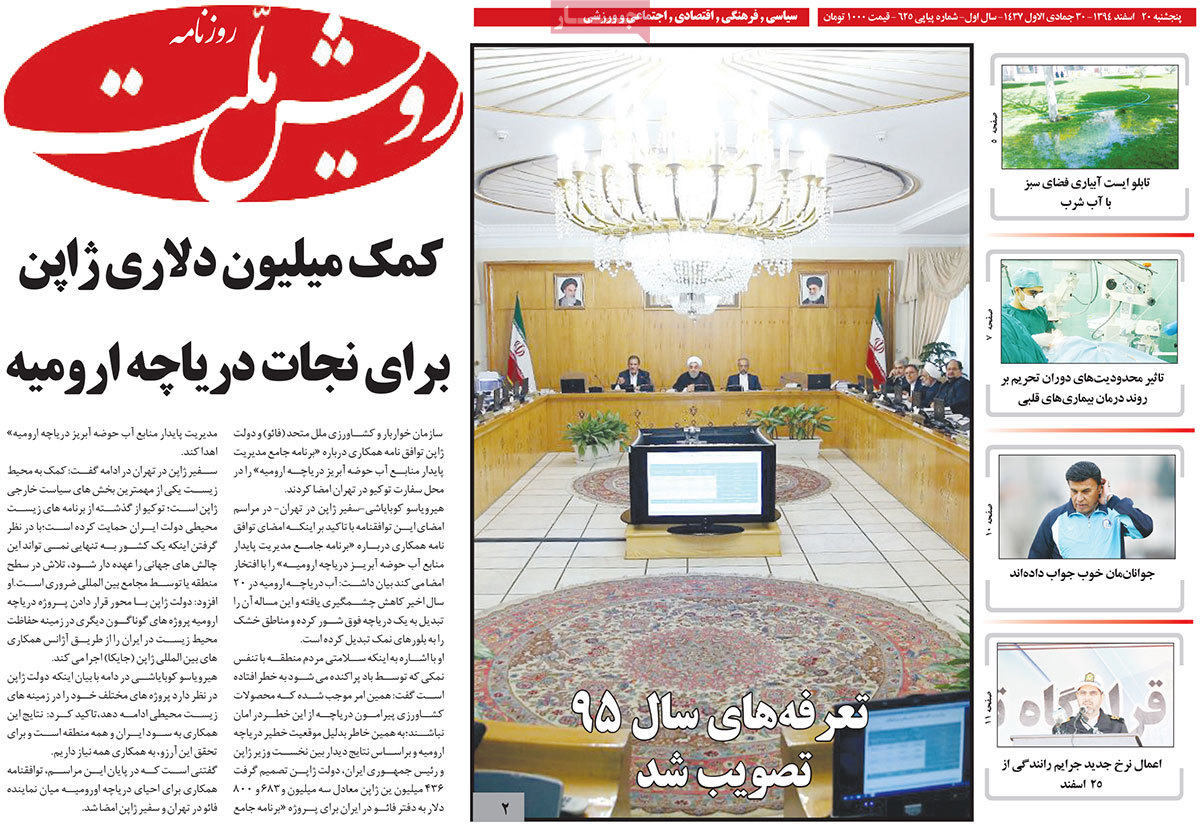
Rooyesh Mellat:

  1. Japan offers million-dollar grant for saving Lake Urmia


A look at Iranian newspaper front pages on March 10


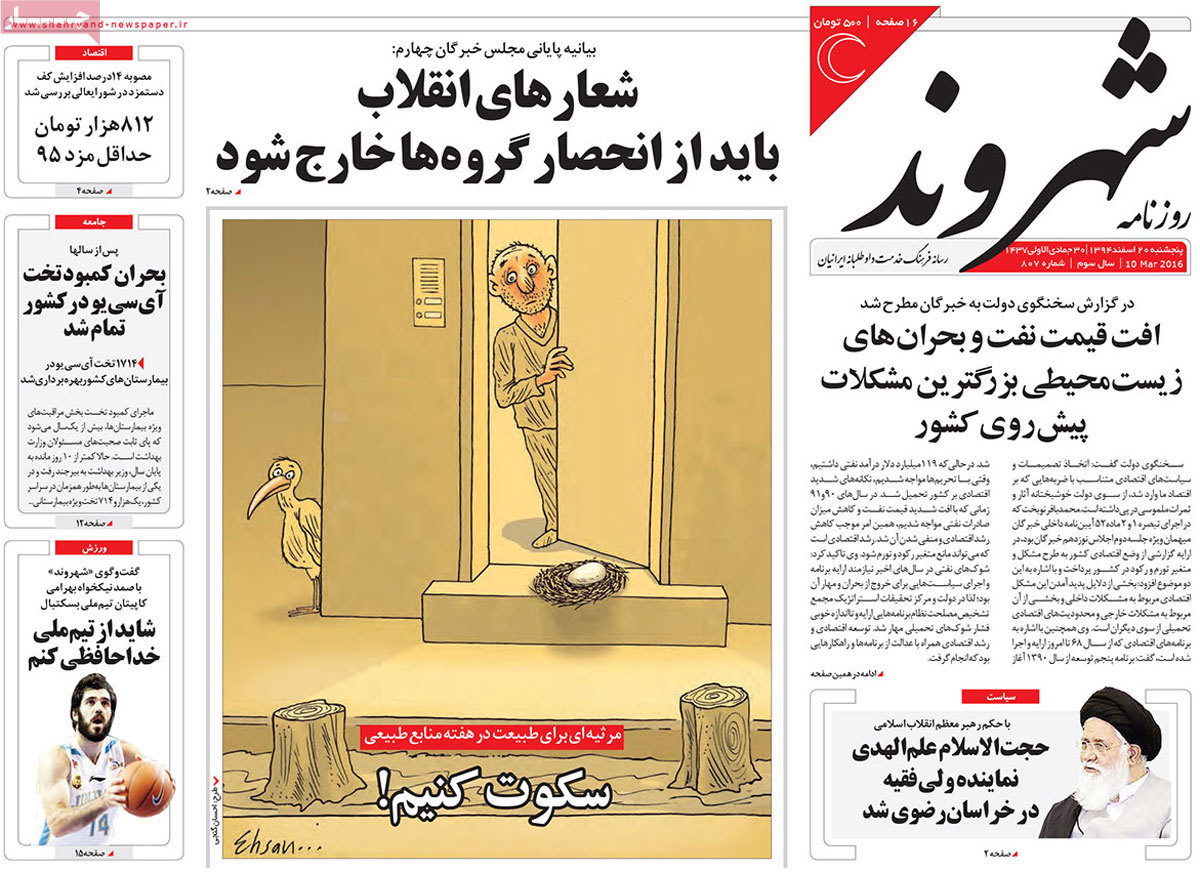
Shahrvand:

  1. Oil price slump, environmental crises, Iran’s main challenges: Gov’t spokesman to Assembly of Experts
  2. No lack of ICU beds in Iran


A look at Iranian newspaper front pages on March 10


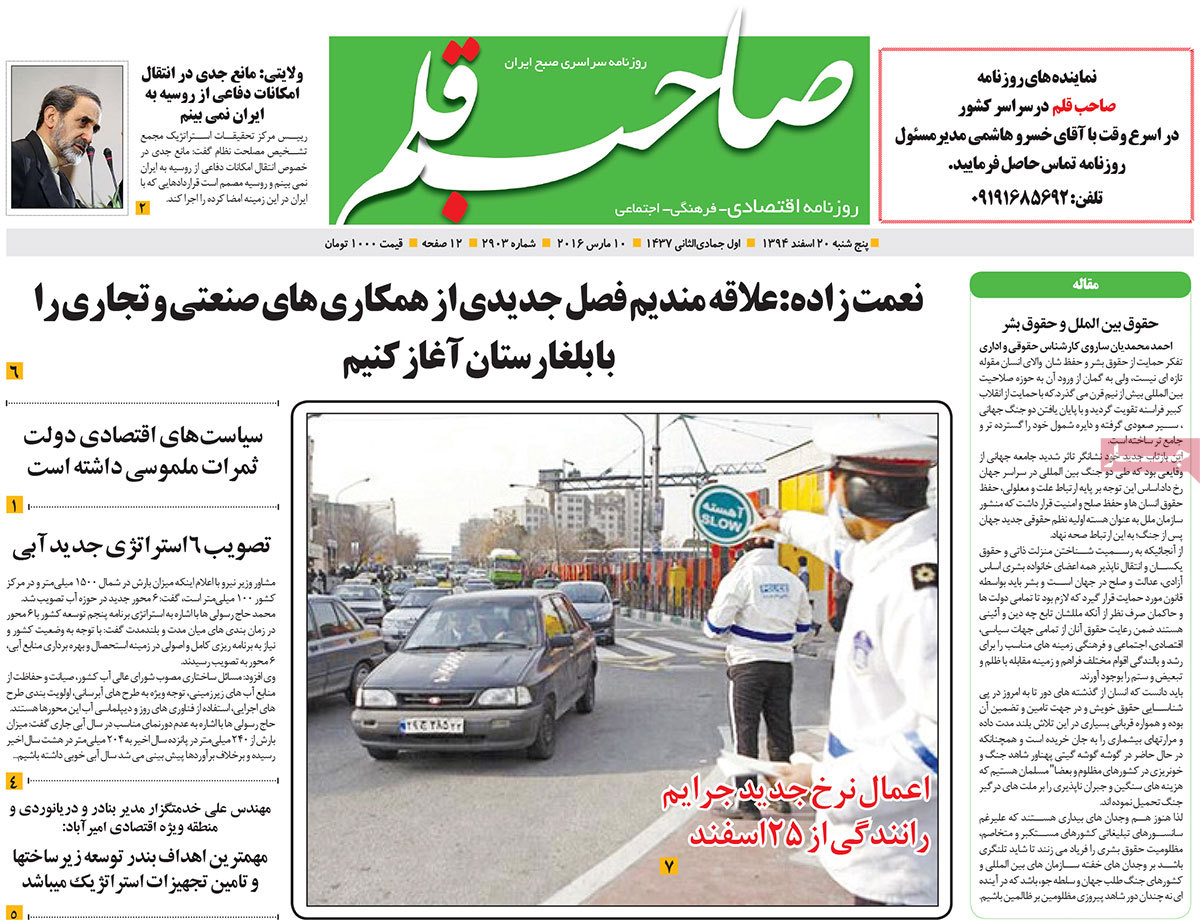
Saheb Ghalam:

  1. Nematzadeh: Iran ready to open new chapter in industrial, business ties with Bulgaria
  2. Leader advisor: No barriers to import of Russian defense systems to Iran
  3. Iran considers 6 new scenarios to tackle water shortage


A look at Iranian newspaper front pages on March 10


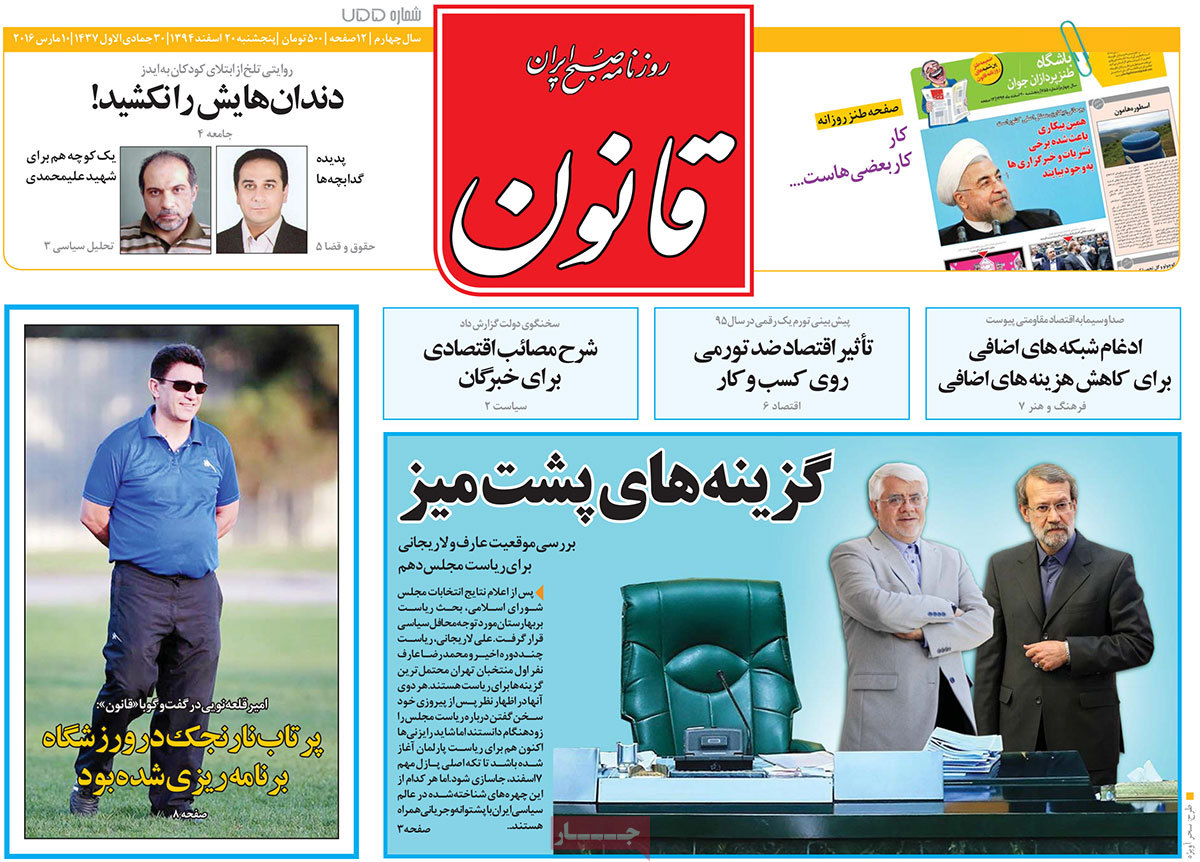
Ghanoon:

  1. Analysis: Impact of anti-inflation economy on business
  2. Speculations about next Parliament speaker candidates: Aref or Larijani
  3. IRIB to join TV channels to curtail costs


A look at Iranian newspaper front pages on March 10