Monday, January 19, 2026
Home Blog Page 4452

NISOC Crude Output Back to Pre-Sanctions Level: CEO

217335_orig

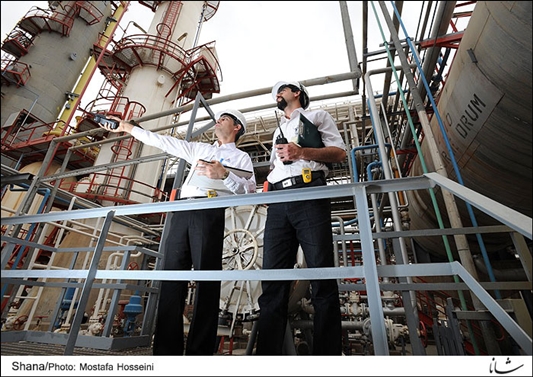
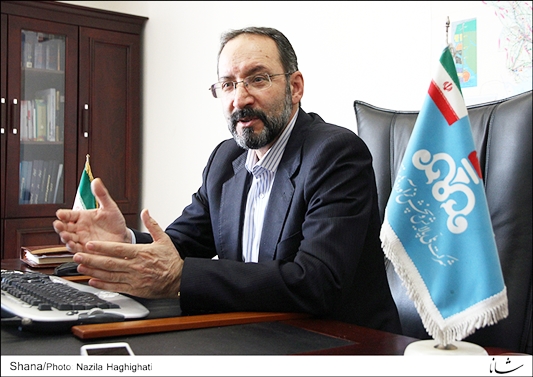
Speaking to Shana, Bijan Alipour said that crude oil production from NISOC, Iran’s biggest supplier of the commodity, has reached its pre-sanctions levels.

“NISOC supplies 1.6m bpd of Iran’s oil exports,” said the official. He said the company is currently producing a total of 2.9m bpd of crude oil in a sustainable fashion.

NISOC has made the achievement while it is equipped with the oldest machinery, pipelines and drilling facilities, said Alipour.

“Reaching this level of production took us a year and a half of non-stop work,” he said.

“As the Minister of Petroleum and Managing Director of National Iranian Oil Company (NIOC) had promised, NISOC managed to add over 900,000 barrels to its output in less than 6 months.”

VP: Vatican Cooperation Important in Iran’s Foreign Policy

Shahindokht-Mollaverdi
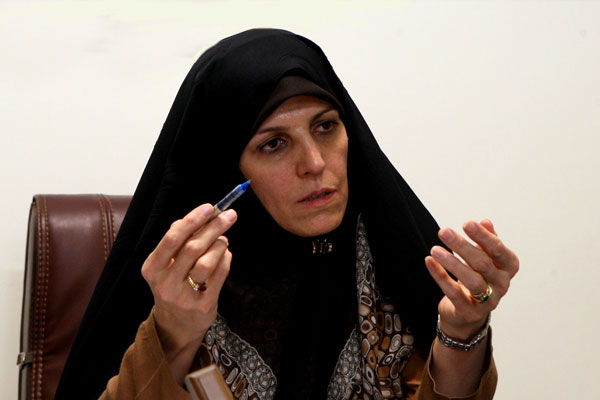
Vice-President in Iran - Women and Family Affairs Shahindokht Mollaverdi

Speaking in a meeting with the President of the Holy See’s Pontifical Council for the Family, and bishop emeritus of the diocese of Terni-Narni-Amelia in Italy Vincenzo Paglia, she added that in the wake of Iranian President Hassan Rouhani’s trip to the Vatican and meeting with Pope Francis, the grounds have been prepared for both countries’ cooperation.

Referring to the fact that the history of Iran-Vatican ties dates back to 1954, she added that the official and unofficial visits to Vatican have established new relations between the two countries.

Regarding current social crises such as terrorism and the breakdown of families, she said that expanding ties can be useful in reinforcing families and in presenting basic strategies. She noted that in dealing with issues such as the status of women and families are a major aspect of Iran-Vatican cooperation.

Referring to the second aspect of cooperation, Molaverdi reiterated that due to the sensitive condition of the Middle East and Europe, the cooperation between religions would be useful in preventing extremism, disrespect to religious values and violence against women and children.

She referred to the international cooperation as the third aspect of the two countries’ cooperation, adding that promoting peace instead of war, making a coalition for peace, fighting poverty and protecting the family should be considered further.

Vincenzo Paglia invited Molaverdi to participate in a meeting in Geneva on June 26. He arrived in Iran on Sunday June 11 with a delegation, and he is scheduled to visit various Iranian officials.

Golrizan Ceremony, a Longstanding Iranian Charity Tradition

k74IzOOJP9kC

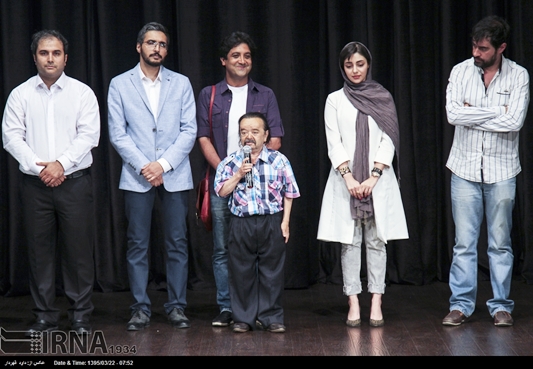
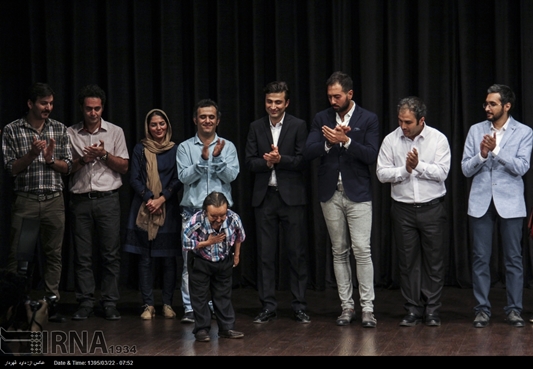
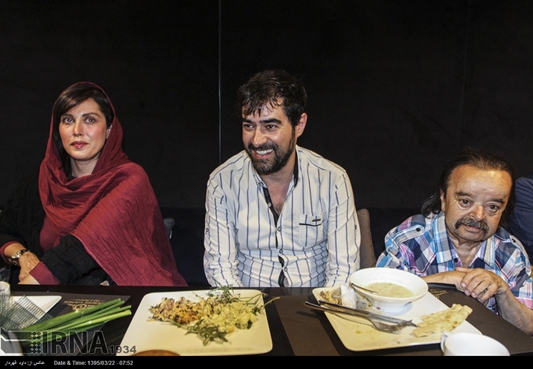
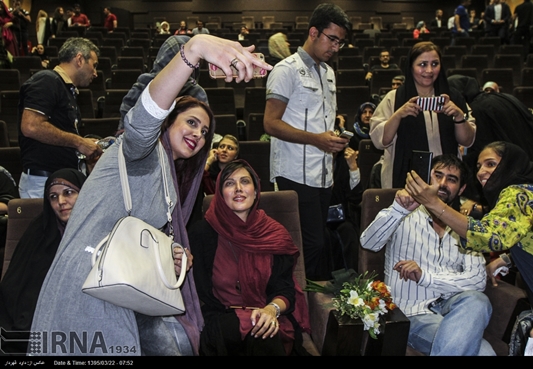
During the event, held on the fourth night of Muslim holy month of Ramadan, the celebrities raised money for the release of the needy inmates who had committed crimes without intent.

The funds raised in such events are used to pay Diyya (blood money) to the victim or the family of the victim that the prisoners had unintentionally harmed.

Such ceremonies, which are known in Iran as Golrizan, have a long history in Iranian culture and civilization. Since a long time before the arrival of Islam in Iran, the Golrizan tradition has been observed across the country. Due to a sense of respect and altruism, Iranians have long been following this tradition and consider the ritual as a God-given blessing, so they hold it every year for thanksgiving.

The tradition, which is based on chivalry and heroism, was later continued in Islamic Iran, mainly following the manner of Imam Ali.


Charity Photo Gallery for Release of Young Prisoners

Since a few weeks ago, a number of Iranian photographers and eco-tourists have also been holding an exhibition of 250 nature photographs. They are going to use the money they earn from this gallery to release a number of teenagers and young prisoners who are in jail because of unintentional economic crimes.

Ali Salehpoor, the project executive, told Shargh daily that the exhibition has been open to visitors since May 18, and will go on until June 18.

“We have had an average daily sale of IRR20m [nearly $600],” he said, adding that IRR1bn is predicted to be raised at the end of the exhibition.

“Some of these teenagers have been imprisoned for just sixty or seventy million Rials [$1700-$2000], and the sale of these photos can help us free more of these young people,” Salehpoor added.


7,000 Iranians in Jail for Money Charges: Official

Asghar Jahangir, the head of Iran’s Prisons Organization, announced that financially-indebted prisoners account for the majority of those imprisoned for unintentional crimes.

“They [debtor inmates] include 7,000 prisoners; 2,000 are also imprisoned for blood money, and 2,000 for Mahr [unpaid marriage bonds],” he went on to say, stressing that a total of 12,700 prisoners are currently incarcerated for unintentional crimes.

Over $1.5bn Earmarked for Non-Oil Exports and Development Projects

2105662

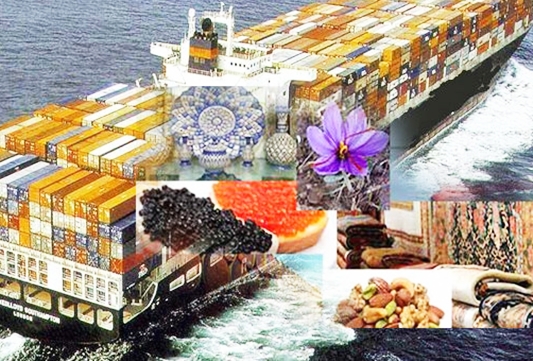
Of the mentioned fund, which was earmarked by the board of trustees of the National Development Fund (NDF) on June 7, IRR25 trillion (about $721m) was allocated as facilities for the promotion of non-oil exports and IRR30 trillion (about $865m) was allocated as floating capital for the implementation of development projects in the agriculture and industry sectors.

The government had previously announced an incentive package for the support of non-oil exports, and the fund allocated by the NDF is expected to boost exports of non-oil goods.

Expecting a 20% increase, the value of non-oil exports should surpass $50bn in the current Iranian calendar year (ending March 20, 2017), IRIB quoted Iranian Industry, Mining and Trade Minister Mohammadreza Ne’matzadeh as saying on May 28.

Mentioning that 32 countries have been already determined as export targets, the minister added, “According to the policies of resistance economy, comprehensive and goal-oriented support of exports and exporters is being emphasized.”

IRGC Takes Out Terrorist Cell in Northwest Iran

IRGC

According to the public relations department of the IRGC’s Hamze Sayyid al-Shohada base, members of the terrorist cell were killed in an ambush after extensive intelligence activities in the Sardasht region in the northwestern province of West Azerbaijan.

The statement also noted that a remarkable amount of weapons, ammunition and documents were seized from the terrorists after the operation.

The slain terrorists were those behind last month’s assassination of two local Basij members in the border city of Sardasht, and another engineer who was engaged in development projects that the IRGC carried out in border areas to tackle economic deprivation, the statement added.

PJAK is an offshoot of the internationally-recognized terrorist group, the Kurdistan Workers’ Party (PKK), which has conducted deadly operations in western Iran, northern Iraq and southern Turkey. PJAK terrorists are involved in regular armed clashes with Iranian security forces along the country’s western border with Iraq’s semi-autonomous Kurdistan region.

Chabahar Deal an Opportunity for Whole Region: Pak MP

82110835-70793165

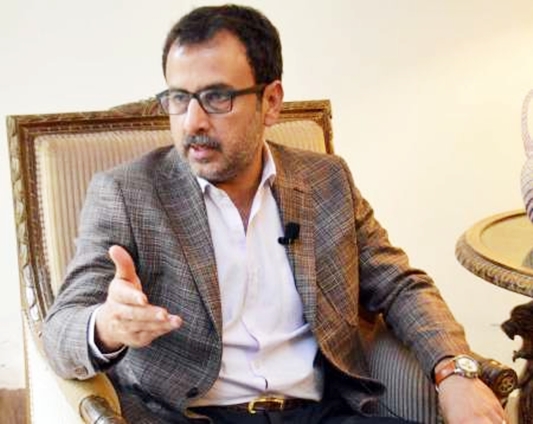
In an exclusive interview with IRNA, Sardar Awais Ahmad Khan Laghari said, “Chabahar, as a port near to Gwadar port in Pakistan, would create a positive competitive environment in that area and it will make both more efficient.”

The senior member of Pakistan’s ruling party (PML-N) reiterated that Chabahar and Gwadar ports ultimately would be run very professionally and, if there is positive competition, it would be helpful and beneficial for both Iran and Pakistan and other regional nations.

“I am the least concerned about any negative impact of the deal. Yes, it could have a negative impact if some players of the trilateral deal are able to convince their partners to use the deal against Pakistan’s interests but I am sure our brother and close neighbour Iran will never allow Chabahar to be used negatively against Pakistan’s interests, just as we would never allow any of our facilities or soil to negatively impact Iran’s economy,” said the MP.

Awais Laghari, a former federal minister for Information Technology (IT), went on to say that Iran and Afghanistan moving closer to India does not mean they are moving away from Pakistan.

“We don’t have any issue with India’s relations with any country in the region, and we do sincerely hope and pray that they do have a very good relationships with Afghanistan and Iran. But India has had a reputation in the past of using these relationships or this platform against Pakistan, and we are concerned about that,” he pointed out.

He viewed both Iran and Afghanistan as intelligent, mature and responsible enough not to move away from one country because they are getting closer to another country.
“I strongly believe Iran’s independent relations with any other country will never result in even a small gap between Pakistan and Iran and neighbouring, brotherly nations. The visit of Iranian president Hassan Rouhani to Islamabad earlier this year was very successful,” noted the top parliamentarian.

He strongly believed that it is very critical that Iran and Pakistan clinch the Iran-Pakistan (IP) gas deal as it is important for the bilateral ties, and anchoring this kind of big project is also very important for the security of Iran and Pakistan.

“I think there might be problems on both sides in the completion of the IP project but Iran, in my opinion, should press upon the international community to quit its double standards and allow financial institutions to invest and help the IP project reach completion in Pakistan,” said the political leader.

Awais Laghari, son of late Farooq Laghari, a former President of Pakistan, said Iran has had very good positive negotiations with the West, so they can press upon western countries to support projects like IP.

Pakistan to continue facilitating Afghan peace talks
Commenting on Pakistan-Afghanistan ties and the Afghan peace process, Laghari said, “Pakistan will continue to facilitate the peace talks as much as it can, but the success of the process depends on Afghanistan because it is an “Afghan-led and Afghan-owned” peace process, and other countries are just trying to help and facilitate.”

The MP said, “On the insistence of the international community, Pakistan has been engaging with the Afghan Taliban to convince and bring them to the negotiation table with the Afghan government.”

“Pakistan is not providing any kind of support to the Taliban. Pakistan is not behind illegal activities of the Taliban in Afghanistan. We are in a very difficult situation; on one hand we are sincerely making effort to bring the Taliban to the peace talks, as we have been asked to do by the international community and the Quadrilateral Coordination Group (QGC), but on the other hand we are being accused of not using force against the Taliban. It is not possible to use force against the group and at the same time, convince them to join the peace talks.”

Five key stakeholders in the Afghan peace process
“I think the QCG’s future lies in the resolution of five key stakeholders inside Afghanistan: the parliamentarians who might feel insecure because of the Taliban coming into mainstream politics; former president Hamid Karzai, who still holds an important and influential position in Afghanistan; Ashraf Ghani and Abdullah Abdullah as two key players in the Afghan coalition government; and the intelligence agency of Afghanistan (NDS),” Laghari said.

He went on to say that all these five stakeholders in Afghanistan have their own way of thinking, so the situation is complicated. “Hence America, China and Pakistan are put together and working closely to make the QCG process fruitful.”

Pakistan-US ties at low point
Commenting on the current tensions in Pakistan-US ties, Laghari said, “Pakistan-US relations are at a low point right now, after Washington refused to provide funds for Pakistan to procure F-16 aircrafts as promised.”

He described a recent deadly US drone attack on Pakistani soil as another reason for the downward trend in Washington-Islamabad ties. A US drone attack in Pakistan’s Baluchistan on May 21 killed former leader of the Afghan Taliban Mullah Akhtar Mansour.

He said Pak-US relations are strong, but some complications have arisen in the relationship from time to time, which need to be resolved by closer contact.

Commenting on Pakistan’s close ties with China and its efforts to develop even better ties with Russia, the MP said, “Our relationships, including the ones with the US, China and Russia, are independent of each other. This is a world where every country and nation needs to work to protect its interests.”

Expressing his views on US drone strikes he said, “I am strongly against any drone attack or any military intervention on our soil. After the drone strike in Pakistan which killed Mullah Akhtar Mansour, we called the US ambassador and lodged our protest.”

He said, “I strongly believe that whatever has happened has hurt the sovereignty of our country and Pakistan has the right – and we are exercising our right – to protest this incident and to make sure that this kind of incident does not take place in future, when Pakistan’s reaction may be harsher.”

To a question on the 34-nation military coalition led by Saudi Arabia, of which Pakistan is a leading member, the parliamentarian said, “The role of Pakistan in the coalition is very clear, as the country will be sharing intelligence and providing some equipment.”

“Our policy is very clear that Pakistan will never want to play any role in coalition against the interest of any country in the region,” he said.

 

Iran’s Refining Capacity to Surpass 1.8m bpd This Year

Saeed Mahjoubi

Saeed Mahjoubi, an official at the National Iranian Oil Products Distribution Company (NIOPDC) said on Monday June 13 that with the completion of development projects in the petrochemical sector across the country, the national refining capacity will surpass 1.85m bpd this year.

Speaking to Shana, he underlined that refineries should undergo a full set of repairs and this is key to the realization of targeted goals in petrochemical sector.

Each refinery will need more than two or three billion dollars of investment to execute its development projects, Mahjoubi added.

The official said that NIOPDC will pursue production of qualified products based on Euro 4 standards in the petrochemical sector. NIOPDC has started a program for decreasing fuel consumption in all refineries across the country, and will continue it to optimize the use of energy in this sector, he noted.

Abbas Kazemi, managing director of NIOPDC, said before that Iran’s refining capacity can reach 3.1m bpd once several refinery projects become operational across the country in the years to come.

He noted that some of these projects are underway in Persian Gulf Star Refinery, Siraf Refinery and Anahita Refinery. The refineries will process crude oil, gas and condensates, he said.

“Promoting the optimum use of energy, avoiding sales of crude oil and gas, strengthening the economy against foreign assaults such as sanctions, and bolstering national self-esteem and confidence are among the policies that NIOPDC is seeking to realize,” the official said.

Leader Makes Donation to Charity Appeal to Free Prisoners

Iran Leader - Ayatollah Khamenei

The charity organization launches annual appeals in the Muslim holy month of Ramadan to raise money for the release of deprived prisoners serving sentences for unintentional crimes.

The funds raised by the organization are used to pay Diyya (blood money) to the victim or heirs of the victim that the prisoners have harmed unintentionally.

In Islamic Sharia law, Diyya is the financial compensation paid to the victim or their next of kin in cases of murder, bodily harm or property damage. It is an alternative punishment to Qisas (equal retaliation).

Ramadan, the ninth month of the Islamic lunar calendar, marks the most special of all occasions for Muslims. It is a time for contemplation, devotion and remembrance of God. Tending to the welfare of the less fortunate members of the community and giving to the poor are among the important practices of the holy month.

Iran and Russia to Ramp Up Nano Cooperation

Iran-Russia

Saeid Sarkar, Head of Iran Nanotechnology Initiative Council (INIC), said the sides also took decisions about 12 further cases of nano cooperation. “Russia has made good progress in the area of technology and Iran also has a high standing in the field of advanced technologies such as nano, bio, cognitive sciences and converged technology,” Sarkar said, stressing that the two countries’ technological cooperation will be of great benefit to both sides.

“The Iran-Russia High Commission on Technological Cooperation can prove to be very effective in providing the two countries with a chance to boost such cooperation and in the near future, the two sides can implement several operational projects,” he said.

Sarkar went on to add, “During the commission’s meeting, Russia agreed to provide Iranian researchers with their infrastructure, since this is a very special opportunity for them. We are also hoping to launch a number of projects in the field of advanced nano materials.”

“Russia has requested our carbon nanotubes and we will begin the technology transfer from Iran after evaluation. In return, a number of technologies such as anti-corrosion coatings will be transferred to Iran,” he said.

The third Iran-Russia High Commission on Technological Cooperation was held in Moscow early this June, with Iran’s VP for science and technology Sorena Sattari and his accompanying delegation in attendance. The commission, which was established last year and is co-chaired by Sattari and Russian Deputy Prime Minister Dmitry Rogozin, comprises 10 specialist committees and sub-committees in the fields of space and aeronautics, nanotechnology, biological and medical technology, energy, and information technology.

In May, Saeid Sarkar, while noting the presence of over 28,000 nanotechnology experts in Iran, said the country’s scientific ranking had improved this year to 6th, exceeding Japan, which now is ranked behind Iran after China, the US, India, South Korea and Germany.

A Look at Iranian Newspaper Front Pages on June 13

Iran Newspaper front pages

Iranian Foreign Minister Mohammad Javad Zarif’s Sunday address to the new members of Iran’s Parliament was a top story in many newspapers. He briefed the MPs on the latest achievements of the JCPOA and provided them with statistics regarding the deal and its positive outcomes.

Today is the third anniversary of President Hassan Rouhani’s victory in the 2013 Presidential Elections. Several media discussed his 3-year performance, and Iran, in particular, published a special 128-page issue on the anniversary with many interviews and comments by popular figures from different social, economic, cultural, and political fields.

A recent terrorist attack in the US city of Orlando was also widely covered. The attack on a gay nightclub killed at least 50 and wounded dozens more.

Iranian media also covered recent statements by US officials denying Saudi Arabia’s role in the 9/11 attacks. The remarks received great coverage because they came shortly after the UN decision to remove Riyadh’s name from a blacklist of children’s rights violators under Saudi pressure.


Abrar:

1- Russia Ready to Sell Arms to Iran

2- Iraqi Forces Make Progress in Battle against ISIS in South Mosul

3- We Didn’t Have Money to Make a Film about Rumi: Iranian Director

A Look at Iranian Newspaper Front Pages on June 13


Abrar-e Eqtesadi:

1- Indian Rupee Removed from Iran’s Oil Deals

2- Iran Continues Negotiations with Italy for Airport Terminal Design

A Look at Iranian Newspaper Front Pages on June 13


Aftab-e Yazd:

1- FM Addresses Parliament: Zarif Wasn’t Threatened to Be Buried in Cement This Time!

2- Oil Price to Hit $70, Aftab-e Yazd Predicts

3- Role of Ahmadinejad Government in Huge Salaries

4- General Soleimani Will Not Choose to Run for Presidency: Politician

5- We’ll Sell Airplanes to Iran: Boeing

A Look at Iranian Newspaper Front Pages on June 13


Arman-e Emrooz:

1- Without JCPOA, Iran Could Not Sell Any Crude Oil: Zarif

2- Conservatives May Keep Silent in 2017 Presidential Elections: Politician

3- In Some Private Hospitals, Female Nurses Are Paid for Cosmetics They Use!

4- Rouhani’s Order on Astronomical Salaries: Retrieve the Money and Dismiss the Offenders

A Look at Iranian Newspaper Front Pages on June 13


Asia:

1- George Soros Sells All His Shares in Stock Exchange Market, Buys All the Gold He Can

2- JCPOA: A Driving Force for Opening Markets or a Road to Crisis?

A Look at Iranian Newspaper Front Pages on June 13


Asrar:

1- Fallujah on Verge of Full Liberation

2- Offending Executives to Be Dismissed on Rouhani’s Order

3- US Shocked by Terrorist Attack: Over 100 Killed and Wounded in Orlando

4- Some Countries Want to Create Problems on Nuclear Issue: Larijani

A Look at Iranian Newspaper Front Pages on June 13


Etemad:

1- $700m Monthly Payment to Gov’t Treasury: Zarif Briefs Parliament on Positive Outcomes of JCPOA

2- 1,100 Days Later: How Rouhani Spent His Term

3- Rouhani Popular among Iranians: Politician

4- Rouhani’s Brother Neither Arrested Nor Summoned: Judiciary Spokesman

A Look at Iranian Newspaper Front Pages on June 13


Ettela’at:

1- 42,000 Homeless People Identified across Iran: 15,000 in Tehran

2- ISIS Attacks Florida, Kills 50

A Look at Iranian Newspaper Front Pages on June 13


Ghanoon:

1- 1096 Days: Moderation without Economy

2- Opponents and Proponents of Gov’t Dissatisfied with Its Economic Policies

3- Empire of Quasi-Governmental Bodies: Economic Prescriptions for Gov’t

A Look at Iranian Newspaper Front Pages on June 13


Haft-e Sobh:

1- Story of Secret Biological Terrors: Nader Talebzadeh Says He Was a Victim

2- Astronomical Salaries to Be Investigated by Judiciary

A Look at Iranian Newspaper Front Pages on June 13


Hamshahri:

1- Zarif Criticized US over Violation of Its Commitments

2- City Council Asks Rouhani to Prevent Trade Exhibitions from Being Held in Tehran

A Look at Iranian Newspaper Front Pages on June 13


Hemayat:

1- Certain Foreign Embassies’ Recruitment at Overnight Parties: Judiciary Spokesman

2- Iran to File Lawsuit against US in ICJ: Zarif

3- Parliament Speaker Urges Gov’t to Counter US Excessive Demands

4- After Being Removed from UN Blacklist, Saudi Arabia Buys US Congress as Well

A Look at Iranian Newspaper Front Pages on June 13


Iran:

1- Serious Confrontation with Unconventional Salaries Paid to Certain Executives

2- Deadliest Shooting Incident in US History: ISIS Claims Responsibility for Attack on Gay Nightclub

3- Bank Mellat Holds Meeting with British Lawyers to Pursue $4bn Compensation for Anti-Iran Sanctions

A Look at Iranian Newspaper Front Pages on June 13


Javan:

1- ISIS’s Dagger at a Time of Compromise [USA’s compromise with Saudi Arabia, which according to Javan, is a state-sponsor of ISIS terrorists]

2- Al Saud House Baptized in Washington: First, Saudi Arabia’s Name Removed from UN Blacklist, Now Their 9/11 Role Is Whitewashed

3- Rouhani Joins Campaign against Astronomical Salaries: A Sudden Change after 3 Years!

A Look at Iranian Newspaper Front Pages on June 13


Jomhouri Eslami:

1- Parliament Speaker and FM Zarif Strongly Support JCPOA

2- First Foreign Petchem Contract Signed after JCPOA

3- UN Discredited More than Ever [Editorial]

A Look at Iranian Newspaper Front Pages on June 13


Kayhan:

1- Poor Economic Management Contributes to Enemy’s Plots

2- Damascus: Terrorist Attacks in Sayyidah Zaynab and Aleppo Sponsored by Fascist Regime of Erdoğan

3- 10 Economists Say Gov’t Failed in Its 3-Year Economic Performance

4- Zarif: Not a Single Item Has Been Added to Anti-Iran Sanctions!

A Look at Iranian Newspaper Front Pages on June 13


Khorasan:

1- Iran’s New Oil Contracts and Amendments: an Acceptable Plan Based on a Shaky Foundation

2- Deadliest Attack in US History after 9/11

A Look at Iranian Newspaper Front Pages on June 13


Resalat:

1- US Denies Saudi Arabia’s Role in 9/11: Obama Pleased with Saudi Arabia’s Bloody Dollars

2- Main Factor behind Crisis in Iranian Factories Is Import of Similar Products

3- Will Sanders Supporters Vote for Clinton?

A Look at Iranian Newspaper Front Pages on June 13


Sayeh:

1- Payment of Unconventional Salaries Is Abuse of Administration’s Trust: Rouhani

2- Our Security Threats Are Serious: Senior Lawmaker

A Look at Iranian Newspaper Front Pages on June 13


Shahrvand:

1- Drop in Internet Prices: National Information Network to Be Launched

2- Teenagers Born after 2000: Social Capital or Left behind in Cyberspace?

3- Florida in Fear and Blood

4- Punishment of 7 Prisoners on Death Row Commuted to Life Terms

5- Volleyball Has Become Iranian People’s Identity: Federation President

A Look at Iranian Newspaper Front Pages on June 13


Shargh:

1- Closed Book of Martyrs Foundation Report: Untold Stories about an Investigation

A Look at Iranian Newspaper Front Pages on June 13


Sobh-e Now:

1- Launch of Iranian Satellite Channel

2- Iran, a Paradise for Offending Drivers: Speeding Fines in Different Countries

A Look at Iranian Newspaper Front Pages on June 13


Vaghaye Ettefaghieh:

1- Iran on Track with Global Banks: $35bn Foreign Lines of Credit to Be Established

2- Jubeir Personally Threatened UN’s Ban Ki-moon: Diplomats Reveal

3- Improvement of Iran’s Rank in Production of Effective Knowledge

A Look at Iranian Newspaper Front Pages on June 13


Vatan-e Emrooz:

1- “Sedqi and Associates”: Manager of Bank Refah with Controversial $66,000 Paycheque Is a Partner with Rouhani’s Brother in Famous Currency Exchange Firm

2- Former Nuclear Negotiators, Nasseri and Mousavian, Being Investigated: Judiciary

A Look at Iranian Newspaper Front Pages on June 13