Sunday, January 18, 2026
Home Blog Page 4440

Top Priority of Iran’s Judiciary: Promotion of Legitimate Freedoms

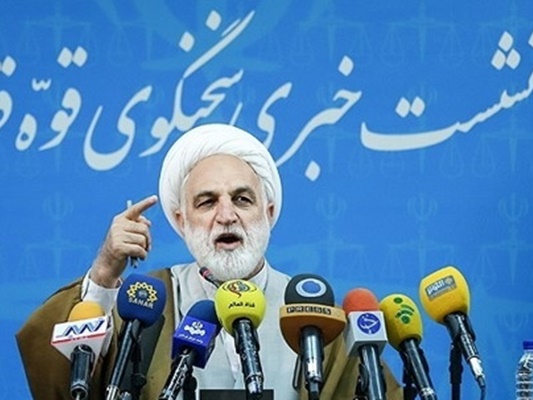
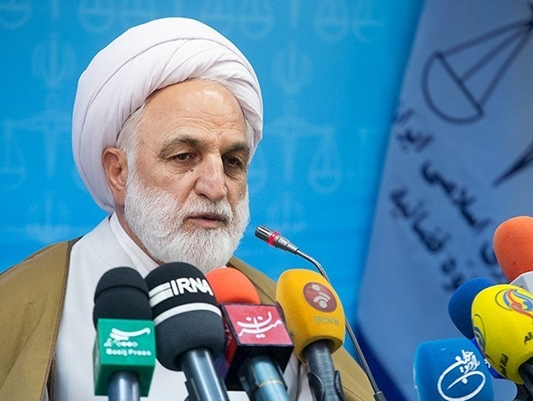
Ejei

“This year, as in the previous year, the priority of Iran’s Judiciary is to restore public rights and promote legitimate freedoms as per Article 156 of the Islamic Republic of Iran’s Constitution,” Mohseni Ejei noted on Sunday, June 19.

He made the remarks during his weekly press conference, as reported by IRNA and translated by IFP.

“Today, anything related to the wellbeing of people’s lives and souls is among the Judiciary’s priorities, and the organization will boost its efforts to restore these rights for society using its powers,” he went on to say.

It is written in Article 156 of Iran’s Constitution that “The judiciary is an independent power that protects individual and social rights and is responsible for actualizing justice.”

The Article further holds the Judiciary responsible for five duties, including, “Investigating and issuing judgment on grievances, infringements of the law, complaints, settling litigations and resolving hostilities, making decisions and taking the necessary actions in probate matters as determined by the law; Restoring public rights and promoting justice and the legitimate freedoms; Overseeing the quality of the execution of the laws; Uncovering crimes, prosecuting, punishing and reprimanding criminals; and enforcing the conditions and regulations of the established Islamic penal code; and taking appropriate steps to reform the criminals and to prevent crimes.”

Iran MPs Pledge ‘Unforgettable’ Response to Any Nuclear Deal Breach

Iranian Lawmakers Endorse Anti-Israel Motion ahead of Quds Day

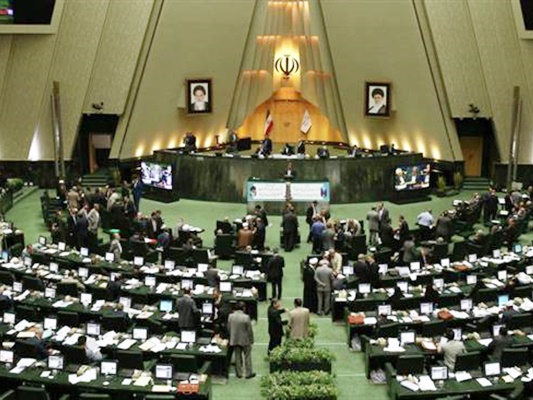
In a letter issued on Sunday, as many as 237 MPs announced their “firm” support for Ayatollah Seyyed Ali Khamenei’s recent remarks in an apparent riposte to a US presidential candidate’s threat to tear up the deal.

“In case the opposite side breaks its promise, we will teach the violators an unforgettable lesson, and make their arrogance regret its breach of promise,” the letter said.

Presumptive Republican candidate Donald Trump said last August it would be hard to “rip up” the deal, but if elected president he would “police that contract so tough they don’t have a chance.”

“The Islamic Republic won’t be the first to violate the nuclear deal. Staying faithful to a promise is a Qur’anic order,” Ayatollah Khamenei said earlier this week.

“But if the threat from the American presidential candidates to tear up the deal becomes operational then the Islamic Republic will set fire to the deal,” the Leader added.

Elsewhere in their statement, the Iranian parliamentarians noted that the country’s strategic nuclear industry should be preserved and developed.

They further said that based on the teachings of the Holy Qur’an, the Islamic Republic will abide by its commitments under the nuclear deal as long as the opposite side fulfils its obligations.

New Spokesman for Foreign Ministry Appointed

57305890

Qassemi previously served as Iran’s ambassador to Ireland, Italy and Spain, was head of the second bureau on political department, head of the first bureau of commonwealth states, director general for the Western Europe department and deputy head of the Strategic Research Centre for International Studies.
Hossein Jaberi Ansari became new Deputy Foreign Minister for Arab-African Affairs.
Former Deputy Foreign Minister for Arab-African Affairs Hossein Amir-Abdollahian in a decree was promoted to the advisor to Foreign Minister Zarif.

Iranian-Designed Robots to Build Structures in a Day

buildings

Behrokh Khoshnevis, an Iranian professor at USC Viterbi School of Engineering in California, US, told Mehr that he has been working on the Selective Separation Sintering (SSS) process for 20 years so that he can build structures in an automated way using 3-D printing.

According to him, SSS is the first process which will be able to work in zero gravity. Compared to expensive technologies like lasers, SSS provides more speed, accuracy and independence and has high potential for space and interplanetary use, he added.

Khoshnevis, who is a two-time NASA competition winner, maintained that construction work is highly dangerous, and statistics show that approximately 60,000 people lose their lives during construction. “Construction also takes a lot of time and costs a lot of money, therefore building structures by robots is an urgent need.”

The Iranian engineer added that his project has been followed up by NASA to be implemented on other planets as well, saying “For years, I have been conducting various research and development on the construction of structures on the moon and Mars from the materials available in space. I am hoping to be able to apply this project in Iran as the first country of choice.”

“With this method, a 200m structure can be built in one day,” he said, adding, “Of course, we will begin with smaller buildings, and with bigger machines we can construct bigger structures.”

He further added that this technology enjoys massive energy and environmental benefits, adding “Any structure can have a unique design of its own with complex curves.”

Khoshnevis’ existing Contour Crafting, a mega-scale 3-D printing process, won the grand prize in a 2014 NASA competition.

Red Crescent in Iran Gets 5 Air Rescue Helicopters

13941216170110507284334

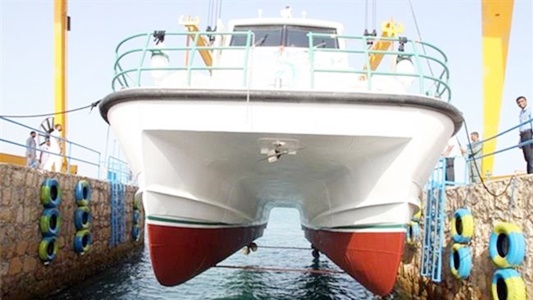
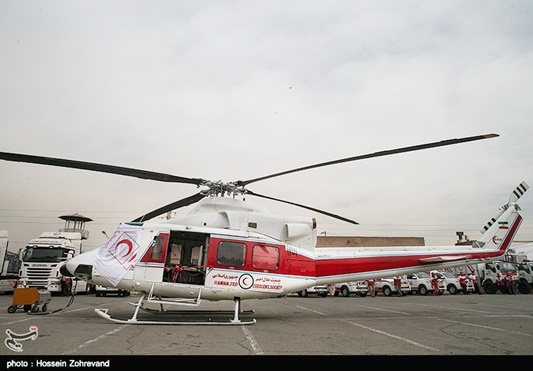
Speaking to Tasnim, Morteza Salimi, deputy head of the IRCS Relief and Rescue Organization, said the five Bell 412’s are now being flown in flight training courses. The new helicopters have the capability to land on water, he added.

The Iranian Parliament has recently allocated a budget to boost the country’s rescue and relief operations.

Relief choppers are used by the Iranian Red Crescent Society, a nongovernmental humanitarian organization, for search-and-rescue missions and transporting victims of natural disasters.

Iranian Researchers Improve Solar Cells with Jellyfish Protein

jellyfish protein

Raheleh Mohammadpour, the project manager, said bio solar cells are a new generation of thin-layered solar cells with a structure and function similar to that of a leaf. She added that the project aimed to optimize the performance of energy conversion in bio solar cells with the use of new light-activated materials.

“The solar cells produced in this project have a much lower cost of production compared to the older generations of solar cells, and their energy conversion efficiency has been reported as being much higher,” she said, adding, “Also, due to the fact that a large part of these cells are made of protein nanoparticles, they contain self-healing properties.”

“In this project, we used light-activated proteins such as bacteriorhodopsin (extracted from a kind of bacterium) and Green Fluorescent Protein (produced as a recombinant) in order to absorb light,” she explained.

Green Fluorescent Protein (GFP) is found in jellyfish and is what makes jellyfish glow in the dark. When a droplet of GPF is placed onto aluminium electrodes, then exposed to ultraviolet light, an electric current is generated that can be used for powering bio solar cells.

According to Mohammadpour, with further optimization of energy conversion, these cells can replace the older generations of solar cells in the near future. The results of the research have been published in Biomass and Bioenergy.

Iran Refinery Output at 1.83mbd

214629_orig

Speaking to Shana, Shahrokh Khosravani, deputy managing director of the National Iranian Oil Refining and Distribution Company (NIORDC), said the production capacity of the country’s refineries stands at 1.85mbd and production came in at 1.83mbd over the past three months since the start of the year.

He said Iran will add 70% to its refinery capacity to reach 3.2mbd by 2020.

The boost will become possible once numerous major refinery projects become operational by 2020, including Persian Gulf Start Refinery (360,000 b/d), Siraf Refinery (480,000 b/d), Anahita Refinery (150,000 b/d), Bahman Kano Refinery (300,000 b/d) and Pars Refinery (120,000 b/d).

Academic: Muslim Brotherhood Is the Only Path to Democracy in Arab World

Feyrahi

The first part of his interview with Etemad about Ennahda, the Tunisian version of the Brotherhood, was earlier published in IFP . Here’s the second part, which talks about the importance of the movement in the Arab world.

“Since 1995, the idea of nationalizing Brotherhood movements gradually emerged inside the Movement. Therefore, Brotherhood movements gained more independence inside the countries. […] This led to a sort of paradox inside the Muslim Brotherhood: how could the Movement possibly remain a global network sensitive to the entire Arab world and at the same time gain national independence? This is what Ennahda does: the Party has highlighted the other side of the spectrum, and that is giving independence to Muslim Brotherhood parties inside national states.”

“During the Ennahda Congress, it was declared that Tunisia is preferred to Ennahda. That means Tunisia’s interests have priority over the Party’s interests. Ennahda is a religious party, but at the same time has its roots in Tunisia. If there is a conflict between Tunisia’s interests and those of others, Ennahda would declare itself to stand for Tunisia. This idea has a tendency to independence and giving priority to the concept of nationality.”

“There is a very important question among Muslim movements, and that is the concept of the national state. It was very difficult for the Muslim Brotherhood to accept this concept. There might be problems with the issue even in Shiite communities, let alone Sunni ones, whose problems are much greater. That is because Sunnis had caliphates and did not experience a national government. Therefore, they were not familiar with the concept of nationality.”

“In Tunisia, Ghannouchi seeks to maintain religion and at the same time institutionalize a national state and nationalism. He is doing his best to open the way for this; despite all problems, he has chosen a correct path, while Turkey has problems with the same issue.”

“In a letter Ghannouchi recently sent to Muslim Brotherhood headquarters, he declared his party had decided to suspend its ties with the Movement. It questioned the Muslim Brotherhood’s interference in all countries, asking whether it even has the right to meddle in different places like Syria. It suggests that the Movement should let national movements resolve their issues nationally, because the Muslim Brotherhood interrupts the process of the birth of nationality. […]”

“The Muslim Brotherhood moved towards democratic movements. Radical polarized movements have long existed within Muslim Brotherhood. This tendency towards democracy in the Brotherhood has currently been delayed. […] It is likely that once democratic efforts for the Brotherhood’s operations fail, the radical faction dominate the democratic one. […]”

“The Muslim world has no choice; it should either take the path of democratization seriously or else the crisis of radicalism will continue in the region. There is no other choice at the moment. Especially for the Sunni world, there are no further choices available. If it wants to move towards democratization, the Muslim Brotherhood, particularly its modernist faction, is the only force equipped to manage the democratization inside the Sunni Muslim community. There is no other way, because seculars are not that powerful in the Muslim world […]. Therefore, the only player that can carry out the ideology of democratization is the Muslim Brotherhood. No better choice is there, because there are a number of radical Salafists among Sunnis, and the others are Brotherhood members. If we look at the wiser factions of the Salafists, like the Salafis of Saudi Arabia’s Sahwa Movement or Safar Al-Hawali, we see they are approaching the Muslim Brotherhood under the new circumstances.”

“The Muslim Brotherhood has not stopped working. In Egypt, for example, […] President Sisi is not capable of realizing a democratic evolution; any democratic change needs either secular democratic movements or democracy-seeking Muslims, or the Muslim Brotherhood.”

“The Brotherhood’s operation is currently prevented by the [Egyptian] Army. If the Army decreases its pressure a little bit, the Brotherhood would find time to reconstruct its activities. Even if people refuse to vote for the Movement, it is important, though, that Muslim Brotherhood has been a major pillar of the democratic process. Without the Muslim Brotherhood, democratic Muslims will leave the political arena, because it is only the Muslim Brotherhood that talks about religious democracy.”

“If we could witness an opening up of Egypt’s political atmosphere, the political game there would fall on the shoulders of young secularists and the Muslim Brotherhood. Democratic rhetoric should either be based on religious or radical values; the religious version belongs to Muslim Brotherhood. Therefore, it might receive 50% of votes in one election, and it might lose its popularity in the next. This is not important, however. The important point is that the Muslim Brotherhood is a prerequisite for moving towards democracy in Arab countries.”

“In the Sunni Muslim world, there is no group [other than Muslim Brotherhood] that can create democratic rhetoric and justify it using religion. We are now facing a necessity and scarcity here.”

“In Saudi Arabia, the Muslim Brotherhood has long been suppressed. They tried to create the Sahwa Movement from Saudi Arabia’s Salafism. […] Saudi Arabia wanted to develop a relatively more rational movement inside Wahhabism, but it was not skilled in doing so, and this will soon move towards democracy as well.”

“In Yemen, however, al-Islah [Reform] Party is a very powerful movement. If some room is provided for democracy in Yemen, al-Islah can become a great political player in the country, and even outperform the Houthis.”

“The only exception is Syria. Because of Hafez al-Assad’s crackdown from 1982 to 1986, the Muslim Brotherhood failed to make much progress towards democratization there. Because of the crackdown and the conflicts, the Muslim Brotherhood in Syria was not allowed to be part of the country’s power structure. So it remained radical and adopted extremist stances.”

“However, this has not been the case in other countries. For example in Jordan, if enough space is provided, Amal Party is in a powerful position and has the potential to guide democracy. If you look at Muslim countries such as Algeria, Morocco, Egypt, Yemen, Tunisia, Turkey, and Jordan, you will see that the Muslim Brotherhood is very strong, and is the only potential, and even actual, engine for guiding democratization.”

“There are three conditions for democracy, and if all of them are provided in one place, the process can be successful. First, there should be democratic thought; second, democratic institutions, and finally, bearers of democracy. Inside the Sunni Muslim community, the Muslim Brotherhood is the only place where one can find democratic thought. They can be the carriers of democracy, but they have institutional problems, because the government does not allow their presence in the political arena. However, if such space is provided, the Muslim Brotherhood is the quickest movement to adapt itself to democracy. Otherwise, it has no replacement.”

The Huge Cost of Refugees in Iran

Zolfaghari

Speaking at a joint press conference with the United Nations High Commissioner for Refugees Filippo Grandi on Saturday evening, June 18, Zolfaghari pointed to three types of expenses in connection with the issue of refugees and migrations on Iran.

“Iran has the largest refugee population, with the longest period of nearly four decades, imposing huge costs. The next type [of cost] is that the Islamic Republic of Iran has contributed as much as possible to the reconstruction of Afghanistan and providing its security and development,” he said.

Zolfaghari noted that Iran has also made great efforts in preventing illegal migration to other countries, especially to Europe.

“What we reached as a fundamental solution together with the UNHCR chief today is that the most basic work to solve the refugee problem is for the international community to take responsibility to eliminate insecurity in the region and also deal with extreme poverty in these countries,” he added.

“As long as Afghanistan suffers from insecurity and deteriorating living conditions, refugees will never return home voluntarily,” Zolfaghari added. He called for the international community to help Afghanistan restore security and development and provide better conditions for refugees to come back home.

The second solution, he went on to say, is to help Afghanistan restore its infrastructure and to develop.

Zolfaghari said the other solution is temporary housing of refugees in other countries, which is unfortunately declining, but can significantly help the refugee crisis.

He emphasized that the international community’s assistance to the Islamic Republic of Iran for healthcare, education, livelihood and employment should be increased.

“Iran spends $570 for the education of each Afghan and Iraqi student annually,” he said, stressing that international aid should be increased to provide better services to refugees.

He expressed his satisfaction with the good coordination between the Islamic Republic of Iran and the UN High Commissioner for Refugees, and hoped his trip would help solve the problems of refugees in Iran and the region.

Greco-Roman Wrestlers Win 8 Medals at Romanian Event

Greco-Roman wrestlers

The sporting event, also dubbed as Ion Cornianu & Ladislau Simon, is being competed in the Romanian capital of Bucharest on 18-19 June.

At the end of the first day of the tournament, Iran’s Azim Garmsiri (71kg), Yousef Ghaderian (80kg) and Mjid Aliyari (98kg) snatched gold medals while Behnam Mahdizadeh (80kg) and Mahdi Fallah (130kg) stood on the second podium.

Meanwhile, Shirzad Beheshti (59kg), Mohammad Ali Geraei (71kg) as well as Mahdi Noori (130kg) managed to bag bronze medals for the Iranian squad.

The first three winners of each weight category will be awarded with medals and diplomas.