Saturday, January 17, 2026
Home Blog Page 4429

Hamas Asks Palestinians to Stage Sit-In at Al-Aqsa Mosque

Al-Aqsa Mosque

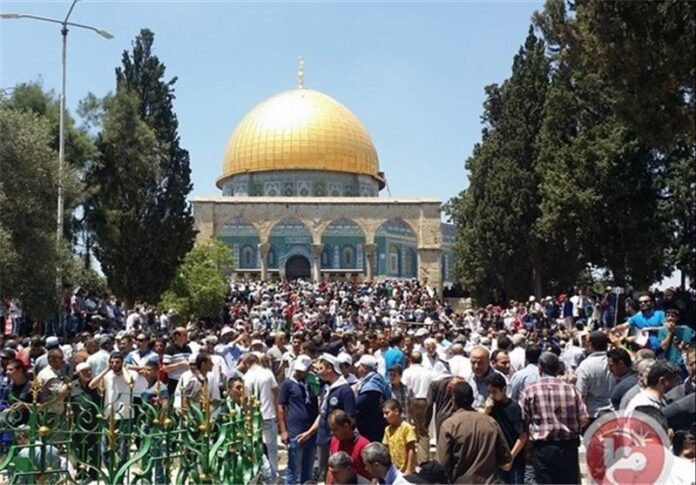
Hamas spokesman Husam Badran, in a statement, stressed the necessity for the massive presence of Palestinians from all walks of life at the compound to protest against recent desecration of the Al-Aqsa Mosque and attacks on Palestinian worshippers by the Israeli forces and settlers.

He further emphasized that the acts of aggression, which have been committed by the Israelis over the past two days, are not something new and had also occurred before the holy month of Ramadan.

Badran added that the Israeli aggressions, which have severely hurt the feelings of Muslims, are “a real test of patience” against the relentless assault on Palestinians and the mosque.

He also called on Palestinians to stage a sit-in during the third ten days of Ramadan.

A number of Palestinian worshippers were injured and arrested at Al-Aqsa Mosque compound in the Israeli-occupied Old City of al-Quds (Jerusalem) after Israeli forces stormed the holy site yet again.

Israeli forces stormed Almagharba Gate at Al-Aqsa Mosque on Sunday and allowed Israeli settlers and foreign tourists in, according to media reports.

Firas Al-Dibs, the Media coordinator at the Waqf authority at Al-Aqsa said, “Israeli forces stormed Al-Aqsa after some worshippers protested the presence of Israeli settlers and foreign tourists inside the Mosque.”

He added that three Palestinians were injured in the assault, including one of the guards of Al-Aqsa.

The al-Aqsa Mosque is the third holiest site for Muslims after Masjid al-Haram in Mecca and Masjid al-Nabawi in Medina.

Palestinians are angry at increasing violence by Israeli settlers at the al-Aqsa Mosque compound and their attacks on Palestinian property, saying the Tel Aviv regime seeks to change the status quo of the sacred site.

President Urges Firm Action Over Saudi Embassy Raids

President Rouhani

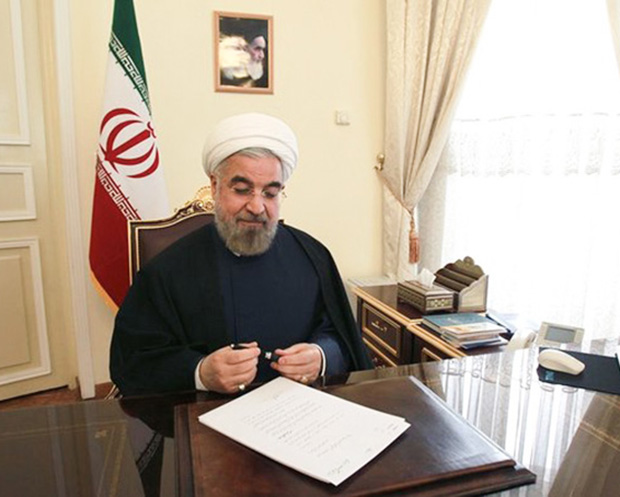
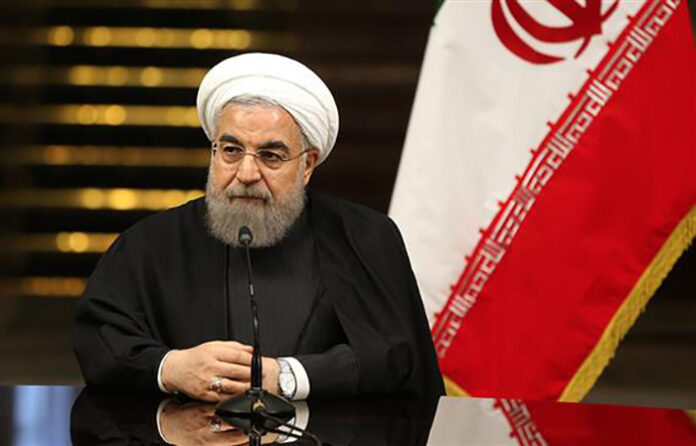
Addressing a ceremony that marked the beginning of the Judiciary Week in Iran on Tuesday, June 28, Rouhani emphasized the importance of public trust in the judicial institution.

“The reason why everyone can go to sleep calmly at nights in Iran is the presence of a capable judiciary,” the President said at the ceremony, which was attended by the heads of the other two branches of the Iranian government as well.

Referring to the raids on the Saudi diplomatic premises, Rouhani said, “The public wants to see how the Judiciary deals with the perpetrators of and those behind the move — who are well-known — and how the public is notified of [potential] verdicts.”

The raids occurred on January 2, when demonstrations were held in front of the Saudi embassy in Tehran and its consulate in Mashhad — both of which were vacant at the time — over Saudi Arabia’s move earlier to execute a prominent Saudi cleric, Sheikh Nimr al-Nimr.

Some angry protesters climbed over the walls of the consulate in Mashhad, while incendiary devices were hurled at the embassy in Tehran. A day later, Saudi Arabia cut its diplomatic ties with Iran. Iranian officials promptly condemned the attacks, and some 100 people were arrested over the acts of transgression.

In his remarks on Tuesday, the Iranian President said every country is responsible for the provision of security for foreign diplomatic missions stationed on their territory.

He also emphasized the significance of the due application of justice, which he implied ensures psychological security for those seeking to invest in the country.

“If foreign investment is made in the country, it is because of trust in a healthy and fair judiciary in it,” he said.

Iran, Russia Security Officials Discuss Syria, Bilateral ties

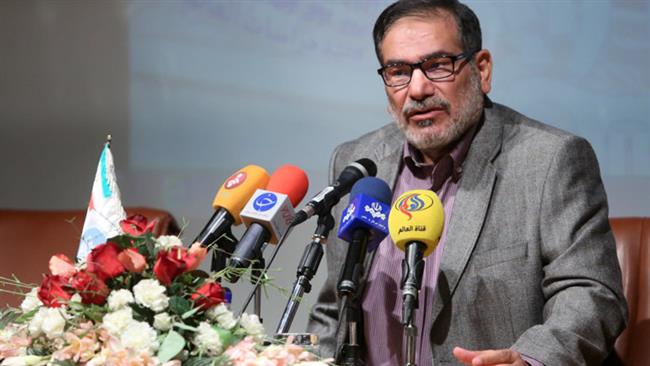
Ali Shamkhani
Ali Shamkhani, Secretary of Iran’s Supreme National Security Council (SNSC)

Ali Shamkhani, the secretary of Iran’s Supreme National Security Council (SNSC), met with Russia’s Defense Minister Sergei Shoigu in Moscow late on Monday, when the two officials exchanged viewpoints about developments in Syria and bilateral cooperation for a political solution to the foreign-sponsored crisis in the Arab country.

Shamkhani also held a separate meeting with Nikolai Patrushev, the secretary of the Security Council of the Russian Federation (SCRF), discussing with him regional developments and cooperation and the exchange of information between SNSC and SCRF.

Additionally, the top Iranian official met with Russia’s special envoy on Syria, Alexander Lavrentiev. The two discussed the status quo in Syria, potential future developments there and strategies to resolve the Syrian crisis.

Shamkhani traveled to Moscow for the high-level meetings on Monday. Before departing the Russian capital for Tehran, he elaborated on the topics of discussions he had had with Russian authorities. He said common areas of interest, including regional issues, mutual security cooperation, regional terrorism, the situation in Syria as well as continued contacts between SNSC and SCRF, were discussed.

On June 9, Iranian, Russian and Syrian defense ministers met in the Iranian capital, Tehran, to coordinate and step up their efforts in the anti-terrorism fight.

“We made decisions for what must be done on the regional and operational levels and in a consensual and coordinated manner,” Iranian Defense Minister Hossein Dehqan said back then after meeting with his Syrian and Russian counterparts.

Syria has been gripped by foreign-backed militancy since March 2011. United Nations Special Envoy for Syria Staffan de Mistura estimates that over 400,000 people have been killed in the conflict. The UN has stopped its official casualty count in Syria, citing its inability to verify the figures it receives from various sources.

Iran and Russia are Syria’s main allies against the various foreign-backed armed groups fighting to topple President Bashar al-Assad, including Daesh terrorists.

Russia launched an aerial military campaign against terrorist groups in Syria last September upon a request from the government in Damascus. The air raids have expedited the advances of Syrian forces against the militants on the ground.

Iran has also been offering military advice to the government in Damascus.

A ceasefire brokered by the US and Russia went into effect in Syria on February 27, but it does not apply to the Daesh and al-Nusra Front terrorist groups.

The Syrian army has vowed to press ahead with its counter-terror operations and uproot the terrorists.

Sweden’s Ultra-Runner Makes Movie about Her Running in Iran

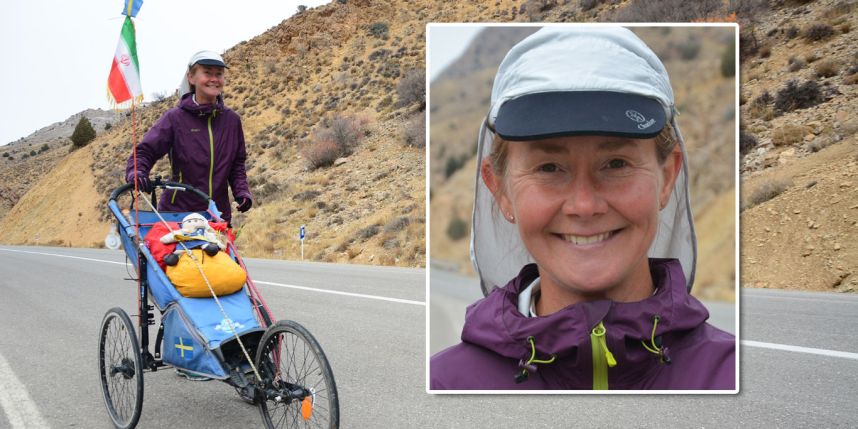
Kristina Paltén - Iran

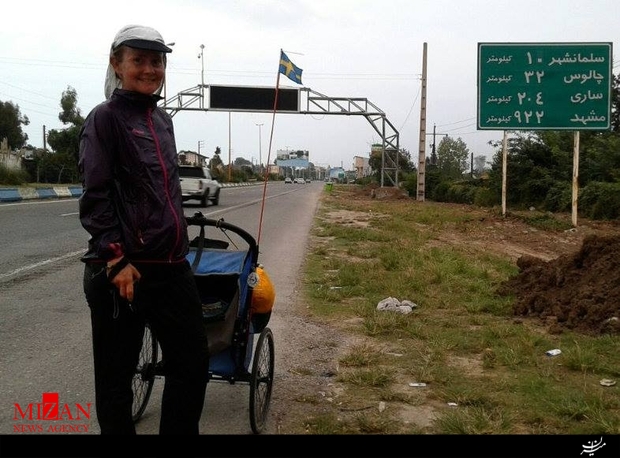
Asr-e Iran released a report on a Swedish runner who has decided to make a movie of her running in different parts of Iran in order to change the unfairly stereotypical image of Iran and the Muslim world shown internationally. The report was translated by IFP.

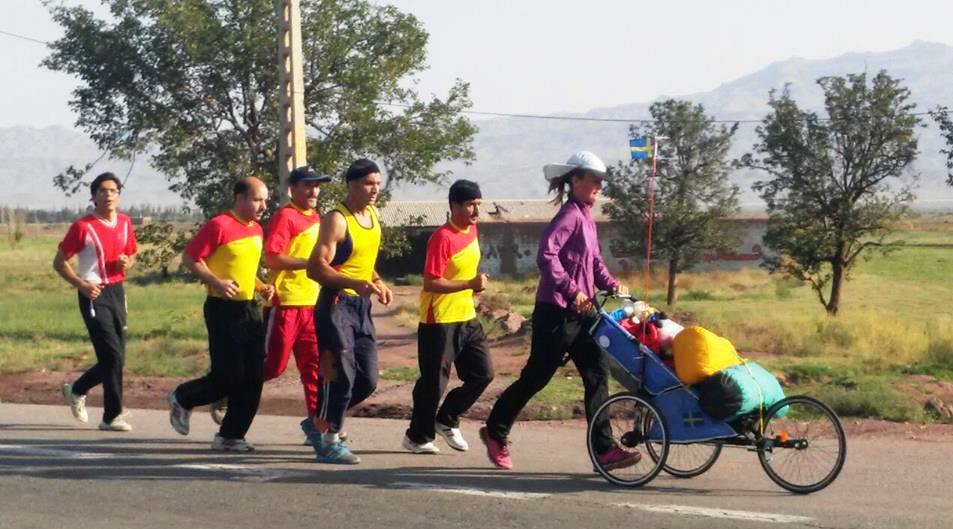
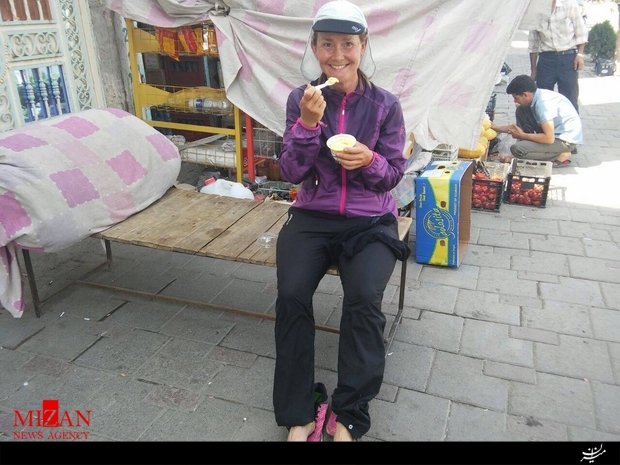
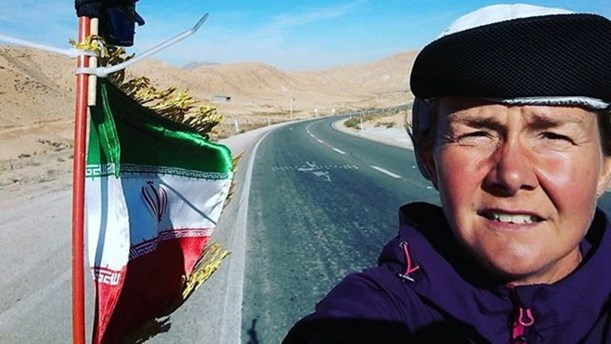
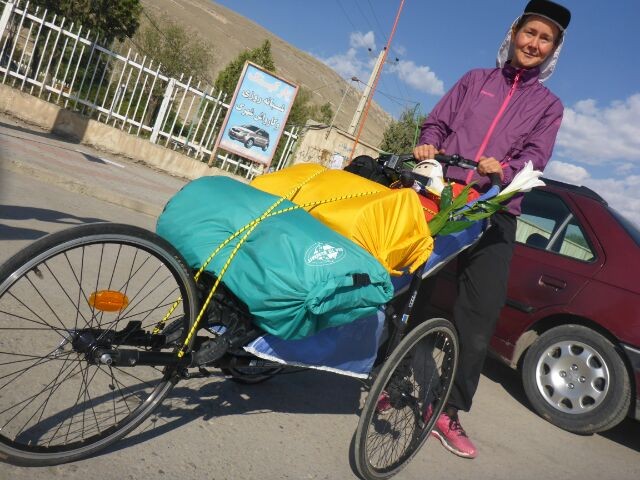
Kristina Paltén is a Swedish woman who, during a two-month stay in Iran, ran 1144 miles through the country to prove false the Islamophobia and Iranophobia stirred up by the West. To this end, she decided to make and distribute a movie about her stay and running in different parts of Iran.

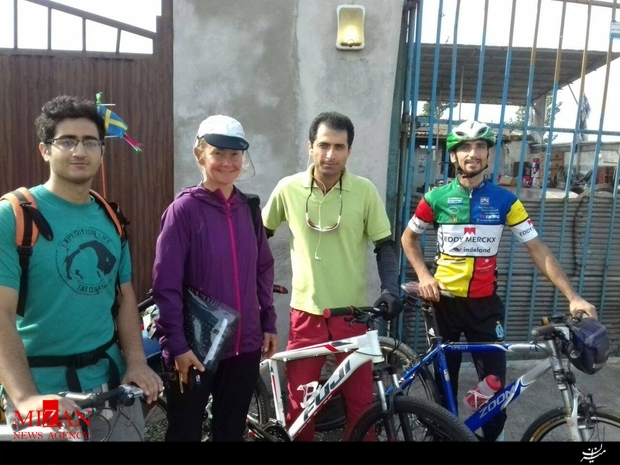
Kristina Paltén - Iran

Kristina Paltén’s name was in the headlines throughout the world as she overcame her fears and negative prejudices about Islamic countries and started running across Iran on August 21, 2015.

“I’m working on a movie about my stay in Iran,” Gear Junkie magazine quoted the 45-year-old runner as saying.

During and after her stay in Iran, Kristina gave plenty of interviews, in which she made positive remarks about Iranian hospitality and culture.

“I had a great time in Iran and proved to myself that a woman can travel through an Islamic country all by herself, alone,” she said.

The Swedish runner, who set the record of the greatest distance covered on a treadmill in 48 hours in 2014, entered Iran from the Turkish border, and after running the Western border areas, headed towards the north-eastern borders of Iran.

Paltén, who is a married woman working in a private company in Sweden, said that she had paid all the expenses of her travel to Iran out of her own pocket.

Social Media Users Call for Revision in Iran’s Military Service Policies

Iranian Soldiers

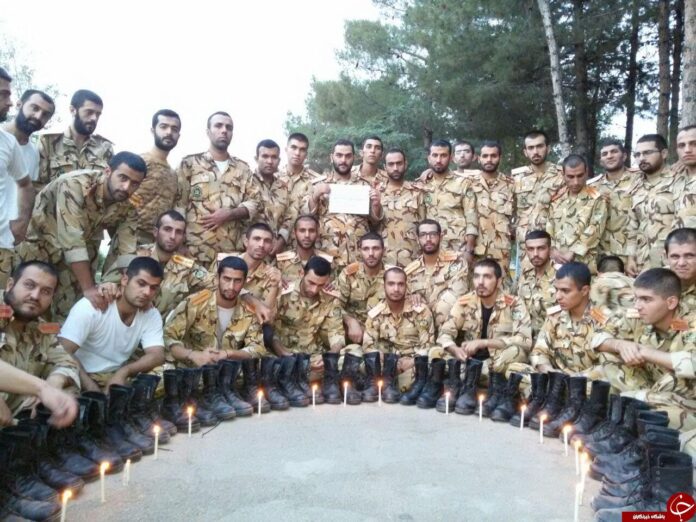
In the early hours of June 22, a bus carrying 36 army conscripts, who had just finished their training and were on leave to visit their families, veered off the road into a canyon in Fars Province. As the news began to come in, reports quickly surfaced that a second bus carrying army soldiers had also overturned. Reports said 19 soldiers were killed and 77 were injured in the two accidents.

Iraj Harirchi, a ranking Health Ministry official, declared that the bus which killed 19 soldiers was carrying 5 passengers over its capacity. It was also smuggling eight passengers and certain amounts of illicit drugs and cigarettes, among other items.

The Commander of Army Ground Forces, Brigadier General Ahmad Reza Pourdastan, also noted that the driver was too old [70 years old] and the bus lacked the required standards.

Later on, Leader of the Islamic Revolution Ayatollah Seyyed Ali Khamenei expressed his deep sorrow over the deadly bus accidents in southern Iran in which a number of young soldiers lost their lives, asking relevant officials to prevent similar incidents from occurring in future.

Iranian President Hassan Rouhani offered a message of condolence on the death of 19 soldiers, and ordered his ministers to make whatever efforts possible to address the problems of the injured and their families. Parliament also formed a committee to investigate the accident. The committee will prepare a report on the incident and submit it to the presiding board of the parliament in the near future.

Before official responses, the initial reactions came from users of social media. Shocked by the accidents, Iranian social media users immediately began expressing their solidarity with the soldiers and their bereaved families.

They also criticized the Islamic Republic of Iran Broadcasting (IRIB) for its slow and poor coverage of the tragic events. IRIB kept silent in the early hours, and started covering the issue only after the wide reactions of social media users.

Vaghaye Ettefaghieh daily also reported social media campaigns for “Saying No to Compulsory Military Service”. Many users lashed out at the lack of standards and sufficient facilities and equipment for the soldiers, and criticized the current rules.

There are many unofficial views on the need for changes in military service conditions in Iran. However, some official bodies like the Parliament’s Research Centre have in recent years tried to introduce more appropriate alternatives for compulsory military service.

A plan for localizing the service, in which all soldiers will serve in their places of residence, and an industrial military service plan are among official proposals to make major changes in military service.

Iranian Official Rejects Saudi Claims on Hajj Deal

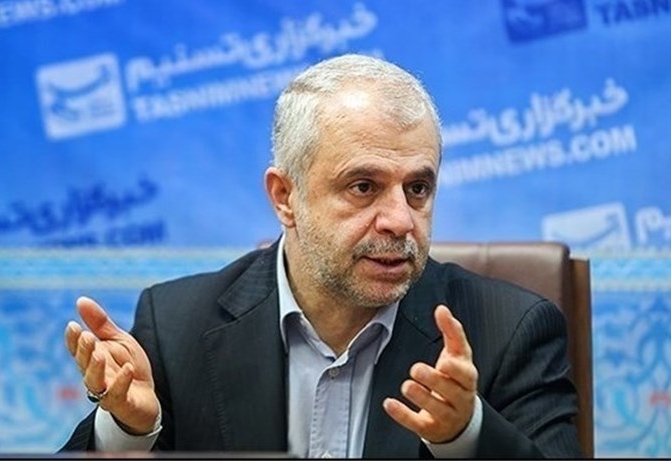
Head of Iran’s Hajj and Pilgrimage Organization Saeed Ohadi

The text of the memorandum of understanding (MoU) proposed to Iran by Saudi Arabia was completely different and “discriminatory” compared to the MoUs proposed to other Muslim countries, Ohadi told Tasnim.

“We looked at the texts of Saudi Arabia’s MoUs with other countries completely and clause by clause,” he said, adding that none of the restrictions and prohibitions that Saudis had imposed on Iran in the proposed MoU was seen in the texts.

Ohadi further emphasized that Saudi authorities, in their recent talks with Iranian officials, politicized the issue of Hajj pilgrimage, which is a religious duty for Muslims, and by preparing a “discriminatory” MoU demonstrated that they are not willing to host Iranians for the upcoming Hajj.

On May 24, an Iranian delegation travelled to Saudi Arabia at the official invitation of new Saudi Minister of Hajj and Umrah Mohammad Saleh bin Taher Benten to hold the last-ditch talks with the Arab kingdom’s officials on the dispatch of Iranian pilgrims for the annual rituals in September.

Tehran had insisted in the talks that visas for Iranian pilgrims should be issued in Iran and that the safety of travellers to Saudi Arabia must be ensured, given the disaster in Mina that killed many pilgrims in the previous Hajj pilgrimage. However, Riyadh refused to accept Iran’s conditions and said it would impose certain restrictions on Iran’s Hajj delegation and its pilgrims.

More than 460 Iranians were among the thousands of pilgrims who died on September 24, 2015, in a crush in Mina, near Mecca, during the Hajj pilgrimage.

The incident marked the worst ever tragedy during Hajj.

Saudi Arabia has no right to meddle in Iraq: Iran commander

General Masoud Jazayeri
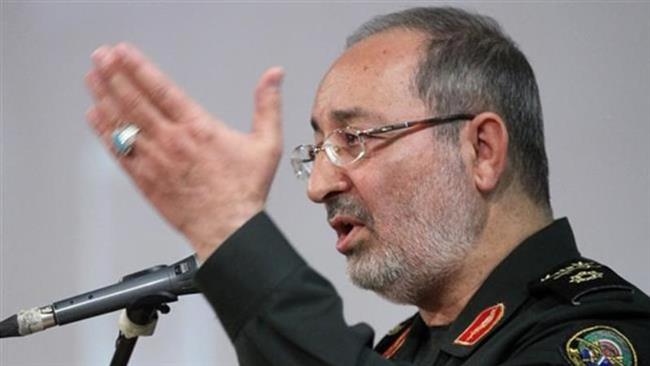
Deputy Chief of Staff of Iran’s Armed Forces Brigadier General Massoud Jazayeri

“Saudi Arabia and its rulers are a foreign country with respect to the decisions of the Iraqi government and people and have no right to interfere in Iraq’s affairs,” Deputy Chief of Staff of Iran’s Armed Forces Brigadier General Massoud Jazayeri said in an interview with Iran’s Al-Alam Arabic-language news channel on Monday.

He congratulated the Iraqi people and government as well as regional nations on the recapture of the strategic western city of Fallujah from Daesh terrorists.

“Fortunately, Iraq’s recent victories carry positive strategic points for the region and Iraq’s security environment, and will have notable effects and benefits, while on the other hand, will result in the spiritual and psychological collapse of the terrorists and their allies in the region and reduce their operational capabilities,” the Iranian commander pointed out.

On Sunday, the commander of the Fallujah liberation operation, Lieutenant General Abdul Wahab al-Saidi, said the last remaining district held by Daesh in the city had been retaken and declared the city’s full recapture from the terrorists.

Saidi added that at least 1,800 Takfiri militants were killed in the Fallujah operation.

Fallujah, located some 65 kilometers (40 miles) west of the capital, Baghdad, was the first Iraqi city to fall in the hands of Daesh terrorists in January 2014.

Jazayeri expressed hope that Iraqis would succeed in achieving more victories in the fight against terrorists, saying that all Muslim states including Iran are duty-bound to support Baghdad to uproot terrorism in the country and across the Middle East region.

“In line with the long-term security [interests] of Iraq and the surrounding countries, all parts of Iraq must be liberated [from Daesh terrorists],” he added.

Following the liberation of Fallujah, Iraqi Prime Minister Haider al-Abadi visited the city and vowed the recapture of the militants’ stronghold of Mosul in the near future.

The Iraqi premier said the national flag would be raised in Mosul, the country’s second largest city, soon.

Jazayeri further warned against plots by the US and its allies to disintegrate Iraq and Syria, saying, “Documents and evidence show that the US seriously seeks to undermine Muslim countries.”

He added that the US and Zionists have waged a “proxy war” in the region.

The Iranian commander said Washington seeks to foment strife among Shia and Sunni Muslims to achieve its own objectives and guarantee the Israeli regime’s security.

Syria, Iraq’s western neighbor, has been gripped by foreign-backed militancy since March 2011.UN special envoy for Syria Staffan de Mistura estimates that over 400,000 people have been killed in the conflict, which has also displaced over half of the Arab country’s pre-war population of about 23 million.

OPEC Secretary-General to Visit Iran in Near Future

Rahimi-Opec-Nigeria

According to the Twitter account of Iran’s Embassy in Nigeria, Barkindo held a meeting with Iran’s new Ambassador to Abuja Morteza Rahimi Zarchi.

During the meeting, which was held on Friday June 24 at the Iranian embassy, Barkindo appreciated the support of Iran, particularly the Oil Minister Bijan Namdar Zanganeh, for his bid for the OPEC post.

Rahimi, for his part, extended his congratulations to Barkindo and wished him success in his new post.

He also noted that Iran made its decision to support his candidacy during a visit by Nigerian President Muhammadu Buhari to Tehran back in November 2015.

The new OPEC Secretary-General plans to visit the Islamic Republic after August, and personally appreciate the Iranian officials.

Tajikistan President Becomes a God!

Emomali Rahmon-Tajikistan President

The new rules come following the implementation of constitutional reforms on “the government and legal status of Assembly of Representatives and National Assembly” in Tajikistan.

Accordingly, the government officials will swear to the President’s name before starting their job as to strive for the country’s prosperity and reputation enhancement, Jomhouri Eslami newspaper reported, as translated by IFP.

However, the members of Parliament will continue to swear on people’s name to spare no effort to bring to fruition the national unity, state independence and realization of human rights and freedom.

They’ll make a vow to introduce and pass the laws in the Parliament based on righteousness and honesty.

This was only one out of 41 reforms that came to the Tajikistan Constitution. The President is the one who determines where and when the government officials should swear oaths.

ISIS Sympathy Causes Saudi Twins to Behead Their Mother

ISIS-Terrorists-Twin Saudi brothers

No official statement has been released regarding the motivation of the two brothers’ brutal crime.

Saudi social media users argue that the twins believed their parents were apostates for opposing ISIS (also known as ISIL or Daesh), The New Arab reports, as covered by IRNA.

They shared details of the gruesome incident and expressed their horror that the suspects could commit such violence against their parents, especially during the holy month of Ramadan.

Back in September, two ISIS sympathizers lured their cousin – a member of the Saudi armed forces – to come to the desert and shot him dead on the first day of Eid al-Adha, while recording the entire incident.

Security forces aided by aircraft tracked the brothers to a mountainous area.

When asked to surrender, the two men opened fire. Eighteen-year-old Abdul-Aziz Radi Ayash al-Anzi was killed in the ensuing gunfight, and his brother, 21-year-old Saad Radi Ayash al-Anzi was wounded and arrested.