Saturday, January 17, 2026
Home Blog Page 4419

Iran’s Cabinet Readying Bill on Big Change in Banking Sector

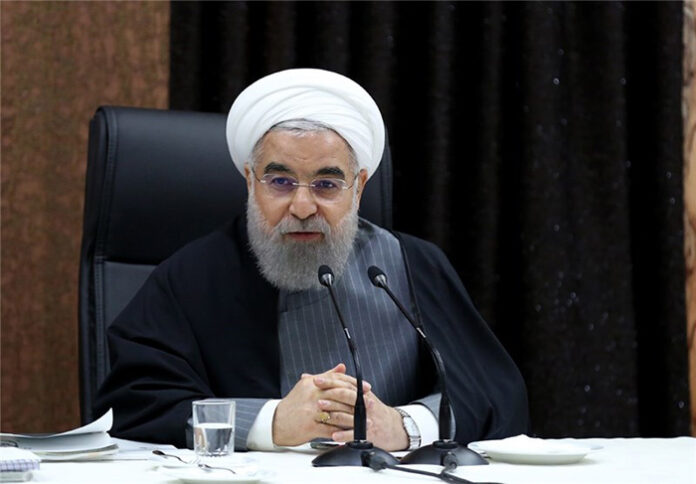
President Hassan Rouhani

In an address to a joint meeting of the Administration and the Parliament, held in Tehran on Sunday night, July 3, President Rouhani said Iran’s banking system is suffering from two main problems: high interest rates on the loans and their weak capabilities.

To fix those problems, the President added, the administration’s economic headquarters has prepared a bill that will be unveiled in the coming days.

“If the bill is passed [by the lawmakers], we will witness a major evolution in the country’s banking sector,” he noted.

Elsewhere in his comments, the president touched upon the controversial issue of ‘astronomical salaries’, blaming certain organizations for their failure to control and handle the issue with necessary and timely caution.

He also underlined that the administration has begun measures to address the case and will press ahead to fix the problems in relation to inflated salaries.

His comments came after Leader of the Islamic Revolution Ayatollah Seyyed Ali Khamenei on Saturday ordered decisive reaction by all Iranian organizations to cases of exorbitant, unconventional wages, and called for unrelenting punitive action on breaking regulations.

Over the past weeks, cases of very high salaries earned by some senior managers have attracted a great deal of media attention and had a negative impact on public sentiment.

Ayatollah Khamenei had already called for firm action to halt payment of such salaries and punish the wrongdoers.

Confessions of ISIS Elements Captured in Iran

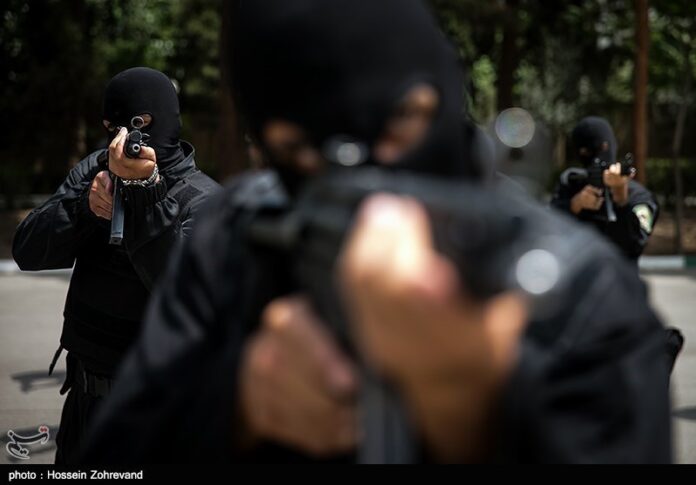
Iranian Forces

Iran’s Intelligence Ministry announced in a statement on June 20 that Takfiri elements had planned a series of bombings in different parts of Iran, including Tehran and some other provinces, but Iranian security forces thwarted the plot. This was one of the biggest attacks planned so far by Wahhabi terrorists.

A documentary, entitled “Depth of Failure”, is scheduled to be aired by IRINN at 20:15 [Tehran local time], in which the arrested elements explain the details of their terrorist missions.

According to a report by Tasnim, as translated by IFP, the ISIS elements, whose faces are not going to be covered in this documentary, will elaborate on the way they supplied their equipment and wanted to do the operation in Tehran.

According to one of the elements in this documentary, they had prepared explosives for 50 big terrorist attacks in Tehran.

One ISIS terrorist claims in this documentary to have received €600,000 in cash for the operation. He also says that they used to hold some of their meetings in front of Daneshju Park in central Tehran.

He also said that the ISIS commanders had ordered them to prepare cars belonging to Tehran and the suburbs for their operations in the Iranian capital.

For the first time, the documentary will also show films secretly shot by the Intelligence Ministry of the elements’ moves, cars, and explosives, particularly around Daneshju Park.

In its June statement, the Intelligence Ministry had noted that its Forces in Tehran and some other provinces managed to foil the “satanic” measures of Takfiri terrorists. Several bombs, which were ready to explode, and a huge amount of explosive ingredients were seized, it said at the time.

The Intelligence Ministry further noted that field investigations are underway inside and outside the country, and the terrorists are being interrogated. “The Iranian nation will be informed of further details once security conditions are appropriate,” the statement added.

Iran’s FM Denounces Deadly Terrorist Attacks in Istanbul, Dhaka, Baghdad

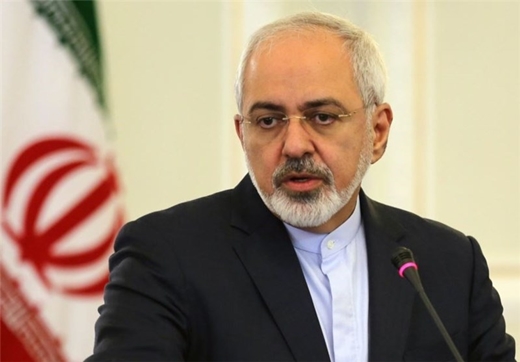
Iran FM Mohammad Javad Zarif

“We should not and will not rest until those behind terror in Istanbul, Dhaka, and now Baghdad, and their ideology, are defeated,” Zarif made the statement in a message posted on his Twitter account late on Sunday, July 3.

The Iranian top diplomat’s message came after at least 167 people lost their lives and 185 others sustained serious injuries in a twin attack in Baghdad early on Sunday.

The first attack occurred at about 1 a.m. local time (2200 GMT Saturday) when a bomber detonated his refrigerator truck packed with explosives in the capital’s south-central neighbourhood of Karrada.

Separately, 20 people were also killed after gunmen stormed the Holey Artisan Bakery cafe on Friday night in Dhaka, Bangladesh, before troops entered almost 12 hours later.

Another similar terror attack hit Istanbul’s Ataturk international airport on Tuesday night and killed 36 people and injured more than 140 others.

ISIS Afraid of Iraqis’ Imminent Onslaught on Mosul

Iraq Army

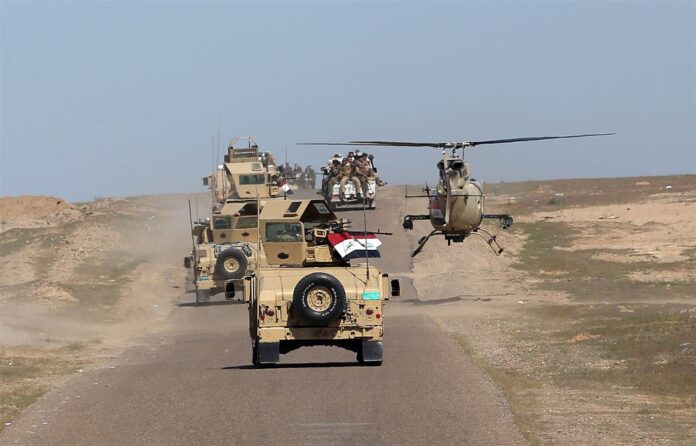
According to a report by Entekhab, as translated by IFP, a deep-seated fear has spread among ISIS terrorists as Iraqi forces are preparing to mount an all-out attack on Takfiris in Mosul.

Iraqi and Kurdish authorities informed the Western media about the terrorists’ provident measures to store weapons and money in Mosul’s mosques, churches and schools in an attempt to equip for Iraqis’ imminent attacks.

Since the beginning of 2016, ISIS’s territories in Syria and Iraq have considerably shrunk and meanwhile they have lost properties and weapons worth of millions of dollars under heavy attacks.

After the ful liberation of Fallujah, Iraqi forces are now poised to launch an all-out assault on ISIS terrorists to recapture Iraq’s second largest city, Mosul.

Iranians to Enjoy Summer Time with New Concerts

concerts

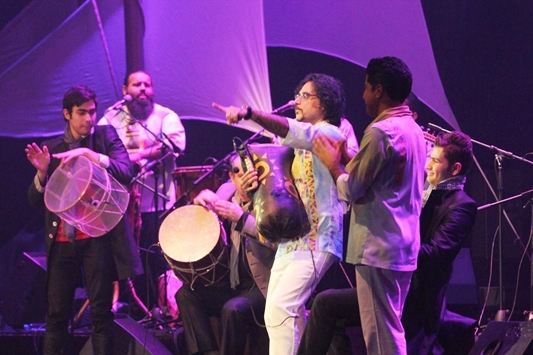
July performances include a concert by composer Mahyar Alizadeh and vocalist Alireza Qorbani who will perform selections from their album “Fairylike Girl” at Tehran’s Vahdat Hall.

Several other performances are also scheduled to take place in Vahdat Hall including concerts by Nariman Ensemble, exclusively for women, and the Sur Ensemble with vocalist Hessameddin Seraj.

Gil and Amard, a major ensemble playing Gilaki folk music, and Lian, an Iranian band from the southern city of Bushehr, will also give performances at Vahdat Hall.

Vocalist Salar Aqili is scheduled to perform in Kerman on July 14.

Several cities in northern Iran will also be hosting pop music concerts in July.

Pop singers Omid Hajili, Majid Kharratha, Mehdi Moqaddam, and Rouzbeh Nematollahi will give concerts in the city of Noor, while Mohsen Yeganeh will perform in Chalus and Omid Hajili in Ramsar.

The concerts will continue in August with a performance by the US-based Iranian guitarist Lily Afshar in the Niavaran Cultural Centre.

The Niavaran Cultural Centre will also host several other performances including a concert by the Rasch Ensemble, during which the group will perform pieces of Latin music, and a quartet by Shahrdad Rohani, the new conductor of the Tehran Symphony Orchestra.

Several other concerts have also been scheduled in other cities such as Kermanshah, Mahabad, Khorramabad and Rasht.

Diplomats Kidnapped in Lebanon in 1982 Are in Israeli Prison, Iran Says

Diplomats

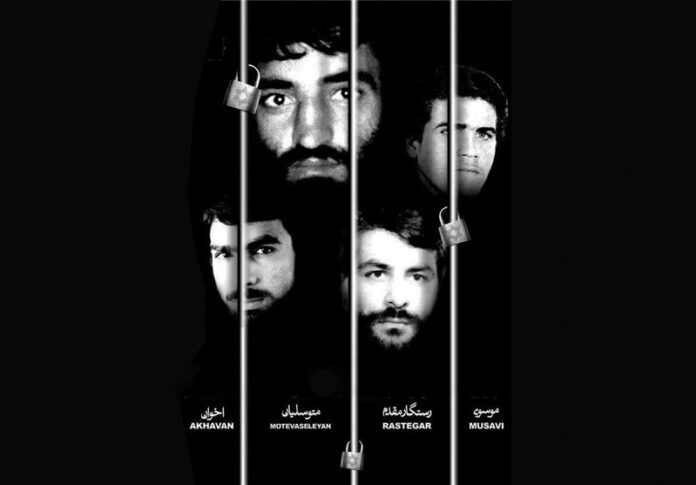
In a statement released on Sunday, July 3, to mark the 34th anniversary of the kidnapping of the four diplomats in Lebanon, the Ministry said Iranian nation and families of kidnapped diplomats are still waiting for them.

The statement thanked the efforts made by the Lebanese government and relevant bodies to pursue the case, and asked UN Secretary General Ban Ki-Moon, the International Committee of the Red Cross and other human rights bodies to fulfil their undertakings and impose pressure on the Zionist regime of Israel in a bid to pave the ground for their freedom.

“The Islamic Republic of Iran reiterates its previous proposal for the establishment of a fact-finding committee to further clarify different aspects of the case,” the statement underlined.

Earlier in June, Secretary of Iran’s Expediency Council Mohsen Rezaei had said that the Islamic Revolution Guards Corps (IRGC) is involved in security and intelligence activities to free four Iranian diplomats.

The information provided by the country’s security and intelligence services suggests that the diplomats are alive, he noted.

In July 1982, four Iranian diplomats, the then charge d’affaires of the Iranian Embassy in Beirut Seyed Mohsen Mousavi, military attaché Ahmad Motevasselian, embassy technician Taghi Rastegar Moghaddam and journalist of the Islamic republic news agency Kazzem Akhavan were abducted at a checkpoint in northern Lebanon.

Their vehicle was passing through a checkpoint post on its way to Beirut when it was intercepted by the Phalange Party, a group of gunmen belonging to Israel-backed militia forces headed by Samir Geagea.

The car and four passengers, completely disappeared.

The militia headed by Geagea was known for its close ties with Israel at the time and was responsible for handing over many Lebanese and foreigners to Israeli custody at the peak of the Zionist regime’s invasion of Lebanon.

Geagea has made contradictory statements concerning the Iranian diplomats, initially saying that his militia handed them to Israel and later claiming that they witnessed their killing inside Lebanon.

Rare Glimpse Caught of Asiatic Cheetah in Iran

cheetah_tooran-1

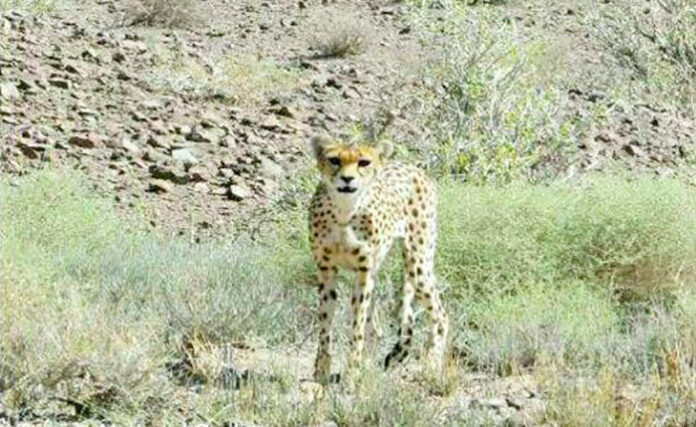
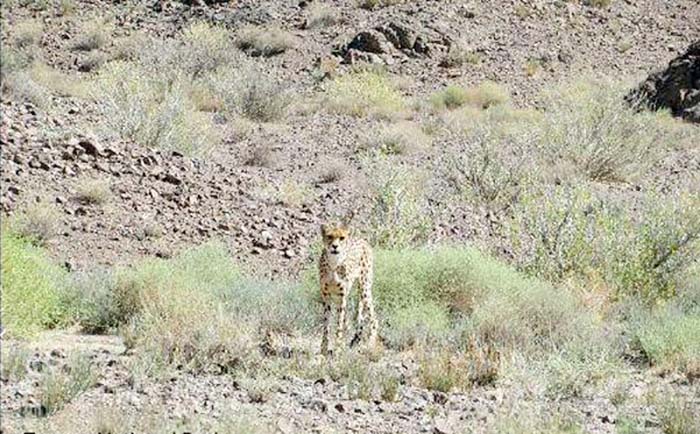
Yousef Yousefi and Hossein Fa’alpour, two on-duty officers of Khartouran National Park managed to capture the images of this beautiful feline creature under extinction when doing their regular patrolling work on Wednesday, June 29.

Imaging of the large cat is extremely rare and difficult due to the fact that the animal avoids humans and would not welcome social companies.

Asiatic Cheetah, also known as Iranian Cheetah, is on the brink of extinction and only 40-70 animals of the species live in restricted wildlife refuges in Iran.

Asiatic Cheetah is indigenous to desert setting of the Iranian plateau, but its odds to survive had been declining. Since the 1970s, Iran has been its major habitat, hence the name ‘Iranian Cheetah.’


cheetah_tooran-2

Khartouran or Touran National Park is located in the easternmost part of Semnan province in Shahroud. The sheer diversity of fauna has turned the park into the second most protected and largest habitat of the country after Naibandan in Tabas, also a desert city.

With an area of more than 1m hectares (2.3m acres), Khartouran is also one of 11 biosphere reserves of the country.

Gradual Revival of Artemia Paints Lake Urmia Red

Iran Lake Urmia

IFP translated a report by ISNA on the restoration of Lake Urmia as follows.

Lake Urmia in northwest of Iran has recently turned red. Experts believe that the red colour is caused by three factors: the increased activity of Artemia brine shrimps, the activity of a green micro alga called Dunaliella Salina, and the Lake’s excessive salt water.

Iran Lake UrmiaArtemia, which is dubbed ‘Iran’s living gold’, is a genus of aquatic crustaceans that lives in brine lakes. Lake Urmia is replete with this aquatic creature that is used in shrimp and fish industry.


World’s sixth largest saltwater lake, Lake Urmia, is located near the Turkish border between the provinces of East Azerbaijan and West Azerbaijan. The lake has been shrinking for three decades, and since its shores have started to recede, the surrounding land has begun to die, causing an unprecedented ecological disaster.

The rising level of Lake Urmia’s water, either achieved by replenishment or an increase in rainfall, has brought back to the Lake not only various species such as stilt birds but also scores of people who visit the lake for swimming. It is good to know that Lake Urmia is being restored.

[:fa]Increased activity of Artemia brine shrimps and a few other aquatic creatures has changed the colour of Lake Urmia into red.

IFP translated a report by ISNA on the restoration of Lake Urmia as follows.

Lake Urmia in northwest of Iran has recently turned red. Experts believe that the red colour is caused by three factors: the increased activity of Artemia brine shrimps, the activity of a green micro alga called Dunaliella Salina, and the Lake’s excessive salt water.

Iran Lake UrmiaArtemia, which is dubbed ‘Iran’s living gold’, is a genus of aquatic crustaceans that lives in brine lakes. Lake Urmia is replete with this aquatic creature that is used in shrimp and fish industry.


World’s sixth largest saltwater lake, Lake Urmia, is located near the Turkish border between the provinces of East Azerbaijan and West Azerbaijan. The lake has been shrinking for three decades, and since its shores have started to recede, the surrounding land has begun to die, causing an unprecedented ecological disaster.

The rising level of Lake Urmia’s water, either achieved by replenishment or an increase in rainfall, has brought back to the Lake not only various species such as stilt birds but also scores of people who visit the lake for swimming. It is good to know that Lake Urmia is being restored.

[:ar]Increased activity of Artemia brine shrimps and a few other aquatic creatures has changed the colour of Lake Urmia into red.

IFP translated a report by ISNA on the restoration of Lake Urmia as follows.

Lake Urmia in northwest of Iran has recently turned red. Experts believe that the red colour is caused by three factors: the increased activity of Artemia brine shrimps, the activity of a green micro alga called Dunaliella Salina, and the Lake’s excessive salt water.

Iran Lake UrmiaArtemia, which is dubbed ‘Iran’s living gold’, is a genus of aquatic crustaceans that lives in brine lakes. Lake Urmia is replete with this aquatic creature that is used in shrimp and fish industry.


World’s sixth largest saltwater lake, Lake Urmia, is located near the Turkish border between the provinces of East Azerbaijan and West Azerbaijan. The lake has been shrinking for three decades, and since its shores have started to recede, the surrounding land has begun to die, causing an unprecedented ecological disaster.

The rising level of Lake Urmia’s water, either achieved by replenishment or an increase in rainfall, has brought back to the Lake not only various species such as stilt birds but also scores of people who visit the lake for swimming. It is good to know that Lake Urmia is being restored.


ISIS Introduces Its Own Gold Coins as New Currency

Gold Coins ISIS

In a report translated by IFP, QudsOnline quoted a nomad from Mosul as saying that the ISIS terrorist group has minted its exclusive coins based on dinar and injected them into the Mosul’s market, trying to replace other currencies.

ISIS coinsISIS’s exclusive coins come in 21 carat gold and silver, every one of which is worth 187,000 dinars, i.e. $140, and weighs 25.4 grams.

“It’s been a year since the ISIS has started minting gold coins in a bid to replace US dollars and Iraq’s currency,” Alquds Alarabi newspaper reported, adding that Takfiris [extremists] have injected their new currency into the city’s market and major stocks with the goal of weaning Muslims off US dollars.

Money changers and merchants are looking forward to new instructions on how to use the new currency in their business. Citizens, too, have started providing the new coins.

ISIS Coins - 1“ISIS has started clandestine smuggling of gold and currency out of Baghdad and Erbil since last year and snuck them into Mosul,” an informed source said.

The terrorist group has distributed statements of warning all over the city threatening smugglers to refrain from taking gold out of the occupied territories, the source added.

Extreme Heat in Iranian Capital

Extreme Heat_1

People in Tehran and many other cities of Iran are suffering from a wave of excessive heat these days. Young Journalists Club (YJC) has released photos of people in streets of Tehran, struggling with the extreme heat.