Thursday, January 15, 2026
Home Blog Page 4380

Mosul Liberation, Ace in the Hole for US Elections: Iraqi MP

Mosul Liberation

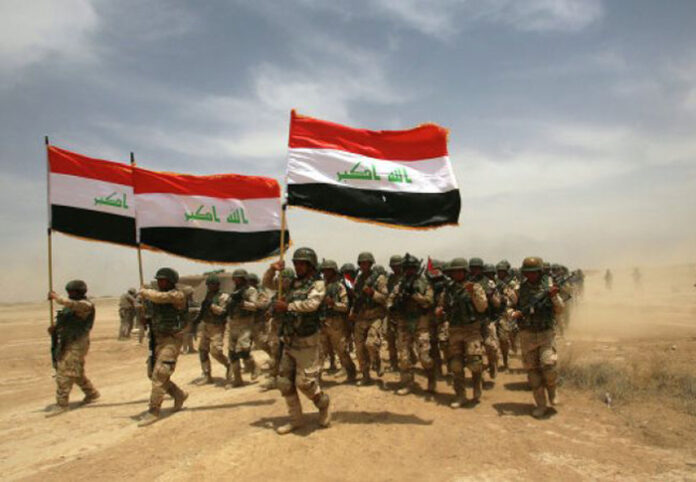
Alsumaria News has quoted Nayef al-Shemmri as saying that Mosul will be retaken shortly before the US elections; however, it is regrettably to the benefit of the US 2016 presidential campaign.

“It is very regrettable that the recapture of Mosul is going to be used as a winning card for the US elections,” he noted, as reported by Tasnim and translated by IFP.

Al-Shemmri hailed the potentials of Iraqi army and the volunteer forces and described them as decisive factors in the liberation of Mosul.

“Although an exact time has yet to be set, Iraqi and Western intelligentsia say Iraq’s Prime Minister Haider al-Abadi is willing to launch the military operation in October.”

The remarks came after Ashton Carter, the US Secretary of Defence, told the media that Washington has plans to dispatch 650 soldiers to Iraq in a bid to help retake Mosul.

Washington claims that sending troops to Iraq is based on the country’s request.

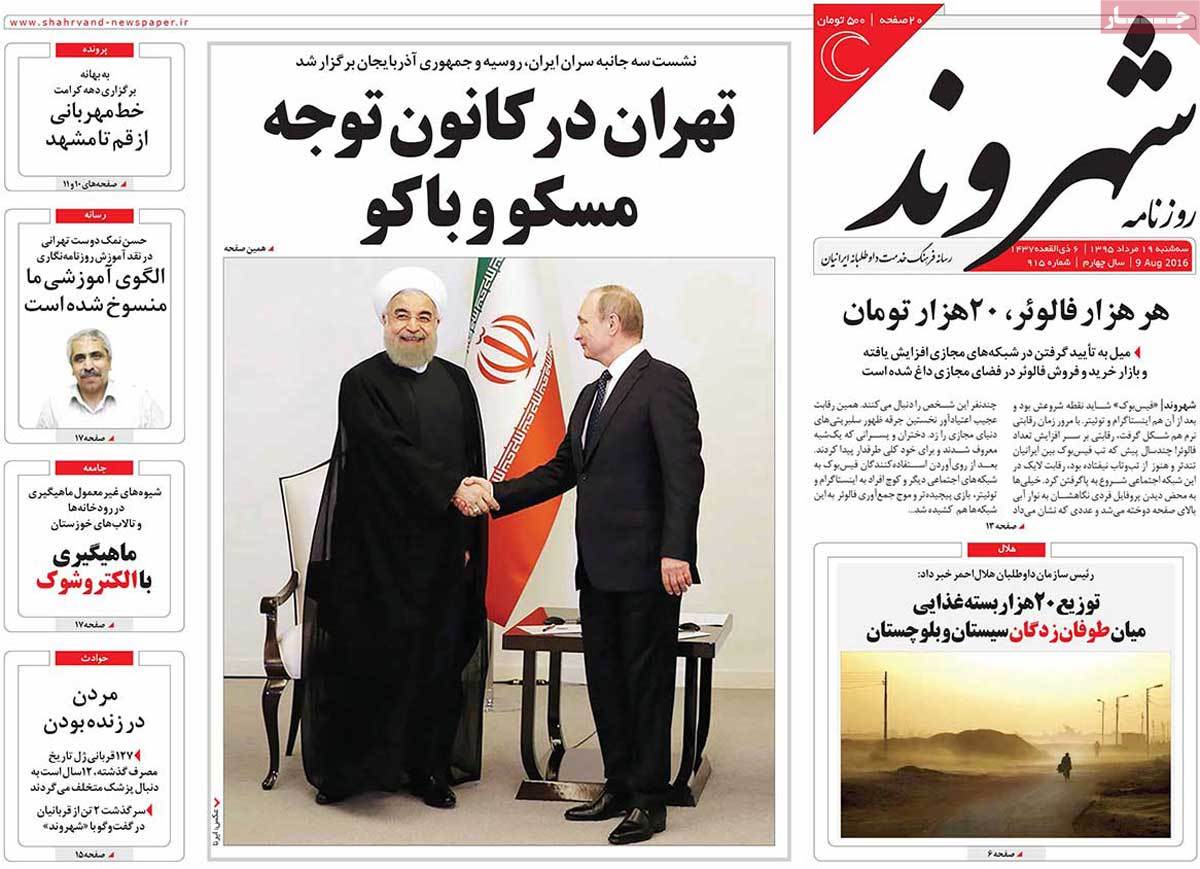
Iran, Russia Urge Acceleration of Relations Promotion

Iran-Russia

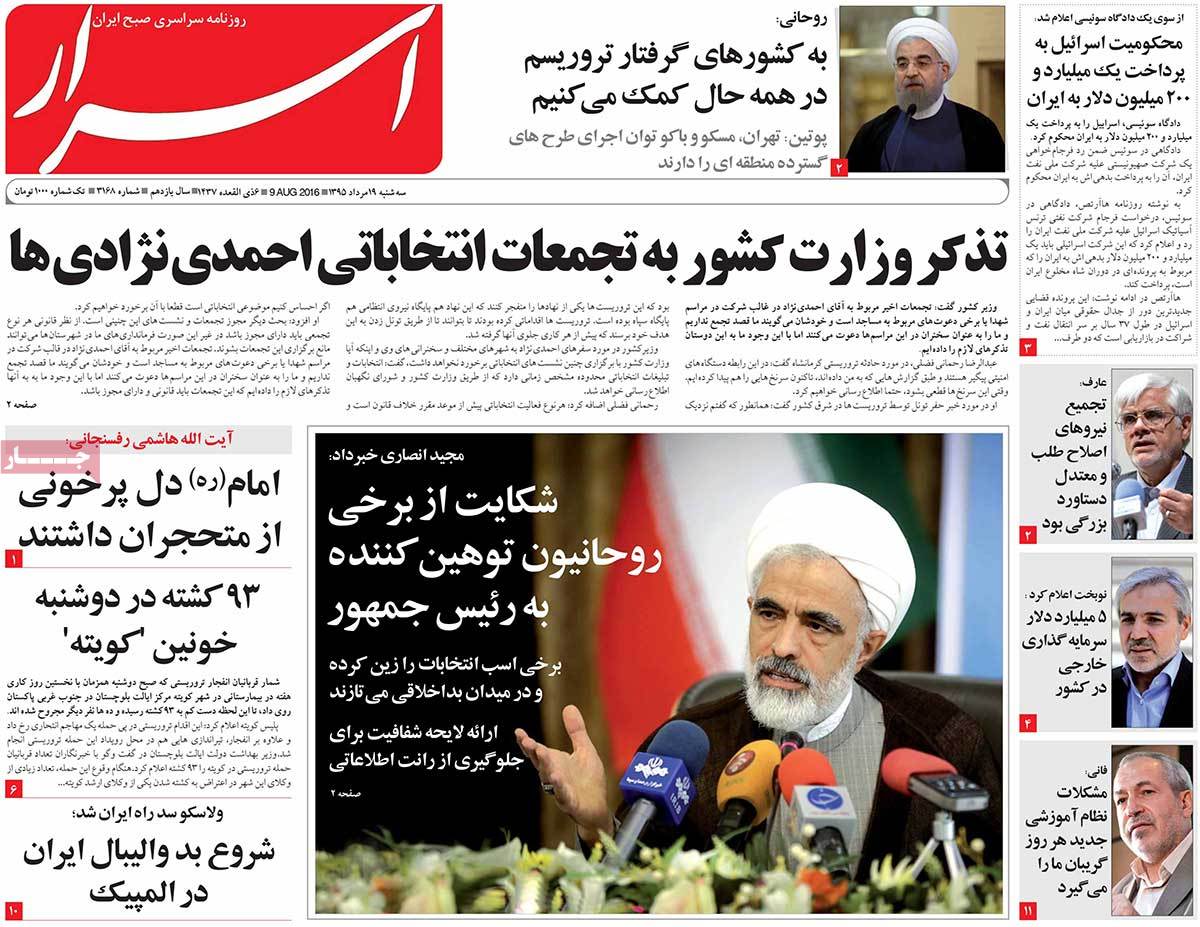
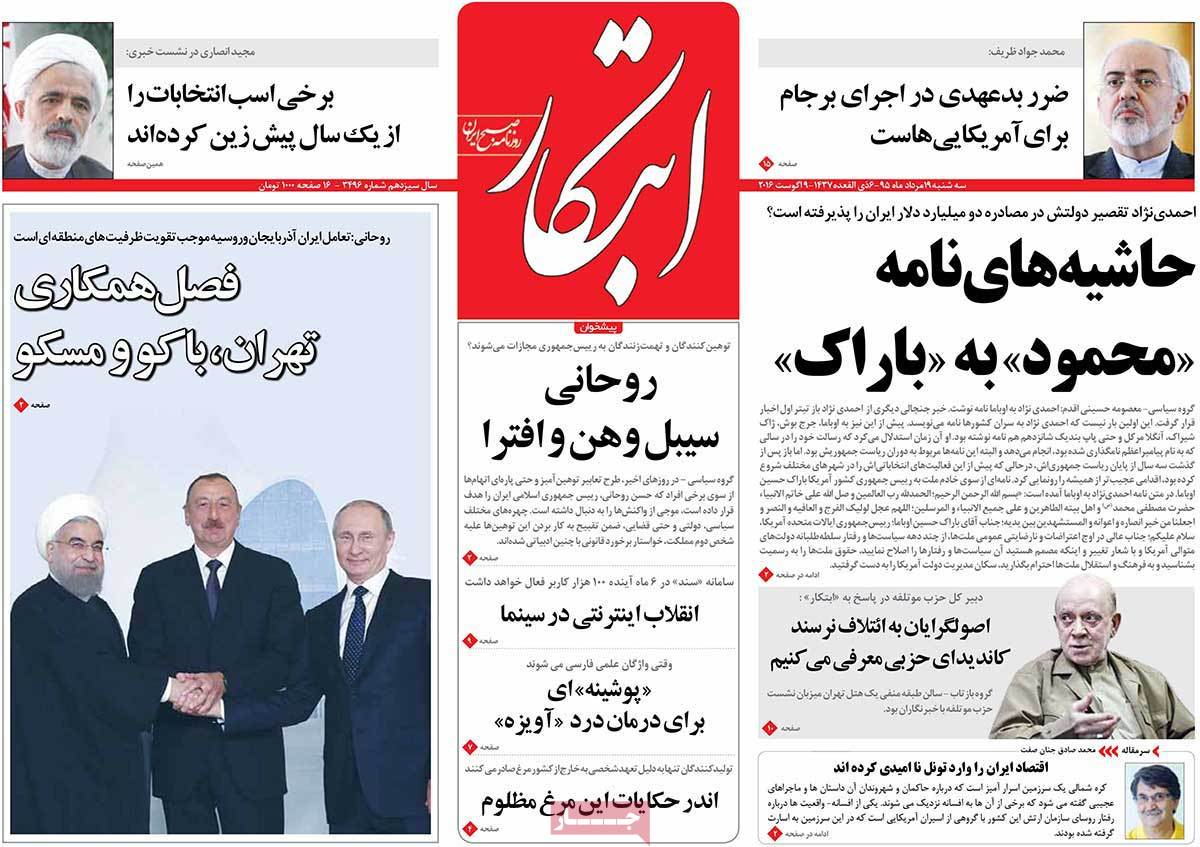
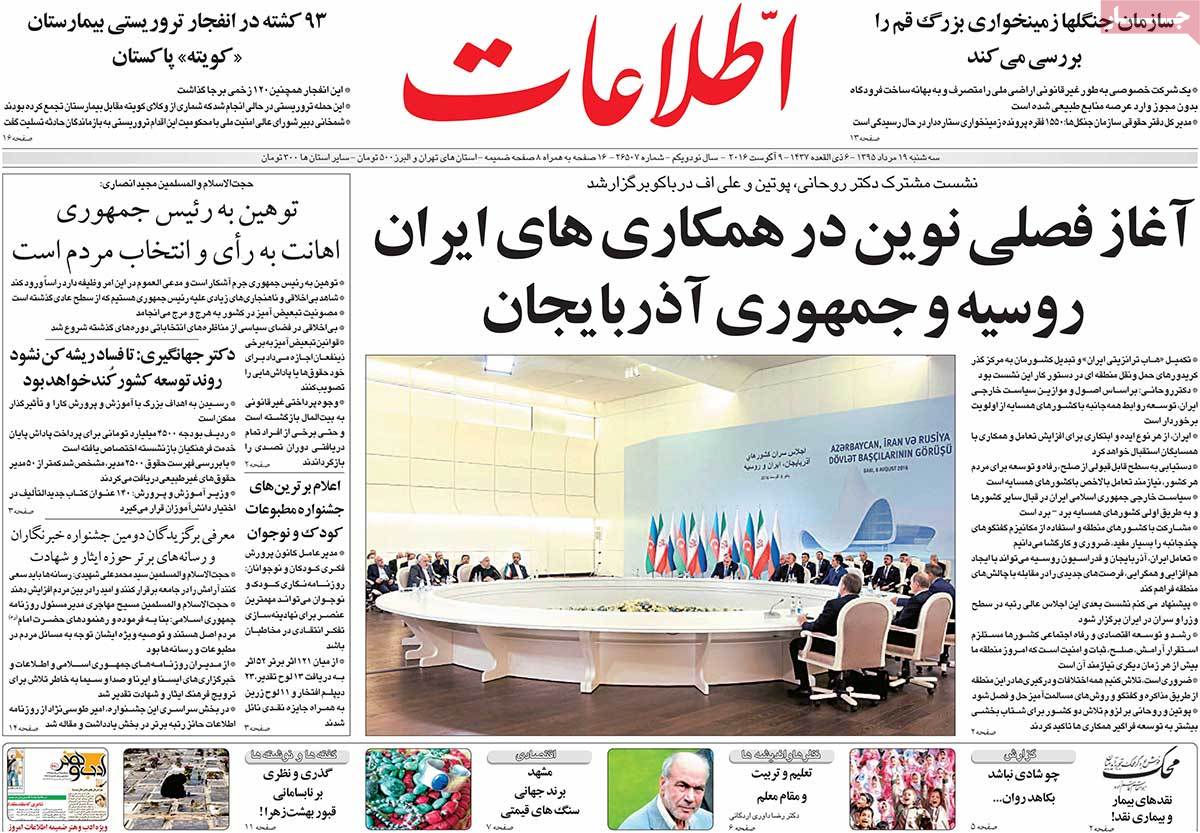
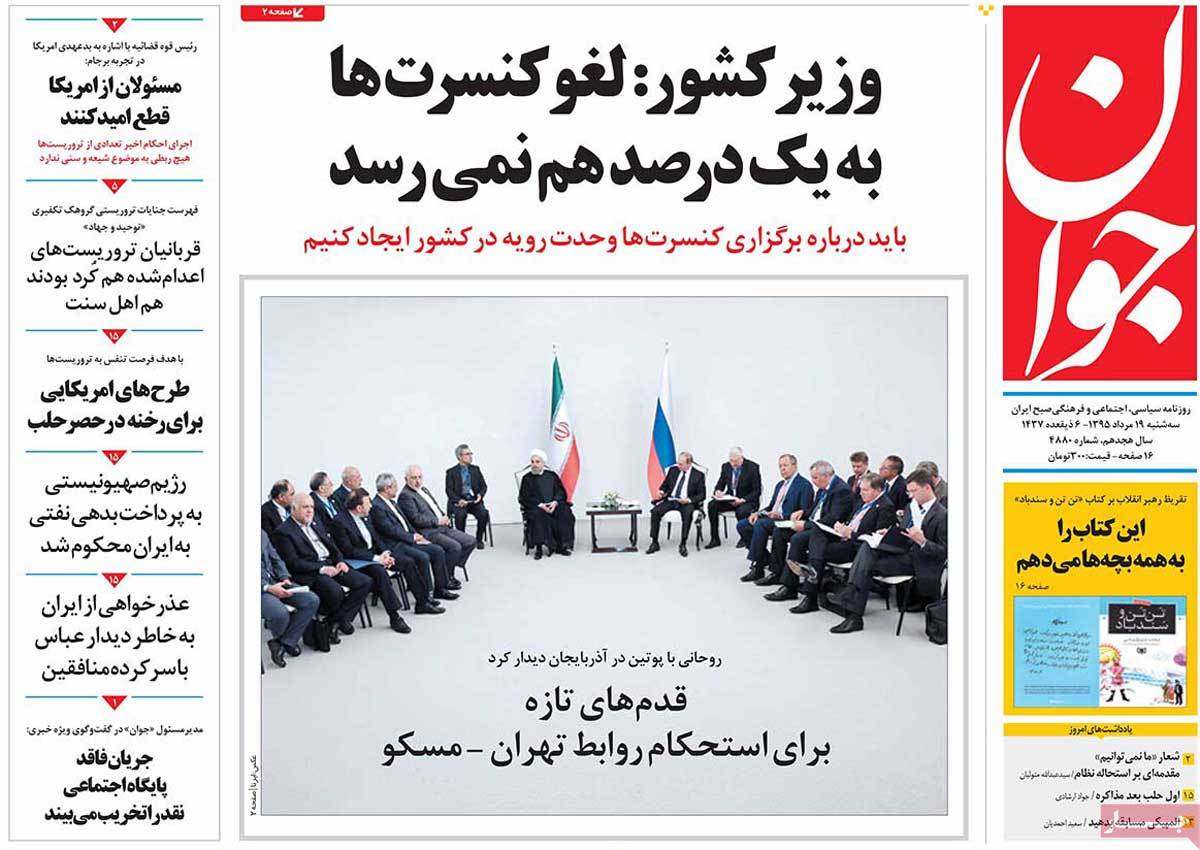
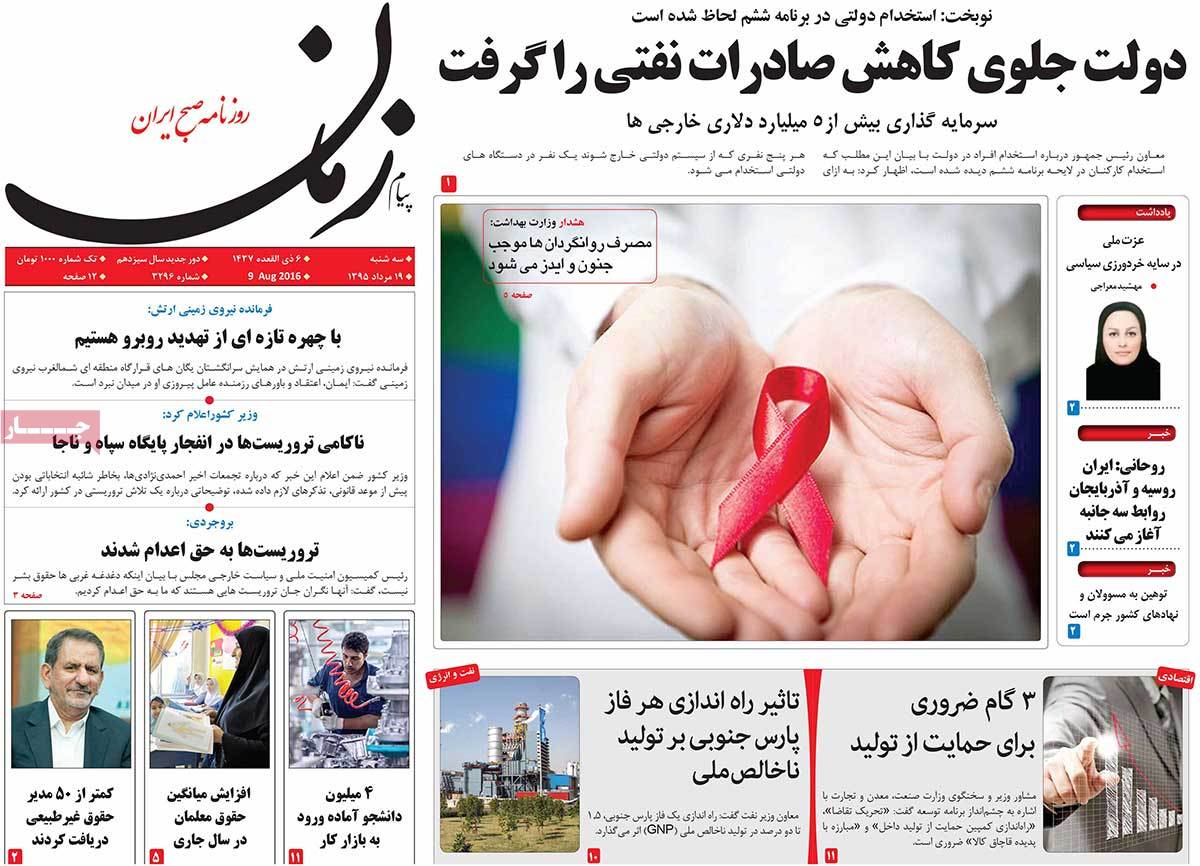
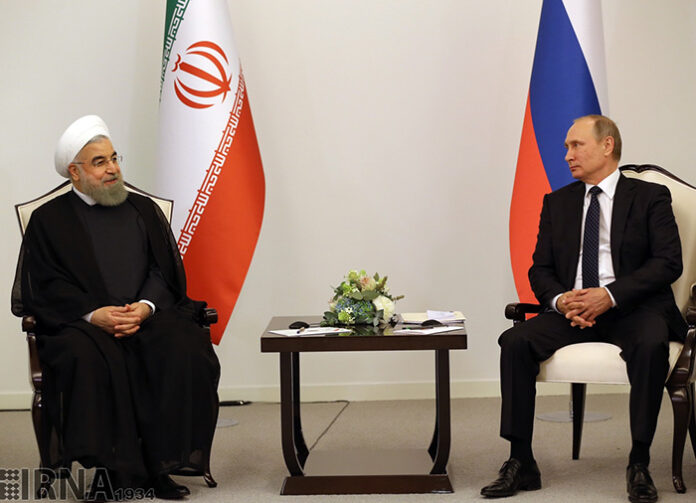
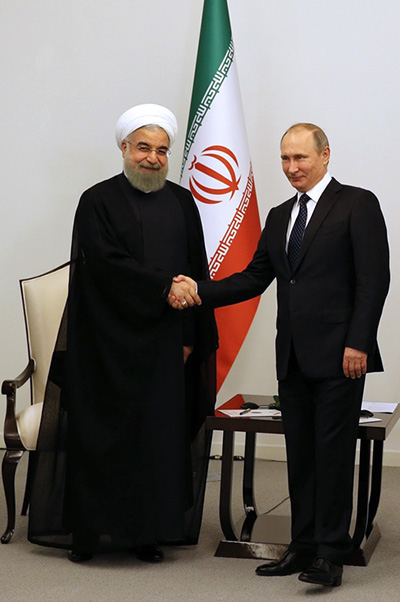
In a meeting in the Azeri capital city of Baku on Monday, Iranian President Hassan Rouhani and his Russian counterpart, Vladimir Putin, said Tehran and Moscow need to make more efforts to speed up the development of all-out cooperation.

Iran-RussiaPutin pointed to his key visit to Iran last November and his meetings with senior Iranian officials, particularly with Leader of the Islamic Revolution Ayatollah Seyyed Ali Khamenei, saying that Tehran and Moscow have managed to take very good steps toward the expansion of relations and that the two sides will continue to maintain their consolidated ties.
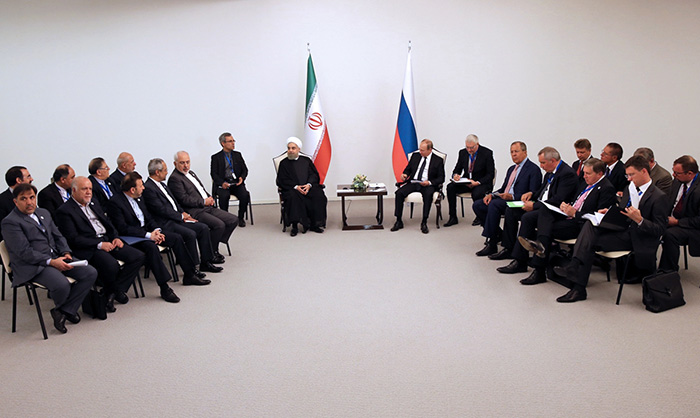
The Russian leader said that Moscow-Tehran ties have turned into an all-out strategic cooperation in different sectors, including politics and economy, the Kremlin website reported.

“Our friendly relations are strengthening. I am pleased that they are multi-faceted. This applies to the economic relations, political contacts in all areas. It also applies to the humanitarian sphere,” the Russian president said.

Relations between Iran and Russia have developed in all sectors, Putin said, stressing that he saw a bright prospect for the ties between the two countries.

Rouhani, for his part, praised his meeting with Putin as well as the Russian president’s visit to Iran and his talks with Iranian officials last year.

Heading a high-ranking delegation, the Iranian president arrived in Baku on Sunday for a two-day visit to hold talks and discuss matters of mutual interest with his Azeri counterpart Ilham Aliyev and Russian leader Vladimir Putin.

On Sunday, Rouhani met and attended a joint press conference with Aliyev, during which the two sides talked about bilateral ties as well as regional developments.

Iran-Russiaru

Iranian Researchers Produce Vaccine for Cancer

Vaccine

Hojatollah Rabbani, who is the project director, said that immunotherapy is a secure method for treating cancer.

The researchers are trying to make body smartly react to growth of cancer cells and control or kill them, Rabbani noted, as reported by ISNA and edited by IFP.

He said that the researchers aimed to produce vaccine to be injected to babies as it is done in many cases of diseases, so that they would never suffer cancer.

Rabbani noted that the vaccine can be used for preventing all kinds of cancers. The vaccine is made of protein anti-genes and studies on its animal phase have been accomplished.

Iran, Russia, Azerbaijan Vow to Create NSTC

Iran-Russia- Azerbaijan

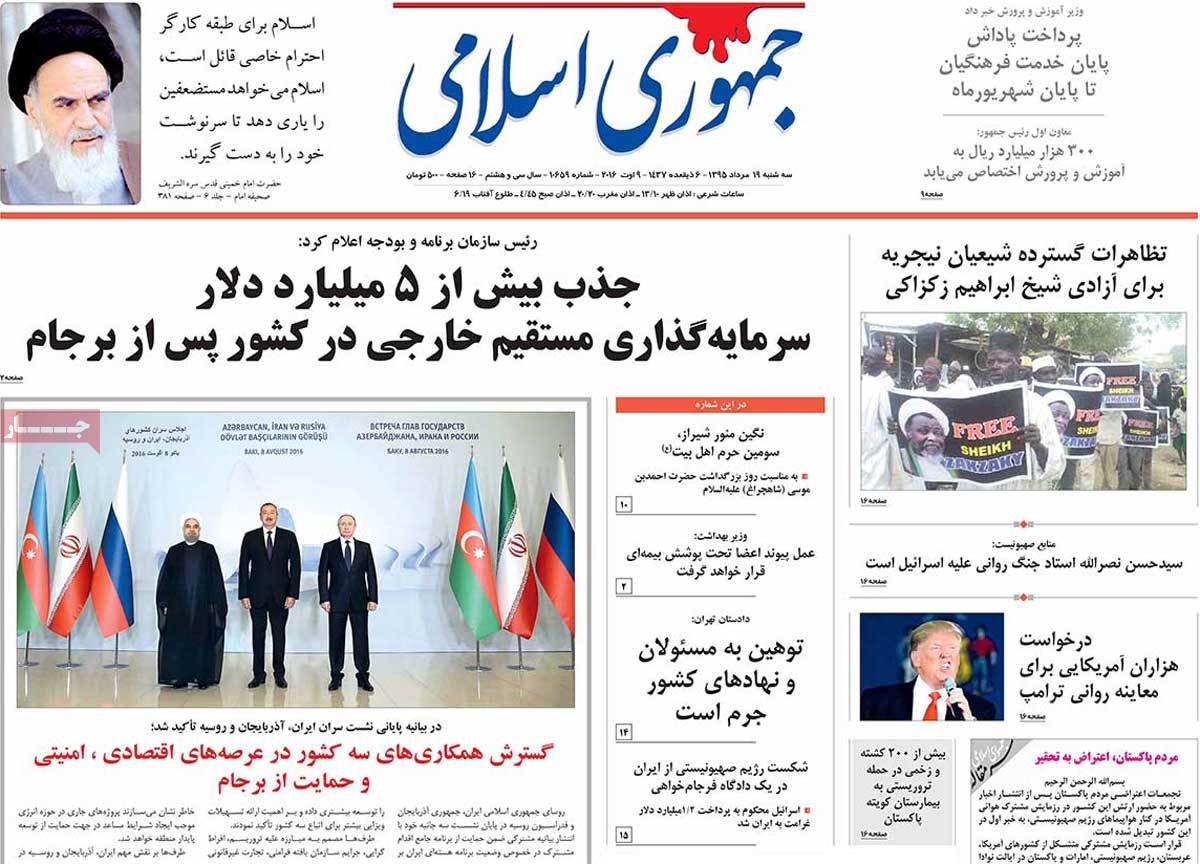
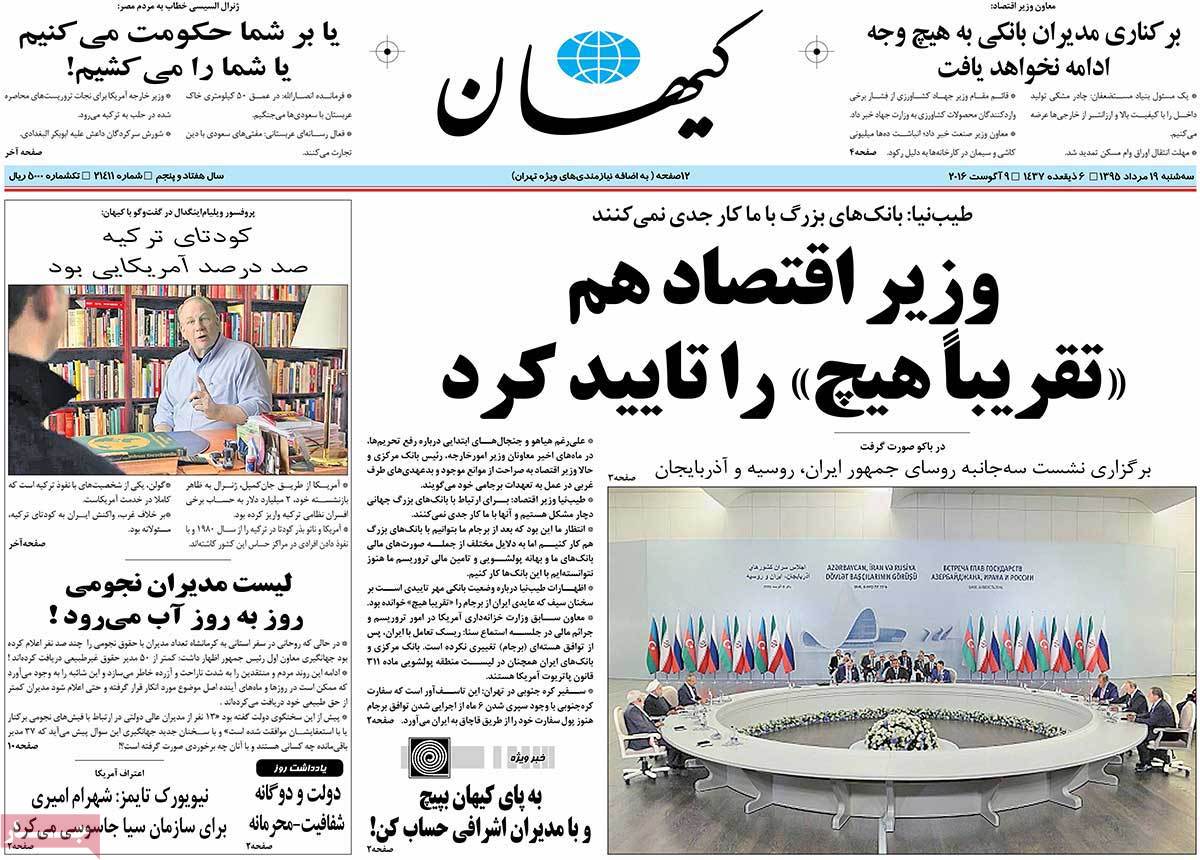
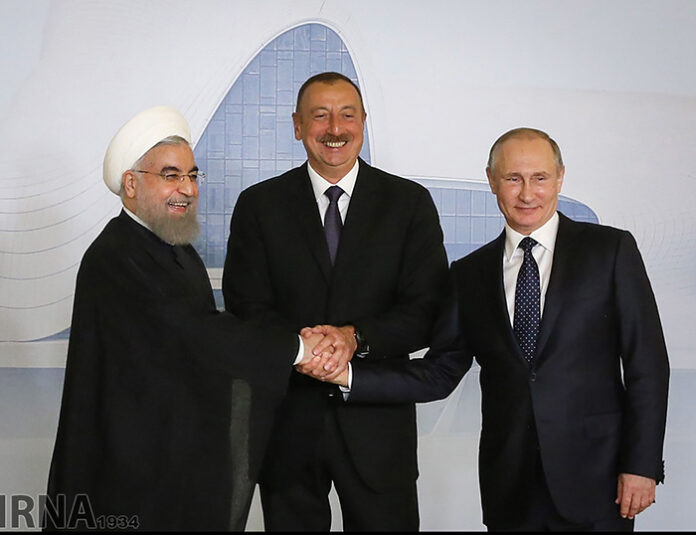
The three presidents announced in a joint statement at the end of the historic Baku summit that they would take the required measures to materialize the NSTC with the ultimate objective to exploit the economic opportunities it creates.

The statement was read out after the summit in which Russia’s President Vladimir Putin, Iran’s President Hassan Rouhani and Azerbaijan’s President Ilham Aliyev had participated.

They also emphasized that their respective countries would try to increase their own shares in efforts to create the NSTC “based on their common interests”.

The NSTC is a multi-modal route to link India and the Middle East to the Caucasus, Central Asia and Europe.

The ship, road and rail route connects India’s Mumbai to the Iranian port of Bandar Abbas and further to Baku in Azerbaijan as well as Astrakhan, Moscow and St Petersburg in Russia before stretching to northern Europe and Scandinavia.

In addition to Iran, India and Russia, countries that are on board to integrate into the transit network include Armenia, Azerbaijan, Belarus, Kyrgyzstan, Kazakhstan, Ukraine, Turkey, Tajikistan, Oman, Syria and Bulgaria.

Dry runs of the route were conducted in 2014, from Mumbai to Baku and Astrakhan via Bandar Abbas. Results showed transport costs had been reduced by $2,500 per 15 tonnes of cargo.

The NSTC was a central theme in the summit of Putin, Rouhani and Aliyev.

“Our talks will focus on a flagship project – the International North–South Transport Corridor with a total length of 7,200 kilometers,” Russian President Vladimir Putin quoted as saying by the media before leaving for Baku.

“It aims to provide the best possible opportunities for transporting transit cargo from India, Iran, and the Persian Gulf states to Azerbaijan, the Russian Federation and further to northern and western Europe,” he said.

The three presidents also agreed to cooperate on natural gas industry. They said in their statement that they will specifically work together over the transfer of technology as well as the shipment and delivery of gas.

Putin, Rouhani and Aliyev also voiced support for efforts to connect the power grids of their respective countries – what they said would contribute to the sustainable development of the region.

The significance of close banking cooperation to attract investments and bring in new technologies for development projects was also highlighted in the trilateral talks.

Police Arrest Robbers Who Dug Tunnel beneath Synagogue

45029007899204401060

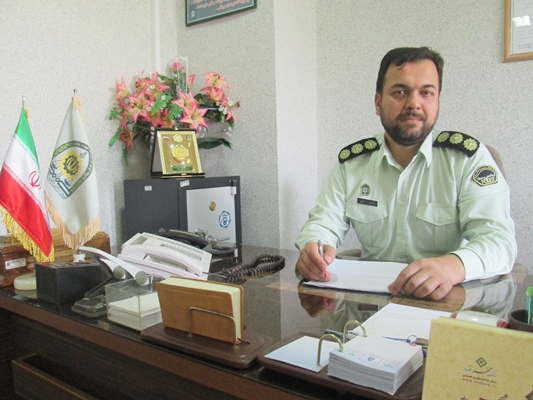
Iran’s Police arrested four men who were digging a tunnel under the Jews’ synagogue in Iran’s western city of Hamadan.


In an interview with IRNA, as translated by IFP, Colonel Pejman Ghavimi, the Police Chief of Hamadan, referred to a report received about illegal excavations in Baba Taher Street near a synagogue which dates back to Qajar era.

“Once we received the report, we made the required arrangements with the judicial authorities and officials from the Cultural Heritage, Handicrafts and Tourism Organization and investigated the issue immediately,” he said.

The criminals were caught while they were digging a tunnel under the Jewish shrine.

Ghavimi went on to say that the offenders had hired a warehouse next to the synagogue to do their excavations in quest of antiquities.

“They had dug a tunnel to a depth of 30 metres to no avail,” he noted, stressing that the offenders have confessed to all of their crimes.

The warehouse was sealed by judicial warrant and the discovered objects were seized accordingly.

The synagogue, which belongs to the Qajar period, is located in an alley named Jarrahan in Baba Taher Street of Hamadan. It was registered as a national cultural heritage on February 5, 2011.

Iran Breaks Records by Exporting 7m Barrels of Oil in One Day

oil

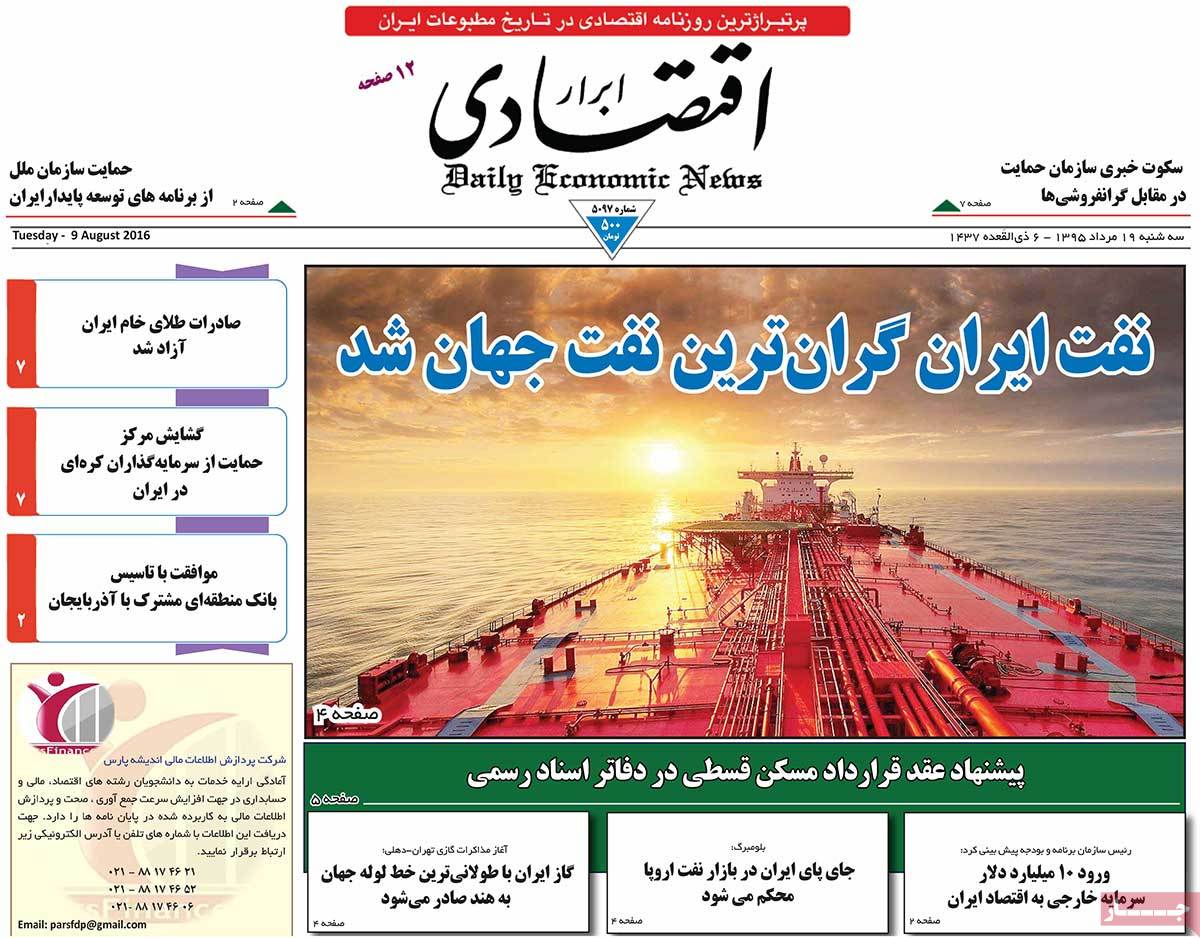
According to a report by Tasnim, as translated by IFP, Pirooz Mousavi, the managing director of Iran’s oil terminals, noted that the export of more than 7 million barrels of crude oil is just one example of the accomplishments of Iranian terminals in the export of oil.

“In the post-JCPOA era, all records in the export of oil and gas consolidates have been broken by Iran Oil Terminals Company,” he said.

His remarks came as Mohsen Qamsari, the director for international affairs of National Iranian Oil Company (NIOC), recently announced the country has reclaimed about 80 percent of its share in global oil markets since sanctions against the country were removed.

Iran exports about 2 million barrels of its daily output of 3.8 million and has regained about 80 percent of the market share it held before the anti-Tehran sanctions, Qamsari told Bloomberg in an interview.

He added that oil markets will remain stable this year even as Iran plans to keep boosting crude exports.

“Our exports peak is above 4 million barrels a day, and we have plans for that and are waiting for the right conditions,” Ghamsari stressed.

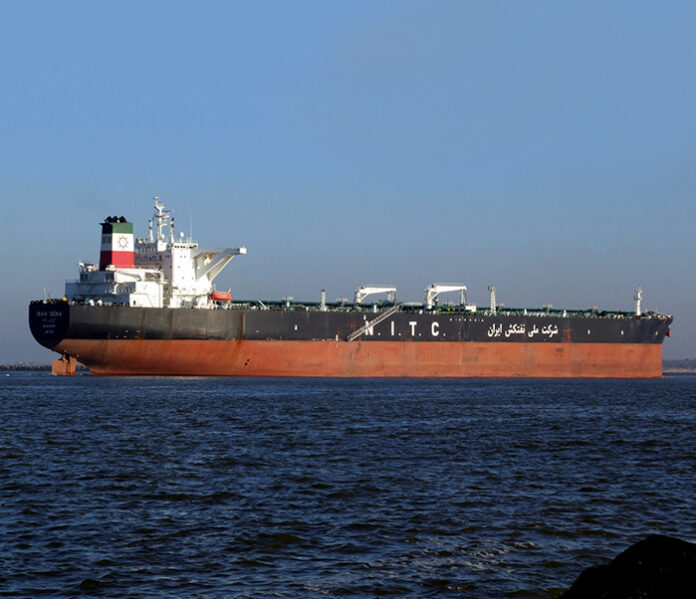
On June 27, the Atlantas Very Large Crude Carrier (VLCC), destined for Gdansk, left Iran’s Kharg Island laden with 2 million barrels of crude.

The cargo was the first Iranian crude sold into this part of the Baltic Sea market.

Before sanctions, Iran was exporting about 2.2 million barrels per day (bpd).

The sanctions were lifted after Tehran and the Group 5+1 (Russia, China, the US, Britain, France and Germany) on July 14, 2015 reached an agreement on Iran’s peaceful nuclear program and started implementing it on January 16.

Journalism, Thrill of Pursuing Truth on Perilous Path

journalism

Being a journalist is hard work, this is the first thing my boss told me when I came for my job interview three years ago, as a warning or perhaps as an amicable advice to give me a chance to rethink my career choice if I did not see myself fit for the job description. Needless to say, I did not heed the warning, because really, how hard could it be? There is an expression among us Iranians that says ‘this is the toughest job in the world, after working in the mines.’ Some would even go so far as to say journalism is even tougher than a mining job. Comparisons aside, no one gets into journalism for the money.

The job may hold some flimsy prestigious appeal to those looking at it on the sidelines, but from inside, it is fraught with so many sleepless nights, anxiety-ridden hours, exhausting commute on foot or by public transport in terrible climate conditions, and just pure headache. But, this cannot be all, right? According to a survey conducted in 2014, there were 83,000 full time professional journalist employees in the United States. Deputy Minister of Culture and Islamic Guidance, Hossein Entezami, put the number of active journalists in Iran in 2016 at approximately 5,000. The figures are not staggering, of course, especially when one compares it to the whole Iranian population of 77.45 million in 2013. Yet, being a journalist must have its appeals, if it has attracted thousands of people to choose it as their profession when they could have easily been working a 9-to-5 office job (it is 8-to-4 in Iran, by the way).

Mitra, a young journalist with five years of experience in medical and scientific journalism, perceived her career with passion and love; “journalism for me is not just a word, but a combination of creativity, honesty, alertness, confidence and courage,” she said. “These are the reasons why I am still pursuing this career with the same enthusiasm I had five years ago.”

“Each day at my work greets me with a new kind of adventure,” she said with excitement. “It is hard work, but you can never accuse journalism of being boring.”

The pursuit of information can indeed come with a rush of pure excitement and adrenaline-pumping experience, as beautifully dramatized in ‘Spotlight’. But sometimes it comes at the cost of great perils. According to Reporters without borders, 80 journalists were killed in 2015, with Iraq, France, Syria and Brazil among the deadliest countries. The website puts the number of killed journalists in 2016 so far at 35, with Syria, Mexico and Yemen having the highest number of fatality among journalists. The report published by the Committee to Protect Journalists (CPJ) cites 199 jailed journalists worldwide in 2015, and 452 forced into exile since 2010. There are also a number of missing cases, particularly in Syria and Iraq as two countries are currently suffering from terrorist activities and civil wars.

People in Iran commemorate Journalists’ Day on August 8 (August 7, this year) in memory of Mahmoud Saremi, Afghanistan bureau chief for the official Iranian news agency, IRNA, who was killed when Taliban militia seized the northern city of Mazar Sharif and captured the Iranian consulate. Our National Journalists’ Day is in fact a commemoration of the sacrifices that journalists and reporters make on this hazardous path toward truth and awareness.  […]

No one can deny the power of written words, and journalists are simply in possession of that power. With power comes responsibility, and those journalists who are committed to excellence and moral principles in their profession can bring positive changes to the world around them.

Joseph Pulitzer, an American newspaper publisher who is perhaps better known for the Pulitzer Prizes, has left us with this golden quote which I am leaving here for those of you who are thinking to become a journalist yourself: “I am deeply interested in the progress and elevation of journalism, having spent my life in that profession, regarding it as a noble profession and one of unequalled importance for its influence upon the minds and morals of the people.

220 Tons of Narcotics Seized across Iran in Four Months: Police

General Eskandar Momeni

Brigadier General Eskandar Momeni said Iranian police forces managed to seize over 220 tons of narcotics from drug smugglers in the country during the first quarter of this year, which shows a 16 percent increase compared with the amount seized in the same period last year.

The Police are determined to step up the fight against contraband, theft and drug trafficking this year, he stressed, adding that some $2.1 trillion worth of contraband goods were seized in the first four months of the current year as well.

Despite high economic and human costs, the Islamic Republic has been actively fighting drug trafficking over the past three decades.

The country has spent more than $700 million on sealing its borders and preventing the transit of narcotics destined for European, Arab and Central Asian countries.

The war on drug trade originating from Afghanistan has claimed the lives of nearly 4,000 Iranian police officers over the past 34 years.

Deprived People in Northwestern Iran Take Selfies

Selfies 0

Remote and underdeveloped regions have always been deprived of equipment and technologies used in the modern life.

Noli-Balaghi, Kareh-Nab, Golsen Gursen, and Akbar Kandi are among the most deprived parts of a region in northwest of Iran. These villages are located near the city of Meshkinshahr in Ardabil province.

The residents are deprived of the simplest facilities like drinking water, electricity, and medical and educational facilities. They have never seen any TV, refrigerator, mobile phone, and the like, and some of them even do not know such devices exist.

They show interesting reactions in their first encounter with these modern technologies. Mehr’s photographer has given his cell phone to these villagers, and asked them to photograph themselves and whatever matters to them in selfies.

All these photos are taken by individuals who are using technology for the first time, and some even do not know how to take the phone in their hands.

Each of these people has his/her own story. One of them says his sheep and cows are not his properties; they are rather part of his life. A bare-footed kid is spending all his childhood in unpaved alleys. All of them try to show what matters to them without protesting at what they lack.

The simplicity, the joy, and the regrets portrayed in the photos are eye-catching.

Here are Mehr’s photos:


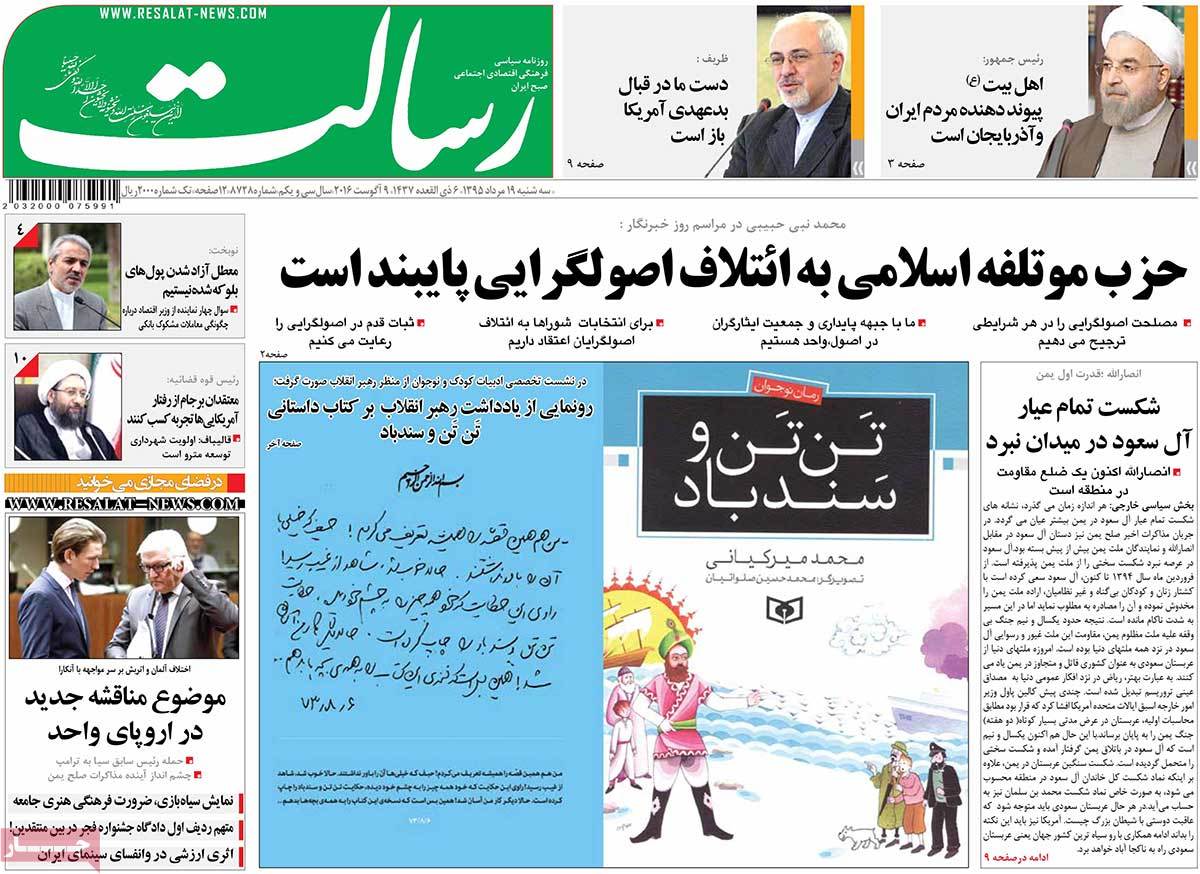
Ayatollah Khamenei Writes Note in Praise of ‘Tintin and Sinbad’

Tintin and Sinbad

The book Tintin and Sinbad, written by Mohammad Mirkiani, is an Iranian book for teenagers that relates the story of Tintin, a fictional character created by the Belgian cartoonist Georges Remi, and Sinbad, a fictional sailor and the hero of a story-cycle of Middle Eastern origin.

On October 28, 1994, Ayatollah Khamanei wrote a short note in praise of the book. The note was unveiled on Monday, August 8, 2016, after 22 years.

In this note, the Leader advices all teenagers to read the book, and voices his pleasure to see the book is relating what he himself has always been telling other people, but they did not believe it.

The book reportedly deals with a failed plot by the Western Tintin against Sinbad, a symbol of the Orient. Here is IFP’s translation of the Leader’s note:

Tintin and Sinbad

“I always used to tell the same story. It’s a pity that not many people believed it. Now it’s good and here’s the evidence! The narrator of this story, who has witnessed everything with his own eyes, has published the story of Tintin and Sinbad. Now my job is easier! The only thing I need to do is to present a copy of the book to all children,” the Leader said about the teen book.


Here is what Ayatollah Khamenei’s official website has written about the book:

‘Tintin & Sinbad’ is a work of fiction and metaphor narrating contrasts between two characters of Tintin and Sinbad, each representing western and eastern cultures, respectively, written for teenagers. In this book, characters like Sinbad, Ali Baba and the like, who were once very popular in eastern stories, go to a challenge against exaggerated protagonists and paper tigers of west. Contrary to illogical and aggrandized powers of western heroes, eastern legends take logical and rational measures and stand against their invasion and aggressions with patience and unity and save their land. The repeated story of western invasions on eastern territories and colonialism Asian and African countries suffered, reappears in a new form and with the objective of dominance over minds and cultures is narrated in ‘Tintin and Sinbad.’