Monday, May 4, 2026
Home Blog Page 424

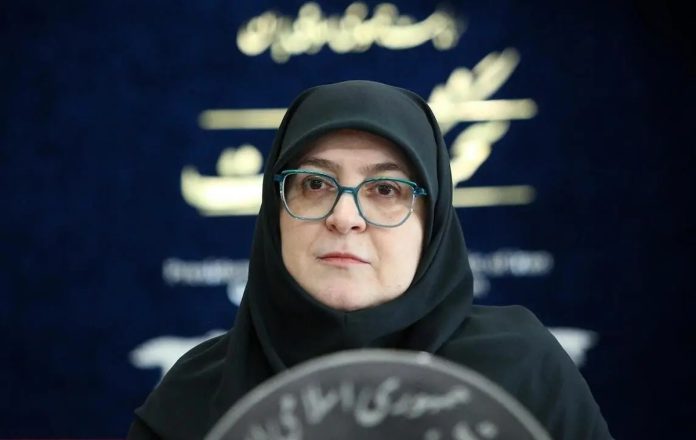
Iran welcomes any practical initiative that terminates sanctions: Spokeswoman

Mohajerani made the remark on Sunday, a day after Iranian and U.S. negotiators concluded a second round of talks over Iran’s nuclear program and the lifting of the sanctions against the country.

She told IRNA that the process of the talks has been positive so far.

“In the continuation of the talks, we welcome any practical initiative to lift the sanctions and ensure the rights of the Iranian people,” said Mohajerani.

The second round of the talks between Tehran and Washington were held in Rome, Italy. The two sides agreed to hold more discussions in the coming days.

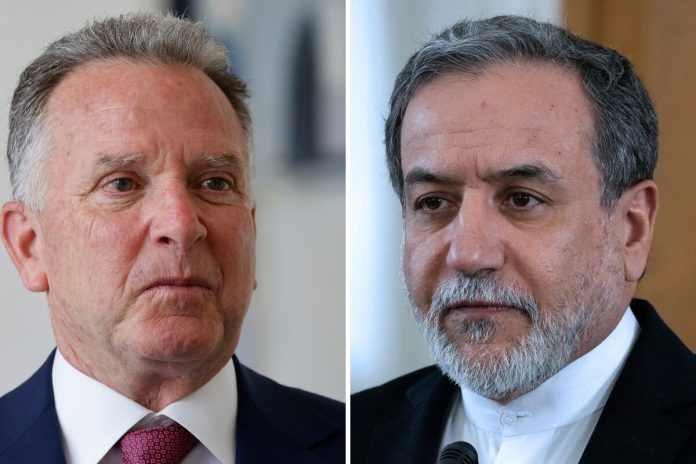
The Rome discussions were a follow-up of negotiations held last Saturday in Muscat, Oman. During both rounds, the Iranian delegation was led by Foreign Minister Abbas Araqchi and the U.S. team was headed by Steve Witkoff, President Donald Trump’s Middle East envoy.

Mohajerani stated the talks will be pursued within the framework of the duties and missions of the Ministry of Foreign Affairs, and the administration will not divert its focus from the main path of running the country.

“The goal of these talks is to examine practical steps to reduce tensions and provide a platform for technical talks in the future,” she added.

Back in 2018, the U.S. withdrew from the 2015 Iran deal, also called the Joint Comprehensive Plan of Action (JCPOA), and initiated a “maximum pressure” campaign against Iran despite the fact that the Islamic Republic had fully honored its commitments to the agreement.

Lifting of sanctions Iran’s main demand in talks with US: Spokesman

Esmail Baghaei

On Monday, Esmail Baqaei spoke to reporters about the objectives of the negotiations and consultations, stating that all sanctions imposed against Iran are unjust and illegal.

Baqaei stressed that the oppressive sanctions have no legitimate basis, as they are rooted in concerns over Iran’s peaceful nuclear program—concerns that are entirely unfounded.

He added that it is natural for Iran’s key demand in any negotiations to be the lifting of sanctions so that Iran can conduct its normal trade and banking activities.

Referring to the US withdrawal from the Iran nuclear deal (JCPOA) in 2018, Baqaei said that given the history of broken promises, there must be guarantees that if the talks reach an agreement, it will endure, and the parties will fulfill their commitments.

Regarding Saudi Arabia’s role in the negotiations, Baqaei stated: “Our relationship with neighboring countries is based on good neighborliness. Close contacts have been maintained between Iran and all regional countries, and these consultations will continue.”

In response to a question about consultations with JCPOA member states regarding Iran-US negotiations, he said: “China and Russia are two important members of the UN Security Council and friends of Iran, and they have always been kept informed of relevant developments. We have also consulted with the three European JCPOA members and will continue to do so.”

The Iranian Foreign Ministry spokesperson also warned that a kind of alliance is forming between US Democrats and the Zionist regime to obstruct Iran-US talks.

FM Araghchi stresses strategic cooperation between Iran, Russia, China

Abbas Araghchi

Araghchi, visiting Moscow ahead of the next round of indirect nuclear talks between Tehran and Washington, described Iran-Russia relations as “closer and stronger than ever,” citing a newly ratified 20-year strategic partnership agreement.

“We are expanding economic ties despite sanctions and won’t wait for their removal,” he stated.

On trilateral cooperation with China and Russia, he said such collaboration is “essential in today’s world,” noting ongoing discussions on Iran’s nuclear issue and readiness to broaden dialogue to other areas.

“Together, we can take effective steps for international peace and security,” he added.

Addressing Western and Israeli threats, Araghchi asserted that Iran “does not yield to pressure” and is prepared to defend itself.

“I doubt military threats will materialize – the US and Israel know our capabilities,” he said, adding that diplomacy remains Iran’s priority but that it is “fully prepared for any scenario.”

Trump voices hope Russia, Ukraine make a deal within days, promises ‘big business’ with US

Trump’s comments come shortly after he threatened to pull U.S. support from the peace process altogether if either Russia or Ukraine caused negotiations to stall.

“Hopefully Russia and Ukraine will make a deal this week,” Trump wrote on Truth Social.

“Both will then start to do big business with the United States of America, which is thriving, and make a fortune.”

Trump’s post was published on Easter Sunday, amid what was supposed to be a temporary ceasefire in Russia’s war against Ukraine. Russian President Vladimir Putin on April 19 declared an “Easter truce,” promising to halt all combat operations until midnight on April 21.

Ukraine and the U.S. both called on Putin to extend the truce beyond Easter and impose a complete 30-day ceasefire. According to Kremlin Spokesperson Dmitry Peskov, Putin gave no such order.

President Volodymyr Zelensky had proposed a 30-day ban on long-range missile and drone strikes against civilian infrastructure, noting that Russia had managed to halt aerial attacks against Ukraine on Easter.

Some European leaders expressed skepticism at Putin’s Easter truce.

Trump had told reporters that he was ready to “take a pass” on negotiating a peace settlement between Russia and Ukraine.

“If for some reason one of the two parties makes it very difficult, we’re just going to say: ‘you’re foolish, you’re fools, you’re horrible people,’ and we’re just going to take a pass. But hopefully we won’t have to do that,” he said.

Earlier that day, U.S. Secretary of State Marco Rubio stated Washington would abandon its negotiation efforts in the coming days if there was no progress on an agreement.

The comments represent an abrupt about-face for the Trump administration, which has made a Ukraine-Russia peace deal a priority since the Jan. 20 inauguration. Trump spent the months leading up to his election promising to end the war in 24 hours and has repeatedly boasted about his ability to secure a deal.

Business interests have played a key role in Trump’s approach to both Ukraine and Russia.

Since Trump took office, Washington has taken steps to normalize relations with Moscow, emphasizing strengthened economic ties. Following a phone call between Trump and Putin on March 18, the Kremlin announced the leaders were interested in developing “mutually beneficial cooperation” in a number of sectors. The White House later touted the potential for “enormous economic deals” between the two countries.

White House Press Secretary Karoline Leavitt has stated that “economic partnerships” with the U.S. could serve as an incentive for Russia to end the war in Ukraine.

The Trump administration is also pursuing a minerals deal with Kyiv that would give the U.S. broad control over revenues from Ukraine’s natural resources — something Washington claims it deserves in return for military aid provided to Kyiv. The U.S. maintains the agreement would help protect Ukraine against Russian aggression, though it includes no security guarantees.

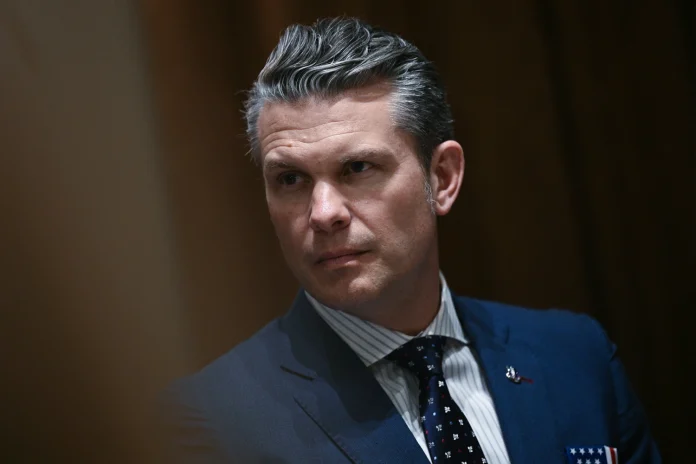
Pentagon chief shared Yemen attack details in second Signal chat: Report

Pete Hegseth

It’s the second time Hegseth has been accused of sharing sensitive military information on the commercial messaging app with unauthorised personnel.

Last month, The Atlantic magazine revealed that its editor-in-chief was inadvertently included in a Signal chat in which officials including Hegseth and National Security Advisor Mike Waltz discussed the strikes, which took place on March 15.

The revelation sparked an uproar, with US President Donald Trump’s administration facing a scandal over the accidental leak. A Pentagon Inspector-General’s probe into that leak is ongoing.

On Sunday, the Times reported that Hegseth had shared information on the same March 15 strikes with the second Signal group chat.

The information shared “included the flight schedules for the F/A-18 Hornets targeting the Houthis in Yemen”, the newspaper reported.

The outlet said that unlike the accidental leak where journalist Jeffrey Goldberg was mistakenly included in the group, this group chat was created by Hegseth. The other chat was initiated by Waltz.

“It included his wife and about a dozen other people from his personal and professional inner circle in January, before his confirmation as defence secretary,” the daily reported, citing unnamed sources.

Hegseth’s wife Jennifer is a journalist and former Fox News producer. The group also included his brother Phil and Tim Parlatore, both of whom serve in roles at the Pentagon.

Parlatore also continues to serve as Hegseth’s personal lawyer, the Times reported.

Trump largely pinned the blame for the earlier leak on Waltz, but has dismissed calls to fire top officials and insisted instead on what he called the success of the raids on the Yemeni rebels.

This week, three top Pentagon officials were put on leave pending investigations into unspecified leaks in the Defence Department.

Deputy chief of staff Darin Selnick, senior advisor Dan Caldwell and Colin Carroll hit back on Sunday, releasing a statement saying Pentagon officials had “slandered our character with baseless attacks”.

“At this time, we still have not been told what exactly we were investigated for, if there is still an active investigation, or if there was even a real investigation of ‘leaks’ to begin with,” they announced in a joint statement posted on social media.

“While this experience has been unconscionable, we remain supportive of the Trump-Vance Administration’s mission to make the Pentagon great again and achieve peace through strength.”

Locals rescue 24 wild sheep trapped in mud in southern Iran

Meisam Ghassemi, deputy director of natural resources and biodiversity at Hormozgan’s Department of Environment, said 26 wild sheep had entered the watering hole but became trapped in thick mud.

“Despite rescue efforts, two animals died due to exhaustion, while one severely weakened sheep was transferred to a veterinary clinic in Bastak for treatment,” he explained, adding, “It will be released back into the wild after recovery.”

Ghassemi attributed the incident to severe drought in Hormozgan, which has drastically reduced water sources in natural habitats.

The Department of Environment, alongside local communities and conservation volunteers, has launched efforts to provide water for wildlife and prevent similar accidents.

Authorities urged the public to report such emergencies to the nearest environment office, ranger station, or the hotline to protect wildlife.

Iran emphasizes substantive sanctions relief, right to enrichment in nuclear talks with US

Araghchi Witkoff

His remarks, delivered during a meeting with the Iranian Parliament’s National Security and Foreign Policy Commission on Sunday, underscored Tehran’s firm positions in the ongoing diplomatic process.

According to the commission’s spokesperson, Ebrahim Rezaei, Gharibabadi reported that the negotiations in Rome yielded agreements on a general framework, a working agenda, and technical focal points.

He stressed that Iran’s proposals are fully aligned with national policies and the decisions of top governing bodies, particularly with regard to the complete and verifiable removal of all U.S. sanctions.

“Iran considers both congressional sanctions and presidential executive orders as components of the sanctions architecture, and their full removal is essential,” Gharibabadi was quoted as saying.

He reiterated that any agreement must bring tangible and meaningful economic benefits to the Iranian people, rather than being symbolic or superficial.

Iran also reaffirmed its unwavering stance on its right to enrich uranium, a point Gharibabadi described as a red line in the negotiations.

He emphasized that Iran’s nuclear program remains exclusively peaceful, with no intention to pursue nuclear weapons.

The Deputy Minister further conveyed Tehran’s dissatisfaction with any delay in the negotiation process, calling for serious engagement from the American side.

He urged Washington to resist external pressures, particularly from the Zionist regime, which is actively seeking to sabotage the talks.

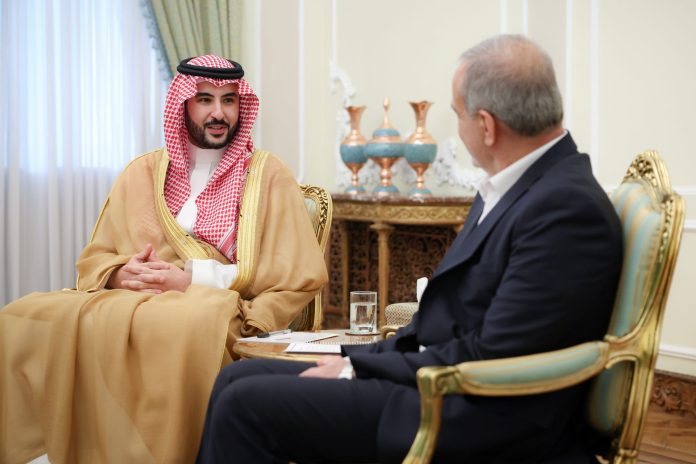
Iran’s envoy in Riyadh: Saudi defense minister’s visit a sovereign move

In an interview with IRNA, Enayati emphasized that Iran and Saudi Arabia are entering a new phase in their bilateral and multilateral relations, marking a clear departure from the previous period of stagnation.

He noted that this was the second official visit of a Saudi defense minister to Iran, recalling the 1999 visit by Prince Sultan which resulted in the signing of a bilateral aviation agreement and the establishment of direct flights.

Enayati described Prince Khalid’s meetings in Tehran, including the one with the Leader of the Islamic Republic, as opening “broad prospects for the future of Iran-Saudi relations.”

He noted that Saudi officials were made fully aware of Iran’s firm will to expand international cooperation.

The ambassador underlined the importance of people-to-people exchanges in solidifying bilateral relations. “For sustainable ties, it is not enough for political, security, and military relations to be confined to capital cities. These relations must become tangible to the public, through increased economic, cultural, social, and tourism cooperation, as well as facilitating travel for citizens of both nations.”

He also highlighted the importance of regional consensus in support of de-escalation efforts, referencing Saudi Arabia’s statement backing the Iran-U.S. talks in Oman, as well as supportive declarations by the Persian Gulf Cooperation Council (GCC) and Iraq.

“These developments reflect a shift in the region from confrontation to constructive engagement,” he said.

Enayati acknowledged that economic cooperation still lags behind and requires greater effort.

“Economic development must move in parallel with political and security progress,” he stressed.

Ukraine, Russia accuse each other of breaking ceasefire

Russia Ukraine War

Putin, who ordered thousands of Russian troops into Ukraine in February 2022, ordered Russian forces to “stop all military activity” along the front line in the three-year-old war until midnight Moscow time (2100 GMT) on Sunday.

Ukrainian President Volodymyr Zelensky said Russia was pretending to observe the Easter ceasefire, but had in fact continued hundreds of artillery attacks on Saturday night, with more assaults on Sunday.

Zelensky wrote on the X social media platform that Russia had launched 26 assaults from midnight until midday local time (0900 GMT).

“Either Putin does not have full control over his army, or the situation proves that in Russia, they have no intention of making a genuine move toward ending the war, and are only interested in favourable PR coverage,” Zelensky’s post added.

Earlier he stated the Russian army “is trying to create a general impression of a ceasefire”, while continuing to inflict losses on Ukraine’s front line.

Russia’s Defence Ministry announced that Ukraine had broken the ceasefire more than 1,000 times, inflicting damage to infrastructure and causing some civilian deaths.

The ministry said Ukrainian forces had shot at Russian positions 444 times while it had counted more than 900 Ukrainian drone attacks, including attacks on Crimea and on the Russian border areas of Bryansk, Kursk and Belgorod regions.

“As a result, there are deaths and injuries among the civilian population, as well as damage to civilian facilities,” the ministry added.

Ukraine’s military noted earlier on Sunday that activity on the front line had decreased. Some Russian military bloggers also stated military activity along the frontline has substantially decreased.

The apparent failure to observe even an Easter ceasefire shows just how hard it will be for U.S. President Donald Trump to achieve his aim of clinching a lasting deal to end what he calls the “bloodbath” of the war in Ukraine.

The U.S. will walk away from efforts to broker a peace deal unless there are clear signs of progress soon, Trump and his secretary of state, Marco Rubio, stated on Friday.

Trump, who says he wants to be remembered as a peacemaker, has repeatedly warned of the escalation risk of the war – which his administration now casts as a proxy conflict between the U.S. and Russia, echoing Moscow’s stance.

Last month, after Ukraine accepted Trump’s proposal for a 30-day truce, Putin said crucial issues of verification had not been sorted out. Both Moscow and Kyiv have agreed to a moratorium on attacks on energy targets and at sea, which each accuses the other of breaking.

Zelensky reiterated that Kyiv was willing to extend the ceasefire for 30 days but said that if Russia kept fighting on Sunday, so would Ukraine.
Putin told his top general, Valery Gerasimov, to be ready to respond “in full” if Kyiv broke the truce.

Russia controls just under one-fifth of Ukraine, including Crimea, which Moscow annexed in 2014, and the regions of Luhansk, Donetsk, Zaporizhzhia and Kherson.

Putin, when announcing the ceasefire before heading to an Orthodox Easter service, said the truce would show whether or not Ukraine was ready or able to implement peace. Putin thanked Trump, Chinese President Xi Jinping and leaders from the BRICS group of emerging economies for attempts to mediate.

The European Union reacted cautiously to Putin’s ceasefire declaration, saying Moscow could stop the war immediately if it wanted to.

U.N. spokesman Stephane Dujarric reiterated U.N. support “for meaningful efforts towards a just, lasting and comprehensive peace that fully upholds Ukraine’s sovereignty, independence and territorial integrity”.

Easter falls on the same day this year for Orthodox and Western churches, and Zelensky urged Ukrainians not to give up hope that peace will one day return.

“We know what we are defending. We know what we are fighting for,” he stated in a social media video, wearing a traditional Ukrainian embroidered shirt and standing in front of Kyiv’s main church, Saint Sophia Cathedral.

Rare Pallas’s cat spotted again in Iran’s Kerman province

According to the head of Kerman’s Department of Environment, one of the local environmental volunteers succeeded in observing two Pallas’s cat cubs in the mountainous area of Rabor County, capturing an image of one of them.

Due to the considerable distance between the two cubs, photographing the second one was not possible.

Officials say this rare sighting suggests a potential increase in the local population of this vulnerable species, which is known for its reclusive nature and declining numbers across its native range in Central Asia and parts of the Iranian plateau.

The Pallas’s cat (Otocolobus manul), also known as the manul, is listed as Near Threatened by the IUCN due to habitat loss, prey depletion, and other environmental pressures. The species is extremely difficult to monitor due to its solitary behavior and elusive presence.

Conservation experts in Iran consider repeated sightings of the animal in Kerman a positive indicator and are calling for heightened protection measures to safeguard its habitat and support possible population recovery in the region.