Monday, May 4, 2026
Home Blog Page 425

Pope Francis calls for Gaza ceasefire

The 88-year-old pontiff, still recovering from a near-fatal bout of double pneumonia, appeared on the balcony of St Peter’s Basilica on Sunday as an aide read out his “Urbi et Orbi” – Latin for “to the city and the world” – benediction, in which the pope condemned the “deplorable humanitarian situation” caused by Israel’s 18-month war on the Palestinian territory.

“I express my closeness to the sufferings … of all the Israeli people and the Palestinian people,” said the message.

The pope also called on the Palestinian armed group Hamas to release its remaining captives and condemned what he said was a “worrisome” trend of anti-Semitism in the world.

“I appeal to the warring parties: call a ceasefire, release the hostages and come to the aid of a starving people that aspires to a future of peace.”

Before his recent five-week stay at Rome’s Gemelli Hospital, Francis had been ramping up criticism of Israel’s military campaign in Gaza, calling the situation “very serious and shameful” in January.

Francis, who has been under doctors’ orders to observe two months of convalescence since he left the hospital on March 23, would have normally presided over the entire event, but on this occasion was replaced by Cardinal Angelo Comastri.

Lebanon President says Beirut waits for ‘right conditions’ to bring all weapons under state control

“The Lebanese people do not want war, and therefore the armed forces are the only body responsible for Lebanon’s sovereignty and independence,” he said following a meeting with Maronite Patriarch Cardinal Bechara Boutros Al-Rai.

He stated the state will deal with the issue of Hezbollah’s weapons “with vision and responsibility.”

“This is essential to preserving civil peace, and I will take responsibility for it in cooperation with the government,” he added.

“We will place the weapons under state control, but we are waiting for the right conditions to determine how this will be done.”

Hezbollah did not immediately comment on Aoun’s comments.

Aoun vowed in an earlier interview with the London-based Arabic outlet Al-Araby Al-Jadeed to place all weapons under state control in 2025.

He noted that Hezbollah members could join the Lebanese army and “undergo integration training.”

In 2006, the United Nations Security Council adopted Resolution 1701 to cease hostilities between Hezbollah and Israel, establishing a buffer zone in southern Lebanon and calling for the implementation of the Taif Agreement and other international resolutions, which require the disarmament of all armed groups in Lebanon.

International pressure has been increasing on Lebanon to disarm Hezbollah since the November ceasefire deal that ended more than a year of cross-border clashes with Israel.

Lebanese authorities have reported more than 2,763 Israeli violations of the truce, including the deaths of at least 193 victims and injuries to 485 others.

Under the ceasefire accord, Israel was supposed to fully withdraw from southern Lebanon by Jan. 26, but the deadline was extended to Feb. 18 after Israel refused to comply. It still maintains a military presence at five border outposts.

US plans to send special envoy to Russia again: CNN

Witkoff has already met with Russian President Vladimir Putin three times this year as the US president tries to broker a ceasefire between Kiev and Moscow.

In its article on Saturday, CNN further quoted its source as saying that Washington’s plan, which was reportedly presented to Ukrainian officials and several European leaders during a top-level meeting in Paris on Thursday, envisages a ceasefire along the current front line. The US government also supposedly signaled a willingness to recognize Crimea as Russian territory.

Commenting on his meeting with Putin in Moscow last Friday, Witkoff told Fox News on Monday that the nearly five-hour talks were “compelling” and that the Kremlin is seeking a lasting solution to the Ukraine conflict.

Trump’s special envoy claimed that Moscow and Kiev “might be on the verge of something that would be very, very important for the world at large.”

According to the US official, any potential peace deal would include the recognition of Crimea, the Donetsk, and Lugansk People’s Republics, and Kherson and Zaporozhye Regions as part of Russia.

Kremlin spokesman Dmitry Peskov told reporters on Tuesday that while there were “no clear outlines of any agreement yet,” Moscow values the “constructive and substantive” contact with the US.

Witkoff’s remarks did not sit well with Ukrainian leader Vladimir Zelensky, who on Thursday accused Trump’s envoy of “wittingly or unwittingly spreading Russian narratives.”

He reiterated that Kiev will “never recognize any temporarily occupied Ukrainian territory as Russian.”

Russia has maintained that it is open to peace talks with Ukraine in principle, as long as its key security concerns are addressed. Moscow demands among other things that Kiev renounce its NATO aspirations and recognize the territorial “realities on the ground.”

The Kremlin has insisted it will not accept a mere freeze of the conflict.

On Saturday, President Putin announced a temporary Easter truce effective from 18:00 Moscow time through midnight on Sunday night.

While he expressed hope that Ukraine would reciprocate, he also stated that the “Kiev regime has violated the agreement on pausing energy infrastructure strikes more than a hundred times.”

Putin argued that Ukraine’s reaction to the ceasefire would be a clear indicator of whether Kiev is serious about wanting to achieve peace.

Zelensky has made a counteroffer to a 30-hour Easter ceasefire announced by Putin, saying Kiev is ready to extend it beyond this period.

Ukraine’s leader made the remarks on his social media account late on Saturday, implying that it was primarily up to Moscow to observe the truce and that Kiev would only do likewise.

“If Russia is now suddenly ready to really join the format of complete and unconditional ceasefire, Ukraine will act in a reciprocal way – as it will be from the Russian side. Silence in response to silence, strikes in response to strikes,” Zelensky stated, adding that if the truce holds, Kiev is ready to extend it beyond the 30-hour period.

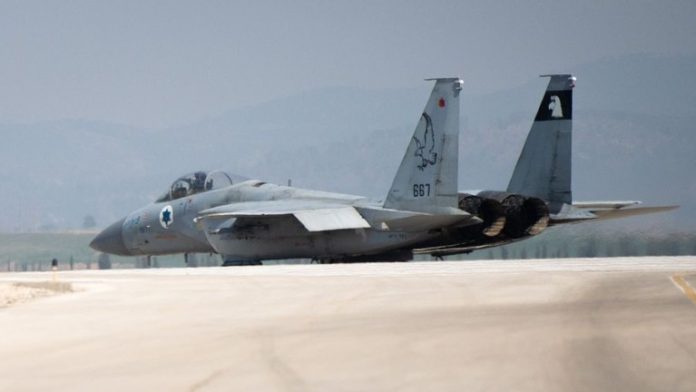
Israel considers ‘limited’ air attack on Iran: Reuters

According to Reuters, Israeli officials are weighing a “limited strike” that would require minimal US support – unlike the larger and prolonged bombing campaign previously under consideration.

Tel Aviv reportedly presented Washington with several strike options, “including some with late spring and summer timelines”. A senior Israeli official told the outlet that no final decision had been made.

On Wednesday, The New York Times reported that US President Donald Trump had rejected an Israeli proposal for “extensive” strikes, opting instead to pursue diplomacy.

“I’m not in a rush to do it, because I think that Iran has a chance to have a great country and to live happily without death, and I’d like to see that. That’s my first option,” Trump told reporters on Thursday.

A senior Iranian security official told Reuters that Tehran had “intelligence from reliable sources that Israel is planning a major attack on Iran’s nuclear sites”.

Iranian officials have previously vowed to retaliate against any form of aggression.

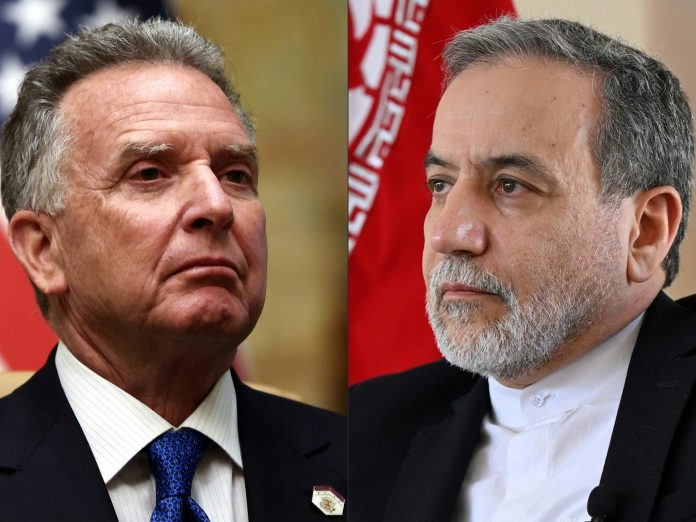
Iranian Foreign Minister Seyyed Abbas Araghchi said on Saturday that the talks in Rome “were held in a constructive environment”. A US official told CNN that the sides had “made very good progress’.

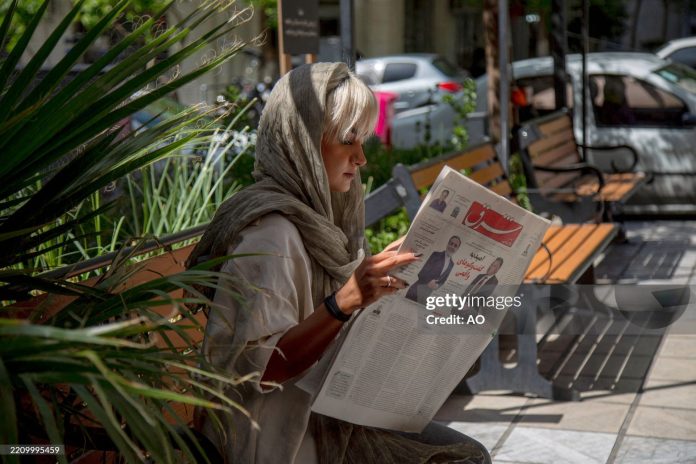
Tehran-based newspaper: Majority of Iranians support nuclear deal with US

In an editorial on Sunday, the paper cautioned against labeling negotiators as “traitors” or “unpatriotic,” stating, “If reaching a deal means ending unjust sanctions and solving national problems, why should we fear the criticism of naysayers?”

The newspaper noted that the potential economic benefits of sanctions relief justify the diplomatic efforts, pointing to recent positive market reactions including gains in the Tehran Stock Exchange and relative stability in currency markets as signs of public optimism.

While acknowledging Iran’s domestic economic challenges, the editorial emphasized that the country enters negotiations from a position of strength, with sufficient leverage to avoid accepting unfavorable terms.

The analysis suggested neither side has appetite for military confrontation, with the US reportedly unwilling to risk regional instability that could result from heightened tensions.

The piece noted President Massoud Pezeshkian’s repeated assurances that Iran will not allow sanctions to hinder national development, while maintaining that a balanced nuclear agreement could provide significant economic relief.

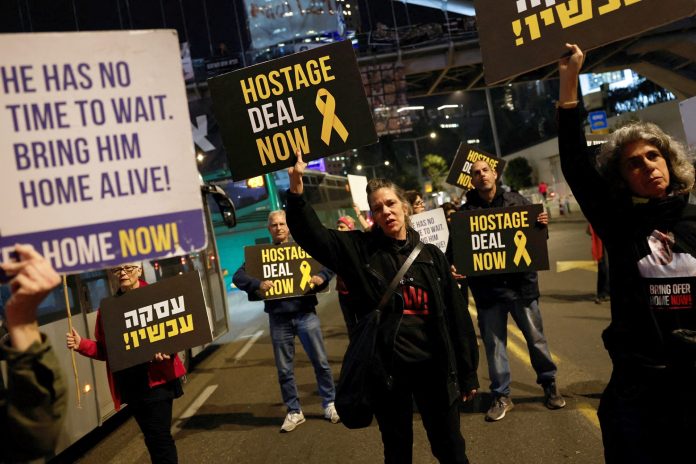
Thousands rally in Tel Aviv to demand return of Hamas-held hostages

Israel Hostages

The Yedioth Ahronoth reported that thousands gathered in Hostages Square, including hundreds of family members of the captives.

Israeli Prime Minister Benjamin Netanyahu, meanwhile, reaffirmed Saturday that he would not end the 19-month war until “Hamas’s civil and military capabilities are fully eliminated.”

In a pre-recorded video message, Netanyahu also referenced the establishment of so-called “security zones” in Lebanon and Syria, in violation of the sovereignty of both countries.

“Hamas rejected a proposal to release half of the living hostages and many of the bodies of the deceased, demanding an end to the war — this is unacceptable,” he added.

Hamas leader in Gaza, Khalil Al-Hayya, announced late Thursday the group’s readiness to immediately begin “comprehensive package negotiations” with Tel Aviv to release all of the hostages in exchange for an agreed number of Palestinian prisoners, a cessation of the war, full Israeli withdrawal from Gaza, the start of reconstruction and the lifting of the blockade.

More than 51,000 Palestinians have been killed in Gaza in a brutal Israeli onslaught since October 2023, most of them women and children.

The International Criminal Court issued arrest warrants last November for Netanyahu and his former Defense Minister Yoav Gallant for war crimes and crimes against humanity in Gaza.​​​​​​​

Israel also faces a genocide case at the International Court of Justice for its war on the enclave.

Ukraine proposes extending ceasefire beyond Easter Sunday

Russia Ukraine War

Russian President Vladimir Putin has announced that he ordered a halt on all combat operations during the Easter holiday. The temporary ceasefire is set to last from 6 p.m. Moscow time on April 19 until midnight on April 21.

Zelensky said that Kyiv was prepared to abide by a ceasefire if Russia is serious about halting attacks, but will respond in kind if Russia violates the truce.

“If complete silence really prevails, Ukraine proposes to extend it after the end of Easter on April 20,” he added.

“This will show Russia’s true intentions, because 30 hours is enough for headlines, but not for real confidence-building measures. Thirty days can give peace a chance.”

Russia has not suspended all assault operations on the front line, Zelensky said, citing reports from Commander-in-Chief Oleksandr Syrskyi. The continued shelling and attacks undermine trust in Moscow’s claims of a truce.

“The Ukrainian Defense Forces will act rationally, responding in a mirror manner. There will be an adequate response to every Russian strike,” Zelensky added.

Ukraine remains ready to begin an unconditional ceasefire in line with Washington’s previous proposal for a 30-day truce as soon as Russia agrees to the same terms, the president continued.

Zelensky initially reacted skeptically to Putin’s declaration of an Easter truce, noting that air raids were sounding in Kyiv even as Russia publicly claimed its peaceful intentions. Putin’s announcement came shortly after the U.S. signaled that it was ready to cease its mediation efforts in Russia’s war against Ukraine if either side “makes it difficult.”

A senior Ukrainian military officer reportedly told the BBC’s Russia service that Ukrainian units received orders to cease fire against Russian positions minutes after the Easter truce was set to go into effect.

Soldiers were also ordered to document any Russian ceasefire violations and return fire if necessary, the officer said.

Moscow’s proposed Easter ceasefire comes on the heels of two major Russian attacks on Ukraine during Orthodox holidays. A deadly missile strike on Sumy on Palm Sunday killed 35 people while an attack against Kharkiv on Good Friday killed one person and injured 120.

Kayhan newspaper on Iran-US talks: “Negotiations are good – but not with America”

In an editorial published on Sunday, Kayhan – known for its staunch anti-Western stance –acknowledged that Iran’s negotiating team had performed well but warned against trusting the US.

“After shaking hands with them, count your fingers,” the paper wrote, quoting an old Iranian adage.

The article dismissed US threats, including the oft-repeated “all options are on the table,” as hollow. “They don’t have the stomach for another war – they only scare to gain concessions.”

It stressed that Iran’s missile program, nuclear advancements, and regional alliances are its true leverage, forcing adversaries to the negotiating table.

The editorial reserved particular scorn for US President Donald Trump, labeling him an “unpredictable psychopath” who used negotiations to evade American commitments.

It insisted that economic revival comes from domestic production, not talks with a nation that “only seeks to humiliate and waste time.”

Kayhan conceded that the US “desperately needs” talks with Iran to restore its global standing.

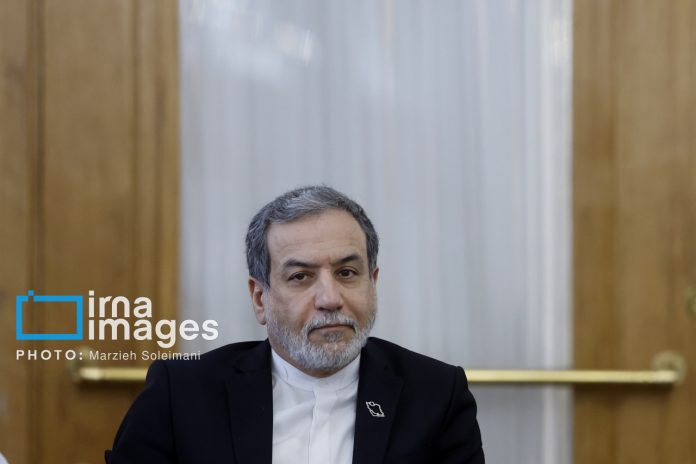
Iran’s FM: “Cautious optimism” after Rome talks on nuclear deal

Abbas Araghchi

In a post on X social meadia, Araghchi noted that while the discussions advanced shared objectives, many in Iran no longer see the 2015 nuclear deal (JCPOA) as sufficient.

“For them, what remains are only the ‘lessons learned,'” he wrote, expressing his personal agreement with the view.

Technical talks will continue in the coming days to finalize details, after which a clearer assessment can be made. “For now, cautious optimism may be justified – but nothing more,” Araghchi added.

Meanwhile, Iranian Foreign Ministry Spokesperson Esmail Baqaei thanked Oman and Italy for facilitating the indirect negotiations.

He emphasized Iran’s commitment to diplomacy amid global challenges to international law and shared human values.

The second round of talks, led by Araghchi and US envoy Steve Witkoff, was held at Oman’s embassy in Rome.

Both sides outlined frameworks for sanctions relief and nuclear compliance, agreeing to resume discussions next Saturday in Muscat.

Expert-level meetings are scheduled for Wednesday in Oman to address technical details.

US touts “very good progress” in Iran talks

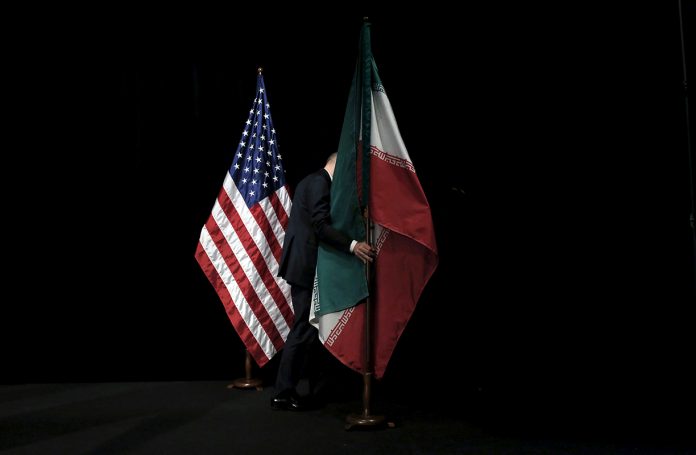
Iran US Flags

“In Rome over four hours in our second round of talks, we made very good progress in our direct and indirect discussions,” a senior administration official told CNN.

“We agreed to meet again next week and are grateful to our Omani partners for facilitating these talks and to our Italian partners for hosting us today,” the official added.

A third round of discussions is expected in Oman next Saturday, and talks between technical experts from both sides will begin on Wednesday, according to an Iran foreign ministry spokesperson.

The negotiations came a week after an initial round was held in the Omani capital of Muscat. Although the talks were in Italy, Oman was again acting as mediator between the US team, led by special envoy Steve Witkoff, and the Iranian one, led by Foreign Minister Seyyed Abbas Araghchi.

Araghchi signaled that the talks had been positive, telling reporters they lasted about four hours.

“I can say that there is movement forward. We’ve reached better understanding and agreement on some principles and goals in these Rome negotiations,” he stated.