Monday, April 20, 2026
Home Blog Page 4239

People Say JCPOA Had No Positive Effect on Iran’s Economy

JCPOA - Iran Nuclear Deal

According to a Persian report by Kayhan Newspaper, after the Parliamentary elections held last February in Iran, Iranian President Hassan Rouhani became known for kicking radicals out of Iranian Parliament and the Assembly of Experts.

Meanwhile, Donald Trump’s victory in the US presidential election shook the legacy of Rouhani and the turning point of his presidential policies, namely the nuclear deal.

“Regardless of what decisions Trump is to take during his first 100 days of Presidency, his conduct shows no tendency to cooperate with Iran on JCPOA.  It will have significant effects on Rouhani’s popularity,” Kayhan went on to say, quoting a report by National Interest.

“Since the implementation of JCPOA [the nuclear deal] in last January, Rouhani has been countering the claims made to violate the nuclear deal. He vowed that the deal will get Iran out of the shadow of war threats, and then it will attract foreign investment to Iranian economy and re-join Iran to the international market.

However, three-fourth of Iranian people have recently said in a survey that they don’t feel the economic improvement caused by JCPOA implementation in their lives.

Iran’s President Challenged by Students’ Harsh Criticisms

Rouhani

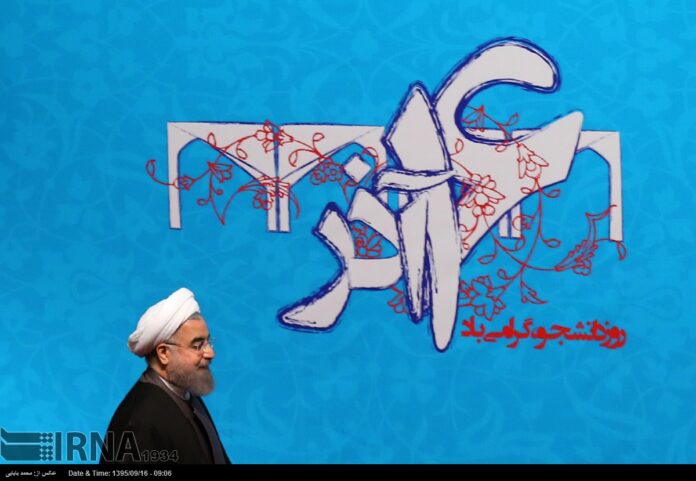
According to a report by IFP, Iranian students and officials annually mark Student Day on December 6 [or sometimes 7], the anniversary of martyrdom of three Iranian students back in 1953 who were protesting at US President Nixon’s visit to Iran.

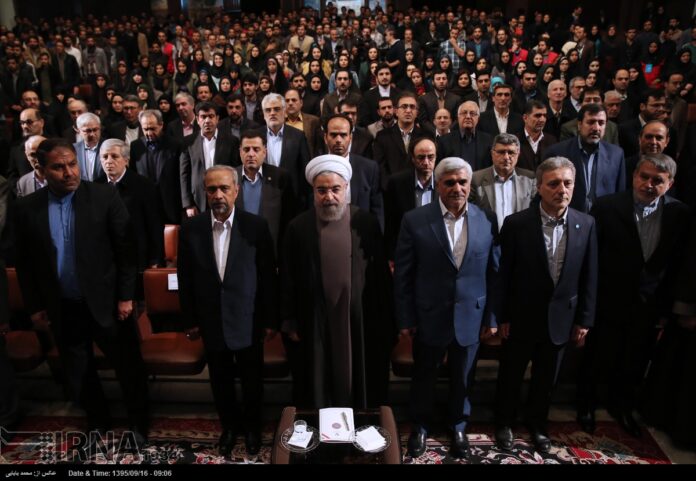
To mark the occasion, President Rouhani headed to University of Tehran, the Faculty of Literature, and spoke with students.

At the beginning of the meeting, a representative from the “Islamic Society” of University of Tehran hailed Rouhani as a president who prevented a war from happening, and urged him to take serious action against organized corruption.

“We are worried that a government would replace yours [in the upcoming elections] that endangers the country once again,” the representative noted.

Meanwhile, the representative of “Student Basij” criticized Rouhani for preferring his government’s interests to honesty.

“You weren’t a good president, because you were not a revolutionary. You weren’t a revolutionary because you were optimistic about talks with US […] This incurred heavy damages on the country,” the Basij representative noted.


Freedom of Speech in Iran

After many harsh criticisms were raised against Rouhani and his government, Rouhani said, “I really enjoyed all the things mentioned by representatives of students in different ways. They were really beautiful. This is what we expect from university students.”

He hailed the level of freedom of speech in Iran, and stressed that under his administration, “Iranian students feel free to say whatever they want before the country’s President without any concern and censorship.”

“Nowhere in the world can you see the political independence we now have in Iran,” he added.

He asked students to criticize the president in a good tone, as recommended by the Holy Quran.

“I believe you should also criticize other branches of the Iranian Establishment,” Rouhani noted.
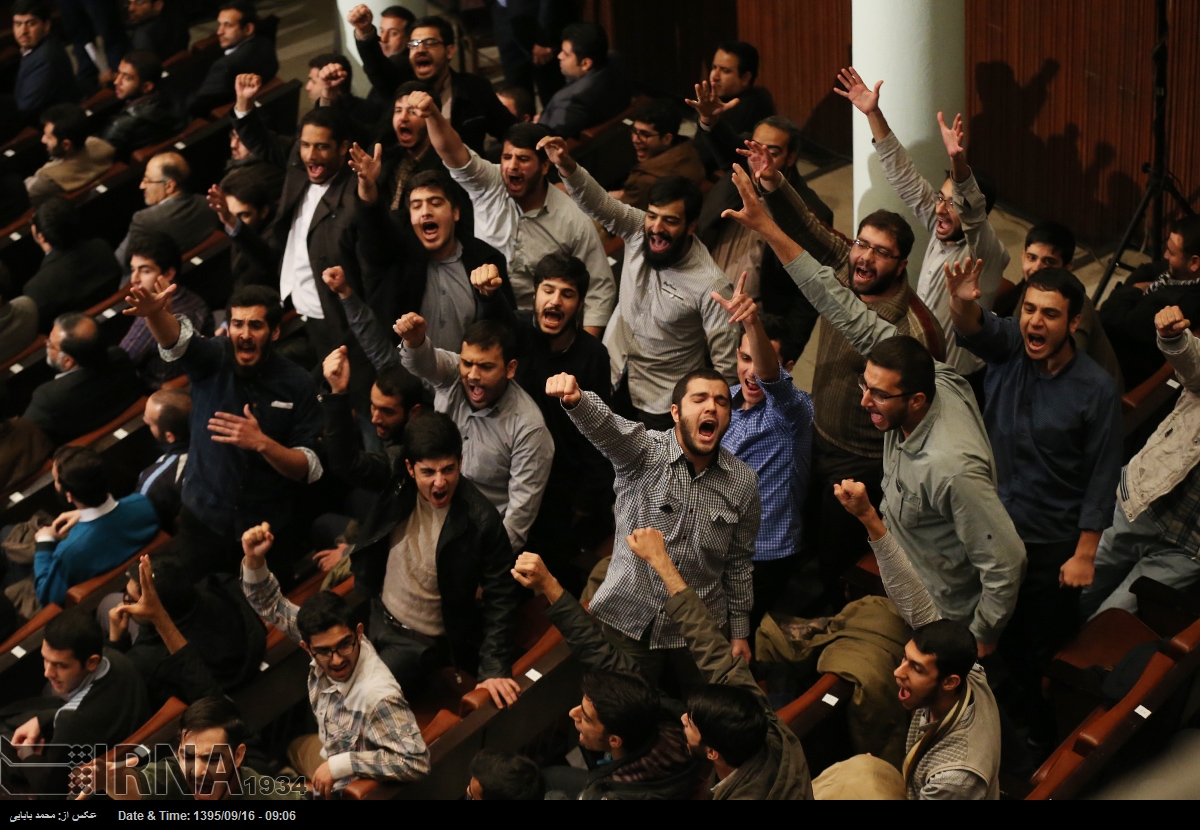
Basij studentsNational Unity, Key to Iran’s Achievements

Perhaps in response to members of IRGC’s Basij [volunteer] Force, who called Rouhani a non-revolutionary and dishonest president, Rouhani tried to calm down the atmosphere by saying that “Basij is not a group belonging to specific people.”

“If the country is threatened someday, we are all members of Basij,” he added.

“Whatever success we achieve was because of unity. Our thoughts and tastes are not the same, but we have common causes,” Rouhani noted.

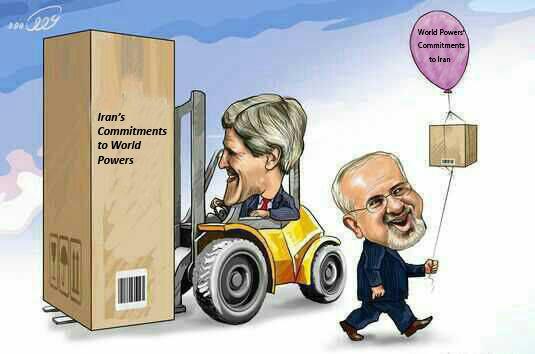
He also referred to the hard-liners’ criticisms of the nuclear deal, particularly after the US violation of its commitments, and said, “Don’t worry! This is what I tell my revolutionary and ‘worried’ friends. The committee responsible for monitoring JCPOA implementation will have a meeting tomorrow in this regard.”


Trump’s Election and Its Influence on Nuclear Deal

He further referred to the election of Donald Trump as the US President and said, “A guy has been elected in the US votes. Look how other countries are shaking. The only country that is neither happy nor sad is Iran.”

“Whatever plan this guy [Trump] has, it will become clear in future; but we are going on our own way. He claims to have lots of plans, he wants to scrap the nuclear deal, but will the Iranian nation let him do that? US cannot influence Iran’s will and resistance,” he added.


JCPOA Finalized after Ayatollah Khamenei’s Approval

Rouhani further noted that all the moves made by the government in the course of nuclear talks and JCPOA were coordinated with the Leader of the Islamic Revolution Ayatollah Seyyed Ali Khamenei.

“We had meetings with the Leader and the letters are all available,” he stressed.


Nuclear Deal’s Benefits for Iran

“All anti-Iran sanctions, except for banking restrictions, have been totally lifted after the nuclear deal. We are now cooperating with small and medium-sized banks,” Rouhani said.

“In the past, we had to pay 10 to 20 percent commission fees for transfer of our petrodollars, but now JCPOA has resolved the issue for us, and we no longer have such problem,” he went on to say.

“Our power of negotiation with others originates from the Iranian nation,” he added.

“I ask you a question: are we now free to sell our oil or not,” he asked, hailing the ‘great job’ Iran’s Oil Minister Bijan Namdar Zanganeh did in the recent OPEC meeting.

“We actually restored our right,” Rouhani noted, saying that the country is now free to sell its oil.

“All countries in the world are pleased with the nuclear deal, because they can have interaction with us,” he added.

Iranian University Students Mark National Student Day

Rouhani 16 Azar

Ahmad Ghandchi who belonged to Jebhe-e Melli [National Front] and two other students, Shariat-Razavi and Bozorg-Nia who were claimed by Hezb-e Tudeh [Communist Tudeh Party of Iran], were killed when the police forces opened fire on the students of University of Tehran going on strike in protest at the resumption of Iran’s relations with Great Britain and US President Nixon’s visit to Iran, following the coup d’état of 1953.

According to a report by IFP, every year, the day is commemorated by student movements and there are local demonstrations at many universities organised by students.

Leader of the Islamic Revolution Ayatollah Seyyed Ali Khamenei has noted that the Day belongs to anti-US and anti-arrogance students.

The Leader’s sentence is highlighted in the following poster designed by Islamic Revolution Designers House.

afiche-copy

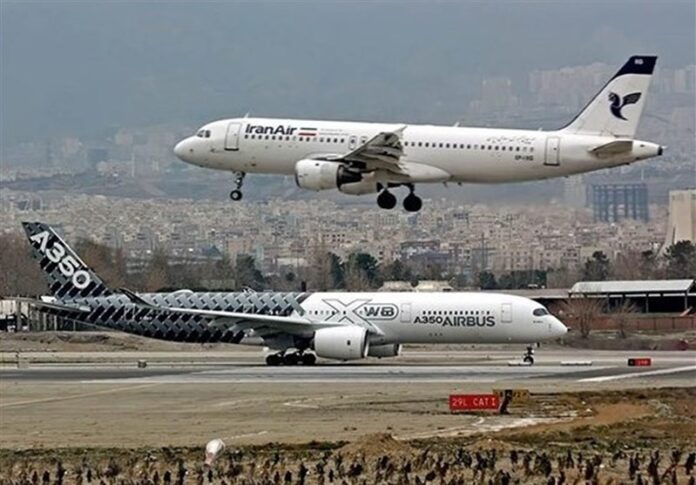
Iran, Airbus to Cooperate in Building Aircraft Parts: Official

airbus

“We will soon begin cooperation with Airbus in the manufacture of aircraft parts,” Manteqi said on Monday.

Spare parts manufacturers are the most important link in the chain in the process of building airplanes, the Iranian aviation official noted.

Airbus announced in September that it had received the US Treasury Department’s approval to sell aircraft to Iran. The company – together with its American rival Boeing – had earlier this year sealed deals with Iran to sell some 200 planes to Iran.

Back in October, Iran’s Minister of Road and Urban Development Abbas Akhoundi said the country would finalize a contract with Airbus for purchase of jetliners in the near future.

Speaking to reports on October 3, Akhoundi said his ministry and Airbus representatives held negotiations in Tehran a week earlier following the US decision to remove a final hurdle for Western aircraft manufacturers to sell planes to Iran under contracts signed after coming into force of the Joint Comprehensive Plan of Action (JCPOA), a nuclear agreement between Tehran and the Group 5+1 (Russia, China, the US, Britain, France and Germany).

“The contract with Airbus will be finalized soon,” he added at the time.

Akhoundi noted that talks with Boeing are also in progress with “positive attitude on part of both sides.”

While the Western plane makers are impatient to begin trade with Iran, Washington still demands that even non-American manufacturers wishing to sell to Iran obtain an export license if their products include materials made in the United States. Airbus, based in Europe, buys more than 40 percent of all its aircraft parts from the US.

During a visit to Paris in January by Iranian President Hassan Rouhani, Tehran signed the major contract with Airbus worth about $27 billion to buy 118 planes.

Iran also sealed a deal in June worth around $25 billion with the US aerospace heavyweight, Boeing, for the purchase of 100 passenger planes.

Kremlin confirms Putin wrote confidential letter to Rouhani

Putin and Rouhani

“I can confirm the submission of the Russian president’s letter to his Iranian counterpart but cannot reveal its details,” Kremlin spokesman Dmitry Peskov said on Monday.

Iran’s Foreign Ministry Spokesman Bahram Qassemi had earlier said that Russia’s special envoy on Syria, Alexander Lavrentiev, who recently visited Iran, carried a message from President Putin to “Iranian political leaders.”

Russia’s ITAR-TASS news agency said Peskov had confirmed the delivery of the message in the form of a letter.

Lavrentiev  met with President Rouhani in Tehran on Saturday.

Russia, a Syria ally, has been providing military assistance to Damascus in its battle against foreign-backed terrorism. Iran, also an ally of Damascus, has been lending advisory support to the Syrian counterterrorism push.

Russia and Iran hold regular and close consultation concerning the situation in Syria toward coordinating their efforts in helping purge the Arab country of terrorism.

Also on Monday, Russia’s Deputy Foreign Minister Mikhail Bogdanov met with Hossein Jaberi Ansari, the deputy Iranian foreign minister for Arab and African Affairs, in Tehran.

Explaining the subject of the meeting, the Russian Foreign Ministry said in a statement, “Tehran and Moscow’s positions to politically resolve the Syrian crisis are the same.”

The statement said that, during the meeting, the two sides highlighted that the armed conflict in Syria does not have a military solution. It was emphasized that the conflict can only be resolved through political channels and unconditional intra-Syria dialog based on United Nations Security Council resolutions, the Geneva Communiqué issued in June 30, 2012, and decision-making by pro-Syria international groups, the statement added.

The Geneva Communiqué, which was adopted in the first international meeting on the ongoing crisis in Syria in the Swiss city, sketches the steps in a process to end the violence in Syria.

The Russian statement concluded that the Tehran talks had placed emphasis on “the immutability of the two countries’ shared, principal position” on the reinforcement of the ceasefire regime in Syria and addressing the humanitarian situation while continuing the fight against the Takfiri terrorist groups of Daesh, al-Nusra Front, and other active terrorist groups in Syria.

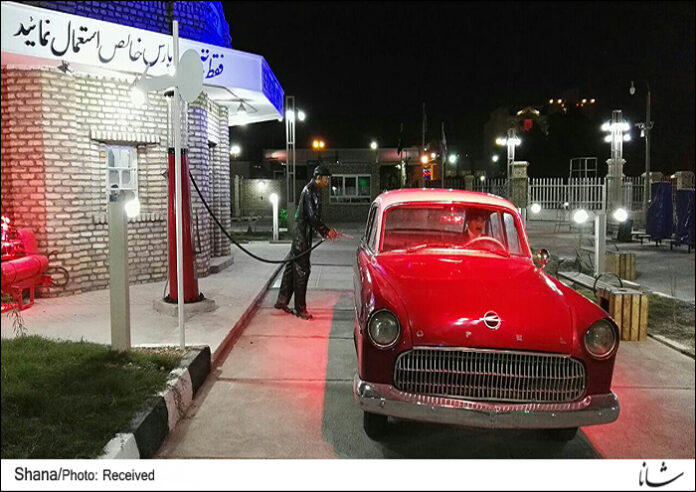
Iran’s 1st Oil Museum to Open Up in Abadan by December 20

Iran Oil Museum

Director of the Petroleum Industry Museums Project Akbar Nematollahi told Shana that executive operations on the museum of the first gasoline station in Abadan and Artisan School will be over by January 20, 2017.

He said the first power plant of Abadan refinery, Abadan Oil Museum Park Jetty Museum and the protocols houses will also be operational by end of the current Iranian year (due to end on March 20).

He went on to say that 20 points have been specified in Abadan city where the oil industry museum will be located.

The official said based on the documents available, the oldest and first gasoline station of the country was established in Abadan by British Petroleum in 1927.

At that time, the gasoline station provided oil and gasoline for households and vehicles, including planes, in the region, he added.

United States Is a Major Destination of Iran’s Handwoven Carpets

Iran carpet Rasam Arabzadeh

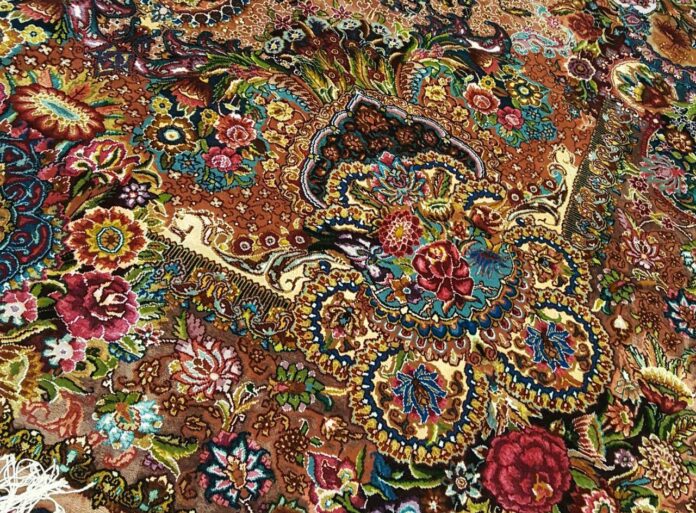
Baqer Seirafian, the head of Carpet Industries Association of Isfahan Province, says more than 4.5 million square metres of handwoven carpets are annually produced in Iran.

According to a Persian report by ILNA, he went on to say that 10% of Iranian handmade carpet exports go to the US.

He also referred to the problems of carpet business in Iran, and said, “Tourists should be able to use their credit cards, such as Visa and MasterCard, to buy our products if we intend to develop the sale of handmade carpets to tourists in domestic markets. Iranian banks are following up on this problem.”

Seirafian, meanwhile, announced that the price of handwoven carpet may rise in the near future.

“The silk used to be smuggled into Iran, so it was economically efficient to buy it. It will become expensive from now on because of the smuggling prevention program; and as a result, the handmade carpet is going to be more expensive.”


Iran Carpet Exports Up 17%

According to a recent report by Financial Tribune, Iran has exported $166 million worth of handwoven carpets during the seven months leading to October 21, registering a 17% increase compared with the corresponding period last year.

“The US, Germany, the UAE, Pakistan and Lebanon are the main export destinations for Iranian carpets,” the head of Iran’s Trade Promotion Organization Mojtaba Khosrotaj told IRNA.

Iran’s carpet exports were hard hit as a result of sanctions imposed on the country over its nuclear program. The United States—the biggest importer of Iran’s handmade rugs—banned the import of Iranian carpets, among other products, in September 2010.

Sanctions were lifted mid-January as part of a landmark nuclear deal the country signed with world powers last year. Iran agreed to limit the scope of its nuclear activities if the sanctions are lifted. Now that the sanctions are gone, exports are slowly gaining momentum.

Putin’s Envoy Had A Message for Tehran: Spokesman

Bahram Ghasemi

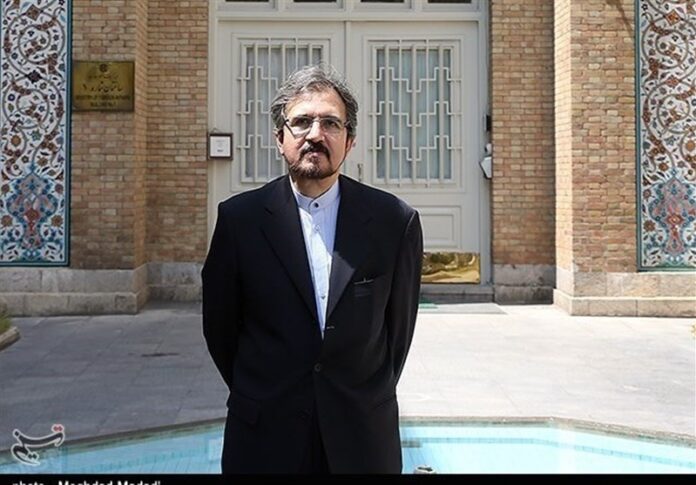
Alexander Lavrentiev, the Russian president’s special envoy on Middle East affairs, had a message from Putin to Iranian political leaders, Qassemi said at a press conference in Tehran on Monday.

According to the spokesman, the Russian envoy raised a number of issues on the bilateral and regional ties and specifically on the crisis in Syria during a December 3 meeting with Ali Akbar Velayati -a senior adviser to Leader of the Islamic Revolution Ayatollah Seyed Ali Khamenei- and received answers.

Highlighting the “widespread and close” consultations between Iran and Russia, Qassemi said Russian Deputy Foreign Minister Mikhail Bogdanov is also now in Tehran for a meeting with his Iranian counterpart.

“Our cooperation with Russia is substantial and profound; we have certain interests in the region, have worked in cooperation and will keep to do so,” the spokesman added.

Iran and Russia have formed a strong alliance in recent years, with both supporting the Syrian government against foreign-backed militancy.

Tehran and Moscow insist that the Syrian nation is the only side that has the right to shape the future of the Arab country, which has been gripped by civil war since March 2011 with various terrorist groups, including Daesh (ISIL or ISIS), currently controlling parts of it.

Illegal Immigrants Dominate Iran’s Job Market

img22014682

Iranian job market has been influenced by the presence of illegal foreign nationals for years. Some actions have been taken to identify, organize and dismiss the illegal foreign labour force; however, Iranian Parliament members believe that these measure have not been effective enough; and these refugees and immigrants keep working in Iranian job market because the related organisations neglect the issue.

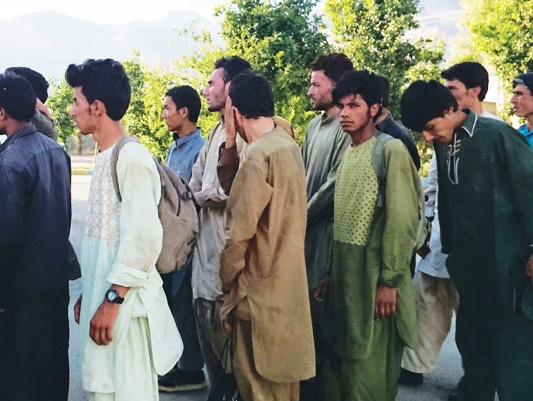
According to a Persian report by ICANA, the Iranian MPs criticize the presence of 3 million illegal foreign nationals in Iran, saying that while Iranian workers are affected by unemployment and financial problems, 70% of foreign nationals work in construction field as the rest work as gatekeepers and servicemen.

According to Ahmad Hamzeh, a lawmaker from Kerman province in southern Iran, despite the fact that the recruitment of legal foreign nationals is forbidden in southern Kerman, the illegal foreign nationals are massively present in the job market of region, working in occupations such as pistachio trade, services, sewing, car repairing and smoothing, among others.

“The majority of foreign nationals consists of Afghans, Iraqis, Syrians and Pakistanis, with Afghans outnumbering others,” Hamzeh stated, noting that illegal Afghan refugees enter Iran due to lack of rigid control over Iran’s eastern borders.

“We need to allocate credits for the control of our frontiers. The police can’t fund it, so the government must take this responsibility to cooperate with the police and the Border Guard,” said Rouhollah Babaei, another Parliament member.

Criticizing the Department of Foreign Nationals, the Parliament members underlined the need to deal incisively with the recruitment of illegal foreign nationals, and to intensify the punishment for offending entrepreneurs.

‘Salaam Mumbai’ Sets New Box Office Record in Iran

16_salaam_0

Directed by Iranian filmmaker Qorban Mohammadpur and featuring Iranian and Indian stars Mohammad Reza Golzar and Dia Mirza, the melodrama had a massive opening day sales with 6 billion rials ($155,000), more than double the amount of the previous record-holder, Asghar Farhadi’s ‘The Salesman’, which took in $67,500 on its first day earlier this year.

The high sale on December 1 was also the highest for a single day recorded for any movie in Iran’s cinema history.

As the public kept packing movie theaters on Friday (Dec. 2), the film became the fastest to reach 10 billion rials ($260,000) in only two days, breaking the record of ‘The Salesman’ which was released three months ago and raked the amount in three days.

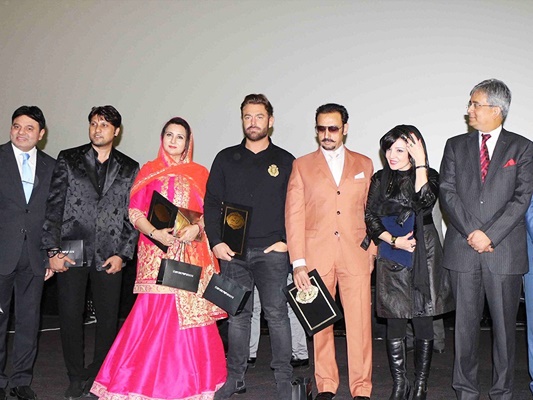
According to local news outlets, a formal ceremony for the film opening was held at Kourosh Cineplex in west of Tehran on Saturday (Dec. 3) in the presence of the Iranian and Indian cast and crew as well as a huge audience who rushed to see the movie stars, particularly Golzar.

Golzar, 39, appreciated the invaluable assistance of the Indian team that supported the Iranian group in their first joint production as the Iranian side had no experience of making a film in Bollywood. He thanked the famous Indian actor Gulshan Grover for his cooperation.

Grover, 61, has acted in over 450 films. He is among the first actors to have made a successful transition from Bollywood to Hollywood and international cinema. He is nicknamed the “bad man” in Bollywood as he mostly appears in negative roles.

At the ceremony, Grover acknowledged the talent of the Iranian filmmaker and actors and expressed joy for being a part of the movie. He has collaborated with many top actors in Hollywood; however, paying respect to the Iranian movie star, he said, “Golzar is better than many of them like Brad Pitt and Tom Cruise.”

Indian Ambassador to Iran Saurabh Kumar appreciated the efforts by the Iranian director and producer of the film. “In the 1980s, many Iranians studied in India and fortunately the relations between the two countries have improved. Iran’s Foreign Minister Mohammad Javad Zarif is in New Delhi now to attend the Heart of Asia Conference, and we are celebrating the cinematic collaboration of Iran and India here.”

  Star-Studded Event

Indian actress Poonam Dhillonm, 54, Pakistani actor Nasrullah Qureshi, 55, Indian composer Dilshaad Shabbir Shaikh and Iranian-Indian actor and the intermediary between Iran and India cinema Behrooz Chaihel were also introduced by Golzar on stage.

The movie’s leading actress Dia Mirza, 34, is scheduled to come to Iran on December 20.

Well-known Indian filmmaker Akbar Khan was also among the guests invited for the program. The historical drama series ‘Sword of Tipu Sultan’, one of the works he has directed, was shown on the state TV in Iran almost 25 years ago and was quite popular with the Iranian audience at the time.

  Two Cultures

‘Salaam Mumbai’ narrates the story of two medical students from two different backgrounds and explores their tumultuous romantic relationship. It touches the cultures and lifestyles of both Iran and India.

A typical Bollywood film contains singing and dancing; however, such scenes are not allowed in Iranian movies. But the film has three songs performed by famous Indian singers Sonu Nigam, Arijit Singh and Shabbir Kumar as well as one track by the young Iranian pop singer Benyamin Bahadori, 34, who has made his first appearance in a feature film with ‘Salaam Mumbai’. Two more tracks by Benyamin are also used for the beginning and ending credits.

Indian actors Dalip Tahil and Simran Mishrikoti and Benyamin’s wife Shaili Mahmoudi are also in the cast.

Almost 80% of the film was shot in India and the rest in Iran. Actors speak in English and Hindi. The film has Persian subtitles for the Iranian audience.

The movie has been widely released across the country. It is on screen at 25 movie theaters in Tehran and 75 halls in other cities.

The international screening of the film will start from Australia and the US in January 2017 and will be followed by showing in the UK, Canada, Germany, Sweden, Norway, Denmark, Pakistan, Bangladesh, Sri Lanka and Arab countries.

It will be released in about 3000 cinemas in India after its screening in Iran, most likely in March.

The film is co-produced by Javad Norouzbeigi from Iran and his Indian counterpart Pahlaj Nihalani. The Indian film company Motion Pictures will help with the international distribution of the work.