Thursday, December 25, 2025
Home Blog Page 4235

Monkey Attack Sparks Deadly Tank Battle in Libya

Monkey

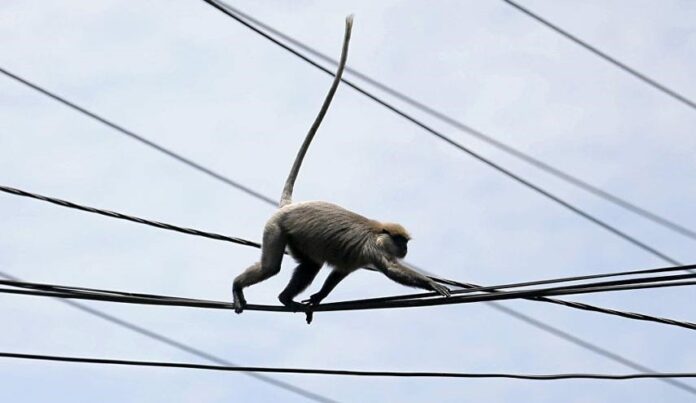
According to residents and local media in the southern city of Sabha, the violence erupted between two tribes after three young men turned a pet monkey loose on a schoolgirl.

The animal pulled off one of the girls’ headscarves, prompting men from the Awlad Suleiman tribe to retaliate by killing three people from the Gaddadfa tribe as well as the monkey, according to a resident who spoke to Reuters.

“There was an escalation on the second and third days with the use of tanks, mortars and other heavy weapons,” the resident said, according to a report covered by Al Alam.

“There are still sporadic clashes and life is completely shut down in the areas where there has been fighting.”

Like other parts of Libya, Sabha has been periodically plagued by conflict since the uprising that toppled Muammar Gaddafi five years ago splintered the country into warring factions.

In the Sabha region, a hub for migrant and arms smuggling in Libya’s often neglected south, militia abuses and the deterioration of living conditions have been especially acute.

The Gaddadfa and the Awlad Suleiman represent the most powerful armed factions in the region.

During the latest clashes, which took place in the city centre, initial attempts by tribal leaders to calm the fighting and arrange a ceasefire so that bodies could be recovered had failed, residents said.

By Sunday, Sabha Medical Centre had received the bodies of 16 people killed in the clashes and some 50 wounded, said a spokesman for the centre.

“There are women and children among the wounded and some foreigners from sub-Saharan African countries among those killed due to indiscriminate shelling,” he said.

The city lies about 660km (410 miles) south of Tripoli.

Iranian Parliament Urges Rouhani’s Gov’t to Act against JCPOA Violation

Iran's Parliament

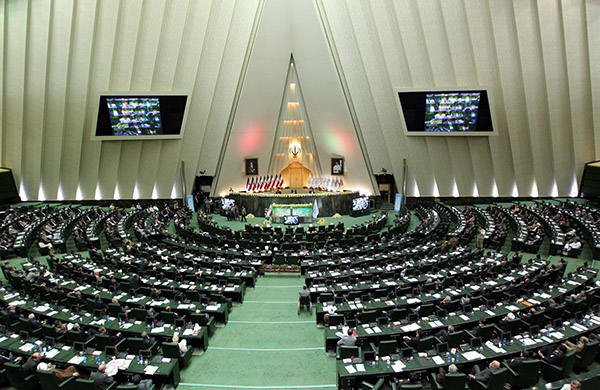
“Iran’s diplomatic apparatus should counteract the US extension of anti-Iran sanctions,” stated Hossein Ali Hajideligani, a senior Iranian MP, according to a report by Keyhan newspaper, as translated by IFP.

“The extension of sanctions shows that we still cannot trust the US and American statesmen,” he said.

“By extending the sanctions on Iran for 10 years, the US has practically violated the Joint Comprehensive Plan of Action (JCPOA), and our government and diplomatic apparatus should act effectively against the US deceit,” he added, affirming that to resolve the economic problems, Iran has to rely on its internal capacities.

“This long-term extension of sanctions should make some people understand why others worry about them being overly optimistic toward the West, and that we should provide the means of Iran’s development inside the country,” Hajideligani went on to say.

“Our Leader insisted on US deceitfulness since the beginning of negotiations,” said Farhad Tajari, another Iranian lawmaker.

“The move by US will strengthen the mentality of fight against imperialism within Iran, and shows others who blindly bought the US promises that Washington is dishonest, and the first violator of Human Rights,” he added.

“Those who associated the solution of all problems in Iran with our agreement with the US should wake up and invest on resistance economy,” MP Seyyed Nasser Mousavi Laregani told Tasnim.

It is necessary for Iran to act against US deceitfulness

“We should neither count on US nor believe its statesmen’s words,” stated Sodeif Badri, the representative of Ardabil and spokesman of Iranian Parliament`s Civil Commission in this regard. “The government should counteract US dishonesty in a precise timeframe, with a view on the articles of JCPOA.”

“Iran’s foreign ministry should be more active in this regard, and express its protest against US policies in the international community,” said Hajideligani.

“Having failed to meet its obligations, US should be accountable to the international public opinion,” said Valiollah Nanva, the representative of Babolsar and member of Iranian Parliament`s National Security and Foreign Policy Commission, according a report by Tasnim. “We investigate in this commission the issue of sanctions’ renewal and the ban on selling aircraft to Iran.”

27 Students Killed and Wounded in Terrorist Attack on Aleppo School

Syria

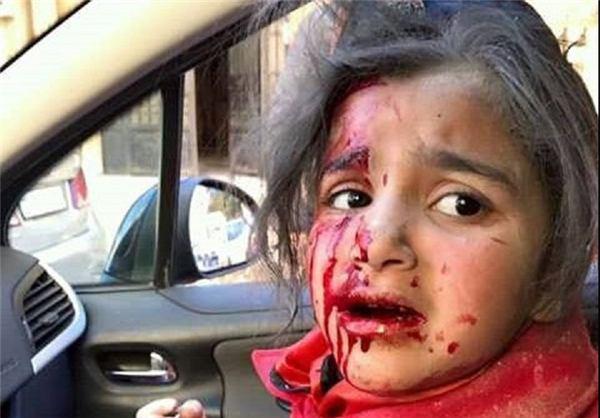
According to a report by Fars, as translated by IFP, Takfiri terrorists launched a mortar attack on Sariah Hassoun school in Aleppo, killing 7 and wounding 20 Syrian students.

They targeted this school in Al-Fourqan, Aleppo, killing seven students and a female teacher; 32 people, including 20 students, were also wounded.

Migratory Birds Land in Iran’s Khomeyn Natural Habitat

photo_2016-11-21_14-26-20

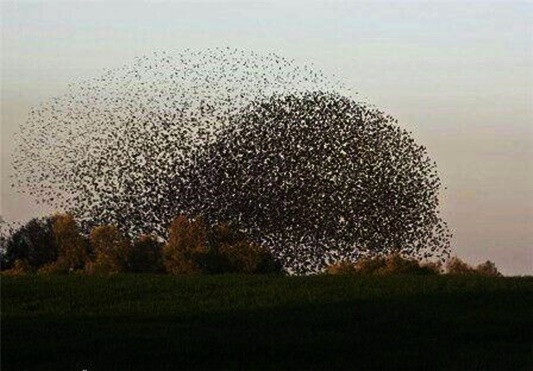
According to a report by IRNA, as translated by IFP, the Head of Khomeyn’s Department of Environment announced that the migratory starlings, who immigrate from North and North-East to the South, have landed on the natural habitat of Khomeyn in Markazi Province.

The starlings rest there for one or two months, then fly to tropical areas as the cold season begins.

Saudi Newspaper Provokes Anger after Insulting Iraqi Women

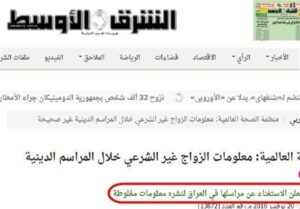
The London-based Asharq Al-Awast, which is owned by the Saudi Research and Marketing Group, published an article on Sunday titled “International warnings of ‘illegitimate pregnancies’ in Karbala”.

Ashargh AlawsatThe article which was published as millions of mainly Shiite pilgrims arrived in Karbala to commemorate the fortieth day after Imam Hussein’s martyrdom, claimed that the WHO issued a report saying the large-scale pilgrimage had caused “illegitimate pregnancies among 169 Iraqi women” last year.
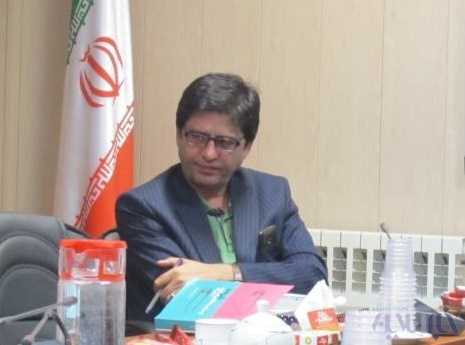
However, the WHO on Sunday denied the statement attributed to it, which it said appeared earlier this week, and which was rebuffed by the organisation on Friday.

“The [World Heath] Organisation condemns in the most severe terms the use of its name in a fabricated report that does not in any way conform to the principles of the organisation,” read the WHO’s statement.

“The organisation is investigating the source of the false report and could take legal action against its publisher,” the statement added, as reported by The New Arab.

Rana Sidani, a spokeswoman for the WHO said the organisation was shocked at the publication of the fabricated report by Asharq Al-Awsat after the international group had denied the report on Friday.

Sidani, who made the remarks in a televised interview, added that the WHO is consulting with the Iraqi ministry of health on possible legal action against the paper.

Following the condemnations by the WHO and Iraqi officials, Asharq Al-Awsat published a correction and announced that it has fired the paper’s editor in Baghdad who was responsible for the publication of the story.

Meanwhile, public condemnations of the paper continue, with calls to prosecute the paper and ban it from circulation for insulting Iraqi women.

Iranian Knowledge-Based Firms to Attend Aeromart Toulouse

aeromart toulouse

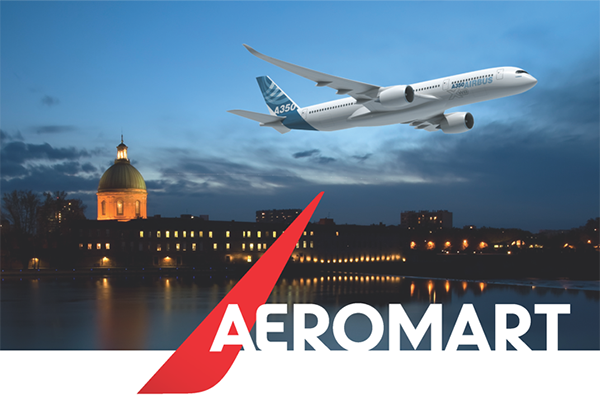
Aeromart Toulouse is an International Business Convention for the aerospace industry held from November 29 to December 1, 2016.

In line with the policy to strengthen bilateral ties with foreign countries, the Tech-Export Services Corridor (TESC) at the Iranian Vice-Presidency for Science and Technology plans to deploy trade-technical delegations to the international aerospace exhibition and congress in France’s Toulouse.

Tech-Export Services Corridor would undertake 80 percent of airfares as well as 50 percent of accommodation costs for a maximum of two members from each knowledge-based enterprise.

Given that the Aeromart Toulouse biennial Congress deals with latest finding in the aerospace industry, interested firms are required to possess prior experience in relevant aviation fields.

According to a report by Mehr, as edited by IFP, representatives of Iranian knowledge-based firms are given the opportunity to attend the event in order to bolster bilateral relations with France, analyse the current status of technology in aviation industries and ink agreement for collaboration with French companies.

Iranian Navy Deploys Warships in Atlantic Ocean

Navy

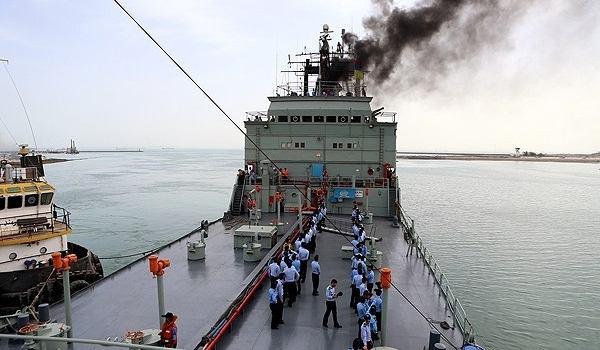
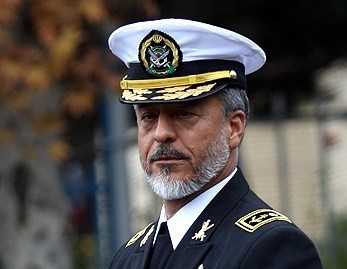
Habibollah Sayyari“For the first time, the 44th flotilla comprised of Alvand and Bushehr destroyers could sail around the African continent and enter the Atlantic Ocean,” Rear Admiral Habibollah Sayyari told reporters in Tehran on Monday.
“The two destroyers are now deployed in Durban Harbor (South Africa),” he added.

Noting that the deployment of the 44th flotilla of warships in the international waters indicates the Iranian Navy’s might and power, Admiral Sayyari said, “In addition to that, 5 fleets of warships have also been sent to other countries so far with a message of peace and friendship.”

Back in 2014, Admiral Sayyari had announced the country’s plans to deploy troops in the Atlantic Ocean.

“The Iranian Navy will definitely be present in the Atlantic Ocean in the near future,” Admiral Sayyari said at the time, Fars reported.

He noted that conducting reciprocal visits to other countries, including the littoral states of the Indian Ocean and African countries, and exchanging naval visits and voyages are among the Navy’s programs.

“We are ready to hold joint naval drills with the neighboring countries as well,” Admiral Sayyari said.

In recent years, Iran’s Navy has been increasing its presence in international waters to protect naval routes and provide security for trade vessels and tankers.

The Islamic Republic has repeatedly asserted that its overseas naval presence is meant to convey a message of peace and friendship to other countries.

US President Obama Seeks to Fortify Iran Deal before Leaving Office: Officials

obama

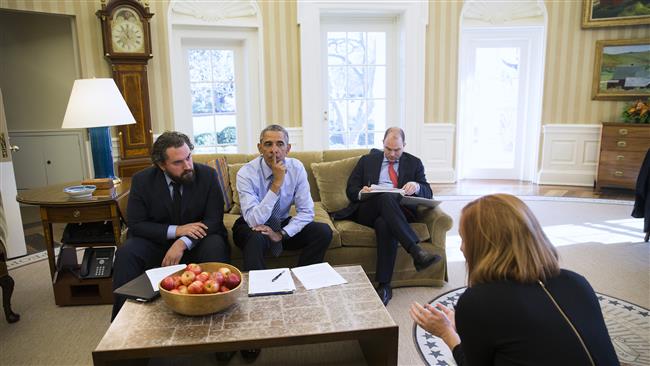
Senior Obama administration officials, speaking anonymously to The Wall Street Journal, said the planned measures included “steps to provide licenses for more American businesses to enter the Iranian market and the lifting of additional U.S. sanctions” against Iran, the Journal reported Sunday.

They said they also planned to make a strong argument to the incoming President Donald Trump’s team that the potential abdication of American commitments under the Iran deal would have “grim consequences” for the United States.

The deal, named the Joint Comprehensive Plan of Action (JCPOA), was reached between Iran on the one side and the US, the UK, France, Germany, Russia, and China on the other in July 2015.

During the raucous presidential campaign in the US, the then-nominee Trump exhibited anti-Iran rhetoric, including by saying that he would “tear up” the nuclear deal with Iran if elected.

Although he has not commented on Iran-related issues since winning the US presidential election on November 8, individuals whom Trump has named or whose names are being floated as possible recruits for high-level posts have been adopting a harsh tone about the deal, which took some 23 months to be negotiated between Iran and its international interlocutors, including the administration of President Obama.

US President Obama Seeks to Fortify Iran Deal before Leaving Office: Officials

The JCPOA received a United Nations Security Council mandate when it was endorsed in Resolution 2231 (2015) under the UN Charter’s Chapter VII. That has effectively turned the deal into international law.

Observers generally agree that if the administration of President-elect Trump, which will take over on January 20, 2017, harmed the deal, it would risk losing close partnership over the issue with the European and other sides to the deal.

The Obama administration officials said that prospect is what worries them.

“Our bet is when they look at this and analyze what the implications would be for tearing up the deal, they won’t do it,” a senior administration official said. “But as for what they’ll actually do? Who knows?”


One US official said that “‘it’s very hard to tear up the deal’ because U.S. allies and partners, including Russia and China, are committed to it.”

Other officials said they did not believe a Trump presidency would scrap the JCPOA altogether. “Their concern is more that it would fall apart due to attempts by the incoming administration to renegotiate pieces of it, expanding sanctions against Iran unrelated to its nuclear program, or neglect,” the report read.


Such concerns found reason to emerge last Wednesday, when the US House of Representatives passed a bill for a 10-year re-authorization of the Iran Sanctions Act (ISA), which had initially been adopted in 1996 on the unfounded grounds that Iran was pursuing a non-civilian nuclear program.

A day later, the House voted to bar the sale of American commercial Boeing airplanes to the Islamic Republic. The measures have to be approved by the Senate and then the US president to turn into law.

President Obama has threatened he would veto the legislation barring the sale of commercial airplanes to Iran if it ends up on his desk. He has been silent on the ISA. Even if they are passed by the Senate, there is a potential that neither of the bills will be in time for him to consider and that the next president, Trump, will have to decide about them.

The Obama administration officials said, however, that the measures meant to buttress the deal are not aimed “at boxing in Mr. Trump.”

Iran has said it is prepared for any possible scenario.

80 ISIS Elements in Europe Preparing for Attacks: Dutch Expert

ISIS

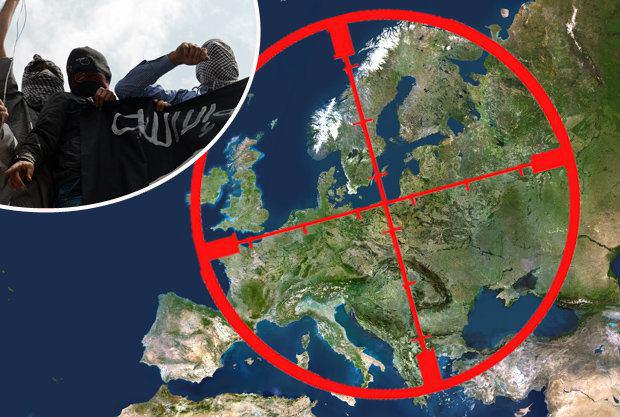
According to a report covered by Keyhan newspaper, the ISIS operatives are reportedly focusing on preparing for conducting attacks in the continent than returning to Syria and Iraq, as per instructions from the leadership.

ISIS is currently under attack by Iraqi forces in Mosul, where the leader of the terrorist group Abu Bakr-al Baghdadi is also holed up. He reportedly sleeps with his suicide bomber vest on and stays in tunnels that run under the city in Iraq. His growing paranoia has been reported by a source within Mosul to the Iraq intelligence agency recently.

Schoof said that the number of “foreign terrorist fighters” in Europe has not grown in the last six months. However, that “does not mean that the potential threat of those who would have travelled is diminished.”

With continuous attacks on Mosul and other ISIS strongholds like Aleppo, operatives can find it difficult to return to defend its frontlines. The terror group also believes in conducting lone-wolf attacks to wreck chaos and paranoia among people than major coordinated attacks. However, the Paris and Brussels terror attacks have been among the major attacks in recent past by the group.

Schoof added that the military offensive against the group was scattering the fighters. It is also likely that with the central command under attack coordination with fighters outside has become difficult for the group.

He further added that the counter-terror operations in Syria and Iraq could increase the number of refugees travelling to Europe, IB Times reported.

While Netherlands has not been attacked so far, attacks like those in France and Belgium means “the chance of an attack in the Netherlands is real”, he said.

“We have seen 294 terrorist fighters go overseas in Iraq and Syria and there are still 190 over there,” he said. “And what happened in France and Brussels and Germany could happen to us,” he said.

Kurds in Turkey Will Resort to Violence in Near Future: Expert

Javad Salehi

Tension in Turkey has escalated following growing suppression of Kurdish policy makers. The arrest of two of the leaders of the Peoples’ Democratic Party, the pro-Kurdish party in Turkish parliament and ten more members of the parliament, have sparked harsh reactions.

One of the deputy leaders of the Peoples’ Democratic Party has accused Turkish President Recep Tayyip Erdogan that Turkey is on verge of civil war. Turkey’s security forces arrested Figen Yuksekdag and Selahattin Demirtas, two leaders of the Peoples’ Democratic Party, and thus the political future of the party is in a halo of ambiguity.

Here’s IFP’s translation of excerpts from Khabar Online’s interview with Javad Salehi, a researcher at the Middle East Strategic Studies and Scientific Research Centre and an expert in Turkey’s affairs regarding the future of Turkey.


How do you assess Turkey’s domestic developments under such conditions? It seems the arrest of the leaders of the Democratic Party was in reaction to Belgian judicial system, which issued a scandalous ruling that Turkey’s clashes have something to do with the PKK within the framework of the armed campaign and it should not be treated through the law of terrorism.

It seems the conditions of the Kurds in Turkey can be investigated from several standpoints: First of all, Kurds’ resolve for identity is the topic on the table. It has been in effect for several decades following developments in Turkey. It started from militia standpoint to civil aspect. Changes in the international system’s atmosphere and internal developments in Turkey served as a ground for Kurds to feel that they will more easily and safely achieve their demands from civil points of view. After the capture of the PKK leader and his imprisonment, the civil front is more firmly promoted among Kurdish strata. Such a change in the identity-seeking cause results from several issues:

First of all, the highly difficult and heavy approach of the military towards them, which supports harsh approach in deal with Kurds. Secondly, a lack of balance between the cost and benefit exposed to them in the course of these developments. Thirdly, the changes and developments inside Turkey. The Justice and Development Party has prepared the ground for consolidation of the idea among a vast portion of Kurdish strata in Turkey.

However, what happened after the coup has been in a different direction. Kurds felt that they can extensively widen the scope of their justice-seeking side and deepen it in various sectors. Perhaps they can put the government under pressure, thus gaining more incentives. To this end, we have been witnessing visits to foreign countries of Kurdish leaders, including Moscow. This has not been welcomed in Turkey and a number of hardliners and nationalists take it as a betrayal.

The post-coup atmosphere in fact prepared the ground for settlement with a movement initiated by Kurds and Mr. Erdogan used it. The current atmosphere in Turkey should be interpreted as the sign of Kurds’ approach and harsh and authoritative response of government to the new identity-seeking gestures.

The Turkish government believes that Peoples’ Democratic Party acts as the political wing of the PKK. Under such conditions, to which direction is the state of affairs moving?

Surely, under these conditions, the mechanism Kurds have been using to attain the object has changed and the growing tension the Peoples’ Democratic Party has resorted to internationally, will not be ineffective in its growth. But in my opinion, under such conditions, Kurds’ strata will launch harsher campaigns against the government. This will cost dearly both for Turkish government and Kurds from partisan and non-partisan points of view. The most tangible result of such measures should be looked into in polarization of the society in Turkey in escalating tension in external view of Turkey.

However, Kurdish movement in Turkey in the post-coup era cannot be separated from such strata as the military. We should admit that under the current conditions, security is the top priority for the government in Turkey and the government and Erdogan try to manage it at any price, even if they would resort to merciless and crackdown measures and depriving envoys from immunity and their arrest and drastic encounter with the wings supporting them and their social strata.

Do you think that the civil campaign sought by Kurds would alter its direction towards an uncivilized campaign coupled with violence?

Definitely, with regards to the ongoing developments in Turkey, violence or growing violence and uncivilized methods will be on agenda. The parties, viewed as under-ash fire, might keep silent but in the near future, we will witness conflict between the Kurdish and non-Kurdish strata. It is of course possible to imagine lobbies and certain groups trying to manage the ongoing developments. However, the atmosphere is in general moving in that direction.

Will this force Turkey to step up its activities in Syria?

As for growing movements of Turkey in suburbs of Iraq and Syria, we have been witnessing that Turkey treats certain issues as red line. The impact of such an issue inside and outside will couple with certain strict measures. This is because, Turkey has a systematic approach towards the issue and it is not ready to make a distinction at least between them under present atmosphere.