Tuesday, December 23, 2025
Home Blog Page 42

More than 100,000 people died in Gaza war: Report

According to calculations by a research team at the prestigious Max Planck Institute for Demographic Research based in the northeastern port city of Rostock, at least 100,000 people have apparently died or been killed in the war, which has lasted more than two years.

“We will never know the exact number of dead. We are only trying to estimate as accurately as possible what a realistic order of magnitude might be,” said Irena Chen, co-leader of the project.

Based on calculations by the researchers, between 99,997 and 125,915 people died or were killed in the fighting in the Gaza Strip during the first two years of the war. The researchers’ median estimate is 112,069 people.

The Max Planck scientists compiled data from various sources and performed a statistical projection. In addition to data from the Gaza-based Ministry of Health, they also incorporated an independent household survey and death reports from social media.

Until now, the only official source for the number of deaths was the Health Ministry of the Gaza Strip, which reported 67,173 deaths in the first two years of the war.
However, there is no evidence of statistical manipulation, according to Zeit.

On the contrary, various research teams have previously determined that the Ministry of Health tends to be conservative in its counting. It is now well-documented that more people died in the war between Israel and Hamas than the official figures indicate. Different studies consistently arrive at a high number of unreported deaths.

The Ministry of Health only counts confirmed deaths, for example, those with a death certificate from a hospital. Since many hospitals had to cease normal operations during the war, the ministry now also uses death notifications from relatives; a panel then verifies the information. Victims buried under the rubble of bombed-out buildings, for instance, are often not recorded.

The Max Planck team based their research upon previous findings and calculated detailed mortality estimates. They analyzed men and women, as well as different age groups, separately.

This approach not only produces more precise overall figures, but it also enables detailed differentiation of who died. The accuracy of death records varies by gender and age; women are counted less frequently than men. Official statistics frequently fail to include deaths among people over the age of 60.

According to the researchers’ calculations, approximately 27% of the war dead are likely to be children under the age of 15, with approximately 24% being women.

The researchers have also calculated the impact of the war on life expectancy in the Gaza Strip.

Before the war, it was 77 years for women and 74 for men. For 2024, the demographers project a figure of 46 years for women and 36 for men. This is initially only a statistical value.

It indicates that if the fighting continues indefinitely, as it has in recent years, Palestinians will only reach this average age. These figures demonstrate how dangerous life has become for the civilian population of the Gaza Strip.


Iranian scholar Vahid Abedini released after brief ICE detention in US

Abedini was taken into custody on November 22 while boarding a flight to Washington, DC, where he was scheduled to attend the annual meeting of the Middle East Studies Association (MESA).

His detention was first reported by Joshua Landis, director of the Center for Middle East Studies and the Center for Iranian Studies at the University of Oklahoma.

Landis said Abedini holds a valid H-1B visa, a non-immigrant work visa issued to individuals in “specialty occupations,” including higher education, and described the arrest as unjustified.

He added that the scholar was transferred to a detention facility before being released.

Prominent Iranian-American academic Vali Nasr of Johns Hopkins University also reacted to the incident, calling Abedini “a respected researcher and teacher” and urging his immediate release and return to campus.

Following growing concern from colleagues and students, Abedini’s associates confirmed his release on Tuesday, though US authorities have not publicly commented on the reasons for the detention.

Gaza Humanitarian Foundation officially ends ‘mission’: Report

The Gaza Humanitarian Fund (GHF) closed its sites in October after the United Nations and other NGOs were allowed to resume deliveries in the war-torn enclave, which has been recognised as a genocide by the UN.

Speaking about GHF’s four-and-a-half-month deadly stint in Gaza, executive director John Acree said in a statement that the organisation had set new standards in aid delivery, despite widespread criticism of the organisation by the world’s most reputable aid distribution networks.

“This mission was designed to show that humanitarian aid can be delivered efficiently, safely, and transparently even in the most challenging conflict zones,” Acree added.

“With the support of the Civil-Military Coordination Centre (CMCC) and the broader international community, we have successfully demonstrated a new standard for aid operations in Gaza.”

Acree, who was previously director of USAID’s stabilisation office in Afghanistan, stated that the CMCC would be “adopting and expanding” the model that GHF set out.

“As a result, we are winding down our operations as we have succeeded in our mission of showing there’s a better way to deliver aid to Gazans,” he continued.

GHF announced it was established only as a “temporary emergency initiative”.

The privately-funded GHF took control of aid distribution in the enclave in late May after Israel imposed a total blockade on all humanitarian and commercial supplies from 2 March onwards. Almost three months later, when GHF set up militarised operations, starvation was widespread in Gaza as supplies were in short supply or non-existent.

Experienced NGOs and aid distributors expressed concern about both GHF’s delivery model and the complete lack of experience in delivering aid.

Unlike other NGOs, GHF did not directly provide aid to people in need. Instead, it opened four distribution sites in the south of the Gaza Strip and required people in the enclave to travel there, even if it meant walking for days. It was especially challenging for those in the north, where there were no food distribution services.

If people did not fall sick or die while travelling there, they were at risk of being injured or killed trying to obtain aid at the sites where armed Israeli soldiers and US security contractors operated.

According to whistleblowers such as Anthony Aguilar, other witnesses and videos shared to social media, many Palestinians were said to have been deliberately shot by Israeli soldiers or US security contractors hired by GHF, after following direct orders from their superiors.

Despite this, thousands of Palestinians braved going to GHF sites every day to obtain food for themselves and their families, until a ceasefire was reached on 10 October.

Gaza’s health ministry reported that, in addition to over 2,600 Palestinians who were killed, at least 19,182 were injured while trying to get aid while GHF operated.

The GHF has denied that anyone was killed at their sites and says the UN figures on the number of aid seekers killed are “false and misleading”, saying that it only fired warning shots at aid seekers.

Questions still surround GHF, including its funding sources. In August, the Center for Constitutional Rights filed a lawsuit seeking records from the Trump administration on its funding for GHF.

Israel’s war on Gaza has killed and wounded more than 245,000 Palestinians to date, the majority of whom are civilians.

Reports released in August and based on Israeli military intelligence data indicate that more than 80 percent of those killed through May of this year were civilians.


Authorities order closures in Tehran amid severe air pollution

Air Pollution

The Emergency Air Pollution Task Force, a subsidiary of Iran’s Interior Ministry, announced on Monday that schools and universities throughout Tehran province, with the exception of one mountainous city, will shift to online instruction for the next two days.

The task force also said that government offices may permit staff to work from home, while banks will operate with limited open branches.

Truck traffic has been banned on streets and highways in the capital, and cement factories and sand plants have been ordered to remain closed until Thursday.

The measures were announced as thick smog blanketed Tehran and neighboring cities. Municipal authorities reported an air quality index (AQI) of 179, indicating air conditions that are unhealthy for sensitive groups.

Over the weekend, officials had initially ordered only elementary schools in Tehran to close on Tuesday and Wednesday. However, the directive was expanded on Monday to include high schools and universities as air quality worsened.

Tehran typically experiences poor air quality in the early and mid-autumn months, as falling temperatures and lack of wind cause pollutants to accumulate over the city.

Authorities and environmental activists attribute the pollution largely to emissions from older vehicles, as well as from refineries, power plants, and industrial facilities.

The province of Tehran is also facing one of its driest periods in decades. According to data from Iran’s Energy Ministry, Tehran province has recorded less than 1 millimeter of precipitation since the start of the water year in late September.

Iranian editor criticizes President Pezeshkian over letter to Saudi crown prince; foreign ministry denies mediation claims

The letter, delivered two weeks ago by Iran’s Hajj and Pilgrimage Organization, officially conveyed Tehran’s appreciation for Saudi Arabia’s management of Iranian pilgrims during last year’s Hajj, the Iranian Foreign Ministry explained.

Shariatmadari questioned the timing and motives behind the correspondence, suggesting in an editorial that the proposal to send the letter may have come from political actors seeking to create “a two-sided game.”

He implied that the move was suspicious because it coincided with bin Salman’s trip to the US to meet President Donald Trump. He also criticized the fact that the letter was sent months after the previous Hajj and months before the next, arguing that its timing lacked practical justification.

The editor accused unnamed political figures, some allegedly close to the president, of both encouraging the letter and later spreading false claims that President Pezeshkian had asked Riyadh to mediate between Tehran and Washington.

In response, Iran’s Foreign Ministry Spokesperson Esmail Baqaei reiterated that the letter contained “nothing beyond standard coordination on Hajj” and included no discussion of negotiations or mediation.

He expressed regret that some political actors continue to promote “baseless speculation,” urging all sides to prioritize national interests over partisan agendas.

Iranian FM to visit France for talks on bilateral issues, regional crises, nuclear file

Abbas Araghchi

Iran’s Foreign Ministry Spokesperson Esmail Baqaei told reporters that the visit is taking place at the invitation of the French foreign minister.

He said the agenda will include bilateral matters, among them the case of detained Iranian citizen Mahdieh Esfandiari, as well as major regional and international developments.

Baqaei stressed that Iran’s approach to foreign relations remains rooted in “mutual respect” and the use of every diplomatic opportunity to articulate Tehran’s positions.

He noted the talks in Paris would allow Araghchi to clearly present Iran’s views on Israel’s ongoing crimes in Palestine and Lebanon, the state of the nuclear file, and other pressing international issues.

The spokesperson added that the visit would also be used to convey the “legitimate demands of the Iranian people” to the French side, underscoring that Iran intends to utilize the trip as a platform for outlining its political expectations and strategic priorities.

IRGC busts terror team in Iran’s Sistan and Baluchestan

IRGC

The IRGC Ground Force’s Quds Base said in a statement on Monday that the team was detected and dismantled amid the large-scale “Martyrs of Security” drills in the region.

The statement added that a number of terrorists were captured in the anti-terror operation, which also resulted in the recovery of two explosive vests.

Sistan and Baluchestan province, bordering Pakistan, has faced frequent terrorist attacks targeting both civilians and security forces in recent years.

Terrorist groups carrying out attacks on Iranian interests in the southeastern and southwestern parts of the country are thought to have ties to foreign intelligence agencies.

On October 26 last year, a terrorist attack in the Gohar Kuh district of Taftan County claimed the lives of 10 members of Iran’s law enforcement forces.

The so-called Jaish al-Adl terrorist group took responsibility for the attack, which is marked as one of the most deadly incidents in the province in recent months.

The group has conducted numerous terrorist attacks across Iran, primarily focusing on the Sistan and Baluchestan region. Its methods include abducting border guards and launching assaults on civilians and police stations, aiming to incite chaos and disruption.


More Iranian oil being shipped to China via Indonesia: Reuters

Iran Oil

The Monday report said Chinese buyers of Iranian crude have shifted to oil trans-shipped in waters off Indonesia rather than Malaysia, which was once the main hub for rebranding Iranian oil destined for China.

The report cited Chinese customs data showing that China’s crude imports from Indonesia surged from less than 100,000 metric tons (mt) in 2024 to 9.81 million mt, equivalent to 235,570 barrels per day (bpd), in the year to October.

By contrast, China’s oil imports from Malaysia have almost halved since July, dropping sharply from this year’s peak of 8.5 million mt recorded in March.

Reuters reiterated claims from its earlier reporting that much of the crude China imports from certain South Asian countries is actually of Iranian origin. It said shipments are being rerouted through Indonesia due to increased scrutiny from banks over cargoes labeled as Malaysian.

Iranian authorities have never confirmed such claims or other reports alleging that the country uses tactics such as ship-to-ship transfers in South Asian waters to deliver oil to Chinese clients.

However, Iranian oil exports have consistently increased in recent years, and experts believe much of the crude ends up at private refineries in China, a country that has officially reported no Iranian crude imports since 2022.

Recent data from Kpler, an energy analytics firm, indicates that China imported an average of 1.37 million bpd of Iranian crude during the first ten months of this year.

 

German arms industry investors in panic over Ukraine peace talks

The US reportedly handed Kiev a 28-point peace proposal last week and gave it until Thursday to respond. The framework was discussed in Geneva on Sunday, with US President Donald Trump saying afterwards that “something good” may be happening.

The peace push immediately unnerved investors, triggering a fierce sell-off of shares in Rheinmetall, Germany’s largest arms manufacturer and a key supplier of military equipment to Kiev. Rheinmetall stock has fallen by over 14% over the past five days, with defense-electronics producer Hensoldt recording a similar drop.

“Investors fear that an end to hostilities could also mean the end of the “super-cycle” for defense stocks,” Boerse-Express wrote.

Germany has become Kiev’s second-largest arms provider after the US, and Rheinmetall, which produces tanks, artillery systems, and ammunition, recently reported surging profits for the first nine months of 2025, alongside a record order backlog driven by the conflict and rising EU military budgets. Company shares have climbed nearly 2,000% since fighting escalated almost four years ago.

During the previous US attempt to broker peace in February, Rheinmetall CEO Armin Papperger argued that even if the fighting were to end, it would be “wrong” for Europe to assume “a peaceful future.” In 2024, the company announced plans to build four manufacturing plants in Ukraine.

The broader European defense sector has been expanding at roughly three times its pre-2022 pace, Financial Times reported in August. Western leaders claim the accelerated buildup is needed to meet NATO readiness targets, maintain arms deliveries to Kiev, and deter what they describe as a potential Russian threat.

Moscow has called such claims “absurd” fearmongering aimed at justifying increased military spending and condemned what it calls the West’s “reckless militarization.”

US signals ‘progress’ in Ukraine peace push

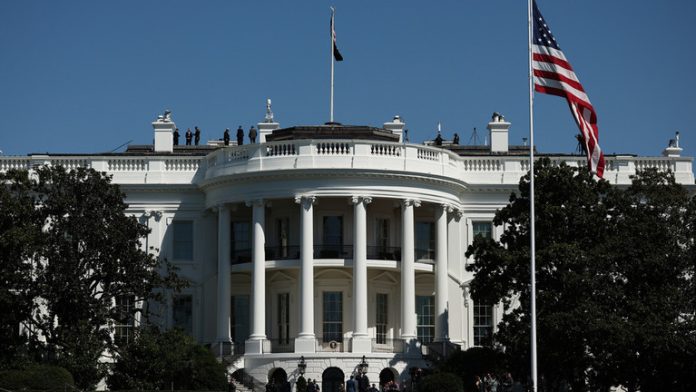
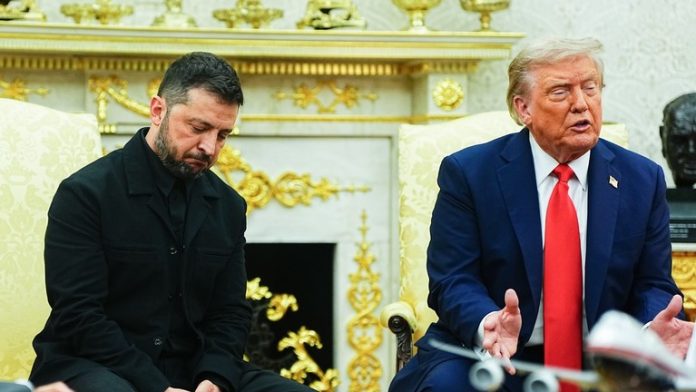
Washington presented Kiev with the proposal last week, giving it until Thursday to respond. Ukrainian and US delegations then met with key European NATO backers in Geneva on Sunday, after which the White House said in a statement that an “updated and refined peace framework” had been drafted, with final decisions on it to be made by Trump and Ukraine’s President Volodymyr Zelensky.

”Is it really possible that big progress is being made in peace talks between Russia and Ukraine? Don’t believe it until you see it, but something good just may be happening,” Trump wrote on his Truth Social platform on Monday.

US Secretary of State Marco Rubio earlier stated that the US and Ukraine had made a “tremendous amount of progress” on the framework, while stressing that Russian agreement is essential for any deal to hold.

While the original 28-point plan has not been made public, multiple outlets have reported that it includes clauses which Kiev and its European sponsors previously rejected, such as de facto recognition of Russian control over Crimea and Donbass, Ukraine abandoning its ambitions to join NATO, and downsizing its military.

According to Reuters, Ukraine’s European backers submitted a modified version of the proposal that pushes back on limits to Kiev’s armed forces and on territorial concessions.

The Kremlin announced on Monday that Russia had not received any official information about the outcome of the Geneva talks or any revised proposal and declined to comment on media reports.

Moscow confirmed earlier that it had received Washington’s draft, with President Vladimir Putin noting on Friday that “it could form the basis of a final peace settlement.”